
Reports >
Life Sciences
>
Fall Detection System Market Report

Fall Detection System Market Report
First published: 11 October 2024 | Last updated: 25 May 2026 | Report Code: fall-detection-system
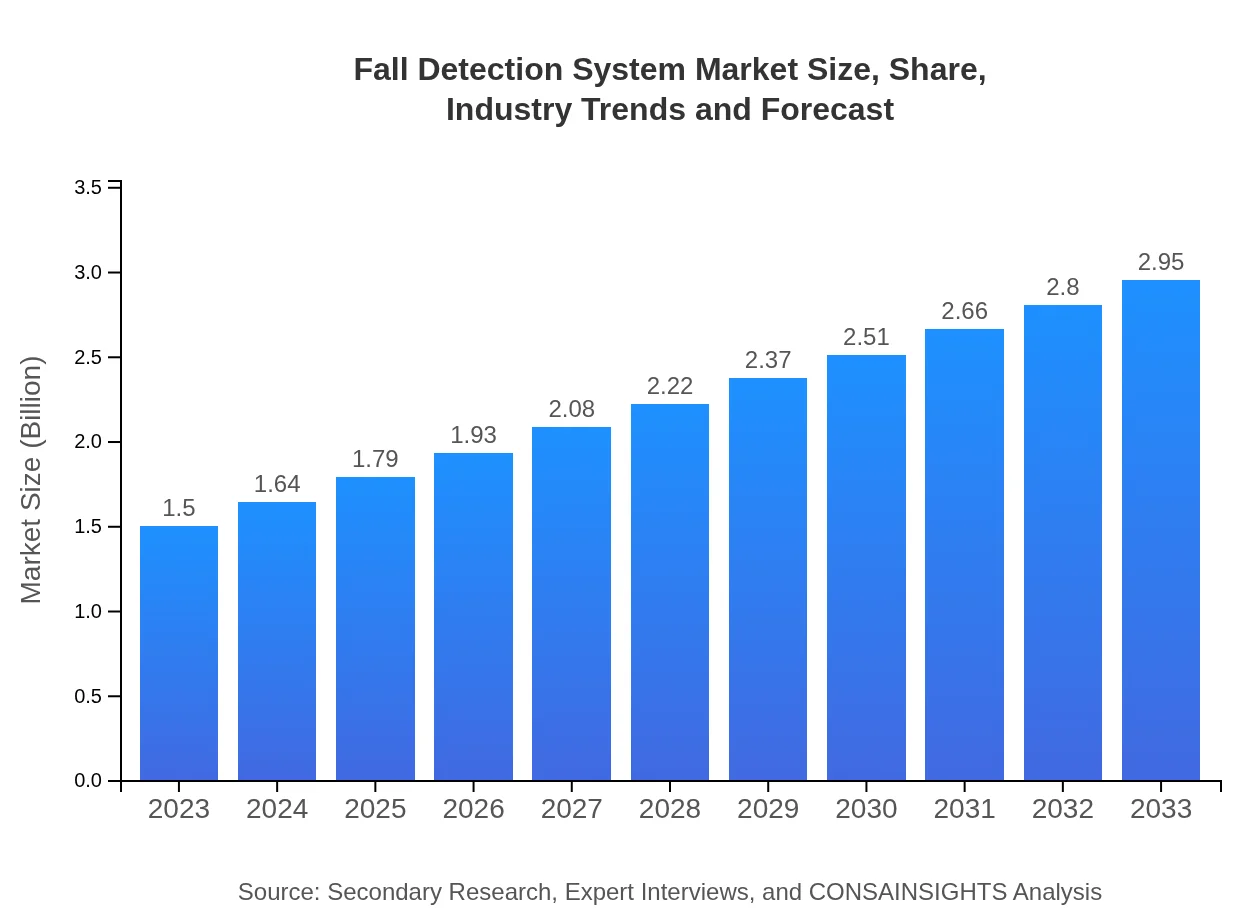
Fall Detection System Market — USD 1.5 billion in 2023, Growing to USD 2.95B by 2033 at 6.8% CAGR
This report provides a comprehensive analysis of the fall detection system market from 2023 to 2033, offering insights into market size, trends, regional growth, technology impacts, and competitive landscape.
Key Takeaways
- Global market projected from $1.50 Billion in 2023 to $2.95 Billion in 2033 at a 6.8% CAGR.
- North America is largest regional market, while no single fastest-growing region is stated because regional CAGR differences remain within 0.15 percentage points.
- Sensor-based, camera-based, and wearable solutions drive deployment across healthcare facilities and home care.
- Key providers include Philips Healthcare, Medtronic, Apple Inc., Samsung Electronics, and Life Alert Emergency Response.
Fall Detection System Market Report — Executive Summary
North America remains largest market by forecast-period value, while no single fastest-growing region is stated because top regional growth rates are separated by less than 0.15 percentage points. The fall detection systems market is experiencing steady expansion driven by demographic shifts and demand for remote monitoring. The market grows from $1.50 Billion in 2023 to $2.95 Billion in 2033 at a 6.8% CAGR. Technology adoption spans sensor-based systems, camera analytics, and wearables, serving healthcare providers, individual consumers, fitness organizations, and emergency services. Increased focus on home healthcare, integration with connected devices, and vendor investments are shaping competitive dynamics; notable firms active in the space include Philips Healthcare, Medtronic, Apple Inc., Samsung Electronics, and Life Alert Emergency Response. Market segmentation covers application areas such as healthcare facilities, home care, sports and fitness, and elderly care. Regional performance varies: North America leads by absolute market value, while Europe, Asia Pacific, Latin America, and Middle East and Africa show incremental growth tied to aging populations, healthcare infrastructure expansion, and uptake of IoT-enabled solutions. The report synthesizes primary interviews, company reports, and expert analysis to outline opportunities and adoption pathways for stakeholders.
Key Growth Drivers
- Rising incidence of falls among aging populations increasing demand for monitoring solutions.
- Expansion of home healthcare services prompting adoption of remote detection technologies.
- Advancements in sensors, connectivity, and wearables improving detection accuracy and user acceptance.
- Healthcare providers and emergency responders integrating systems to shorten response times and reduce complications.
- Vendor investment and product innovation from established medical and consumer electronics firms supporting market expansion.
| Metric | Value |
|---|---|
| Study Period | 2023 - 2033 |
| 2023 Market Size | $1.50 Billion |
| CAGR (2023-2033) | 6.8% |
| 2033 Market Size | $2.95 Billion |
| Top Companies | Philips Healthcare, Medtronic , Apple Inc., Samsung Electronics, Life Alert Emergency Response |
| Published Date | 11 October 2024 |
| Last Modified Date | 25 May 2026 |
Fall Detection System Market Overview
Customize Fall Detection System Market Report market research report
- ✔ Get in-depth analysis of Fall Detection System market size, growth, and forecasts.
- ✔ Understand Fall Detection System's regional dynamics and industry-specific trends.
- ✔ Identify potential applications, end-user demand, and growth segments in Fall Detection System
What is the Market Size & CAGR of Fall Detection System Market Report market in 2023?
Fall Detection System Industry Analysis
Fall Detection System Market Segmentation and Scope
Tell us your focus area and get a customized research report.
Fall Detection System Market Report Market Analysis Report by Region
Europe Fall Detection System Market Report:
Europe grows from $0.38 Billion in 2023 to $0.75 Billion in 2033. Adoption is driven by aging populations, increasing home healthcare initiatives, and integration of sensor and wearable technologies in clinical and residential settings.Asia Pacific Fall Detection System Market Report:
Asia Pacific grows from $0.29 Billion in 2023 to $0.57 Billion in 2033. Growth factors include improving healthcare access, rising awareness of elderly care needs, and gradual uptake of IoT-enabled monitoring devices.North America Fall Detection System Market Report:
North America is largest regional market, rising from $0.58 Billion in 2023 to $1.14 Billion in 2033. Regional expansion is linked to established healthcare infrastructure, higher adoption of connected devices, and institutional procurement across providers and emergency services.South America Fall Detection System Market Report:
Latin America grows from $0.1 Billion in 2023 to $0.19 Billion in 2033. Market advancement reflects growing healthcare infrastructure investments and rising interest in remote monitoring solutions for dispersed populations.Middle East & Africa Fall Detection System Market Report:
Middle East and Africa grows from $0.15 Billion in 2023 to $0.29 Billion in 2033. Regional drivers include expanding healthcare services, increased focus on elder care, and introduction of connected health technologies.Tell us your focus area and get a customized research report.
Research Methodology
Fall Detection System Market Analysis By Tech Type
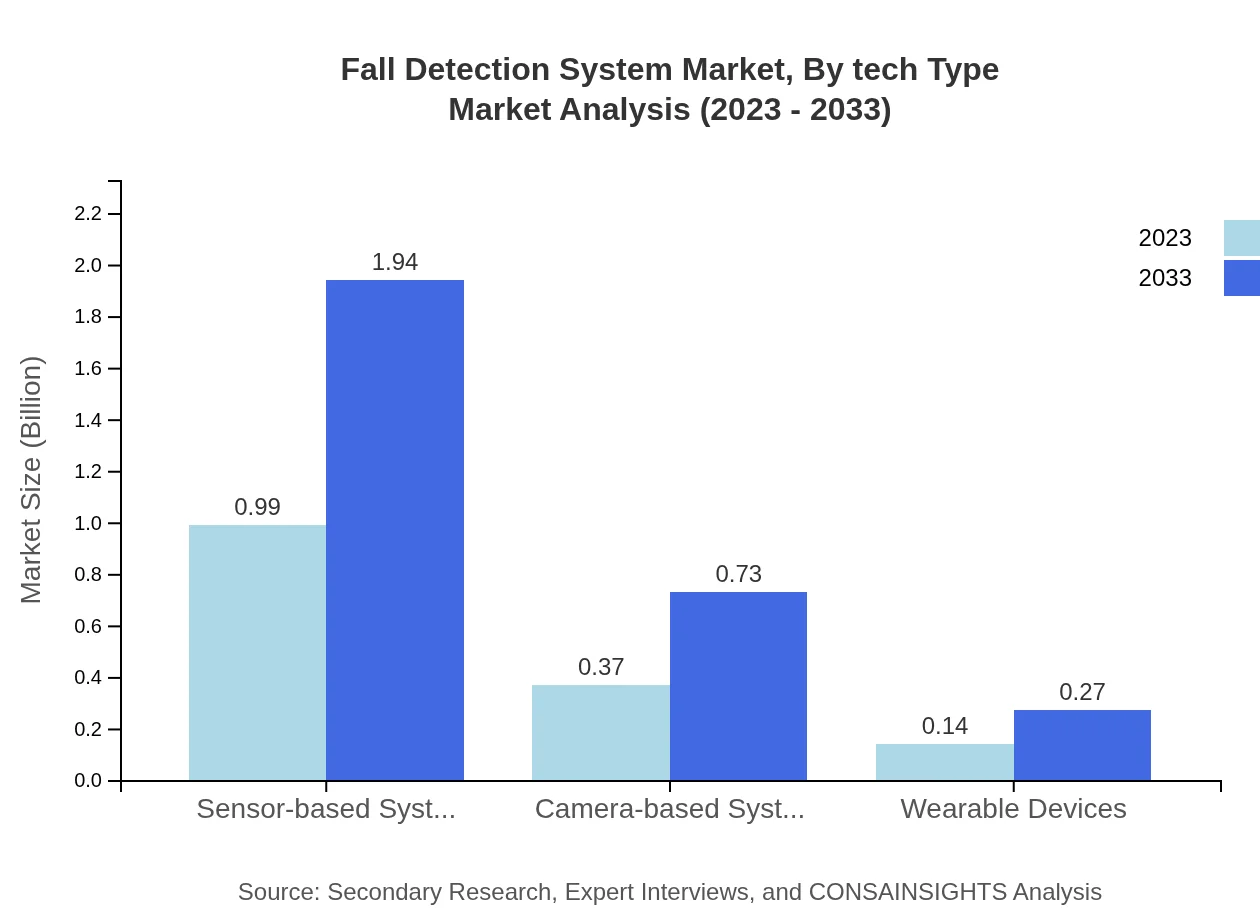
Sensor-based systems dominate the market, accounting for approximately 65.95% market share in 2023, with a size of USD 990 million, projected to reach USD 1.94 billion by 2033. Camera-based systems hold a share of 24.92%, valued at USD 370 million, expected to grow to USD 730 million. Wearable devices, though smaller, represent a growing segment driven by consumer preference for mobility.
Fall Detection System Market Analysis By Application
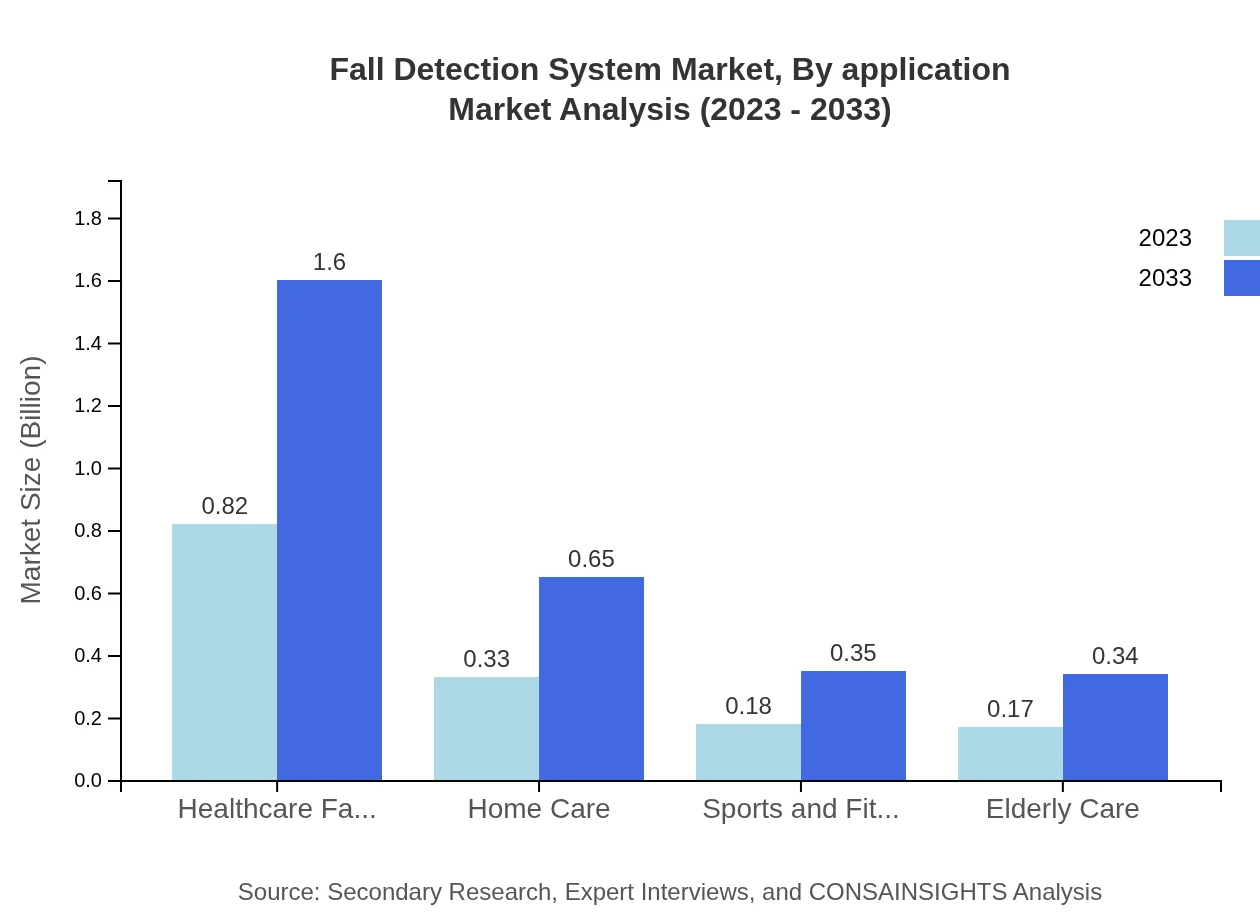
The healthcare facilities segment leads the market with a size of USD 820 million in 2023, which will double to USD 1.60 billion by 2033. Individual consumers represent a significant share with valuations of USD 330 million in 2023 and projected growth to USD 650 million. Fitness organizations show potential with a small but increasing share growing from USD 180 million to USD 350 million.
Fall Detection System Market Analysis By End User
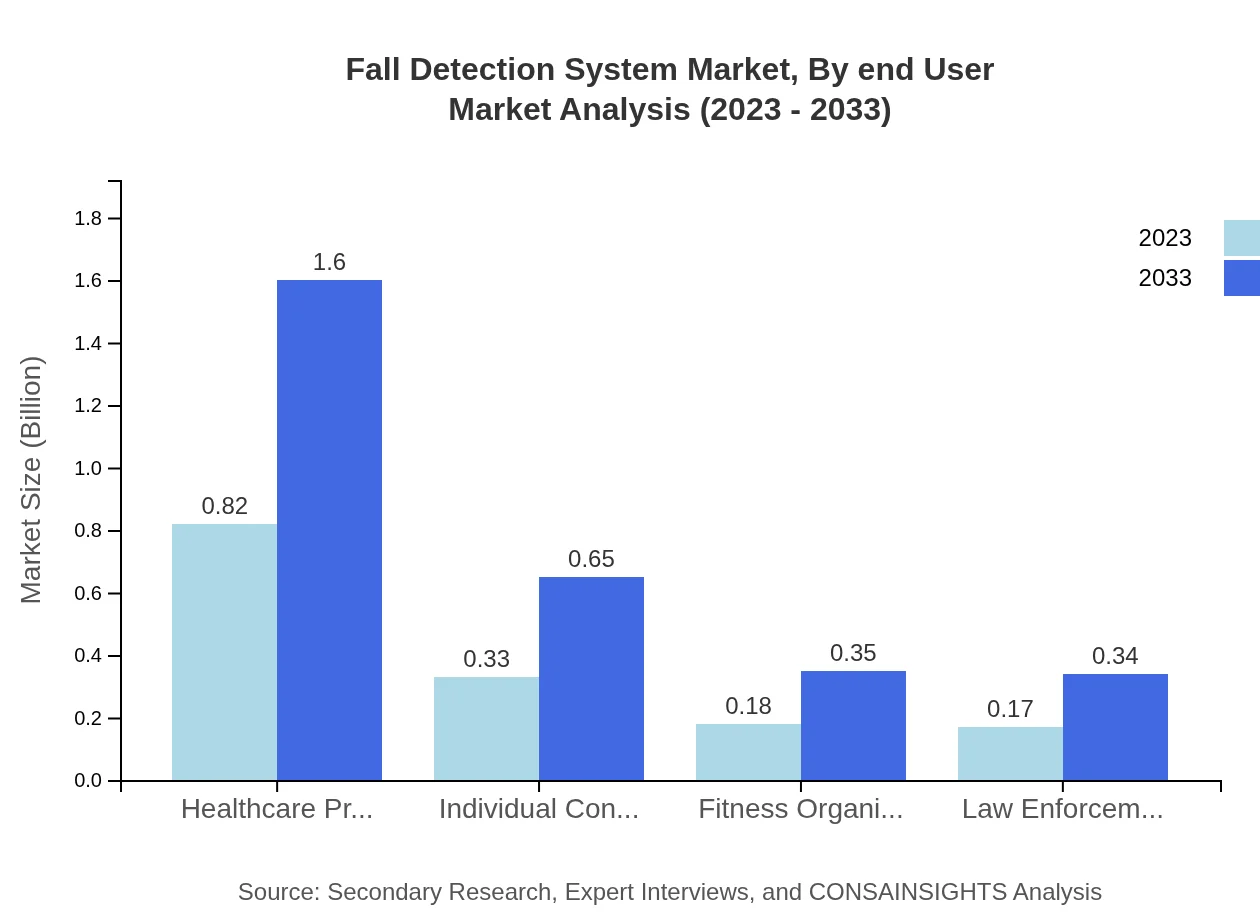
Market analysis by end-users reveals healthcare providers as the main consumers, accounting for 54.37% share, valued at USD 820 million in 2023. Individual consumers hold a 22.02% share, valued at USD 330 million. Additionally, fitness organizations and elder care services are gaining traction in the market.
Fall Detection System Market Analysis By Distribution Channel
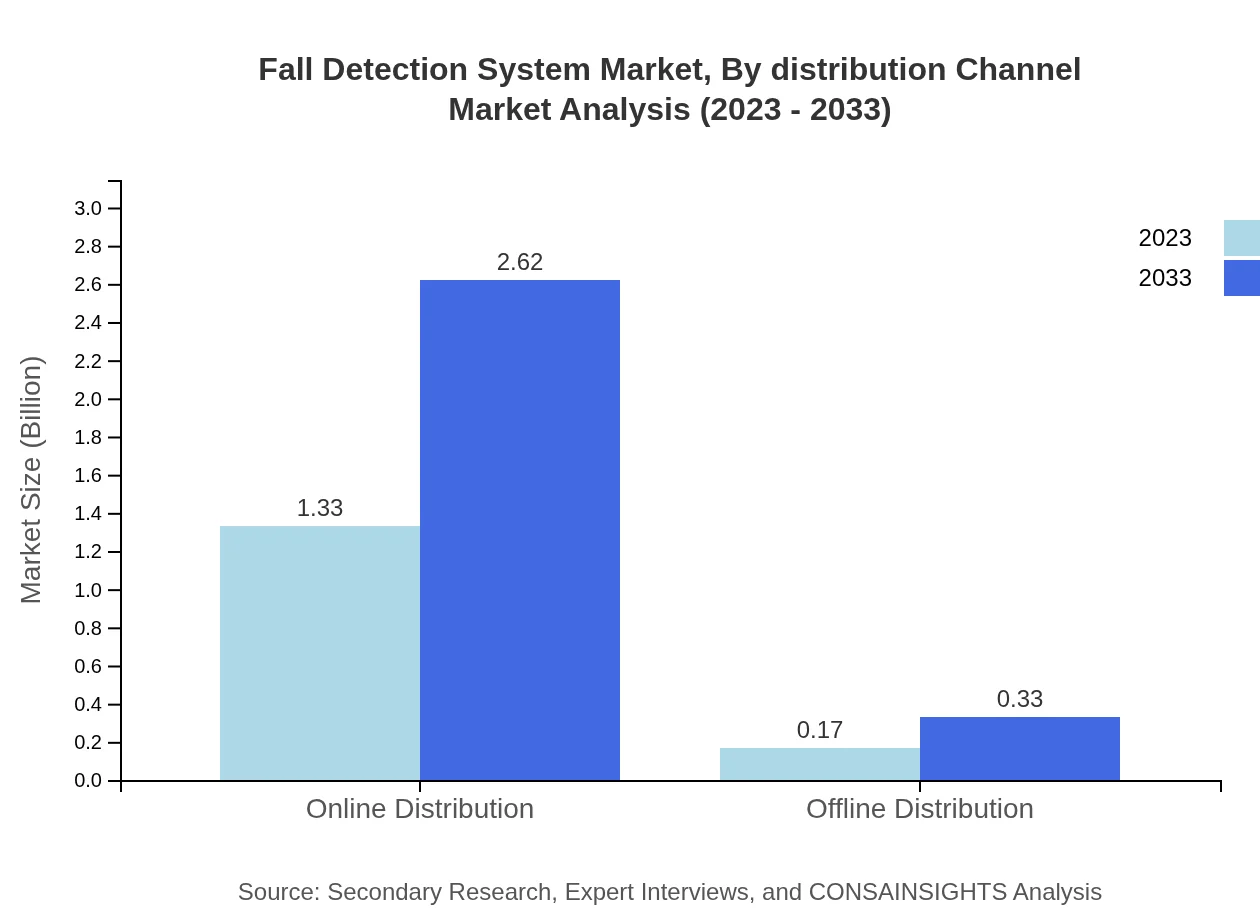
The online distribution channel leads with an impressive 88.85% market share in 2023, valued at USD 1.33 billion, thanks to the growing trend of e-commerce and direct-to-consumer sales. Offline channels account for about 11.15% share, valued at USD 170 million, focusing on traditional retail and healthcare supply chains.
Fall Detection System Market Analysis By Geography
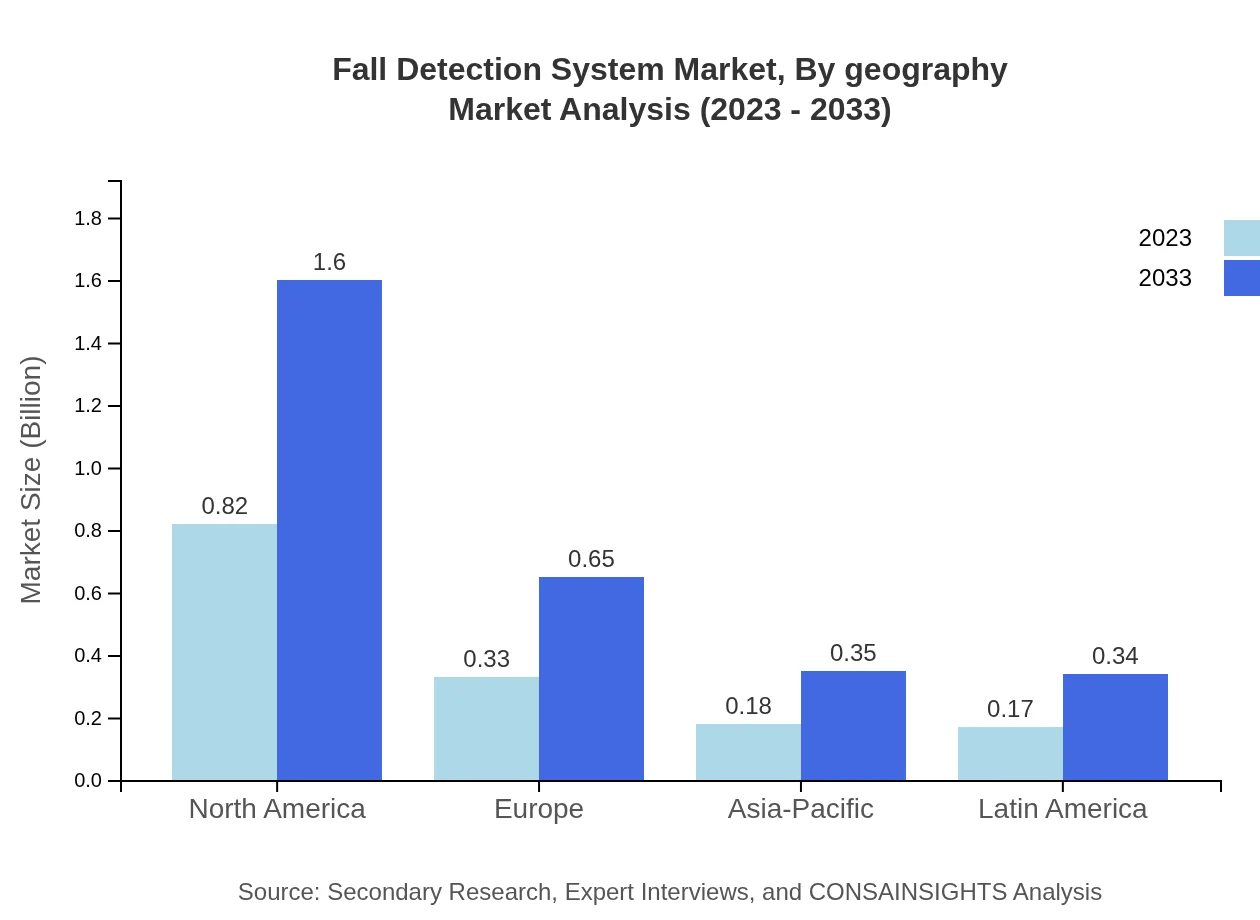
Geographically, North America accounts for the largest market share, followed by Europe and Asia Pacific. While North America leads due to high technological adoption, Europe is witnessing growth fueled by supportive healthcare policies. The Asia Pacific region is emerging rapidly, driven by demographic changes and increasing investments in health technology.
Fall Detection System Market Trends and Future Forecast
Tell us your focus area and get a customized research report.
Global Market Leaders and Top Companies in Fall Detection System Industry
Philips Healthcare:
A leading player in healthcare technology, Philips offers comprehensive fall detection solutions integrated with their health monitoring systems, driving innovations in elderly care.Medtronic :
Medtronic is at the forefront of developing advanced medical technologies, including fall detection sensors that enhance patient safety and improve healthcare outcomes.Apple Inc.:
Known for its innovative consumer electronics, Apple has integrated fall detection features in its wearables, setting a benchmark for individual consumer safety.Samsung Electronics:
Samsung offers a variety of health-focused wearables that include fall detection technology, strengthening its position in the growing health-tech market.Life Alert Emergency Response:
Life Alert specializes in emergency response systems, providing effective fall detection solutions to ensure immediate help for seniors and at-risk individuals.We're grateful to work with incredible clients.









FAQs
What is the market size of the fall detection systems in 2023?
The reported market size for 2023 is $1.50 Billion, reflecting global revenue across technologies and end users for that year.
How big will the market be in 2033?
The market is projected to reach $2.95 Billion in 2033 based on the provided forecast covering the 2023 to 2033 period.
What is CAGR for the forecast period?
The compound annual growth rate for 2023 to 2033 is 6.8%, indicating steady expansion over the ten-year horizon.
Is there a single fastest Growing region in the Fall Detection System Market Report market?
No single fastest-growing region is stated for the Fall Detection System Market Report market because the top regional implied CAGR values are within 0.15 percentage points of each other, making the ranking too close to call reliably.
Which major companies operate in this market?
Top listed companies include Philips Healthcare, Medtronic, Apple Inc., Samsung Electronics, and Life Alert Emergency Response.
What technologies are prominent in fall detection systems?
Primary technology categories noted are sensor-based systems, camera-based systems, and wearable devices, each supporting different deployment contexts.
Who are the primary end users for these systems?
End users include healthcare providers, individual consumers, fitness organizations, and law enforcement and emergency services as specified.
How are distribution channels characterized?
Distribution is split between online distribution and offline distribution, reflecting digital sales and traditional retail or institutional procurement.
What applications do fall detection systems support?
Applications listed include healthcare facilities, home care, sports and fitness, and elderly care, covering clinical and consumer scenarios.
Why might regulatory concerns affect adoption?
Privacy and monitoring regulations can influence deployment decisions and product design, potentially affecting market uptake and vendor strategies.