

Bleeding Disorders Treatment Market Report
First published: 11 October 2024 | Last updated: 25 May 2026 | Report Code: bleeding-disorders-treatment
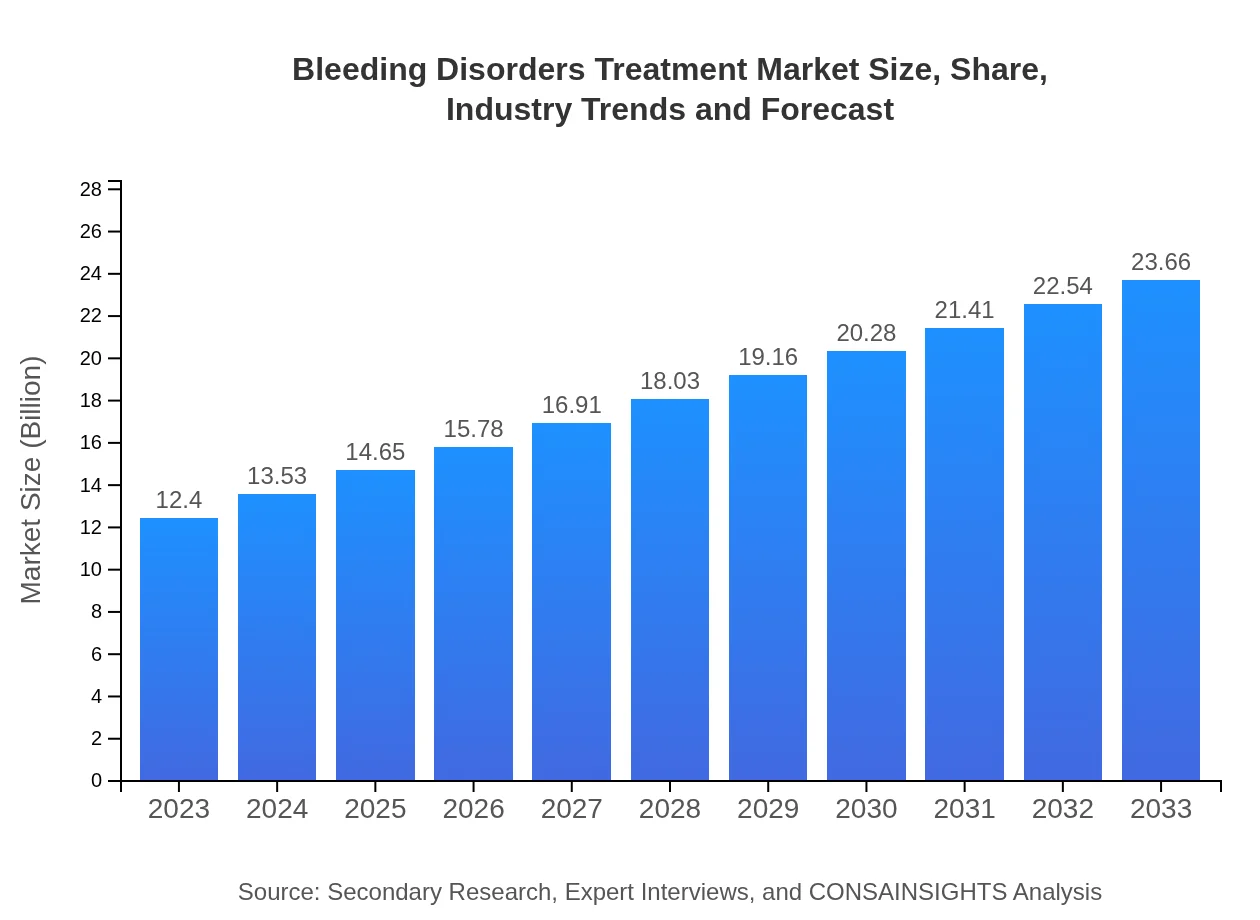
Bleeding Disorders Treatment Market — USD 12.4 billion in 2023, Growing to USD 23.66B by 2033 at 6.5% CAGR
This report provides a comprehensive analysis of the Bleeding Disorders Treatment market, covering key insights, current trends, and forecasts for the period 2023 to 2033. It includes detailed market segmentation, regional insights, industry analysis, and future growth projections.
Key Takeaways
- Global market expands from $12.40 Billion in 2023 to $23.66 Billion by 2033, reflecting a 6.5% CAGR over the forecast period.
- North America is largest regional market, while no single fastest-growing region is stated because regional CAGR differences remain within 0.15 percentage points.
- Europe and Asia Pacific show substantial growth with Europe rising from $3.08 Billion to $5.87 Billion, and Asia Pacific from $2.48 Billion to $4.73 Billion.
- Market structure includes plasma-derived and recombinant products, hospital and home care end-users, and multiple distribution channels.
- Key participants shaping the space include Baxter International Inc., CSL Behring, Novo Nordisk, Boehringer Ingelheim, and Pfizer Inc.
Bleeding Disorders Treatment Market Report — Executive Summary
North America remains largest market by forecast-period value, while no single fastest-growing region is stated because top regional growth rates are separated by less than 0.15 percentage points. The bleeding disorders treatment market is positioned for sustained expansion between 2023 and 2033, supported by biotechnological advances, rising awareness, and growing healthcare investment. Market value climbs from $12.40 Billion in 2023 to $23.66 Billion in 2033 at a 6.5% CAGR. Therapy mix comprises plasma-derived products, recombinant products, and emergency medications delivered via intravenous, subcutaneous, and intramuscular routes. End-users span hospitals, clinics, and home care, while distribution uses direct sales, retail, and online pharmacies. North America represents the largest regional market. Industry activity is driven by product innovation, regulatory approvals, and strategic moves by established firms such as Baxter International Inc., CSL Behring, Novo Nordisk, Boehringer Ingelheim, and Pfizer Inc. Ongoing R&D and patient-centric care models are expected to shape treatment adoption and portfolio strategies across regions.
Key Growth Drivers
- Advances in biologics and therapeutic technologies that improve efficacy and patient adherence.
- Increased healthcare spending and greater diagnosis rates boosting demand for specialized treatments.
- Expanded access through diversified distribution channels, including online pharmacies and direct sales.
- R&D investments and regulatory approvals facilitating new product introductions and broadened indications.
- Rising focus on personalized and home-based care models encouraging treatment uptake outside traditional settings.
| Metric | Value |
|---|---|
| Study Period | 2023 - 2033 |
| 2023 Market Size | $12.40 Billion |
| CAGR (2023-2033) | 6.5% |
| 2033 Market Size | $23.66 Billion |
| Top Companies | Baxter International Inc., CSL Behring, Novo Nordisk, Boehringer Ingelheim, Pfizer Inc. |
| Published Date | 11 October 2024 |
| Last Modified Date | 25 May 2026 |
Bleeding Disorders Treatment Market Overview
Customize Bleeding Disorders Treatment Market Report market research report
- ✔ Get in-depth analysis of Bleeding Disorders Treatment market size, growth, and forecasts.
- ✔ Understand Bleeding Disorders Treatment's regional dynamics and industry-specific trends.
- ✔ Identify potential applications, end-user demand, and growth segments in Bleeding Disorders Treatment
What is the Market Size & CAGR of Bleeding Disorders Treatment Market Report market in 2023?
Bleeding Disorders Treatment Industry Analysis
Bleeding Disorders Treatment Market Segmentation and Scope
Tell us your focus area and get a customized research report.
Bleeding Disorders Treatment Market Report Market Analysis Report by Region
Europe Bleeding Disorders Treatment Market Report:
Europe grows from $3.08 Billion in 2023 to $5.87 Billion in 2033. Expansion is influenced by increasing awareness, supportive regulatory frameworks for novel therapies, and investments in treatment access across care settings.Asia Pacific Bleeding Disorders Treatment Market Report:
Asia Pacific grows from $2.48 Billion in 2023 to $4.73 Billion in 2033. Growth drivers include rising healthcare expenditure, greater diagnosis rates, and growing investment in biologics and treatment delivery models.North America Bleeding Disorders Treatment Market Report:
North America is largest regional market, rising from $4.12 Billion in 2023 to $7.86 Billion in 2033. Regional growth is supported by strong R&D activity, established healthcare infrastructure, and active participation from major industry players.South America Bleeding Disorders Treatment Market Report:
Latin America grows from $1.06 Billion in 2023 to $2.01 Billion in 2033. Market development is propelled by expanding healthcare services, enhanced distribution networks, and increasing availability of specialized treatments.Middle East & Africa Bleeding Disorders Treatment Market Report:
Middle East and Africa grows from $1.67 Billion in 2023 to $3.19 Billion in 2033. Drivers include expanding healthcare infrastructure, improved access to therapies, and growing emphasis on diagnosis and treatment programs.Tell us your focus area and get a customized research report.
Research Methodology
Bleeding Disorders Treatment Market Analysis By Treatment Type
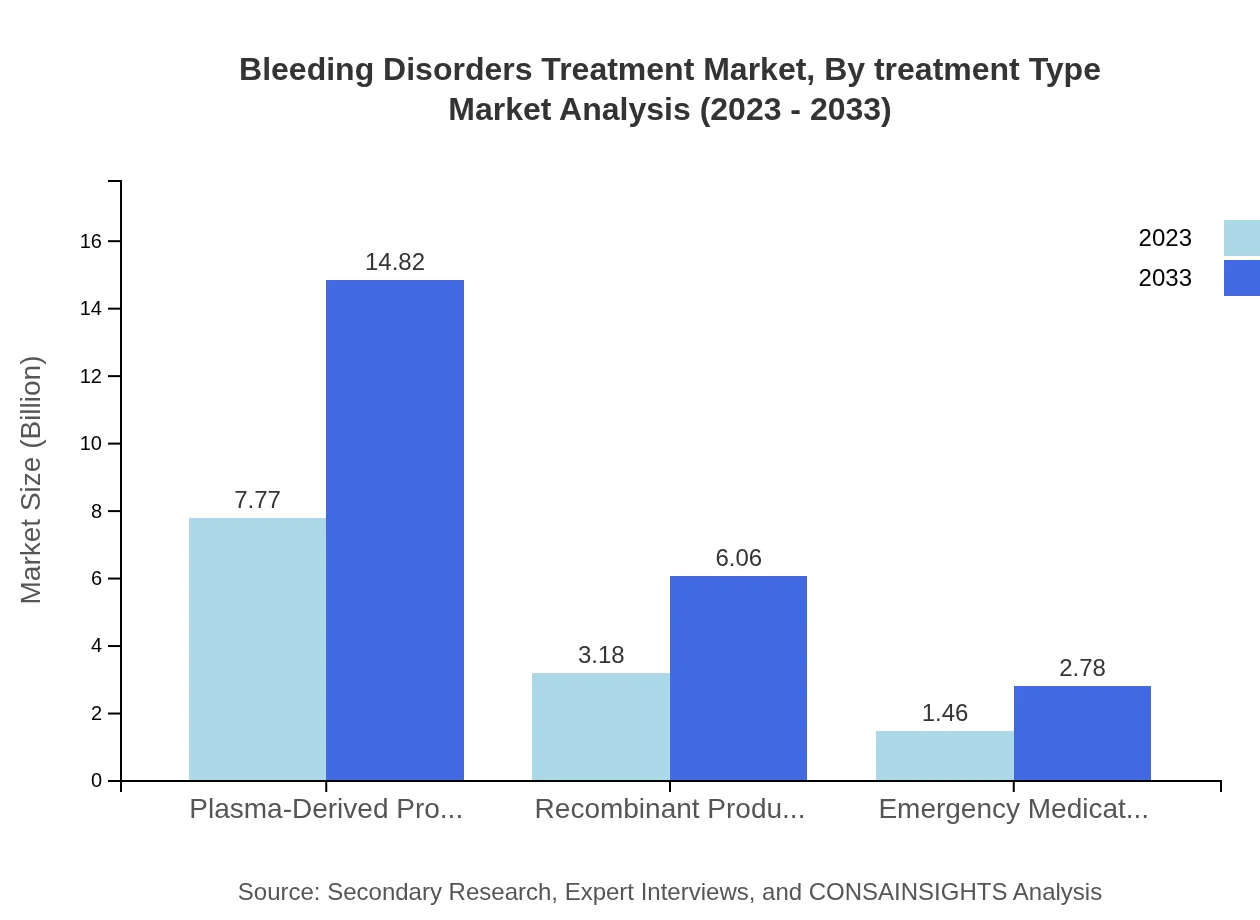
In the treatment type segment, plasma-derived products held a dominant market share in 2023, valued at $7.77 billion, and are expected to reach $14.82 billion by 2033. Recombinant products account for a significant part of the market as well, with a size of $3.18 billion in 2023, forecasted to grow to $6.06 billion by 2033. This trend is notable as hospitals continue to adopt recombinant therapies due to their safety and effectiveness.
Bleeding Disorders Treatment Market Analysis By Disorder
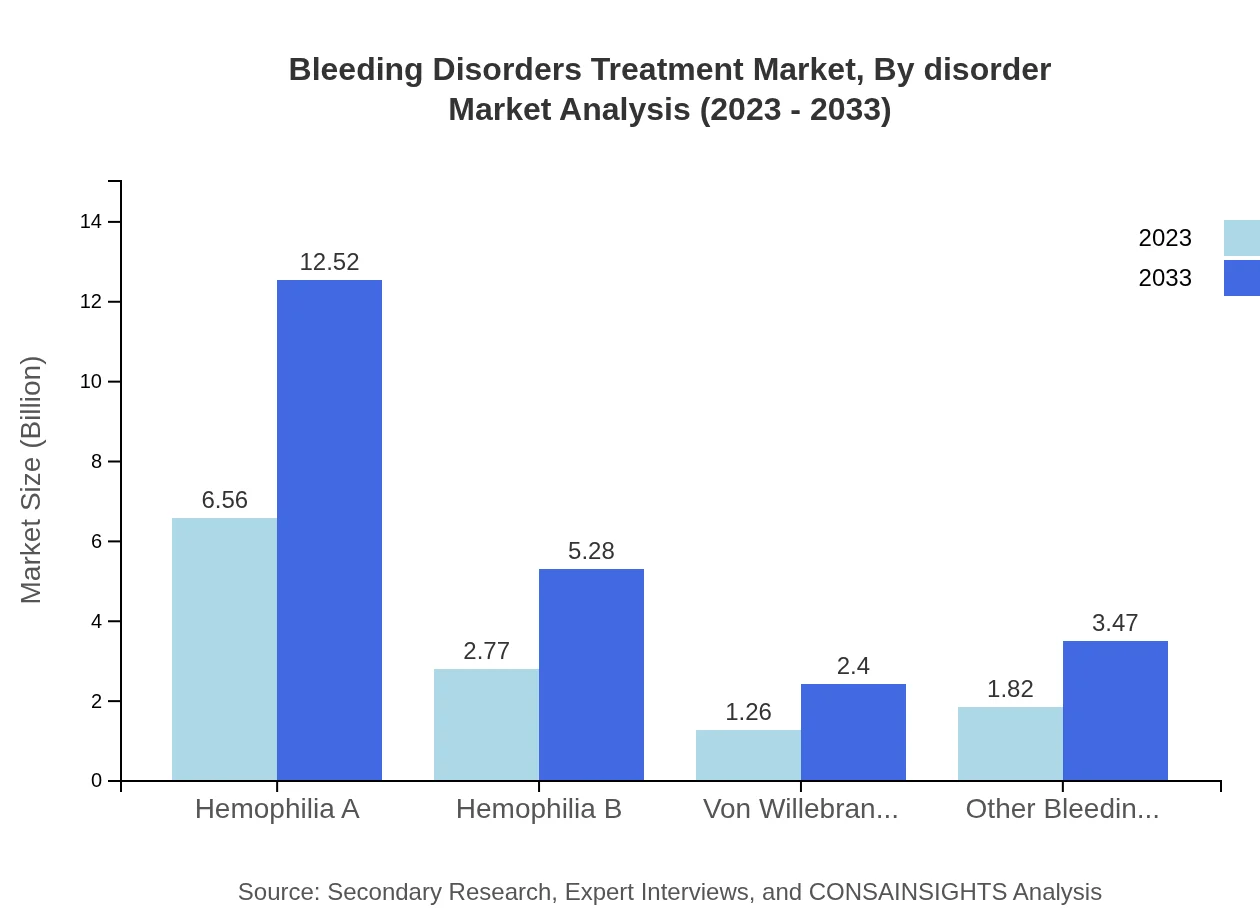
Hemophilia A represents the largest segment with a market size of $6.56 billion in 2023, projected to reach $12.52 billion by 2033, accounting for 52.89% of the overall market. Hemophilia B follows, with a market valued at $2.77 billion in 2023, growing to $5.28 billion by 2033, while von Willebrand disease is expected to reach $2.40 billion by 2033 from $1.26 billion in 2023. These segments signify the substantial need for specialized therapies and innovative treatment approaches.
Bleeding Disorders Treatment Market Analysis By Route Of Administration
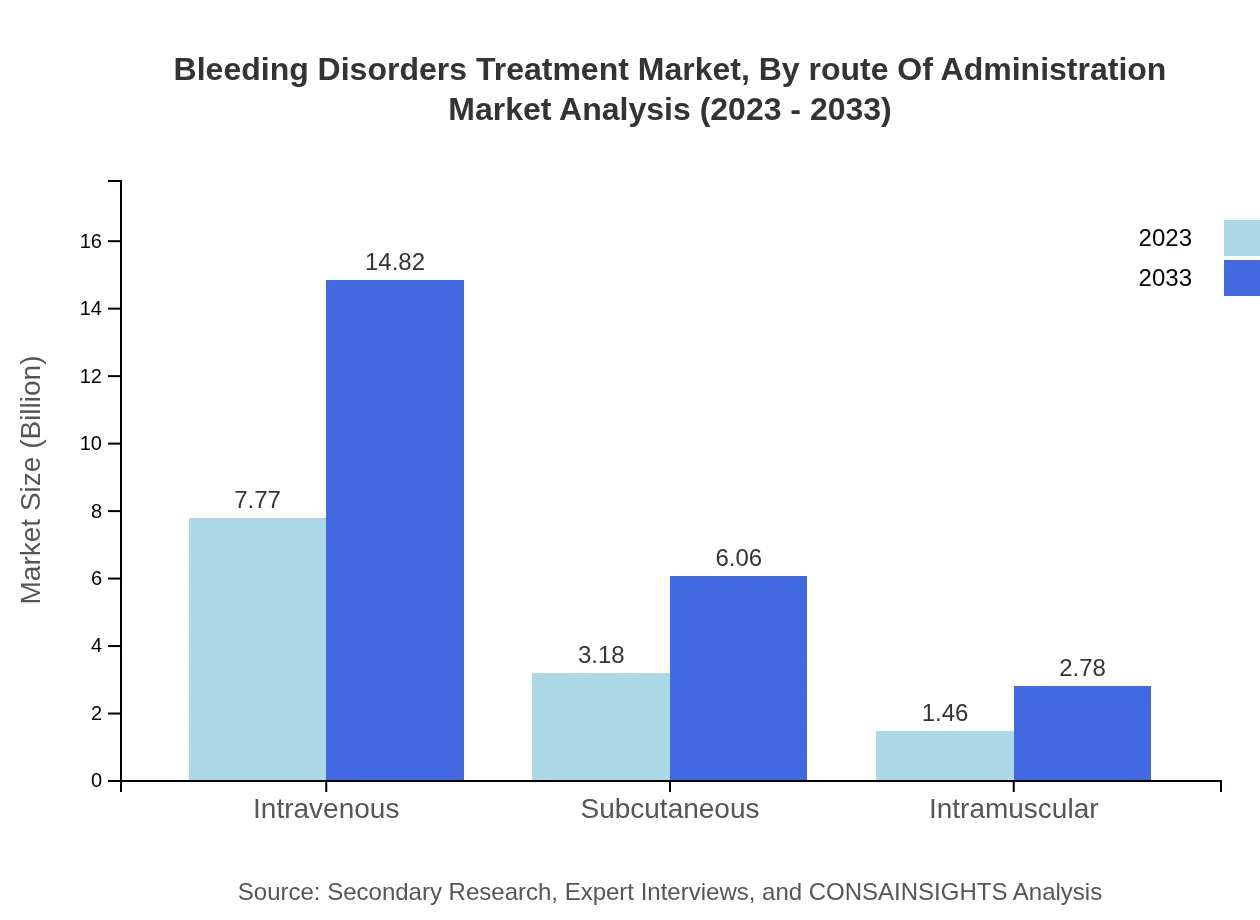
Intravenous administration dominates the market with a size of $7.77 billion in 2023 and a projection of $14.82 billion by 2033, accounting for 62.64% of the market. Subcutaneous routes follow with $3.18 billion in 2023 growing to $6.06 billion by 2033. The preference for intravenous delivery is attributed to its effectiveness and immediate action, especially in acute bleeding situations.
Bleeding Disorders Treatment Market Analysis By End User
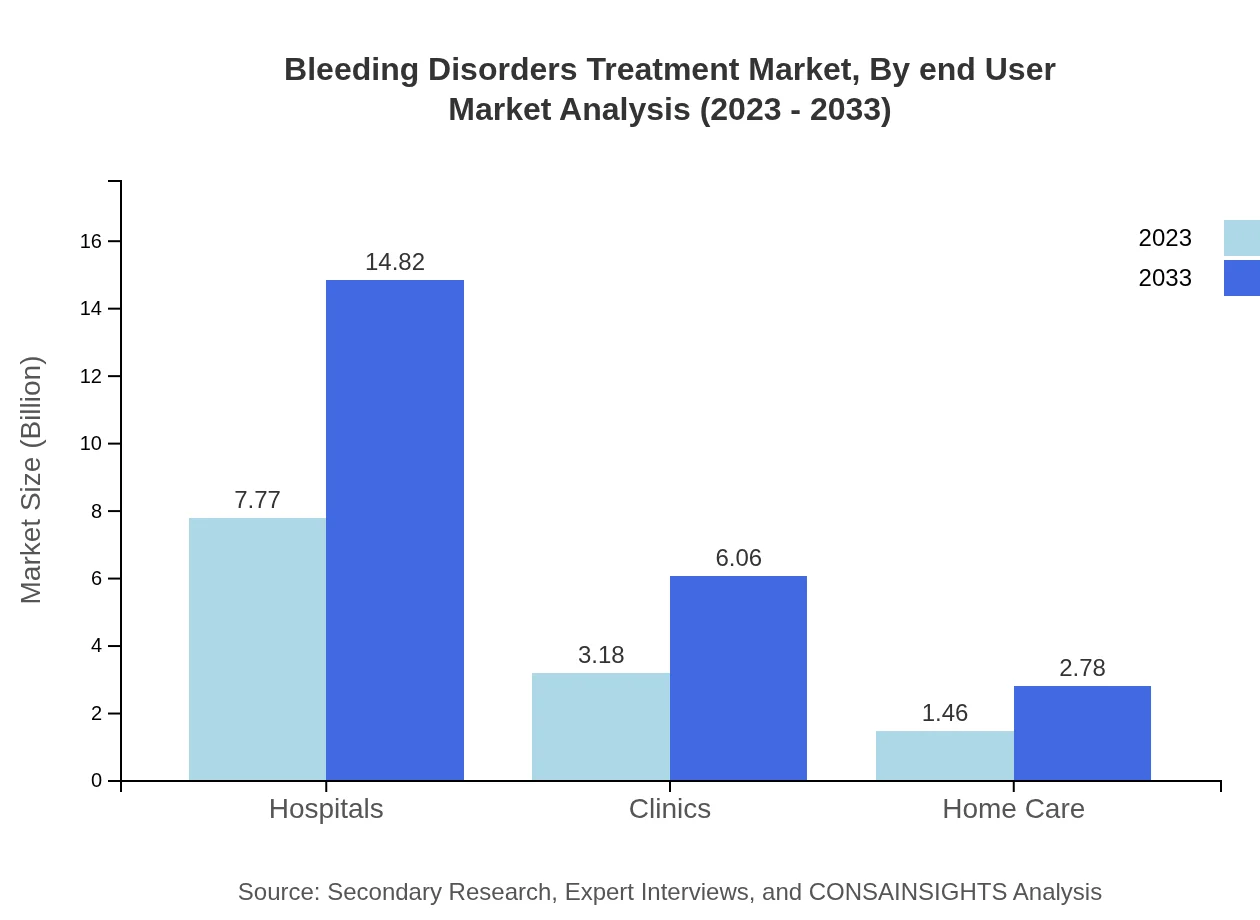
The hospitals segment is the largest end-user, valued at $7.77 billion in 2023 and expected to reach $14.82 billion by 2033. Clinics and home care segments also present significant market shares with sizes of $3.18 billion and $1.46 billion respectively in 2023. Increased hospital admissions for bleeding disorder management greatly influence this sector's growth.
Bleeding Disorders Treatment Market Analysis By Distribution Channel
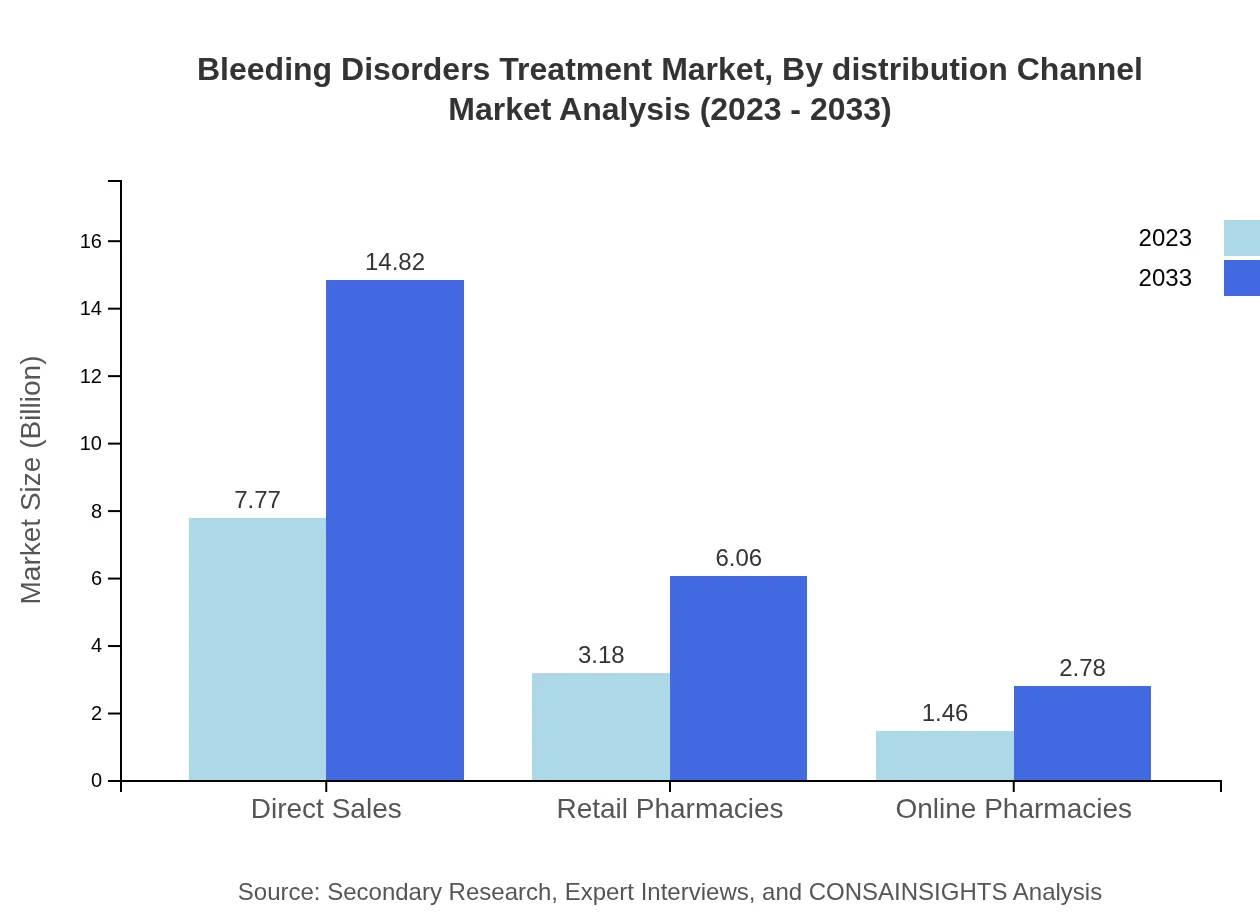
Direct sales channels contribute the majority share, valued at $7.77 billion in 2023 and projected to reach $14.82 billion. Retail pharmacies and online pharmacies account for sizable shares as well, with market sizes of $3.18 billion and $1.46 billion respectively. This multi-faceted distribution approach ensures accessibility and convenience for patients.
Bleeding Disorders Treatment Market Trends and Future Forecast
Tell us your focus area and get a customized research report.
Global Market Leaders and Top Companies in Bleeding Disorders Treatment Industry
Baxter International Inc.:
Baxter is a leading global medical products company that specializes in therapeutics for hemophilia, providing a broad portfolio of treatments that enhance patient outcomes.CSL Behring:
CSL Behring is a global leader in developing and supplying innovative therapies for people with bleeding disorders, focusing on recombinant and plasma-derived products.Novo Nordisk:
Novo Nordisk is recognized for its innovative approach to hemophilia treatment and is committed to advancing care options for patients around the world.Boehringer Ingelheim:
Boehringer Ingelheim is committed to discovering and developing innovative treatment solutions for patients with bleeding disorders, with a robust pipeline of therapies.Pfizer Inc.:
Pfizer is a global biopharmaceutical company that has made significant contributions to the bleeding disorders space, offering a range of treatment options to address diverse patient needs.We're grateful to work with incredible clients.







FAQs
What is the market size of the bleeding disorders treatment market in 2023?
The market size in 2023 is $12.40 Billion as reported for the global bleeding disorders treatment market.
How big is the projected market in 2033?
The market is projected to reach $23.66 Billion in 2033 according to the provided forecast.
What is CAGR of the bleeding disorders treatment market?
The reported compound annual growth rate for the period 2023 to 2033 is 6.5%.
Is there a single fastest Growing region in the Bleeding Disorders Treatment Market Report market?
No single fastest-growing region is stated for the Bleeding Disorders Treatment Market Report market because the top regional implied CAGR values are within 0.15 percentage points of each other, making the ranking too close to call reliably.
What are the main treatment types included?
The market includes plasma-derived products, recombinant products, and emergency medications as primary treatment-type categories.
Who are key companies operating in this market?
Notable companies listed include Baxter International Inc., CSL Behring, Novo Nordisk, Boehringer Ingelheim, and Pfizer Inc.
What end Users are covered in the market segmentation?
End-user segments comprise hospitals, clinics, and home care settings as the primary channels for treatment delivery.
Why is R&D important for this market?
Research and development supports novel therapies, regulatory approvals, and improved patient outcomes, which collectively drive market expansion.
How are treatments typically administered?
Routes of administration reported include intravenous, subcutaneous, and intramuscular delivery methods.
What distribution channels are prominent?
Distribution channels mentioned are direct sales, retail pharmacies, and online pharmacies for product access and supply.