

Gene Therapy Market Report
First published: 21 October 2024 | Last updated: 25 May 2026 | Report Code: gene-therapy
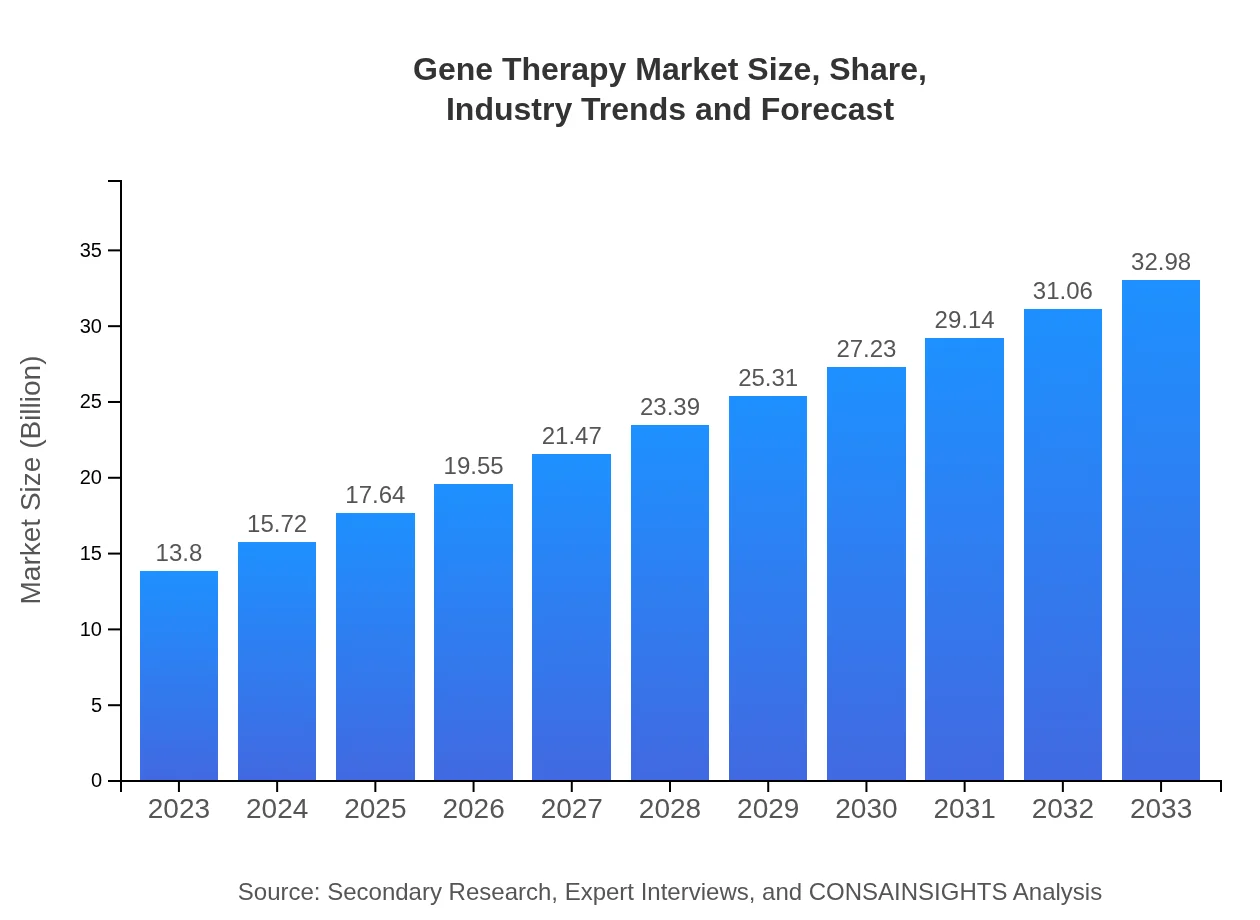
Gene Therapy Market — USD $13.8 Billion in 2023, Growing to USD 32.98null by 2033 at 8.8% CAGR
This report provides a comprehensive analysis of the Gene Therapy market from 2023 to 2033, highlighting market trends, size, segments, regional insights, and forecasts for growth, alongside current competitive dynamics within the industry.
Key Takeaways
- Global market expands from $13.80 Billion in 2023 to $32.98 Billion by 2033, reflecting an 8.8% CAGR over the forecast period.
- North America is largest regional market, while no single fastest-growing region is stated because regional CAGR differences remain within 0.15 percentage points.
- Europe increases from $4.33 Billion in 2023 to $10.34 Billion in 2033, with notable R&D and regulatory activity.
- Asia Pacific rises from $2.62 Billion to $6.26 Billion between 2023 and 2033, supported by clinical development and expanding infrastructure.
- Key industry players include Novartis, Gilead Sciences, Spark Therapeutics, Bluebird Bio, and Sarepta Therapeutics driving commercialization and partnerships.
Gene Therapy Market Report — Executive Summary
North America remains largest market by forecast-period value, while no single fastest-growing region is stated because top regional growth rates are separated by less than 0.15 percentage points. This report examines the Gene Therapy market, capturing a rise from $13.80 Billion in 2023 to $32.98 Billion by 2033 at an 8.8% CAGR for 2023 to 2033. Growth is driven by advances in delivery methods, expanding clinical trial activity, and increasing regulatory approvals that facilitate transitions from preclinical research to commercialization. North America is the largest regional market, reflecting concentrated R&D investment and established clinical ecosystems. Europe and Asia Pacific also show substantial expansion, supported by growing biotech activity and adoption of novel platforms. Key companies such as Novartis, Gilead Sciences, Spark Therapeutics, Bluebird Bio, and Sarepta Therapeutics are prominent in development pipelines and strategic partnerships. The analysis covers end-user, therapy type, research stage, target disease, and delivery method segments to guide stakeholders on investment priorities and competitive positioning.
Key Growth Drivers
- Intensifying research and development investments that accelerate transitions from preclinical phases to clinical trials and commercialization.
- Improved delivery technologies, including viral vectors and emerging non-viral methods, enhancing safety and therapeutic reach.
- Regulatory pathways becoming more receptive to novel gene therapies, supporting market approvals and broader clinical adoption.
- Strategic collaborations among biotech firms, pharmaceutical companies, and research institutions that accelerate product development and market access.
- Rising focus on targeted therapies for oncology, neurological disorders, and rare diseases, expanding potential patient populations.
| Metric | Value |
|---|---|
| Study Period | 2023 - 2033 |
| 2023 Market Size | $13.80 Billion |
| CAGR (2023-2033) | 8.8% |
| 2033 Market Size | $32.98 Billion |
| Top Companies | Novartis, Gilead Sciences, Spark Therapeutics, Bluebird Bio, Sarepta Therapeutics |
| Published Date | 21 October 2024 |
| Last Modified Date | 25 May 2026 |
Gene Therapy Market Overview
Customize Gene Therapy Market Report market research report
- ✔ Get in-depth analysis of Gene Therapy market size, growth, and forecasts.
- ✔ Understand Gene Therapy's regional dynamics and industry-specific trends.
- ✔ Identify potential applications, end-user demand, and growth segments in Gene Therapy
What is the Market Size & CAGR of Gene Therapy Market Report market in 2023?
Gene Therapy Industry Analysis
Gene Therapy Market Segmentation and Scope
Tell us your focus area and get a customized research report.
Gene Therapy Market Report Market Analysis Report by Region
Europe Gene Therapy Market Report:
Europe grows from $4.33 Billion in 2023 to $10.34 Billion in 2033. Expansion is driven by robust research activity, regulatory engagement, and collaborations between biotech companies and academic institutions.Asia Pacific Gene Therapy Market Report:
Asia Pacific grows from $2.62 Billion in 2023 to $6.26 Billion in 2033. Development is underpinned by expanding clinical infrastructure, increasing local R&D initiatives, and adoption of new delivery technologies.North America Gene Therapy Market Report:
North America is largest regional market, rising from $4.9 Billion in 2023 to $11.71 Billion in 2033. Growth there is supported by concentrated R&D investment, established clinical trial networks, and active commercialization efforts by major firms.South America Gene Therapy Market Report:
Latin America grows from $0.71 Billion in 2023 to $1.69 Billion in 2033. Regional progress reflects growing clinical research participation and gradual enhancement of healthcare capabilities supporting gene therapy introduction.Middle East & Africa Gene Therapy Market Report:
Middle East and Africa grows from $1.25 Billion in 2023 to $2.98 Billion in 2033. Growth there is associated with emerging clinical programs, investments in healthcare infrastructure, and collaboration with global partners.Tell us your focus area and get a customized research report.
Research Methodology
Gene Therapy Market Analysis By Therapy Type
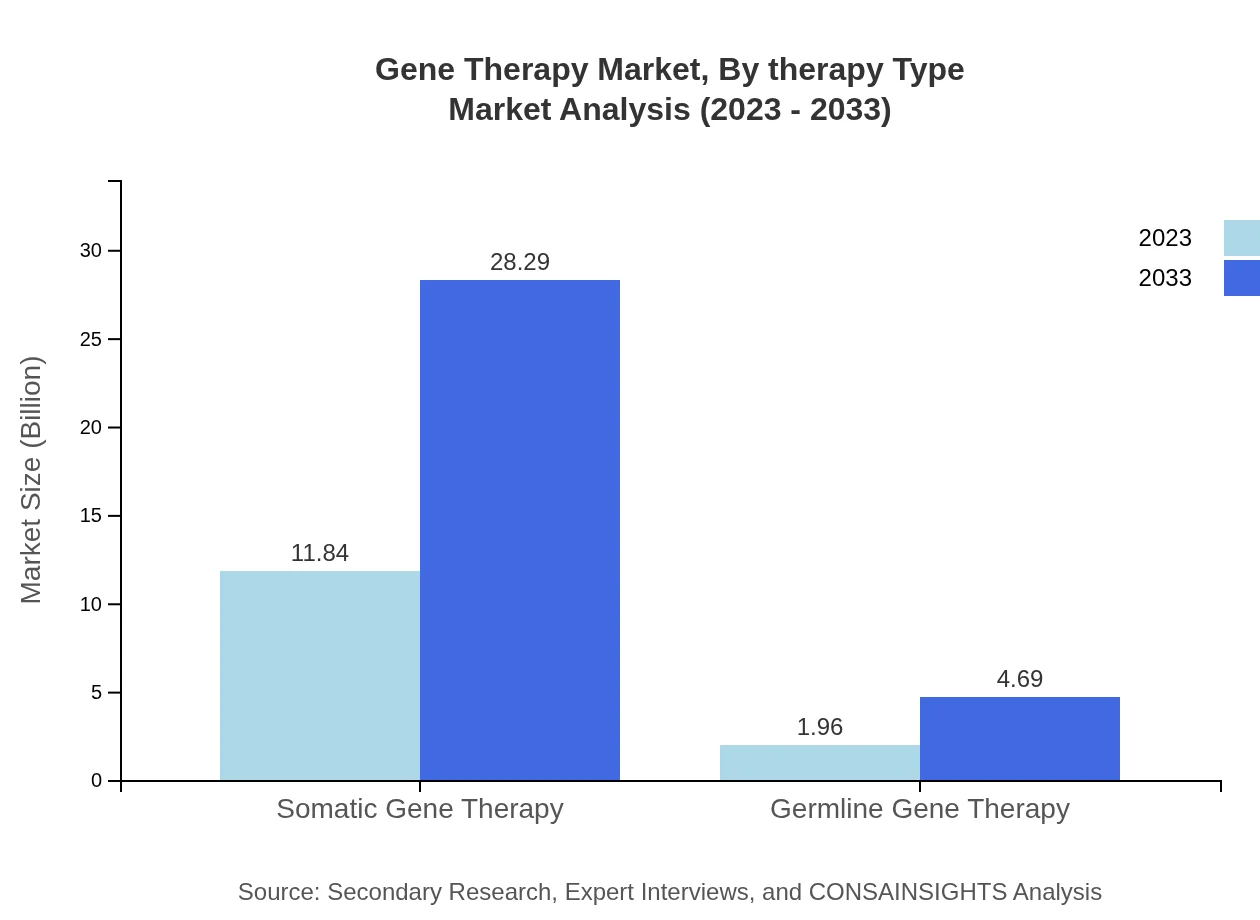
The Gene Therapy market by therapy type is primarily divided into Somatic Gene Therapy and Germline Gene Therapy. Somatic Gene Therapy represents a substantial market share, accounting for $11.84 billion in 2023, projected to grow to $28.29 billion by 2033. Meanwhile, Germline Gene Therapy contributes a smaller share but is still significant, with a market size of $1.96 billion in 2023, projected to reach $4.69 billion by 2033.
Gene Therapy Market Analysis By Delivery Method
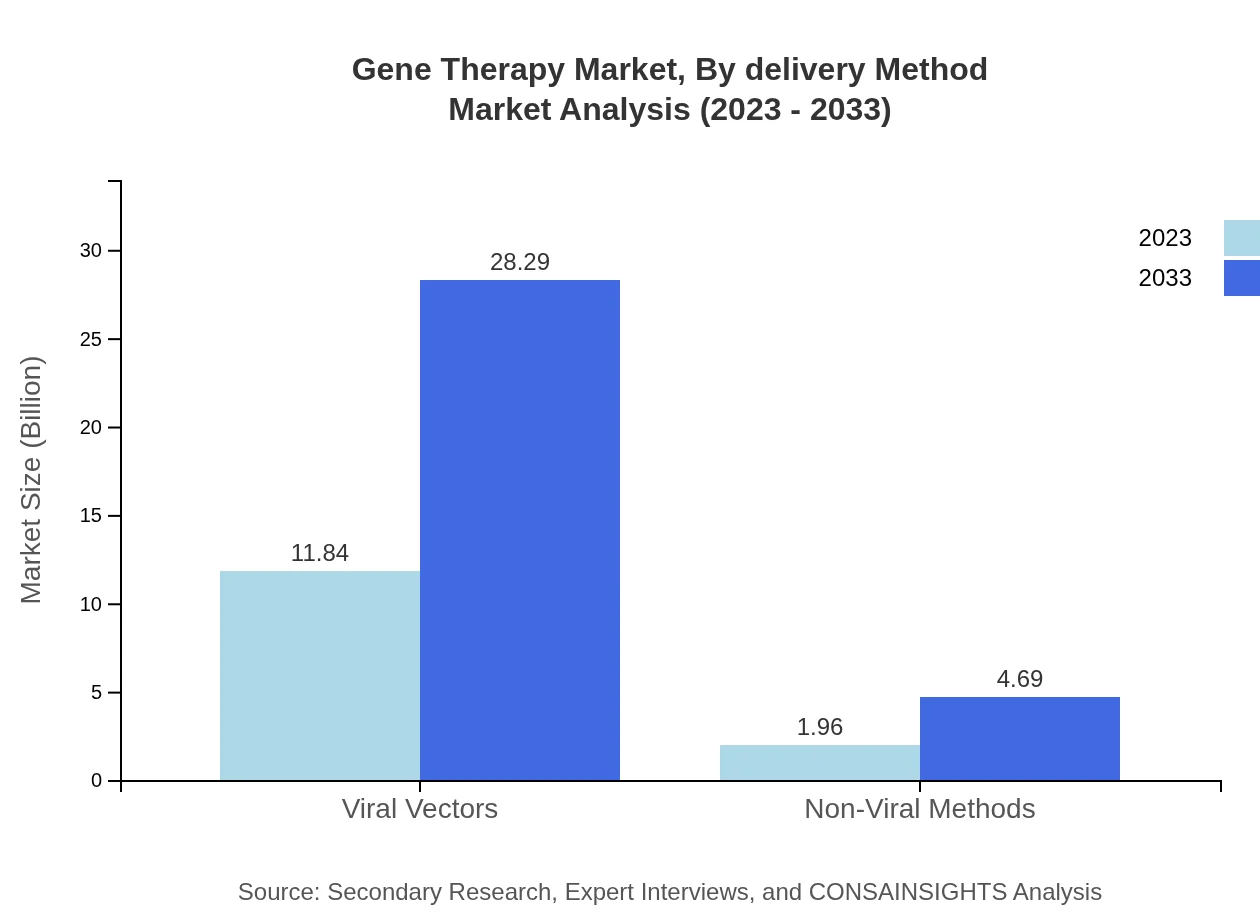
In terms of delivery methods, Viral Vectors dominate the Gene Therapy market, with a size of $11.84 billion expected to rise to $28.29 billion by 2033. Non-Viral Methods, although smaller, indicate growth opportunities, going from $1.96 billion in 2023 to $4.69 billion in 2033, driven by their safety profile and efficiency in gene delivery.
Gene Therapy Market Analysis By Target Disease
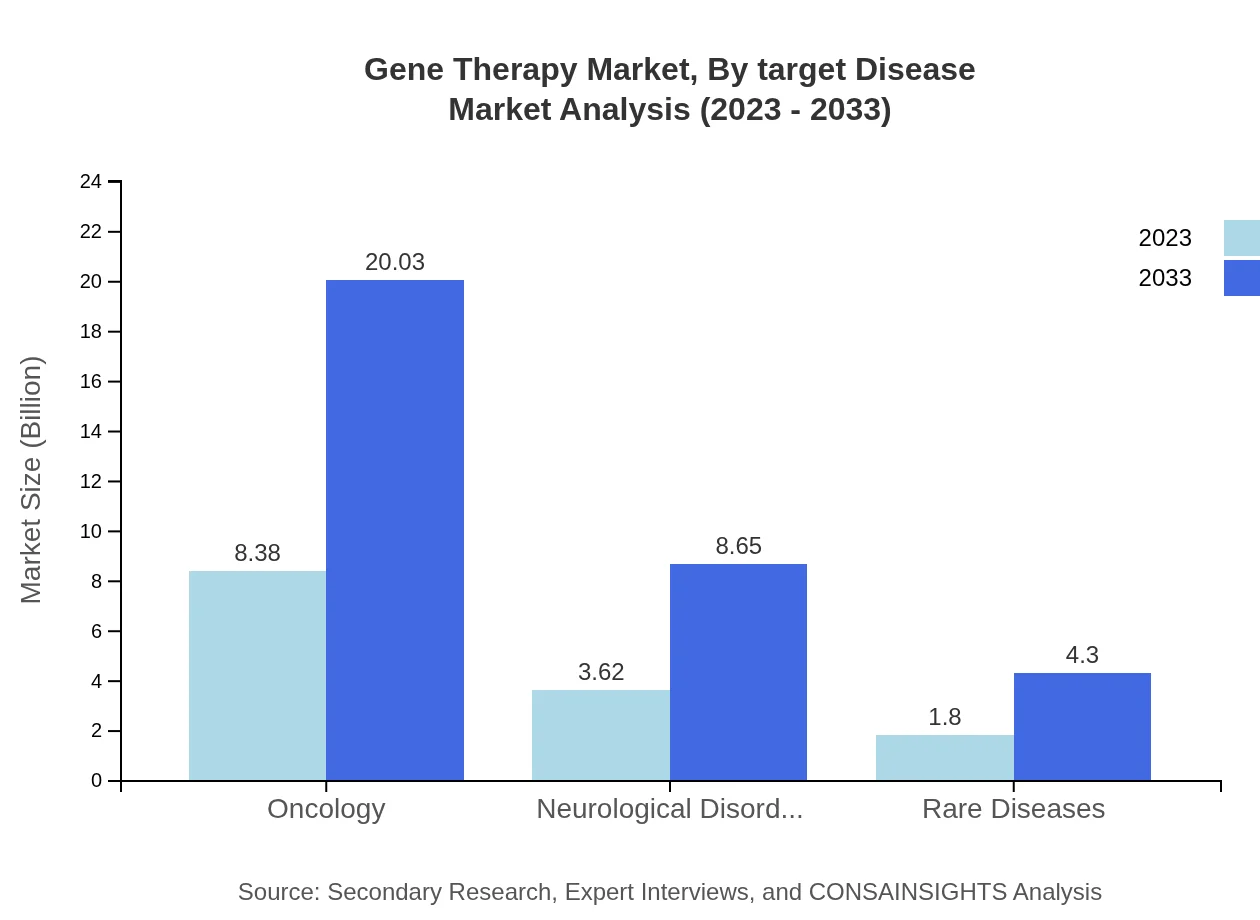
Key target diseases in the Gene Therapy market include Oncology, Neurological Disorders, and Rare Diseases. The oncology segment leads with a share of $8.38 billion in 2023, expected to grow to $20.03 billion by 2033. Neurological Disorders and Rare Diseases follow, with projected market sizes of $3.62 billion and $1.80 billion in 2023, respectively.
Gene Therapy Market Analysis By End User
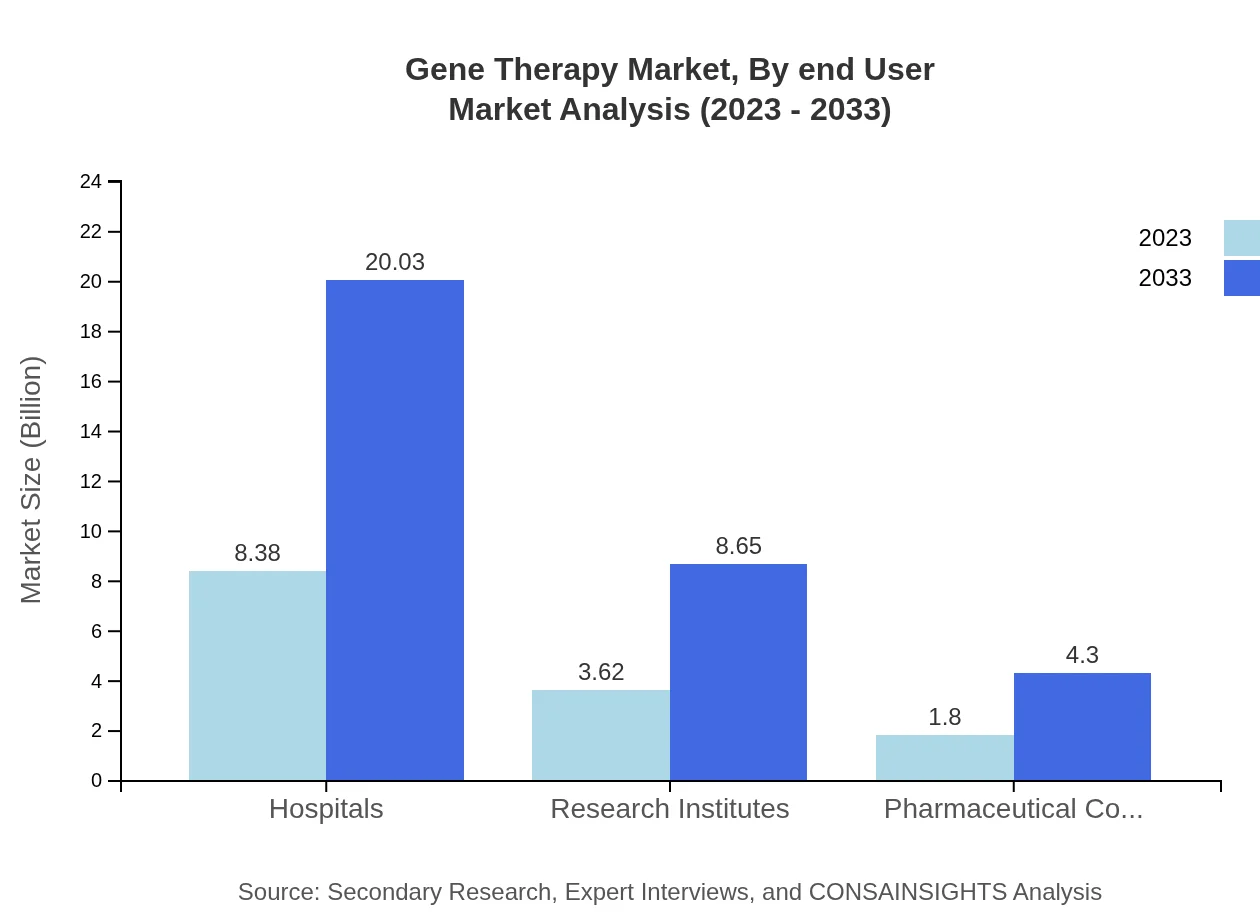
The end-users of Gene Therapy include Hospitals, Research Institutes, and Pharmaceutical Companies. Hospitals are expected to maintain the largest share, growing from $8.38 billion in 2023 to $20.03 billion by 2033. Research Institutes and Pharmaceutical Companies will also experience growth, from $3.62 billion and $1.80 billion in 2023, respectively.
Gene Therapy Market Analysis By Research Stage
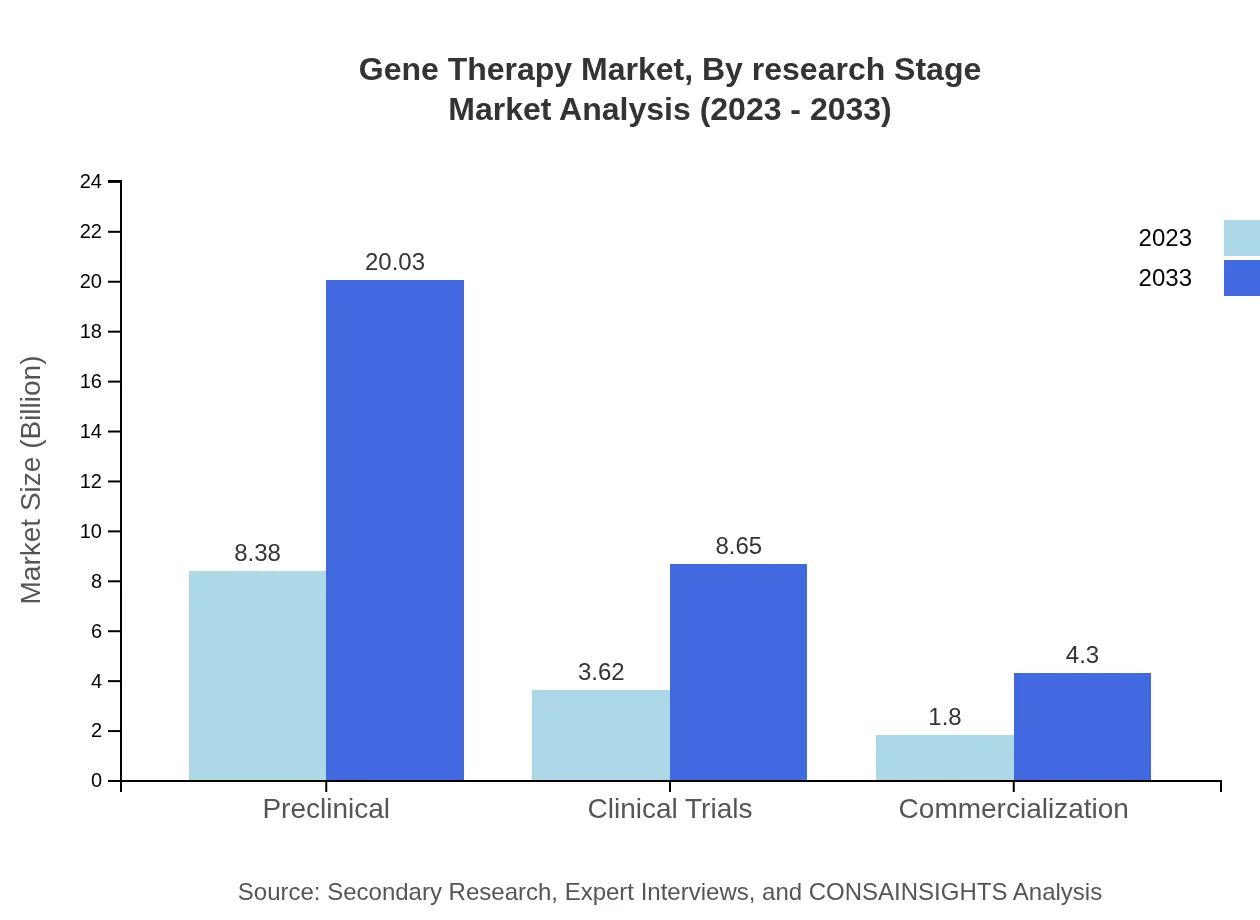
Research stages in the Gene Therapy market consist of Preclinical, Clinical Trials, and Commercialization. The Preclinical segment is projected to maintain a significant market size of $8.38 billion in 2023, while Clinical Trials and Commercialization follow with sizes of $3.62 billion and $1.80 billion. Growth is expected across all stages as therapies advance through development.
Gene Therapy Market Trends and Future Forecast
Tell us your focus area and get a customized research report.
Global Market Leaders and Top Companies in Gene Therapy Industry
Novartis:
A leading pharmaceutical company specializing in innovative therapies including CAR-T cell treatments, setting benchmarks in the Gene Therapy space.Gilead Sciences:
Known for their advancements in antiretroviral therapies, Gilead has also made significant investments in Gene Therapy, particularly for genetic disorders.Spark Therapeutics:
Pioneers in Gene Therapy with a focus on retinal diseases and hemophilia; Spark is known for its innovative approach towards treatment solutions.Bluebird Bio:
This biotechnology company focuses on developing gene therapies for genetic diseases, including sickle cell disease and beta-thalassemia, emphasizing the impact of gene modification.Sarepta Therapeutics:
Specializes in precision genetic medicine and has made significant contributions to therapies for rare diseases, particularly Duchenne muscular dystrophy.We're grateful to work with incredible clients.









FAQs
What is the market size of the Gene Therapy market in 2023?
The market size in 2023 is $13.80 Billion as reported for the Gene Therapy market.
How big is the market expected to be in 2033?
The market is projected to reach $32.98 Billion in 2033 according to the report's forecast.
What is CAGR of the market for the forecast period?
The compound annual growth rate (CAGR) for the 2023 to 2033 forecast period is 8.8%.
Is there a single fastest Growing region in the Gene Therapy Market Report market?
No single fastest-growing region is stated for the Gene Therapy Market Report market because the top regional implied CAGR values are within 0.15 percentage points of each other, making the ranking too close to call reliably.
Which companies are highlighted in the report?
Top companies listed include Novartis, Gilead Sciences, Spark Therapeutics, Bluebird Bio, and Sarepta Therapeutics.
What are the main therapy Type segments covered?
Therapy-type segments include Somatic Gene Therapy and Germline Gene Therapy as specified in the segmentation.
How are delivery methods categorized?
Delivery methods are categorized into Viral Vectors and Non-Viral Methods in the report's segmentation.
What end Users are included in the market segmentation?
End-user sub segments include Hospitals, Research Institutes, and Pharmaceutical Companies as listed in the input.
What research stages does the report analyze?
The report examines Preclinical, Clinical Trials, and Commercialization stages across the research-stage segmentation.
Why is the market expected to grow over the forecast period?
Growth is supported by technological improvements in delivery, expanding clinical trials, and collaborative industry activity that advance commercialization.