

Disposable Protective Clothing Market Report
First published: 11 October 2024 | Last updated: 25 May 2026 | Report Code: disposable-protective-clothing
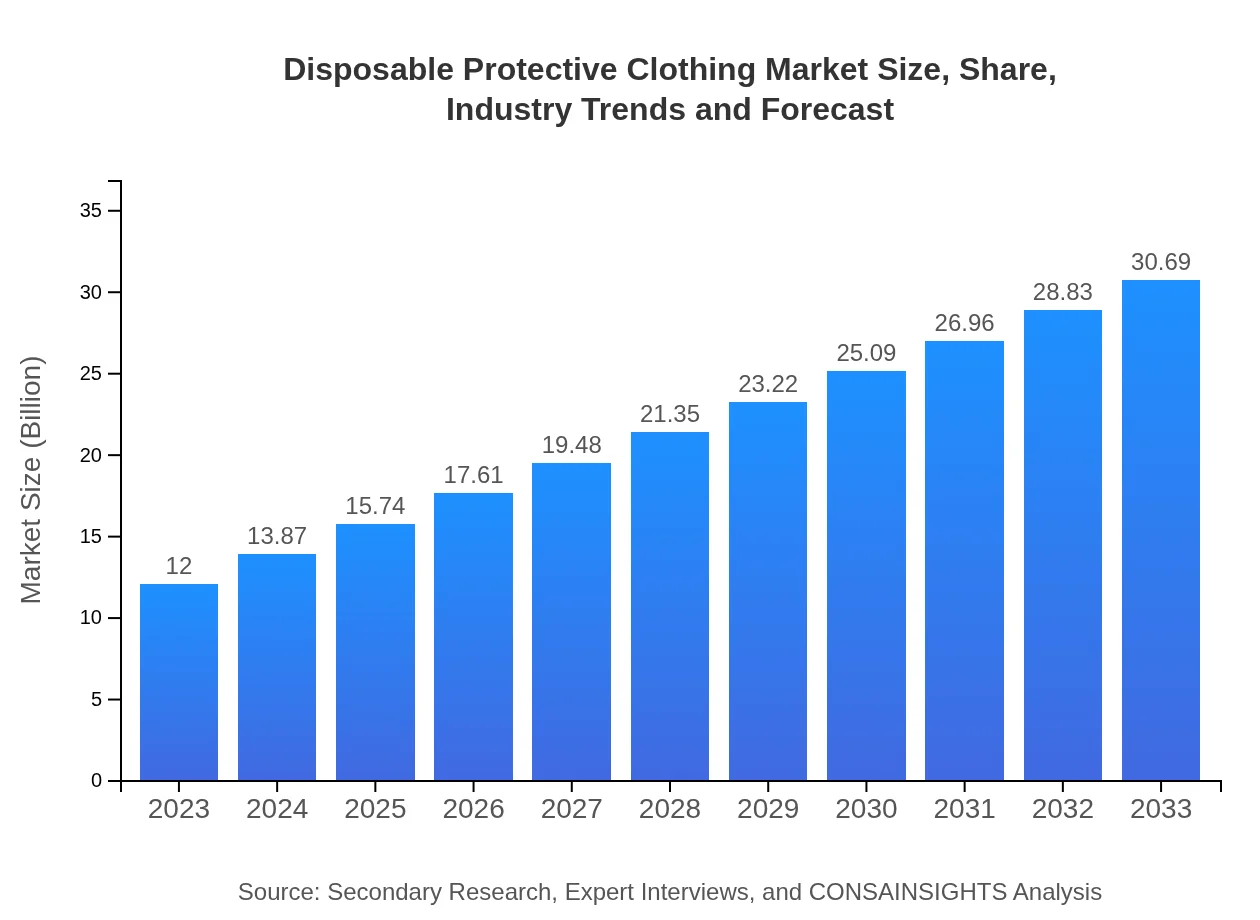
Disposable Protective Clothing Market — USD $12 Billion in 2023, Growing to USD 30.69null by 2033 at 9.5% CAGR
This report provides an in-depth analysis of the Disposable Protective Clothing market, covering insights on market size, trends, technology advancements, and regional dynamics over the forecast period from 2023 to 2033.
Key Takeaways
- Global market expands from $12.00 Billion in 2023 to $30.69 Billion in 2033 at a 9.5% CAGR.
- North America is largest regional market, while no single fastest-growing region is stated because regional CAGR differences remain within 0.15 percentage points.
- North America is the largest region, increasing from $4.38 Billion in 2023 to $11.2 Billion in 2033.
- Segment diversity spans gowns, coveralls, gloves and masks across healthcare, manufacturing and food industry end-users.
- Materials such as polypropylene and polyethylene remain central to product offerings and innovation.
- Major suppliers include 3M Company, DuPont, Lakeland Industries and Honeywell International.
Disposable Protective Clothing Market Report — Executive Summary
North America remains largest market by forecast-period value, while no single fastest-growing region is stated because top regional growth rates are separated by less than 0.15 percentage points. Demand for disposable protective clothing is driven by heightened hygiene protocols and safety regulations across healthcare, manufacturing and food sectors. The market stood at $12.00 Billion in 2023 and is forecast to reach $30.69 Billion by 2033 at a 9.5% CAGR. Product variety includes gowns, coveralls, gloves and masks produced from polypropylene, polyethylene and specialty fabrics. Distribution channels encompass online retail, offline retail and direct sales, supporting broad market access. Key players such as 3M Company, DuPont, Lakeland Industries and Honeywell International focus on material innovation and compliance with regulatory standards. Primary research comprised expert interviews, while secondary sources included company reports and publications; data triangulation and internal validation underpinned the analysis. Major forces shaping the sector are regulatory reinforcement, technological improvements in fabric performance and the need for user comfort and sanitation in critical end-use industries.
Key Growth Drivers
- Stricter health and safety regulations across healthcare and food sectors prompting greater adoption of single-use protection.
- Ongoing material innovations improving breathability, fluid resistance and user comfort, boosting product acceptance.
- Expanded distribution networks, including online retail, increase accessibility for institutional and individual buyers.
- Heightened hygiene awareness and sanitation protocols in manufacturing and service industries sustaining steady demand.
- Established manufacturers investing in product development and compliance to meet sector-specific standards.
| Metric | Value |
|---|---|
| Study Period | 2023 - 2033 |
| 2023 Market Size | $12.00 Billion |
| CAGR (2023-2033) | 9.5% |
| 2033 Market Size | $30.69 Billion |
| Top Companies | 3M Company, DuPont, Lakeland Industries, Honeywell International |
| Published Date | 11 October 2024 |
| Last Modified Date | 25 May 2026 |
Disposable Protective Clothing Market Overview
Customize Disposable Protective Clothing Market Report market research report
- ✔ Get in-depth analysis of Disposable Protective Clothing market size, growth, and forecasts.
- ✔ Understand Disposable Protective Clothing's regional dynamics and industry-specific trends.
- ✔ Identify potential applications, end-user demand, and growth segments in Disposable Protective Clothing
What is the Market Size & CAGR of Disposable Protective Clothing Market Report market in 2023?
Disposable Protective Clothing Industry Analysis
Disposable Protective Clothing Market Segmentation and Scope
Tell us your focus area and get a customized research report.
Disposable Protective Clothing Market Report Market Analysis Report by Region
Europe Disposable Protective Clothing Market Report:
Europe grows from $3.27 Billion in 2023 to $8.36 Billion in 2033. Growth is driven by reinforced regulatory frameworks, heightened sanitation standards in healthcare and food industries, and adoption of improved disposable materials.Asia Pacific Disposable Protective Clothing Market Report:
Asia Pacific grows from $2.5 Billion in 2023 to $6.39 Billion in 2033. Demand rises with expanding healthcare infrastructure, growing manufacturing activity and increased emphasis on workplace safety and hygiene practices.North America Disposable Protective Clothing Market Report:
North America is largest regional market, rising from $4.38 Billion in 2023 to $11.2 Billion in 2033. Regional expansion is underpinned by stringent healthcare protocols, strong institutional procurement, and investments by established suppliers.South America Disposable Protective Clothing Market Report:
Latin America grows from $1.15 Billion in 2023 to $2.95 Billion in 2033. Market development is supported by improving compliance with safety protocols, rising institutional procurement and broader availability through diverse distribution channels.Middle East & Africa Disposable Protective Clothing Market Report:
Middle East and Africa grows from $0.7 Billion in 2023 to $1.8 Billion in 2033. Uptake reflects increased focus on healthcare preparedness, sanitation measures and gradual expansion of supplier networks in the region.Tell us your focus area and get a customized research report.
Research Methodology
Disposable Protective Clothing Market Analysis By Product Type
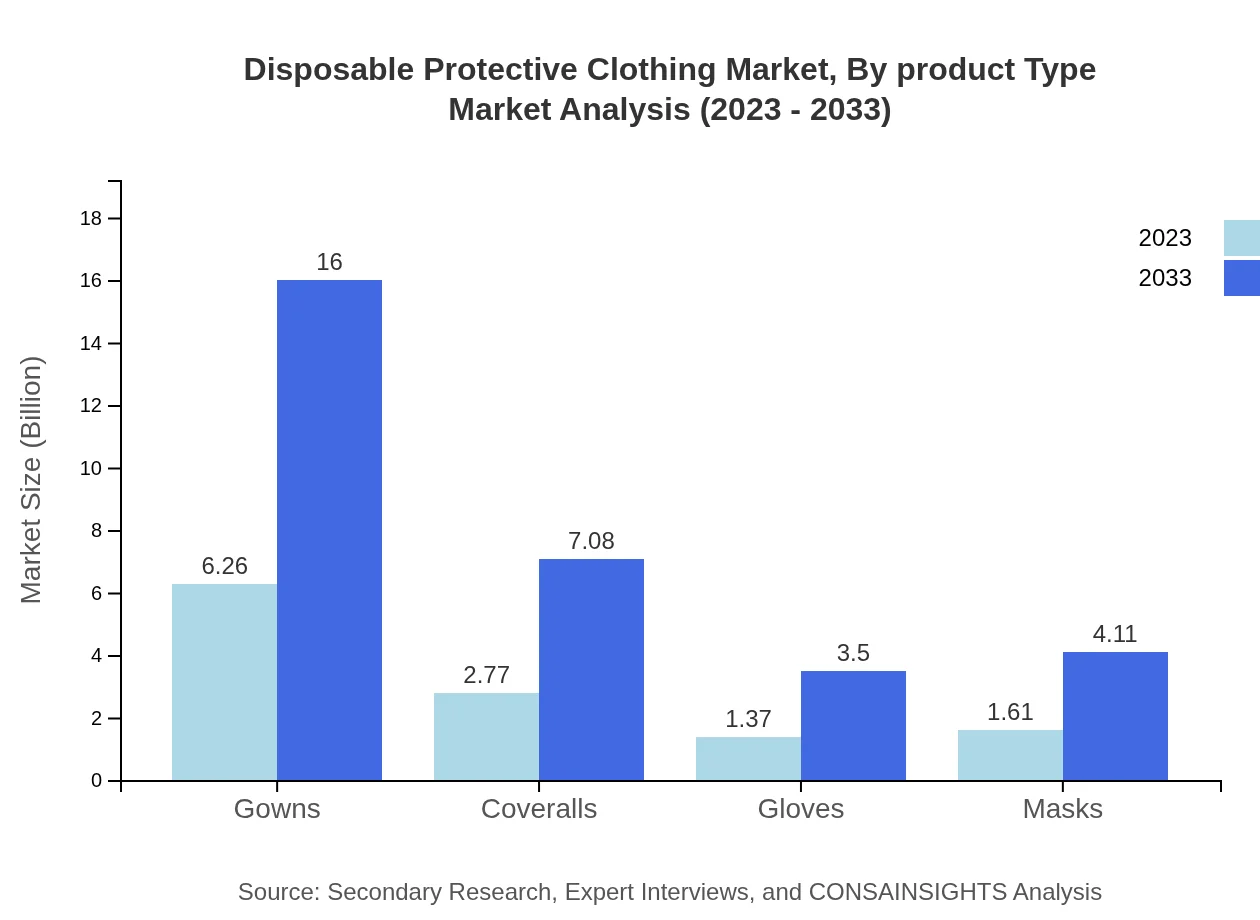
In 2023, gowns account for a significant segment valued at USD 6.26 billion, growing to USD 16.00 billion by 2033. Gloves and masks follow, with markets projected at USD 1.37 billion (USD 3.50 billion by 2033) and USD 1.61 billion (USD 4.11 billion by 2033) respectively. The continuous need for gowns especially in healthcare highlights their critical role in infection control.
Disposable Protective Clothing Market Analysis By Material
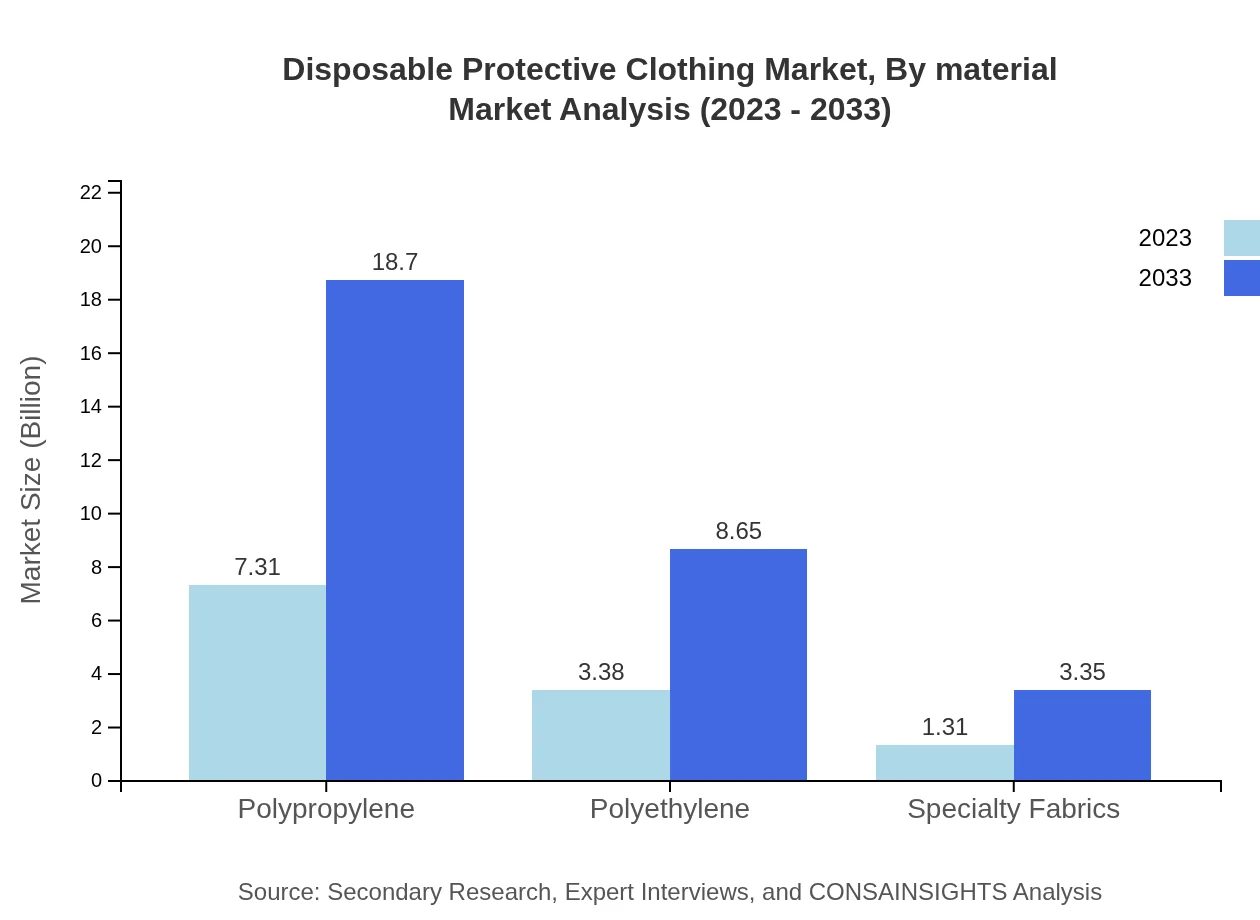
Polypropylene dominates the market with USD 7.31 billion in 2023 and is expected to grow to USD 18.70 billion by 2033. Polyethylene contributes significantly as well, starting at USD 3.38 billion and anticipated to reach USD 8.65 billion. Specialty fabrics, though smaller at USD 1.31 billion, are gaining traction due to their unique properties in specific applications.
Disposable Protective Clothing Market Analysis By End User
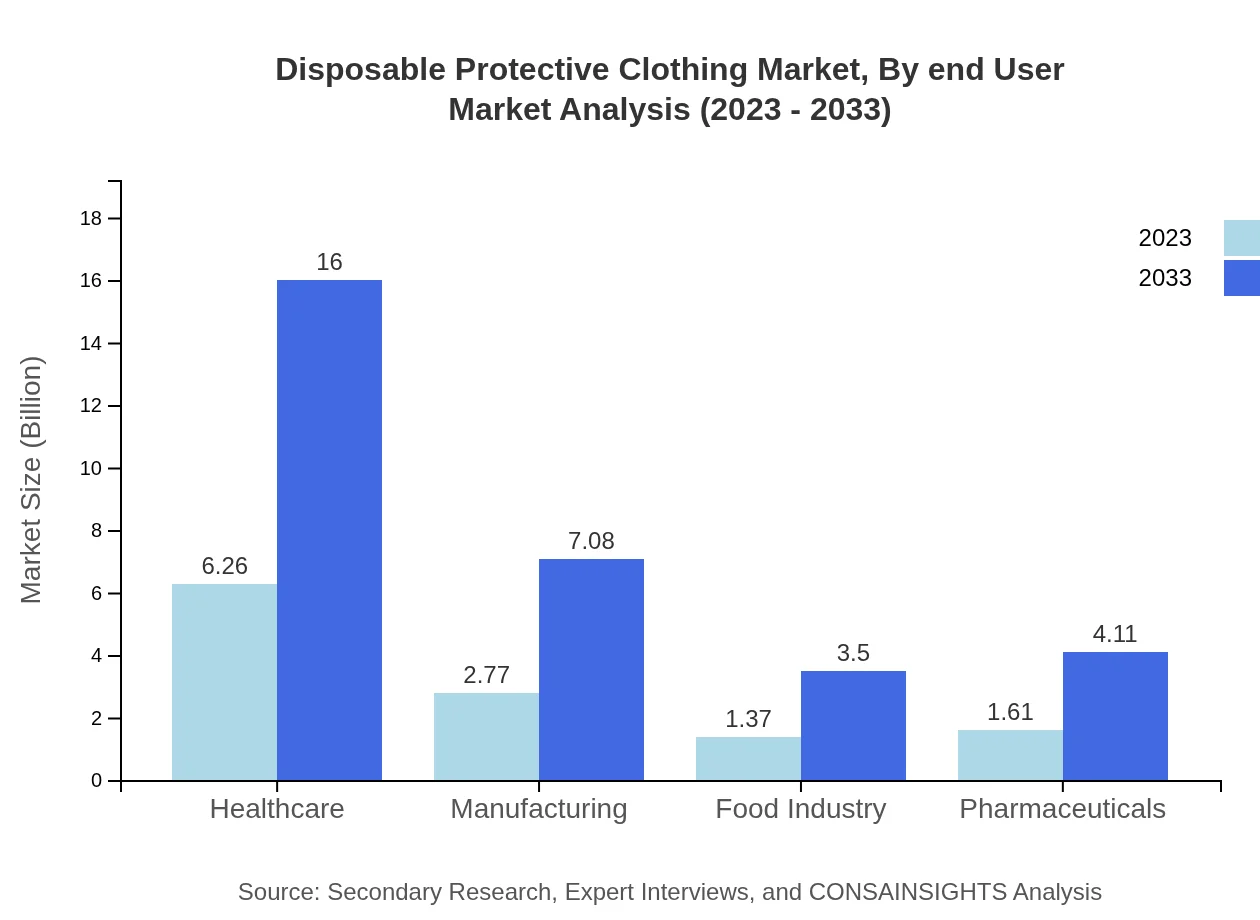
The healthcare sector leads the market with a size of USD 6.26 billion in 2023, projected to reach USD 16.00 billion by 2033. The manufacturing sector contributes USD 2.77 billion and is set to grow to USD 7.08 billion, while the food industry is growing from USD 1.37 billion to USD 3.50 billion, reflecting increasing safety mandates across these industries.
Disposable Protective Clothing Market Analysis By Distribution Channel
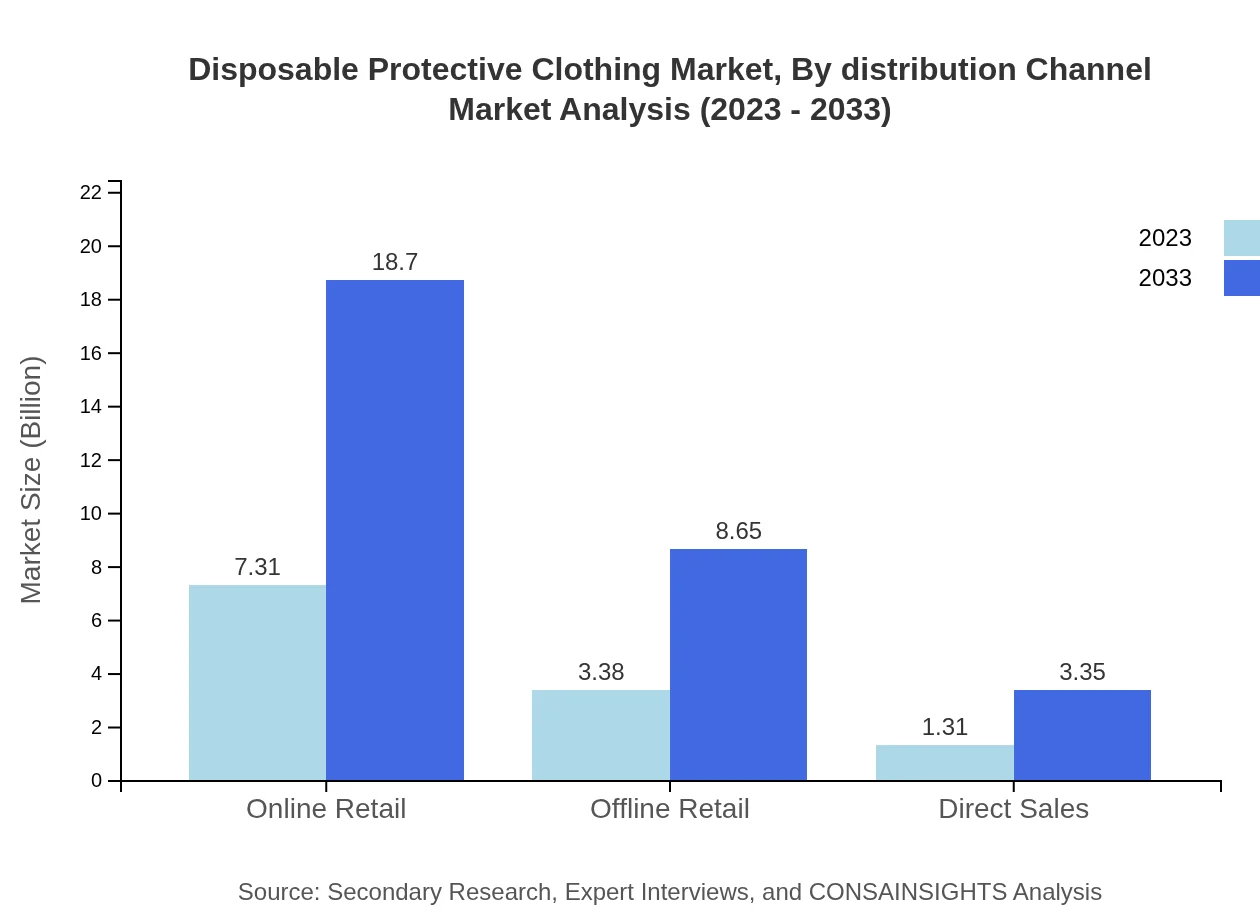
Online retail dominates with USD 7.31 billion in 2023, expected to rise to USD 18.70 billion. Growth in e-commerce, especially post-pandemic, has made protective clothing more accessible. Offline retail still plays a crucial role, starting at USD 3.38 billion, growing to USD 8.65 billion as traditional retailing remains essential.
Disposable Protective Clothing Market Trends and Future Forecast
Tell us your focus area and get a customized research report.
Global Market Leaders and Top Companies in Disposable Protective Clothing Industry
3M Company:
A leading provider of safety and protective equipment, known for its innovative approaches and sustainable solutions in protective clothing.DuPont:
Specializes in high-performance clothing materials for a variety of applications, including tyvek suits that are widely used in healthcare and industrial sectors.Lakeland Industries:
Focuses on the manufacturing of protective clothing with a significant footprint in the healthcare and industrial sectors, prioritizing quality and compliance.Honeywell International:
A diversified technology company that offers a wide range of safety products and protective clothing solutions for multiple industries.We're grateful to work with incredible clients.









FAQs
What is the current market size of the disposable protective clothing market?
The market size in 2023 is $12.00 Billion, based on the input data provided for the Disposable Protective Clothing Market Report.
How big is the market projected to be in 2033?
The forecasted market value for 2033 is $30.69 Billion according to the report's provided projections.
What is CAGR for the forecast period?
The specified compound annual growth rate (CAGR) for 2023 to 2033 is 9.5% as stated in the input.
Is there a single fastest Growing region in the Disposable Protective Clothing Market Report market?
No single fastest-growing region is stated for the Disposable Protective Clothing Market Report market because the top regional implied CAGR values are within 0.15 percentage points of each other, making the ranking too close to call reliably.
Who are the top companies operating in this market?
Top companies listed in the data include 3M Company, DuPont, Lakeland Industries and Honeywell International.
What are the main product categories covered?
Primary product types specified are gowns, coveralls, gloves and masks, reflecting common disposable protective clothing offerings.
Why are materials like polypropylene used widely?
Polypropylene and polyethylene are highlighted for their suitability in disposable protective garments due to cost-effectiveness and functional properties.
What end Users are included in the segmentation?
End-user segments specified include healthcare, manufacturing, food industry and pharmaceuticals as listed in the provided segment facts.
Which distribution channels are detailed?
Distribution channels noted are online retail, offline retail and direct sales, covering primary routes to market in the input data.
How was the research conducted for this report?
Research combined primary interviews with industry experts and secondary review of company reports and publications, plus data triangulation and validation.