
Reports >
Life Sciences
>
Alpha Emitter Market Report

Alpha Emitter Market Report
First published: 11 October 2024 | Last updated: 25 May 2026 | Report Code: alpha-emitter
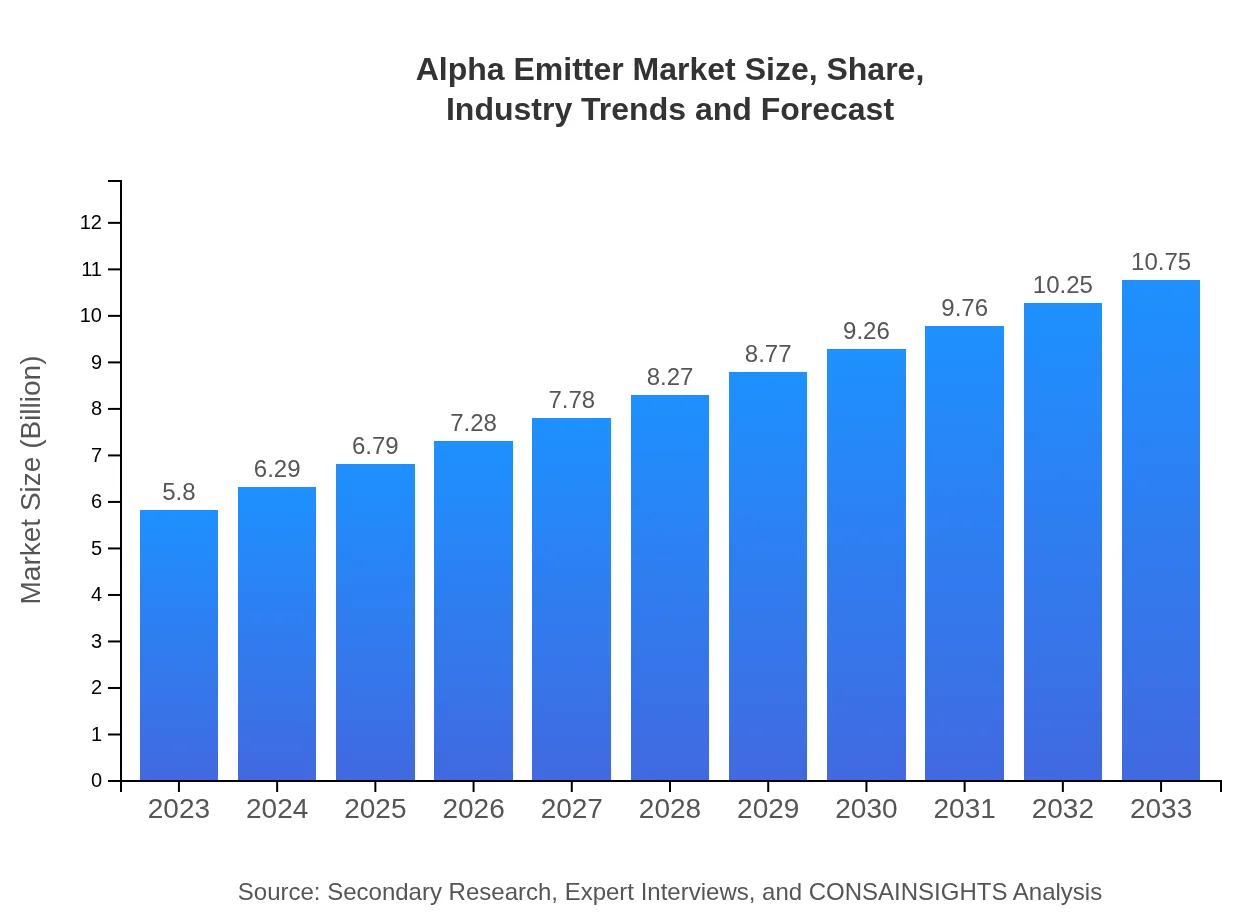
Alpha Emitter Market — USD 5.8 billion in 2023, Growing to USD 10.75B by 2033 at 6.2% CAGR
This report provides a comprehensive analysis of the Alpha Emitter market, exploring market size, CAGR, segmentation, regional insights, industry trends, and key players, along with forecasts for the years 2023 to 2033.
Key Takeaways
- Global market value rises from $5.80 Billion in 2023 to $10.75 Billion in 2033 at a 6.2% CAGR.
- North America is largest regional market, while no single fastest-growing region is stated because regional CAGR differences remain within 0.15 percentage points.
- Europe expands from $1.41 Billion to $2.60 Billion; Asia Pacific grows from $1.16 Billion to $2.15 Billion over the decade.
- Major firms shaping the sector include Bayer AG, Novartis, General Electric Company, Siemens Healthineers, and Elekta AB.
- Clinical adoption, advances in radiopharmaceuticals, and increased cancer research funding are key momentum drivers.
Alpha Emitter Market Report — Executive Summary
North America remains largest market by forecast-period value, while no single fastest-growing region is stated because top regional growth rates are separated by less than 0.15 percentage points. The report examines the Alpha Emitter market from 2023 to 2033, highlighting a rise from $5.80 Billion to $10.75 Billion at a 6.2% CAGR. Demand is driven by expanding use in targeted therapies and diagnostic workflows, supported by ongoing radiopharmaceutical development and collaborations between research institutes and industry. Regional dynamics show North America leading in value, with sustained growth across Europe, Asia Pacific, Latin America, and the Middle East and Africa. Key participants such as Bayer AG, Novartis, General Electric Company, Siemens Healthineers, and Elekta AB are investing in product development and clinical trials. The analysis covers end-user segments, technology types, application areas, and product categories, and outlines regulatory and production cost challenges that could influence adoption. The report is structured to provide market sizing, trend analysis, segmentation insights, and regional breakdowns to support strategic decision-making by stakeholders.
Key Growth Drivers
- Increased clinical adoption of targeted alpha therapies for oncology expands demand for alpha-emitting radiopharmaceuticals.
- Rising investment in radiopharmaceutical research and collaborations between research institutes and pharmaceutical firms accelerates innovation.
- Technological improvements in production, dosimetry, and treatment planning enhance therapeutic efficacy and broaden clinical use.
- Greater emphasis on early diagnosis and personalized treatment pathways boosts integration of alpha emitters in clinical protocols.
- Regulatory support for novel radiotherapies and increased funding for cancer research underpin market expansion.
| Metric | Value |
|---|---|
| Study Period | 2023 - 2033 |
| 2023 Market Size | $5.80 Billion |
| CAGR (2023-2033) | 6.2% |
| 2033 Market Size | $10.75 Billion |
| Top Companies | Bayer AG, Novartis, General Electric Company, Siemens Healthineers, Elekta AB |
| Published Date | 11 October 2024 |
| Last Modified Date | 25 May 2026 |
Alpha Emitter Market Overview
Customize Alpha Emitter Market Report market research report
- ✔ Get in-depth analysis of Alpha Emitter market size, growth, and forecasts.
- ✔ Understand Alpha Emitter's regional dynamics and industry-specific trends.
- ✔ Identify potential applications, end-user demand, and growth segments in Alpha Emitter
What is the Market Size & CAGR of Alpha Emitter Market Report market in 2023?
Alpha Emitter Industry Analysis
Alpha Emitter Market Segmentation and Scope
Tell us your focus area and get a customized research report.
Alpha Emitter Market Report Market Analysis Report by Region
Europe Alpha Emitter Market Report:
Europe grows from $1.41 Billion in 2023 to $2.6 Billion in 2033. Regional momentum is supported by increasing radiopharmaceutical research, regulatory frameworks enabling clinical trials, and collaborations between research institutes and pharmaceutical companies.Asia Pacific Alpha Emitter Market Report:
Asia Pacific grows from $1.16 Billion in 2023 to $2.15 Billion in 2033. Growth drivers include expanding cancer research initiatives, rising clinical adoption, and investment in treatment planning and radiopharmaceutical capabilities.North America Alpha Emitter Market Report:
North America is largest regional market, rising from $2.11 Billion in 2023 to $3.92 Billion in 2033. Expansion reflects strong clinical adoption of targeted therapies, concentrated research funding, and active participation by major firms in development and trials.South America Alpha Emitter Market Report:
Latin America grows from $0.44 Billion in 2023 to $0.82 Billion in 2033. Development is driven by growing awareness of advanced cancer therapies, incremental clinical adoption, and partnerships that aim to improve access to radiopharmaceuticals.Middle East & Africa Alpha Emitter Market Report:
Middle East and Africa grows from $0.68 Billion in 2023 to $1.26 Billion in 2033. Regional gains stem from increased emphasis on oncology research, gradual clinical uptake, and initiatives to enhance diagnostic and therapeutic infrastructure.Tell us your focus area and get a customized research report.
Research Methodology
Alpha Emitter Market Analysis By Product Type
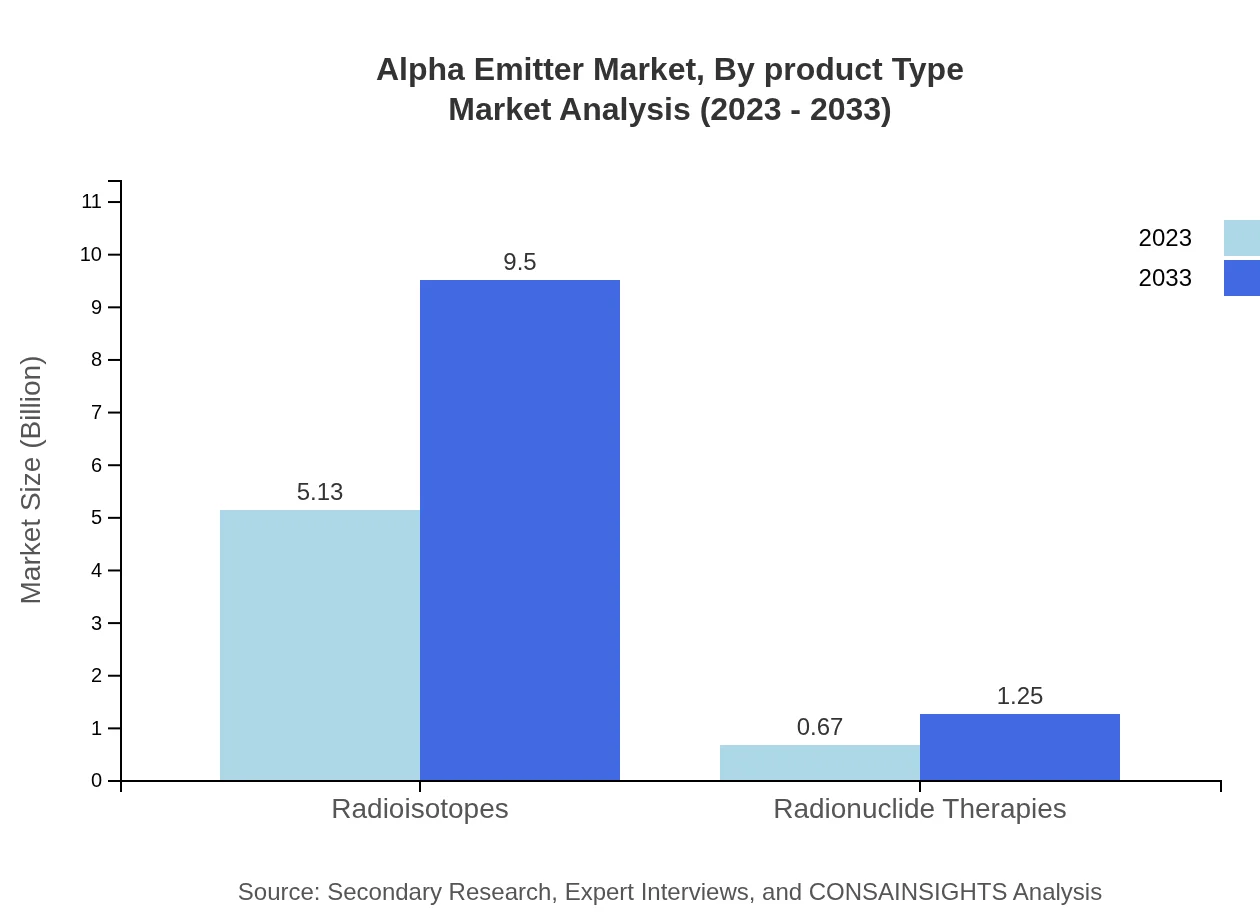
The market segment for product types includes Conventional Technologies and Novel Therapies. By 2033, conventional technologies are expected to dominate the market, projected to grow from $5.13 billion in 2023 to $9.50 billion due to their established presence in therapeutic workflows. In contrast, novel therapies are also on the rise, predicted to grow from $0.67 billion to $1.25 billion, driven by advancements in precision medicine.
Alpha Emitter Market Analysis By Application
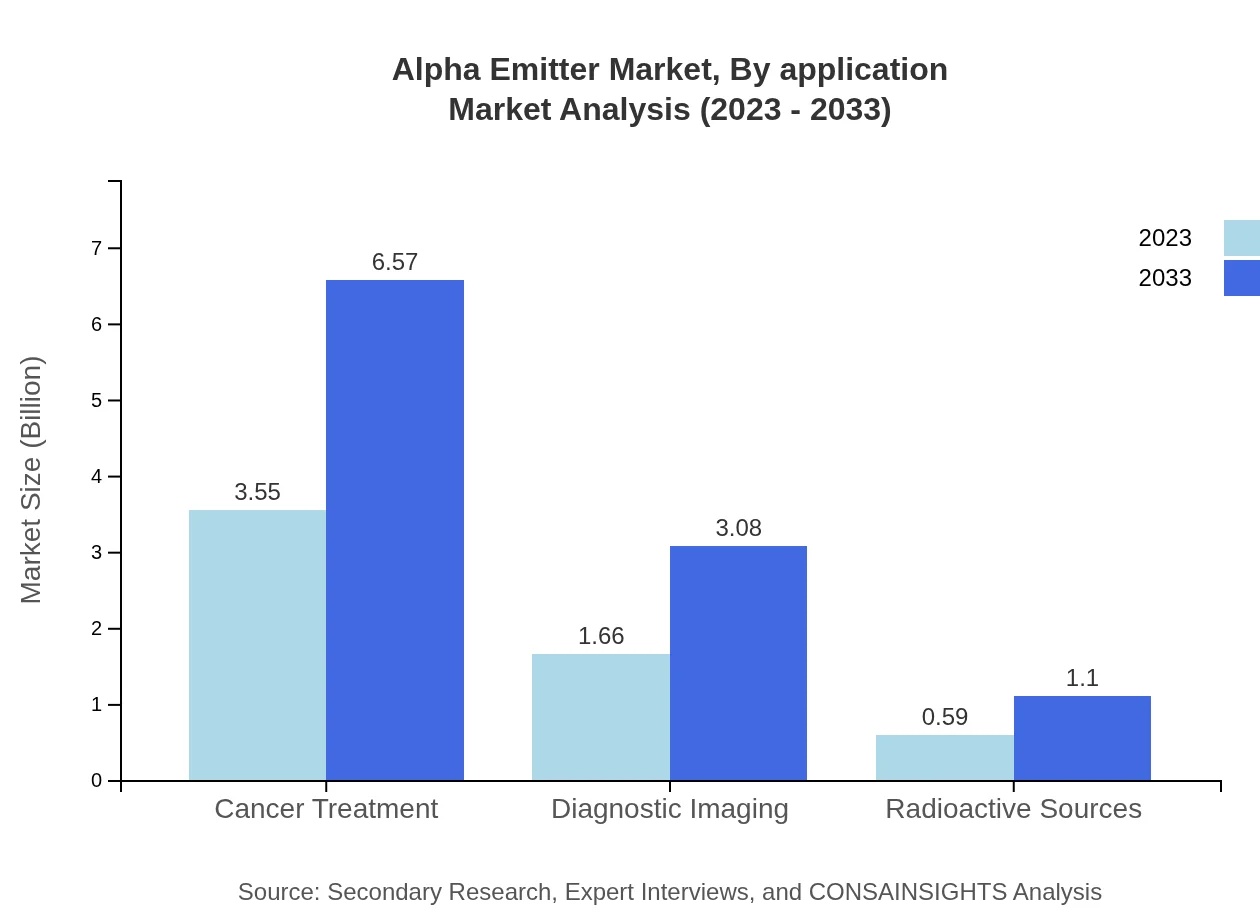
In applications, Cancer Treatment is projected to remain the largest segment, valued at $3.55 billion in 2023 and expected to reach $6.57 billion by 2033. Diagnostic Imaging is anticipated to follow, increasing from $1.66 billion to $3.08 billion, reflecting the continuous integration of radiopharmaceuticals in medical imaging.
Alpha Emitter Market Analysis By End User
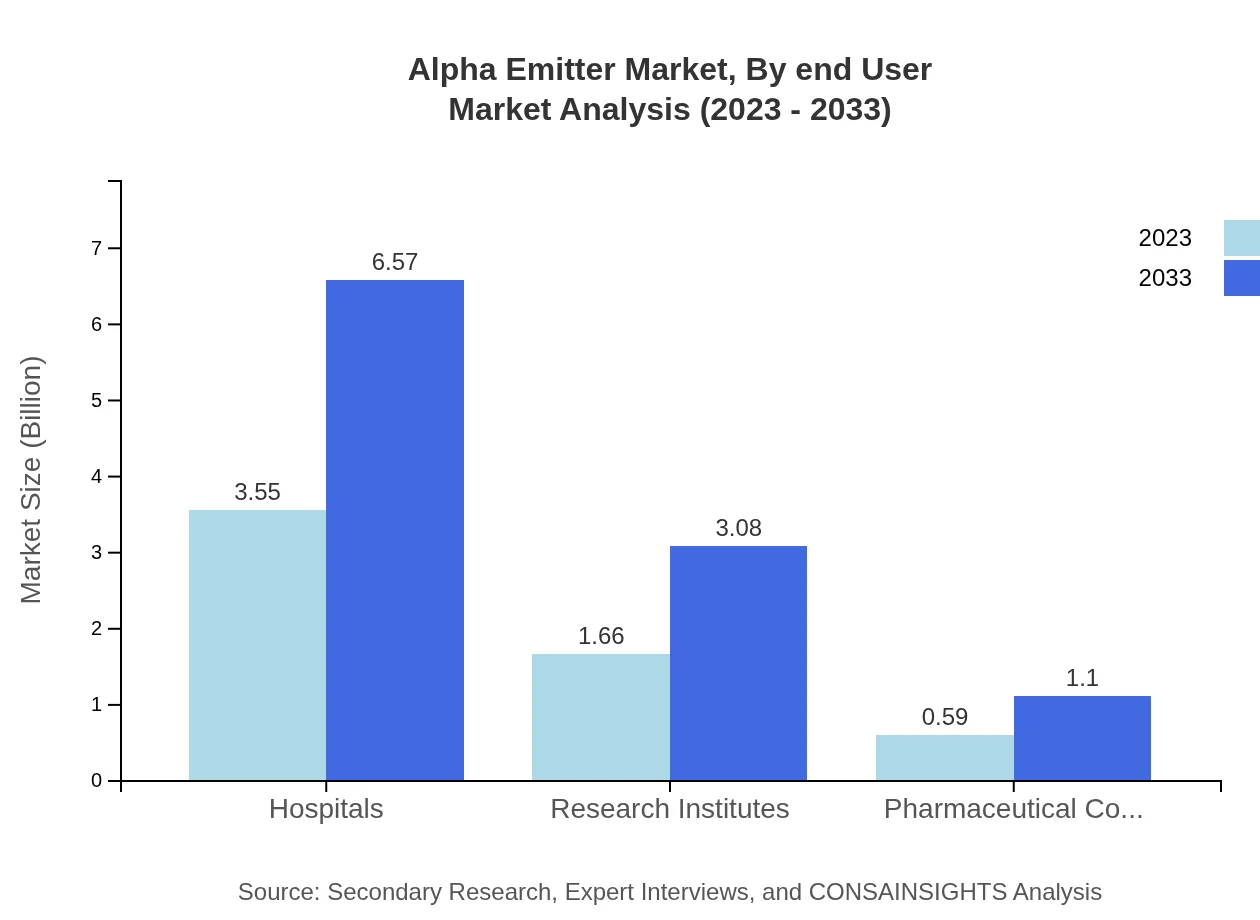
Hospitals are the predominant end-users, expected to grow from $3.55 billion to $6.57 billion by 2033. Research Institutes and Pharmaceutical Companies also represent significant market shares, with revenues projected to rise from $1.66 billion to $3.08 billion and $0.59 billion to $1.10 billion, respectively.
Alpha Emitter Market Analysis By Technology
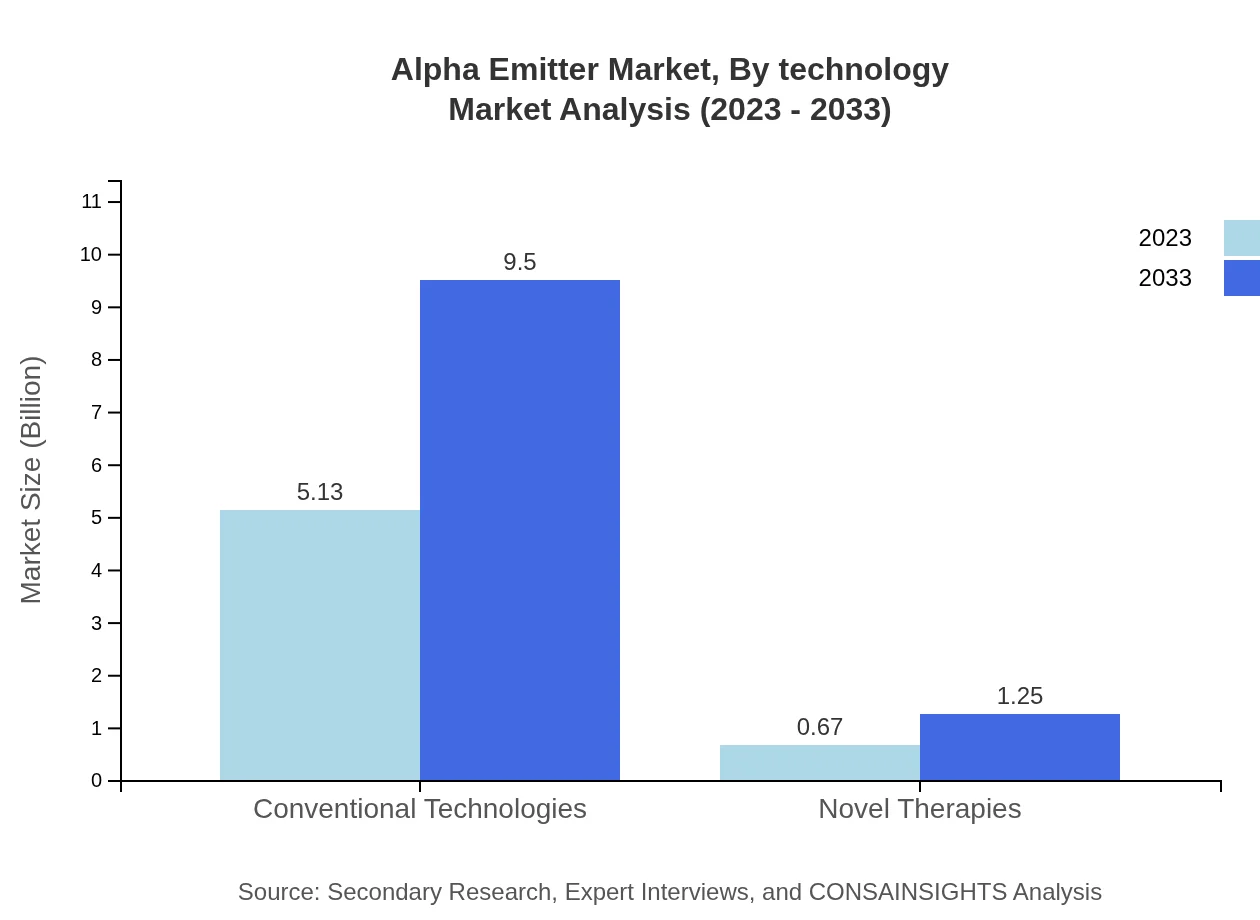
The market's technological landscape is split between Conventional Technologies and Novel Therapies. Conventional Technologies will maintain a large share, growing from $5.13 billion in 2023 to $9.50 billion, while Novel Therapies will gradually carve out their niche, expanding from $0.67 billion to $1.25 billion.
Alpha Emitter Market Trends and Future Forecast
Tell us your focus area and get a customized research report.
Global Market Leaders and Top Companies in the Alpha Emitter Industry
Bayer AG:
A leading global enterprise specializing in pharmaceuticals, Bayer has made significant advancements in radiopharmaceuticals, focusing on targeted cancer therapies utilizing alpha emitters.Novartis:
Known for its innovative approach in treatment solutions, Novartis has embraced the use of alpha emitters in its oncology pipeline, contributing to the enhanced efficacy of cancer treatments.General Electric Company:
GE Healthcare is at the forefront of diagnostic imaging solutions, integrating alpha emitter technologies to advance molecular imaging and therapy.Siemens Healthineers:
Siemens is a prominent player providing comprehensive healthcare solutions, focusing on harnessing alpha emitters for therapeutic advancements in oncology.Elekta AB:
Elekta is recognized for its innovative cancer treatment solutions and is actively engaged in the development of novel therapies using alpha emitters.We're grateful to work with incredible clients.









FAQs
What is the market size of the Alpha Emitter market in 2023?
The reported market size for 2023 is $5.80 Billion, based on published market estimates included in the report.
How big will the market be in 2033?
By 2033 the market is projected to reach $10.75 Billion according to the forecast provided in the report.
What is CAGR for the forecast period?
The forecast period from 2023 to 2033 carries an implied CAGR of 6.2% as stated in the market data.
Is there a single fastest Growing region in the Alpha Emitter Market Report market?
No single fastest-growing region is stated for the Alpha Emitter Market Report market because the top regional implied CAGR values are within 0.15 percentage points of each other, making the ranking too close to call reliably.
Which companies are identified as top players?
Top companies named include Bayer AG, Novartis, General Electric Company, Siemens Healthineers, and Elekta AB in the competitive landscape.
What applications drive demand for alpha emitters?
Primary applications include cancer treatment and diagnostic imaging, with alpha emitters increasingly used in targeted therapies and related clinical workflows.
Who contributes to market research methodology?
Research draws on primary interviews with industry experts and secondary sources such as company reports, with data triangulation and internal validation.
How big is the Europe market in 2023 and 2033?
Europe's market value is reported as $1.41 Billion in 2023, growing to $2.60 Billion by 2033 per the regional data.
What is driving technological progress in the sector?
Advances stem from radiopharmaceutical R&D, improved dosimetry and treatment planning, and collaborations that enhance safety and availability.
Why are production costs a concern?
High production costs for radiopharmaceuticals and stringent regulatory requirements can limit manufacturing scale and affect pricing and access.