

Anti Hypertensive Drugs Market Report
First published: 10 October 2024 | Last updated: 25 May 2026 | Report Code: anti-hypertensive-drugs
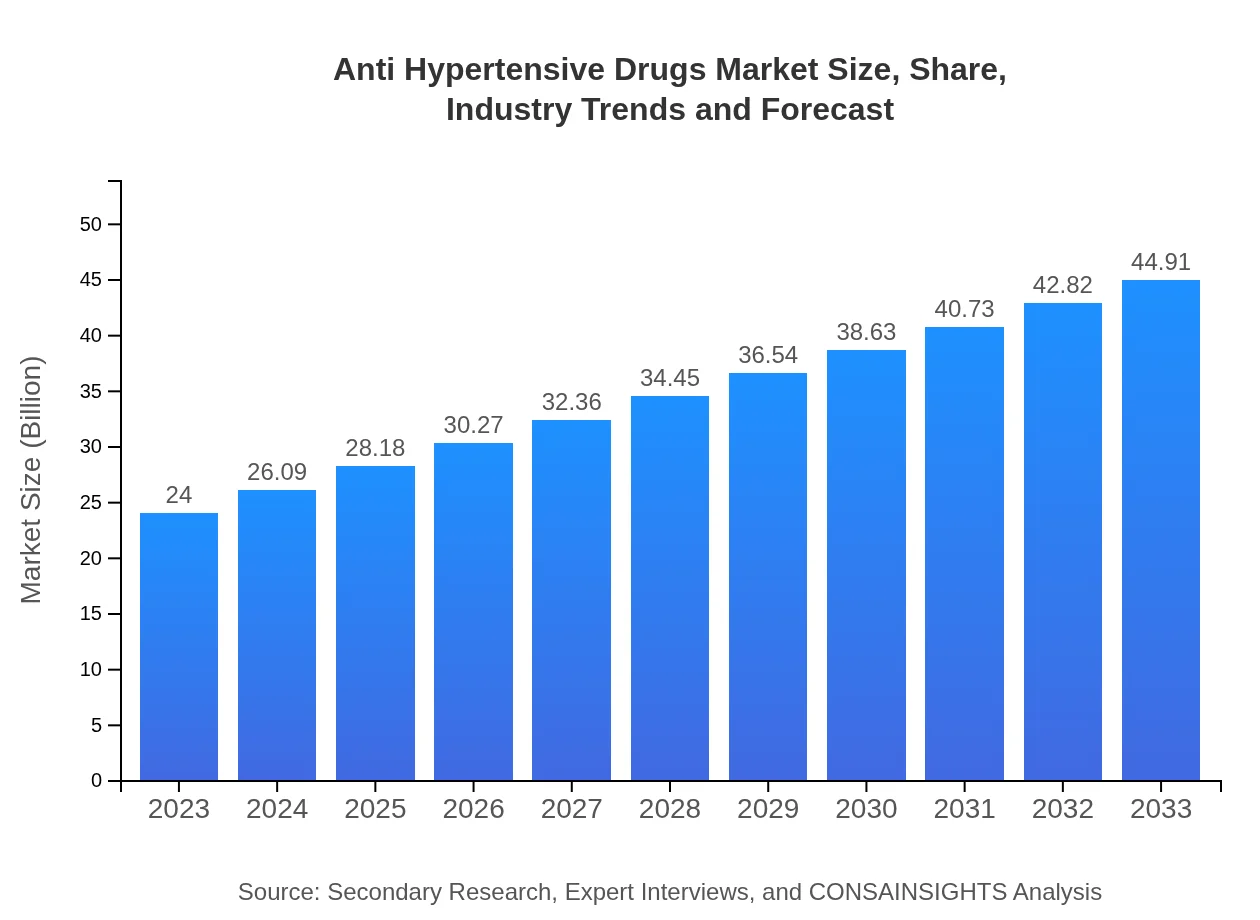
Anti Hypertensive Drugs Market — USD $24 Billion in 2023, Growing to USD 44.91null by 2033 at 6.3% CAGR
This report offers a comprehensive analysis of the Anti Hypertensive Drugs market, detailing market trends, size, segmentation, and forecasts for the period from 2023 to 2033. Insights into regional performance and industry advancements are also included.
Key Takeaways
- Global market value rises from $24.00 Billion in 2023 to $44.91 Billion in 2033 at a 6.3% CAGR.
- North America is largest regional market, while no single fastest-growing region is stated because regional CAGR differences remain within 0.15 percentage points.
- Europe grows from $6.52 Billion in 2023 to $12.19 Billion in 2033, reflecting sustained regional demand.
- Asia Pacific expands from $4.84 Billion in 2023 to $9.06 Billion in 2033 amid evolving treatment access.
- Top vendors include Pfizer Inc., Novartis AG, AstraZeneca, Sanofi, and Bristol Myers Squibb.
Anti Hypertensive Drugs Market Report — Executive Summary
North America remains largest market by forecast-period value, while no single fastest-growing region is stated because top regional growth rates are separated by less than 0.15 percentage points. The Anti Hypertensive Drugs market demonstrates steady expansion driven by growing clinical need and broader treatment access. Rising prevalence of hypertension, demographic shifts, and improved distribution channels support demand. Market structure is diverse, spanning drug classes such as Thiazide Diuretics, Beta-Blockers, ACE Inhibitors, and ARBs, with formulations including tablets, injectables, and transdermal patches. By-end-user settings range from hospitals and clinics to home care, supplied through hospital pharmacies, retail outlets, and online pharmacies. North America is the largest regional market, while no single regional market region is named due to closely aligned regional growth rates. Key participants include Pfizer Inc., Novartis AG, AstraZeneca, Sanofi, and Bristol Myers Squibb. Strategic priorities for stakeholders involve addressing generic competition, optimizing formulation and delivery, and targeting patient adherence through fixed-dose combinations and service-led distribution improvements.
Key Growth Drivers
- Increasing global prevalence of hypertension expanding demand for long-term therapies.
- Broader patient access through hospital, retail, and online pharmacy channels.
- Ongoing product innovation in formulations and delivery methods to improve adherence.
- Aging populations and related comorbidities that elevate treatment requirements.
- Investment by leading companies in research and development for new antihypertensive options.
| Metric | Value |
|---|---|
| Study Period | 2023 - 2033 |
| 2023 Market Size | $24.00 Billion |
| CAGR (2023-2033) | 6.3% |
| 2033 Market Size | $44.91 Billion |
| Top Companies | Pfizer Inc., Novartis AG, AstraZeneca, Sanofi, Bristol Myers Squibb |
| Published Date | 10 October 2024 |
| Last Modified Date | 25 May 2026 |
Anti Hypertensive Drugs Market Overview
Customize Anti Hypertensive Drugs Market Report market research report
- ✔ Get in-depth analysis of Anti Hypertensive Drugs market size, growth, and forecasts.
- ✔ Understand Anti Hypertensive Drugs's regional dynamics and industry-specific trends.
- ✔ Identify potential applications, end-user demand, and growth segments in Anti Hypertensive Drugs
What is the Market Size & CAGR of Anti Hypertensive Drugs Market Report market in 2023?
Anti Hypertensive Drugs Industry Analysis
Anti Hypertensive Drugs Market Segmentation and Scope
Tell us your focus area and get a customized research report.
Anti Hypertensive Drugs Market Report Market Analysis Report by Region
Europe Anti Hypertensive Drugs Market Report:
Europe grows from $6.52 Billion in 2023 to $12.19 Billion in 2033. This expansion reflects steady demand, extensive clinical adoption of multiple drug classes, and evolving distribution through hospitals and retail pharmacies.Asia Pacific Anti Hypertensive Drugs Market Report:
Asia Pacific grows from $4.84 Billion in 2023 to $9.06 Billion in 2033. Growth drivers include increasing treatment access, larger patient populations, and rising healthcare investment across regional markets.North America Anti Hypertensive Drugs Market Report:
North America is largest regional market, rising from $7.77 Billion in 2023 to $14.53 Billion in 2033. Regional expansion is supported by established healthcare infrastructure, broad access to prescription therapy, and active participation from major pharmaceutical companies.South America Anti Hypertensive Drugs Market Report:
Latin America grows from $1.55 Billion in 2023 to $2.91 Billion in 2033. Market progress is influenced by improving healthcare delivery, greater availability of antihypertensive therapies, and expanding pharmacy networks.Middle East & Africa Anti Hypertensive Drugs Market Report:
Middle East and Africa grows from $3.32 Billion in 2023 to $6.22 Billion in 2033. Growth is associated with enhanced healthcare infrastructure, growing diagnosis rates, and wider distribution through institutional and retail channels.Tell us your focus area and get a customized research report.
Research Methodology
Anti Hypertensive Drugs Market Analysis By Drug Class
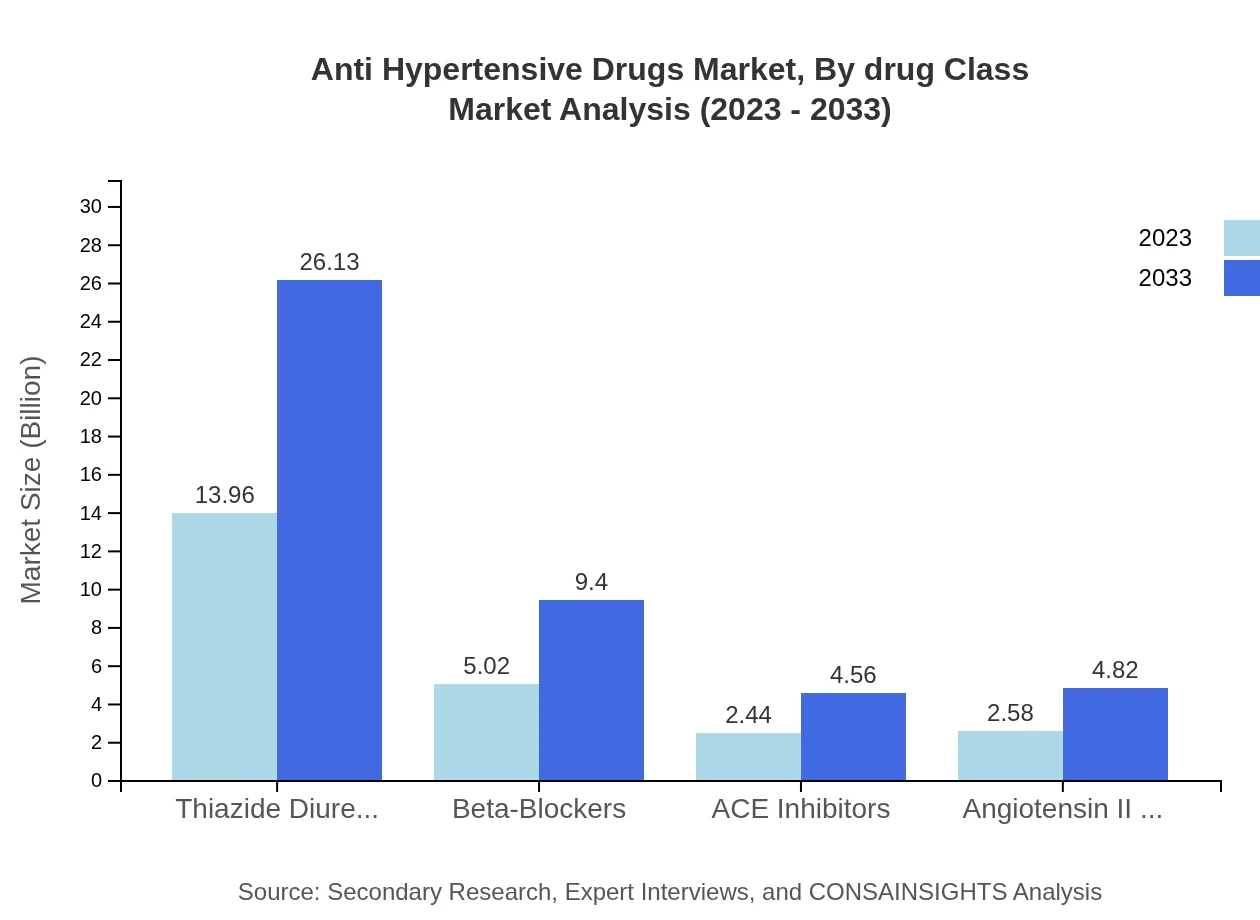
In 2023, the Anti-Hypertensive Drugs market, segmented by drug class, shows that thiazide diuretics dominate with a size of $13.96 billion representing 58.18% market share. Other classes, such as beta-blockers and ACE inhibitors, hold significant shares of 20.93% and 10.15% respectively.
Anti Hypertensive Drugs Market Analysis By Mechanism Of Action
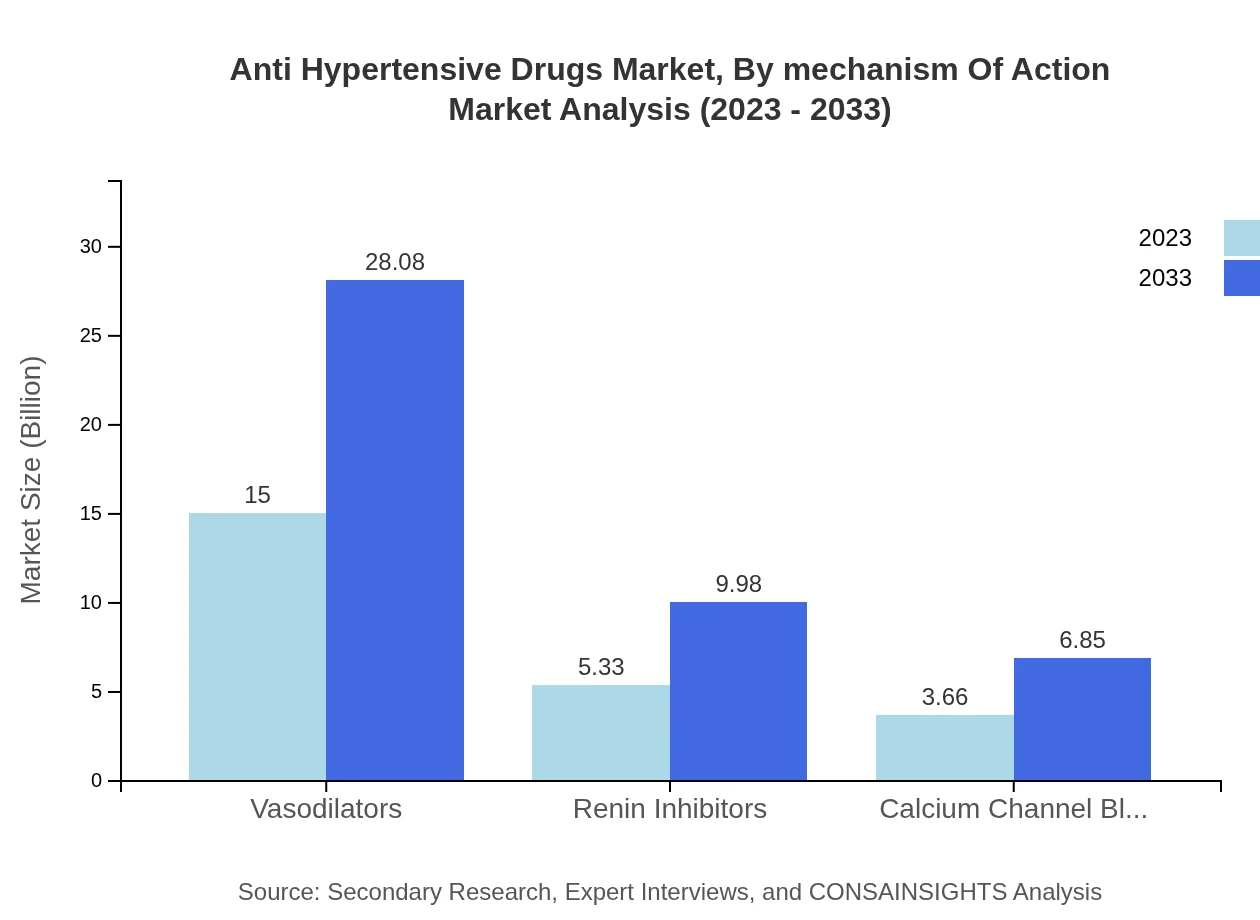
The mechanism of action segment categorically includes agents acting on different paths like diuretics, which focus on fluid management and vasodilators, aimed at relaxing blood vessels. Each class offers distinctive advantages based on patient needs and hypertension severity.
Anti Hypertensive Drugs Market Analysis By Formulation
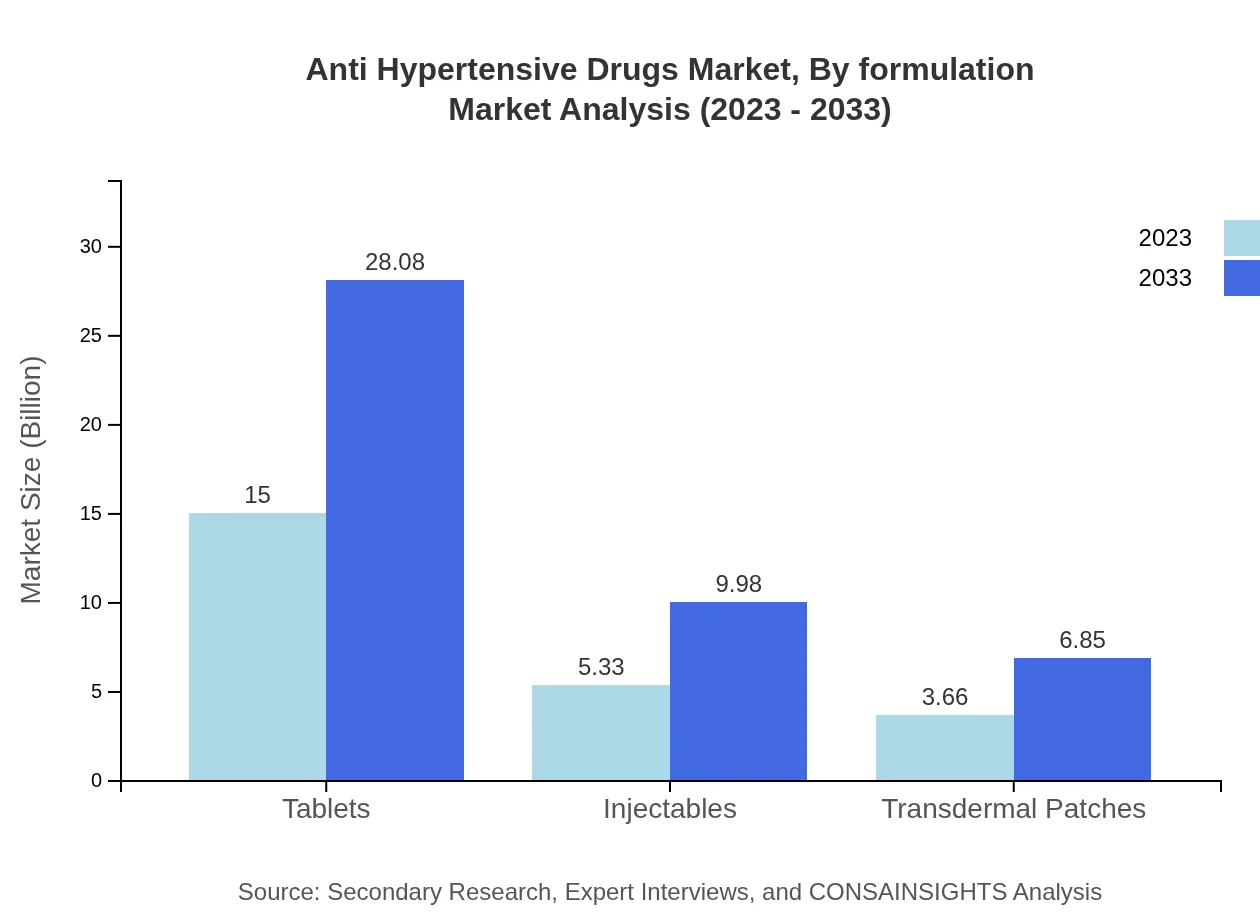
Oral formulations, predominantly tablets, occupy a market size of $15.00 billion with a 62.52% market share in 2023. Injectables and other formulations are also on the rise owing to the push for improved drug delivery systems.
Anti Hypertensive Drugs Market Analysis By Distribution Channel
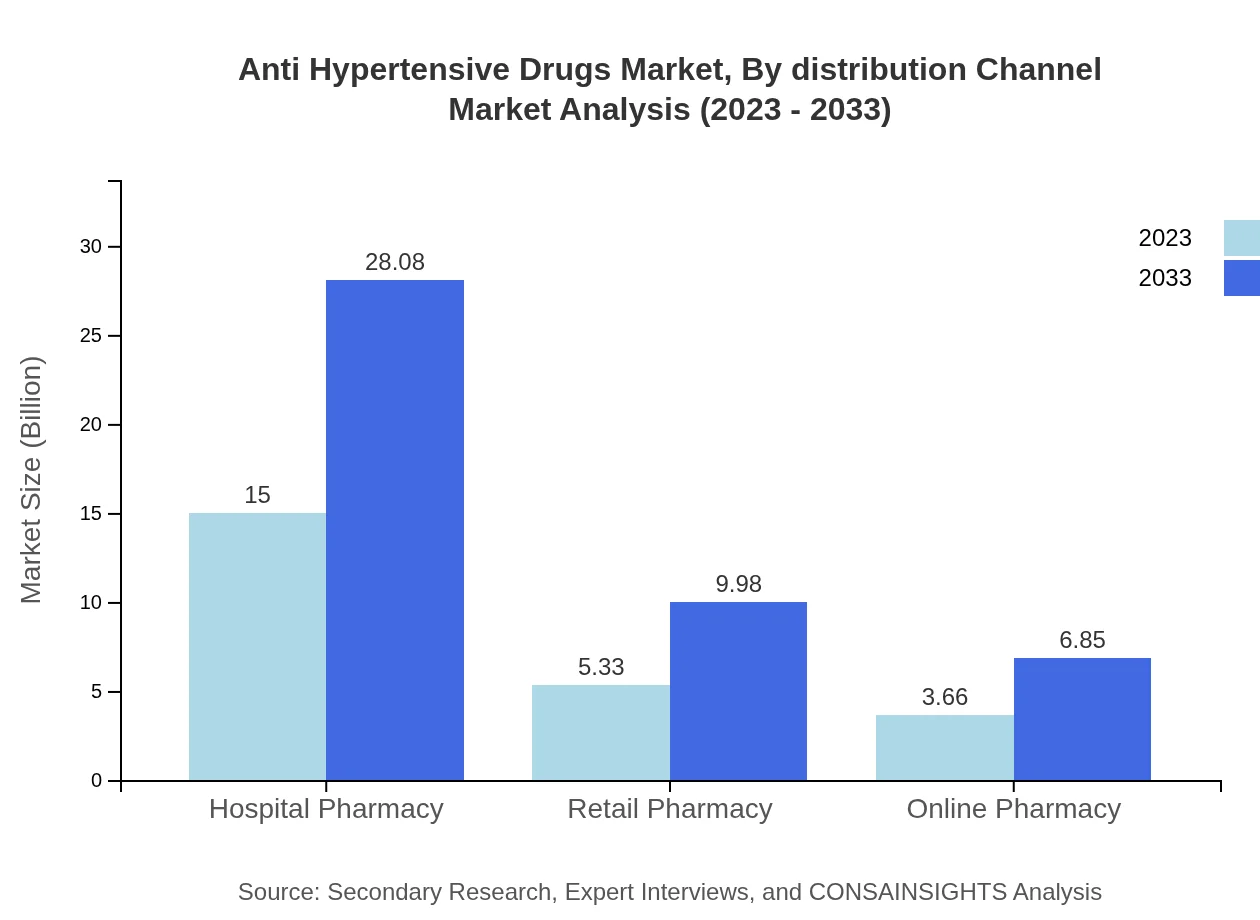
Hospitals are the primary channel for distribution, commanding a market size of $15.00 billion, while retail and online pharmacies provide additional avenues for distribution, witnessing increasing consumer preferences for prescription pickups.
Anti Hypertensive Drugs Market Trends and Future Forecast
Tell us your focus area and get a customized research report.
Global Market Leaders and Top Companies in Anti Hypertensive Drugs Industry
Pfizer Inc.:
A leader in the pharmaceuticals sector, Pfizer has developed a broad range of anti-hypertensive therapies that encompass multiple drug classes, contributing significantly to hypertension management globally.Novartis AG:
Known for its extensive portfolio in cardiovascular drugs, Novartis continues to innovate with comprehensive hypertension solutions, focusing on personalized medicine approaches.AstraZeneca:
AstraZeneca is recognized for its contributions to the cardiovascular segment, offering various effective anti-hypertensive medications, including newer combination therapies.Sanofi:
Sanofi invests substantially in research, creating a diverse range of antihypertensive drugs tailored to different patient populations and needs.Bristol Myers Squibb:
With its commitment to tackling cardiovascular diseases, Bristol Myers Squibb plays a pivotal role in anti-hypertensive drug development and dissemination.We're grateful to work with incredible clients.








FAQs
What is the market size of the anti hypertensive drugs market in 2023?
The market size in 2023 is $24.00 Billion, based on the provided market valuation for that year.
How big will the market be in 2033?
The market is projected to reach $44.91 Billion by 2033 according to the forecast figures supplied.
What is CAGR for the forecast period?
The reported compound annual growth rate (CAGR) for 2023 to 2033 is 6.3%.
Is there a single fastest Growing region in the Anti Hypertensive Drugs Market Report market?
No single fastest-growing region is stated for the Anti Hypertensive Drugs Market Report market because the top regional implied CAGR values are within 0.15 percentage points of each other, making the ranking too close to call reliably.
Which major companies operate in this market?
Top companies listed include Pfizer Inc., Novartis AG, AstraZeneca, Sanofi, and Bristol Myers Squibb.
What are common drug classes included?
The market includes drug classes such as Thiazide Diuretics, Beta-Blockers, ACE Inhibitors, and Angiotensin II Receptor Blockers (ARBs).
Who are the primary end users in this market?
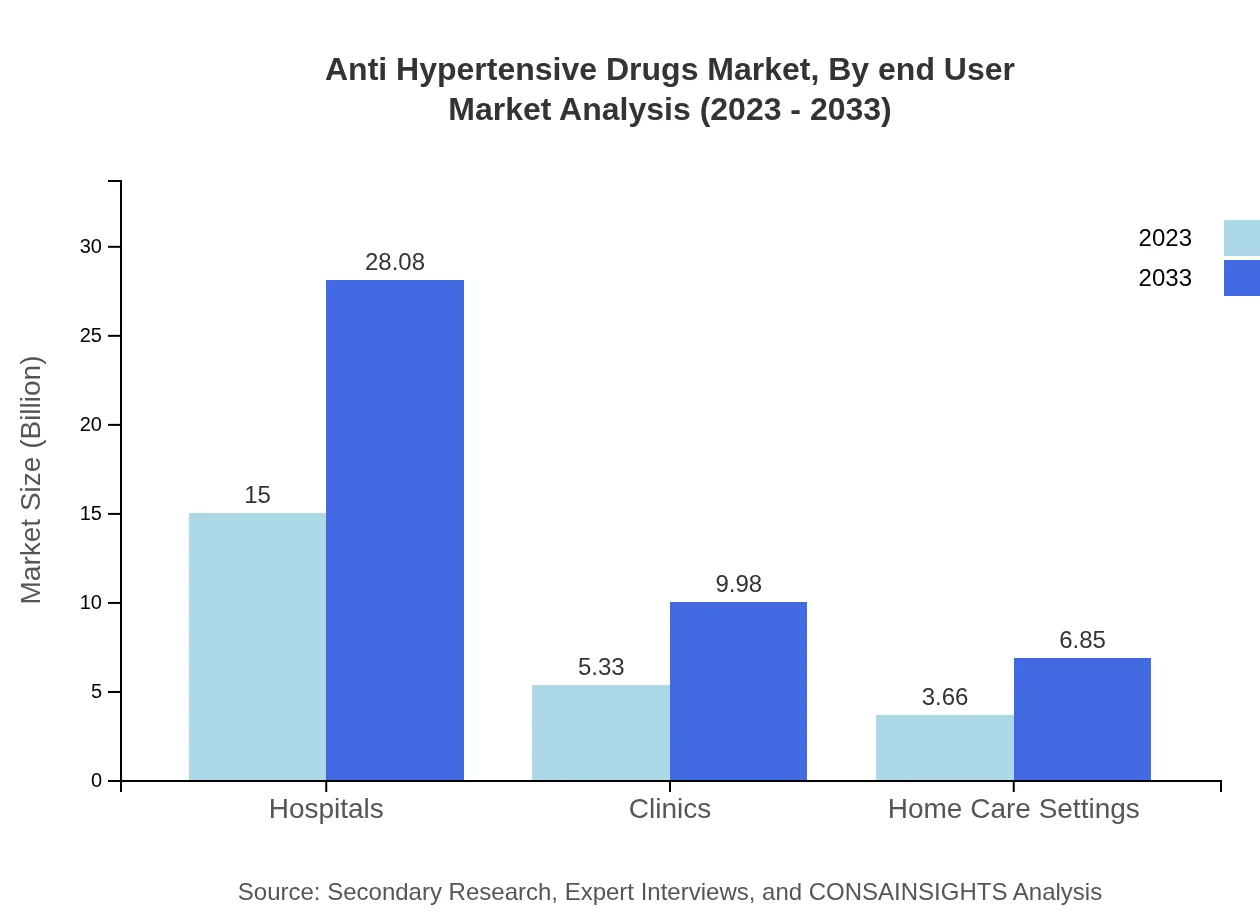
End users include Hospitals, Clinics, and Home Care Settings as noted in the segmentation facts.
How are products typically distributed?
Distribution channels include Hospital Pharmacy, Retail Pharmacy, and Online Pharmacy according to the provided segmentation.