
Anti Malarial Drugs Market Report
First published: 20 October 2024 | Last updated: 25 May 2026 | Report Code: anti-malarial-drugs
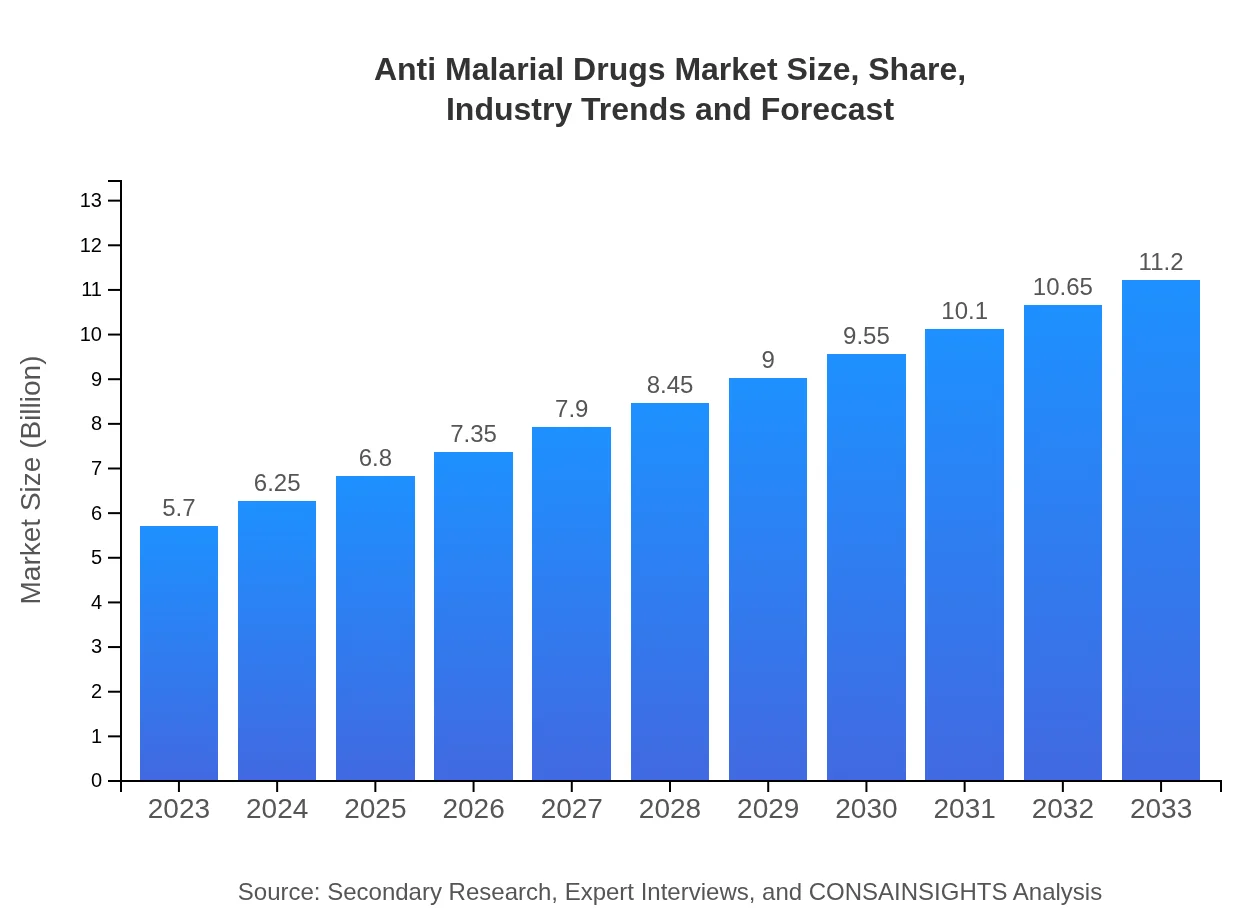
Anti Malarial Drugs Market — USD 5.7 billion in 2023, Growing to USD 11.20B by 2033 at 6.8% CAGR
This report offers a comprehensive analysis of the Anti Malarial Drugs market, highlighting key trends, growth opportunities, and forecasts from 2023 to 2033. The report provides market size, CAGR insights, segmentation, and regional analyses across various demographics.
Key Takeaways
- Global market expands from $5.70 Billion in 2023 to $11.20 Billion by 2033 at a 6.8% CAGR.
- North America is largest regional market, while no single fastest-growing region is stated because regional CAGR differences remain within 0.15 percentage points.
- North America is the largest region, rising from $2.14 Billion in 2023 to $4.21 Billion in 2033.
- Europe increases from $1.45 Billion in 2023 to $2.85 Billion in 2033; Asia Pacific grows from $1.15 Billion to $2.26 Billion.
- Market segmentation highlights ACTs, chloroquine, proguanil, and mefloquine across oral, injectable and liquid formulations.
- Leading companies include Roche, Novartis, GlaxoSmithKline, Sanofi, and Pfizer.
Anti Malarial Drugs Market Report — Executive Summary
North America remains largest market by forecast-period value, while no single fastest-growing region is stated because top regional growth rates are separated by less than 0.15 percentage points. The anti-malarial drugs market is positioned for steady expansion, increasing from $5.70 Billion in 2023 to $11.20 Billion by 2033 at a 6.8% CAGR. Growth is driven by continued treatment demand in endemic areas, investments in drug development, and strengthened distribution networks. Product mixes feature artemisinin-based combination therapies, chloroquine, proguanil and mefloquine delivered via oral, injectable and liquid formats. Hospitals, retail outlets and online pharmacies form the primary distribution channels. Regional dynamics vary: North America registers the largest market value, while Europe, Asia Pacific, Latin America and the Middle East and Africa show notable increases. The competitive landscape includes Roche, Novartis, GlaxoSmithKline, Sanofi and Pfizer, each contributing through research, manufacturing scale and distribution partnerships. The market outlook is influenced by efforts to manage resistance, enhance access in endemic regions, and adopt improved delivery mechanisms to boost adherence and therapeutic outcomes.
Key Growth Drivers
- Sustained demand for effective treatments in malaria-endemic regions supporting consistent medication uptake.
- Ongoing R&D investment by major pharmaceutical firms expanding pipeline options and improving therapeutic profiles.
- Strengthening distribution channels, including hospital and retail pharmacies plus growing online availability, improving access.
- Focus on combination therapies and alternative formulations to address resistance and enhance patient adherence.
- Public health initiatives and collaborations that increase treatment reach and funding for malaria control programs.
| Metric | Value |
|---|---|
| Study Period | 2023 - 2033 |
| 2023 Market Size | $5.70 Billion |
| CAGR (2023-2033) | 6.8% |
| 2033 Market Size | $11.20 Billion |
| Top Companies | Roche, Novartis, GlaxoSmithKline, Sanofi, Pfizer |
| Published Date | 20 October 2024 |
| Last Modified Date | 25 May 2026 |
Anti Malarial Drugs Market Overview
Customize Anti Malarial Drugs Market Report market research report
- ✔ Get in-depth analysis of Anti Malarial Drugs market size, growth, and forecasts.
- ✔ Understand Anti Malarial Drugs's regional dynamics and industry-specific trends.
- ✔ Identify potential applications, end-user demand, and growth segments in Anti Malarial Drugs
What is the Market Size & CAGR of Anti Malarial Drugs Market Report market in 2023?
Anti Malarial Drugs Industry Analysis
Anti Malarial Drugs Market Segmentation and Scope
Tell us your focus area and get a customized research report.
Anti Malarial Drugs Market Report Market Analysis Report by Region
Europe Anti Malarial Drugs Market Report:
Europe grows from $1.45 Billion in 2023 to $2.85 Billion in 2033. Expansion in this region is influenced by regulatory support for effective therapies, public health programs, and investments in managing resistance and expanding access to combination treatments.Asia Pacific Anti Malarial Drugs Market Report:
Asia Pacific grows from $1.15 Billion in 2023 to $2.26 Billion in 2033. Demand is shaped by the prevalence of malaria in parts of the region, increasing treatment access, and initiatives to scale distribution and affordable therapy availability.North America Anti Malarial Drugs Market Report:
North America is largest regional market, rising from $2.14 Billion in 2023 to $4.21 Billion in 2033. Regional growth reflects strong healthcare infrastructure, established distribution networks and significant industry investment in research and supply chains supporting treatment availability.South America Anti Malarial Drugs Market Report:
Latin America grows from $0.4 Billion in 2023 to $0.78 Billion in 2033. Market advancement is supported by public health campaigns, improved supply chains, and greater availability of combination therapies and formulations suited to local needs.Middle East & Africa Anti Malarial Drugs Market Report:
Middle East and Africa grows from $0.56 Billion in 2023 to $1.1 Billion in 2033. Growth drivers include ongoing treatment requirements in endemic areas, international health programs, and efforts to enhance distribution and address drug resistance.Tell us your focus area and get a customized research report.
Research Methodology
Anti Malarial Drugs Market Analysis By Drug Type
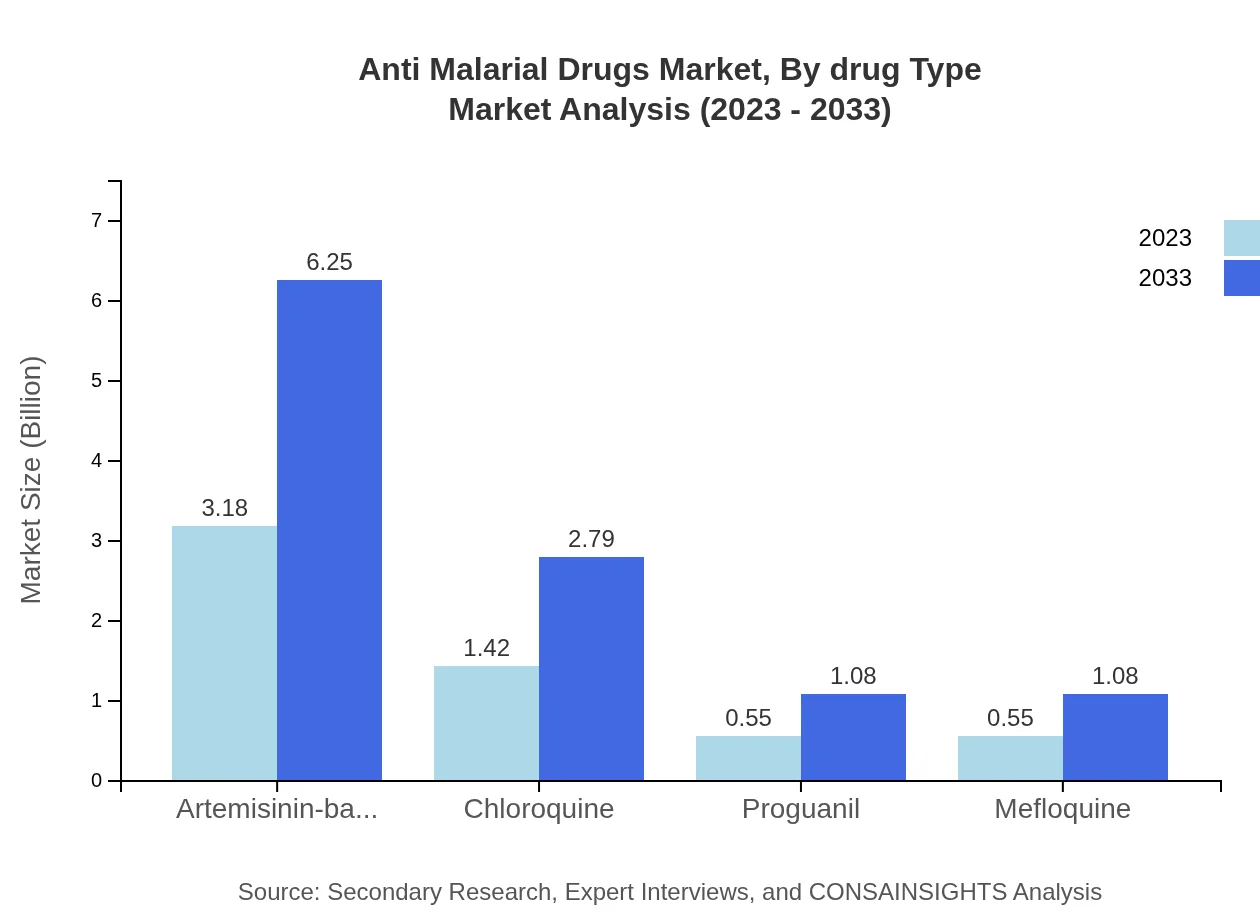
The market for anti-malarial drugs is dominantly led by Artemisinin-based Combination Therapies (ACTs), which held a substantial market size of $3.18 billion in 2023 and is projected to reach approximately $6.25 billion by 2033, maintaining a consistent market share of 55.83%. Chloroquine, on the other hand, accounts for $1.42 billion in 2023 with growth to $2.79 billion by 2033, holding 24.88% market share.
Anti Malarial Drugs Market Analysis By Route Of Administration
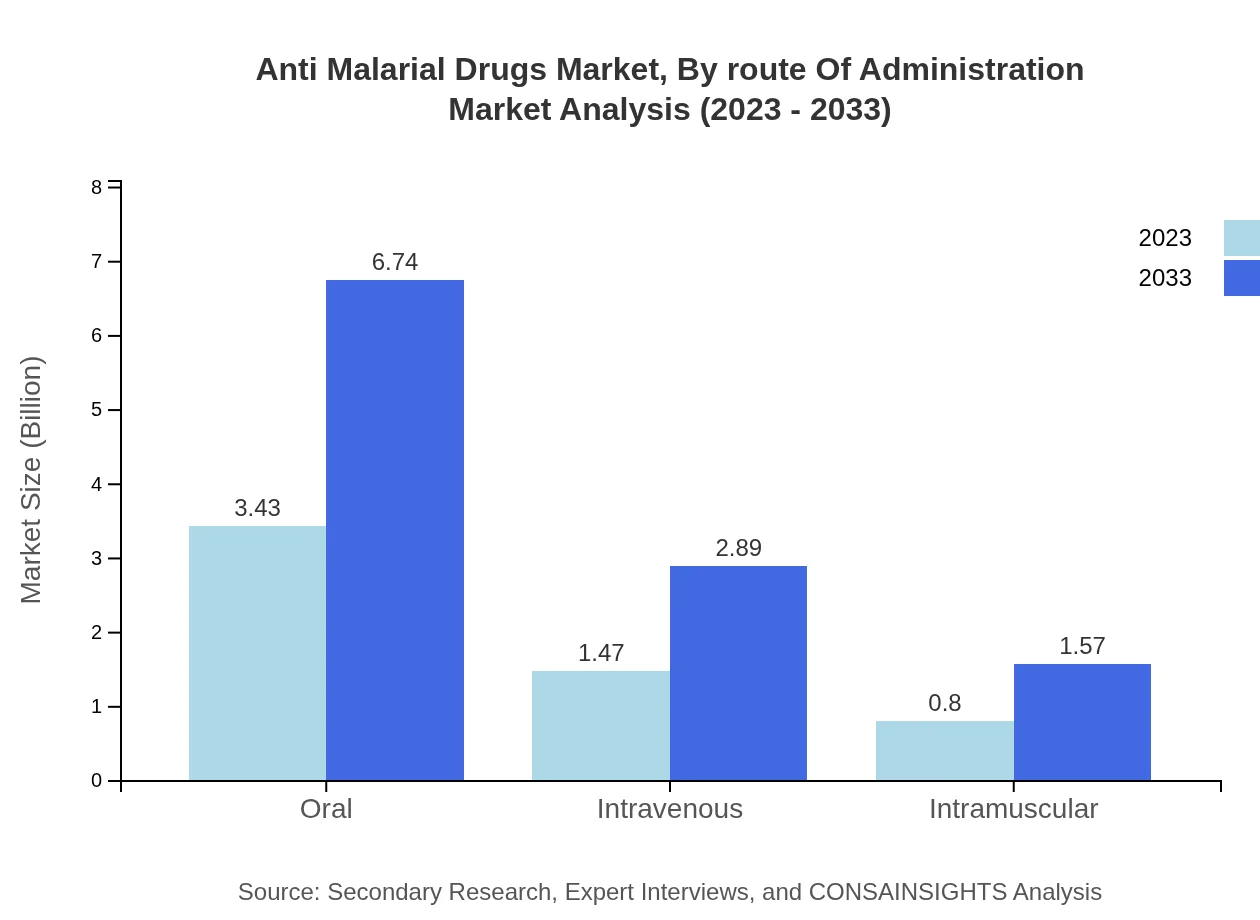
The oral formulation remains widely favored, contributing $3.43 billion in 2023 and anticipated to grow to $6.74 billion by 2033, representing 60.17% of market share. Injectable formulations, although less common, are projected to double their value from $0.80 billion to $1.57 billion in the same period.
Anti Malarial Drugs Market Analysis By Patient Demographics
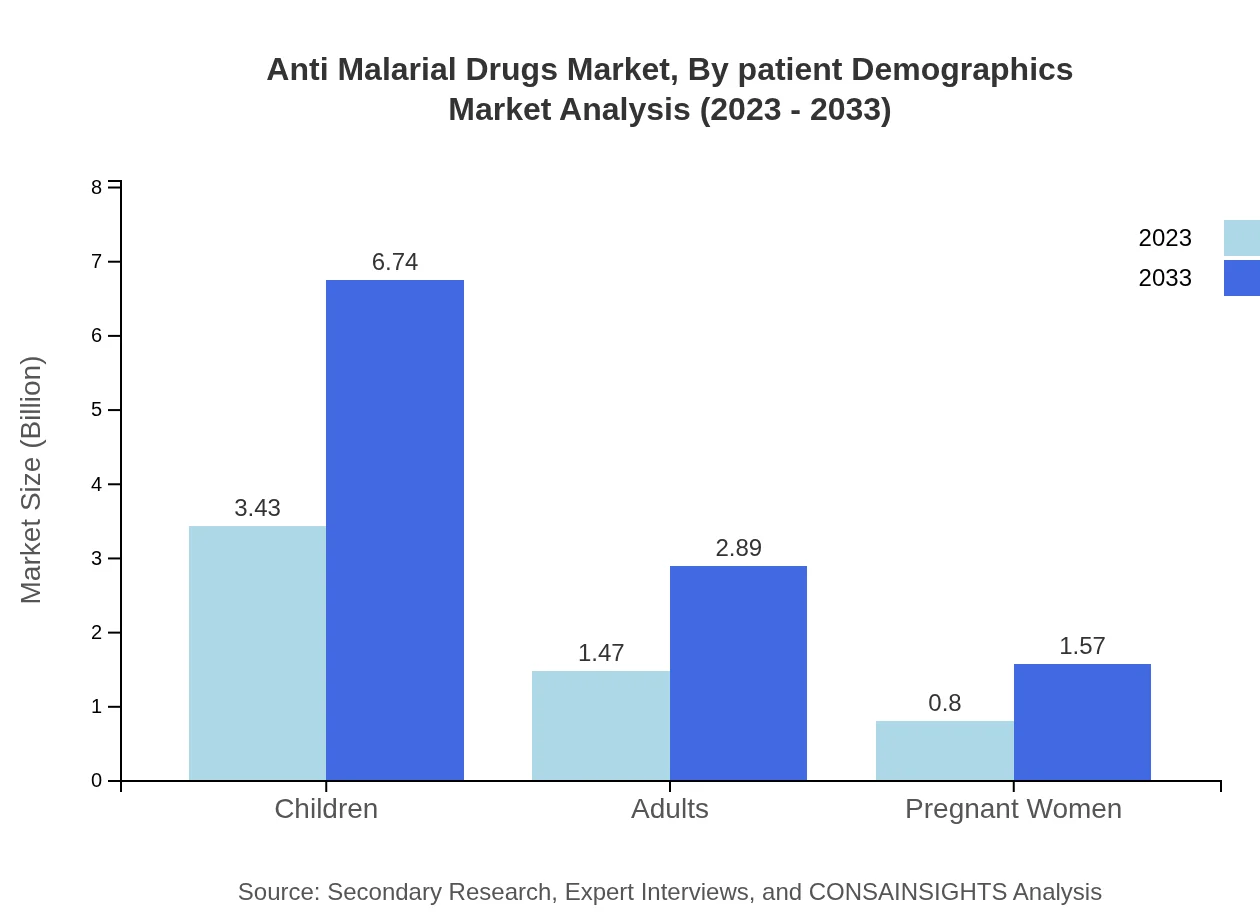
The demographic landscape shows that treatments for children dominate the market with $3.43 billion in 2023. Meanwhile, adult prescriptions follow closely at $1.47 billion, reflecting the growing recognition of tailored treatments for avoiding complications in vulnerable populations, such as pregnant women.
Anti Malarial Drugs Market Analysis By Formulation
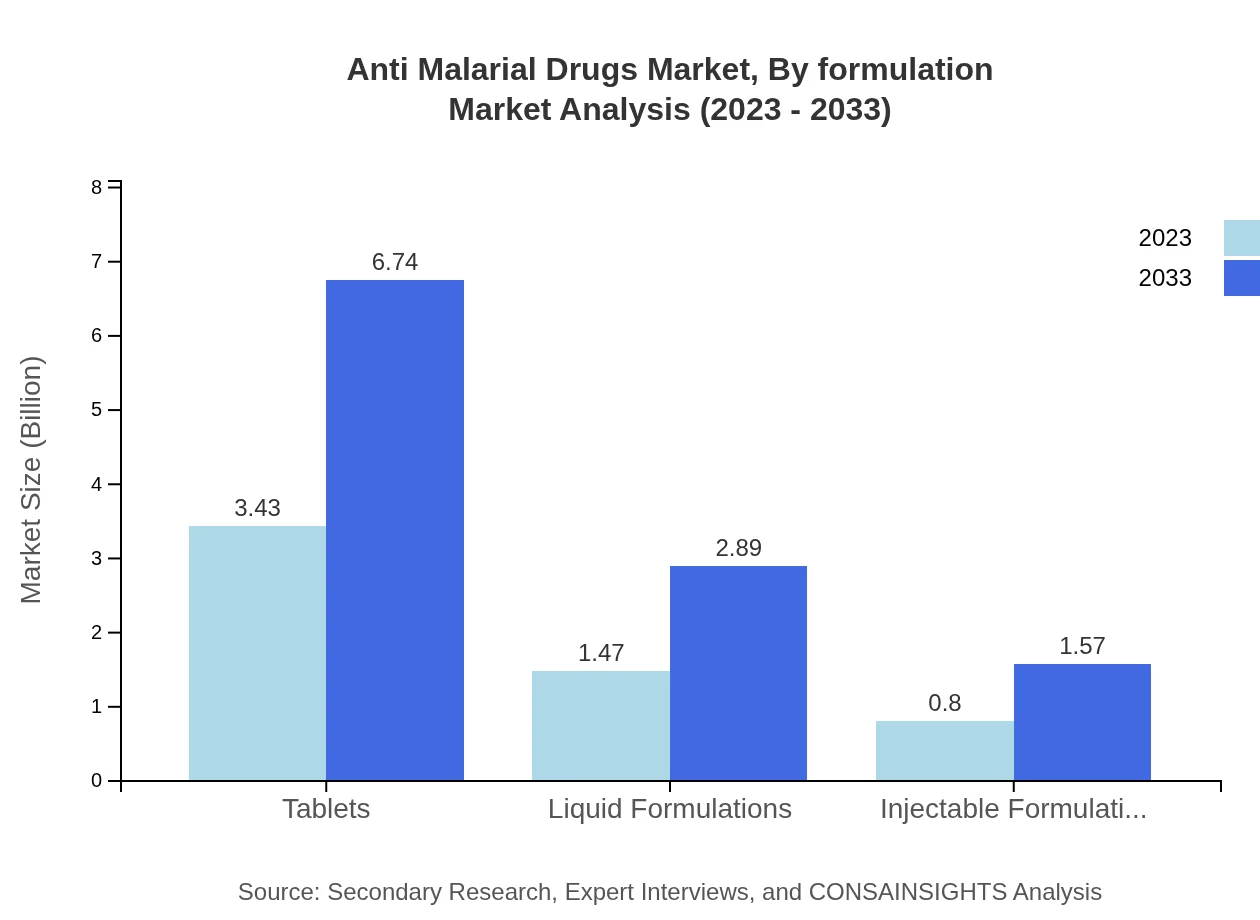
Tablets are the preferred formulation type, generating $3.43 billion by 2023 and projected to reach $6.74 billion by 2033. Liquid formulations and injectable options provide necessary alternatives for patients requiring different administration routes.
Anti Malarial Drugs Market Analysis By Distribution Channel
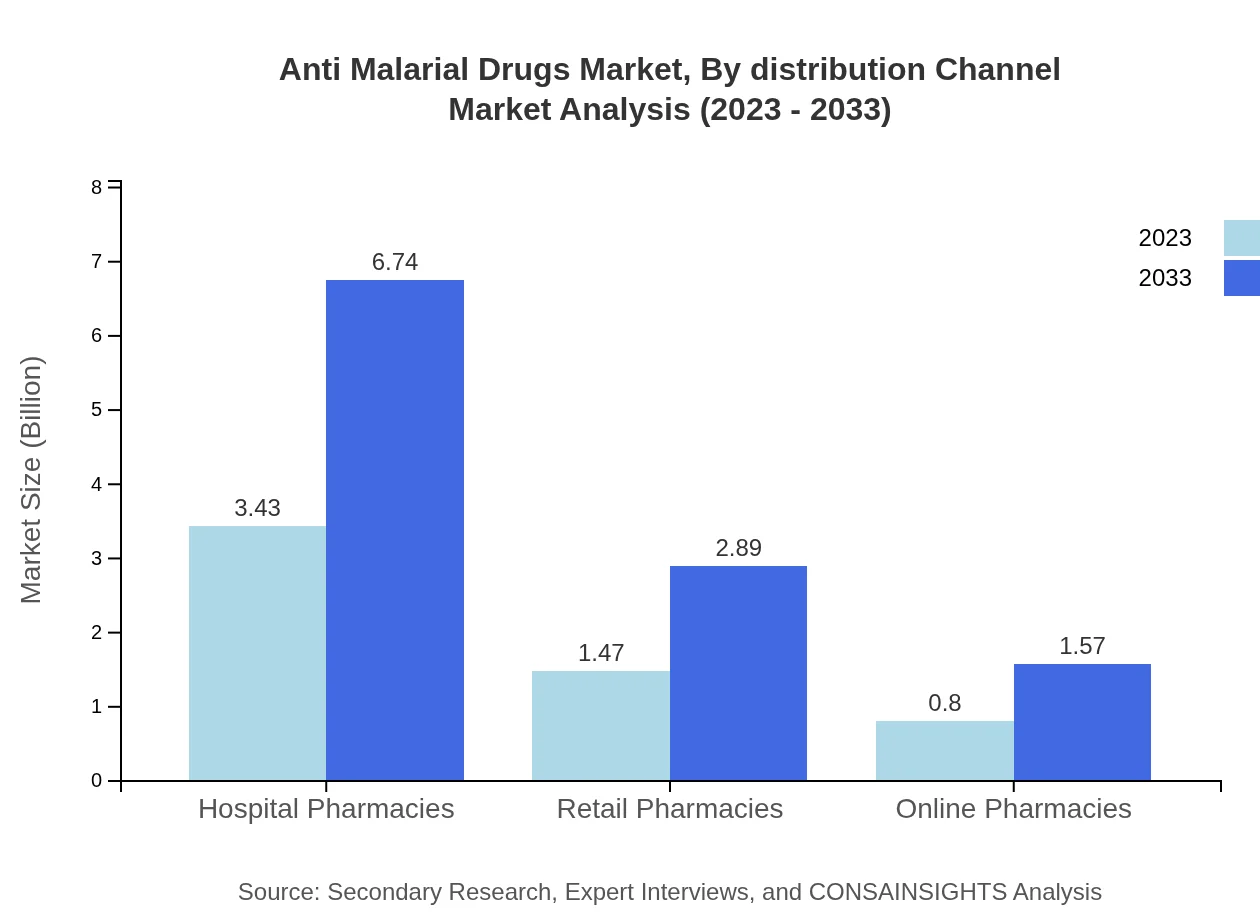
Hospital pharmacies are the leading distribution channel, contributing to a market size of $3.43 billion in 2023 and expected to grow to $6.74 billion. Online pharmacies, although a smaller segment, are witnessing growth fueled by increasing digital health trends, with gains from $0.80 billion to $1.57 billion.
Anti Malarial Drugs Market Trends and Future Forecast
Tell us your focus area and get a customized research report.
Global Market Leaders and Top Companies in Anti Malarial Drugs Industry
Roche:
Known for its robust research initiatives in malaria treatments, Roche has developed several innovative anti-malarial drugs that have transformed treatment protocols.Novartis:
A leading player in the malaria space, Novartis focuses on the development and distribution of affordable ACTs and has initiatives promoting healthcare access.GlaxoSmithKline:
GSK actively participates in advancing global health through malaria research, fostering partnerships that enhance treatment accessibility.Sanofi:
A key contributor to anti-malarial drug development, Sanofi is well-regarded for its ongoing commitment to research in new and traditional therapies.Pfizer :
Pfizer engages in the research and production of anti-malarials and actively involves itself in health initiatives aimed at combating malaria globally.We're grateful to work with incredible clients.





FAQs
What is the current market size of the anti Malarial drugs market?
The market size stood at $5.70 Billion in 2023, according to the report's presented figures.
How big is the market expected to be in 2033?
The projected market value is $11.20 Billion in 2033 as provided in the report data.
What is CAGR for the forecast period?
The reported compound annual growth rate for 2023 to 2033 is 6.8%.
Is there a single fastest Growing region in the Anti Malarial Drugs Market Report market?
No single fastest-growing region is stated for the Anti Malarial Drugs Market Report market because the top regional implied CAGR values are within 0.15 percentage points of each other, making the ranking too close to call reliably.
Which drug types are highlighted in the segmentation?
Key drug types include Artemisinin-based Combination Therapies (ACTs), chloroquine, proguanil and mefloquine as listed.
Who are the leading companies in this market?
Top companies named in the report are Roche, Novartis, GlaxoSmithKline, Sanofi and Pfizer.
What distribution channels are covered?
Distribution channels noted include hospital pharmacies, retail pharmacies and online pharmacies.
How are formulations categorized?
Formulations in the report are listed as tablets, liquid formulations and injectable formulations.
What patient demographics are specified?
The report identifies children, adults and pregnant women as the primary patient demographic segments.
What routes of administration are included?
Routes of administration included are oral, intravenous and intramuscular as provided in the segmentation.