
Reports >
Life Sciences
>
Anti Obesity Drugs Market Report

Anti Obesity Drugs Market Report
First published: 20 October 2024 | Last updated: 25 May 2026 | Report Code: anti-obesity-drugs
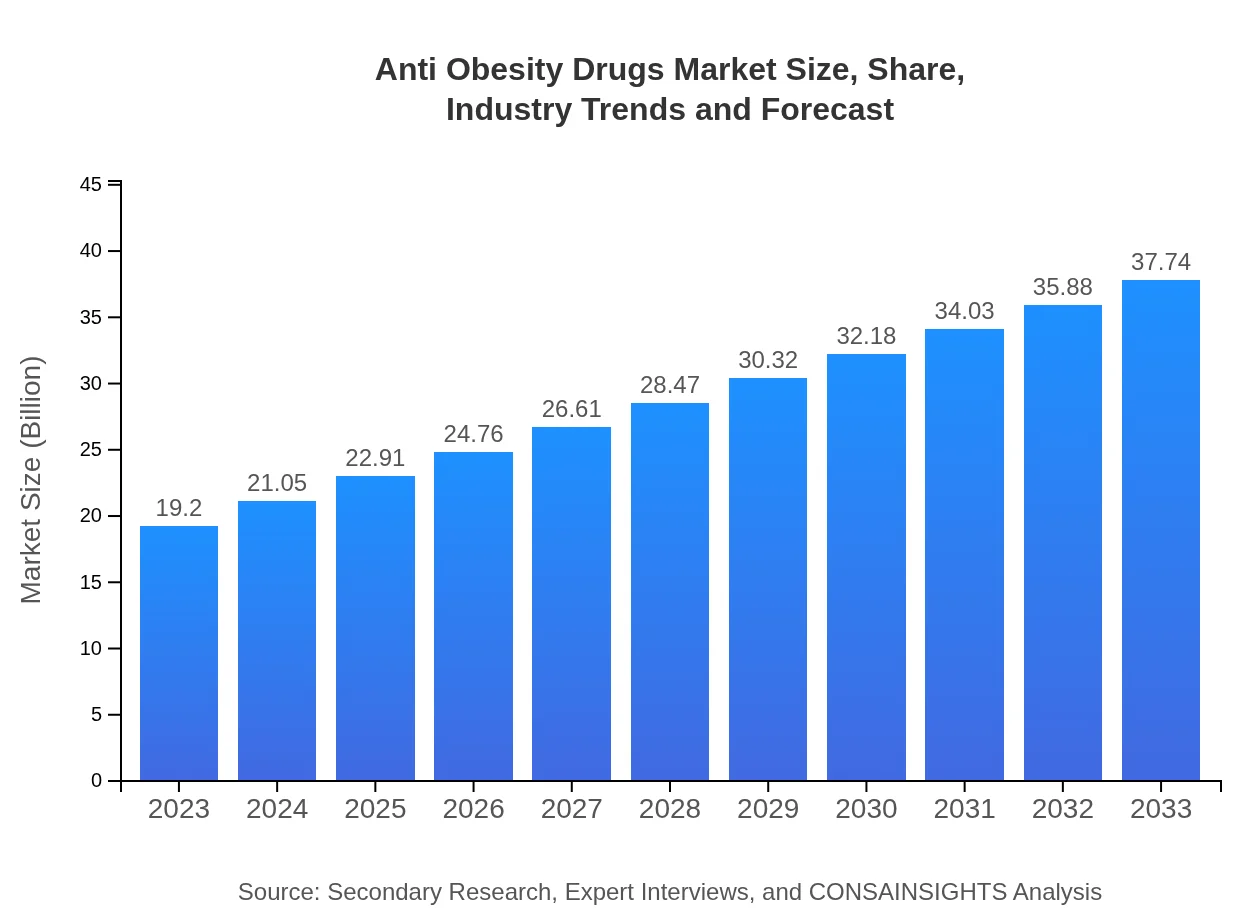
Anti Obesity Drugs Market — USD $19.2 Billion in 2023, Growing to USD 37.74null by 2033 at 6.8% CAGR
This report provides a comprehensive analysis of the Anti Obesity Drugs market from 2023 to 2033, delivering insights on market trends, segmentation, regional dynamics, and key players, along with detailed forecasts and growth projections.
Key Takeaways
- Global market value increases from $19.20 Billion in 2023 to $37.74 Billion in 2033, reflecting a 6.8% CAGR during 2023 to 2033.
- North America is largest regional market, while no single fastest-growing region is stated because regional CAGR differences remain within 0.15 percentage points.
- Europe and Asia Pacific show substantial expansion: Europe from $5.05 Billion to $9.93 Billion, Asia Pacific from $4.15 Billion to $8.17 Billion.
- Product and administration diversity includes oral and injectable routes, multiple drug types, and varied end-users such as hospitals and clinics.
- Key industry participants include Novo Nordisk, Johnson & Johnson, Amgen, and Boehringer Ingelheim driving innovation and market activity.
Anti Obesity Drugs Market Report — Executive Summary
North America remains largest market by forecast-period value, while no single fastest-growing region is stated because top regional growth rates are separated by less than 0.15 percentage points. The Anti Obesity Drugs Market Report examines market dynamics supporting expansion from $19.20 Billion in 2023 to $37.74 Billion in 2033 at a 6.8% CAGR for 2023 to 2033. Growth is supported by increasing obesity prevalence, broader therapeutic adoption, and ongoing pharmaceutical research. The report addresses segmentation by drug type, route of administration, end-users and demographics, highlighting oral and injectable formulations and major drug classes such as phentermine, orlistat, liraglutide, and semaglutide. Regional performance is detailed with North America as the largest market. The competitive landscape profiles leading players including Novo Nordisk, Johnson & Johnson, Amgen, and Boehringer Ingelheim. Methodology combines primary interviews with industry experts and secondary analysis of company reports, followed by data triangulation and expert-led trend assessment to ensure reliability.
Key Growth Drivers
- Rising prevalence of obesity across age groups increasing demand for pharmacological interventions.
- Expanded clinical adoption of novel drug classes prompting higher prescription volumes and sustained market uptake.
- Investment by major pharmaceutical companies in R&D and formulation improvements for patient adherence.
- Broader availability of oral and injectable options enabling tailored treatment pathways across healthcare settings.
- Integration of therapy with lifestyle and preventative healthcare approaches encouraging comprehensive treatment strategies.
| Metric | Value |
|---|---|
| Study Period | 2023 - 2033 |
| 2023 Market Size | $19.20 Billion |
| CAGR (2023-2033) | 6.8% |
| 2033 Market Size | $37.74 Billion |
| Top Companies | Novo Nordisk, Johnson & Johnson, Amgen, Boehringer Ingelheim |
| Published Date | 20 October 2024 |
| Last Modified Date | 25 May 2026 |
Anti Obesity Drugs Market Overview
Customize Anti Obesity Drugs Market Report market research report
- ✔ Get in-depth analysis of Anti Obesity Drugs market size, growth, and forecasts.
- ✔ Understand Anti Obesity Drugs's regional dynamics and industry-specific trends.
- ✔ Identify potential applications, end-user demand, and growth segments in Anti Obesity Drugs
What is the Market Size & CAGR of Anti Obesity Drugs Market Report market in 2023?
Anti Obesity Drugs Industry Analysis
Anti Obesity Drugs Market Segmentation and Scope
Tell us your focus area and get a customized research report.
Anti Obesity Drugs Market Report Market Analysis Report by Region
Europe Anti Obesity Drugs Market Report:
Europe grows from $5.05 Billion in 2023 to $9.93 Billion in 2033. 05 Billion in 2023 to $9.93 Billion in 2033, supported by regulatory frameworks, growing clinical acceptance of anti-obesity treatments, and increased focus on integrated care approaches combining lifestyle and pharmacotherapy.Asia Pacific Anti Obesity Drugs Market Report:
Asia Pacific grows from $4.15 Billion in 2023 to $8.17 Billion in 2033. Regional drivers include rising obesity rates, expanding healthcare access, and growing uptake of prescription therapies alongside public health initiatives.North America Anti Obesity Drugs Market Report:
North America is largest regional market, rising from $6.59 Billion in 2023 to $12.95 Billion in 2033. This growth reflects strong healthcare infrastructure, high adoption of new pharmacotherapies, and significant investment by major industry players.South America Anti Obesity Drugs Market Report:
Latin America grows from $1.68 Billion in 2023 to $3.3 Billion in 2033. 68 Billion in 2023 to $3.3 Billion in 2033, influenced by improving healthcare infrastructure, increasing awareness of obesity-related health risks, and broader availability of therapeutic options.Middle East & Africa Anti Obesity Drugs Market Report:
Middle East and Africa grows from $1.72 Billion in 2023 to $3.39 Billion in 2033. 72 Billion in 2023 to $3.39 Billion in 2033, driven by enhanced healthcare investments, rising prevalence of lifestyle-related conditions, and gradual expansion of treatment access and diagnostics.Tell us your focus area and get a customized research report.
Research Methodology
Anti Obesity Drugs Market Analysis By Drug Type
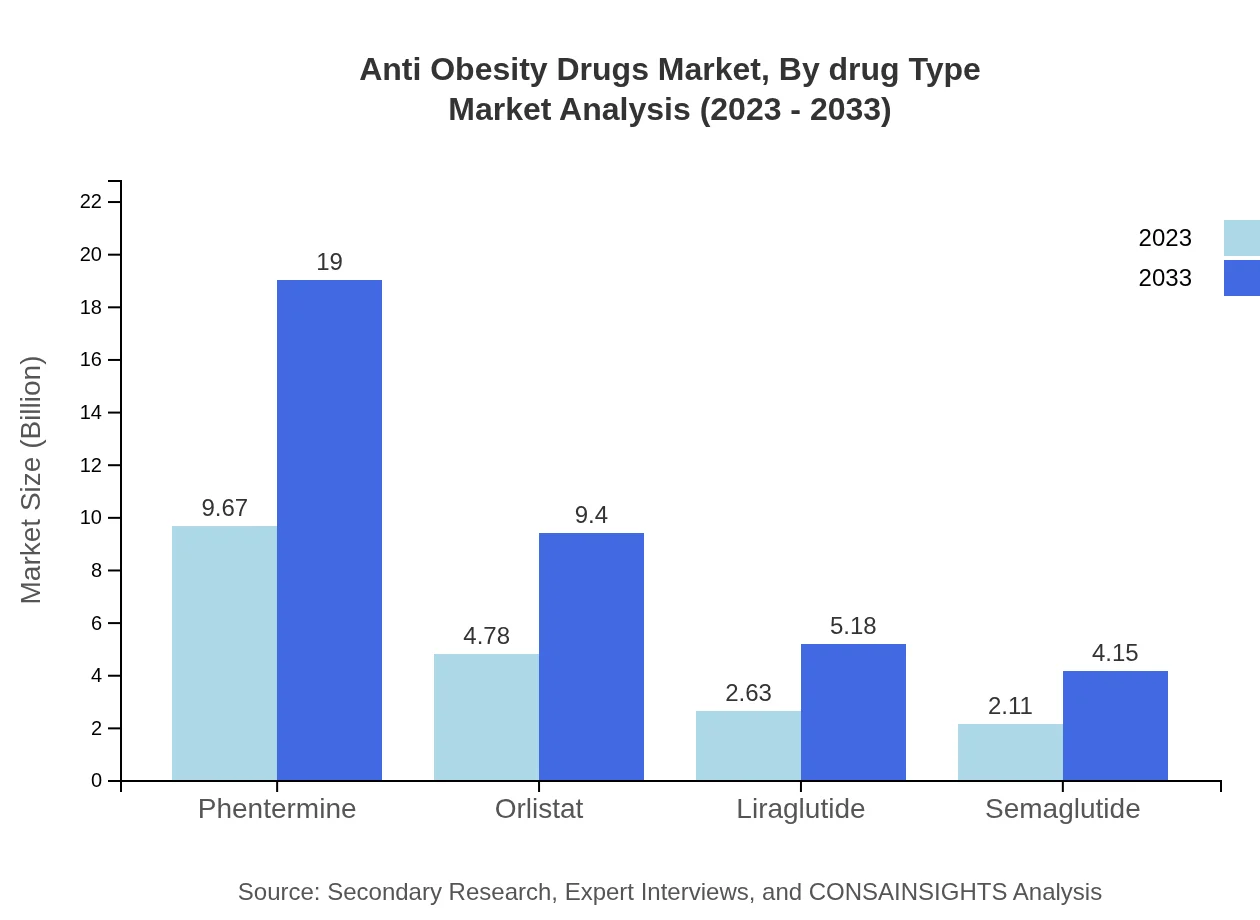
The Anti-Obesity Drugs market is predominantly driven by Phentermine and Orlistat, accounting for substantial market shares in 2023. Phentermine holds a market size of $9.67 billion, while Orlistat stands at $4.78 billion. Emerging drugs like Liraglutide and Semaglutide contribute to the newer market dynamics, targeting specific patient populations.
Anti Obesity Drugs Market Analysis By Route Of Administration
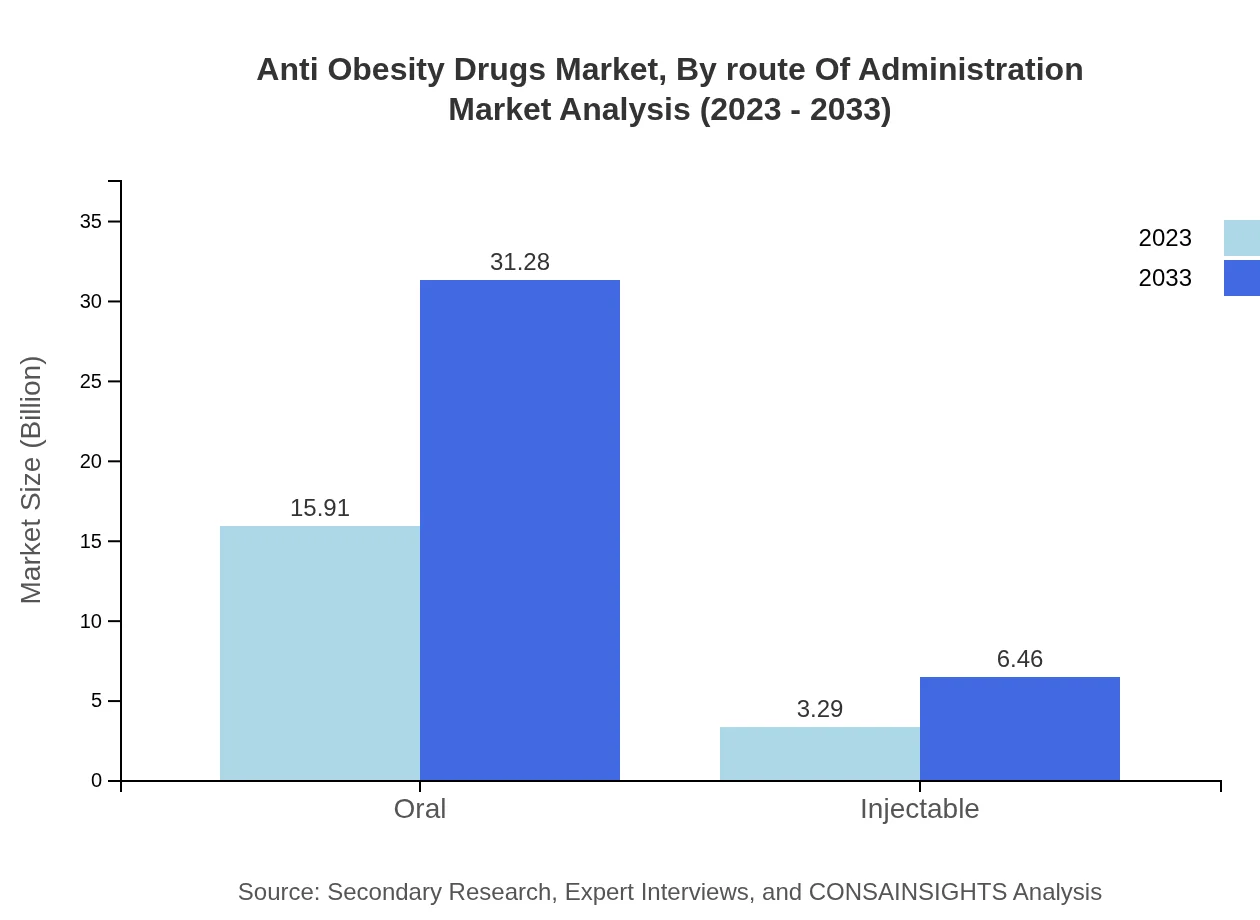
The market is segmented into oral and injectable routes, with oral medications occupying an extensive market share driven by ease of use. In 2023, oral medications, including Phentermine and Orlistat, total a market size of approximately $15.91 billion, whereas injectables are valued at $3.29 billion.
Anti Obesity Drugs Market Analysis By End User
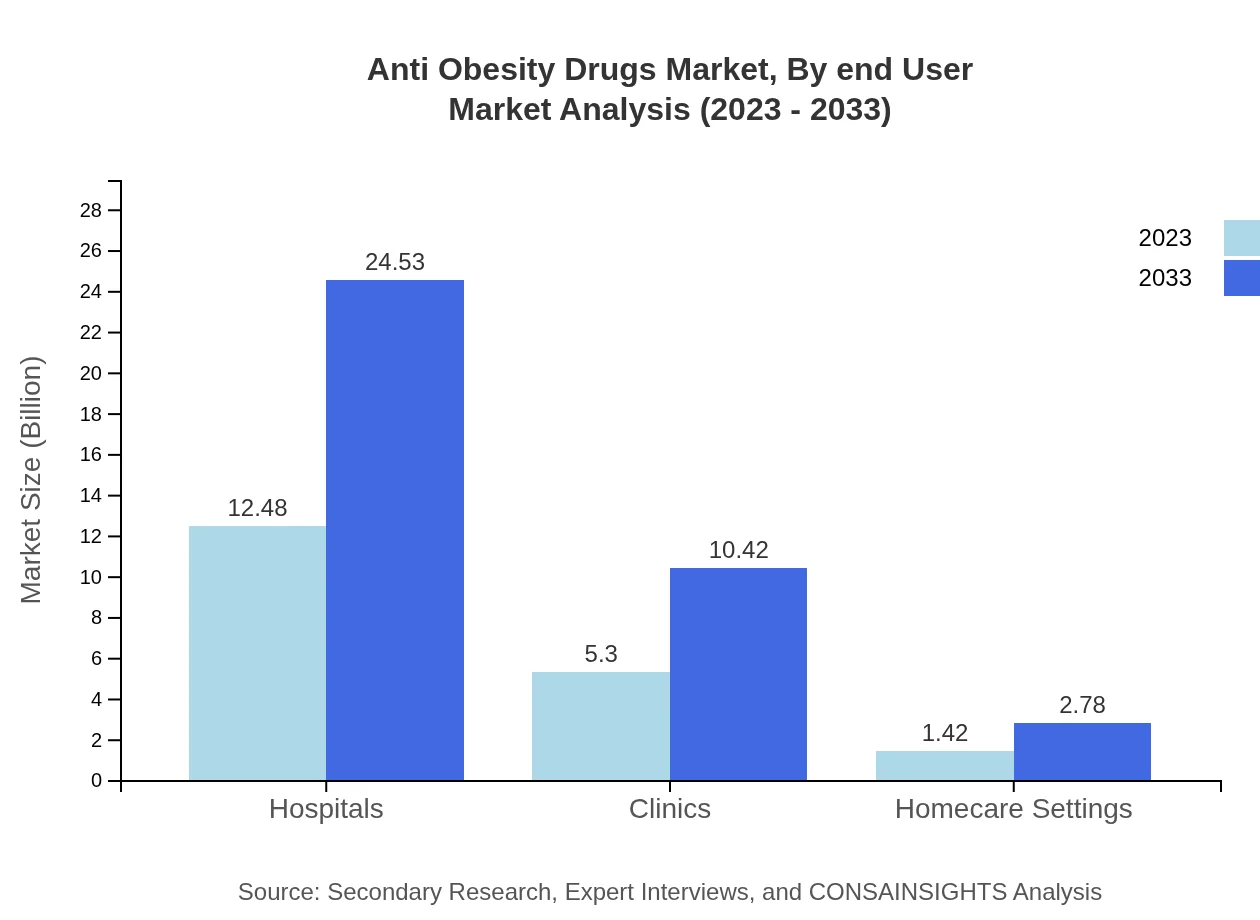
Hospitals represent the largest user segment in the Anti Obesity Drugs market, valued at $12.48 billion in 2023, a substantial share influenced by comprehensive healthcare services. Clinics and homecare settings follow, representing emerging avenues for drug distribution and consumption.
Anti Obesity Drugs Market Analysis By Therapeutic Approach
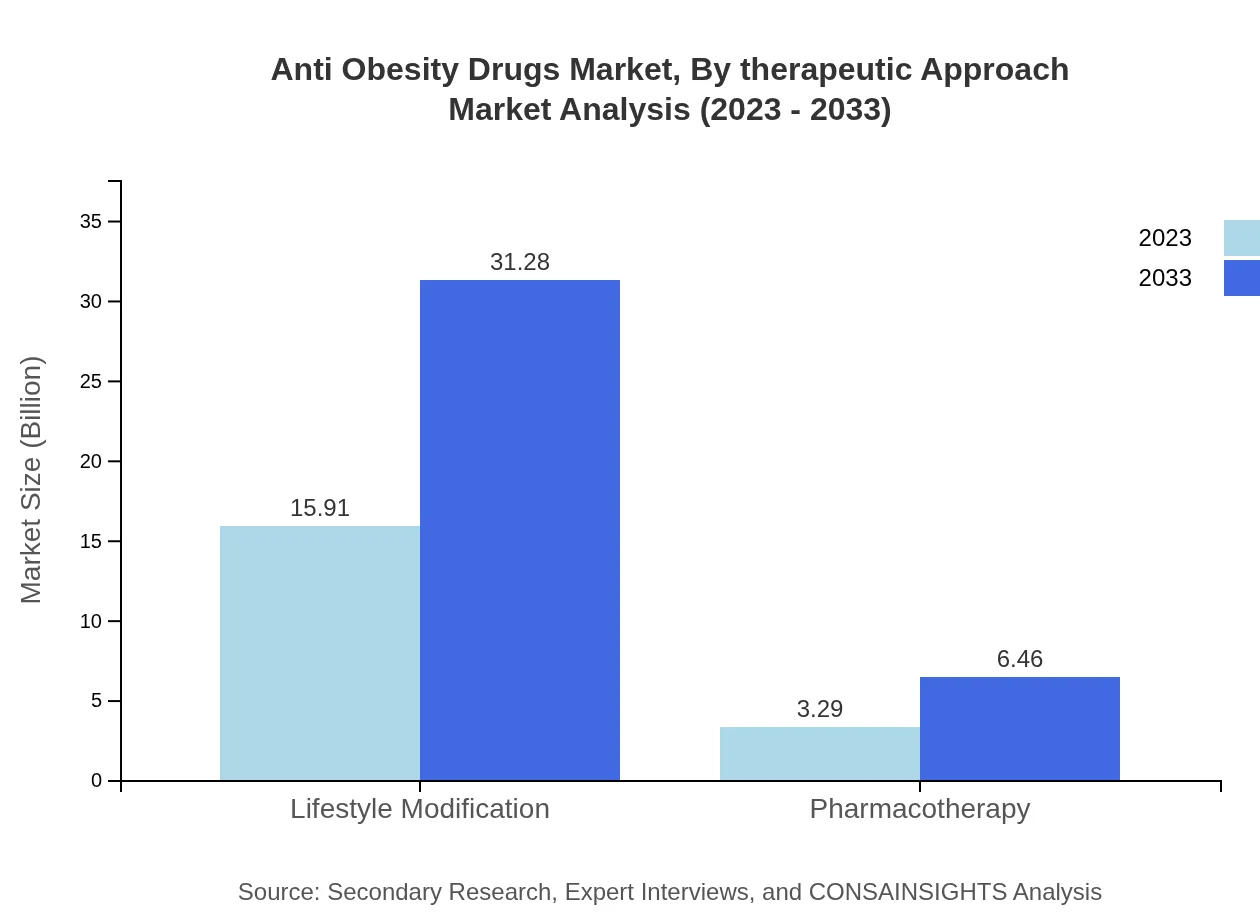
The therapeutic approach segment is dominated by lifestyle modification therapies, which account for approximately $15.91 billion in 2023. Pharmacotherapy complements these approaches, capturing attention as part of combination therapies for enhanced efficacy.
Anti Obesity Drugs Market Analysis By Demographic
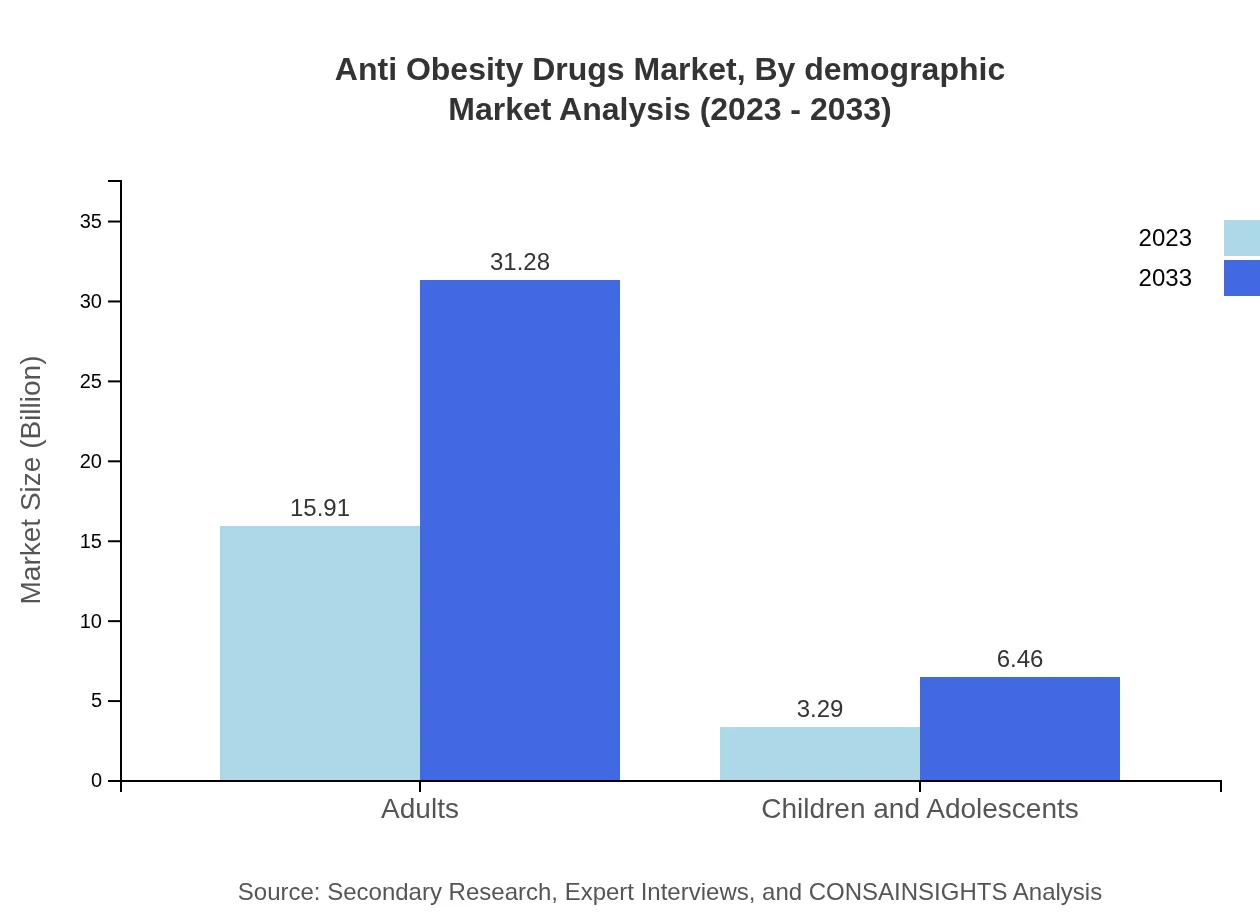
Adults comprise the majority of the user base in the Anti Obesity Drugs market, with a market size of $15.91 billion in 2023. Children and adolescents represent a smaller segment but are gaining attention with tailored formulations to meet their specific health requirements.
Anti Obesity Drugs Market Trends and Future Forecast
Tell us your focus area and get a customized research report.
Global Market Leaders and Top Companies in Anti Obesity Drugs Industry
Novo Nordisk:
A leader in drug development and manufacturing, Novo Nordisk specializes in diabetes and obesity medications, including Semaglutide, significantly contributing to the anti-obesity market.Johnson & Johnson:
Johnson & Johnson markets several anti-obesity products and invests heavily in R&D, focusing on innovative therapies that address the pressing issue of global obesity.Amgen:
Amgen is renowned for its pioneering research in biotechnology, developing drugs that have applications in weight management and metabolic health.Boehringer Ingelheim:
This company is committed to developing advanced treatments for metabolic conditions, including efficacious anti-obesity drugs, emphasizing patient-centric research.We're grateful to work with incredible clients.


FAQs
What is the market size of the Anti Obesity Drugs market in 2023?
The reported market size for 2023 is $19.20 Billion, reflecting the baseline for projecting growth and informing strategic planning across drug development and distribution channels.
How big will the market be in 2033?
By 2033 the market is projected to reach $37.74 Billion, a figure used to evaluate long-term investment opportunities and regional expansion strategies within the sector.
What is CAGR of the market?
The compound annual growth rate for the forecast period 2023 to 2033 is 6.8%, indicating steady expansion driven by clinical adoption and R&D activity.
Is there a single fastest Growing region in the Anti Obesity Drugs Market Report market?
No single fastest-growing region is stated for the Anti Obesity Drugs Market Report market because the top regional implied CAGR values are within 0.15 percentage points of each other, making the ranking too close to call reliably.
Which companies lead the Anti Obesity Drugs market?
Top companies listed include Novo Nordisk, Johnson & Johnson, Amgen, and Boehringer Ingelheim, noted for their R&D investments and product portfolios in this therapeutic area.
What are primary therapeutic approaches covered?
The market includes lifestyle modification and pharmacotherapy approaches, with pharmacological treatments increasingly supported by clinical evidence and integration into care pathways.
How big is the European market in this sector?
Europe grows from $5.05 Billion in 2023 to $9.93 Billion in 2033, reflecting regional demand influenced by healthcare policies, clinical adoption, and access to therapeutic options.
What role do administration routes play in market dynamics?
Oral and injectable administration routes expand treatment flexibility and patient adherence options, influencing product development priorities and end-user adoption across settings.
Who are the primary end Users of anti Obesity drugs?
Primary end-users include hospitals, clinics, and homecare settings, each shaping demand patterns based on treatment delivery, monitoring capabilities, and patient access.
Why is research and development important for this market?
R&D drives novel drug classes, improved efficacy, and patient-centric formulations, supporting market expansion and competitiveness among manufacturers.