
Reports >
Life Sciences
>
High Throughput Screening Market Report

High Throughput Screening Market Report
First published: 20 October 2024 | Last updated: 25 May 2026 | Report Code: high-throughput-screening
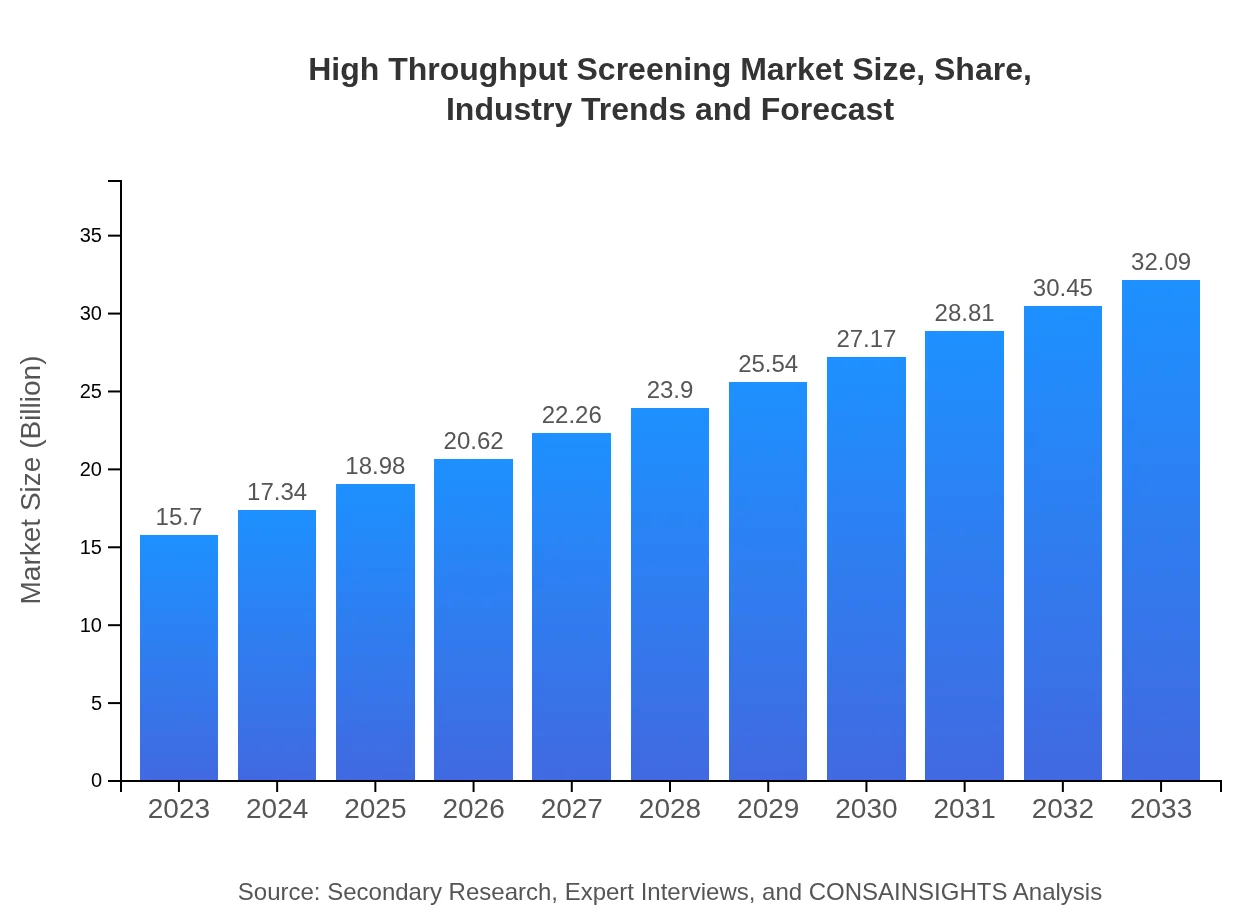
High Throughput Screening Market — USD 15.7 billion in 2023, Growing to USD 32.09B by 2033 at 7.2% CAGR
This report provides a comprehensive analysis of the High Throughput Screening (HTS) market from 2023 to 2033, focusing on market size, trends, segmentation, and regional insights, highlighting growth opportunities and the competitive landscape.
Key Takeaways
- Market value rises from $15.70 Billion in 2023 to $32.09 Billion in 2033, reflecting a 7.2% CAGR for 2023 to 2033.
- Europe is largest regional market, while no single fastest-growing region is stated because regional CAGR differences remain within 0.15 percentage points.
- North America grows from $5.38 Billion in 2023 to $10.99 Billion in 2033, indicating substantial regional expansion.
- Technological advances in automation, microarrays, liquid handling, and imaging are core growth enablers.
- Leading players include Thermo Fisher Scientific, Roche Holding AG, PerkinElmer Inc., Agilent Technologies, and Biocrates Life Sciences AG.
High Throughput Screening Market Report — Executive Summary
Europe remains largest market by forecast-period value, while no single fastest-growing region is stated because top regional growth rates are separated by less than 0.15 percentage points. This report provides a focused analysis of the High Throughput Screening market, documenting a progression from $15.70 Billion in 2023 to $32.09 Billion in 2033 at a 7.2% CAGR during 2023 to 2033. Growth is driven by investments in drug discovery, adoption of automated screening platforms, and improvements in assay development and data analytics. The study covers technology segments such as microarray, liquid handling, and imaging systems, and maps end-users including pharmaceutical companies, academic and research institutes, and CROs. Regional breakdowns highlight Europe as the largest market and detail country-level trends, while company profiles introduce major suppliers actively shaping the landscape. The research integrates primary interviews with sector experts and secondary sources like company reports, with triangulated data and expert validation to support the findings and strategic implications for stakeholders.
Key Growth Drivers
- Rising investment in drug discovery programs that increase demand for rapid screening solutions.
- Advances in automation and robotics that improve throughput and reduce manual intervention in assays.
- Integration of data analytics and software platforms enabling more efficient hit identification and decision-making.
- Continuous refinement of assay development techniques, boosting accuracy and reproducibility of screens.
- Expanding deployment of microarray, liquid handling, and imaging technologies across research and industry labs.
| Metric | Value |
|---|---|
| Study Period | 2023 - 2033 |
| 2023 Market Size | $15.70 Billion |
| CAGR (2023-2033) | 7.2% |
| 2033 Market Size | $32.09 Billion |
| Top Companies | Thermo Fisher Scientific, Roche Holding AG, PerkinElmer Inc., Agilent Technologies, Biocrates Life Sciences AG |
| Published Date | 20 October 2024 |
| Last Modified Date | 25 May 2026 |
High Throughput Screening Market Overview
Customize High Throughput Screening Market Report market research report
- ✔ Get in-depth analysis of High Throughput Screening market size, growth, and forecasts.
- ✔ Understand High Throughput Screening's regional dynamics and industry-specific trends.
- ✔ Identify potential applications, end-user demand, and growth segments in High Throughput Screening
What is the Market Size & CAGR of High Throughput Screening Market Report market in 2023?
High Throughput Screening Industry Analysis
High Throughput Screening Market Segmentation and Scope
Tell us your focus area and get a customized research report.
High Throughput Screening Market Report Market Analysis Report by Region
Europe High Throughput Screening Market Report:
Europe is largest regional market, rising from $5.37 Billion in 2023 to $10.99 Billion in 2033. Growth is fueled by collaborations between industry and academia, strong biotechnology research investment, and deployment of advanced screening systems.Asia Pacific High Throughput Screening Market Report:
Asia Pacific grows from $2.86 Billion in 2023 to $5.85 Billion in 2033. Expansion reflects rising research spending, growing pharmaceutical R&D capacity, and adoption of automated microarray and liquid handling technologies.North America High Throughput Screening Market Report:
North America grows from $5.38 Billion in 2023 to $10.99 Billion in 2033. Regional demand is driven by substantial pharmaceutical research activity, adoption of automation, and investments in data-driven screening platforms supporting drug discovery workflows.South America High Throughput Screening Market Report:
Latin America grows from $1.29 Billion in 2023 to $2.63 Billion in 2033. Market advancement is supported by expanding clinical research activity, increased investment in laboratory infrastructure, and uptake of screening platforms.Middle East & Africa High Throughput Screening Market Report:
Middle East and Africa grows from $0.8 Billion in 2023 to $1.64 Billion in 2033. Growth drivers include investments in research capabilities, infrastructure development, and gradual integration of automated screening solutions.Tell us your focus area and get a customized research report.
Research Methodology
High Throughput Screening Market Analysis By Tech
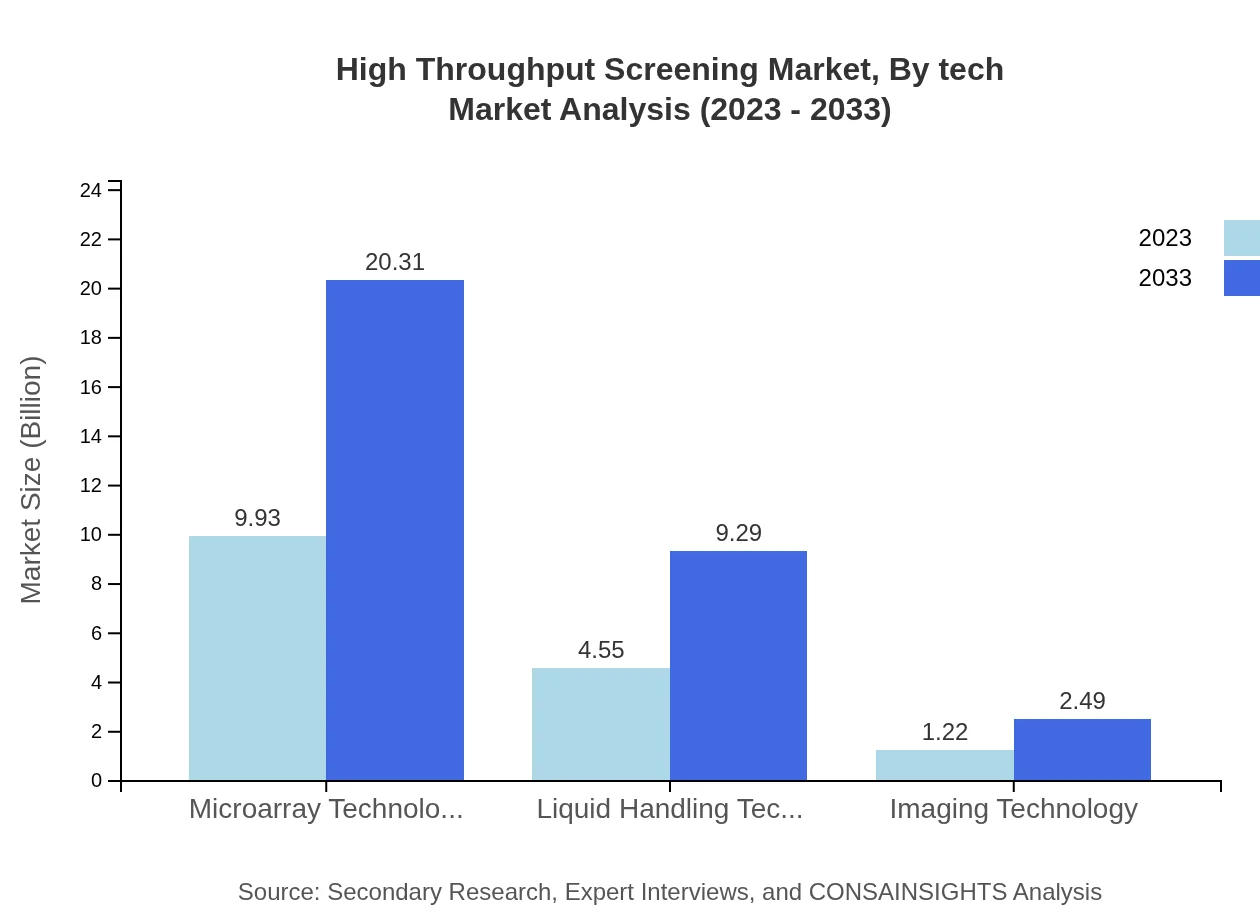
The major technologies in the High Throughput Screening market include Microarray Technology, which is expected to grow from a market size of $9.93 billion in 2023 to $20.31 billion in 2033. Liquid Handling Technology is projected to increase from $4.55 billion in 2023 to $9.29 billion by 2033, while Imaging Technology is anticipated to grow from $1.22 billion to $2.49 billion during the same period. Automation and data analytics are trends driving significant advancements across these technologies.
High Throughput Screening Market Analysis By Application
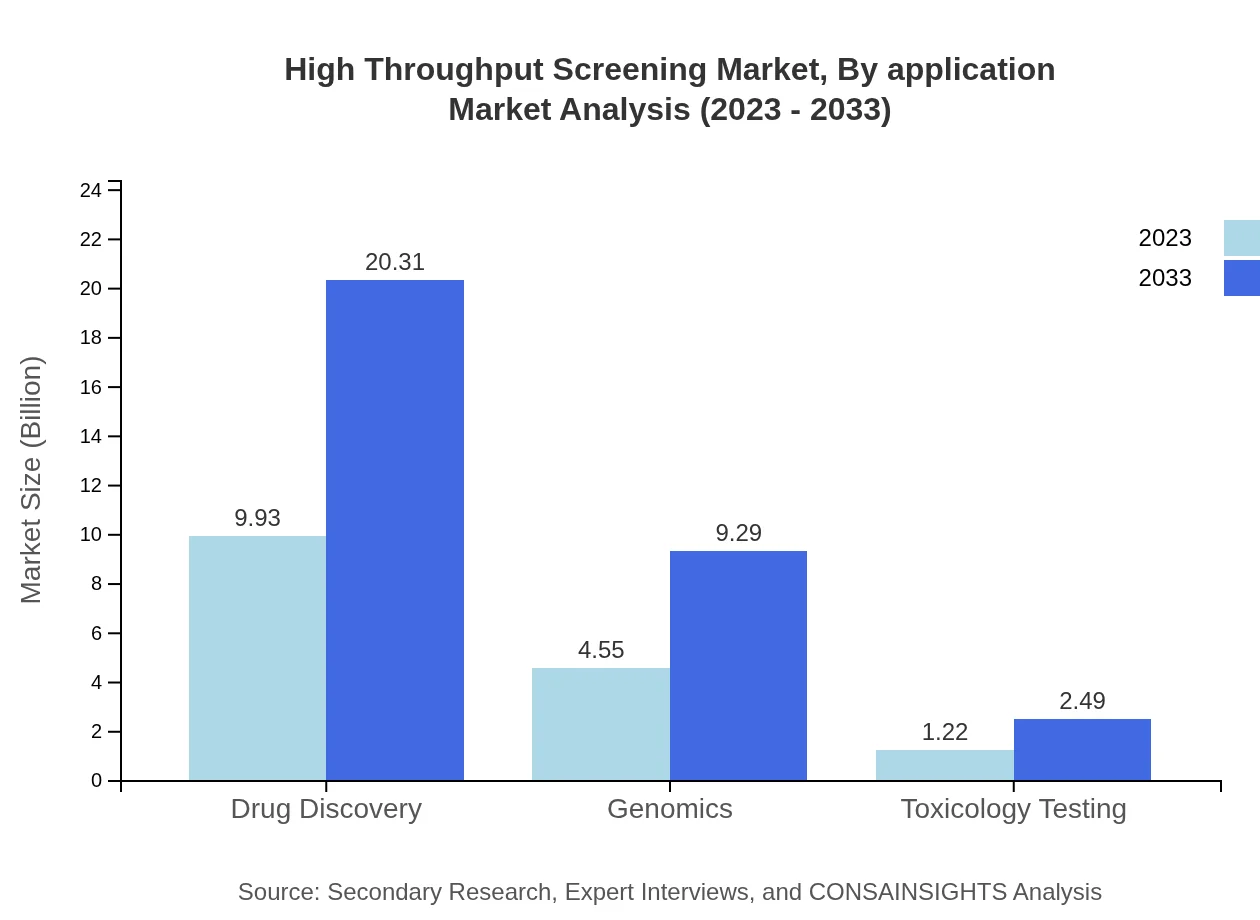
The application segments include Drug Discovery, which leads the market with a size of $9.93 billion in 2023 and is estimated to reach $20.31 billion by 2033. Genomics and Toxicology Testing are also relevant applications, each expected to expand significantly over the forecast period, given the increasing focus on asset safety in drug development.
High Throughput Screening Market Analysis By End User
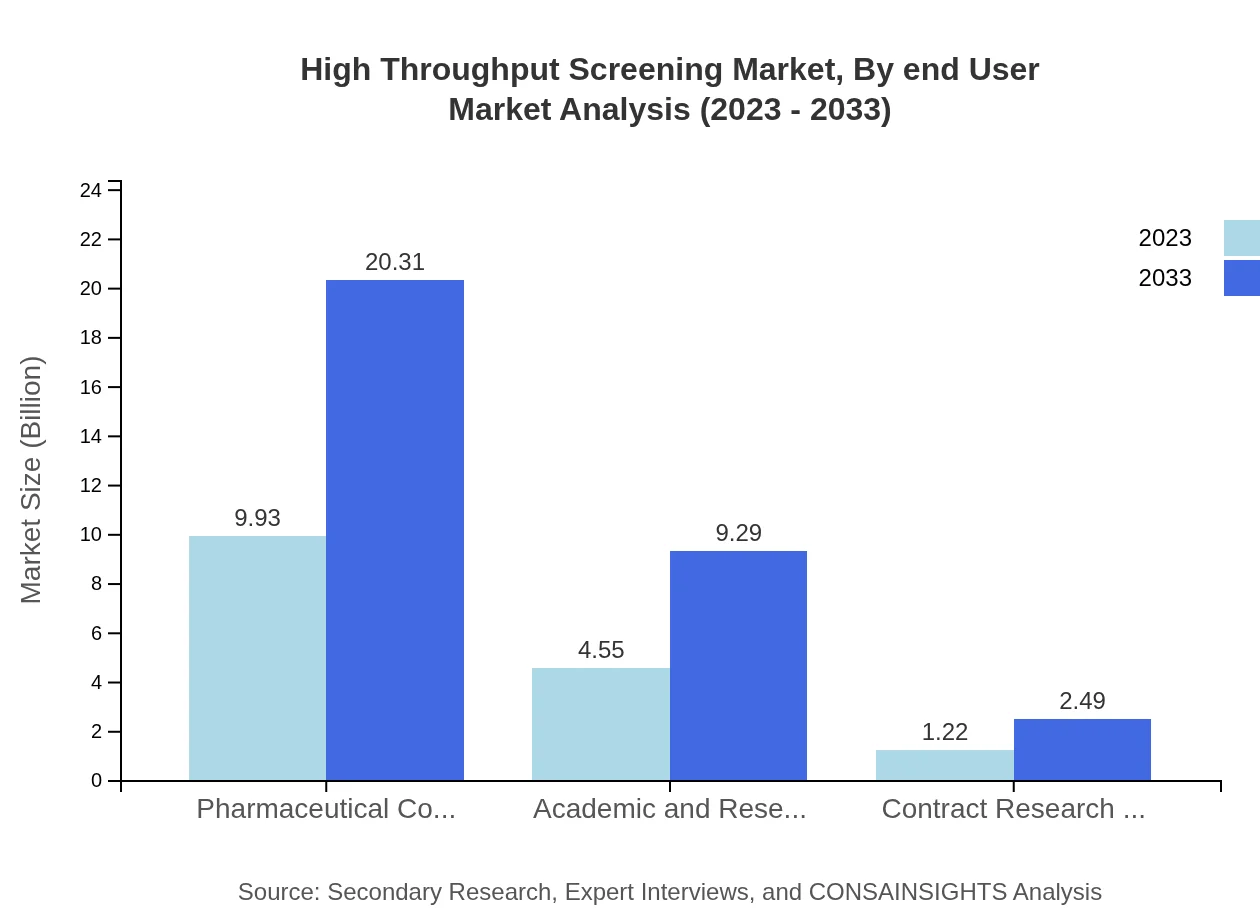
The end-user segment includes Pharmaceutical Companies, who dominate the market with a size of $9.93 billion in 2023 and projected to reach $20.31 billion by 2033. Academic and Research Institutes as well as Contract Research Organizations (CROs) represent other key end-users that are expected to significantly drive the market due to their continual research activities and increasing collaborations with drug development companies.
High Throughput Screening Market Analysis By Region Trends
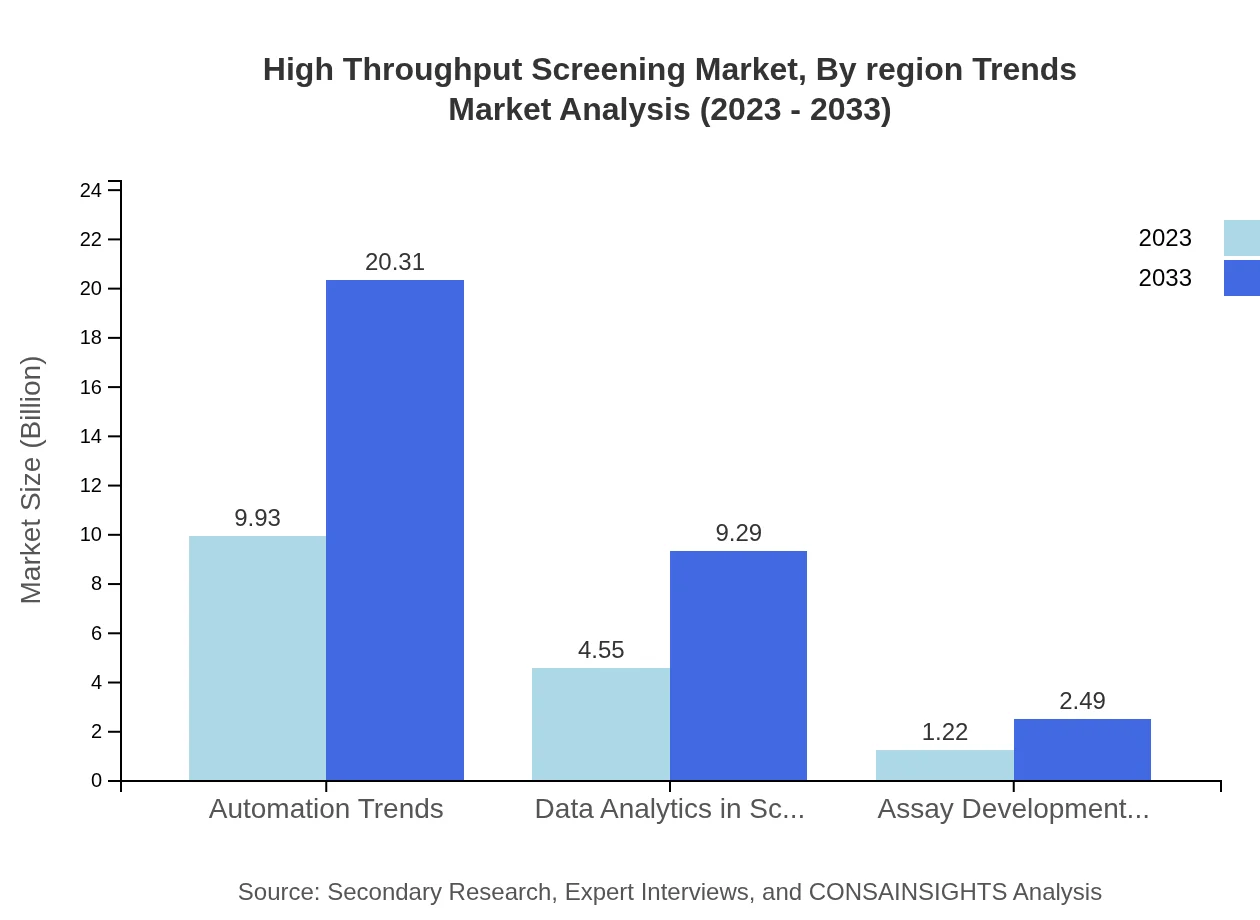
The High Throughput Screening market is set to evolve with key trends such as increased automation, incorporation of artificial intelligence in data analysis, and innovations in assay development. These trends are expected to improve throughput and reduce turnaround times, ultimately enhancing the efficiency of the drug discovery process.
High Throughput Screening Market Trends and Future Forecast
Tell us your focus area and get a customized research report.
Global Market Leaders and Top Companies in High Throughput Screening Industry
Thermo Fisher Scientific:
A leader in scientific instrumentation, Thermo Fisher provides comprehensive solutions for high throughput screening and laboratory automation.Roche Holding AG:
Roche is a prominent player in the pharmaceutical industry, specializing in diagnostics and drug development, heavily investing in innovative HTS technologies.PerkinElmer Inc.:
PerkinElmer offers a wide range of HTS solutions and advanced analytics to facilitate drug discovery, bioanalytical testing, and complex analysis.Agilent Technologies:
Agilent is committed to improving laboratory productivity through investments in HTS technologies that drive efficiencies in drug development.Biocrates Life Sciences AG:
Biocrates specializes in targeted metabolomics and provides innovative solutions for drug testing using high throughput technologies.We're grateful to work with incredible clients.








FAQs
What is the market size of the High Throughput Screening Market Report in 2023?
The market size in 2023 is $15.70 Billion, as reported for the High Throughput Screening market within the specified forecast framework.
How big will the High Throughput Screening market be in 2033?
By 2033 the market is projected to reach $32.09 Billion according to the forecast period stated in the report.
What is CAGR of the High Throughput Screening market for 2023 to 2033?
The compound annual growth rate for the period 2023 to 2033 is 7.2%, based on the market values provided for those years.
Is there a single fastest Growing region in the High Throughput Screening Market Report market?
No single fastest-growing region is stated for the High Throughput Screening Market Report market because the top regional implied CAGR values are within 0.15 percentage points of each other, making the ranking too close to call reliably.
Which companies are cited as leading players?
Top companies listed include Thermo Fisher Scientific, Roche Holding AG, PerkinElmer Inc., Agilent Technologies, and Biocrates Life Sciences AG in the competitive landscape.
Who are the primary end Users covered in the report?
Primary end-users include pharmaceutical companies, academic and research institutes, and contract research organizations, reflecting diverse demand sources for screening services.
What are the main technology segments described?
Key technology segments include microarray technology, liquid handling systems, and imaging technologies, each highlighted for their role in boosting screening throughput.
How was the research conducted for this report?
The study used primary interviews with industry experts and secondary research from company reports and publications, followed by data triangulation and internal validation.