

Antibody Drug Conjugates Contract Manufacturing Market Report
First published: 12 October 2024 | Last updated: 25 May 2026 | Report Code: antibody-drug-conjugates-contract-manufacturing
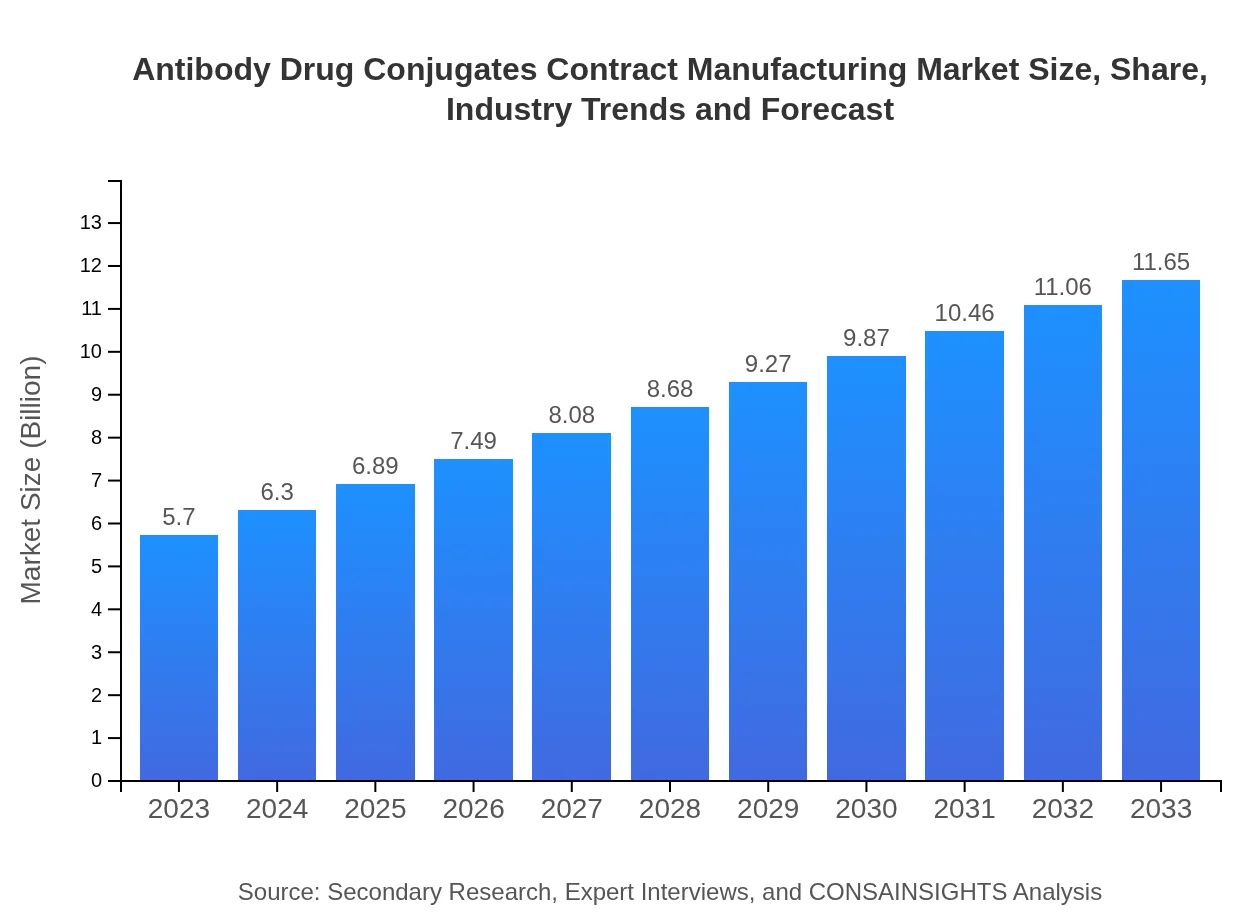
Antibody Drug Conjugates Contract Manufacturing Market — USD 5.7 billion in 2023, Growing to USD 11.65B by 2033 at 7.2% CAGR
This report provides comprehensive insights into the Antibody Drug Conjugates (ADCs) Contract Manufacturing market from 2023 to 2033, including market size, growth trends, regional analysis, and key players, making it essential for stakeholders in the biopharmaceutical industry.
Key Takeaways
- Global market grows from $5.70 Billion in 2023 to $11.65 Billion in 2033 with a 7.2% CAGR.
- North America is largest regional market, while no single fastest-growing region is stated because regional CAGR differences remain within 0.15 percentage points.
- North America leads regionally, expanding from $2.01 Billion in 2023 to $4.11 Billion in 2033.
- Europe increases from $1.66 Billion in 2023 to $3.39 Billion in 2033, reflecting sustained demand.
- Asia Pacific advances from $1.17 Billion in 2023 to $2.39 Billion in 2033 driven by biotech investments.
- Manufacturers and biopharmaceutical firms such as Boehringer Ingelheim, BMS (Bristol-Myers Squibb), and Lonza are prominent participants.
Antibody Drug Conjugates Contract Manufacturing Market Report — Executive Summary
North America remains largest market by forecast-period value, while no single fastest-growing region is stated because top regional growth rates are separated by less than 0.15 percentage points. The Antibody Drug Conjugates Contract Manufacturing market is positioned for steady expansion as demand for targeted therapies and specialized production rises. Market size reaches $5.70 Billion in 2023 and is estimated at $11.65 Billion by 2033, supported by a 7.2% CAGR for the 2023 to 2033 forecast period. Drivers include increasing outsourcing by biopharmaceutical companies, technological progress in linker and cytotoxic technologies, and stricter regulatory requirements that favor experienced contract manufacturers. Regional dynamics show North America as the largest market, with Europe and Asia Pacific also recording notable growth. The competitive landscape features established contract developers and manufacturers, including Boehringer Ingelheim, BMS (Bristol-Myers Squibb), and Lonza, investing in advanced capabilities. Research and development needs, coupled with regulatory compliance and customized small-batch production for personalized medicine, will continue to shape demand for full-service and fill & finish manufacturing offerings. This report synthesizes primary interviews, company publications, and internal validation to present an evidence-based market outlook for stakeholders planning capacity, partnerships, or investments.
Key Growth Drivers
- Rising outsourcing by biopharmaceutical companies seeking specialized ADC production expertise.
- Advances in linker and cytotoxic technologies that improve therapeutic specificity and manufacturability.
- Increased regulatory scrutiny requiring contract manufacturers with strong GMP compliance and approval process capabilities.
- Growing R&D activity in oncology and personalized medicine increasing demand for tailored manufacturing and small-batch runs.
- Strategic collaborations and investments by leading firms to expand production capacity and technical know-how.
| Metric | Value |
|---|---|
| Study Period | 2023 - 2033 |
| 2023 Market Size | $5.70 Billion |
| CAGR (2023-2033) | 7.2% |
| 2033 Market Size | $11.65 Billion |
| Top Companies | Boehringer Ingelheim, BMS (Bristol-Myers Squibb), Lonza |
| Published Date | 12 October 2024 |
| Last Modified Date | 25 May 2026 |
Antibody Drug Conjugates Contract Manufacturing Market Overview
Customize Antibody Drug Conjugates Contract Manufacturing Market Report market research report
- ✔ Get in-depth analysis of Antibody Drug Conjugates Contract Manufacturing market size, growth, and forecasts.
- ✔ Understand Antibody Drug Conjugates Contract Manufacturing's regional dynamics and industry-specific trends.
- ✔ Identify potential applications, end-user demand, and growth segments in Antibody Drug Conjugates Contract Manufacturing
What is the Market Size & CAGR of Antibody Drug Conjugates Contract Manufacturing Market Report market in 2023?
Antibody Drug Conjugates Contract Manufacturing Industry Analysis
Antibody Drug Conjugates Contract Manufacturing Market Segmentation and Scope
Tell us your focus area and get a customized research report.
Antibody Drug Conjugates Contract Manufacturing Market Report Market Analysis Report by Region
Europe Antibody Drug Conjugates Contract Manufacturing Market Report:
Europe grows from $1.66 Billion in 2023 to $3.39 Billion in 2033. Regional growth is driven by active oncology R&D, investments in linker and cytotoxic technologies, and reliance on specialized contract services meeting GMP and approval requirements.Asia Pacific Antibody Drug Conjugates Contract Manufacturing Market Report:
Asia Pacific grows from $1.17 Billion in 2023 to $2.39 Billion in 2033. Rising biotech investment, expanding clinical programs, and growing outsourcing by regional developers support demand for ADC manufacturing capacity and technical know-how.North America Antibody Drug Conjugates Contract Manufacturing Market Report:
North America is largest regional market, rising from $2.01 Billion in 2023 to $4.11 Billion in 2033. 01 Billion in 2023 and grows to $4.11 Billion in 2033. The region’s scale reflects strong demand for ADCs, concentrated biopharma activity, and preference for experienced contract manufacturers with advanced capabilities and regulatory expertise.South America Antibody Drug Conjugates Contract Manufacturing Market Report:
Latin America grows from $0.51 Billion in 2023 to $1.04 Billion in 2033. Growth reflects expanding biotech interests and the gradual uptake of outsourced ADC production solutions that address local development needs and regulatory frameworks.Middle East & Africa Antibody Drug Conjugates Contract Manufacturing Market Report:
Middle East and Africa grows from $0.35 Billion in 2023 to $0.71 Billion in 2033. The market benefits from incremental adoption of advanced therapies, increasing clinical activity, and selective investments in contract manufacturing infrastructure.Tell us your focus area and get a customized research report.
Research Methodology
Antibody Drug Conjugates Contract Manufacturing Market Analysis By Manufacturing Process
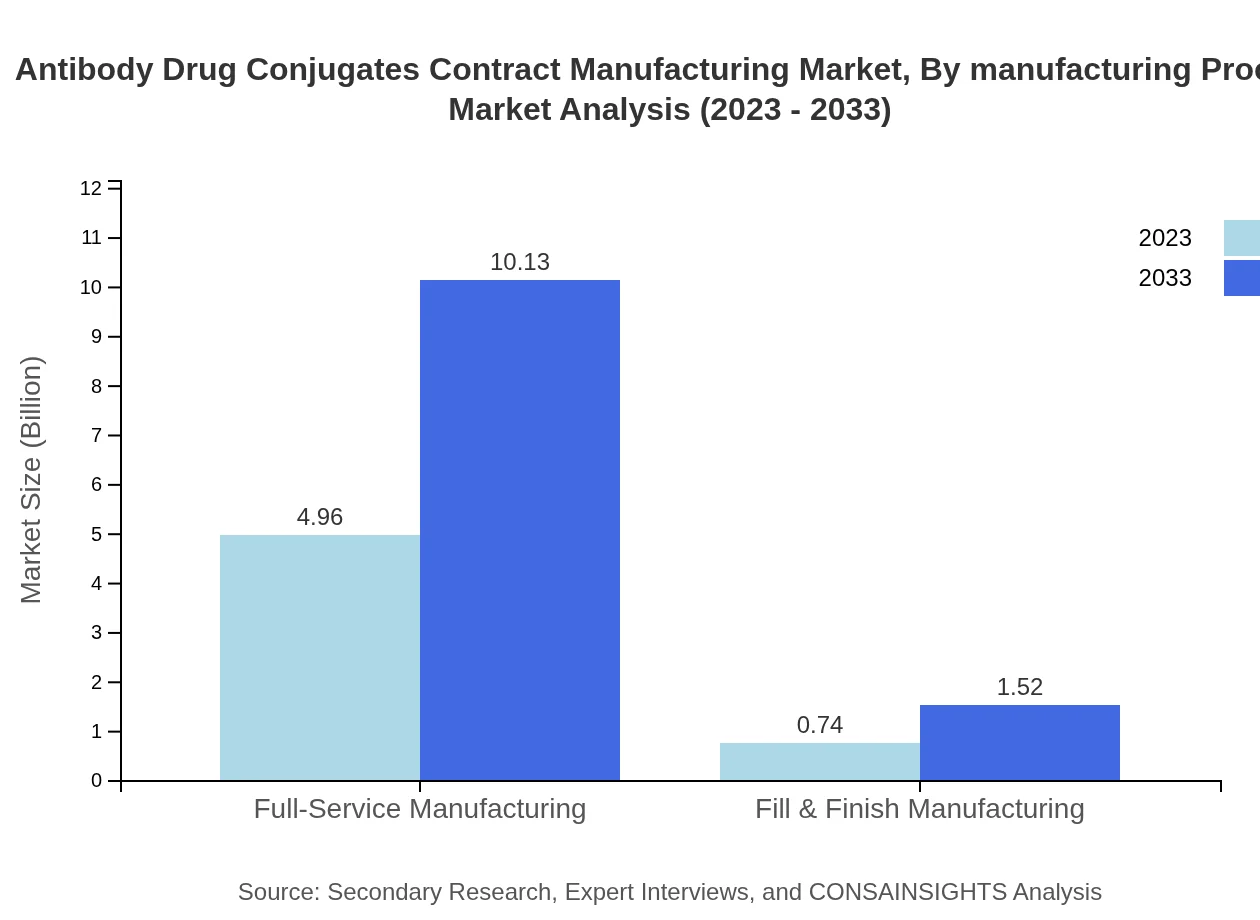
The manufacturing process segment includes full-service manufacturing and fill & finish services, with full-service manufacturing nearing $4.96 billion in 2023 and estimated to grow to $10.13 billion by 2033, capturing 86.95% share due to the preference for comprehensive service offerings by clients. Conversely, fill & finish manufacturing, while vital, holds a smaller market share, growing cautiously from $0.74 billion to $1.52 billion in the same period.
Antibody Drug Conjugates Contract Manufacturing Market Analysis By Therapeutic Area
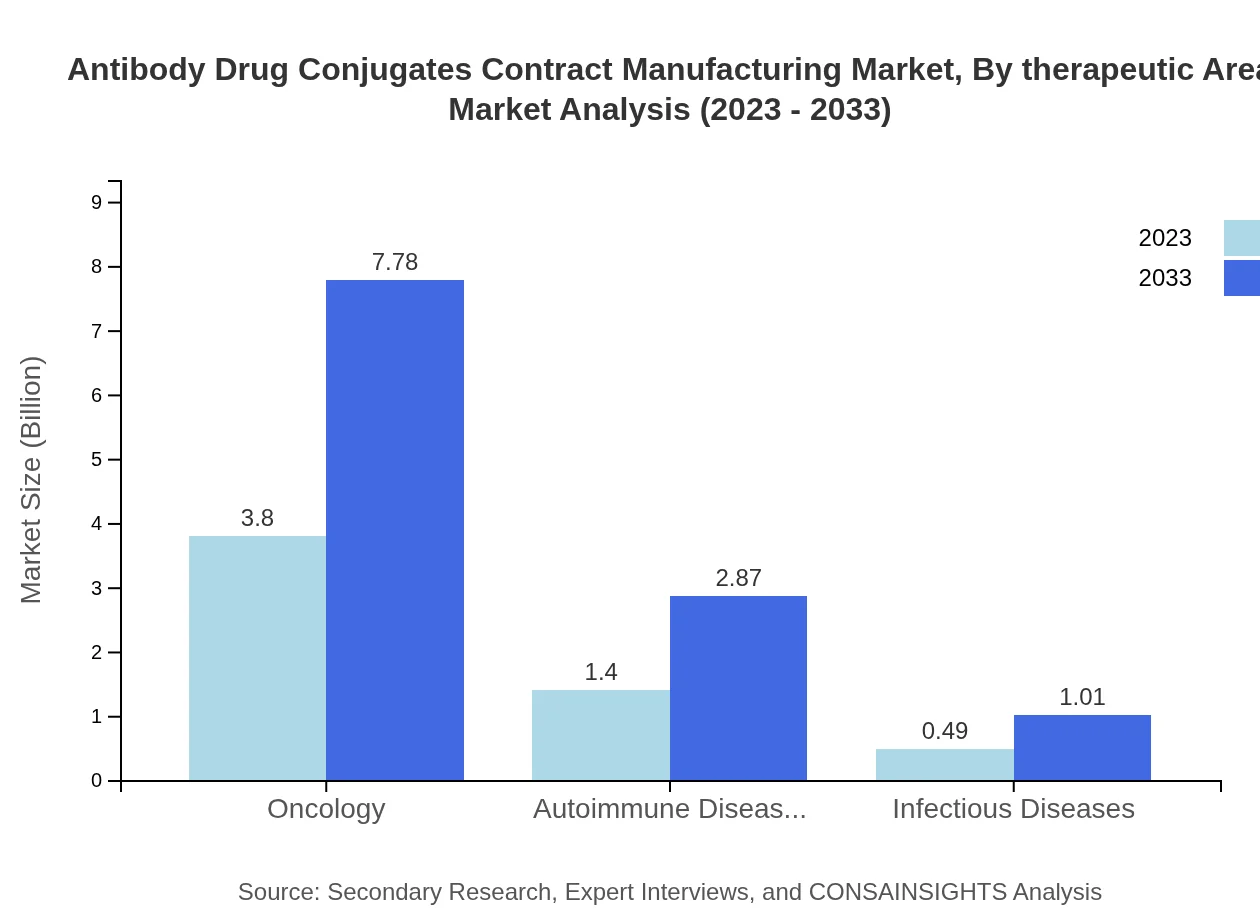
Focusing on therapeutic areas, oncology dominates with a significant market size increase from $3.80 billion in 2023 to $7.78 billion by 2033, maintaining a 66.75% share. Autoimmune diseases follow with growing segments, increasing from $1.40 billion to $2.87 billion. Infectious diseases represent a smaller segment, projected to rise from $0.49 billion to $1.01 billion.
Antibody Drug Conjugates Contract Manufacturing Market Analysis By Technology
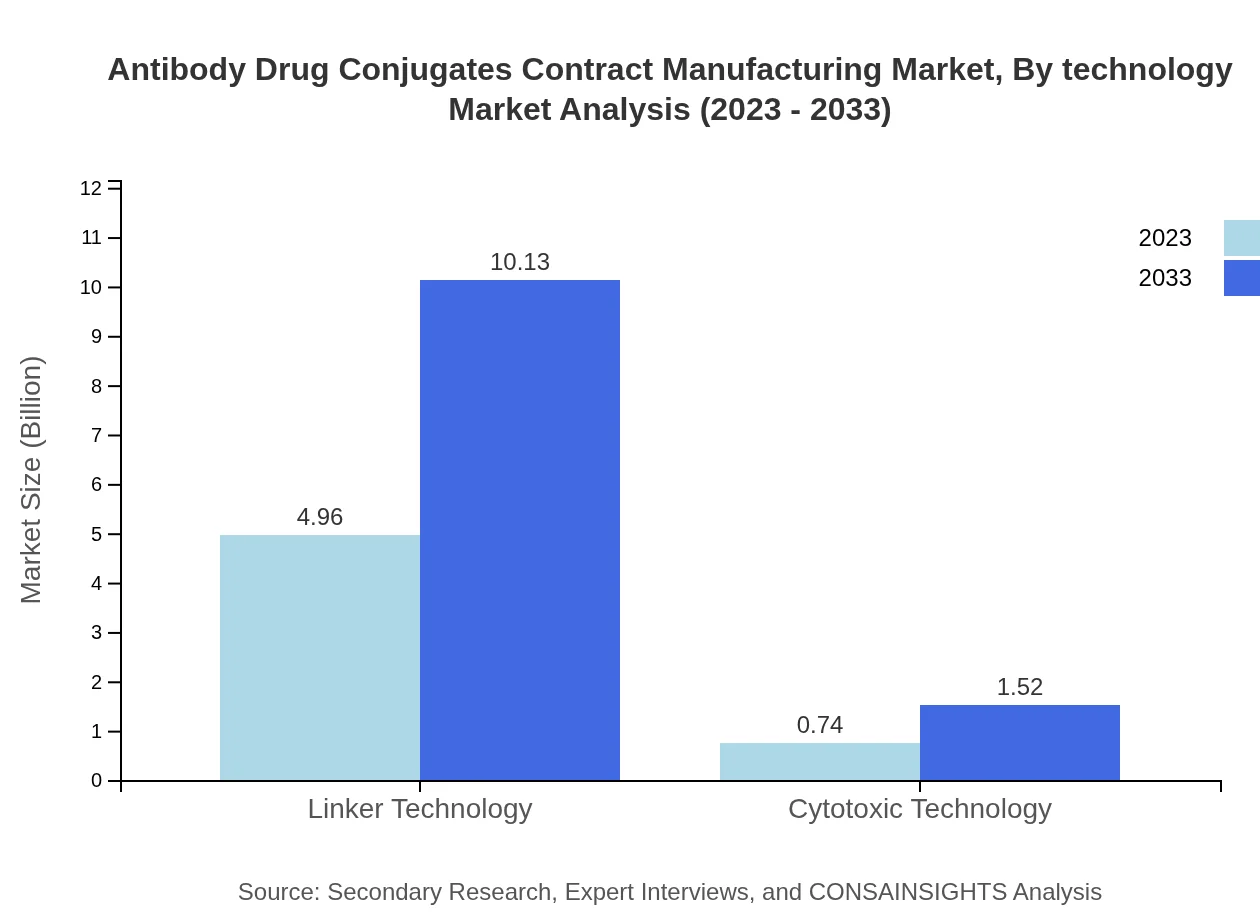
Linker technology and cytotoxic technology lead the technological segment, with linker technology growth mirroring the overall market from $4.96 billion to $10.13 billion. Cytotoxic technology demonstrates slower growth, from $0.74 billion to $1.52 billion, yet holds significant strategic relevance in developing high-efficacy ADCs.
Antibody Drug Conjugates Contract Manufacturing Market Analysis By End User
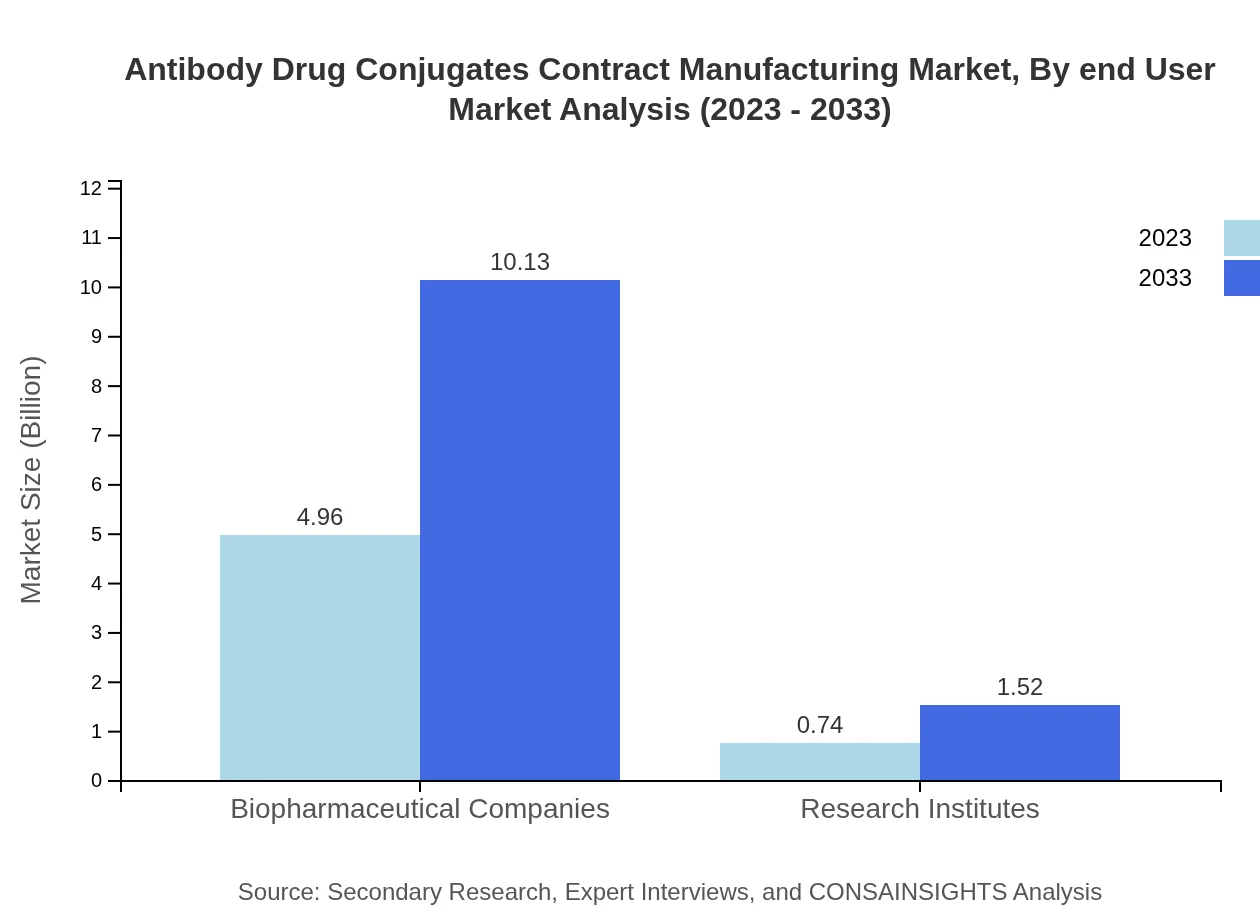
The end-user segment showcases strong demand from biopharmaceutical companies, expected to continue its dominance, with growth from $4.96 billion to $10.13 billion. Research institutes also contribute significantly, with a market increase from $0.74 billion to $1.52 billion, reflecting a collaborative effort in drug development.
Antibody Drug Conjugates Contract Manufacturing Market Analysis By Regulatory Compliance
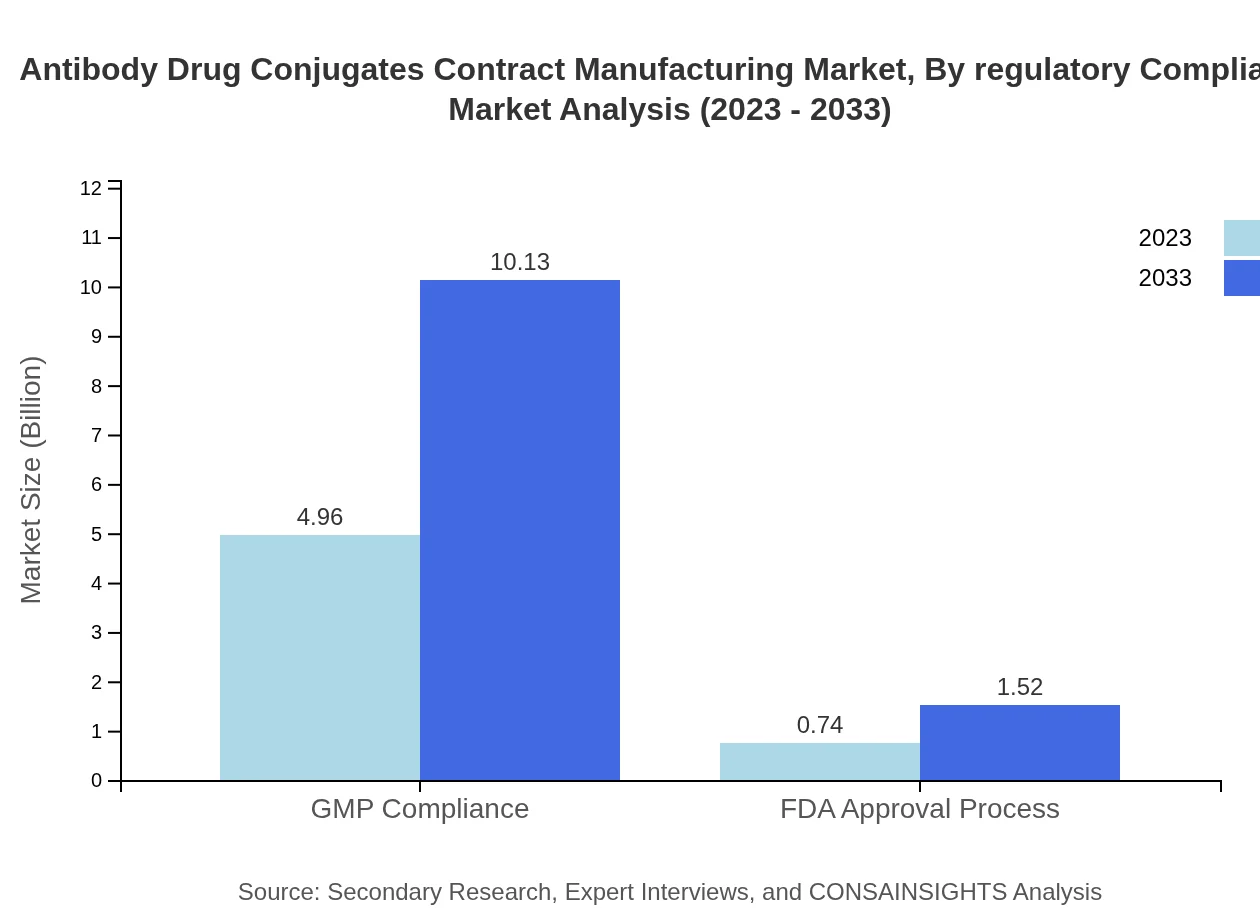
Regulatory compliance remains a critical factor, with GMP compliance ensuring safety and efficacy standards representing a giant segment at $4.96 billion growing to $10.13 billion. FDA approval processes follow, growing from $0.74 billion to $1.52 billion, emphasizing the importance of regulatory adherence in ADC manufacture.
Antibody Drug Conjugates Contract Manufacturing Market Trends and Future Forecast
Tell us your focus area and get a customized research report.
Global Market Leaders and Top Companies in Antibody Drug Conjugates Contract Manufacturing Industry
Boehringer Ingelheim:
Boehringer Ingelheim is a leading global player in biopharmaceutical contract manufacturing, offering innovative solutions for ADCs focusing on efficiency and quality control throughout the manufacturing cycle.BMS (Bristol-Myers Squibb):
Bristol-Myers Squibb has invested extensively in therapeutic development and utilizes ADCs as part of their cancer treatment portfolio, driving demand for contract manufacturing services that ensure high-quality production standards.Lonza:
Lonza is recognized for its integrated offerings in contract manufacturing, specializing in complex biopharmaceuticals including ADCs, with state-of-the-art facilities that enhance production capabilities.We're grateful to work with incredible clients.









FAQs
What is the market size in 2023?
The market size in 2023 is $5.70 Billion, as reported for the Antibody Drug Conjugates Contract Manufacturing market.
What is the projected market size in 2033?
The projected market size for 2033 is $11.65 Billion according to the provided forecast for the period 2023 to 2033.
What is CAGR for the forecast period?
The compound annual growth rate (CAGR) for the 2023 to 2033 forecast period is 7.2%, based on the supplied projection.
Is there a single fastest Growing region in the Antibody Drug Conjugates Contract Manufacturing Market Report market?
No single fastest-growing region is stated for the Antibody Drug Conjugates Contract Manufacturing Market Report market because the top regional implied CAGR values are within 0.15 percentage points of each other, making the ranking too close to call reliably.
Which companies are noted as top participants?
Top companies listed include Boehringer Ingelheim, BMS (Bristol-Myers Squibb), and Lonza as key market participants.
Why is regulatory compliance important in this market?
Regulatory compliance is critical due to complex manufacturing requirements for ADCs, necessitating GMP adherence and extensive approval process expertise from contract manufacturers.
What are common manufacturing service types cited?
Common service types include Full-Service Manufacturing and Fill & Finish Manufacturing, reflecting the range of contract offerings for ADC production.
How big is the Europe market in 2023 and 2033?
Europe is reported at $1.66 Billion in 2023 and is expected to reach $3.39 Billion by 2033, per the regional data provided.
How big is the Asia Pacific market in 2023 and 2033?
Asia Pacific is listed at $1.17 Billion in 2023 and increases to $2.39 Billion in 2033 according to the input figures.
Why are partnerships between biotech and CMOs increasing?
Partnerships are rising because biotechs seek manufacturing expertise and CMOs offer scalability, technical capabilities, and regulatory experience required for ADC development.