

Antiinfective Endotracheal Tube Market Report
First published: 23 October 2024 | Last updated: 25 May 2026 | Report Code: antiinfective-endotracheal-tube
Antiinfective Endotracheal Tube Market — USD 500 million in 2023, Growing to USD 873.17M by 2033 at 5.6% CAGR
This report provides a comprehensive analysis of the anti-infective endotracheal tube market, including key insights, segmentation, and forecasting from 2023 to 2033. It aims to give stakeholders an understanding of market dynamics, trends, and future growth potential.
Key Takeaways
- Global market expands from $500.00 Billion in 2023 to $873.17 Billion by 2033, reflecting a 5.6% CAGR over 2023 to 2033.
- Europe is largest regional market, while no single fastest-growing region is stated because regional CAGR differences remain within 0.15 percentage points.
- North America grows from $164.35 Billion in 2023 to $287.01 Billion in 2033, reflecting significant demand in clinical settings.
- Material and coating innovations, such as antimicrobial surfaces and advanced silicones, are central trends shaping product development.
- Key vendors include Medtronic, Boston Scientific, Teleflex, Smiths Medical, and Hollister Incorporated, focusing on research and regulatory approvals.
Antiinfective Endotracheal Tube Market Report — Executive Summary
Europe remains largest market by forecast-period value, while no single fastest-growing region is stated because top regional growth rates are separated by less than 0.15 percentage points. The Antiinfective Endotracheal Tube Market Report examines a market that increases from $500.00 Billion in 2023 to $873.17 Billion in 2033, recording a 5.6% CAGR over 2023 to 2033. Growth is supported by heightened attention to infection prevention in ICUs and operating rooms, rising respiratory care needs, and adoption of antimicrobial coatings and advanced materials. Europe is identified as the largest regional market with notable expansion. Manufacturers are investing in product innovation, clinical validation, and partnerships to address hospital-acquired infection concerns. The analysis covers segmentation by type, material, application and end user, and reviews competitive positioning among leading suppliers. Forecasts and recommendations are grounded in primary expert interviews, company disclosures, and validated secondary sources to inform stakeholders on demand drivers and strategic priorities.
Key Growth Drivers
- Greater emphasis on infection control in intensive care and surgical environments boosting demand for anti-infective intubation devices.
- Advances in antimicrobial coatings and materials, including silicone-based designs, enhancing clinical adoption and product differentiation.
- Rising prevalence of respiratory conditions and increased need for ventilatory support in hospital settings.
- Investments in healthcare infrastructure and heightened regulatory focus on patient safety encouraging procurement of specialized tubes.
- Manufacturers’ focus on R&D, clinical validation, and strategic collaborations to accelerate product approvals and market access.
| Metric | Value |
|---|---|
| Study Period | 2023 - 2033 |
| 2023 Market Size | $500.00 Million |
| CAGR (2023-2033) | 5.6% |
| 2033 Market Size | $873.17 Million |
| Top Companies | Medtronic , Boston Scientific, Teleflex, Smiths Medical, Hollister Incorporated |
| Published Date | 23 October 2024 |
| Last Modified Date | 25 May 2026 |

Anti-infective Endotracheal Tube Market Overview
Customize Antiinfective Endotracheal Tube Market Report market research report
- ✔ Get in-depth analysis of Antiinfective Endotracheal Tube market size, growth, and forecasts.
- ✔ Understand Antiinfective Endotracheal Tube's regional dynamics and industry-specific trends.
- ✔ Identify potential applications, end-user demand, and growth segments in Antiinfective Endotracheal Tube
What is the Market Size & CAGR of Antiinfective Endotracheal Tube Market Report market in 2023?
Anti-infective Endotracheal Tube Industry Analysis
Anti-infective Endotracheal Tube Market Segmentation and Scope
Tell us your focus area and get a customized research report.
Antiinfective Endotracheal Tube Market Report Market Analysis Report by Region
Europe Antiinfective Endotracheal Tube Market Report:
Europe is largest regional market, rising from $181.7 Billion in 2023 to $317.31 Billion in 2033. 7 Billion in 2023 to $317.31 Billion in 2033 and is identified as the largest regional market. Expansion is supported by strong hospital procurement, regulatory focus on patient safety, and adoption of antimicrobial tube technologies.Asia Pacific Antiinfective Endotracheal Tube Market Report:
Asia Pacific grows from $80.45 Billion in 2023 to $140.49 Billion in 2033. Growth drivers include rising respiratory disease burden, expanding hospital capacity, and greater uptake of advanced materials and coatings in clinical practice.North America Antiinfective Endotracheal Tube Market Report:
North America grows from $164.35 Billion in 2023 to $287.01 Billion in 2033. Regional growth is influenced by high demand in hospital intensive care units, investments in healthcare infrastructure, and clinical emphasis on reducing ventilator-associated infections.South America Antiinfective Endotracheal Tube Market Report:
Latin America grows from $11.1 Billion in 2023 to $19.38 Billion in 2033. Demand is shaped by improving access to hospital care, growing awareness of infection control, and gradual adoption of specialized endotracheal devices.Middle East & Africa Antiinfective Endotracheal Tube Market Report:
Middle East and Africa grows from $62.4 Billion in 2023 to $108.97 Billion in 2033. Regional expansion reflects investments in healthcare services, increased intensive care capabilities, and initiatives to reduce hospital-acquired infections.Tell us your focus area and get a customized research report.
Research Methodology
Antiinfective Endotracheal Tube Market Analysis By Type

The market is divided into cuffed and uncuffed endotracheal tubes. The cuffed endotracheal tubes held a significant market share of 83% in 2023, driven by their effectiveness in preventing air leaks during mechanical ventilation. By 2033, this segment is expected to grow from USD 415.00 million to USD 724.73 million. Uncuffed endotracheal tubes, although accounting for a smaller share, are also forecasted to expand their market presence as they are preferred in certain pediatric applications.
Antiinfective Endotracheal Tube Market Analysis By Material

The anti-infective endotracheal tube market is segmented by material types, primarily focusing on polyvinyl chloride (PVC), silicone, and others. PVC dominates the market, accounting for 64.87% share valued at USD 324.35 million in 2023, expected to reach USD 566.42 million by 2033. Silicone-based tubes are gaining traction due to their biocompatibility, with growth from USD 144.75 million to USD 252.78 million by 2033.
Antiinfective Endotracheal Tube Market Analysis By Application
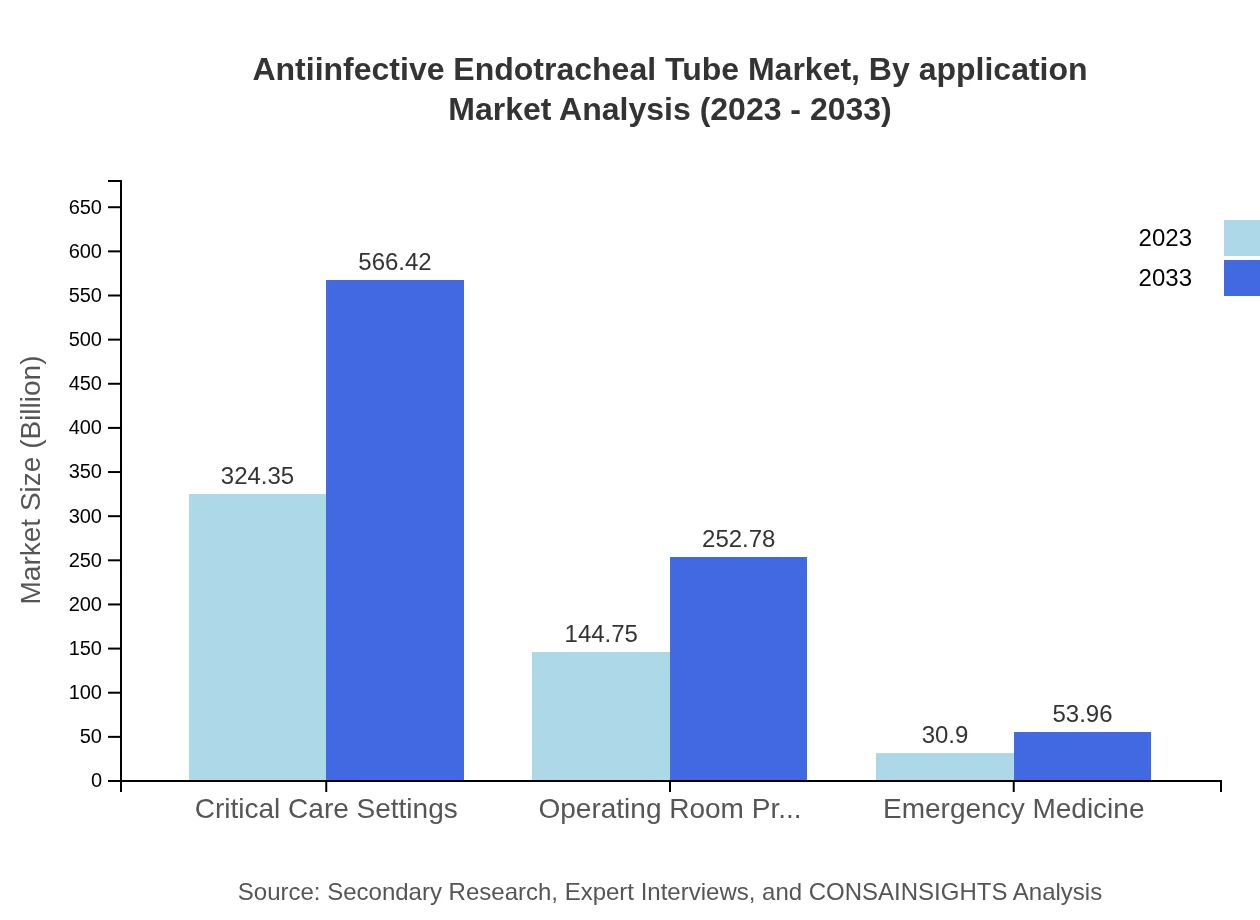
Applications for anti-infective endotracheal tubes include emergency medicine, operating room procedures, and critical care settings. Critical care settings hold a dominant market share, valued at USD 324.35 million in 2023, and are expected to grow significantly due to an increase in ICU admissions. Operating room procedures are also significant, with expected growth from USD 144.75 million to USD 252.78 million by 2033.
Antiinfective Endotracheal Tube Market Analysis By End User
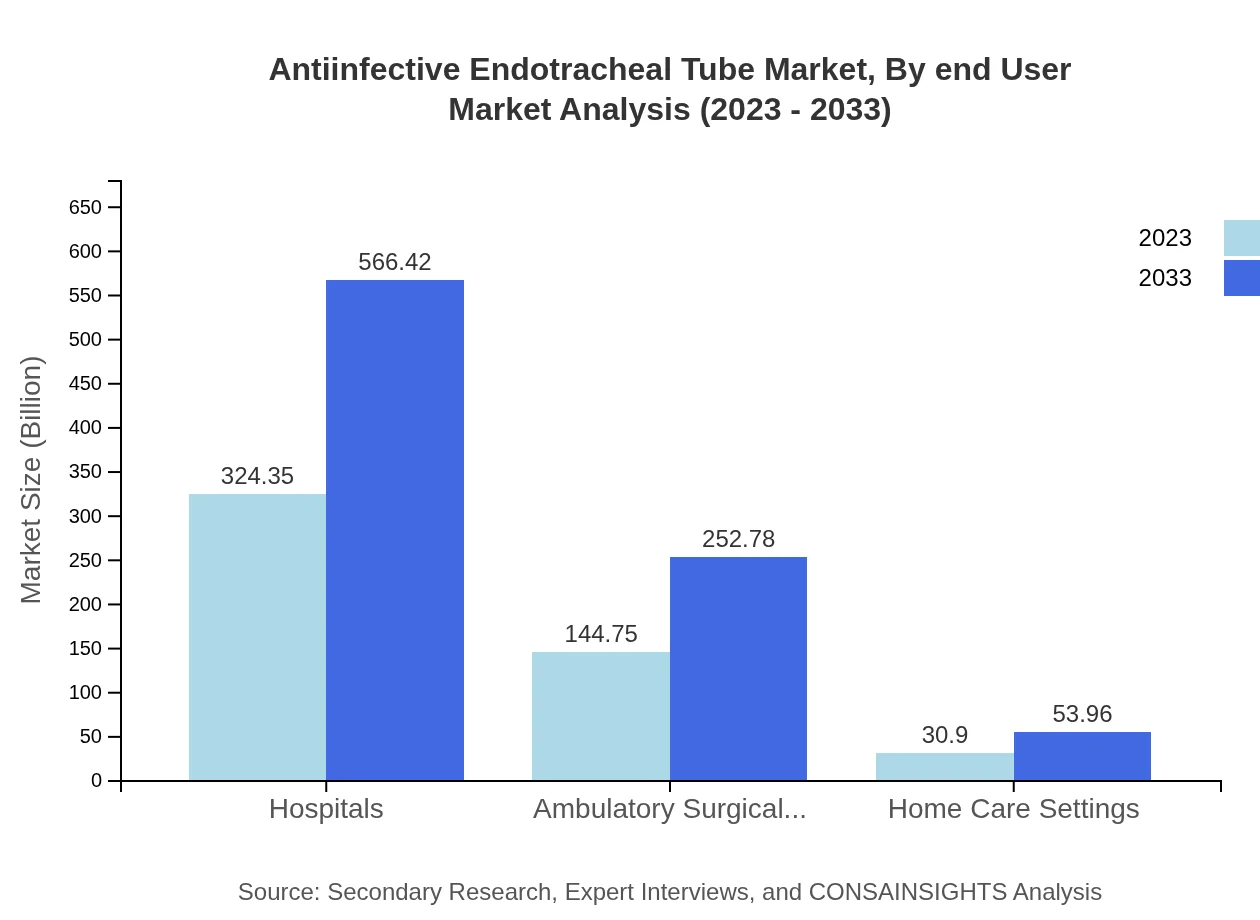
Key end-users of the anti-infective endotracheal tube market include hospitals, ambulatory surgical centers, and home care settings. Hospitals represent the primary sector, capturing 64.87% of the market with a valuation of USD 324.35 million in 2023 and projected to reach USD 566.42 million by 2033. Ambulatory surgical centers and home care settings also contribute to market growth, although on a smaller scale.
Antiinfective Endotracheal Tube Market Analysis By Advanced Features
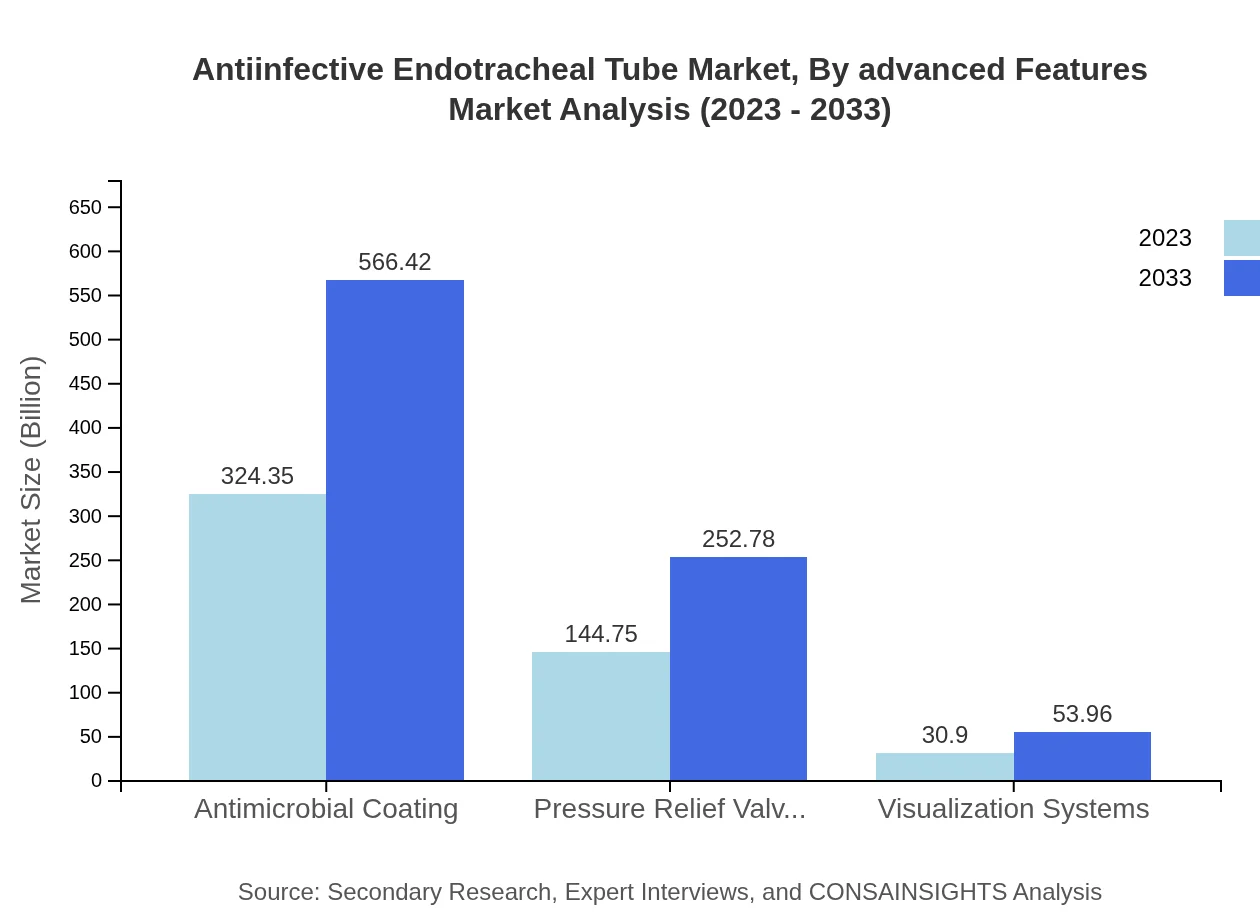
Advanced features of anti-infective endotracheal tubes include antimicrobial coatings, pressure relief valves, and visualization systems. Antimicrobial coatings dominate the market, with a size of USD 324.35 million in 2023 and anticipated to reach USD 566.42 million by 2033. Pressure relief valves and visualization systems are also vital, providing enhanced safety during intubation and ventilation procedures.
Anti-infective Endotracheal Tube Market Trends and Future Forecast
Tell us your focus area and get a customized research report.
Global Market Leaders and Top Companies in Anti-infective Endotracheal Tube Industry
Medtronic :
A leading global healthcare solutions company, Medtronic specializes in medical devices and therapies, including advanced respiratory solutions like anti-infective endotracheal tubes.Boston Scientific:
Boston Scientific focuses on innovative medical solutions, with a significant presence in respiratory devices and critical care applications.Teleflex:
Teleflex is recognized for its diversified portfolio in medical devices, especially in anesthesiology and critical care, providing essential tools for professionals.Smiths Medical:
Specializing in infusion therapy, respiratory care, and vital care products, Smiths Medical offers a range of anti-infective endotracheal tubes to improve patient safety.Hollister Incorporated:
Hollister is known for its commitment to patient care and extensive solutions in the medical sector, including respiratory management technologies.We're grateful to work with incredible clients.








FAQs
What is the market size of the Antiinfective Endotracheal Tube Market Report in 2023?
The market size in 2023 is $500.00 Billion, as stated in the report data provided, representing the baseline for the 2023 to 2033 forecast period.
How big will the market be in 2033?
The projected market value for 2033 is $873.17 Billion according to the supplied forecast figures, reflecting growth over the 2023 baseline.
What is CAGR of the market over the forecast period?
The reported compound annual growth rate for 2023 to 2033 is 5.6%, as specified in the input data for the forecast horizon.
Why is Europe highlighted in the report?
Europe is identified as the largest regional market, growing from $181.7 Billion in 2023 to $317.31 Billion in 2033, reflecting its substantial end-period market value.
Which companies lead the competitive landscape?
Top companies listed in the input include Medtronic, Boston Scientific, Teleflex, Smiths Medical, and Hollister Incorporated, noted for product development and market presence.
What are primary trends affecting market growth?
Key trends include adoption of antimicrobial coatings, material innovations, and increased institutional focus on reducing hospital-acquired infections in critical care.
Who provided input for the research methodology?
Research methodology includes primary interviews with industry experts and secondary research from company reports and publications, as specified in the data.
How big is the North American market in 2023?
North America is reported at $164.35 Billion in 2023, based on the regional figures supplied in the input dataset.
What drives adoption in hospital settings?
Adoption in hospitals is driven by infection-control priorities, ICU demand for ventilatory support, and procurement of devices with validated antimicrobial properties.
Is there a single fastest Growing region in the Antiinfective Endotracheal Tube Market Report market?
No single fastest-growing region is stated for the Antiinfective Endotracheal Tube Market Report market because the top regional implied CAGR values are within 0.15 percentage points of each other, making the ranking too close to call reliably.