
Reports >
Life Sciences
>
Antimicrobial Suture Market Report

Antimicrobial Suture Market Report
First published: 20 October 2024 | Last updated: 25 May 2026 | Report Code: antimicrobial-suture
Antimicrobial Suture Market — USD 500 million in 2023, Growing to USD 982.72M by 2033 at 6.8% CAGR
This report provides a comprehensive analysis of the Antimicrobial Suture market, exploring its current landscape, market size, and CAGR from 2023 to 2033. It also delves into industry trends, segmentation, and regional insights, offering valuable forecasts and challenges that may impact growth.
Key Takeaways
- Global market expected to expand from $500.00 Billion in 2023 to $982.72 Billion by 2033 at a 6.8% CAGR.
- North America is largest regional market, while no single fastest-growing region is stated because regional CAGR differences remain within 0.15 percentage points.
- Europe, Asia Pacific, Latin America and Middle East & Africa show notable increases in absolute market value over the forecast.
- Leading players include Ethicon, Inc., B Braun Melsungen AG, Medtronic and COLLABORATIVE, driving product innovation and collaborations.
- Market growth supported by rising surgical volumes, infection-prevention priorities and advances in suture materials and antimicrobial formulations.
Antimicrobial Suture Market Report — Executive Summary
North America remains largest market by forecast-period value, while no single fastest-growing region is stated because top regional growth rates are separated by less than 0.15 percentage points. The Antimicrobial Suture market is forecast to increase from $500.00 Billion in 2023 to $982.72 Billion in 2033 at a compound annual growth rate of 6.8% for the period 2023 to 2033. Expansion is driven by growing surgical procedure volumes, heightened focus on preventing surgical site infections and continuous improvements in suture technology and antimicrobial additives. Geographic demand varies, with North America representing the largest regional market based on end-period value. Key market participants such as Ethicon, Inc., B Braun Melsungen AG, Medtronic and COLLABORATIVE emphasize research, product development and strategic alliances. Segmentation spans absorbable and non-absorbable sutures, materials including silk and synthetic polymers, and end users such as hospitals and ambulatory surgical centers. Regulatory considerations and pricing pressures remain material constraints, while ambulatory and minimally invasive surgery trends create new opportunities for next-generation products.
Key Growth Drivers
- Higher volumes of surgical procedures increasing need for infection-control sutures.
- Greater awareness and institutional focus on reducing surgical site infections in healthcare facilities.
- Ongoing material innovation and incorporation of antimicrobial agents into suture products.
- Expansion of outpatient and ambulatory surgical settings supporting demand for advanced sutures.
- Strategic initiatives and product development by major industry players enhancing market offerings.
| Metric | Value |
|---|---|
| Study Period | 2023 - 2033 |
| 2023 Market Size | $500.00 Million |
| CAGR (2023-2033) | 6.8% |
| 2033 Market Size | $982.72 Million |
| Top Companies | Ethicon, Inc., B Braun Melsungen AG, Medtronic , COLLABORATIVE |
| Published Date | 20 October 2024 |
| Last Modified Date | 25 May 2026 |

Antimicrobial Suture Market Overview
Customize Antimicrobial Suture Market Report market research report
- ✔ Get in-depth analysis of Antimicrobial Suture market size, growth, and forecasts.
- ✔ Understand Antimicrobial Suture's regional dynamics and industry-specific trends.
- ✔ Identify potential applications, end-user demand, and growth segments in Antimicrobial Suture
What is the Market Size & CAGR of Antimicrobial Suture Market Report market in 2023?
Antimicrobial Suture Industry Analysis
Antimicrobial Suture Market Segmentation and Scope
Tell us your focus area and get a customized research report.
Antimicrobial Suture Market Report Market Analysis Report by Region
Europe Antimicrobial Suture Market Report:
Europe grows from $142.75 Billion in 2023 to $280.57 Billion in 2033. Regional expansion is linked to infection-control priorities, healthcare investments and uptake of advanced surgical materials.Asia Pacific Antimicrobial Suture Market Report:
Asia Pacific grows from $99.2 Billion in 2023 to $194.97 Billion in 2033. Growth drivers include expanding healthcare infrastructure, rising procedural rates and greater access to advanced medical products.North America Antimicrobial Suture Market Report:
North America is largest regional market, rising from $182.15 Billion in 2023 to $358 Billion in 2033. Demand is underpinned by high surgical procedure volumes, established healthcare infrastructure, and adoption of advanced suture technologies.South America Antimicrobial Suture Market Report:
Latin America grows from $34.3 Billion in 2023 to $67.41 Billion in 2033. Market movement reflects wider availability of surgical services and growing emphasis on infection prevention in clinical care.Middle East & Africa Antimicrobial Suture Market Report:
Middle East and Africa grows from $41.6 Billion in 2023 to $81.76 Billion in 2033. Increasing healthcare capacity, investments in clinical standards and greater adoption of improved materials support the regional market.Tell us your focus area and get a customized research report.
Research Methodology
Antimicrobial Suture Market Analysis By Product
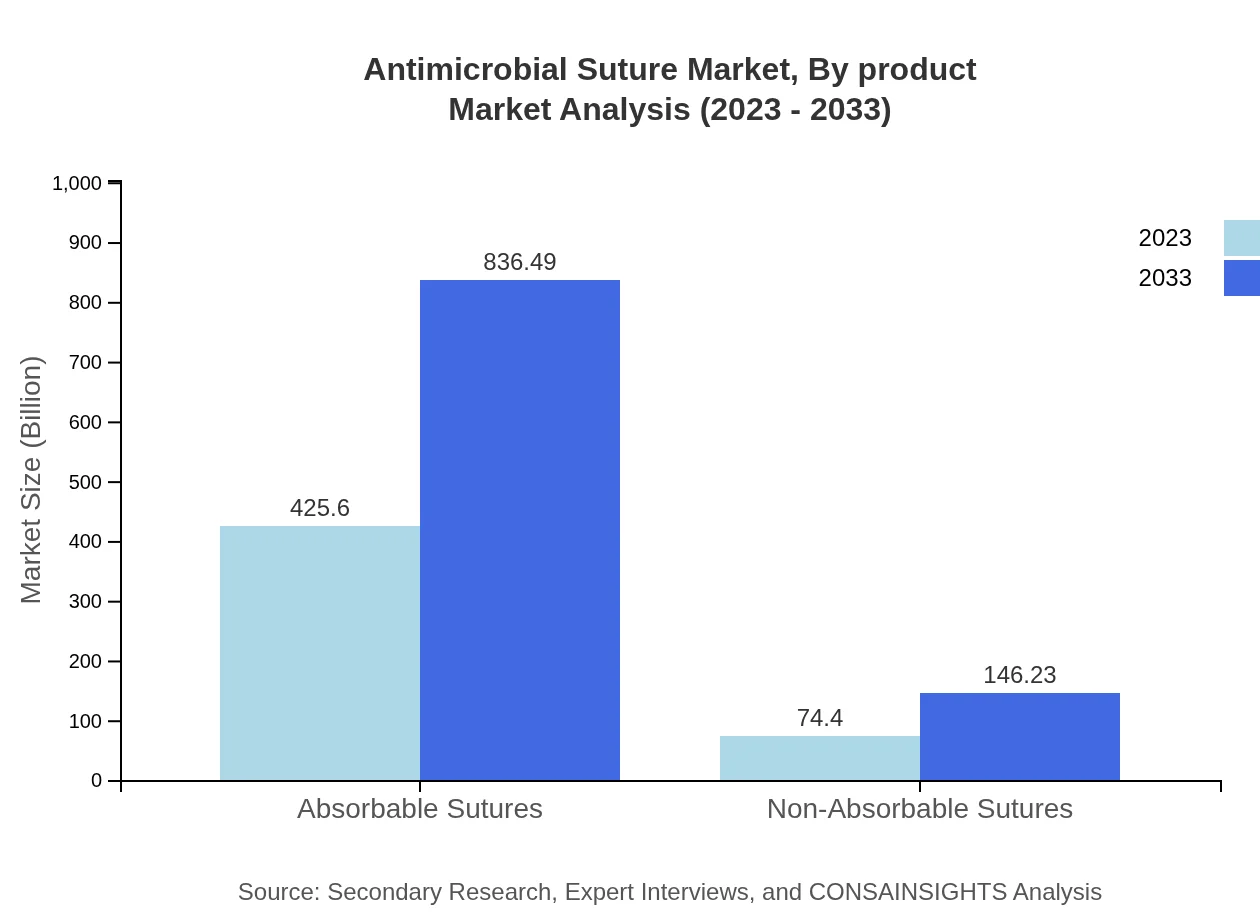
The Antimicrobial Suture market exhibits a diverse product range, primarily comprising absorbable and non-absorbable sutures. Absorbable sutures are projected to experience substantial demand, driven by their effectiveness in clinical settings. Forecasts indicate that the absorbable suture market will rise from $425.60 million in 2023 to $836.49 million by 2033, while the non-absorbable segment is expected to grow from $74.40 million to $146.23 million in the same period.
Antimicrobial Suture Market Analysis By Application
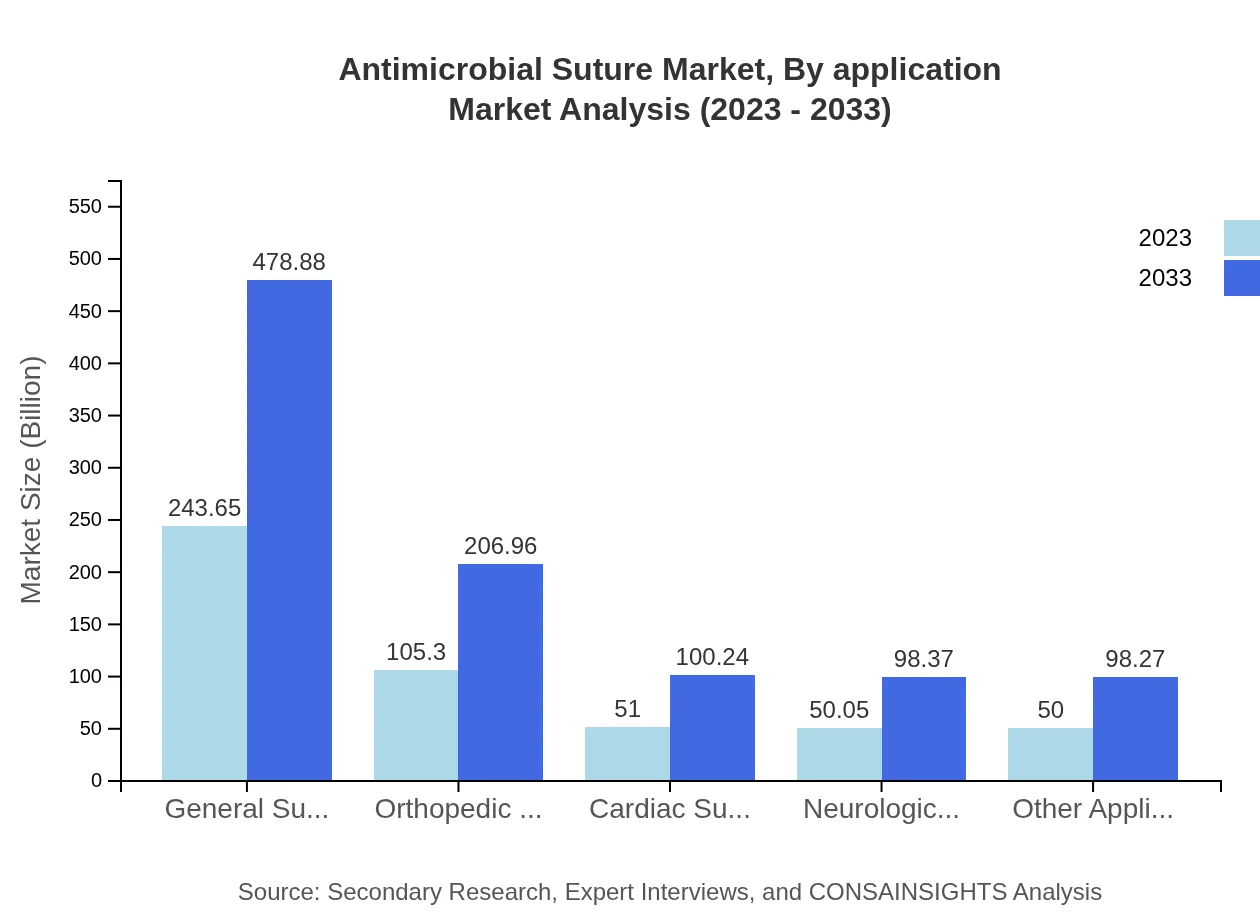
Applications of antimicrobial sutures span various surgical specialties. General surgery holds the largest market share with an increase from $243.65 million in 2023 to $478.88 million by 2033. Orthopedic and cardiac surgeries also present substantial market segments, expected to grow significantly due to advanced surgical techniques and increasing treatment rates.
Antimicrobial Suture Market Analysis By Material
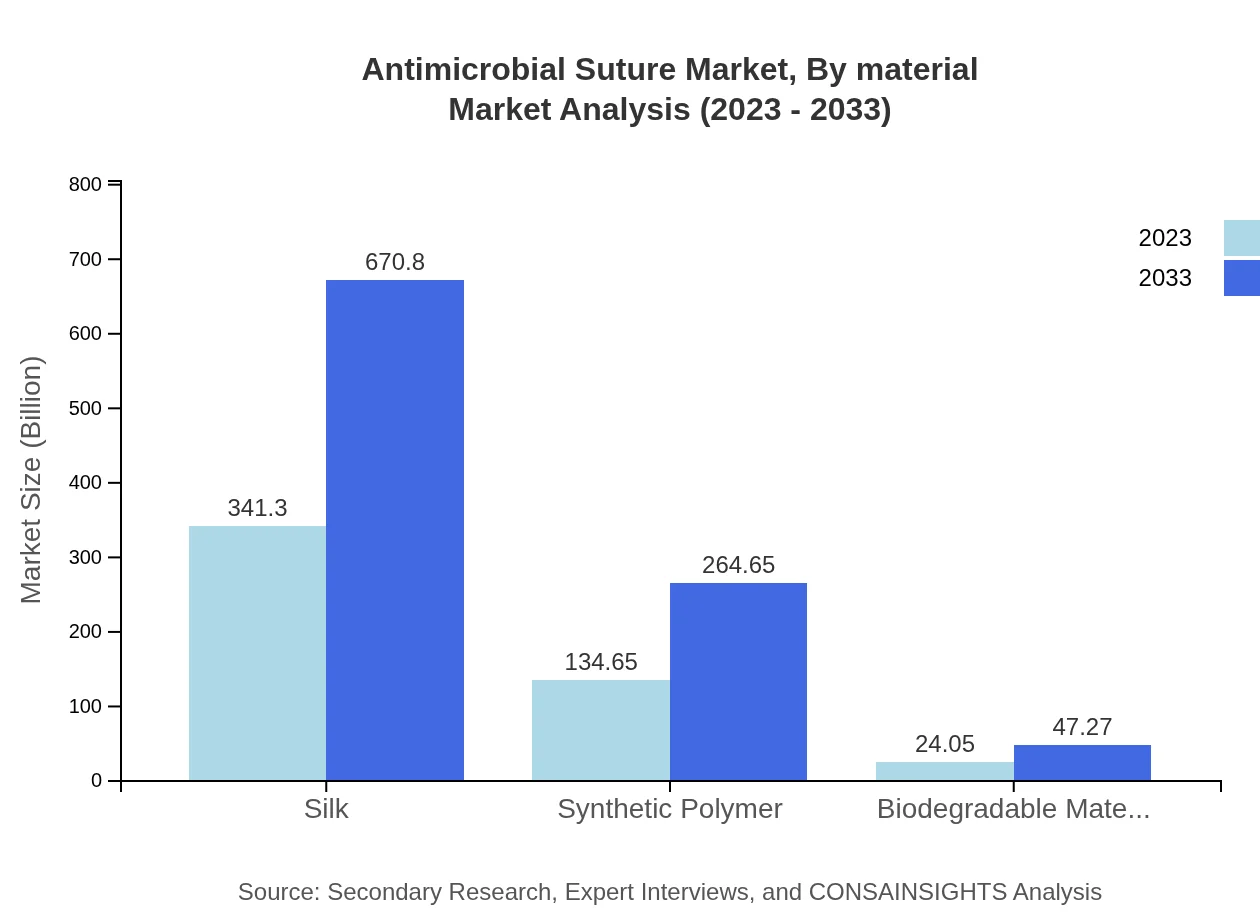
In terms of materials, silk sutures dominate the market, projected to increase in value from $341.30 million in 2023 to $670.80 million by 2033. Synthetic polymers and biodegradable materials are expected to grow progressively as healthcare practitioners aim for more customizable and environmentally friendly options in surgical procedures.
Antimicrobial Suture Market Analysis By End User
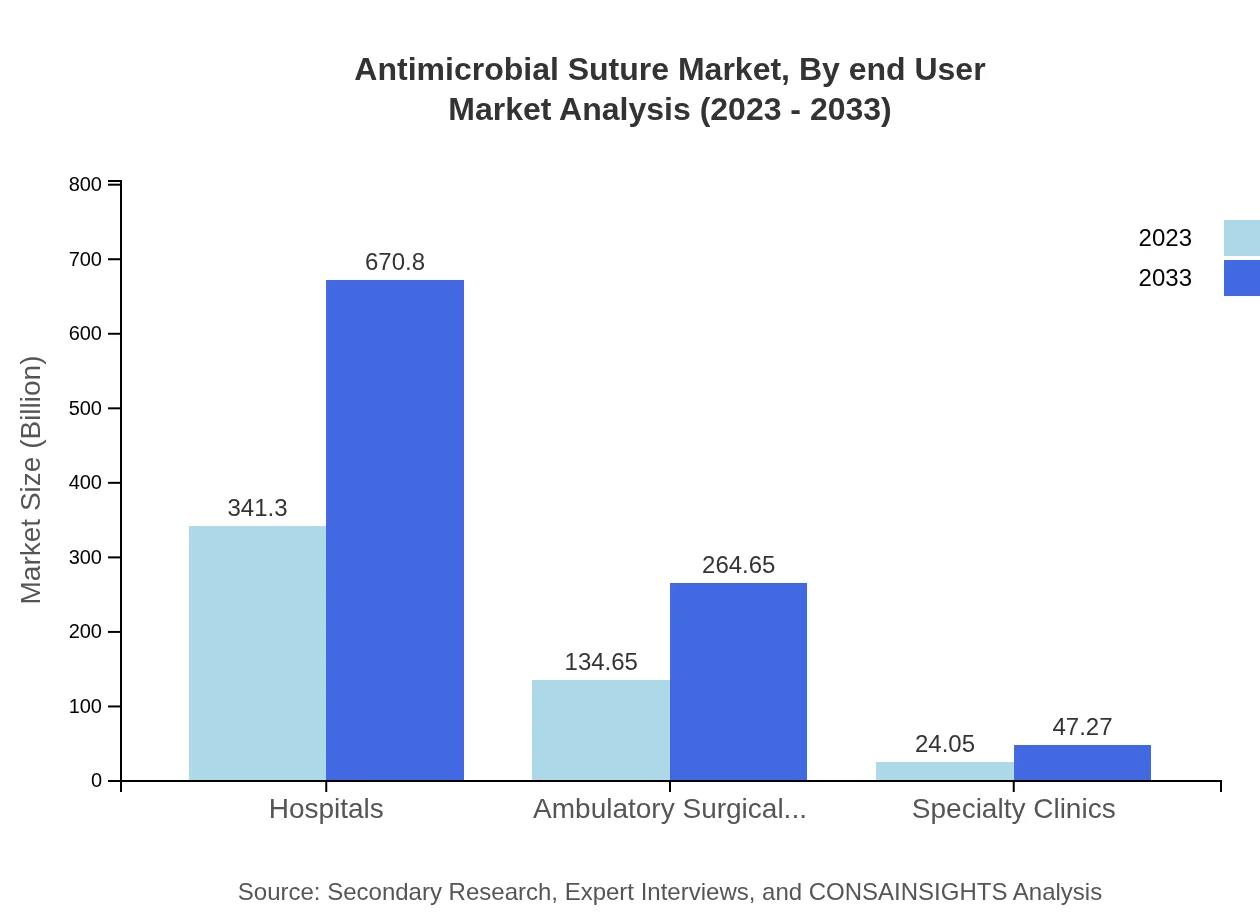
Hospitals lead the market in terms of end-users, with a projected size increase from $341.30 million in 2023 to $670.80 million by 2033. Ambulatory Surgical Centers are also increasing their share owing to the rise of outpatient surgeries, with growth from $134.65 million to $264.65 million over the same period.
Antimicrobial Suture Market Analysis By Geographic Region
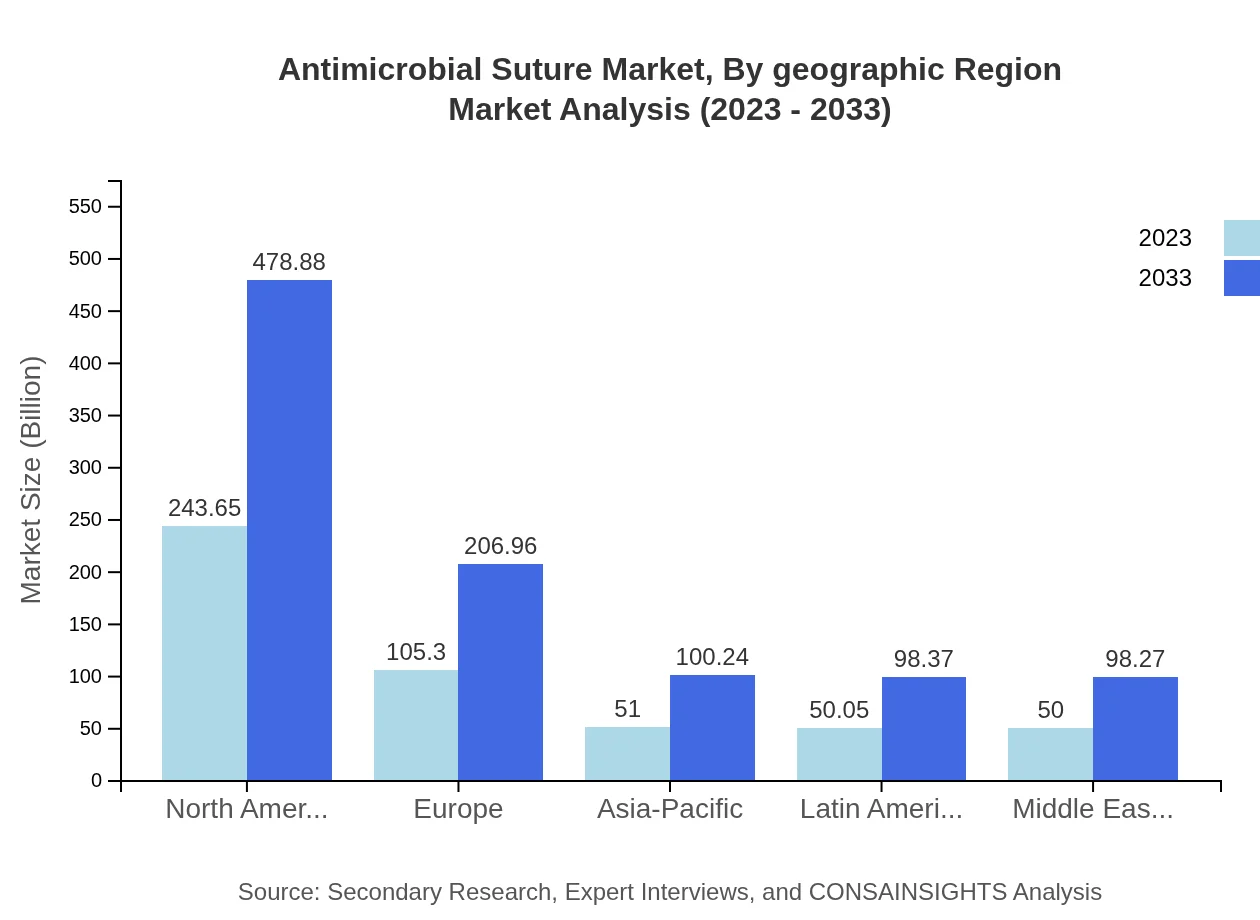
Geographic distribution of the Antimicrobial Suture market reflects a growing preference for advanced suturing techniques across North America, Europe, Asia-Pacific, South America, and the Middle East & Africa. Each region is adapting to specific healthcare needs influenced by economic factors and patient safety concerns, showcasing dynamic growth potentials.
Antimicrobial Suture Market Trends and Future Forecast
Tell us your focus area and get a customized research report.
Global Market Leaders and Top Companies in Antimicrobial Suture Industry
Ethicon, Inc.:
A subsidiary of Johnson & Johnson, Ethicon is a renowned name in the surgical suture market, known for its innovative and high-quality products, including a variety of antimicrobial sutures.B Braun Melsungen AG:
B Braun specializes in various medical devices, including advanced suturing solutions. Their commitment to improving surgical outcomes makes them a key player in the antimicrobial suture segment.Medtronic :
Medtronic is a technology-driven company that offers wide-ranging surgical products, including antimicrobial sutures designed for various surgical specialties.COLLABORATIVE:
As a manufacturer focused on providing innovative surgical solutions, COLLABORATIVE plays a critical role in the antimicrobial suture market by continuously improving their product offerings.We're grateful to work with incredible clients.








FAQs
What is the market size of the Antimicrobial Suture market in 2023?
The market size in 2023 is $500.00 Billion as reported for the Antimicrobial Suture segment.
How big will the Antimicrobial Suture market be in 2033?
The Antimicrobial Suture market is projected to reach $982.72 Billion by 2033 according to the provided forecast.
What is CAGR for the Antimicrobial Suture market between 2023 and 2033?
The reported compound annual growth rate for the market from 2023 to 2033 is 6.8%.
Is there a single fastest Growing region in the Antimicrobial Suture Market Report market?
No single fastest-growing region is stated for the Antimicrobial Suture Market Report market because the top regional implied CAGR values are within 0.15 percentage points of each other, making the ranking too close to call reliably.
Which companies are listed as top players in the market?
Top companies named in the report include Ethicon, Inc., B Braun Melsungen AG, Medtronic and COLLABORATIVE.
What are key market segments covered in the report?
Segments include product types (absorbable and non-absorbable), materials like silk and synthetic polymers, applications, and end users such as hospitals.
How does product innovation influence the market?
Innovation in antimicrobial formulations and suture materials supports enhanced clinical performance and drives adoption across surgical settings.
What factors could constrain market growth?
Regulatory requirements and pricing pressures on manufacturers are noted as constraints that could affect market expansion.
Who are the primary end users for antimicrobial sutures?
Primary end users include hospitals, ambulatory surgical centers and specialty clinics as outlined in the segmentation.
What research methods were used to compile the report?
The study used primary interviews with industry experts, secondary company reports and publications, and data triangulation with internal validation.