

Automated External Defibrillator Market Report
First published: 11 October 2024 | Last updated: 28 May 2026 | Report Code: automated-external-defibrillator
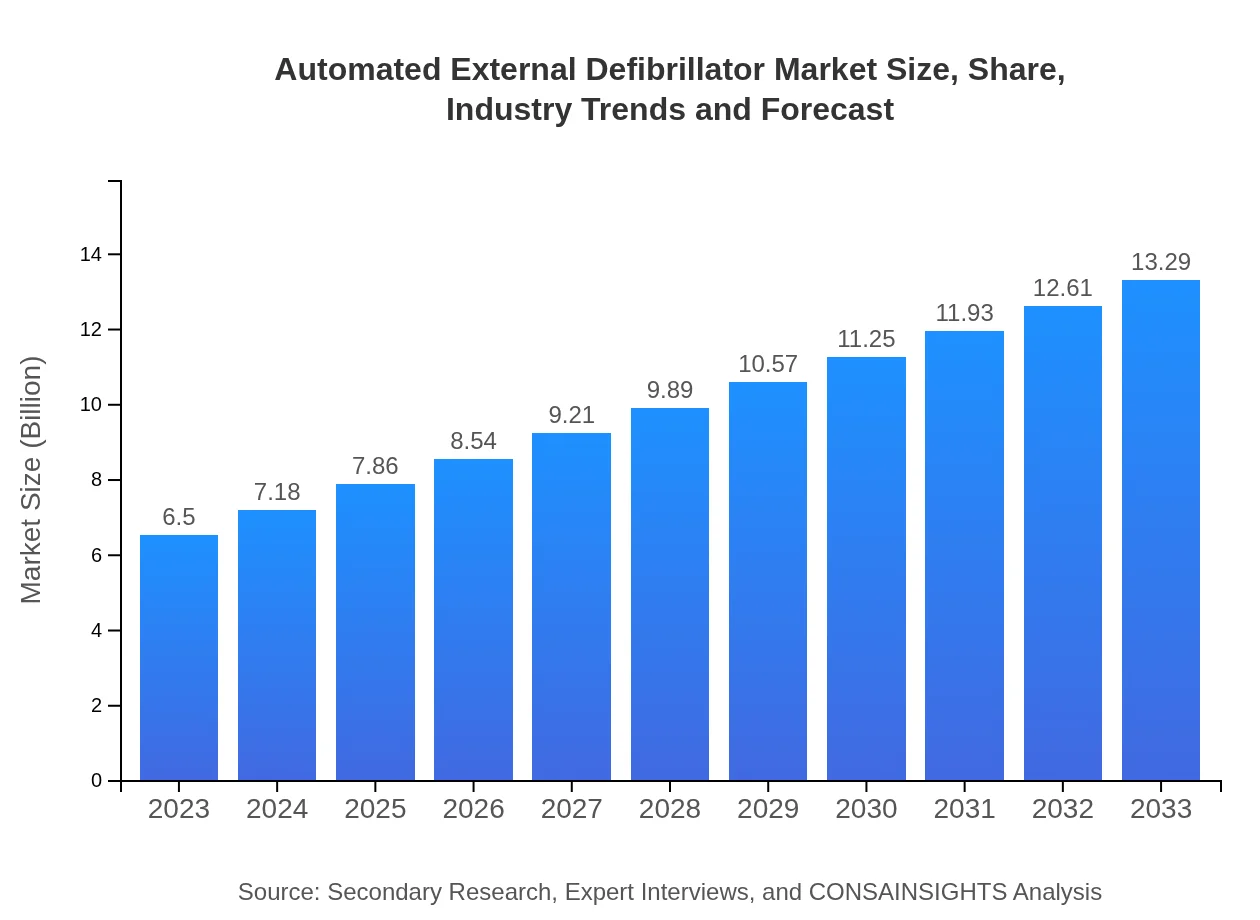
Automated External Defibrillator Market — USD $6.5 Billion in 2023, Growing to USD 13.29null by 2033 at 7.2% CAGR
This report provides a comprehensive analysis of the Automated External Defibrillator (AED) market from 2023 to 2033, offering insights into market size, growth trends, regional performance, and segment dynamics.
Key Takeaways
- Global market size grows from $6.50 Billion in 2023 to $13.29 Billion in 2033, with an overall CAGR of 7.2%.
- North America is largest regional market; Latin America is regional market region based on implied CAGR across 2023 to 2033.
- Latin America is identified as the regional market region, expanding from $0.37 Billion in 2023 to $0.77 Billion in 2033 (7.60% implied).
- Europe and Asia Pacific show substantial gains: Europe from $1.68 Billion to $3.44 Billion, Asia Pacific from $1.26 Billion to $2.58 Billion.
- Key vendors include ZOLL Medical Corporation, Cardiac Science Corporation, Philips Healthcare, Medtronic, and Physio-Control.
Automated External Defibrillator Market Report — Executive Summary
Regional analysis shows North America as largest market and Latin America as fastest-growing region by implied CAGR. The Automated External Defibrillator market is forecast to expand from $6.50 Billion in 2023 to $13.29 Billion by 2033 at a 7.2% CAGR between 2023 and 2033. Adoption is driven by increased public and institutional deployment, regulatory emphasis on emergency preparedness, and improved device usability. Regional dynamics vary: North America registers the largest market value, while Latin America is the regional market region by implied CAGR. Product segmentation covers manual, semi-automated, and fully automated AEDs; end users include healthcare facilities, corporate locations, educational institutions, and community services. Technology types such as bi-phasic and mono-phasic devices and distribution channels including direct, online, and retail sales shape go-to-market approaches. Leading players—ZOLL Medical Corporation, Cardiac Science Corporation, Philips Healthcare, Medtronic, and Physio-Control—remain focal to competitive activity. The report highlights demand drivers, regulatory influences, and opportunities for stakeholders to prioritize deployment, training, and partnerships to enhance AED accessibility and response readiness.
Key Growth Drivers
- Regulatory initiatives and public safety mandates increasing AED placement in public and institutional settings.
- Rising awareness of sudden cardiac arrest and emphasis on rapid response protocols in workplaces and educational facilities.
- Technological advances improving device usability and reliability, facilitating broader non-clinical adoption.
- Expansion of emergency preparedness programs across healthcare and community services boosting procurement and training demand.
- Distribution channel diversification, including online and direct sales, increasing access for many end users.
| Metric | Value |
|---|---|
| Study Period | 2023 - 2033 |
| 2023 Market Size | $6.50 Billion |
| CAGR (2023-2033) | 7.2% |
| 2033 Market Size | $13.29 Billion |
| Top Companies | ZOLL Medical Corporation, Cardiac Science Corporation, Philips Healthcare, Medtronic , Physio-Control |
| Published Date | 11 October 2024 |
| Last Modified Date | 28 May 2026 |
Automated External Defibrillator Market Overview
Customize Automated External Defibrillator Market Report market research report
- ✔ Get in-depth analysis of Automated External Defibrillator market size, growth, and forecasts.
- ✔ Understand Automated External Defibrillator's regional dynamics and industry-specific trends.
- ✔ Identify potential applications, end-user demand, and growth segments in Automated External Defibrillator
What is the Market Size & CAGR of Automated External Defibrillator Market Report market in 2023?
Automated External Defibrillator Industry Analysis
Automated External Defibrillator Market Segmentation and Scope
Tell us your focus area and get a customized research report.
Automated External Defibrillator Market Report Market Analysis Report by Region
Europe Automated External Defibrillator Market Report:
Europe grows from $1.68 Billion in 2023 to $3.44 Billion in 2033. Growth reflects increased placement of AEDs in public venues, regulatory encouragement for emergency equipment, and adoption by hospitals and community services.Asia Pacific Automated External Defibrillator Market Report:
Asia Pacific grows from $1.26 Billion in 2023 to $2.58 Billion in 2033. Drivers include expanding healthcare infrastructure, rising awareness of sudden cardiac arrest, and broader adoption across public and educational institutions.North America Automated External Defibrillator Market Report:
North America is largest regional market, rising from $2.3 Billion in 2023 to $4.7 Billion in 2033. Regional demand is shaped by strong institutional procurement, public access mandates, and substantial deployment in healthcare facilities and community programs.South America Automated External Defibrillator Market Report:
Latin America is fastest-growing region by implied CAGR, increasing from $0.37 Billion in 2023 to $0.77 Billion in 2033. 37 Billion in 2023 to $0.77 Billion in 2033 and is identified as the regional growth market by implied CAGR. Growth is linked to improving emergency preparedness, regulatory initiatives, and rising institutional procurement.Middle East & Africa Automated External Defibrillator Market Report:
Middle East and Africa grows from $0.88 Billion in 2023 to $1.8 Billion in 2033. Regional advancement is supported by enhanced emergency response planning, investments in healthcare facilities, and public access initiatives.Tell us your focus area and get a customized research report.
Research Methodology
Automated External Defibrillator Market Analysis By Product
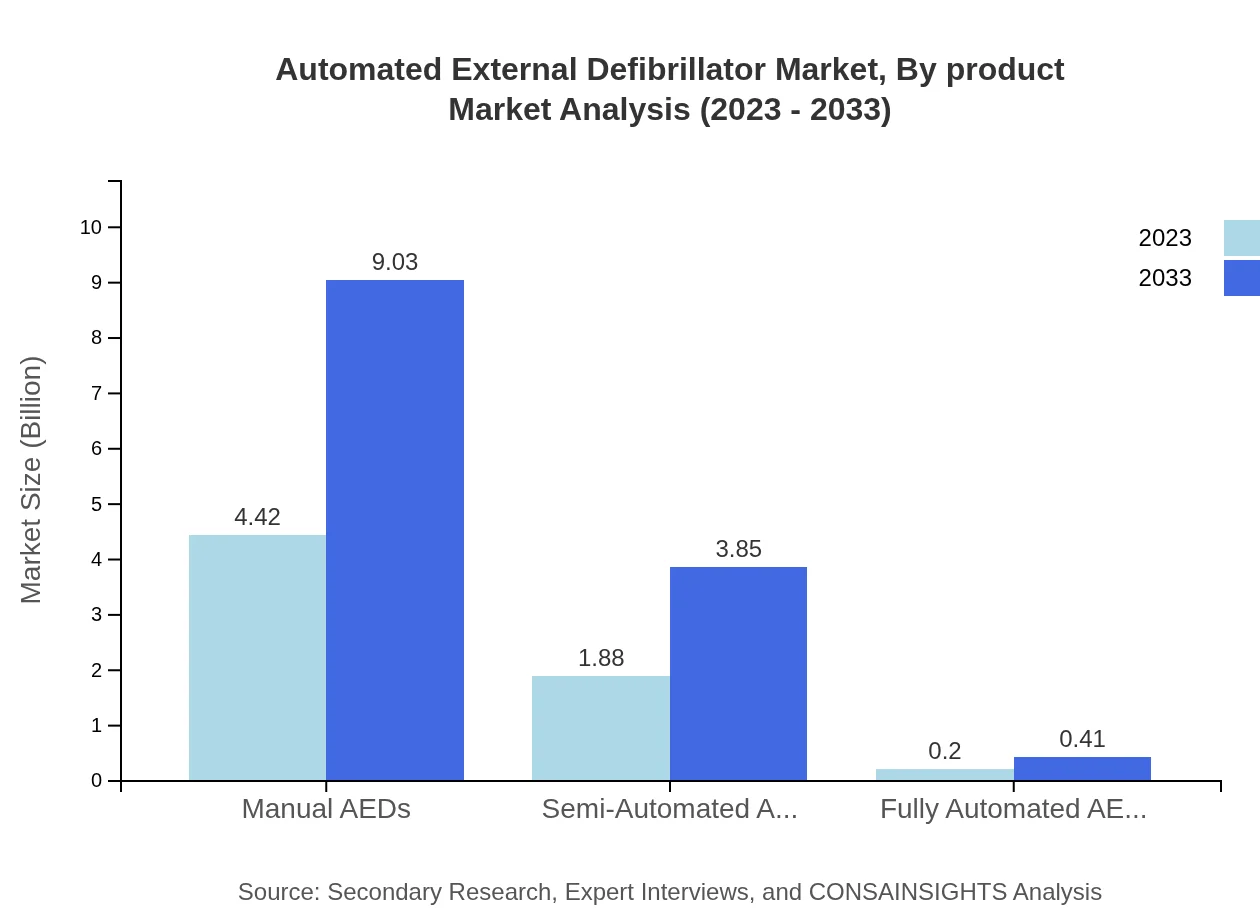
In 2023, the market size for Manual AEDs stands at $4.42 billion, expected to reach $9.03 billion by 2033. Semi-Automated AEDs contribute $1.88 billion, growing to $3.85 billion, while Fully Automated AEDs, starting at $0.20 billion, project an increase to $0.41 billion in the same period.
Automated External Defibrillator Market Analysis By Application
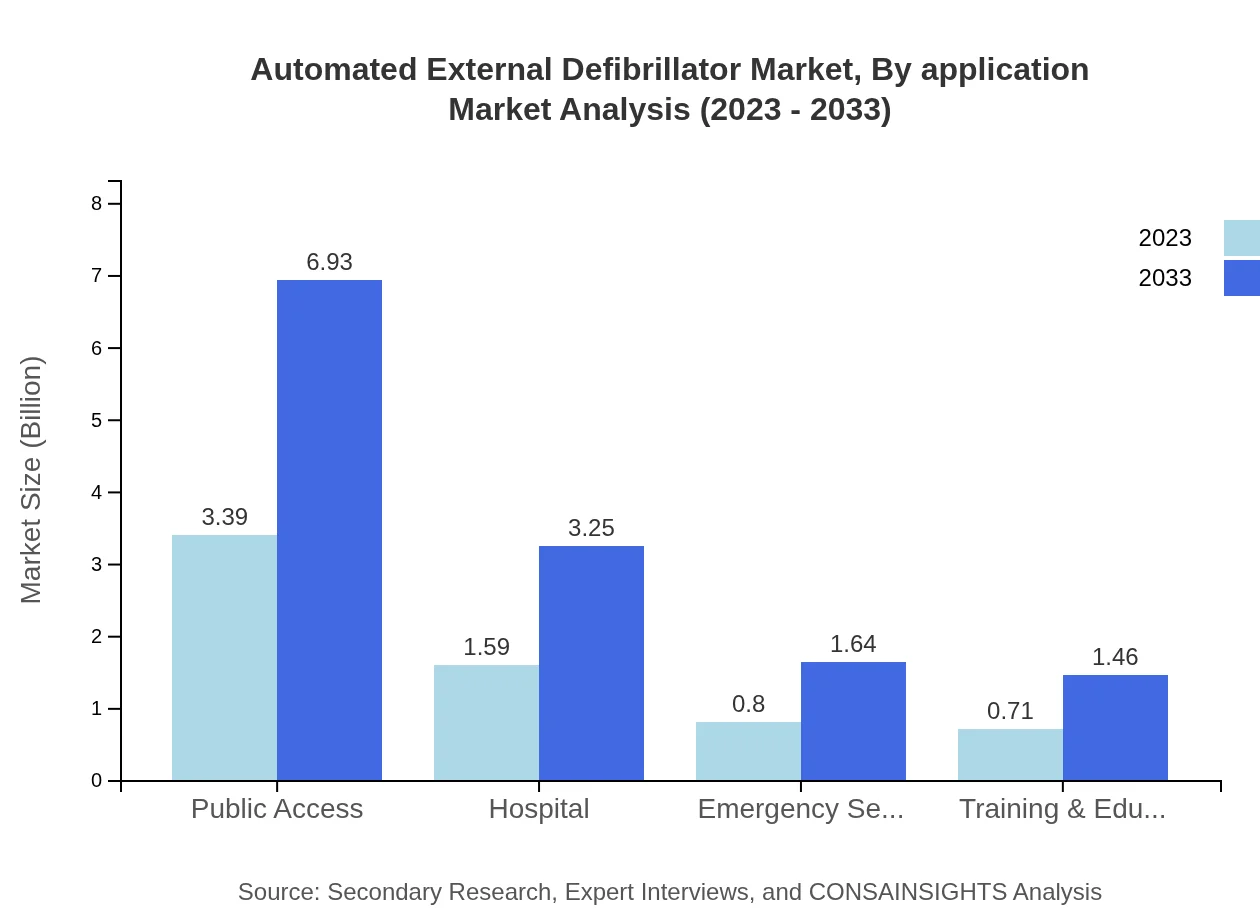
Healthcare facilities retain the largest market share, valued at $3.39 billion in 2023 and predicted to grow to $6.93 billion. The corporate sector, educational institutions, and community services are other significant applications, showing dedicated adoption due to rising health initiatives.
Automated External Defibrillator Market Analysis By Distribution Channel
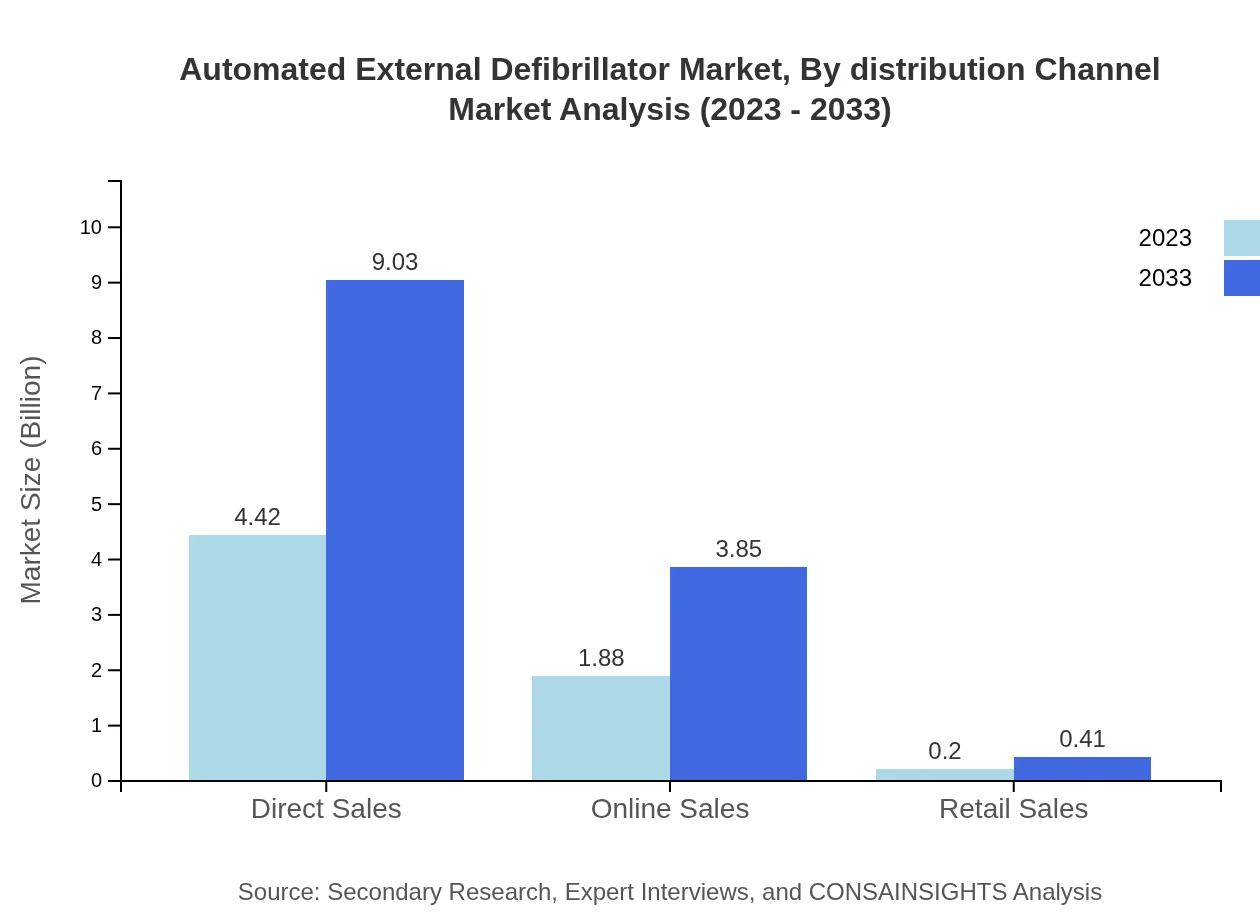
Direct sales remain the primary channel, accounting for $4.42 billion this year, projected to reach $9.03 billion. Online sales are also on the rise, expected to grow from $1.88 billion to $3.85 billion, reflecting a shift in purchasing behavior.
Automated External Defibrillator Market Analysis By End User
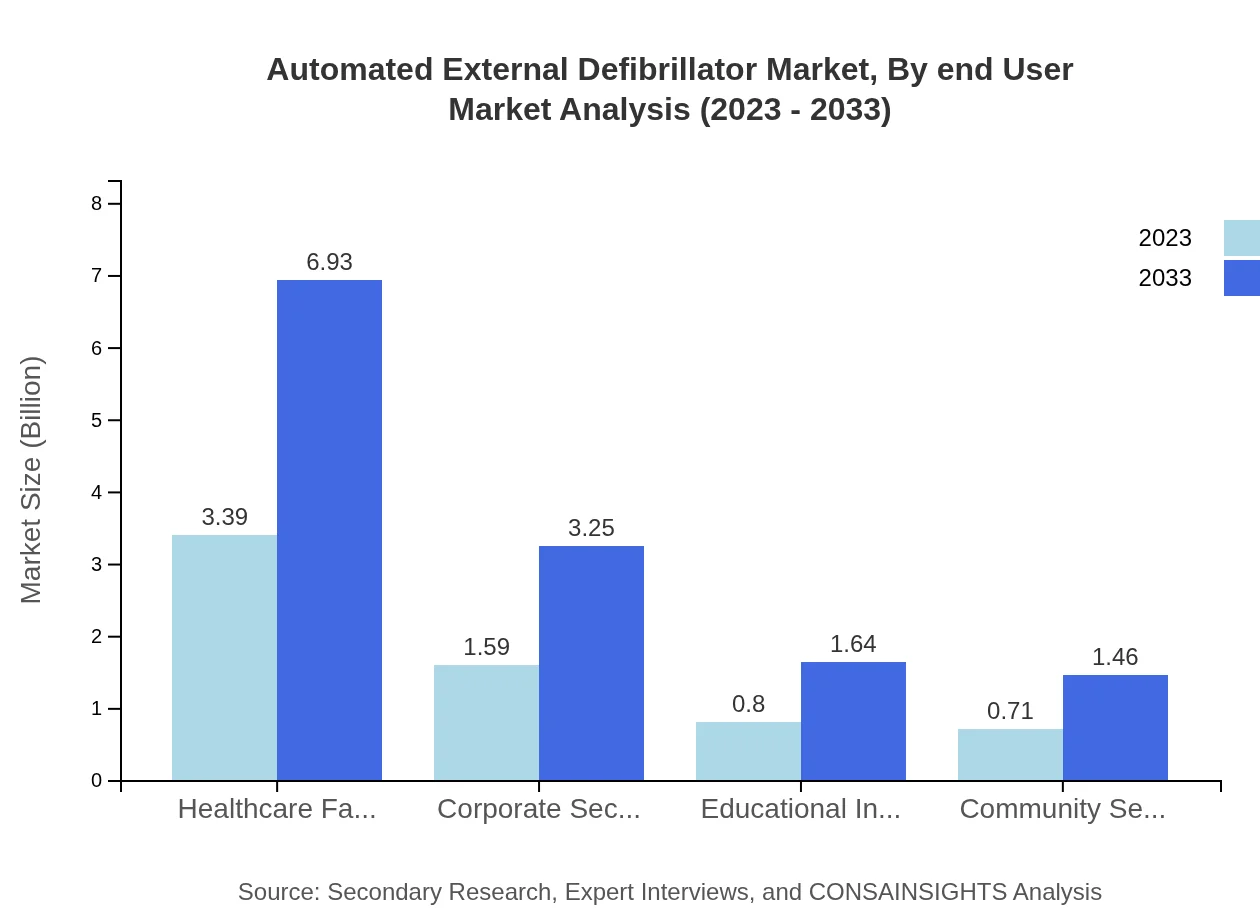
Major end-users of AEDs include hospitals, emergency services, and public accessibility settings. Hospitals are valued at $1.59 billion in 2023 and forecasted to grow to $3.25 billion. Emergency services are also significant, expected to reach $1.64 billion by 2033.
Automated External Defibrillator Market Analysis By Technology
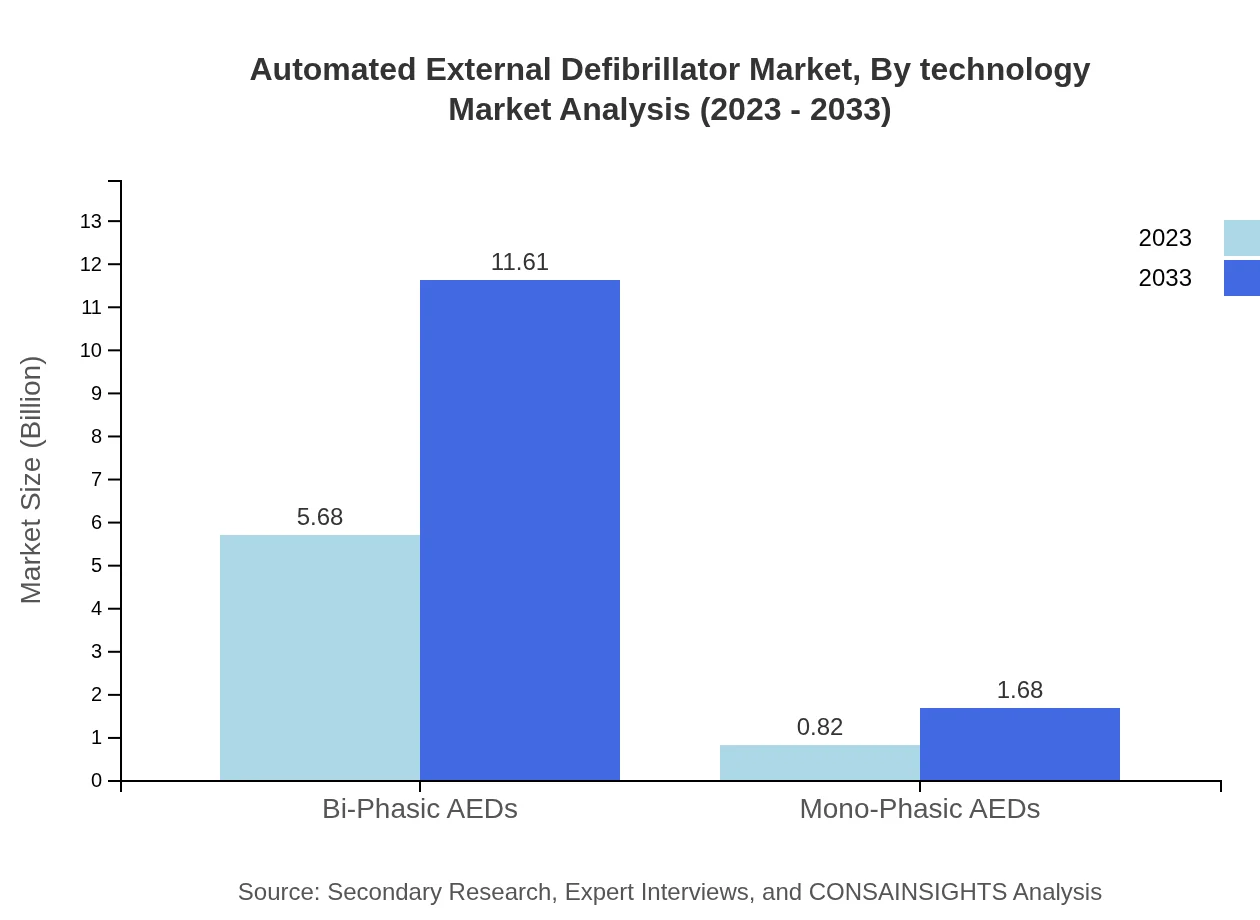
Bi-Phasic AEDs represent the largest technology segment with a market size of $5.68 billion in 2023, anticipated to grow to $11.61 billion by 2033. Mono-Phasic AEDs, though smaller, also showcase growth potential, rising from $0.82 billion to $1.68 billion.
Automated External Defibrillator Market Trends and Future Forecast
Tell us your focus area and get a customized research report.
Global Market Leaders and Top Companies in Automated External Defibrillator Industry
ZOLL Medical Corporation:
A leader in medical devices and software solutions that enhance patient care and improve clinical outcomes.Cardiac Science Corporation:
Offers innovative AEDs and integrated solutions for cardiopulmonary resuscitation, leading efforts in saving lives.Philips Healthcare:
A major player in healthcare, focused on innovative solutions including advanced defibrillation technologies.Medtronic :
Known for its extensive portfolio in medical devices, encompassing solutions for patients with life-threatening health conditions.Physio-Control:
Provides a wide range of defibrillators and resuscitation devices, committed to enhancing emergency response.We're grateful to work with incredible clients.









FAQs
What is the current market size of the Automated External Defibrillator market?
The market size for 2023 is $6.50 Billion, as reported. This figure establishes the baseline for the forecast period spanning 2023 to 2033.
How big will the Automated External Defibrillator market be in 2033?
The market is projected to reach $13.29 Billion by 2033 according to the provided forecast data for the period 2023 to 2033.
What is CAGR of the Automated External Defibrillator market during the forecast?
The reported compound annual growth rate for the forecast period 2023 to 2033 is 7.2%, reflecting the expected market expansion over the decade.
Which region is the fastest Growing in the Automated External Defibrillator Market Report market?
Latin America is the fastest-growing region, projected to expand from $0.37 Billion in 2023 to $0.77 Billion in 2033, reflecting an implied 7.60% CAGR over the forecast period.
Which region is the fastest Growing in the Automated External Defibrillator market?
Latin America is reported as the regional market region with an implied 7.60% CAGR, rising from $0.37 Billion in 2023 to $0.77 Billion in 2033.
Why are AEDs seeing higher adoption across sectors?
Adoption is driven by regulatory push for emergency equipment, greater public awareness of sudden cardiac arrest, and improvements in AED usability and accessibility.
Who are the key companies in the Automated External Defibrillator market?
Top companies listed include ZOLL Medical Corporation, Cardiac Science Corporation, Philips Healthcare, Medtronic, and Physio-Control.
What are the primary distribution channels for AEDs?
Reported distribution channels include direct sales, online sales, and retail sales, each facilitating procurement by different end users.
How big is the Europe AED market in the forecast?
Europe is reported to grow from $1.68 Billion in 2023 to $3.44 Billion in 2033, reflecting regional demand increases over the forecast period.
How big is the Asia Pacific AED market in the forecast?
Asia Pacific is documented to increase from $1.26 Billion in 2023 to $2.58 Billion in 2033, per the provided regional figures.