

Beauty Devices Market Report
First published: 08 October 2024 | Last updated: 25 May 2026 | Report Code: beauty-devices
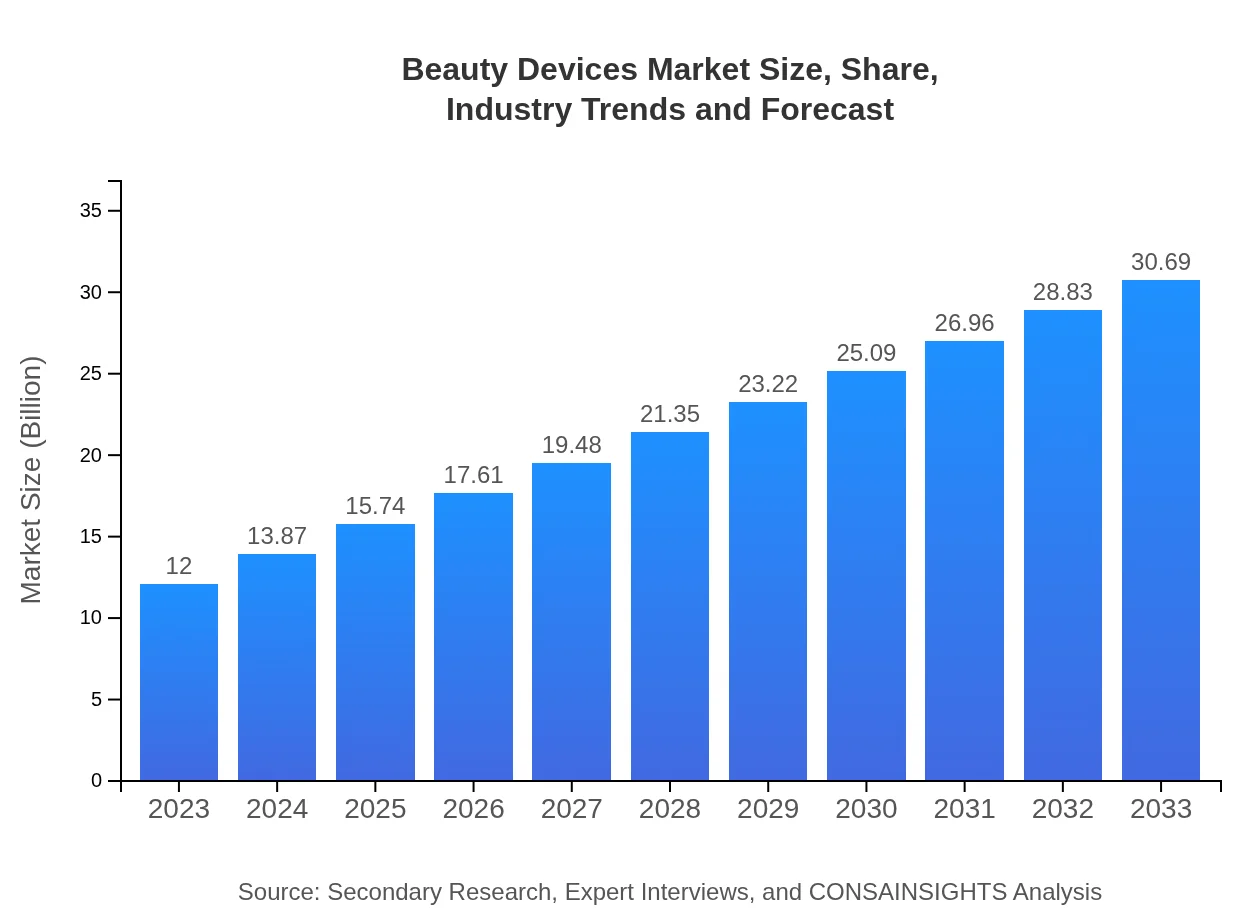
Beauty Devices Market — USD $12 Billion in 2023, Growing to USD 30.69null by 2033 at 9.5% CAGR
This report provides an in-depth analysis of the Beauty Devices market, focusing on current trends, market size, and future forecasts from 2023 to 2033. It examines technological advancements, regional performances, and key market players in the industry.
Key Takeaways
- Market expands from $12.00 Billion in 2023 to $30.69 Billion in 2033 at a 9.5% CAGR.
- North America is largest regional market, while no single fastest-growing region is stated because regional CAGR differences remain within 0.15 percentage points.
- Europe grows from $3.66 Billion in 2023 to $9.35 Billion in 2033, reflecting robust demand.
- Asia Pacific increases from $2.28 Billion in 2023 to $5.84 Billion in 2033, driven by consumer adoption of at-home solutions.
- Leading firms active in the market include Philips, Estée Lauder, L'Oréal, and Panasonic.
Beauty Devices Market Report — Executive Summary
North America remains largest market by forecast-period value, while no single fastest-growing region is stated because top regional growth rates are separated by less than 0.15 percentage points. The Beauty Devices Market Report outlines steady expansion across device types, technologies, and distribution channels over the 2023 to 2033 forecast period. Growth is underpinned by consumer interest in at-home skincare and hair-removal solutions, ongoing product innovation, and wider digital distribution. The market value is projected to climb from $12.00 Billion in 2023 to $30.69 Billion in 2033, reflecting a 9.5% CAGR. Regional performance varies: North America holds the largest end-period value. The landscape includes established global brands such as Philips, Estée Lauder, L'Oréal, and Panasonic. The report segments the market by device type, technology, application, end-user, and distribution channel, and highlights trends such as increased online sales, technology-driven product upgrades, and demand for salon-equivalent home treatments. Competitive dynamics are shaped by R&D, marketing reach, and distribution strategies. The analysis supports stakeholders evaluating investment, product development, and market-entry tactics.
Key Growth Drivers
- Rising consumer preference for at-home beauty treatments with salon-like outcomes.
- Advances in laser, ultrasound, and radio frequency technologies improving accessibility and performance.
- Expansion of online retail channels increasing product discoverability and direct-to-consumer sales.
- Continuous product innovation by established players and new entrants expanding addressable markets.
| Metric | Value |
|---|---|
| Study Period | 2023 - 2033 |
| 2023 Market Size | $12.00 Billion |
| CAGR (2023-2033) | 9.5% |
| 2033 Market Size | $30.69 Billion |
| Top Companies | Philips, Estée Lauder, L'Oréal, Panasonic |
| Published Date | 08 October 2024 |
| Last Modified Date | 25 May 2026 |
Beauty Devices Market Overview
Customize Beauty Devices Market Report market research report
- ✔ Get in-depth analysis of Beauty Devices market size, growth, and forecasts.
- ✔ Understand Beauty Devices's regional dynamics and industry-specific trends.
- ✔ Identify potential applications, end-user demand, and growth segments in Beauty Devices
What is the Market Size & CAGR of Beauty Devices Market Report market in 2023?
Beauty Devices Industry Analysis
Beauty Devices Market Segmentation and Scope
Tell us your focus area and get a customized research report.
Beauty Devices Market Report Market Analysis Report by Region
Europe Beauty Devices Market Report:
Europe grows from $3.66 Billion in 2023 to $9.35 Billion in 2033. 66 Billion in 2023 to $9.35 Billion in 2033, reflecting demand for advanced personal care devices and a well-established retail and professional salon network supporting adoption.Asia Pacific Beauty Devices Market Report:
Asia Pacific grows from $2.28 Billion in 2023 to $5.84 Billion in 2033. 28 Billion in 2023 to $5.84 Billion in 2033, driven by increasing consumer interest in personal grooming, rising awareness of skincare technologies, and growing e-commerce access.North America Beauty Devices Market Report:
North America is largest regional market, rising from $4.26 Billion in 2023 to $10.89 Billion in 2033. Local drivers include strong consumer adoption of home-use devices, significant brand presence, and widespread online retail penetration.South America Beauty Devices Market Report:
Latin America grows from $0.29 Billion in 2023 to $0.74 Billion in 2033. 29 Billion in 2023 to $0.74 Billion in 2033, with adoption influenced by rising consumer interest in at-home beauty solutions and expanding online sales channels.Middle East & Africa Beauty Devices Market Report:
Middle East and Africa grows from $1.51 Billion in 2023 to $3.87 Billion in 2033. 51 Billion in 2023 to $3.87 Billion in 2033, supported by growing demand for personal care devices and improving availability through online and offline distribution.Tell us your focus area and get a customized research report.
Research Methodology
Beauty Devices Market Analysis By Device Type
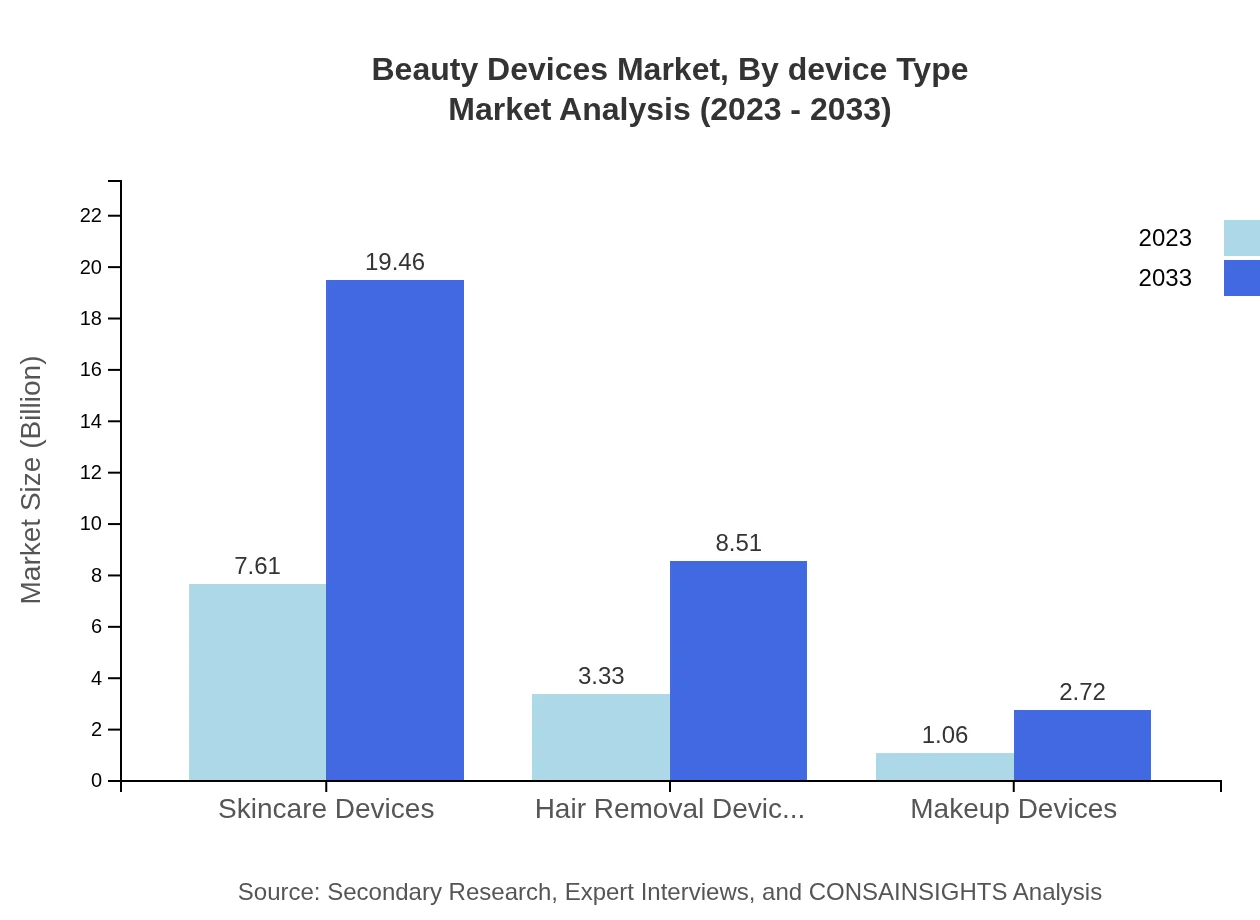
The Beauty Devices market is dominated by skincare and personal care devices, which together account for more than 80% of the market share. In 2023, skincare devices generation revenue of 7.61 billion USD, with a forecast increase to 19.46 billion USD by 2033. Hair removal devices and makeup devices also play essential roles, with significant advancements in technology enhancing consumer appeal.
Beauty Devices Market Analysis By Technology
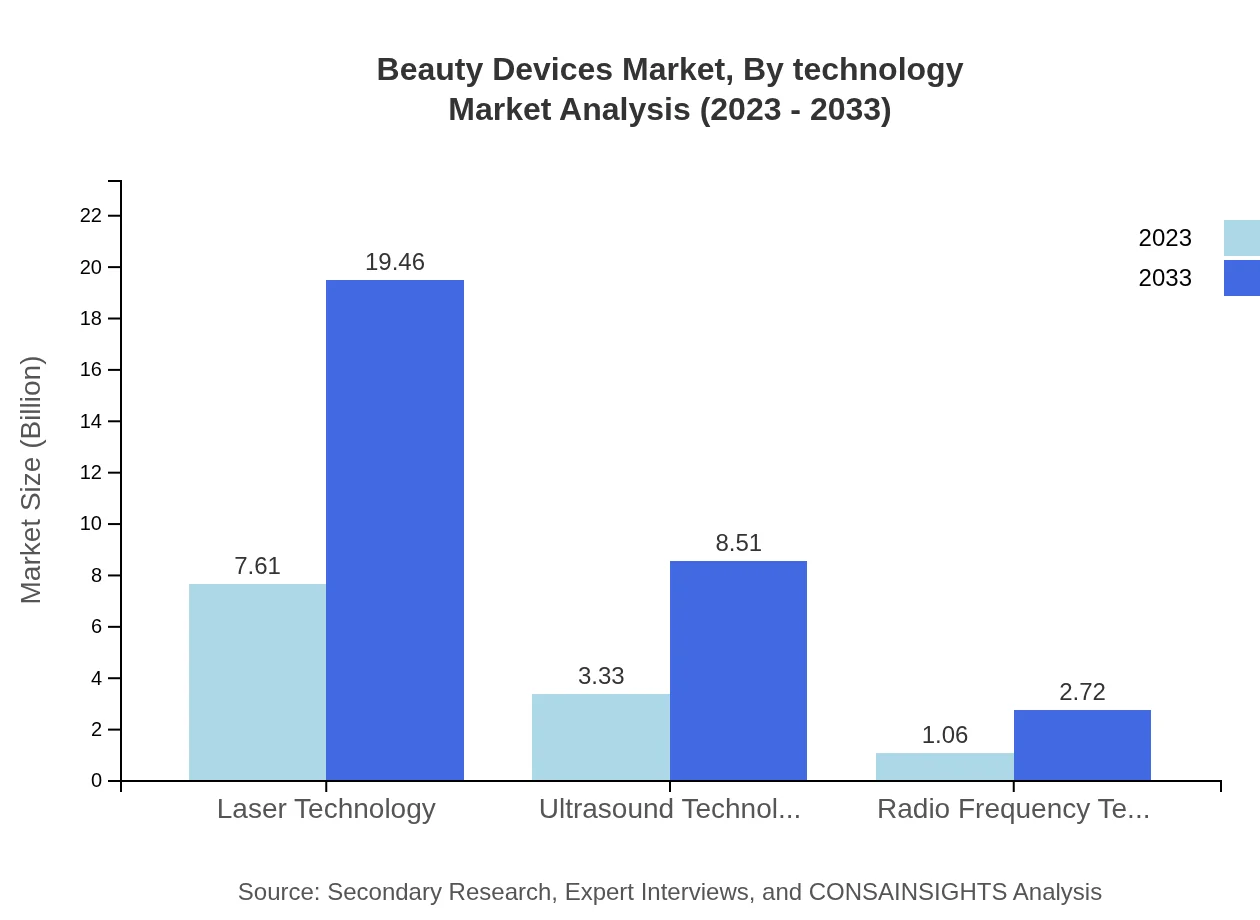
Technological advancements such as laser technology, ultrasound, and radiofrequency continue to shape the Beauty Devices landscape. Laser technology alone captures 63.4% of the market share in 2023, with significant applications in skincare treatments. Ultrasound and radiofrequency technologies are growing sectors, reflecting the industry's adaptation to consumer needs and preferences.
Beauty Devices Market Analysis By Application
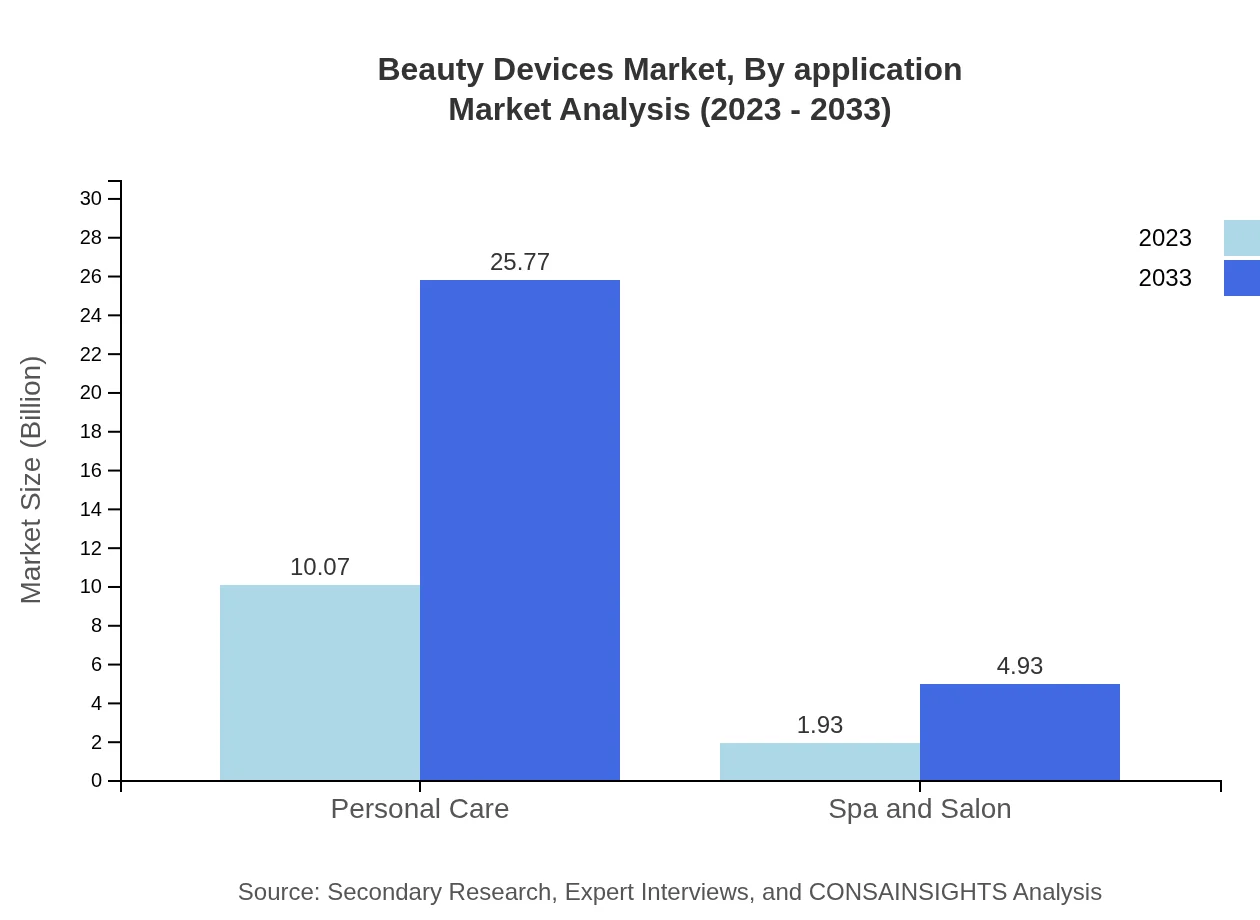
The Beauty Devices are primarily segmented into skincare, hair removal, and makeup application, reflecting diverse consumer preferences. The skincare application exhibits the highest growth potential, with revenues expected to rise significantly over the forecast period. Hair removal devices are increasingly popular, particularly among demographic segments prioritizing convenience and effectiveness.
Beauty Devices Market Analysis By End User
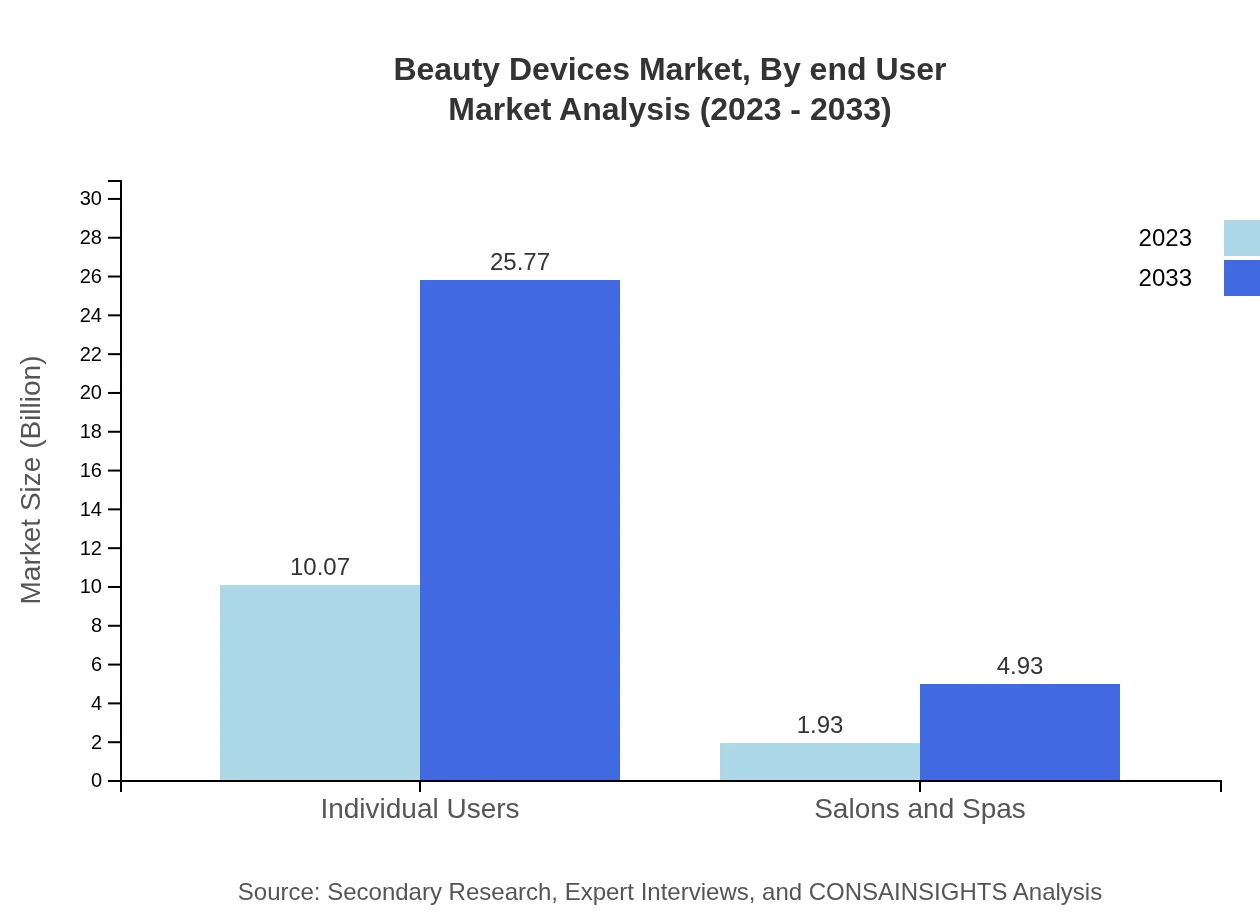
The Beauty Devices market serves two primary end-users: individual consumers and professional salons/spas. Individual users constitute a larger share of the market, projected to grow from 10.07 billion USD in 2023 to 25.77 billion USD by 2033, emphasizing the shift toward personal beauty solutions.
Beauty Devices Market Analysis By Distribution Channel
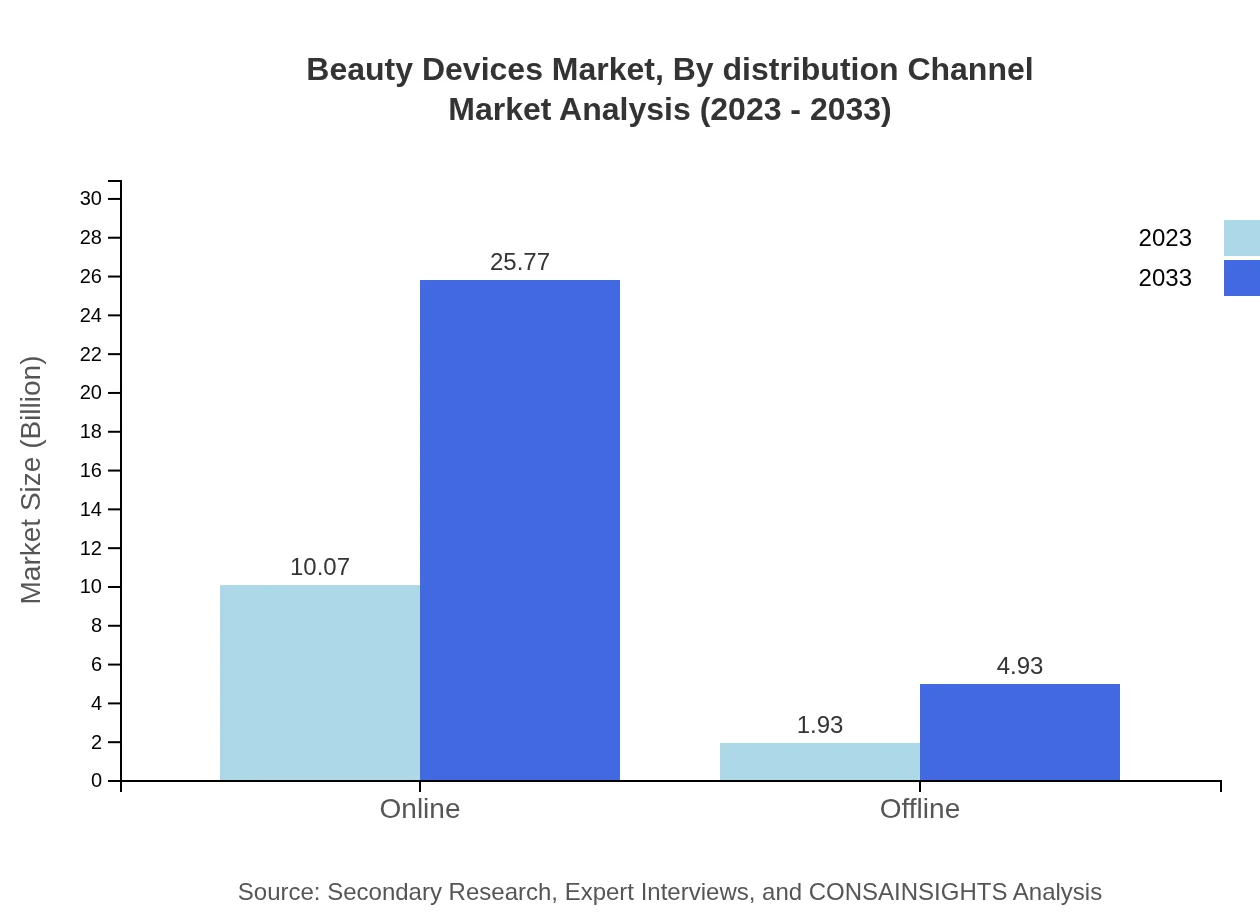
The market distribution channels are predominantly online, with significant growth in e-commerce, accounting for 83.95% of the overall sales as consumers prefer the convenience of online shopping. Offline retail channels, including salons and beauty stores, continue to provide important sales avenues, particularly in regions with limited internet access.
Beauty Devices Market Trends and Future Forecast
Tell us your focus area and get a customized research report.
Global Market Leaders and Top Companies in Beauty Devices Industry
Philips:
Philips is a leader in the personal care market, known for its advanced skincare and hair removal devices that combine technology with consumer insights.Estée Lauder:
Estée Lauder offers a range of innovative beauty devices that complement their skincare products, enhancing user experience and product efficacy.L'Oréal:
As a global powerhouse in beauty care, L'Oréal has branched into the beauty devices market, leveraging scientific research to provide cutting-edge products.Panasonic:
Panasonic manufactures a diverse range of beauty devices, including hair and facial care products, focusing on user-friendly technology.We're grateful to work with incredible clients.









FAQs
What is the market size of the Beauty Devices Market Report in 2023?
The market size for 2023 is $12.00 Billion as reported for the Beauty Devices market for the start of the forecast period.
How big will the Beauty Devices market be in 2033?
The market is projected to reach $30.69 Billion by 2033, representing the end value specified for the 2023 to 2033 forecast window.
What is CAGR of the Beauty Devices Market Report?
The reported compound annual growth rate (CAGR) for the 2023 to 2033 forecast period is 9.5%.
Is there a single fastest Growing region in the Beauty Devices Market Report market?
No single fastest-growing region is stated for the Beauty Devices Market Report market because the top regional implied CAGR values are within 0.15 percentage points of each other, making the ranking too close to call reliably.
Why are online channels important in this market?
Online distribution expands product reach and supports direct consumer access to beauty devices, facilitating adoption of at-home solutions and amplifying marketing and sales efficiency.
Who are the top companies in the beauty devices market?
Key companies named in the report include Philips, Estée Lauder, L'Oréal, and Panasonic, representing major brand participants in the sector.
What are primary technology categories in the market?
Primary technologies cited include laser, ultrasound, and radio frequency devices, which are prominent in product offerings across applications.
Which distribution channels are covered in the report?
The report addresses both online and offline distribution channels as the principal routes to market for beauty devices.
What end User segments are included?
End-user segmentation noted in the data includes individual users and salons and spas as principal consumer groups.
How big is the Europe market in 2023 and 2033?
Europe is recorded at $3.66 Billion in 2023 and grows to $9.35 Billion in 2033, per the regional facts provided.