

Biocatalysis Biocatalysts Market Report
First published: 11 October 2024 | Last updated: 28 May 2026 | Report Code: biocatalysis-biocatalysts
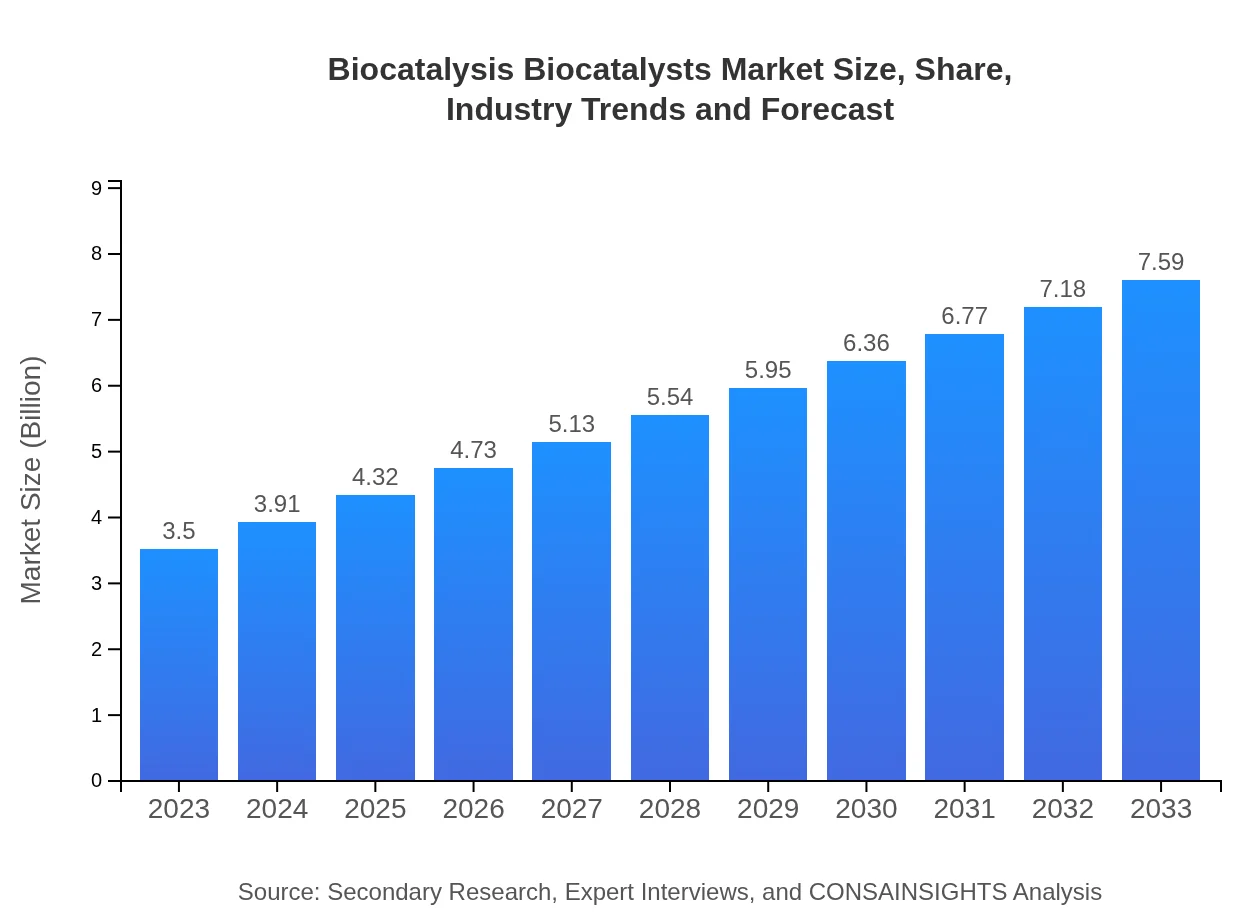
Biocatalysis Biocatalysts Market — USD 3.5 billion in 2023, Growing to USD 7.59B by 2033 at 7.8% CAGR
This report provides an in-depth analysis of the biocatalysis biocatalysts market from 2023 to 2033, examining market size, growth trends, technological advancements, regional insights, and key players shaping the industry.
Key Takeaways
- Global market expands from $3.50 Billion in 2023 to $7.59 Billion by 2033 with a 7.8% CAGR.
- North America is the largest region, rising from $1.25 Billion in 2023 to $2.7 Billion in 2033.
- North America is largest regional market; Middle East and Africa is regional market region based on implied CAGR across 2023 to 2033.
- Europe and Asia Pacific show notable growth: Europe from $1.12 Billion to $2.42 Billion; Asia Pacific from $0.63 Billion to $1.36 Billion.
- Key vendors include Novozymes, DSM, AMEC Foster Wheeler, Codexis, and BASF, active across enzyme and whole-cell solutions.
Biocatalysis Biocatalysts Market Report — Executive Summary
Regional analysis shows North America as largest market and Middle East and Africa as fastest-growing region by implied CAGR. Demand for sustainable production processes and reduced environmental impact is driving investment in biocatalysts across pharmaceuticals, food and beverages, biofuels, and industrial manufacturing. The market is projected to grow from $3.50 Billion in 2023 to $7.59 Billion by 2033 at a 7.8% CAGR, supported by enzyme engineering, immobilized enzyme applications, and advances in recombinant technologies. Regional dynamics vary: North America leads in absolute market value, while the Middle East and Africa shows the highest implied growth rate. Market structure comprises catalyst types (immobilized, native, recombinant), application verticals (biofuels, food & beverages, pharmaceuticals, textiles, cosmetics), and formulations (liquid, solid). Competitive activity involves established players such as Novozymes, DSM, AMEC Foster Wheeler, Codexis, and BASF, which pursue innovation and partnerships to expand capabilities. Challenges include regulatory compliance and technology integration, while opportunities arise from green chemistry adoption, synthetic biology advances, and rising demand for efficient, low-emission production methods. This report aggregates primary interviews, company documentation, and internal validation to present an evidence-based outlook through 2033.
Key Growth Drivers
- Rising preference for eco-friendly manufacturing fuels demand for enzymes and whole-cell catalysts in multiple industries.
- Advances in enzyme engineering and recombinant methods expand applications and improve process efficiencies.
- Adoption of immobilized enzyme technologies increases operational stability and reusability, lowering production costs.
- Growth in biofuels and pharmaceutical production drives steady uptake of biocatalysts for greener synthesis routes.
- Regulatory emphasis on lower emissions and sustainable inputs encourages replacement of chemical catalysts with biocatalysts.
| Metric | Value |
|---|---|
| Study Period | 2023 - 2033 |
| 2023 Market Size | $3.50 Billion |
| CAGR (2023-2033) | 7.8% |
| 2033 Market Size | $7.59 Billion |
| Top Companies | Novozymes, DSM, AMEC Foster Wheeler, Codexis, BASF |
| Published Date | 11 October 2024 |
| Last Modified Date | 28 May 2026 |
Biocatalysis Biocatalysts Market Overview
Customize Biocatalysis Biocatalysts Market Report market research report
- ✔ Get in-depth analysis of Biocatalysis Biocatalysts market size, growth, and forecasts.
- ✔ Understand Biocatalysis Biocatalysts's regional dynamics and industry-specific trends.
- ✔ Identify potential applications, end-user demand, and growth segments in Biocatalysis Biocatalysts
What is the Market Size & CAGR of Biocatalysis Biocatalysts Market Report market in 2023?
Biocatalysis Biocatalysts Industry Analysis
Biocatalysis Biocatalysts Market Segmentation and Scope
Tell us your focus area and get a customized research report.
Biocatalysis Biocatalysts Market Report Market Analysis Report by Region
Europe Biocatalysis Biocatalysts Market Report:
Europe grows from $1.12 Billion in 2023 to $2.42 Billion in 2033. Regional momentum stems from regulatory emphasis on sustainability, demand in food & beverages and pharmaceuticals, and increasing application of immobilized enzyme systems.Asia Pacific Biocatalysis Biocatalysts Market Report:
Asia Pacific grows from $0.63 Billion in 2023 to $1.36 Billion in 2033. Growth is driven by manufacturing modernization, expanded biotech activity, rising biofuels and pharmaceutical production, and adoption of recombinant enzyme technologies.North America Biocatalysis Biocatalysts Market Report:
North America is largest regional market, rising from $1.25 Billion in 2023 to $2.7 Billion in 2033. Local drivers include strong R&D investment, adoption in pharmaceuticals and industrial manufacturing, and established enzyme-technology supply chains.South America Biocatalysis Biocatalysts Market Report:
Latin America grows from $0.31 Billion in 2023 to $0.67 Billion in 2033. Regional uptake is supported by growing interest in sustainable industrial practices, biofuel initiatives, and expanding use of enzyme-based solutions.Middle East & Africa Biocatalysis Biocatalysts Market Report:
Middle East and Africa is fastest-growing region by implied CAGR, increasing from $0.2 Billion in 2023 to $0.44 Billion in 2033. Growth reflects expanding investment in sustainable manufacturing, increasing bio-based initiatives, and adoption of biocatalyst technologies.Tell us your focus area and get a customized research report.
Research Methodology
Biocatalysis Biocatalysts Market Analysis By Catalyst Type
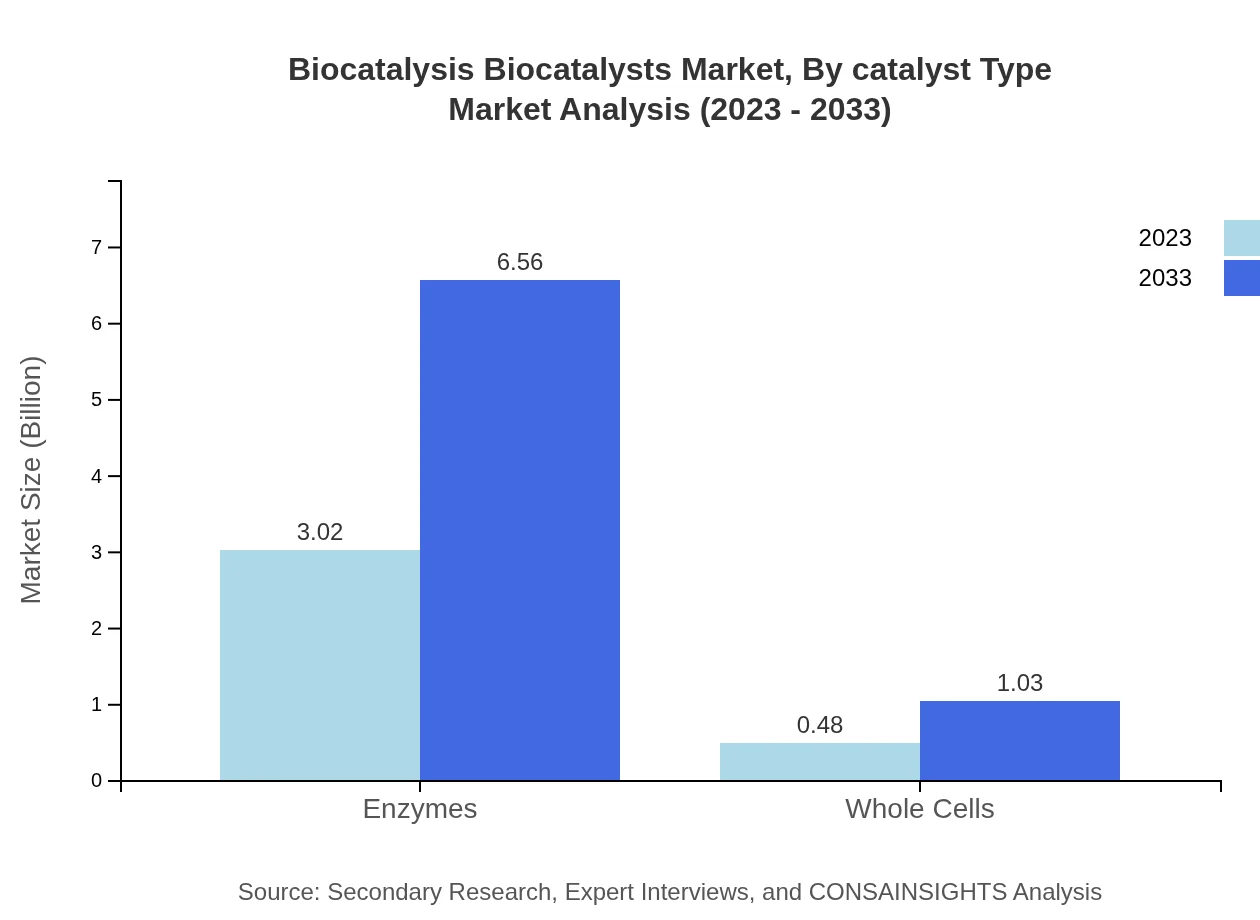
Immobilized enzyme technology leads the market with a size of USD 2.21 billion in 2023 and projected to grow to USD 4.78 billion by 2033, capturing 63.06% market share. Native enzyme technology is expected to reach USD 2.07 billion from USD 0.96 billion, while recombinant enzyme technology is forecasted to increase from USD 0.34 billion to USD 0.73 billion.
Biocatalysis Biocatalysts Market Analysis By Application
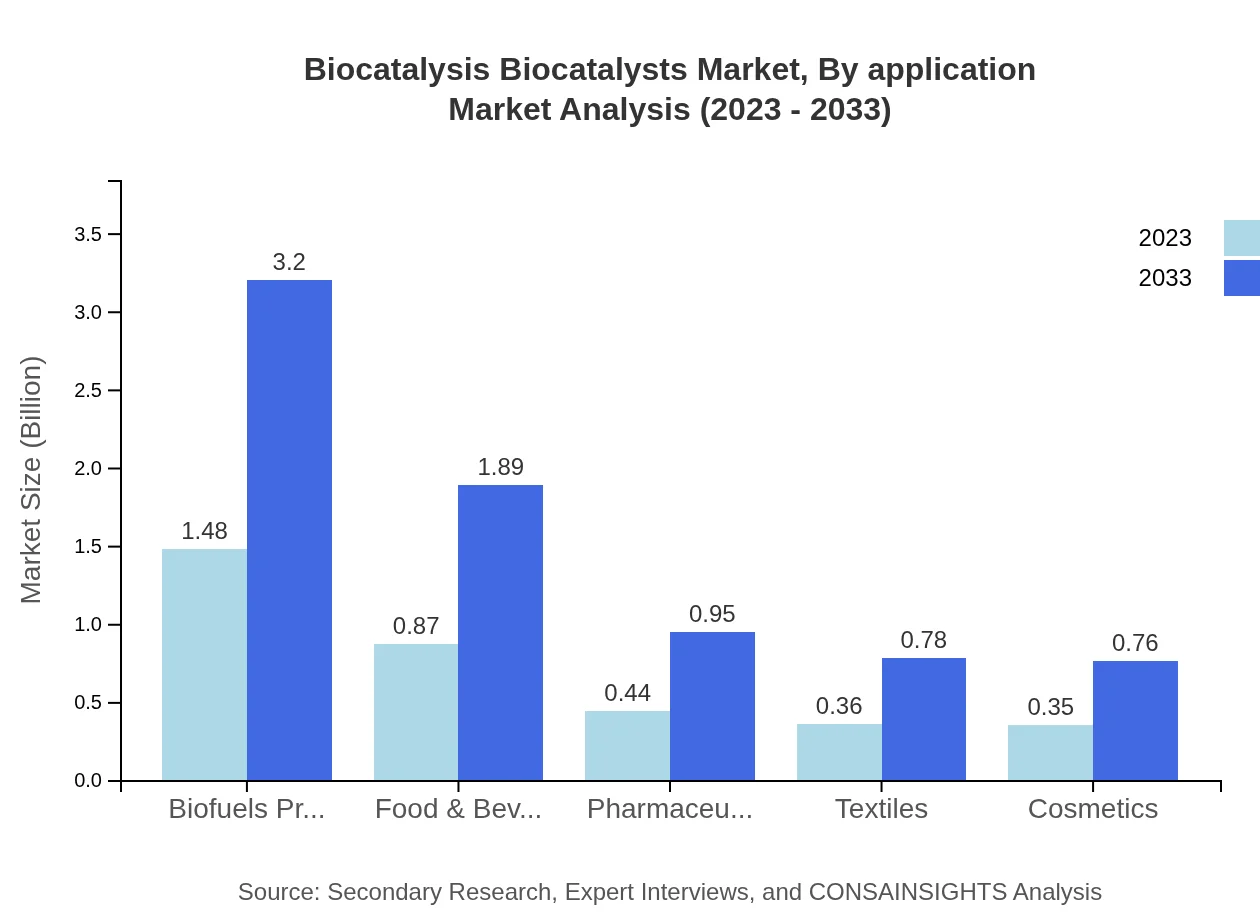
The market for biocatalysis biocatalysts in biofuels production is significant, expected to increase from USD 1.48 billion in 2023 to USD 3.20 billion in 2033, representing a 42.19% market share. The food and beverages sector is also crucial, growing from USD 0.87 billion to USD 1.89 billion, holding a 24.91% share.
Biocatalysis Biocatalysts Market Analysis By Formulation
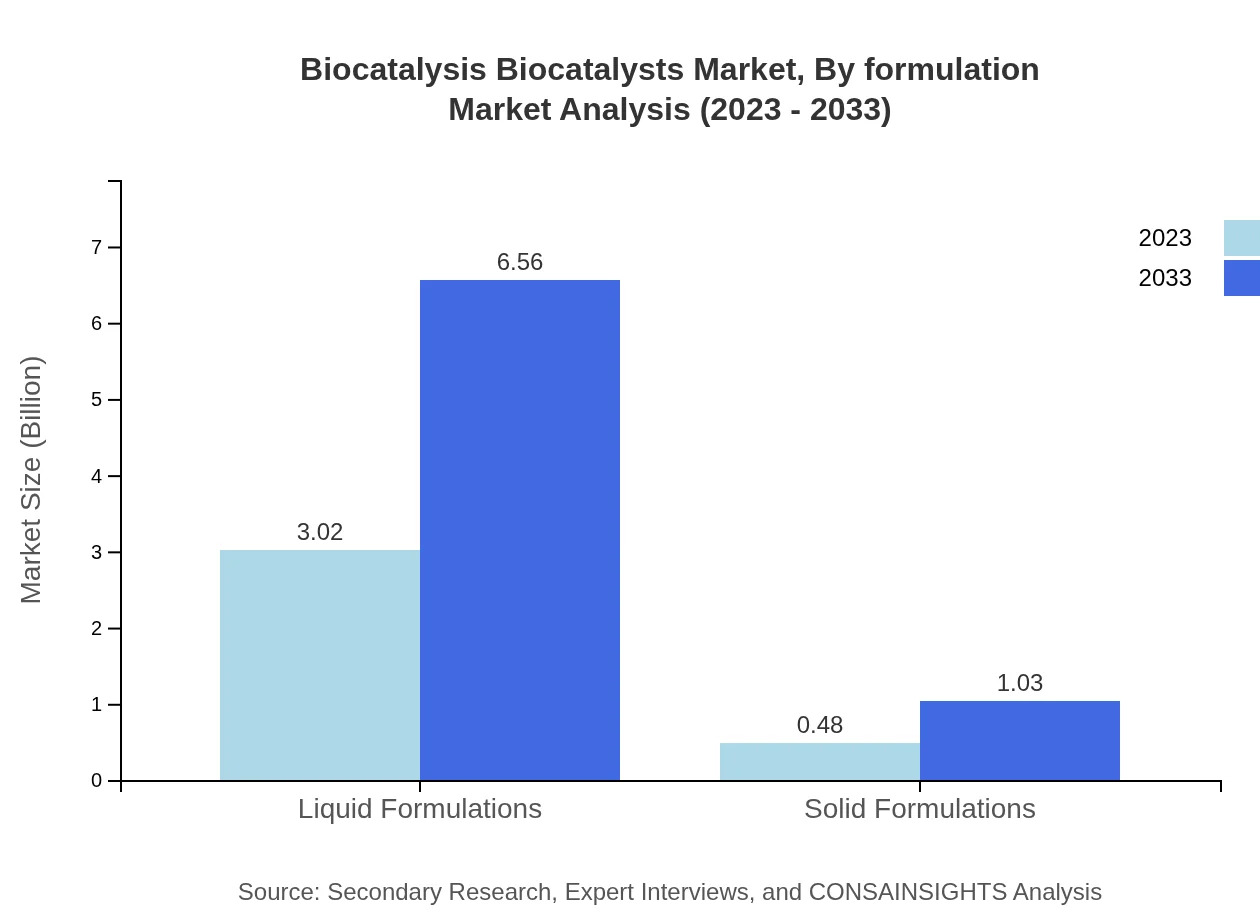
Liquid formulations dominate the biocatalysis biocatalysts market, estimated at USD 3.02 billion in 2023 and growing to USD 6.56 billion by 2033, maintaining an 86.42% market share. Solid formulations are anticipated to increase from USD 0.48 billion to USD 1.03 billion.
Biocatalysis Biocatalysts Market Analysis By End User Industry
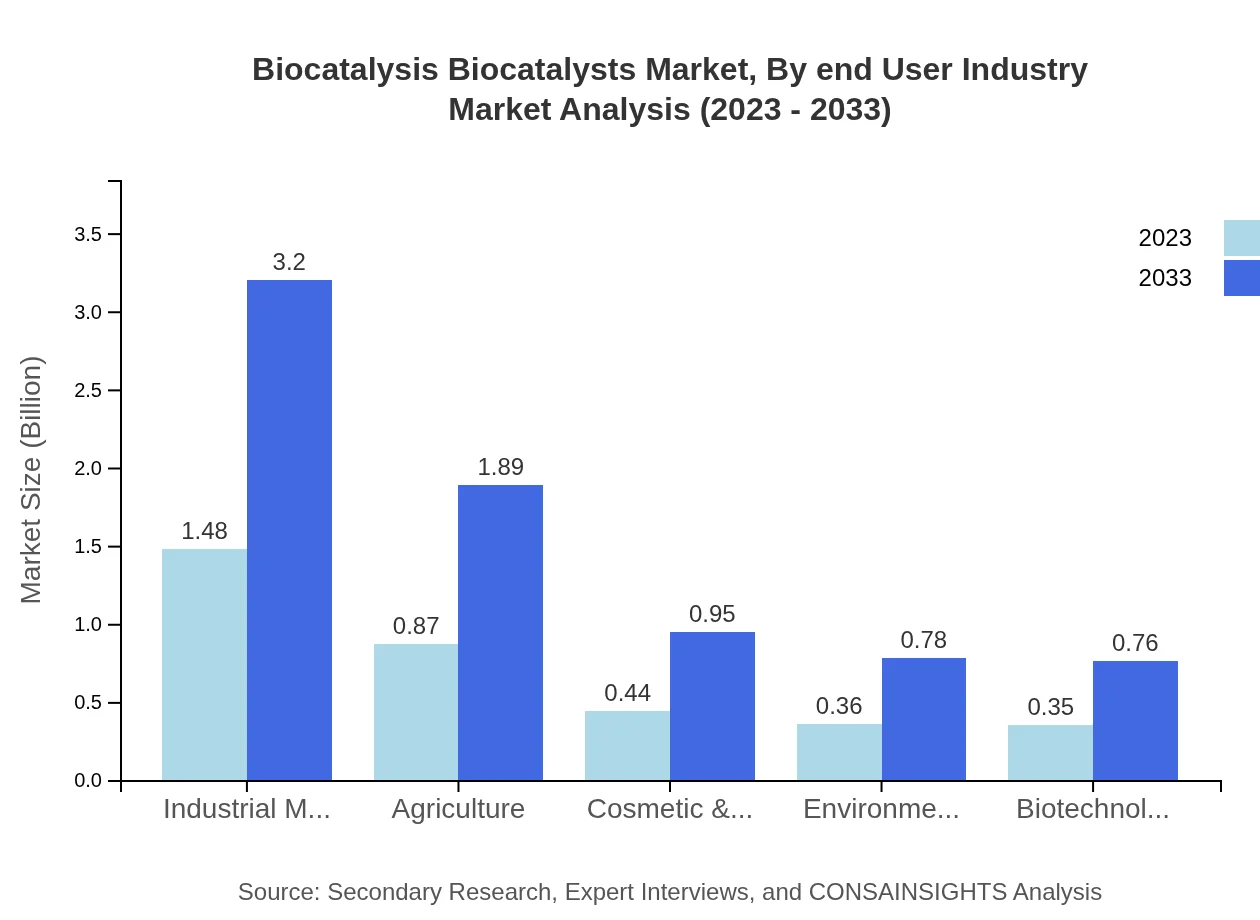
Key end-user industries include industrial manufacturing, agriculture, pharmaceuticals, and cosmetics, with industrial manufacturing leading with a market size of USD 1.48 billion in 2023, projected to grow to USD 3.20 billion. Agriculture is forecasted to increase from USD 0.87 billion to USD 1.89 billion by 2033.
Biocatalysis Biocatalysts Market Analysis By Technology
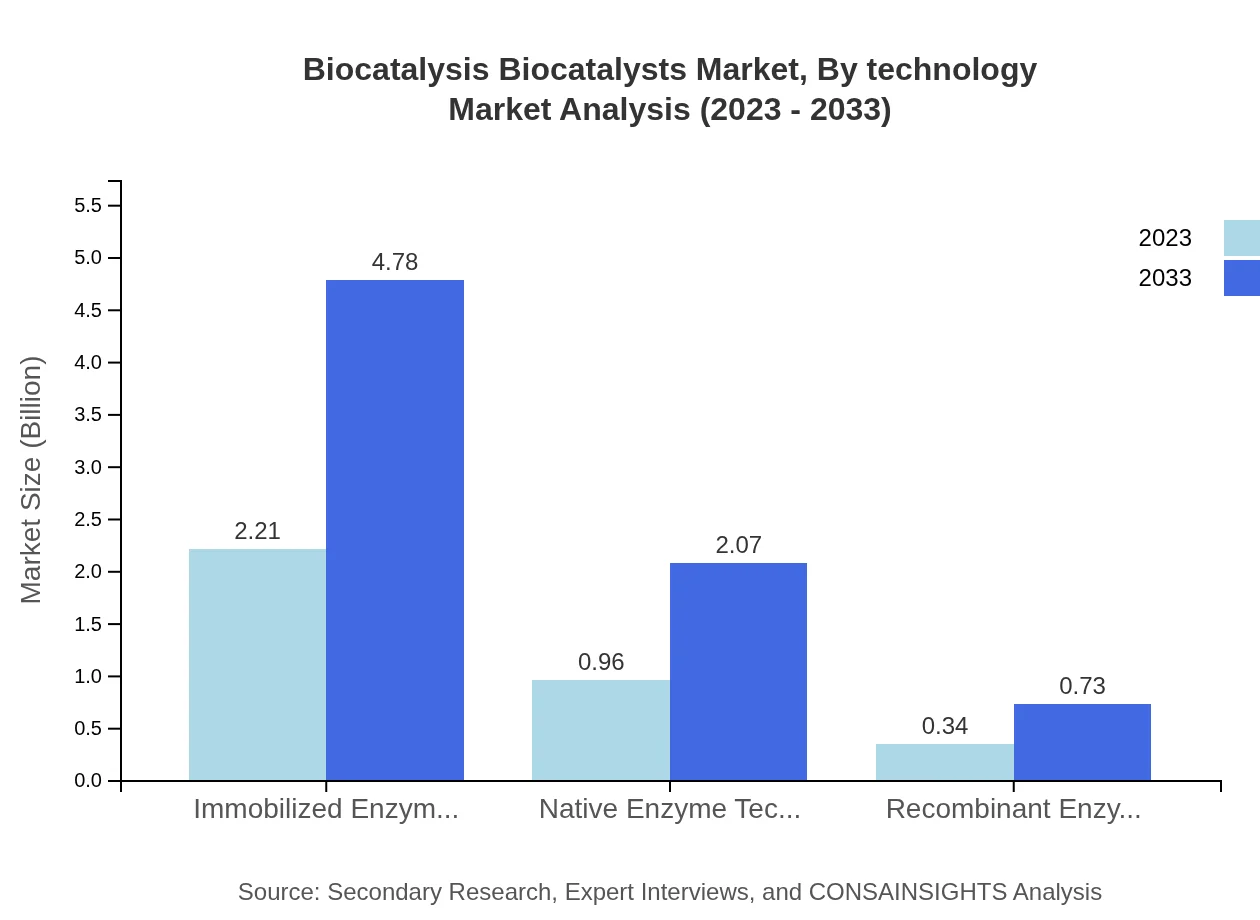
Technological advancements are pivotal in the biocatalysis market, with trends focusing on synthetic biology to create novel biocatalysts. The continuous development and optimization of existing biocatalytic processes enhance the efficiency and application range of biocatalysts across various industries.
Biocatalysis Biocatalysts Market Trends and Future Forecast
Tell us your focus area and get a customized research report.
Global Market Leaders and Top Companies in Biocatalysis Biocatalysts Industry
Novozymes:
A leading player in biotechnology, Novozymes specializes in enzyme production and biocatalytic processes, offering solutions across diverse industries including agriculture, food, and biofuels.DSM:
DSM is recognized for its innovative enzyme solutions developed for application in pharmaceuticals, food, and industrial processing, contributing significantly to sustainable practices in these sectors.AMEC Foster Wheeler:
Providing biotechnological services, AMEC Foster Wheeler focuses on integrated solutions that develop processes enhancing the efficiency of biocatalysts in chemical production.Codexis:
Codexis designs novel biocatalysts and enzymes aimed at streamlining chemical production for pharmaceuticals and biofuels, making significant strides in diversification and applicability.BASF:
BASF is a global chemical giant that incorporates biocatalytic technologies into its processes, promoting sustainability and efficiency in chemical manufacturing operations.We're grateful to work with incredible clients.







FAQs
What is the market size of the Biocatalysis Biocatalysts Market Report in 2023?
The market size in 2023 is $3.50 Billion, as reported in the study. This baseline frames the projected expansion across regions and segments through the forecast period.
How big will the market be in 2033?
The market is projected to reach $7.59 Billion by 2033, reflecting anticipated growth driven by sustainable process adoption and technology advancements across industries.
What is CAGR of the market for the forecast period?
The compound annual growth rate for the forecast period 2023 to 2033 is 7.8%, reflecting steady expansion influenced by demand for greener production methods.
Which region is the fastest Growing in the Biocatalysis Biocatalysts Market Report market?
Middle East and Africa is the fastest-growing region, projected to expand from $0.2 Billion in 2023 to $0.44 Billion in 2033, reflecting an implied 8.20% CAGR over the forecast period.
Which region is fastest Growing in the market?
Middle East and Africa is identified as the regional market region with an implied 8.20% CAGR, rising from $0.2 Billion in 2023 to $0.44 Billion in 2033.
Who are the top companies active in this market?
Prominent companies listed in the report include Novozymes, DSM, AMEC Foster Wheeler, Codexis, and BASF, each participating in enzyme and whole-cell catalyst development.
Why are biocatalysts gaining adoption across industries?
Biocatalysts enable reactions under mild conditions, reduce waste and energy use, and support green chemistry objectives, making them attractive for pharmaceutical, food, and industrial applications.
What are the main product segments covered?
The report covers catalyst types (immobilized, native, recombinant), application areas like biofuels and pharmaceuticals, and formulation types including liquid and solid formats.
How big is the Europe market in 2023 and 2033?
Europe grows from $1.12 Billion in 2023 to $2.42 Billion in 2033, reflecting demand for sustainable processing and enzyme-based solutions in regional industries.
What drives growth in Asia Pacific for biocatalysts?
Asia Pacific expands from $0.63 Billion in 2023 to $1.36 Billion in 2033, driven by manufacturing modernization, increasing biotech activity, and uptake of greener production techniques.