
Reports >
Life Sciences
>
Stem Cell Banking Market Report

Stem Cell Banking Market Report
First published: 11 October 2024 | Last updated: 28 May 2026 | Report Code: stem-cell-banking
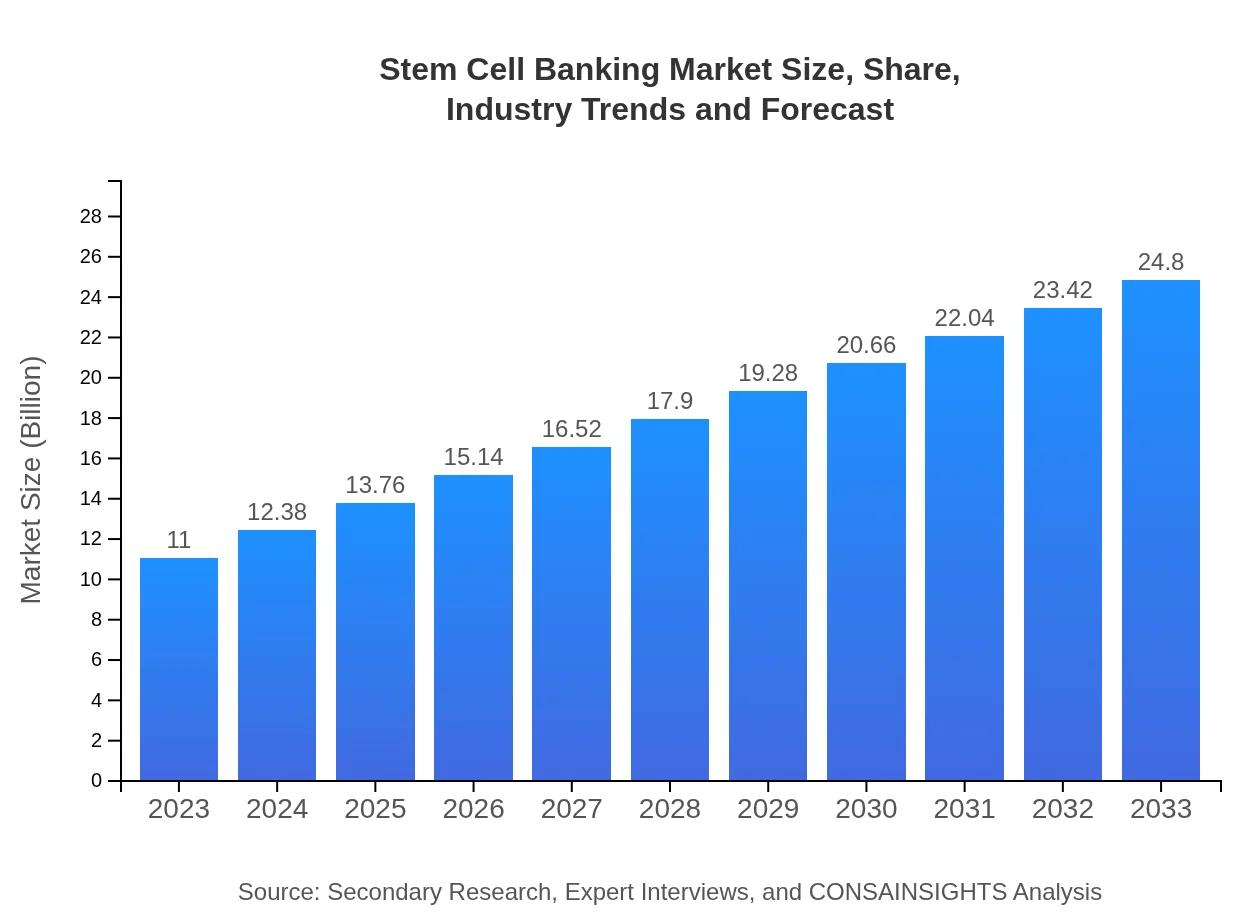
Stem Cell Banking Market — USD $11 Billion in 2023, Growing to USD 24.80null by 2033 at 8.2% CAGR
This report provides a comprehensive analysis of the Stem Cell Banking market from 2023 to 2033. It includes insights on market size, CAGR, industry trends, technological advancements, regional analysis, and forecasts to help stakeholders make informed decisions.
Key Takeaways
- Global market expands from $11.00 Billion in 2023 to $24.80 Billion by 2033, reflecting an 8.2% CAGR over 2023 to 2033.
- North America is largest regional market, while no single fastest-growing region is stated because regional CAGR differences remain within 0.15 percentage points.
- Europe moves from $3.11 Billion in 2023 to $7.00 Billion in 2033, indicating substantial regional gains.
- Asia Pacific grows from $2.27 Billion in 2023 to $5.12 Billion in 2033, driven by research investment and clinical adoption.
- Leading companies covered include Cord Blood Registry (CBR), Viacord, Cryo-Cell International, Inc., and StemCyte Inc.
Stem Cell Banking Market Report — Executive Summary
North America remains largest market by forecast-period value, while no single fastest-growing region is stated because top regional growth rates are separated by less than 0.15 percentage points. This report presents a structured assessment of the global Stem Cell Banking market, which rises from $11.00 Billion in 2023 to $24.80 Billion in 2033 at an 8.2% CAGR for 2023 to 2033. Growth is supported by expanding applications in personalized medicine, rising demand for regenerative therapies, and advances in storage technologies such as cryopreservation. The analysis addresses market segmentation by sample type, storage technique, service, and end user, and profiles prominent providers including Cord Blood Registry (CBR), Viacord, Cryo-Cell International, Inc., and StemCyte Inc. Regional performance is detailed with North America identified as the largest regional market. The research discusses drivers, constraints, and trends, and presents a balanced view for stakeholders evaluating investment, partnership, and development opportunities within the industry.
Key Growth Drivers
- Rising clinical and research demand for stem cell–based therapies expands need for long-term storage services.
- Technological improvements in cryopreservation and preservation techniques enhance sample viability and service offerings.
- Growing awareness among consumers and healthcare providers increases uptake of cord blood and cord tissue banking.
- Increased funding and investments in biotechnology and regenerative medicine support market development and service diversification.
| Metric | Value |
|---|---|
| Study Period | 2023 - 2033 |
| 2023 Market Size | $11.00 Billion |
| CAGR (2023-2033) | 8.2% |
| 2033 Market Size | $24.80 Billion |
| Top Companies | Cord Blood Registry (CBR), Viacord, Cryo-Cell International, Inc., StemCyte Inc. |
| Published Date | 11 October 2024 |
| Last Modified Date | 28 May 2026 |
Stem Cell Banking Market Overview
Customize Stem Cell Banking Market Report market research report
- ✔ Get in-depth analysis of Stem Cell Banking market size, growth, and forecasts.
- ✔ Understand Stem Cell Banking's regional dynamics and industry-specific trends.
- ✔ Identify potential applications, end-user demand, and growth segments in Stem Cell Banking
What is the Market Size & CAGR of Stem Cell Banking Market Report market in 2023?
Stem Cell Banking Industry Analysis
Stem Cell Banking Market Segmentation and Scope
Tell us your focus area and get a customized research report.
Stem Cell Banking Market Report Market Analysis Report by Region
Europe Stem Cell Banking Market Report:
Europe grows from $3.11 Billion in 2023 to $7 Billion in 2033. Expansion is driven by increasing regulatory clarity, rising investment in regenerative medicine research, and adoption of storage technologies across clinical and research centers.Asia Pacific Stem Cell Banking Market Report:
Asia Pacific grows from $2.27 Billion in 2023 to $5.12 Billion in 2033. Growth is supported by expanding research capacity, rising healthcare expenditure, and greater awareness of stem cell banking among consumers and providers.North America Stem Cell Banking Market Report:
North America is largest regional market, rising from $3.53 Billion in 2023 to $7.96 Billion in 2033. Regional strength stems from established biotech infrastructure, significant research investment, and broad clinical and consumer awareness supporting banking services.South America Stem Cell Banking Market Report:
Latin America grows from $1.04 Billion in 2023 to $2.34 Billion in 2033. Market development is influenced by growing biotechnology initiatives, enhanced clinical research activity, and increasing adoption of preservation services.Middle East & Africa Stem Cell Banking Market Report:
Middle East and Africa grows from $1.06 Billion in 2023 to $2.38 Billion in 2033. Growth drivers include targeted investments in healthcare infrastructure, expanding research collaborations, and gradual increases in service uptake.Tell us your focus area and get a customized research report.
Research Methodology
Stem Cell Banking Market Analysis By Sample Type
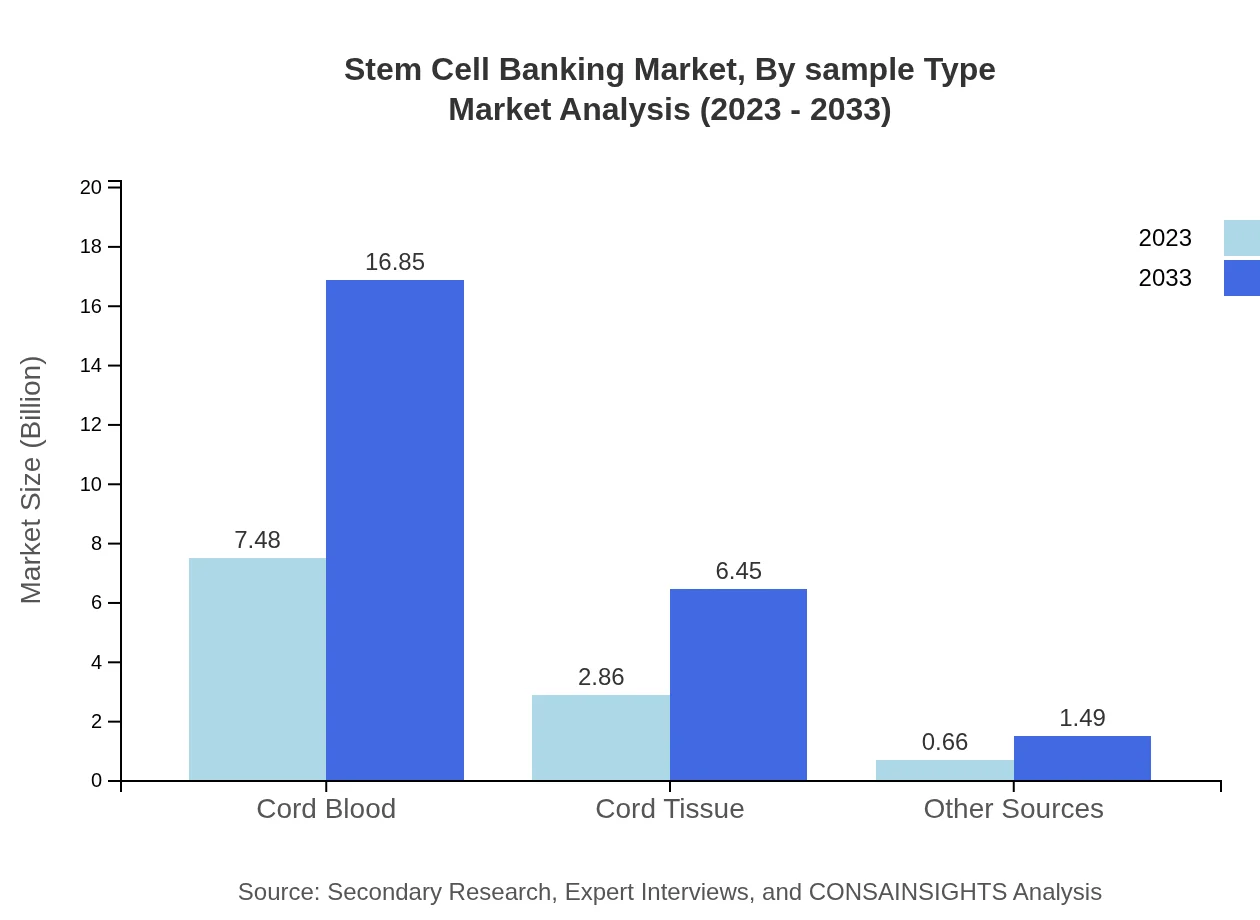
The market can be segmented by sample types, which include Cord Blood, Cord Tissue, and Other Sources. In 2023, the Cord Blood market is valued at $7.48 billion, maintaining a dominance of 67.97% share, expected to grow to $16.85 billion by 2033. Cord Tissue accounts for $2.86 billion with a 26.01% share, projected to rise to $6.45 billion. Other Sources make up $0.66 billion, with a 6.02% share growing to $1.49 billion.
Stem Cell Banking Market Analysis By Storage Technique
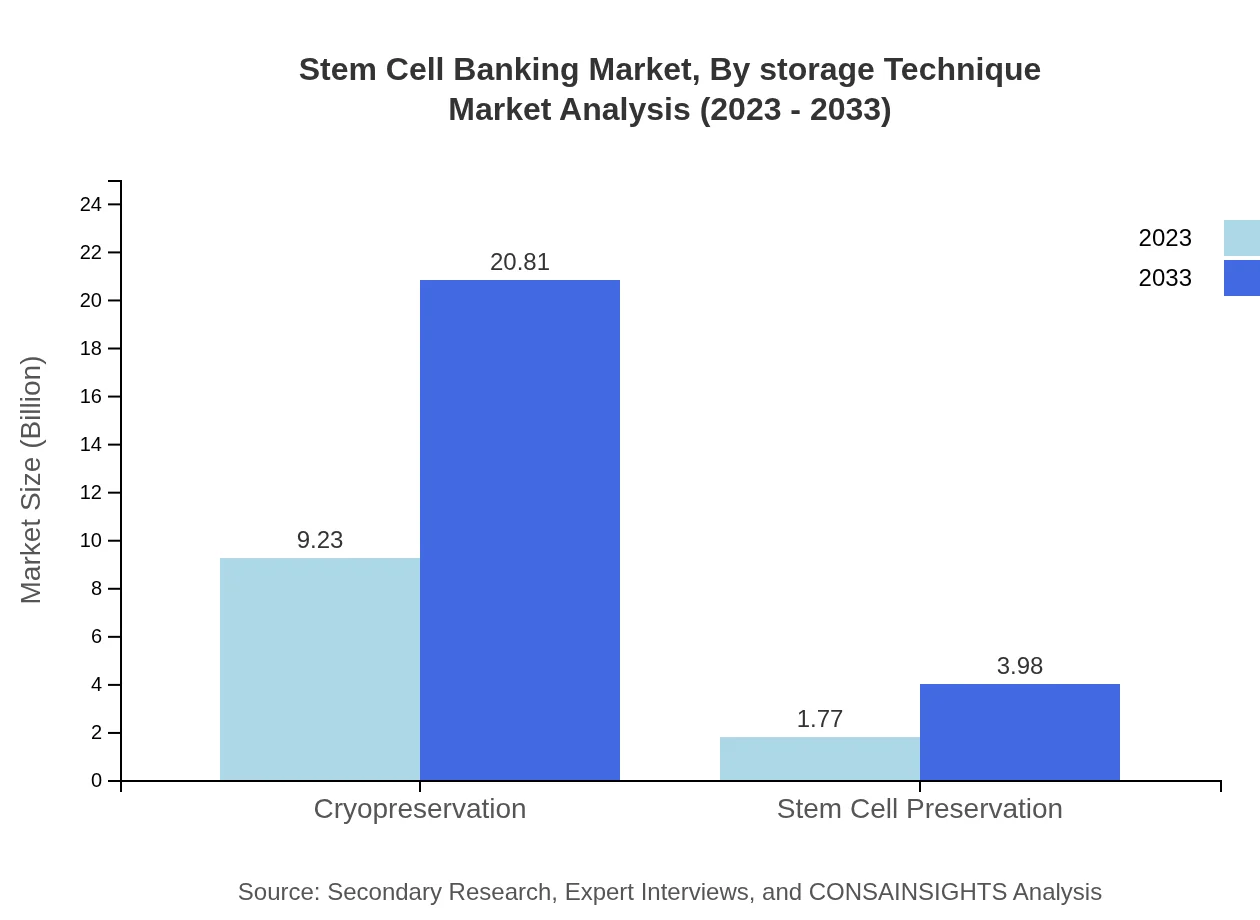
Storage techniques primarily involve Cryopreservation, which constitutes $9.23 billion, representing 83.94% in 2023, and is expected to reach $20.81 billion by 2033. Stem Cell Preservation generates $1.77 billion with a 16.06% share, forecasting up to $3.98 billion by the end of 2033.
Stem Cell Banking Market Analysis By Service Type
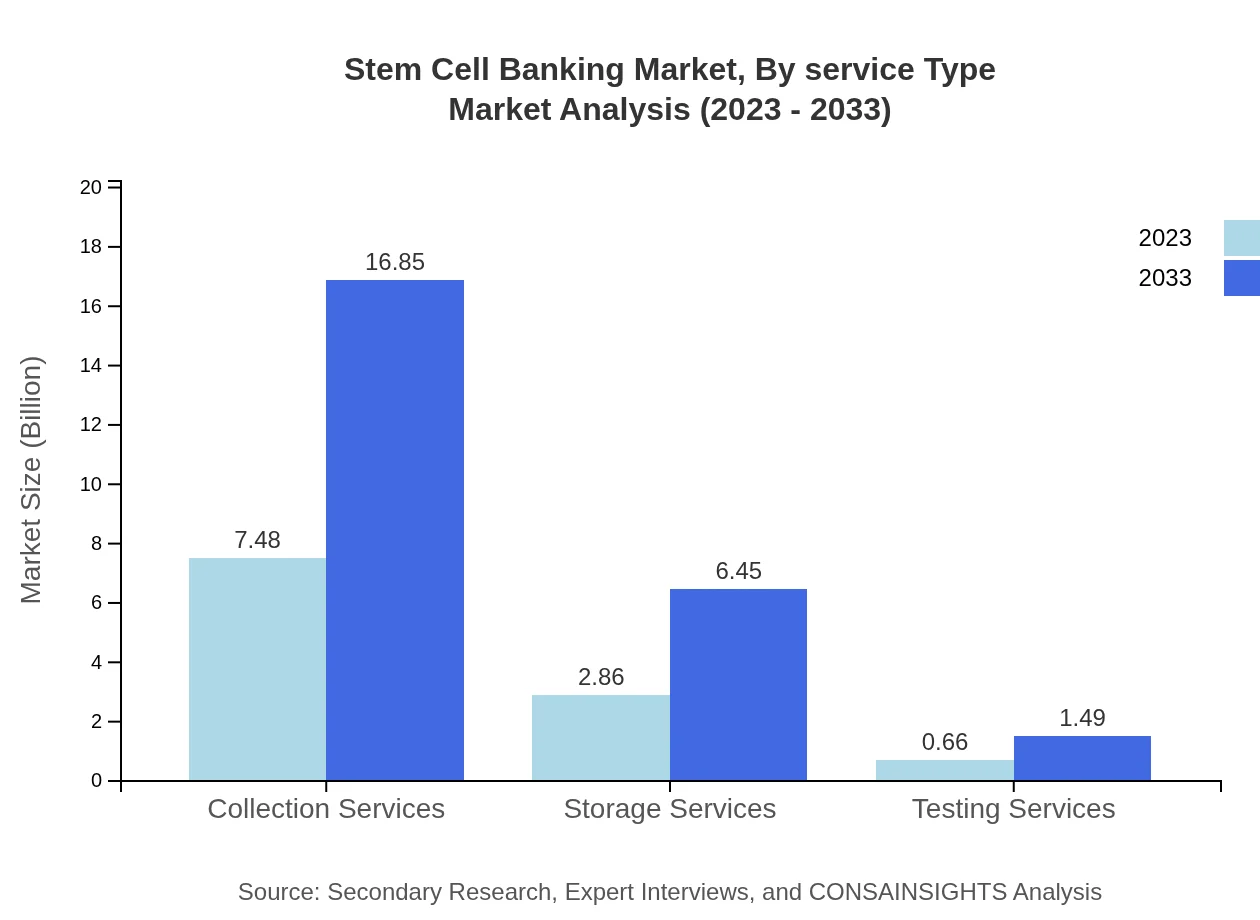
The market for service types includes Collection Services, Storage Services, and Testing Services. Collection Services lead at $7.48 billion with a 67.97% share, with projections of $16.85 billion by 2033. Storage Services are at $2.86 billion, making up 26.01% share expected to grow to $6.45 billion. Testing Services account for $0.66 billion in 2023 and will rise to $1.49 billion.
Stem Cell Banking Market Analysis By End User
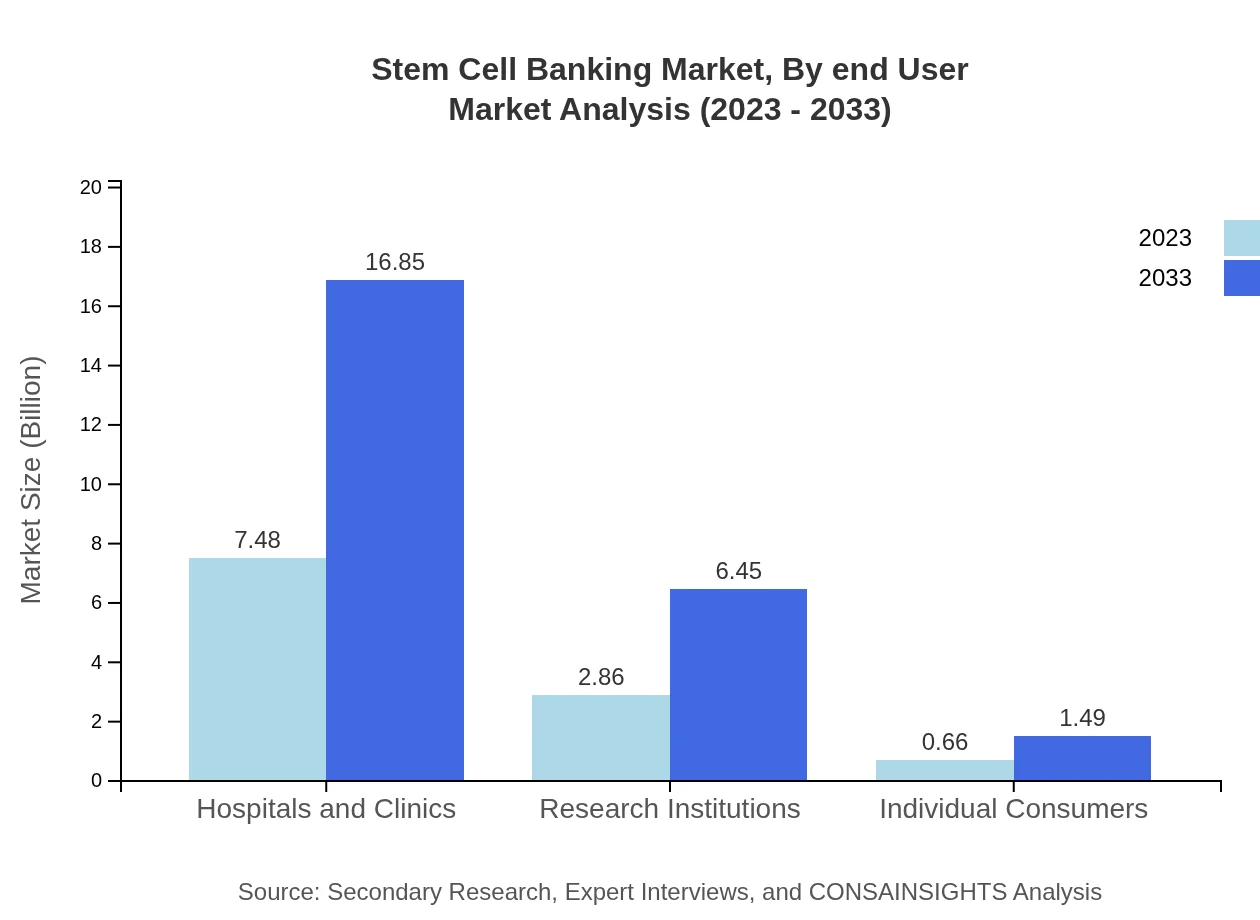
Hospitals & Clinics dominate the market, achieving a size of $7.48 billion and a 67.97% share in 2023, anticipated to increase to $16.85 billion. Research Institutions account for $2.86 billion at 26.01%, projected to reach $6.45 billion, while Individual Consumers represent $0.66 billion growing to $1.49 billion.
Stem Cell Banking Market Trends and Future Forecast
Tell us your focus area and get a customized research report.
Global Market Leaders and Top Companies in Stem Cell Banking Industry
Cord Blood Registry (CBR):
As a market leader in cord blood banking, CBR offers comprehensive cord blood and cord tissue collection and storage services, contributing significantly to advancements in regenerative medicine.Viacord:
A prominent player in the industry, Viacord provides innovative cord blood and tissue banking services, focusing on quality and security for families seeking stem cell storage.Cryo-Cell International, Inc.:
Pioneering in the field of cord blood banking, Cryo-Cell International has introduced various technologies to improve storage practices and promote the use of stem cells in therapies.StemCyte Inc.:
Recognized for its role in expanding stem cell therapy options, StemCyte focuses on cord blood banking, emphasizing on providing quality stem cells for transplantations.We're grateful to work with incredible clients.








FAQs
What is the market size in 2023?
The market size for the stem cell banking sector is $11.00 Billion in 2023, as stated in the report's baseline market valuation for that year.
How big will the market be in 2033?
By 2033 the market is projected to reach $24.80 Billion, representing long-term expansion over the specified forecast period.
What is CAGR for the forecast period?
The compound annual growth rate for the market over 2023 to 2033 is 8.2%, based on the reported start and end market values.
Is there a single fastest Growing region in the Stem Cell Banking Market Report market?
No single fastest-growing region is stated for the Stem Cell Banking Market Report market because the top regional implied CAGR values are within 0.15 percentage points of each other, making the ranking too close to call reliably.
Which companies are profiled in the report?
The report includes profiles of Cord Blood Registry (CBR), Viacord, Cryo-Cell International, Inc., and StemCyte Inc. among industry participants.
What are common storage techniques covered?
Storage methods discussed include cryopreservation and stem cell preservation techniques, reflecting the primary approaches to long-term sample maintenance.
Who are the main end users?
End-user categories include Hospitals and Clinics, Research Institutions, and Individual Consumers as primary demand sources for banking services.
How was the research conducted?
Research combined primary interviews with industry experts and secondary sources such as company reports, supported by data triangulation and expert analysis.