

Biologic Therapeutics Drugs Market Report
First published: 15 October 2024 | Last updated: 25 May 2026 | Report Code: biologic-therapeutics-drugs
Biologic Therapeutics Drugs Market — USD 50 billion in 2023, Growing to USD 102.21B by 2033 at 7.2% CAGR
This report delves into the Biologic Therapeutics Drugs market, offering insights into trends, technologies, and forecasts from 2023 to 2033, emphasizing market size, segmentation, and key players within the industry.
Key Takeaways
- Global market value increases from $50.00 Billion in 2023 to $102.21 Billion in 2033 with a 7.2% CAGR.
- North America is largest regional market, while no single fastest-growing region is stated because regional CAGR differences remain within 0.15 percentage points.
- Regional expansion seen across Europe ($14.07B to $28.76B) and Asia Pacific ($10.44B to $21.34B) between 2023 and 2033.
- Leading industry participants include AbbVie, Roche, Amgen, and Johnson & Johnson.
- Segment diversity spans monoclonal antibodies, vaccines, cell and gene therapies, and multiple administration routes and end users.
Biologic Therapeutics Drugs Market Report — Executive Summary
North America remains largest market by forecast-period value, while no single fastest-growing region is stated because top regional growth rates are separated by less than 0.15 percentage points. The report details market momentum driven by sustained R&D investment, expanding approvals of biologic therapies, and technological advances in manufacturing and personalized approaches. The global market is projected to expand from $50.00 Billion in 2023 to $102.21 Billion by 2033 at a 7.2% CAGR. North America represents the largest regional market by 2033. Key segments covered include product types such as monoclonal antibodies and cell and gene therapies; applications spanning oncology, autoimmune, infectious and neurological disorders; and routes like intravenous and subcutaneous. The analysis highlights participation from major firms including AbbVie, Roche, Amgen, and Johnson & Johnson, and examines supply-chain, regulatory, and adoption trends shaping future growth.
Key Growth Drivers
- Increased R&D spending and clinical pipelines advancing novel biologic therapies and personalized treatment approaches.
- Regulatory approvals and greater acceptance of biologics in managing oncology, autoimmune, and infectious diseases.
- Improvements in manufacturing processes, including upstream and downstream processing and fill-finish capabilities.
- Rising collaboration between pharmaceutical firms and research institutions accelerating product development and commercialization.
- Broader adoption across hospitals, biotechnology companies, and research organizations expanding end-user demand.
| Metric | Value |
|---|---|
| Study Period | 2023 - 2033 |
| 2023 Market Size | $50.00 Billion |
| CAGR (2023-2033) | 7.2% |
| 2033 Market Size | $102.21 Billion |
| Top Companies | AbbVie, Roche, Amgen, Johnson & Johnson |
| Published Date | 15 October 2024 |
| Last Modified Date | 25 May 2026 |

Biologic Therapeutics Drugs Market Overview
Customize Biologic Therapeutics Drugs Market Report market research report
- ✔ Get in-depth analysis of Biologic Therapeutics Drugs market size, growth, and forecasts.
- ✔ Understand Biologic Therapeutics Drugs's regional dynamics and industry-specific trends.
- ✔ Identify potential applications, end-user demand, and growth segments in Biologic Therapeutics Drugs
What is the Market Size & CAGR of Biologic Therapeutics Drugs Market Report market in 2023?
Biologic Therapeutics Drugs Industry Analysis
Biologic Therapeutics Drugs Market Segmentation and Scope
Tell us your focus area and get a customized research report.
Biologic Therapeutics Drugs Market Report Market Analysis Report by Region
Europe Biologic Therapeutics Drugs Market Report:
Europe grows from $14.07 Billion in 2023 to $28.76 Billion in 2033. Regional drivers include strong biotech clusters, collaborative research between companies and institutions, and progressive regulatory pathways supporting biologic approvals.Asia Pacific Biologic Therapeutics Drugs Market Report:
Asia Pacific grows from $10.44 Billion in 2023 to $21.34 Billion in 2033. Expansion reflects rising healthcare investment, increasing local manufacturing capabilities, and greater uptake of biologics across clinical and commercial settings.North America Biologic Therapeutics Drugs Market Report:
North America is largest regional market, rising from $16.18 Billion in 2023 to $33.08 Billion in 2033. Growth in this region is influenced by concentrated R&D activity, established industry players, strong clinical adoption, and investments in manufacturing capacity.South America Biologic Therapeutics Drugs Market Report:
Latin America grows from $4.09 Billion in 2023 to $8.36 Billion in 2033. Market development is supported by growing healthcare infrastructure, expanding access to advanced therapies, and increasing collaborations with global firms.Middle East & Africa Biologic Therapeutics Drugs Market Report:
Middle East and Africa grows from $5.21 Billion in 2023 to $10.66 Billion in 2033. Market progression is driven by improving healthcare systems, greater access to biologic treatments, and targeted investments in biotechnology capabilities.Tell us your focus area and get a customized research report.
Research Methodology
Biologic Therapeutics Drugs Market Analysis By Product
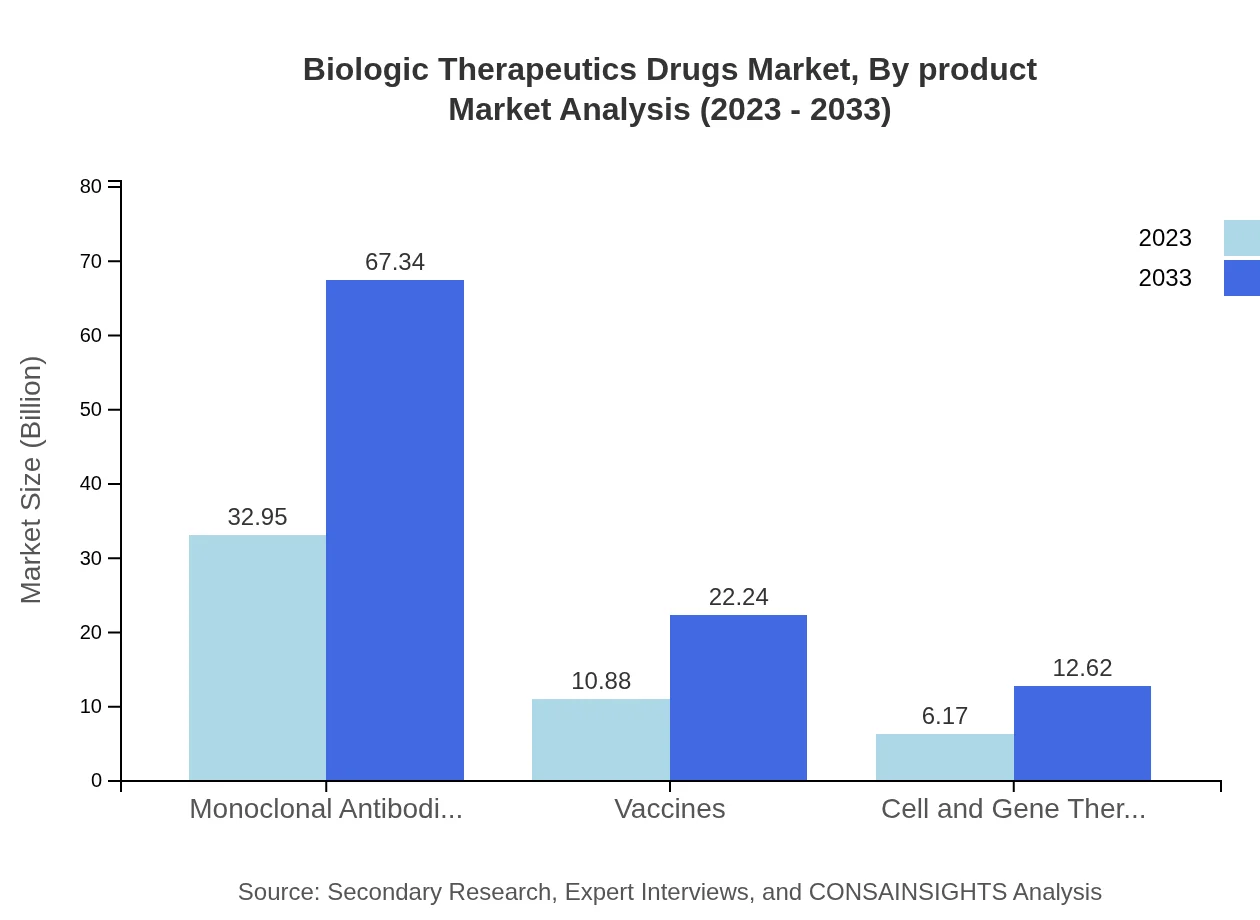
The segment of monoclonal antibodies holds a significant market share, estimated at USD 32.95 billion in 2023 and projected to reach USD 67.34 billion by 2033. Vaccines follow, with a current market valuation of USD 10.88 billion, increasing to USD 22.24 billion, reflecting their vital role in preventive healthcare. Cell and gene therapies, while smaller at USD 6.17 billion currently, are expected to grow significantly, demonstrating their emerging importance in personalized medicine.
Biologic Therapeutics Drugs Market Analysis By Application
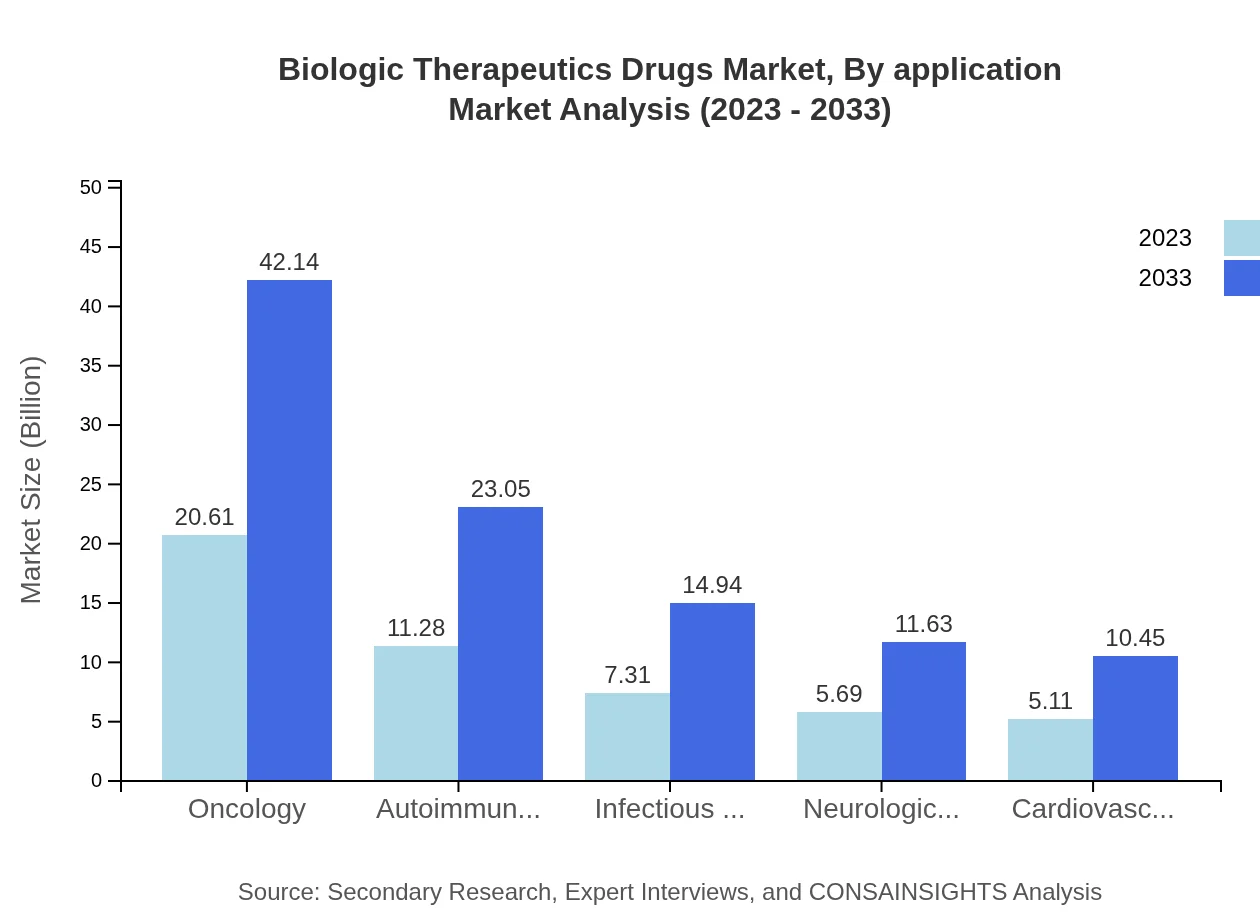
Oncology remains a leading application for biologics, valued at USD 20.61 billion in 2023 and anticipated to rise to USD 42.14 billion by 2033. This growth is driven by the increasing incidence of cancer and demand for innovative treatment options. Autoimmune disorders also constitute a significant portion, expected to grow from USD 11.28 billion to USD 23.05 billion over the same period, reflecting the rising need for effective therapies in this area.
Biologic Therapeutics Drugs Market Analysis By End User

Hospitals dominate the end-user segment, showcasing a market size of USD 29.00 billion in 2023, projected to escalate to USD 59.28 billion by 2033. Research institutions also play a crucial role, with expected growth from USD 11.16 billion to USD 22.82 billion, highlighting the essential contribution of research in advancing therapeutic applications.
Biologic Therapeutics Drugs Market Analysis By Route Of Administration
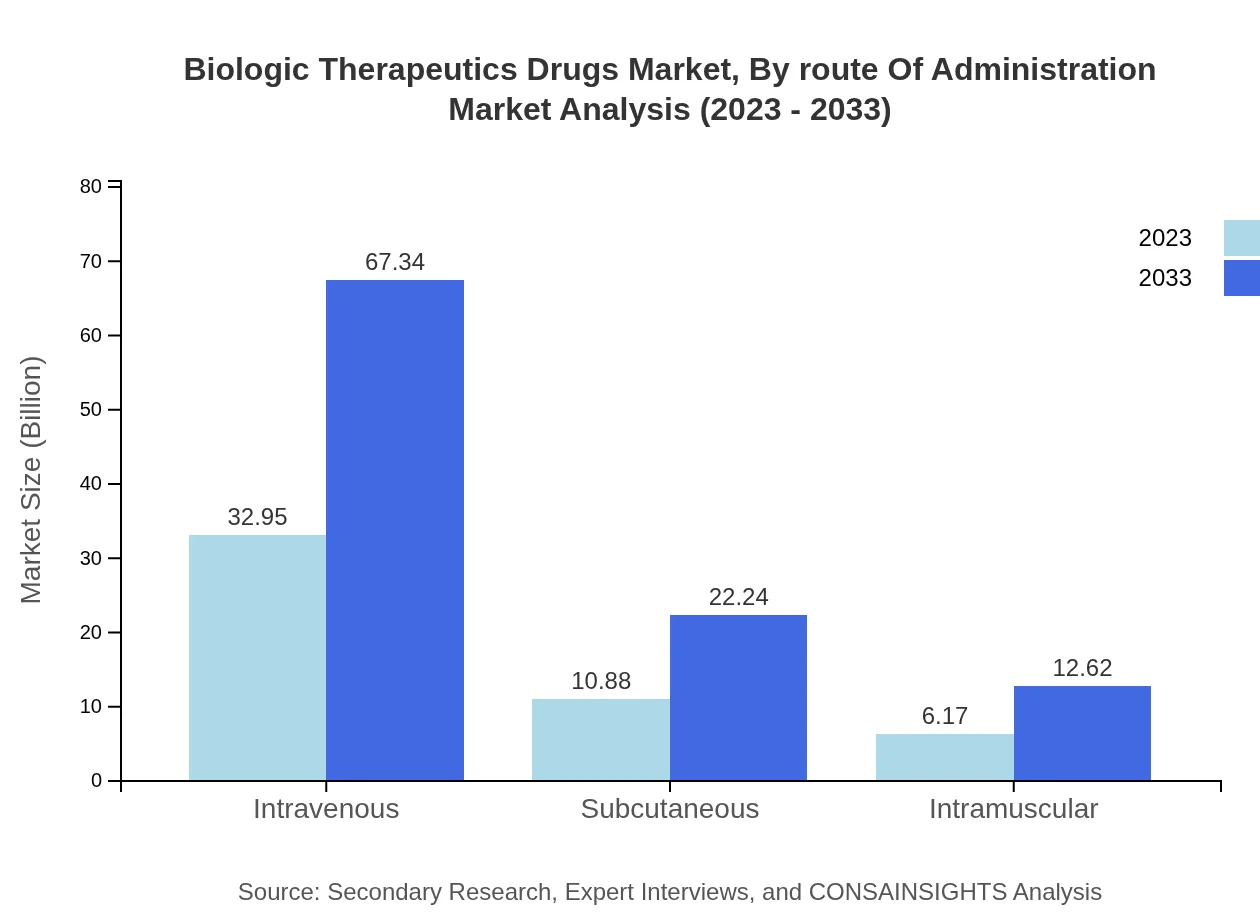
Intravenous administration is the most prevalent route, representing a market size of USD 32.95 billion and expected to grow to USD 67.34 billion. Subcutaneous and intramuscular routes are also significant, with current sizes of USD 10.88 billion and USD 6.17 billion, respectively, both of which show promising growth as patient convenience becomes a priority.
Biologic Therapeutics Drugs Market Analysis By Manufacturing Process
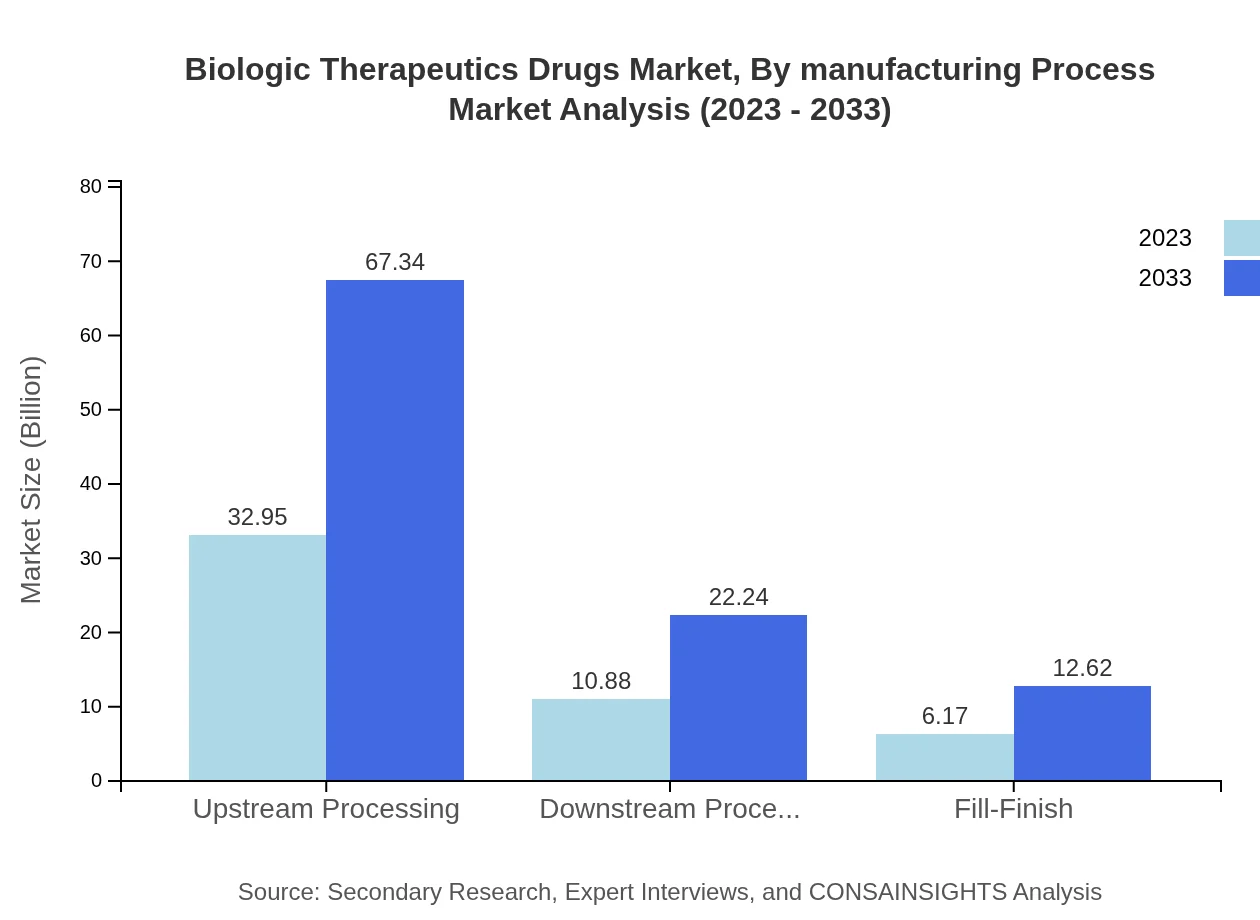
The manufacturing processes for biologic therapeutics encompass upstream processing, downstream processing, and fill-finish. Upstream bioprocessing is particularly notable, with an expected growth from USD 32.95 billion to USD 67.34 billion, driven by the need for efficient and cost-effective production methods.
Biologic Therapeutics Drugs Market Trends and Future Forecast
Tell us your focus area and get a customized research report.
Global Market Leaders and Top Companies in Biologic Therapeutics Drugs Industry
AbbVie:
AbbVie is a global biopharmaceutical company known for its diverse portfolio, including leading monoclonal antibodies and therapies addressing autoimmune diseases.Roche:
Roche is a pioneer in oncology biologics, innovating treatments that have reshaped cancer care and contributing significantly to global health advancements.Amgen:
Amgen focuses on biotechnology's vast potential, offering biologic therapies for various diseases, particularly in the fields of neurology and oncology.Johnson & Johnson:
Johnson & Johnson engages in biopharmaceuticals, advancing immunologic and oncologic treatments, and investing heavily in research initiatives.We're grateful to work with incredible clients.








FAQs
What is the market size of the biologic therapeutics drugs market in 2023?
The market size in 2023 is $50.00 Billion, representing the baseline for the forecast period and informing regional and segment-level analyses.
How big will the market be in 2033?
By 2033 the market is projected to reach $102.21 Billion, reflecting growth across product, application, and regional segments over the forecast period.
What is CAGR for the forecast period?
The forecast period CAGR is 7.2%, describing the compound annual growth rate applied between 2023 and 2033 for the global market.
Is there a single fastest Growing region in the Biologic Therapeutics Drugs Market Report market?
No single fastest-growing region is stated for the Biologic Therapeutics Drugs Market Report market because the top regional implied CAGR values are within 0.15 percentage points of each other, making the ranking too close to call reliably.
Which product types are covered in the segmentation?
Product segmentation includes monoclonal antibodies, vaccines, and cell and gene therapy among the primary biologic categories examined in the report.
Who are the top companies profiled?
Top companies named in the report are AbbVie, Roche, Amgen, and Johnson & Johnson as prominent participants shaping the market landscape.
What end users are analyzed?
End-user coverage includes hospitals, research institutions, biotechnology companies, and pharmaceutical companies across clinical and commercial settings.
How is manufacturing covered in the study?
Manufacturing discussion addresses upstream processing, downstream processing, and fill-finish stages, highlighting process improvements and capacity considerations.
What applications receive focus in the report?
Key applications analyzed include oncology, autoimmune disorders, infectious diseases, neurological disorders, and cardiovascular diseases.
Why are regional trends important in this analysis?
Regional trends show distinct market expansions and adoption patterns, using region-specific values to inform strategy and investment decisions through 2033.