
Reports >
Life Sciences
>
Biomedical Textiles Market Report

Biomedical Textiles Market Report
First published: 15 October 2024 | Last updated: 25 May 2026 | Report Code: biomedical-textiles
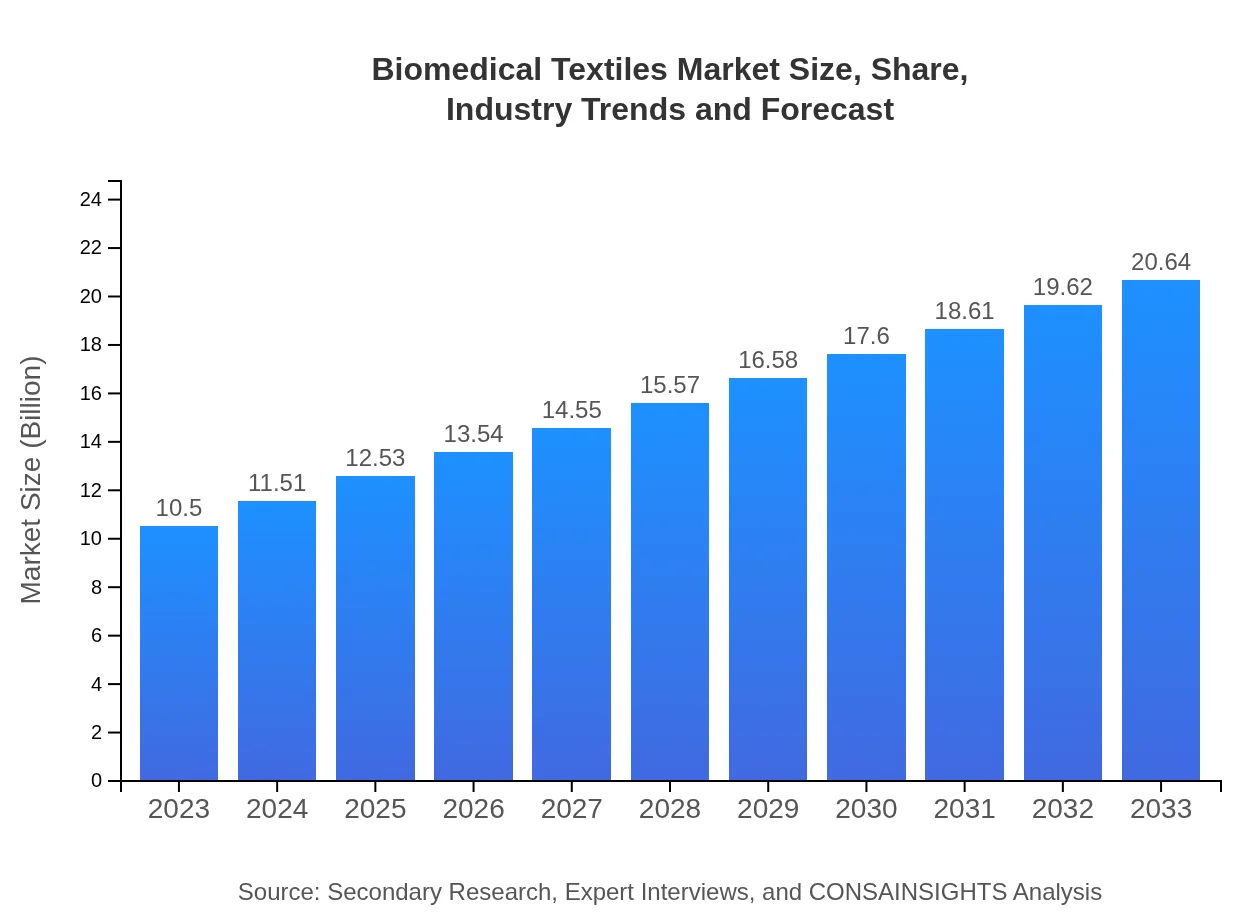
Biomedical Textiles Market — USD 10.5 billion in 2023, Growing to USD 20.64B by 2033 at 6.8% CAGR
This report extensively covers the Biomedical Textiles market from 2023 to 2033, providing insights into market size, growth opportunities, technology advancements, and key players shaping the industry's future.
Key Takeaways
- Global market moves from $10.50 Billion in 2023 to $20.64 Billion by 2033, reflecting a 6.8% CAGR over 2023 to 2033.
- North America is largest regional market, while no single fastest-growing region is stated because regional CAGR differences remain within 0.15 percentage points.
- Europe expands from $3.33 Billion in 2023 to $6.55 Billion in 2033, while Asia Pacific grows from $2.10 Billion to $4.14 Billion across the forecast.
- Top manufacturers named include Medtronic, B. Braun Melsungen AG, Johnson & Johnson, Smith & Nephew, and Stryker Corporation.
- Key segments cover product types, materials, applications and end users with hospitals and research laboratories among principal buyers.
Biomedical Textiles Market Report — Executive Summary
North America remains largest market by forecast-period value, while no single fastest-growing region is stated because top regional growth rates are separated by less than 0.15 percentage points. The report outlines market expansion driven by technological advancement, rising healthcare expenditure, and demand for application-specific biomedical materials. From $10.50 Billion in 2023 to $20.64 Billion by 2033, the sector records a 6.8% CAGR over 2023 to 2033. North America remains largest market by forecast-period value, while no single fastest-growing region is stated because top regional growth rates are separated by less than 0.15 percentage points. Product segmentation examines absorbable, non-absorbable and bioactive textiles; material breakdown includes natural, synthetic and composite fibers. The competitive landscape identifies Medtronic, B. Braun Melsungen AG, Johnson & Johnson, Smith & Nephew and Stryker Corporation as primary participants. Research emphasizes regulatory compliance, innovation in bioactive and antimicrobial textiles, and investment in R&D as central industry themes.
Key Growth Drivers
- Rising healthcare spending and growing prevalence of chronic conditions increase demand for biomedical textile applications.
- Technological progress in bioactive and absorbable materials improves product performance and broadens clinical uses.
- Aging populations in multiple regions create sustained need for surgical and orthopedic textile solutions.
- Increased investment in research and development by major manufacturers fosters new material and application innovation.
- Regulatory focus and quality standards drive adoption of certified biomedical textile products in hospitals and laboratories.
| Metric | Value |
|---|---|
| Study Period | 2023 - 2033 |
| 2023 Market Size | $10.50 Billion |
| CAGR (2023-2033) | 6.8% |
| 2033 Market Size | $20.64 Billion |
| Top Companies | Medtronic , B. Braun Melsungen AG, Johnson & Johnson, Smith & Nephew, Stryker Corporation |
| Published Date | 15 October 2024 |
| Last Modified Date | 25 May 2026 |
Biomedical Textiles Market Overview
Customize Biomedical Textiles Market Report market research report
- ✔ Get in-depth analysis of Biomedical Textiles market size, growth, and forecasts.
- ✔ Understand Biomedical Textiles's regional dynamics and industry-specific trends.
- ✔ Identify potential applications, end-user demand, and growth segments in Biomedical Textiles
What is the Market Size & CAGR of Biomedical Textiles Market Report market in 2023?
Biomedical Textiles Industry Analysis
Biomedical Textiles Market Segmentation and Scope
Tell us your focus area and get a customized research report.
Biomedical Textiles Market Report Market Analysis Report by Region
Europe Biomedical Textiles Market Report:
Europe grows from $3.33 Billion in 2023 to $6.55 Billion in 2033. Expansion reflects investment in medical technologies, regulatory compliance emphasis, and adoption of bioactive and antimicrobial textile solutions.Asia Pacific Biomedical Textiles Market Report:
Asia Pacific grows from $2.1 Billion in 2023 to $4.14 Billion in 2033. Growth is supported by increasing healthcare spending, larger patient populations, and demand for surgical and wound-care textile products.North America Biomedical Textiles Market Report:
North America is largest regional market, rising from $3.47 Billion in 2023 to $6.83 Billion in 2033. Regional expansion is linked to healthcare investment, advanced clinical adoption, and active participation by leading manufacturers.South America Biomedical Textiles Market Report:
Latin America grows from $0.76 Billion in 2023 to $1.5 Billion in 2033. Market development is driven by improving healthcare infrastructure and growing needs for clinical textile applications.Middle East & Africa Biomedical Textiles Market Report:
Middle East and Africa grows from $0.82 Billion in 2023 to $1.62 Billion in 2033. Regional drivers include healthcare capacity building, greater access to medical technologies, and rising demand for durable and application-specific textiles.Tell us your focus area and get a customized research report.
Research Methodology
Biomedical Textiles Market Analysis By Product
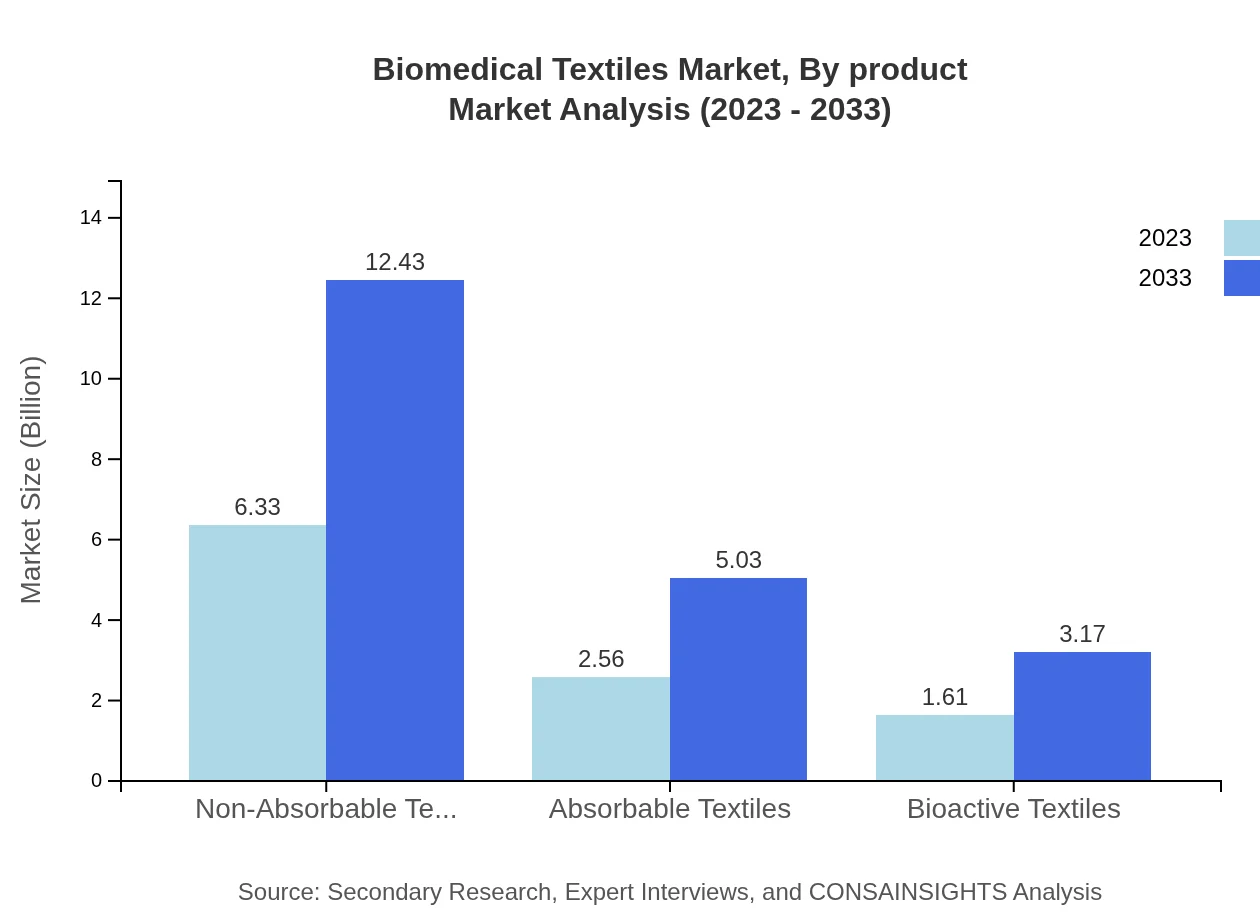
The market is segmented into absorbable and non-absorbable textiles, with non-absorbable textiles dominating the market due to their broader applications in surgical procedures. Non-absorbable textiles are projected to grow from USD 6.33 billion in 2023 to USD 12.43 billion by 2033. Conversely, absorbable textiles are increasingly gaining traction, growing from USD 2.56 billion in 2023 to USD 5.03 billion by 2033.
Biomedical Textiles Market Analysis By Application
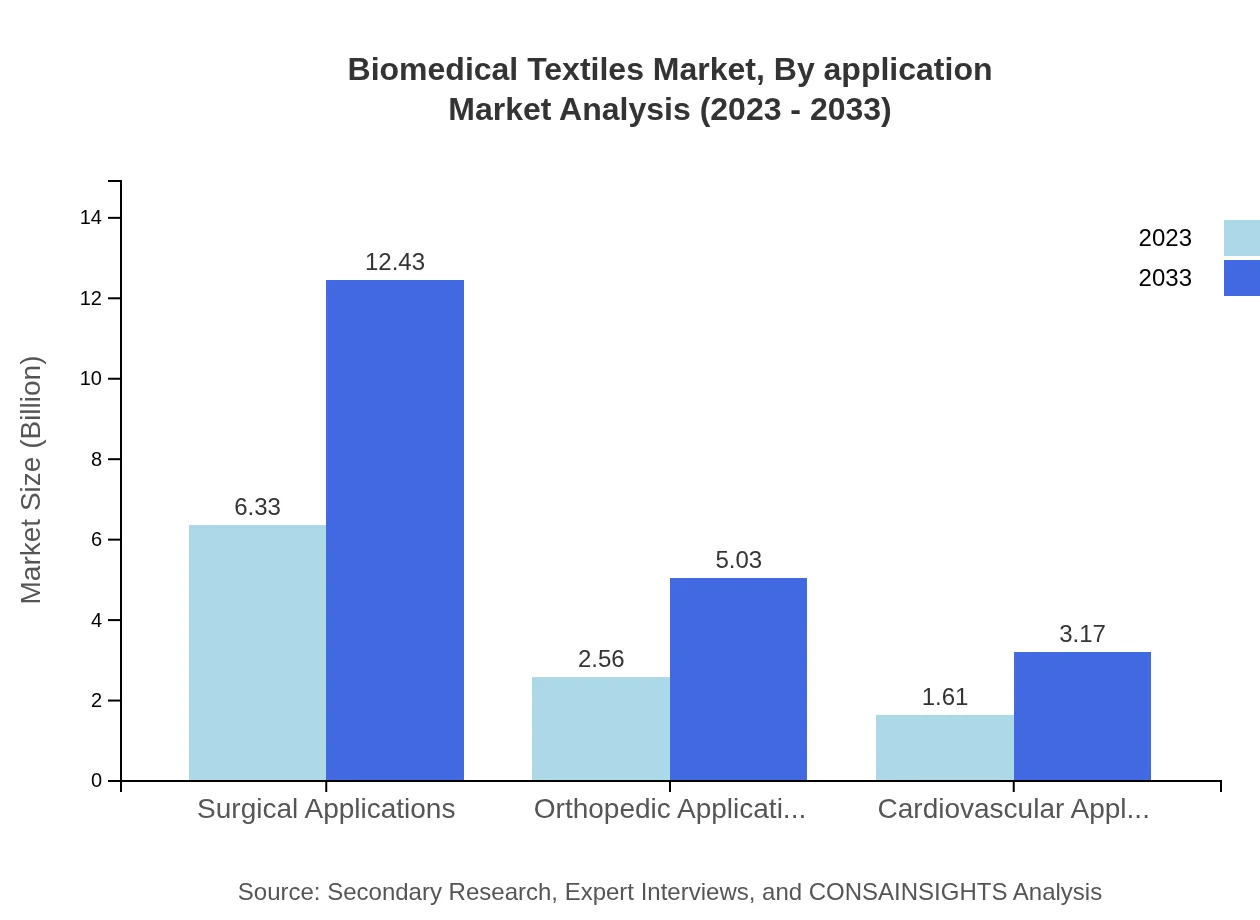
The major applications of biomedical textiles include surgical, orthopedic, and cardiovascular applications. Surgical applications are key, with the market size expected to rise from USD 6.33 billion in 2023 to USD 12.43 billion by 2033. Orthopedic applications are projected to grow from USD 2.56 billion to USD 5.03 billion, while cardiovascular applications, although smaller, represent a significant niche segment.
Biomedical Textiles Market Analysis By Material
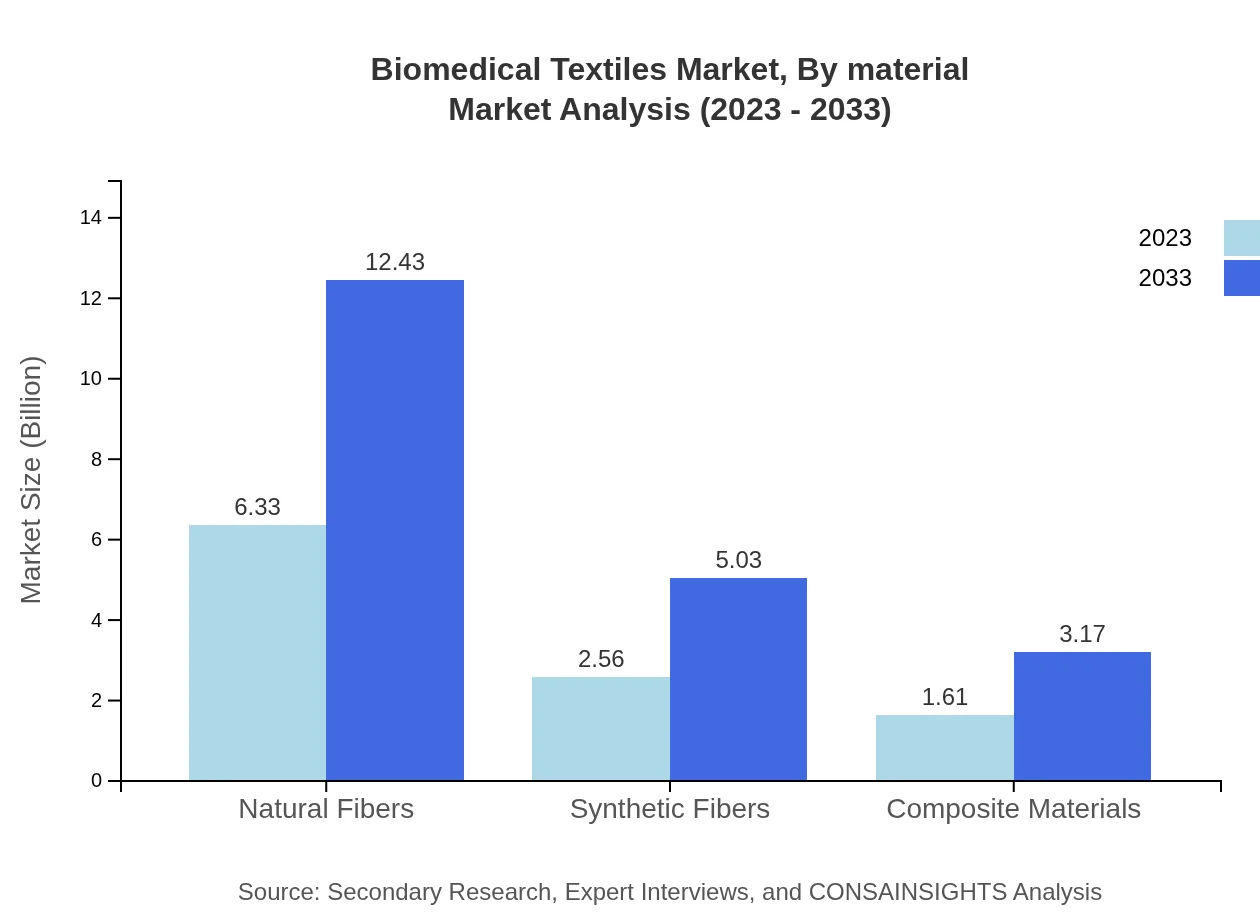
The material segmentation includes natural fibers, synthetic fibers, and composite materials. Natural fibers occupy a major share of approximately 60.24%, with a projected market size of USD 6.33 billion in 2023, expected to rise to USD 12.43 billion by 2033. Synthetic fibers hold a market share of 24.39% and are also set to grow notably as demand for lightweight and durable textiles increases.
Biomedical Textiles Market Analysis By End User
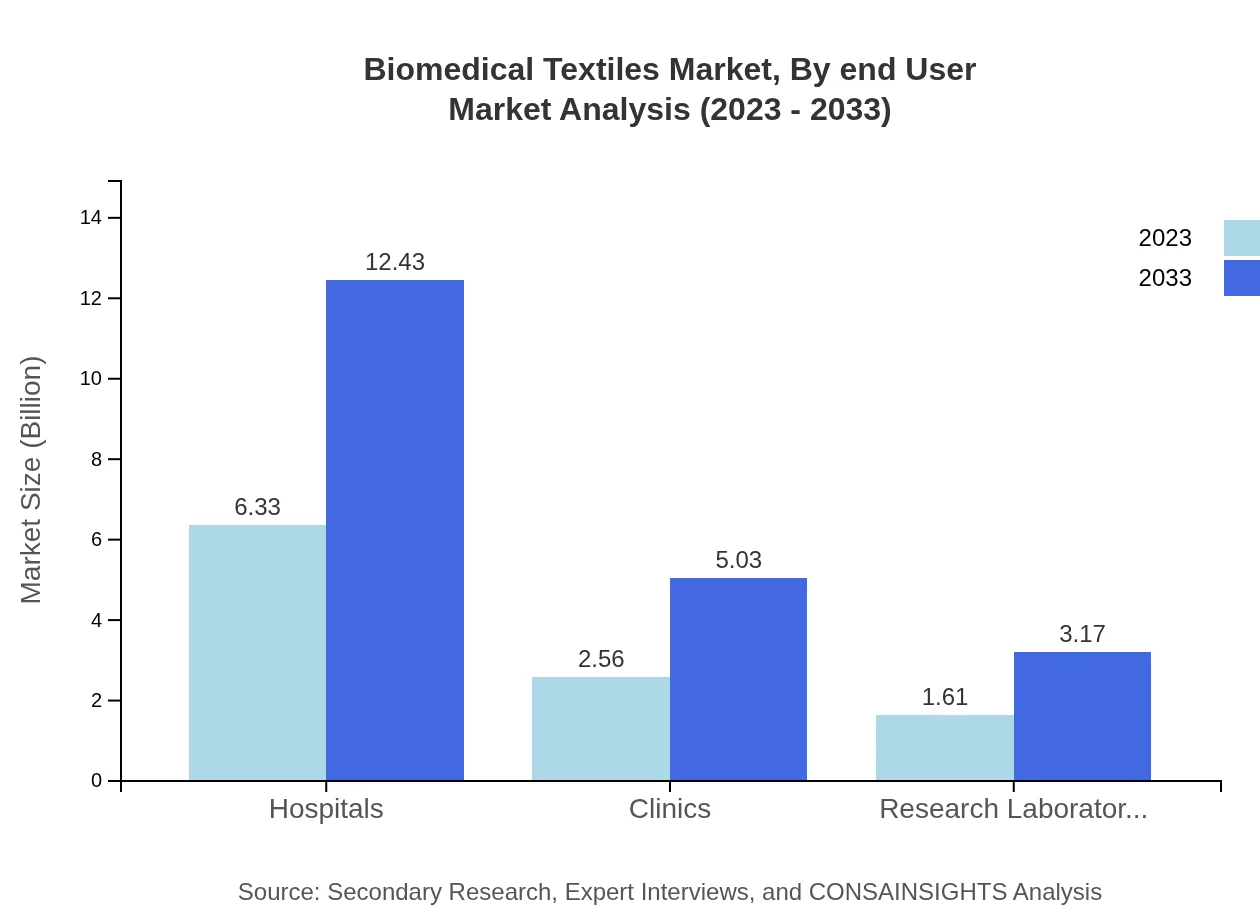
End-users include hospitals, clinics, and research laboratories. Hospitals are the primary consumers, with a substantial market size of USD 6.33 billion in 2023, expected to reach USD 12.43 billion by 2033. Clinics, accounting for a share of 24.39%, are projected to grow significantly as healthcare services expand.
Biomedical Textiles Market Trends and Future Forecast
Tell us your focus area and get a customized research report.
Global Market Leaders and Top Companies in Biomedical Textiles Industry
Medtronic :
A leading global healthcare solutions company, Medtronic is known for its innovative biomedical textiles that serve surgical and wound care applications.B. Braun Melsungen AG:
B. Braun specializes in developing solutions and products in medical technology, including a wide range of biomedical textiles for surgical procedures.Johnson & Johnson:
With a strong focus on innovation and R&D, Johnson & Johnson produces advanced biomedical textiles used in various healthcare applications, notably in surgical sutures.Smith & Nephew:
Smith & Nephew offers a comprehensive range of advanced wound care systems, relying on innovative biomedical textiles for better patient outcomes.Stryker Corporation:
Stryker is dedicated to medical technology and equipment, providing high-quality biomedical textiles for surgical applications.We're grateful to work with incredible clients.








FAQs
What is the market size of the Biomedical Textiles Market Report?
The market size was $10.50 Billion in 2023 and is projected to reach $20.64 Billion by 2033, reflecting the figures reported for the 2023 to 2033 forecast period.
How big will the biomedical textiles market be by 2033?
By 2033 the market is projected to be $20.64 Billion, based on the provided forecast values covering the 2023 to 2033 period and the stated growth trajectory.
What is CAGR for the forecast period?
The reported compound annual growth rate for the 2023 to 2033 forecast period is 6.8%, as specified in the input market projections and accompanying analysis.
Is there a single fastest Growing region in the Biomedical Textiles Market Report market?
No single fastest-growing region is stated for the Biomedical Textiles Market Report market because the top regional implied CAGR values are within 0.15 percentage points of each other, making the ranking too close to call reliably.
Which companies lead the market?
Top companies listed include Medtronic, B. Braun Melsungen AG, Johnson & Johnson, Smith & Nephew, and Stryker Corporation as primary market participants.
What are primary product segments covered?
Product segmentation includes absorbable and non-absorbable textiles as well as bioactive textiles, addressing surgical, orthopedic and cardiovascular applications among others.
Who are the main end users for biomedical textiles?
End users identified include hospitals, clinics and research laboratories, which are primary purchasers for clinical applications and R&D purposes.
How is regional growth described in the report?
Regional figures are provided for each area: Europe, Asia Pacific, Latin America, North America and Middle East & Africa, with specific start and end values for 2023 and 2033.