
Reports >
Life Sciences
>
Biopharmaceuticals Market Report

Biopharmaceuticals Market Report
First published: 21 October 2024 | Last updated: 25 May 2026 | Report Code: biopharmaceuticals
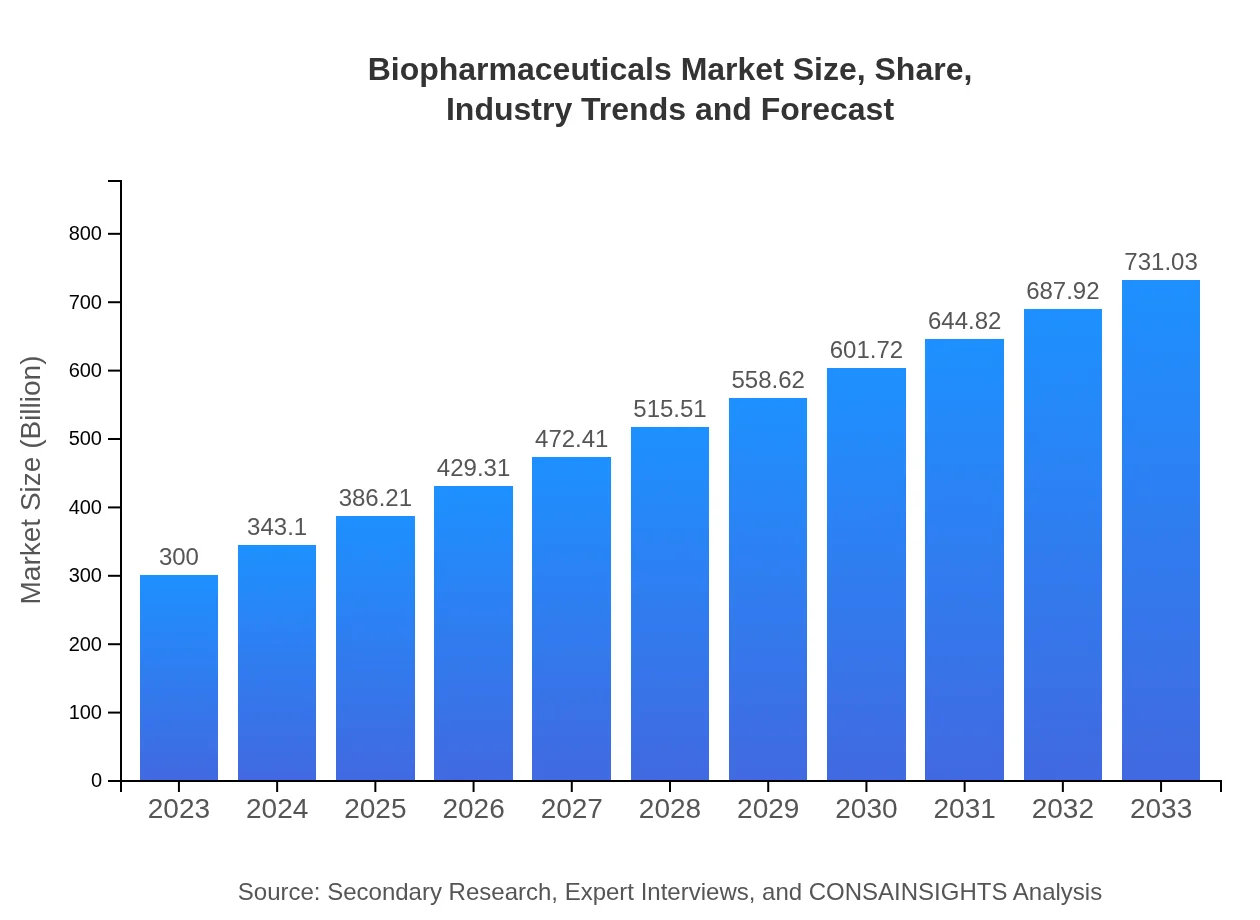
Biopharmaceuticals Market — USD 300 billion in 2023, Growing to USD 731.03B by 2033 at 9% CAGR
This report provides extensive insights into the biopharmaceuticals market from 2023 to 2033, covering market size, trends, forecasts, and key regional analysis. It aims to equip stakeholders with data-driven strategies for navigating the evolving biopharmaceutical landscape.
Key Takeaways
- Global market value rises from $300.00 Billion in 2023 to $731.03 Billion in 2033, reflecting a 9% CAGR over the forecast period.
- North America is largest regional market, while no single fastest-growing region is stated because regional CAGR differences remain within 0.15 percentage points.
- North America is the largest region, expanding from $105.93 Billion in 2023 to $258.13 Billion in 2033.
- Europe grows from $87.51 Billion in 2023 to $213.24 Billion in 2033, while Asia Pacific advances from $58.38 Billion to $142.26 Billion.
- Leading firms include AbbVie Inc., Roche Holding AG, Amgen Inc., Johnson & Johnson, and Pfizer Inc.
- Market momentum is supported by targeted therapeutics, gene therapies, and increased R&D collaboration between industry and research institutions.
Biopharmaceuticals Market Report — Executive Summary
North America remains largest market by forecast-period value, while no single fastest-growing region is stated because top regional growth rates are separated by less than 0.15 percentage points. The biopharmaceuticals market is forecast to expand from $300.00 Billion in 2023 to $731.03 Billion in 2033 at a 9% CAGR. Growth is driven by the rising need for targeted treatments, expansion of monoclonal antibodies, vaccines, and gene therapy portfolios, and intensified partnerships between pharmaceutical companies and research organizations. North America is the largest regional market, with significant investment in R&D and manufacturing capacity. Regulatory complexity and high development costs remain industry features, while advances in personalized medicine and manufacturing efficiency are shaping strategic priorities. Major companies such as AbbVie Inc., Roche Holding AG, Amgen Inc., Johnson & Johnson, and Pfizer Inc. are prominent participants, influencing innovation through acquisitions and pipeline investments. The report covers segmentation across product types, clinical stages, therapeutic areas, distribution channels, and manufacturing processes, offering a structured view of market dynamics and opportunities.
Key Growth Drivers
- Rising demand for precision therapies, including monoclonal antibodies and gene therapy products, expanding treatment options.
- Increased R&D alliances between pharmaceutical firms and research institutions accelerating candidate development and clinical progression.
- Growing prevalence of chronic diseases creating sustained need for biologic and targeted treatment modalities.
- Investment in manufacturing scale-up and process improvements, supporting broader commercialization and supply chain resilience.
- Regulatory pathways and approvals for advanced biologics facilitating market entry and therapy adoption.
| Metric | Value |
|---|---|
| Study Period | 2023 - 2033 |
| 2023 Market Size | $300.00 Billion |
| CAGR (2023-2033) | 9% |
| 2033 Market Size | $731.03 Billion |
| Top Companies | AbbVie Inc., Roche Holding AG, Amgen Inc., Johnson & Johnson, Pfizer Inc. |
| Published Date | 21 October 2024 |
| Last Modified Date | 25 May 2026 |
Biopharmaceuticals Market Overview
Customize Biopharmaceuticals Market Report market research report
- ✔ Get in-depth analysis of Biopharmaceuticals market size, growth, and forecasts.
- ✔ Understand Biopharmaceuticals's regional dynamics and industry-specific trends.
- ✔ Identify potential applications, end-user demand, and growth segments in Biopharmaceuticals
What is the Market Size & CAGR of Biopharmaceuticals Market Report market in 2023?
Biopharmaceuticals Industry Analysis
Biopharmaceuticals Market Segmentation and Scope
Tell us your focus area and get a customized research report.
Biopharmaceuticals Market Report Market Analysis Report by Region
Europe Biopharmaceuticals Market Report:
Europe grows from $87.51 Billion in 2023 to $213.24 Billion in 2033. Growth is linked to robust research ecosystems, regulatory frameworks that support biologic approvals, and collaboration between biotech firms and larger pharmaceutical companies.Asia Pacific Biopharmaceuticals Market Report:
Asia Pacific grows from $58.38 Billion in 2023 to $142.26 Billion in 2033. Market drivers include rising healthcare investment, expanding clinical trial activity, and increasing adoption of biologic treatments across emerging healthcare systems.North America Biopharmaceuticals Market Report:
North America is largest regional market, rising from $105.93 Billion in 2023 to $258.13 Billion in 2033. Regional strength is underpinned by substantial R&D spending, established manufacturing infrastructure, and strong industry–academic collaborations supporting pipeline advancement.South America Biopharmaceuticals Market Report:
Latin America grows from $26.67 Billion in 2023 to $64.99 Billion in 2033. Regional development is supported by growing access to advanced therapeutics, partnerships for technology transfer, and expanding distribution channels.Middle East & Africa Biopharmaceuticals Market Report:
Middle East and Africa grows from $21.51 Billion in 2023 to $52.41 Billion in 2033. Growth reflects investment in healthcare infrastructure, adoption of advanced therapies, and initiatives to strengthen local manufacturing and access.Tell us your focus area and get a customized research report.
Research Methodology
Biopharmaceuticals Market Analysis By Therapeutic Area
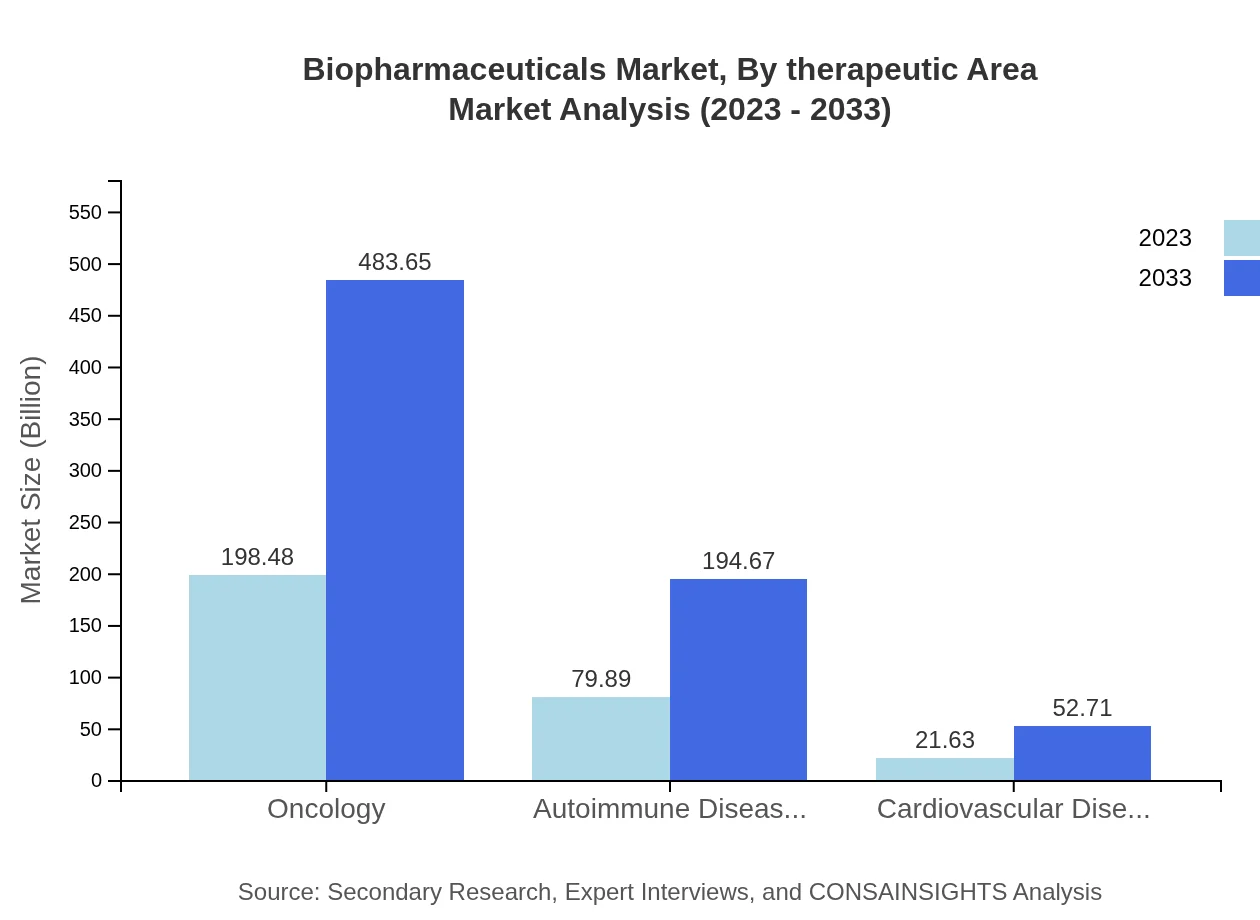
The biopharmaceuticals market by therapeutic area reveals monoclonal antibodies leading with a market size of 198.48 billion USD in 2023 and 483.65 billion USD by 2033, representing an increasing share of 66.16%. Vaccines are expected to grow from 79.89 billion USD to 194.67 billion USD, indicating a share of 26.63%. Additionally, gene therapy products are gaining traction, with a size of 21.63 billion USD expanding to 52.71 billion USD, holding a share of 7.21%.
Biopharmaceuticals Market Analysis By Product Type
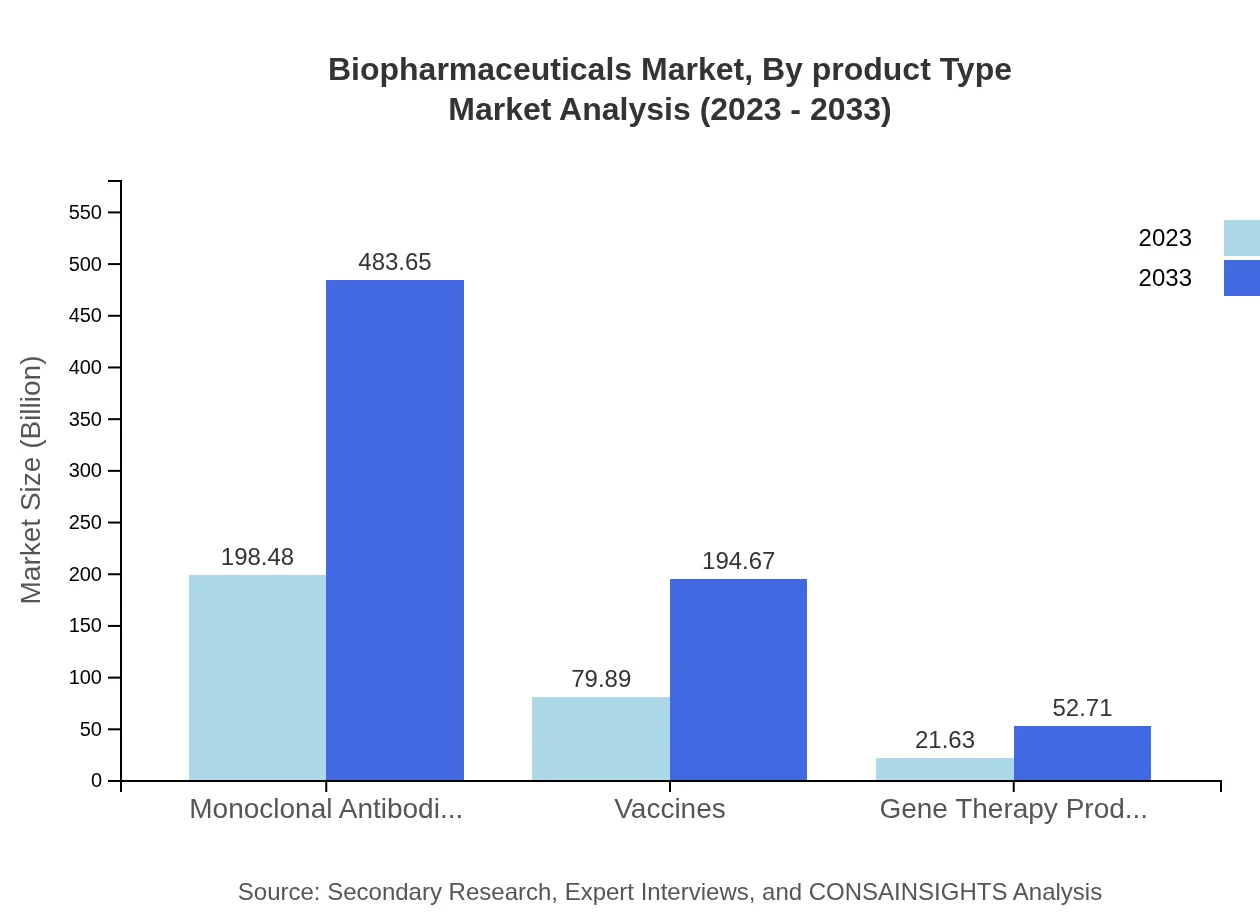
The product type analysis shows that monoclonal antibodies dominate, with a size of 198.48 billion USD in 2023 and 483.65 billion USD by 2033. Vaccines follow at 79.89 billion USD to 194.67 billion USD, and gene therapy products range from 21.63 billion USD to 52.71 billion USD over the same period. These products are pivotal, accounting for significant market shares and expected growth.
Biopharmaceuticals Market Analysis By Manufacturing Process
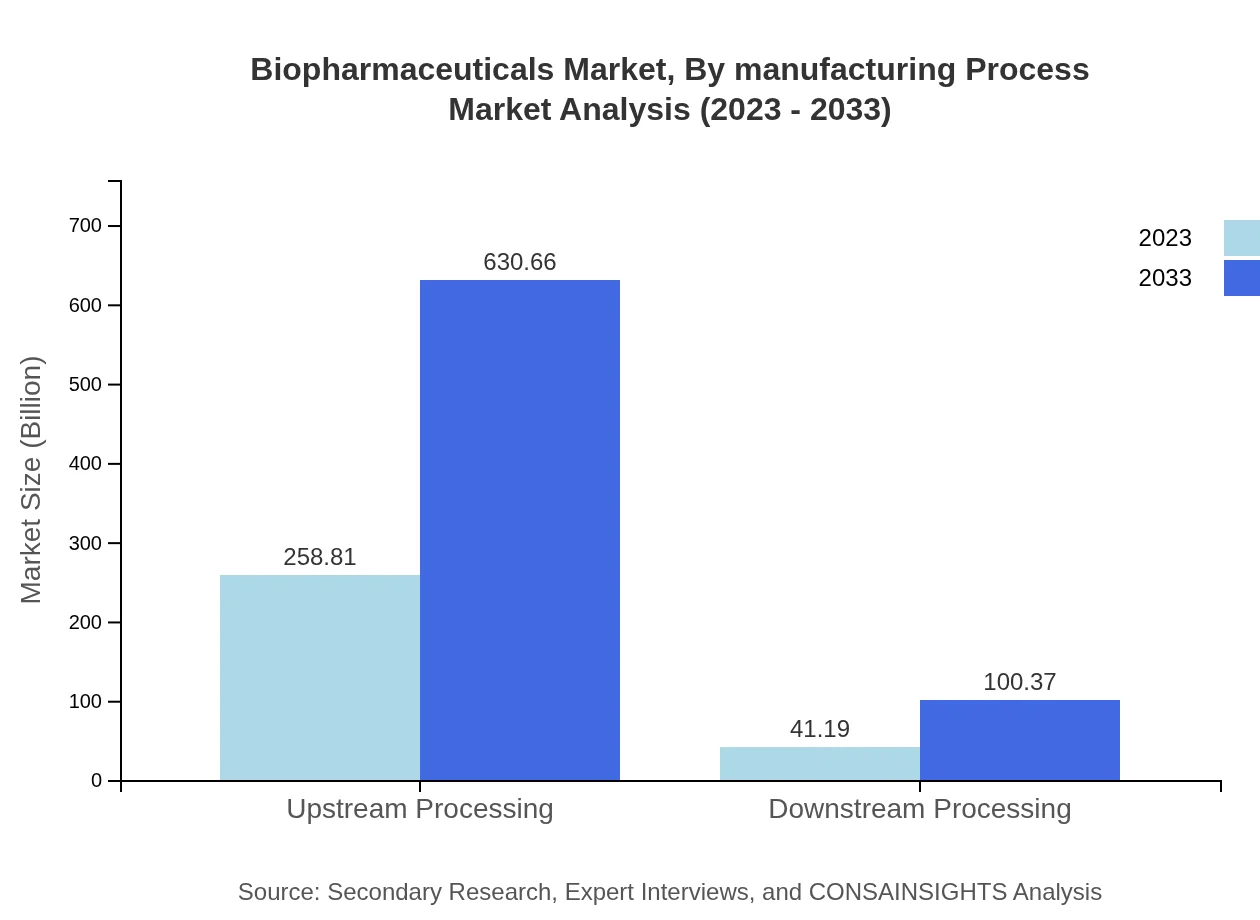
The market is segmented by manufacturing process into upstream and downstream processing. The upstream processing segment is valued at 258.81 billion USD in 2023 and is projected to double to 630.66 billion USD by 2033, maintaining an overwhelming share of 86.27%. Meanwhile, downstream processing is anticipated to grow from 41.19 billion USD to 100.37 billion USD, securing a share of 13.73%.
Biopharmaceuticals Market Analysis By Distribution Channel
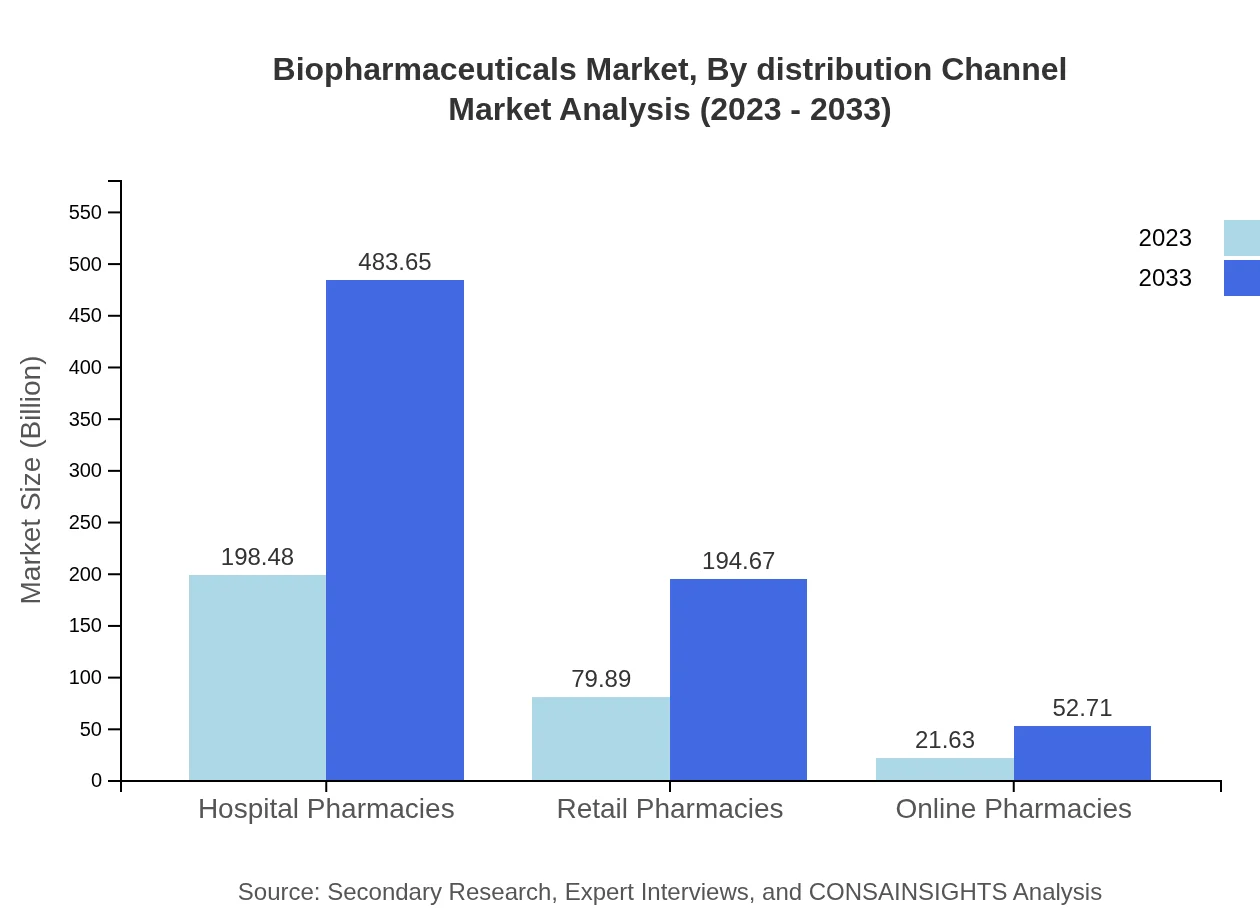
Distribution channel segmentation reveals hospital pharmacies leading with a size of 198.48 billion USD for 2023 and 483.65 billion USD by 2033. Furthermore, retail pharmacies are projected to grow from 79.89 billion USD to 194.67 billion USD, with online pharmacies increasing from 21.63 billion USD to 52.71 billion USD, collectively channeling a substantial share of the market.
Biopharmaceuticals Market Analysis By Clinical Stage
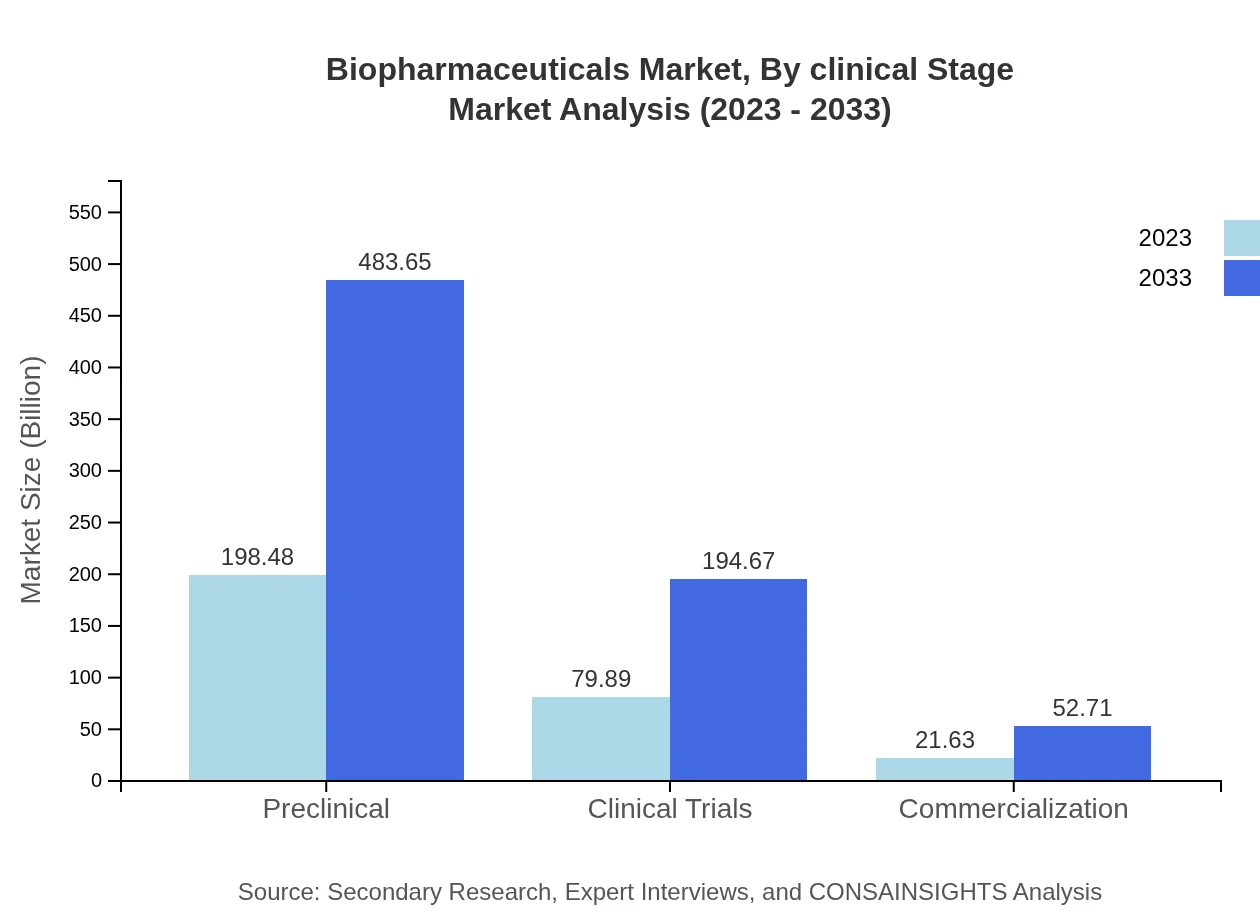
The clinical stage breakdown of the biopharmaceutical market indicates preclinical stages leading at 198.48 billion USD in 2023, projected to expand to 483.65 billion USD by 2033. Similarly, clinical trials show significant growth from 79.89 billion USD to 194.67 billion USD, while commercialization sees a rise from 21.63 billion USD to 52.71 billion USD, highlighting the importance of these stages in drug development.
Biopharmaceuticals Market Trends and Future Forecast
Tell us your focus area and get a customized research report.
Global Market Leaders and Top Companies in Biopharmaceuticals Industry
AbbVie Inc.:
AbbVie is a global biopharmaceutical leader known for its innovatively designed methodologies in drug discovery and production. Its blockbuster drugs target severe immunological and oncology conditions.Roche Holding AG:
Roche is renowned for its development of monoclonal antibodies and diagnostics solutions. Its strategic focus on precision medicine significantly enhances its footprint in the biopharmaceutical landscape.Amgen Inc.:
Amgen is one of the largest biotechnology companies, specializing in a broad range of novel therapeutic interventions and continuously investing in innovative research and development.Johnson & Johnson:
Johnson & Johnson operates across multiple segments, with its biopharmaceutical division focusing on immunology, oncology, and neuroscience, driving significant growth through robust clinical pipelines.Pfizer Inc.:
Pfizer is known for its research-driven approach and a diverse portfolio of vaccines and biologics, emerging as a global leader post-COVID-19 vaccine rollouts.We're grateful to work with incredible clients.








FAQs
What is the market size of the biopharmaceuticals market in 2023?
The market size in 2023 is $300.00 Billion, as stated in the report's base-year valuation for the global biopharmaceuticals sector.
How big will the market be in 2033?
By 2033 the market is projected to reach $731.03 Billion according to the forecast figures provided for the period 2023 to 2033.
What is CAGR for the forecast period?
The reported compound annual growth rate for the 2023 to 2033 period is 9%, reflecting the projected expansion over the decade.
Is there a single fastest Growing region in the Biopharmaceuticals Market Report market?
No single fastest-growing region is stated for the Biopharmaceuticals Market Report market because the top regional implied CAGR values are within 0.15 percentage points of each other, making the ranking too close to call reliably.
Which product types are covered in segmentation?
Segmentation includes monoclonal antibodies, vaccines, and gene therapy products among the listed by-product-type categories in the report.
Who are the top companies in the market?
Top companies named in the input include AbbVie Inc., Roche Holding AG, Amgen Inc., Johnson & Johnson, and Pfizer Inc.
What drives adoption of gene therapies and vaccines?
Adoption is driven by clinical advancements, targeted treatment benefits, and increased collaboration between industry and research institutions to advance pipelines.
How is the market segmented by clinical stage?
Clinical-stage segmentation in the report lists preclinical, clinical trials, and commercialization as the stages used to classify market activity.
Why are manufacturing processes important?
Manufacturing processes, including upstream and downstream processing, influence product yields, quality control, and cost efficiency critical to commercial success.
What role do distribution channels play?
Distribution channels such as hospital pharmacies, retail pharmacies, and online pharmacies determine patient access, channel coverage, and final product delivery.