
Reports >
Life Sciences
>
Breast Cancer Therapy Market Report

Breast Cancer Therapy Market Report
First published: 21 October 2024 | Last updated: 25 May 2026 | Report Code: breast-cancer-therapy
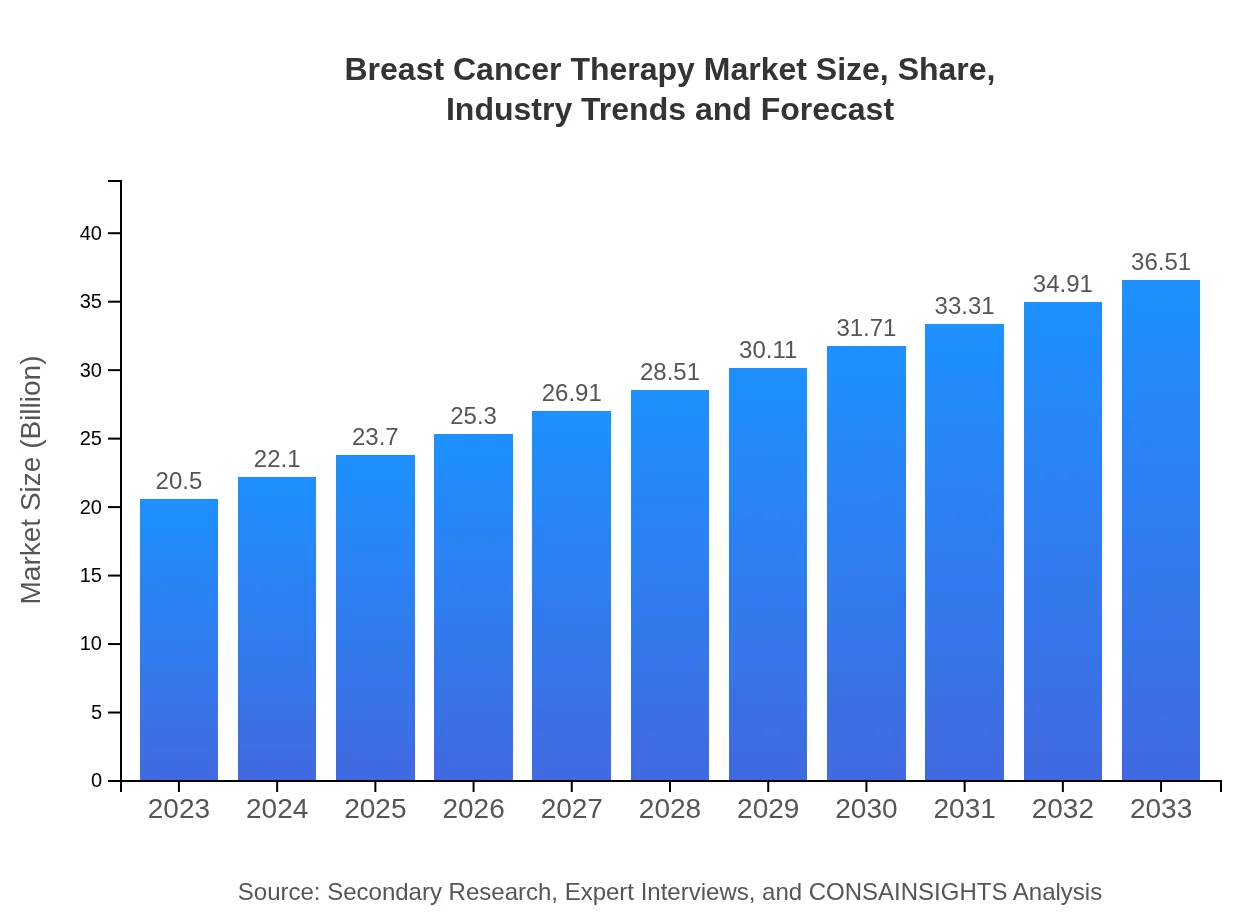
Breast Cancer Therapy Market — USD 20.5 billion in 2023, Growing to USD 36.51B by 2033 at 5.8% CAGR
This report provides a comprehensive analysis of the breast cancer therapy market, covering market dynamics, trends, and forecasts from 2023 to 2033. Insights include market size, segmentation, regional analysis, and key players to help stakeholders make informed decisions.
Key Takeaways
- Global market grows from $20.50 Billion in 2023 to $36.51 Billion in 2033 at a 5.8% CAGR.
- North America is largest regional market, while no single fastest-growing region is stated because regional CAGR differences remain within 0.15 percentage points.
- Europe expands from $5.24 Billion in 2023 to $9.34 Billion in 2033, reflecting sustained demand for advanced therapies.
- Asia Pacific rises from $4.07 Billion in 2023 to $7.26 Billion in 2033, driven by broader access and treatment adoption.
- Top industry players include Roche, Novartis, Bristol-Myers Squibb, Pfizer, and AstraZeneca, influencing innovation and market access.
Breast Cancer Therapy Market Report — Executive Summary
North America remains largest market by forecast-period value, while no single fastest-growing region is stated because top regional growth rates are separated by less than 0.15 percentage points. The Breast Cancer Therapy Market Report outlines a steady expansion from $20.50 Billion in 2023 to $36.51 Billion by 2033, reflecting a 5.8% CAGR across the 2023 to 2033 forecast period. Growth is supported by therapeutic innovation, including targeted agents, hormonal and immunotherapy approaches, and enhanced diagnostic and screening uptake. Market structure spans multiple therapy types—chemotherapy, radiation, hormonal, and targeted therapy—alongside treatment-stage and end-user segments such as hospitals, oncology centers, and home care. Regional variation is notable: North America is the largest market with a jump from $7.85 Billion to $13.98 Billion, while Europe and Asia Pacific also show significant expansion. The competitive landscape features established pharmaceutical firms including Roche, Novartis, Bristol-Myers Squibb, Pfizer, and AstraZeneca, which are active in product development and market access strategies. Regulatory frameworks, reimbursement policies, and innovation initiatives will continue to shape adoption patterns, while stakeholder collaboration and expert-led research are central to future advancements.
Key Growth Drivers
- Therapeutic innovation: development of targeted agents and biologics expands treatment options and adoption.
- Improved diagnostics and screening increase early detection, supporting demand for a range of therapies.
- Demographic trends: an aging population contributes to a larger patient base needing breast cancer treatments.
- Policy and market access initiatives help broaden availability of advanced therapies across care settings.
- Investment by major pharmaceutical companies accelerates R&D and commercialization of new treatment modalities.
| Metric | Value |
|---|---|
| Study Period | 2023 - 2033 |
| 2023 Market Size | $20.50 Billion |
| CAGR (2023-2033) | 5.8% |
| 2033 Market Size | $36.51 Billion |
| Top Companies | Roche, Novartis, Bristol-Myers Squibb, Pfizer , AstraZeneca |
| Published Date | 21 October 2024 |
| Last Modified Date | 25 May 2026 |
Breast Cancer Therapy Market Overview
Customize Breast Cancer Therapy Market Report market research report
- ✔ Get in-depth analysis of Breast Cancer Therapy market size, growth, and forecasts.
- ✔ Understand Breast Cancer Therapy's regional dynamics and industry-specific trends.
- ✔ Identify potential applications, end-user demand, and growth segments in Breast Cancer Therapy
What is the Market Size & CAGR of Breast Cancer Therapy Market Report market in 2023?
Breast Cancer Therapy Industry Analysis
Breast Cancer Therapy Market Segmentation and Scope
Tell us your focus area and get a customized research report.
Breast Cancer Therapy Market Report Market Analysis Report by Region
Europe Breast Cancer Therapy Market Report:
Europe grows from $5.24 Billion in 2023 to $9.34 Billion in 2033. Expansion reflects increasing adoption of advanced treatment modalities, evolving reimbursement mechanisms, and investments in diagnostic and therapeutic innovation.Asia Pacific Breast Cancer Therapy Market Report:
Asia Pacific grows from $4.07 Billion in 2023 to $7.26 Billion in 2033. Growth is driven by expanding treatment access, rising awareness and screening, and progressive uptake of targeted and personalized therapies.North America Breast Cancer Therapy Market Report:
North America is largest regional market, rising from $7.85 Billion in 2023 to $13.98 Billion in 2033. Regional growth is influenced by strong R&D activity, established healthcare infrastructure, access to advanced therapies, and active participation from major pharmaceutical companies.South America Breast Cancer Therapy Market Report:
Latin America grows from $1.12 Billion in 2023 to $2 Billion in 2033. Market advancement is shaped by improving healthcare delivery, enhanced access to therapies, and initiatives aimed at widening treatment availability.Middle East & Africa Breast Cancer Therapy Market Report:
Middle East and Africa grows from $2.22 Billion in 2023 to $3.95 Billion in 2033. Growth factors include gradual improvements in healthcare infrastructure, policy support for access, and adoption of newer therapeutic options.Tell us your focus area and get a customized research report.
Research Methodology
Breast Cancer Therapy Market Analysis By Therapy Type
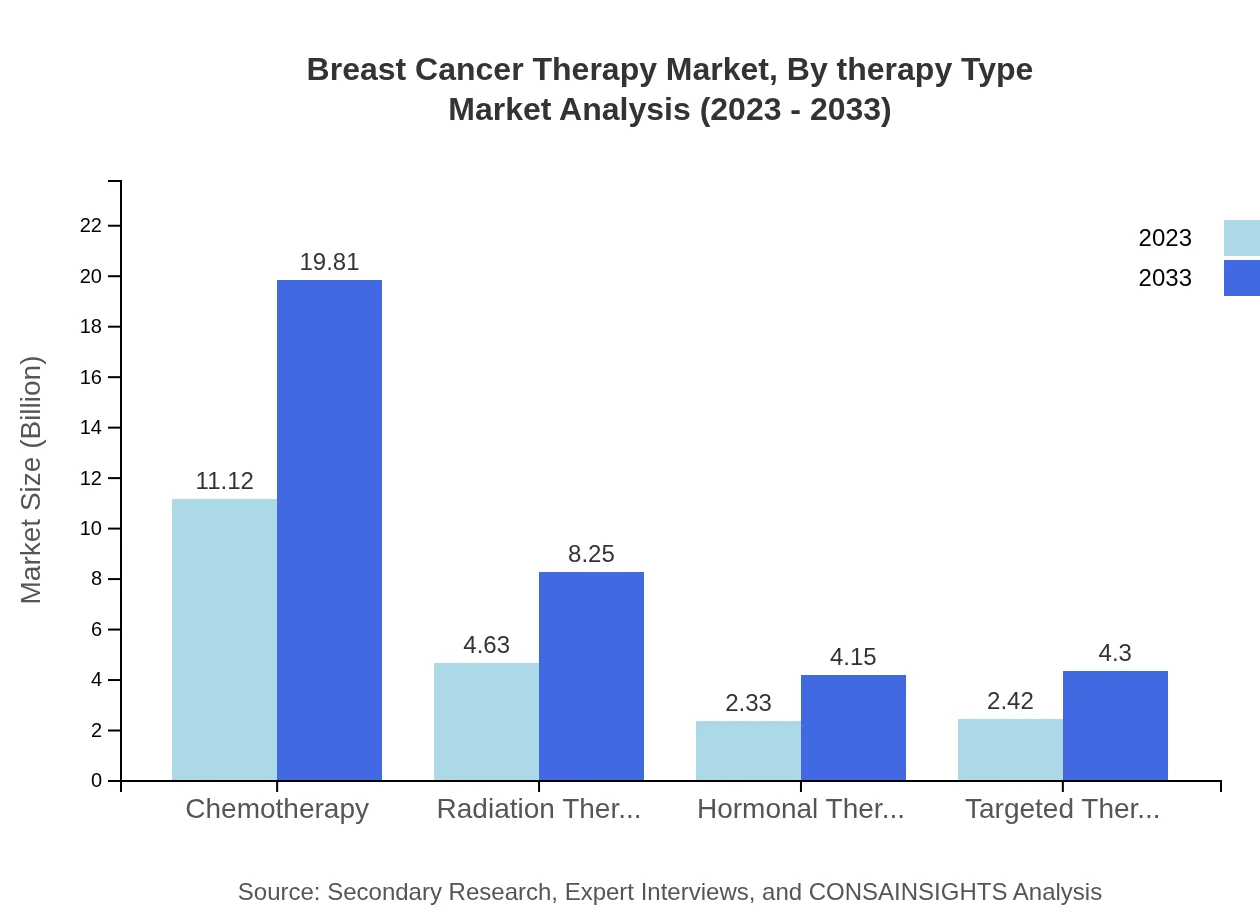
The breast cancer therapy market is dominated by chemotherapy, expected to grow from $11.12 billion in 2023 to $19.81 billion by 2033, representing 54.25% market share. Following chemotherapy, radiation therapy and hormonal therapy are also significant contributors, with market sizes projected at $4.63 billion to $8.25 billion and $2.33 billion to $4.15 billion respectively.
Breast Cancer Therapy Market Analysis By Stage
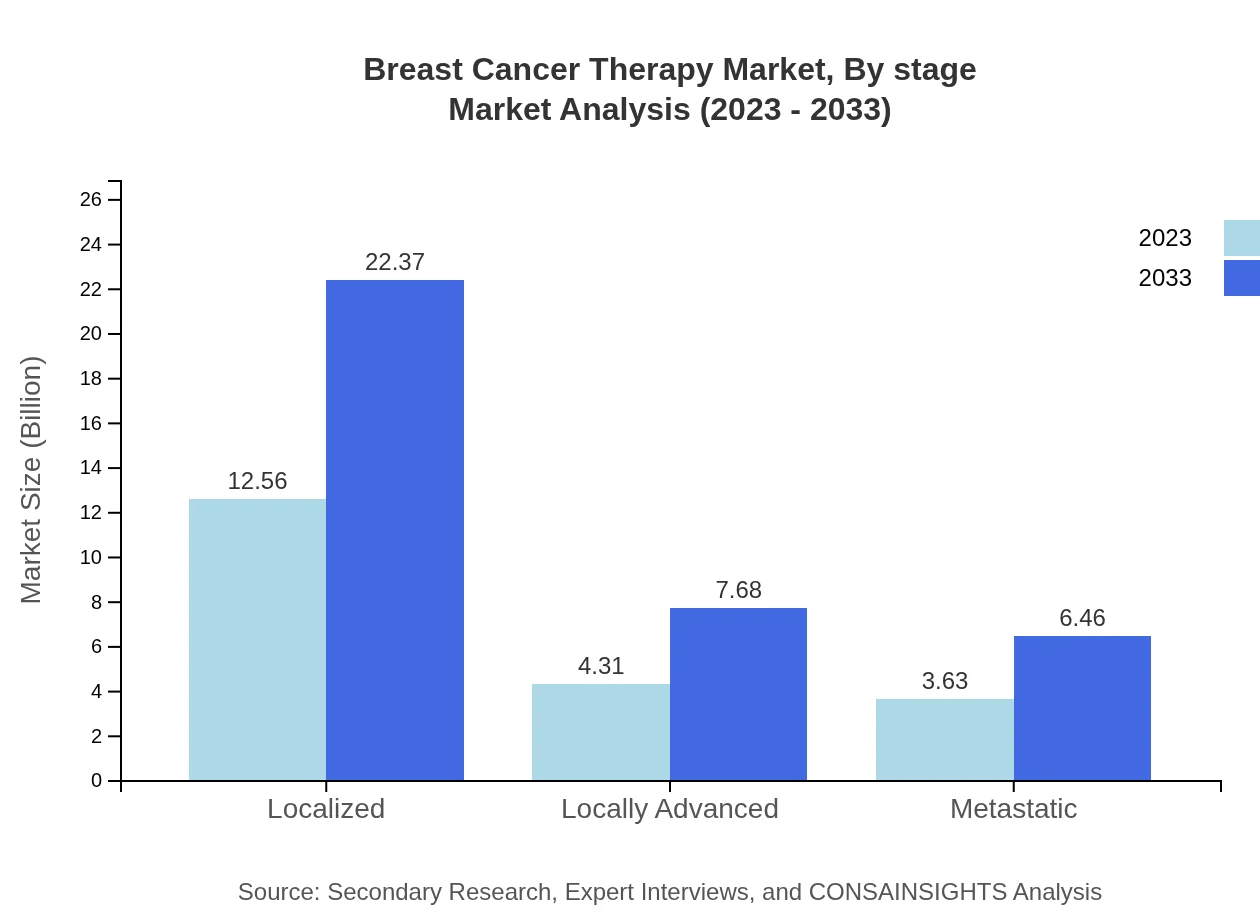
The market is segmented by cancer stage, with localized cancer treatments growing from $12.56 billion in 2023 to $22.37 billion by 2033, representing a considerable market share. Locally advanced and metastatic stages show steady growth, reflecting increased awareness and treatment options that cater to diverse patient needs.
Breast Cancer Therapy Market Analysis By End User
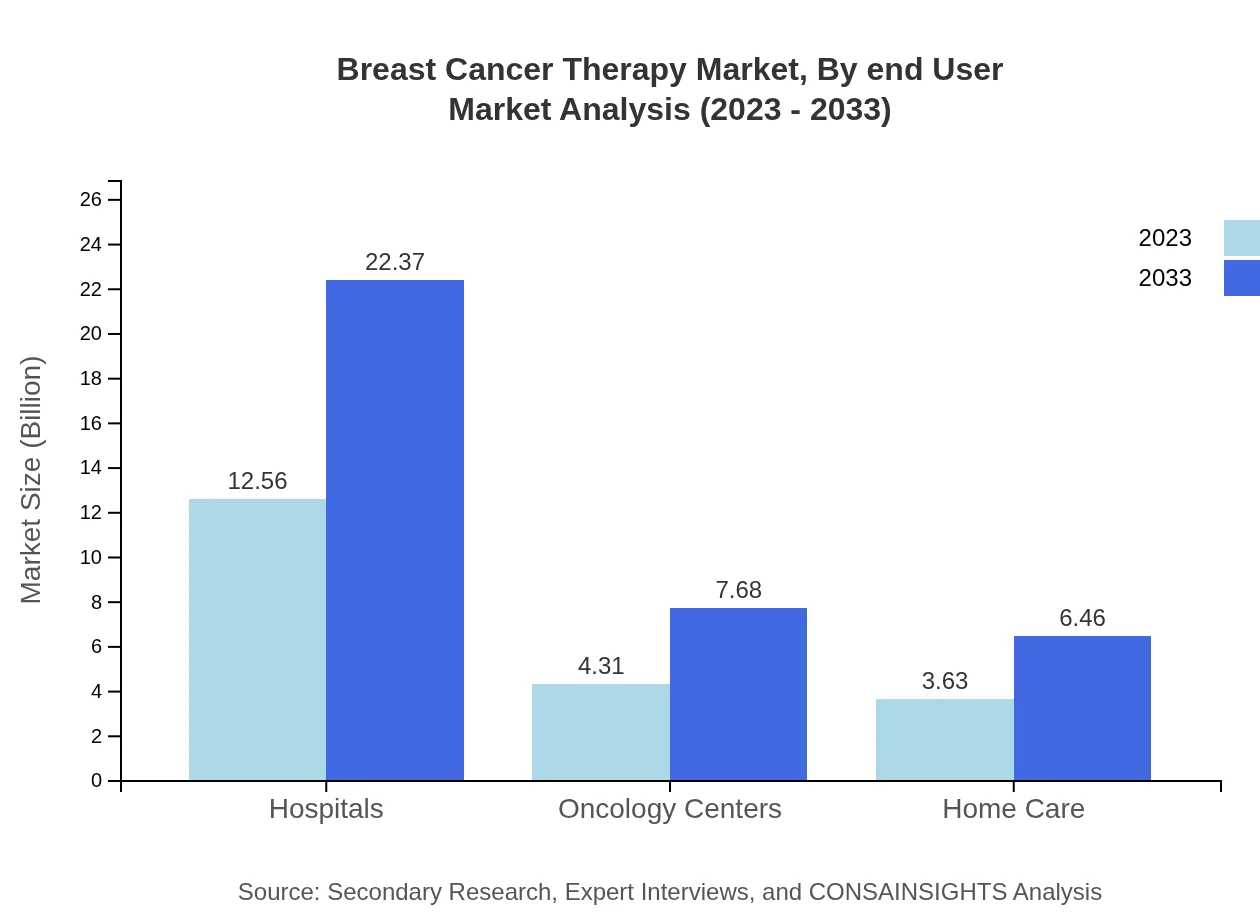
Hospitals remain the leading end-user segment, accounting for a substantial market share, projected to grow from $12.56 billion in 2023 to $22.37 billion by 2033. Oncology centers and home care settings are also gaining traction, driven by the rise in outpatient services and patient preference for personalized care.
Breast Cancer Therapy Market Analysis By Region Impacts
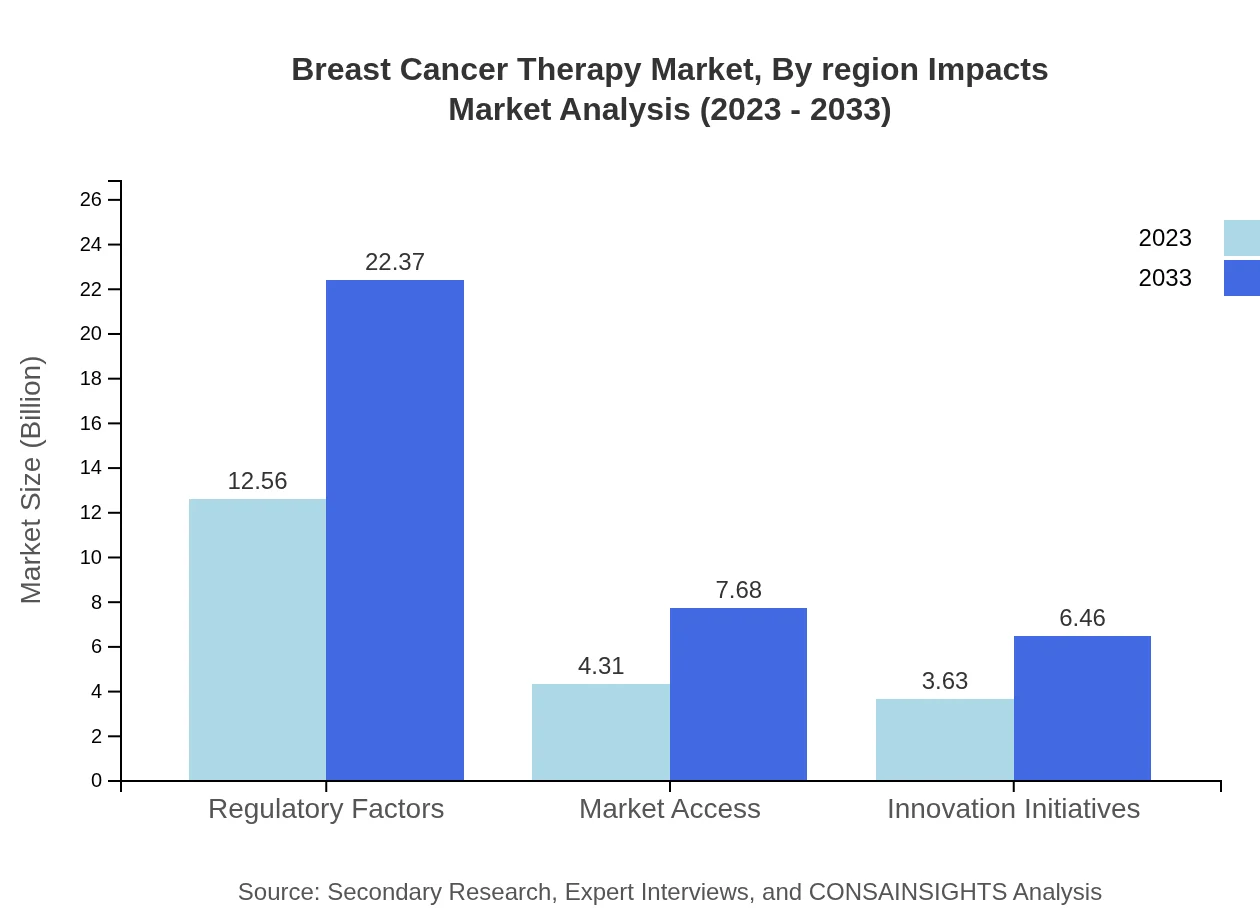
Regional impacts on the breast cancer therapy market are varied; North America drives the largest share, followed closely by Europe. The Asia Pacific region shows the fastest growth potential, while South America and the Middle East and Africa display more gradual improvements due to varying healthcare access and economic conditions.
Breast Cancer Therapy Market Trends and Future Forecast
Tell us your focus area and get a customized research report.
Global Market Leaders and Top Companies in Breast Cancer Therapy Industry
Roche:
A pioneering leader in personalized breast cancer therapies, Roche is known for its innovative solutions such as Herceptin and Perjeta, targeting HER2-positive breast cancer.Novartis:
Novartis is recognized for its significant contributions to breast cancer treatment development, offering advanced therapies focusing on targeted and precision medicine.Bristol-Myers Squibb:
Bristol-Myers Squibb is at the forefront of immunotherapy for breast cancer, particularly with its Opdivo and Yervoy products, enhancing survival rates in eligible patients.Pfizer :
Pfizer is noted for its extensive research portfolio and the development of drugs such as Ibrance, a pivotal therapy for hormone receptor-positive breast cancer.AstraZeneca:
AstraZeneca offers a range of therapies for breast cancer, emphasizing hormone receptor and HER2-positive treatments to improve patient outcomes.We're grateful to work with incredible clients.







FAQs
What is the market size of the breast cancer therapy market in 2023?
The market size in 2023 is $20.50 Billion as provided in the report's baseline year figure.
How big will the market be in 2033?
By 2033 the market is reported to reach $36.51 Billion according to the forecast figures supplied.
What is CAGR of the market for the forecast period?
The reported compound annual growth rate (CAGR) for 2023 to 2033 is 5.8%.
Is there a single fastest Growing region in the Breast Cancer Therapy Market Report market?
No single fastest-growing region is stated for the Breast Cancer Therapy Market Report market because the top regional implied CAGR values are within 0.15 percentage points of each other, making the ranking too close to call reliably.
Which therapy types are covered in the market segmentation?
The segmentation includes chemotherapy, radiation therapy, hormonal therapy, and targeted therapy as listed sub segments.
Who are the top companies operating in this market?
Top companies named in the input are Roche, Novartis, Bristol-Myers Squibb, Pfizer, and AstraZeneca.
What end User channels are included in the analysis?
End-user categories cited are hospitals, oncology centers, and home care settings.
How was the research for this report conducted?
The methodology combines primary interviews with industry experts and secondary research from company reports and publications.
What are key drivers of market growth?
Drivers include therapeutic innovation, improved diagnostics and screening, demographic trends, and market access initiatives.
Which regional markets are tracked in the report?
The report provides regional figures for North America, Europe, Asia Pacific, Latin America, and Middle East and Africa.