

Cachexia Market Report
First published: 07 October 2024 | Last updated: 25 May 2026 | Report Code: cachexia
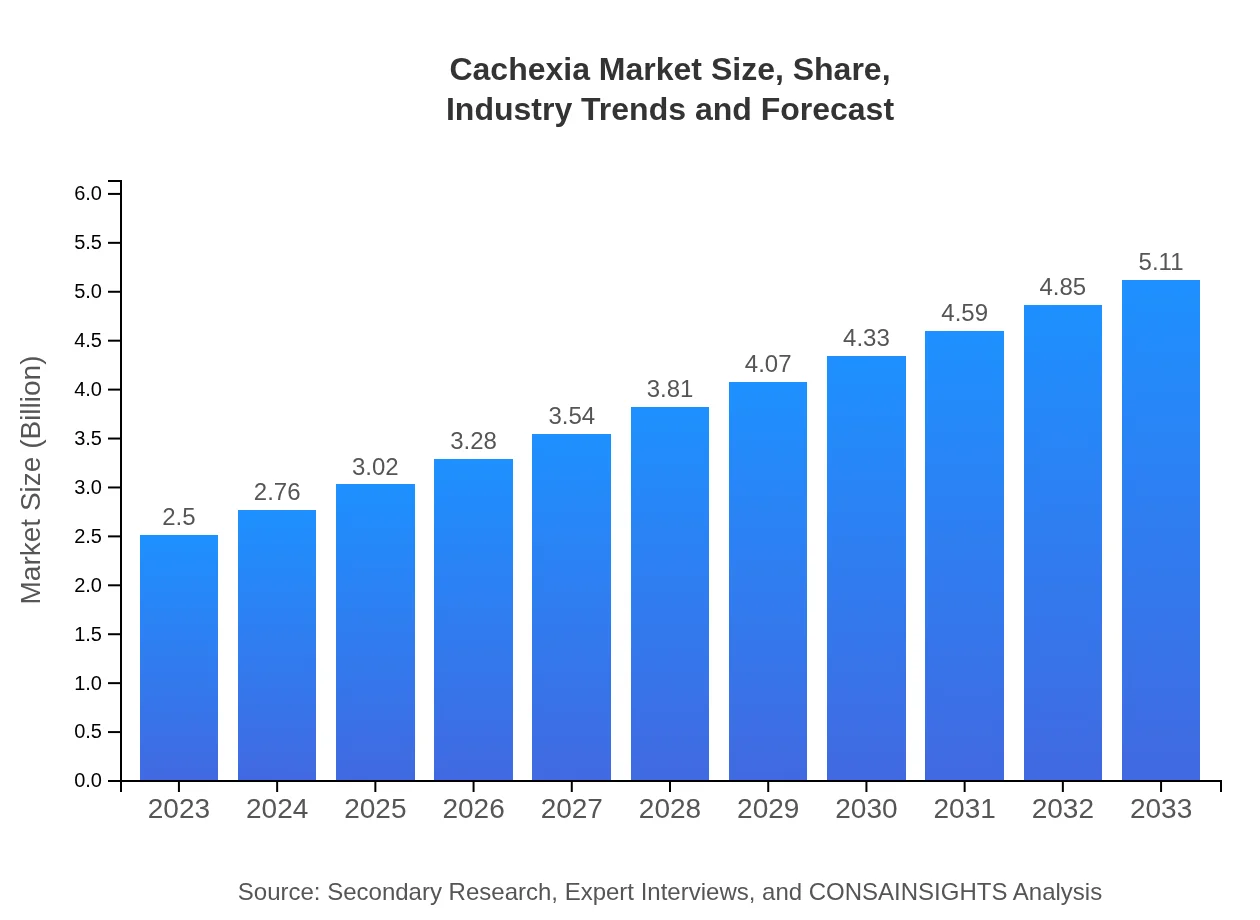
Cachexia Market — USD 2.5 billion in 2023, Growing to USD 5.11B by 2033 at 7.2% CAGR
This report provides an in-depth analysis of the Cachexia market, focusing on market size, trends, segmentation, and regional insights from 2023 to 2033. Essential data on the current market conditions and future forecasts will guide stakeholders in making informed decisions.
Key Takeaways
- Global market grows from $2.50 Billion in 2023 to $5.11 Billion by 2033 at a 7.2% CAGR.
- North America is largest regional market, while no single fastest-growing region is stated because regional CAGR differences remain within 0.15 percentage points.
- Europe expands from $0.81 Billion in 2023 to $1.65 Billion in 2033, reflecting intensified healthcare investment.
- Pharmacological therapies remain dominant while non-pharmacological approaches gain attention across care settings.
- Top companies active in the market include AstraZeneca, Roche, AbbVie, and Sanofi.
Cachexia Market Report — Executive Summary
North America remains largest market by forecast-period value, while no single fastest-growing region is stated because top regional growth rates are separated by less than 0.15 percentage points. The Cachexia Market Report outlines a decade of steady expansion driven by growing prevalence of chronic illnesses such as cancer, heart failure, and COPD, and by rising investment in targeted therapies and care infrastructure. Market value increases from $2.50 Billion in 2023 to $5.11 Billion in 2033 at a 7.2% CAGR between 2023 to 2033. Treatment innovation—particularly pharmacological options—continues to shape the competitive landscape, while non-pharmacological solutions and digital tools are gaining traction. Industry activity is supported by major players including AstraZeneca, Roche, AbbVie, and Sanofi. Regional dynamics show North America as the largest market, with sizable growth across Europe, Asia Pacific, Latin America, and the Middle East and Africa. The report covers segmentation by type, stage, end user, treatment, and distribution channels, and offers insight into market drivers, stakeholder strategies, and adoption patterns relevant to manufacturers, payers, and care providers.
Key Growth Drivers
- Rising incidence of chronic diseases such as cancer, heart failure, and COPD increases demand for cachexia management solutions.
- Advances in pharmacological research and increased R&D investment by major life-sciences companies expand treatment options.
- Improved healthcare infrastructure and expanded access to specialized care enable broader adoption of therapies.
- Growing awareness of cachexia and patient-centric care models encourages integration of non-pharmacological and supportive interventions.
- Expansion of distribution channels, including hospital and online pharmacies, facilitates access to treatments across settings.
| Metric | Value |
|---|---|
| Study Period | 2023 - 2033 |
| 2023 Market Size | $2.50 Billion |
| CAGR (2023-2033) | 7.2% |
| 2033 Market Size | $5.11 Billion |
| Top Companies | AstraZeneca, Roche, AbbVie, Sanofi |
| Published Date | 07 October 2024 |
| Last Modified Date | 25 May 2026 |
Cachexia Market Overview
Customize Cachexia Market Report market research report
- ✔ Get in-depth analysis of Cachexia market size, growth, and forecasts.
- ✔ Understand Cachexia's regional dynamics and industry-specific trends.
- ✔ Identify potential applications, end-user demand, and growth segments in Cachexia
What is the Market Size & CAGR of Cachexia Market Report market in 2023?
Cachexia Industry Analysis
Cachexia Market Segmentation and Scope
Tell us your focus area and get a customized research report.
Cachexia Market Report Market Analysis Report by Region
Europe Cachexia Market Report:
Europe grows from $0.81 Billion in 2023 to $1.65 Billion in 2033. This growth reflects enhanced healthcare investment, wider access to specialized care, and adoption of emerging treatment approaches described in the report context.Asia Pacific Cachexia Market Report:
Asia Pacific grows from $0.49 Billion in 2023 to $0.99 Billion in 2033. Market advancement is associated with improving healthcare infrastructure, rising chronic disease burden, and expanding availability of therapies across care settings.North America Cachexia Market Report:
North America is largest regional market, rising from $0.83 Billion in 2023 to $1.69 Billion in 2033. Regional expansion is linked to advanced healthcare systems, concentrated R&D activity, and strong presence of leading life-sciences companies.South America Cachexia Market Report:
Latin America grows from $0.06 Billion in 2023 to $0.12 Billion in 2033. Local drivers include growing recognition of cachexia, incremental healthcare capacity building, and widening distribution through pharmacies and care facilities.Middle East & Africa Cachexia Market Report:
Middle East and Africa grows from $0.32 Billion in 2023 to $0.65 Billion in 2033. Growth is supported by improving clinical capabilities, increased investment in healthcare services, and broader access to both pharmacological and supportive treatments.Tell us your focus area and get a customized research report.
Research Methodology
Cachexia Market Analysis By Type
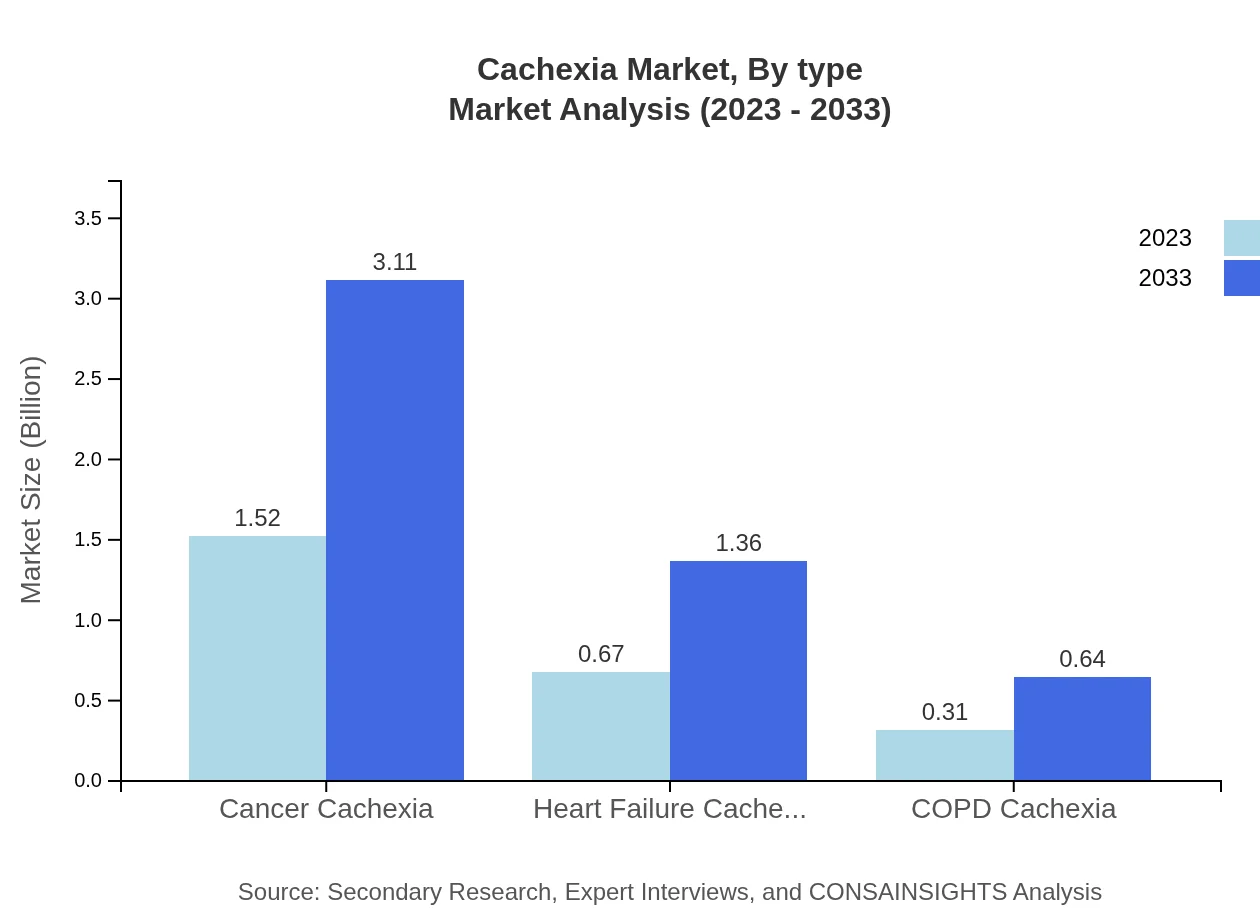
The segment on type includes significant categories such as Cancer Cachexia, which is expected to grow from $1.52 billion in 2023 to $3.11 billion by 2033, indicating a strong share of around 60.77%. Heart Failure Cachexia follows with an increase from $0.67 billion to $1.36 billion, maintaining a 26.69% share. COPD Cachexia shows modest growth, emphasizing the need for targeted interventions and management strategies.
Cachexia Market Analysis By Treatment
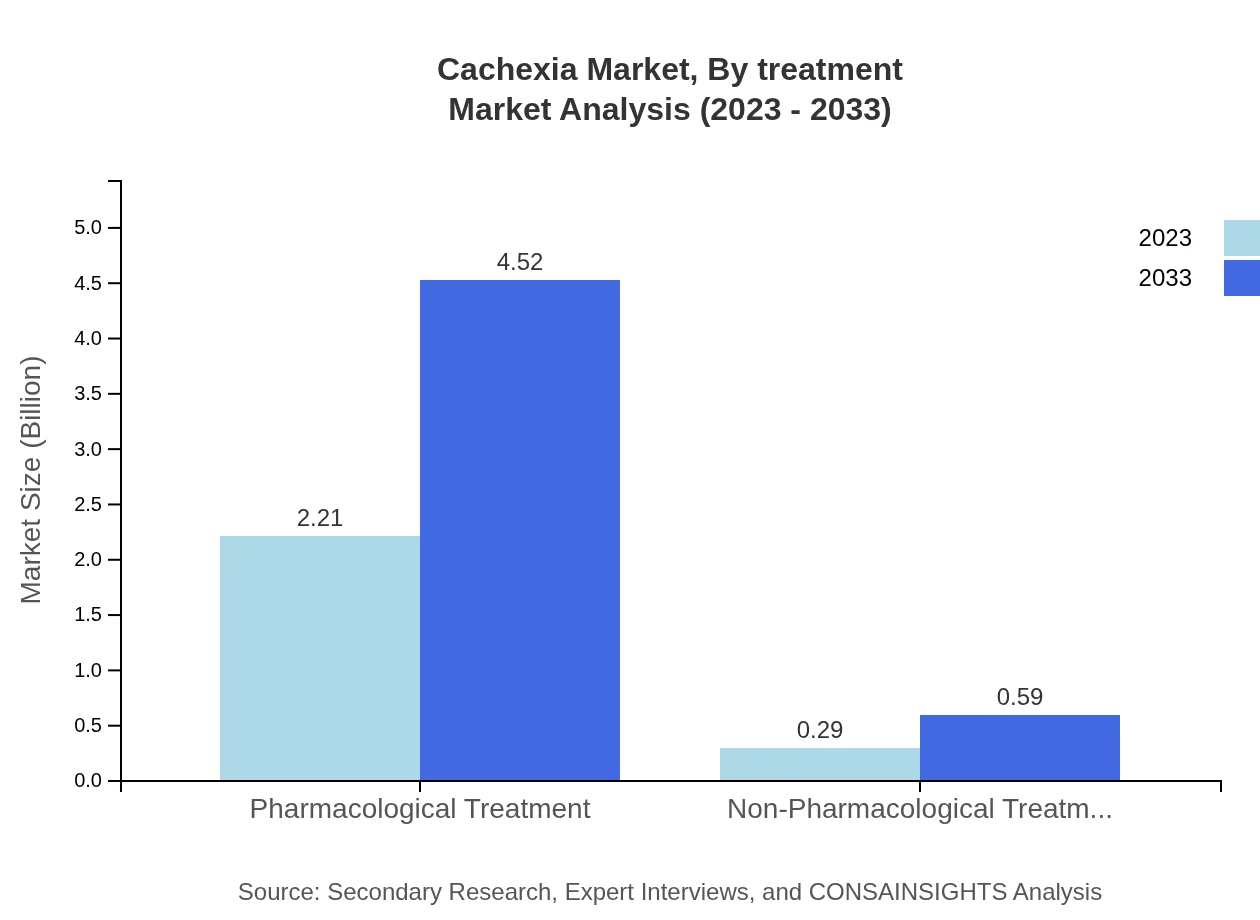
Pharmacological Treatment remains dominant, projected to grow from $2.21 billion in 2023 to $4.52 billion by 2033, retaining an impressive share of 88.42%. Conversely, Non-Pharmacological Treatment is expected to gradually penetrate the market, with a size increase from $0.29 billion to $0.59 billion, indicating a growing acceptance of holistic approaches to management.
Cachexia Market Analysis By End User
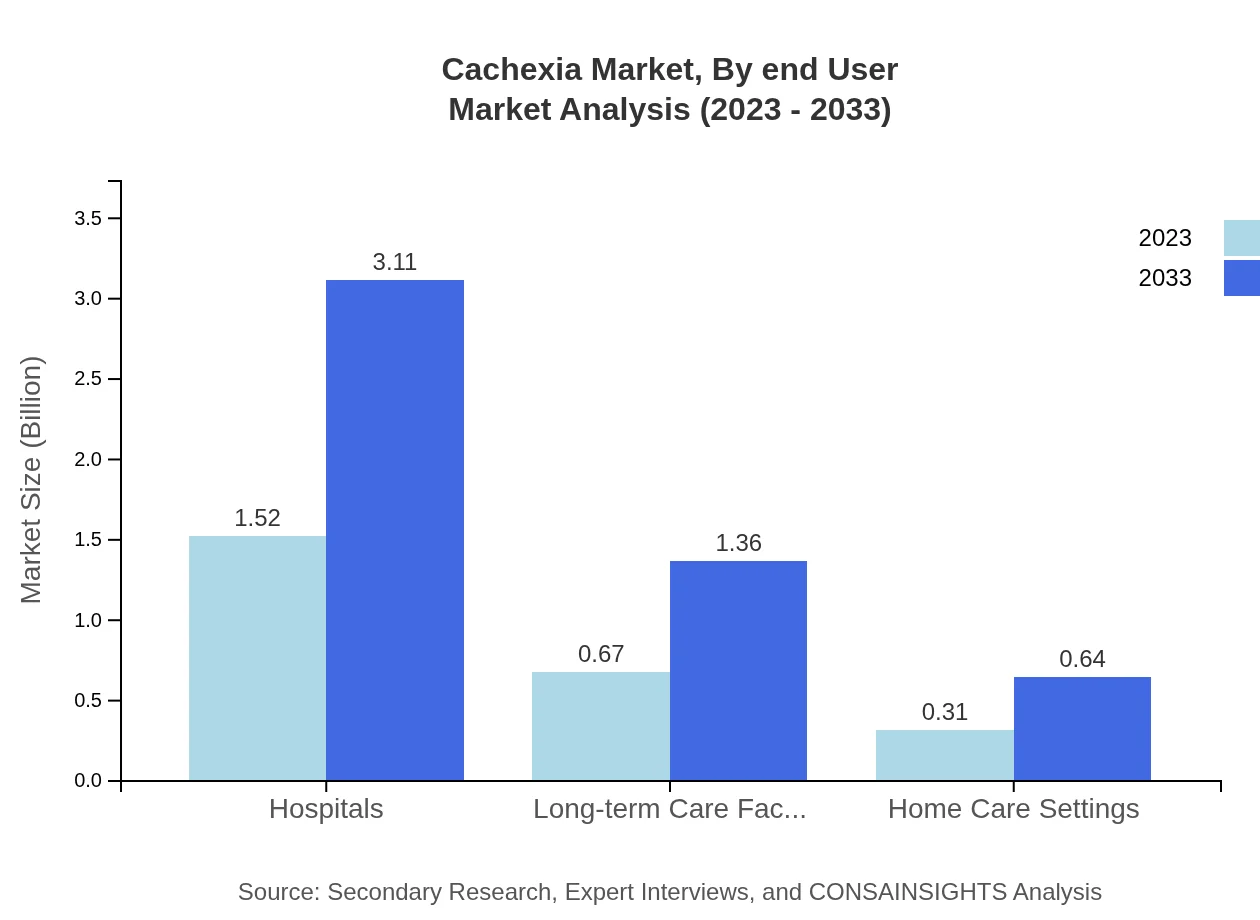
Hospitals dominate the market segment, measured at $1.52 billion in 2023 and expected to reach $3.11 billion by 2033, holding a consistent share of 60.77%. Long-term care facilities are also significant, with growth from $0.67 billion to $1.36 billion, reflecting the increasing need for specialized care in managing patients with Cachexia.
Cachexia Market Analysis By Distribution Channel
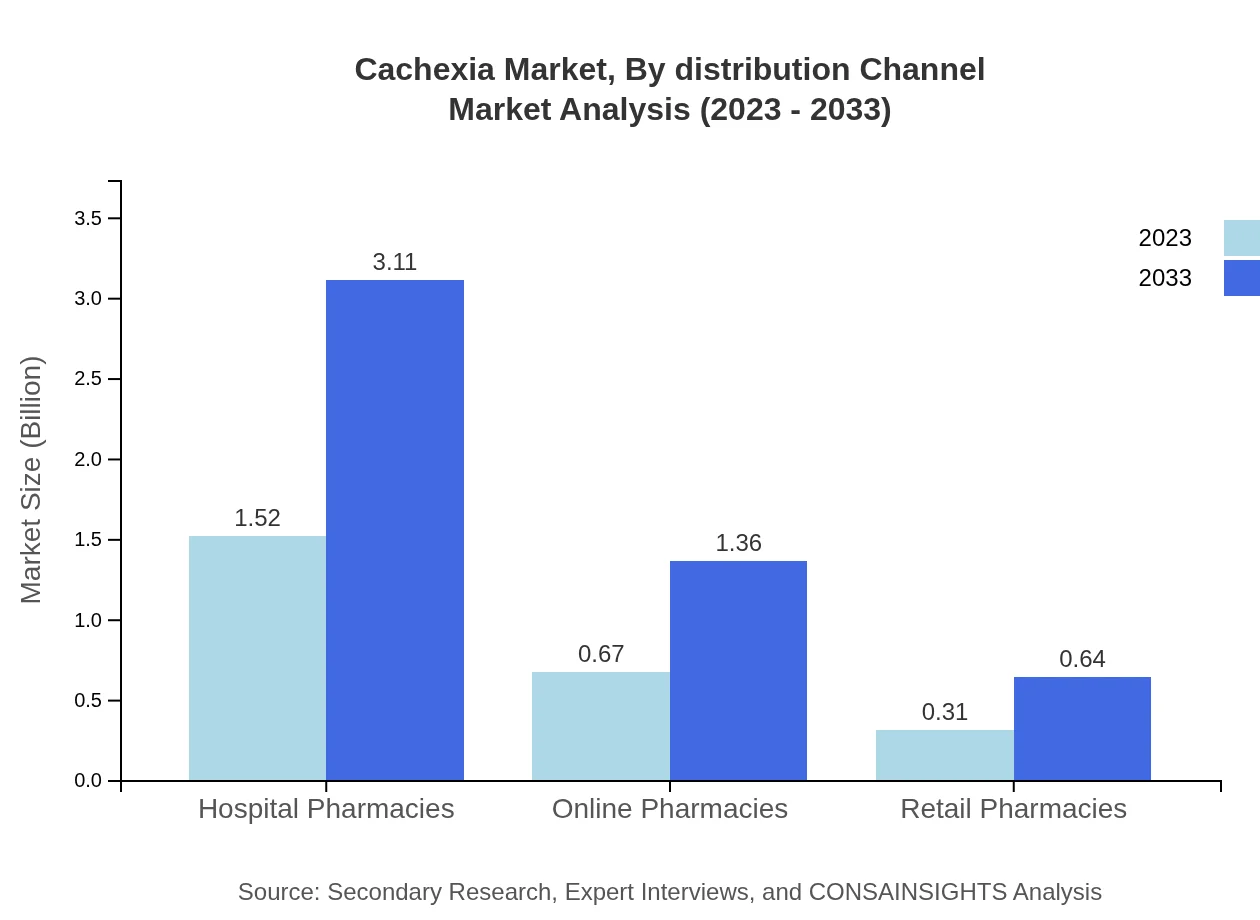
Hospital Pharmacies lead this segment, showing a robust growth from $1.52 billion to $3.11 billion by 2033 with a 60.77% share. Online Pharmacies are gaining market traction, expected to rise from $0.67 billion to $1.36 billion, as convenience and accessibility drive patient preferences.
Cachexia Market Analysis By Stage
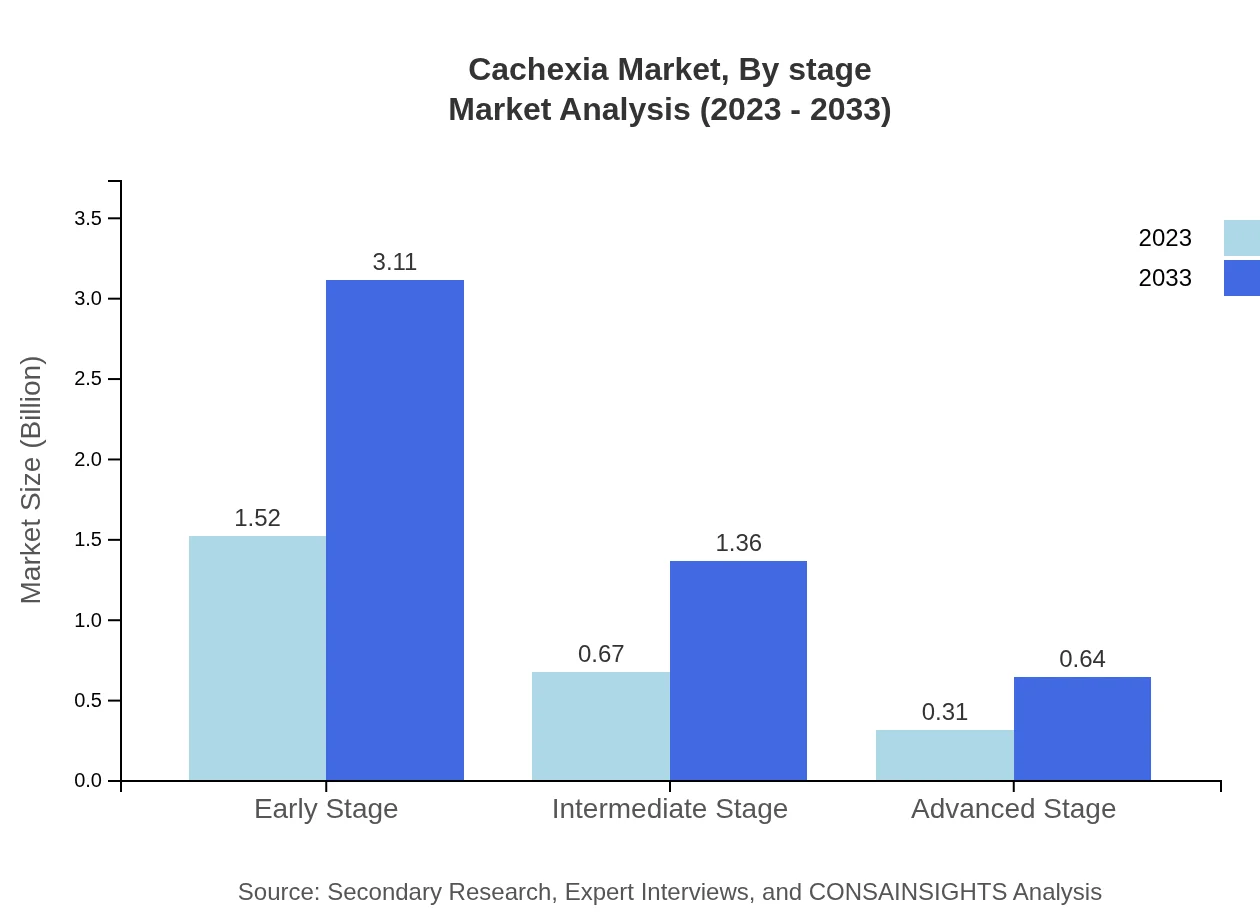
In the early stages, accounting for $1.52 billion in 2023 and expected to grow to $3.11 billion, holds a market share of 60.77%. The intermediate stage, starting at $0.67 billion and anticipated to increase to $1.36 billion, reflects 26.69%. Meanwhile, advanced stage cachexia is smaller yet significant, projected to rise from $0.31 billion to $0.64 billion.
Cachexia Market Trends and Future Forecast
Tell us your focus area and get a customized research report.
Global Market Leaders and Top Companies in Cachexia Industry
AstraZeneca:
AstraZeneca is known for its innovative drug developments and extensive research in managing chronic conditions, contributing significantly to the cachexia treatment landscape.Roche:
Roche provides cutting-edge solutions tailored to cancer patients grappling with cachexia, enhancing patient quality of life through innovative treatments.AbbVie:
AbbVie focuses on developing therapies that address unmet medical needs in cachexia, particularly related to age-related muscle wasting.Sanofi:
Sanofi is engaged in continuous research and development tailored for cachexia management, emphasizing accessibility and affordability of treatments.We're grateful to work with incredible clients.








FAQs
What is the market size of the Cachexia Market Report in 2023?
The market size in 2023 is $2.50 Billion, as provided in the report data, representing the baseline for the 2023 to 2033 forecast period.
What is the market size of the Cachexia Market Report in 2033?
By 2033 the market is projected to reach $5.11 Billion according to the provided forecast figures for the 2023 to 2033 period.
What is CAGR of the Cachexia Market Report?
The compound annual growth rate for the forecast period 2023 to 2033 is stated as 7.2%, based on the provided market projections.
Is there a single fastest Growing region in the Cachexia Market Report market?
No single fastest-growing region is stated for the Cachexia Market Report market because the top regional implied CAGR values are within 0.15 percentage points of each other, making the ranking too close to call reliably.
Which companies are named as top players in the report?
The input lists AstraZeneca, Roche, AbbVie, and Sanofi as top companies actively participating in the cachexia market landscape.
Why is pharmacological treatment significant in this market?
Pharmacological interventions are highlighted as primary treatments due to focused R&D and their dominant contribution to overall market share in the provided context.
How big is the Europe market for cachexia in 2023 and 2033?
Europe is recorded at $0.81 Billion in 2023 and is expected to reach $1.65 Billion by 2033, reflecting steady regional expansion per the data.
What drives regional demand for cachexia therapies?
Regional demand is driven by increasing chronic disease prevalence, investments in healthcare infrastructure, and enhanced access to specialized therapies, as described in the report context.
How big is the Asia Pacific market for cachexia in 2023 and 2033?
Asia Pacific is listed at $0.49 Billion in 2023 and rises to $0.99 Billion in 2033, per the supplied regional figures for the forecast interval.
Who provided the research inputs for this report?
Research combined primary interviews with industry experts and secondary sources including company reports and publications, with data triangulation and internal validation.