

Cardiopulmonary Stress Testing Systems Market Report
First published: 21 October 2024 | Last updated: 25 May 2026 | Report Code: cardiopulmonary-stress-testing-systems
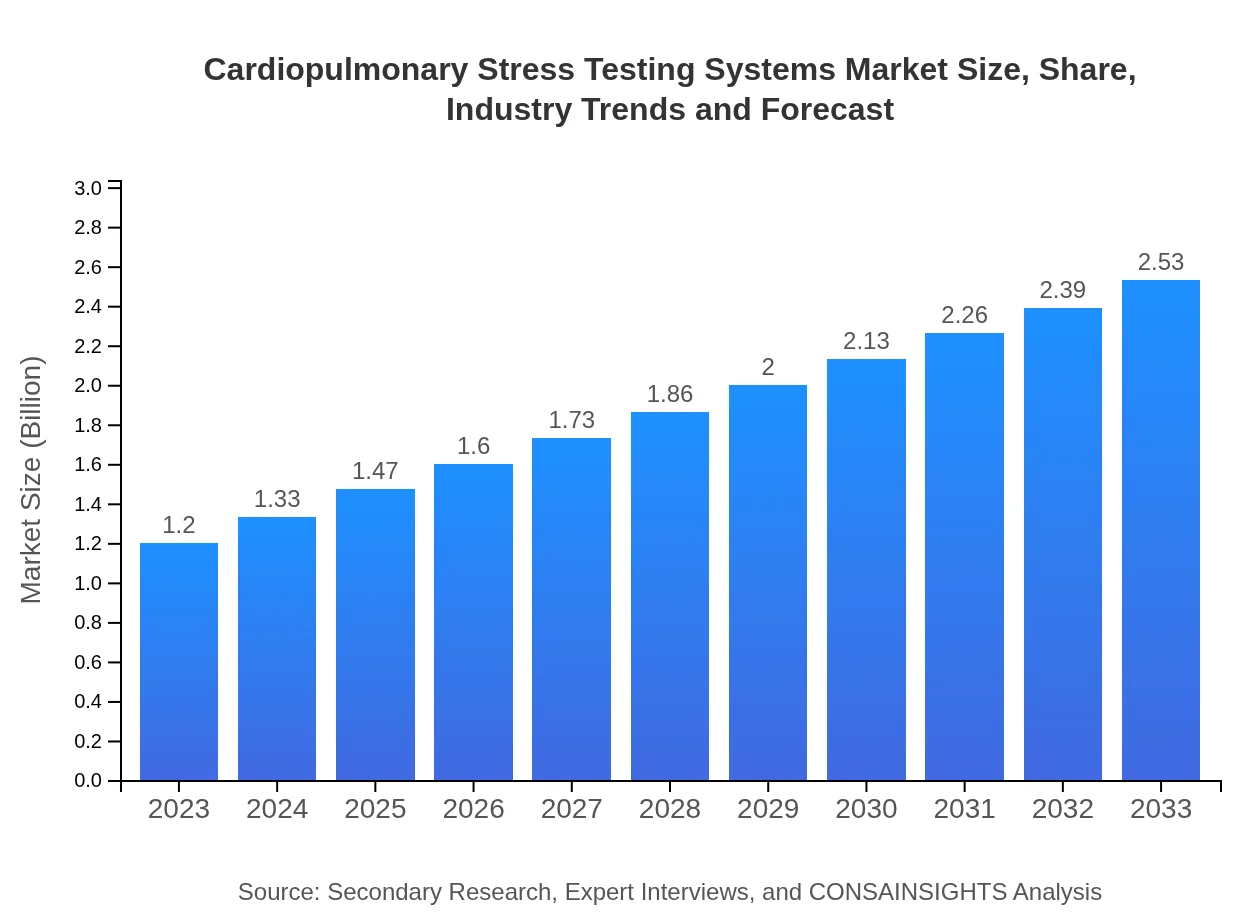
Cardiopulmonary Stress Testing Systems Market — USD 1.2 billion in 2023, Growing to USD 2.53B by 2033 at 7.5% CAGR
This report provides a comprehensive analysis of the Cardiopulmonary Stress Testing Systems market from 2023 to 2033. It highlights industry trends, market size, segmentation, and insights that guide businesses in understanding this evolving market.
Key Takeaways
- Global market expands from $1.20 Billion in 2023 to $2.53 Billion in 2033 at a 7.5% CAGR.
- North America is largest regional market, while no single fastest-growing region is stated because regional CAGR differences remain within 0.15 percentage points.
- North America leads regional demand, increasing from $0.44 Billion in 2023 to $0.93 Billion in 2033.
- Europe is set to grow from $0.3 Billion to $0.64 Billion between 2023 and 2033, reflecting steady adoption.
- Asia Pacific moves from $0.25 Billion to $0.52 Billion from 2023 to 2033 amid rising healthcare investments.
Cardiopulmonary Stress Testing Systems Market Report — Executive Summary
North America remains largest market by forecast-period value, while no single fastest-growing region is stated because top regional growth rates are separated by less than 0.15 percentage points. This report examines the cardiopulmonary stress testing systems market, which grows from $1.20 Billion in 2023 to $2.53 Billion in 2033 at a 7.5% CAGR. Expansion is supported by rising chronic cardiovascular and pulmonary disease prevalence, greater preventive care emphasis, and investments in healthcare infrastructure. Market segmentation covers product types such as exercise testing systems, monitoring devices and software, multiple end users including hospitals and clinics, and technologies ranging from traditional systems to wearables. Regional dynamics show North America as the largest market, with Europe, Asia Pacific, Latin America, and the Middle East and Africa each showing measurable gains. Established vendors such as GE Healthcare, Philips Healthcare, Schiller AG and Cardinal Health participate alongside newer entrants focusing on remote monitoring and integrated diagnostic workflows. The analysis highlights technology integration, demand for home-based diagnostics, and provider initiatives to improve diagnostic accuracy as principal trends shaping adoption and procurement strategies.
Key Growth Drivers
- Rising incidence of cardiovascular and pulmonary conditions increasing demand for diagnostic testing systems.
- Greater focus on preventive care and early detection prompts wider use of stress testing in clinical pathways.
- Healthcare infrastructure investments expand access in hospitals and clinics across multiple regions.
- Adoption of wearable and remote monitoring technologies broadens settings for cardiopulmonary assessment.
- Demand for integrated software solutions enhances data analytics and patient management during testing.
| Metric | Value |
|---|---|
| Study Period | 2023 - 2033 |
| 2023 Market Size | $1.20 Billion |
| CAGR (2023-2033) | 7.5% |
| 2033 Market Size | $2.53 Billion |
| Top Companies | GE Healthcare, Philips Healthcare, Schiller AG, Cardinal Health |
| Published Date | 21 October 2024 |
| Last Modified Date | 25 May 2026 |
Cardiopulmonary Stress Testing Systems Market Overview
Customize Cardiopulmonary Stress Testing Systems Market Report market research report
- ✔ Get in-depth analysis of Cardiopulmonary Stress Testing Systems market size, growth, and forecasts.
- ✔ Understand Cardiopulmonary Stress Testing Systems's regional dynamics and industry-specific trends.
- ✔ Identify potential applications, end-user demand, and growth segments in Cardiopulmonary Stress Testing Systems
What is the Market Size & CAGR of Cardiopulmonary Stress Testing Systems Market Report market in 2023?
Cardiopulmonary Stress Testing Systems Industry Analysis
Cardiopulmonary Stress Testing Systems Market Segmentation and Scope
Tell us your focus area and get a customized research report.
Cardiopulmonary Stress Testing Systems Market Report Market Analysis Report by Region
Europe Cardiopulmonary Stress Testing Systems Market Report:
Europe grows from $0.3 Billion in 2023 to $0.64 Billion in 2033. 3 Billion in 2023 to $0.64 Billion in 2033, supported by broader adoption in hospital systems, preventive screening initiatives and investments that improve access to cardiopulmonary diagnostic services.Asia Pacific Cardiopulmonary Stress Testing Systems Market Report:
Asia Pacific grows from $0.25 Billion in 2023 to $0.52 Billion in 2033. 25 Billion in 2023 to $0.52 Billion in 2033 as healthcare infrastructure investments and rising awareness of cardiovascular and respiratory disease drive demand for testing equipment in hospitals and clinics.North America Cardiopulmonary Stress Testing Systems Market Report:
North America is largest regional market, rising from $0.44 Billion in 2023 to $0.93 Billion in 2033. Expansion reflects established clinical utilization, investment in diagnostic capacity and adoption across hospitals and specialty centers.South America Cardiopulmonary Stress Testing Systems Market Report:
Latin America grows from $0.11 Billion in 2023 to $0.23 Billion in 2033. 11 Billion in 2023 to $0.23 Billion in 2033, with growth linked to expanding healthcare services, increased diagnostic capacity in urban centers and gradual uptake of monitoring and testing technologies.Middle East & Africa Cardiopulmonary Stress Testing Systems Market Report:
Middle East and Africa grows from $0.1 Billion in 2023 to $0.21 Billion in 2033. 1 Billion in 2023 to $0.21 Billion in 2033, influenced by targeted healthcare investments, improved clinical facilities and growing focus on early diagnosis of cardiopulmonary conditions.Tell us your focus area and get a customized research report.
Research Methodology
Cardiopulmonary Stress Testing Systems Market Analysis By Product
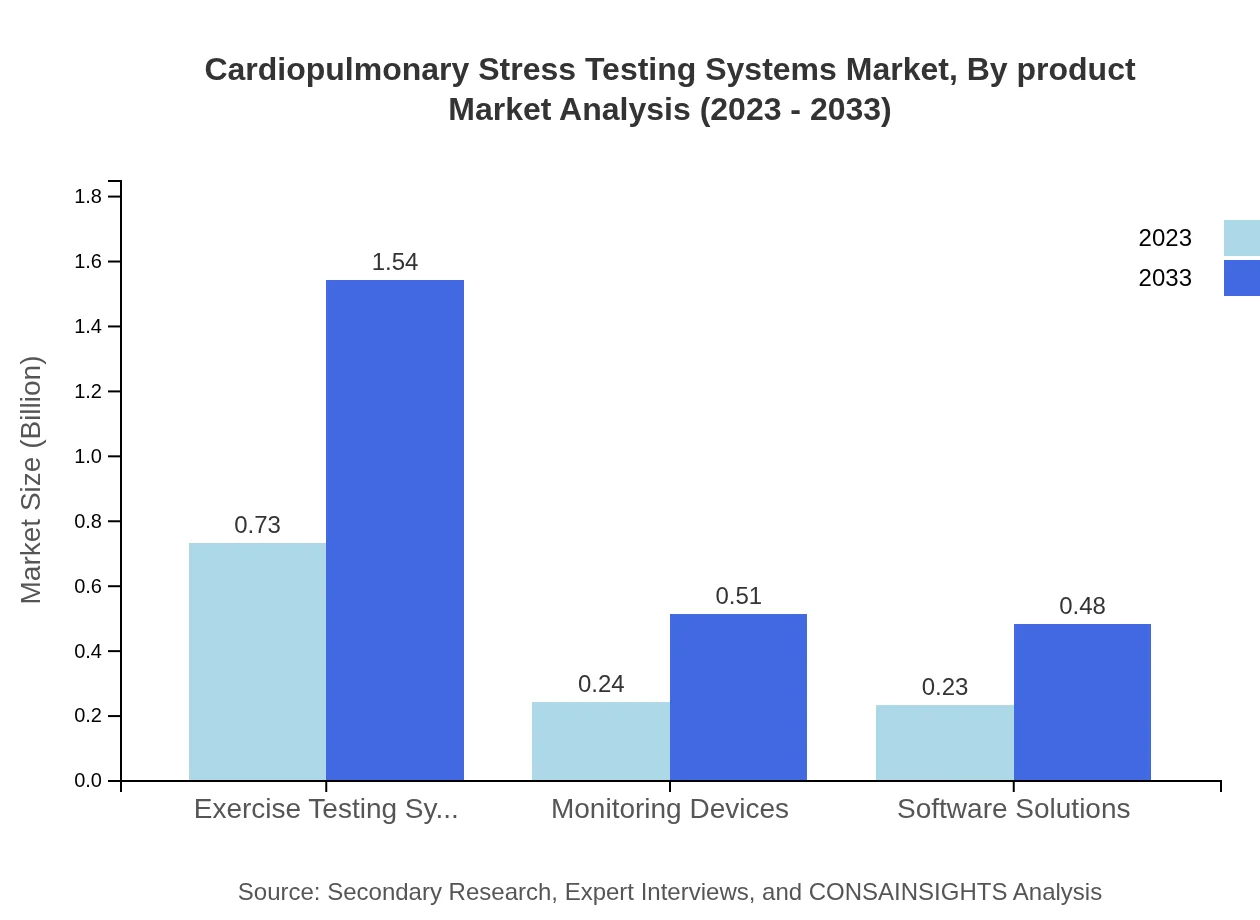
The product segment is dominated by traditional systems which valued at $1.00 billion in 2023, expanding to $2.11 billion by 2033, representing a significant market share. Exercise Testing Systems follow, expected to grow from $0.73 billion to $1.54 billion within the same period. Monitoring Devices and Software Solutions also showcase robust performance.
Cardiopulmonary Stress Testing Systems Market Analysis By Application
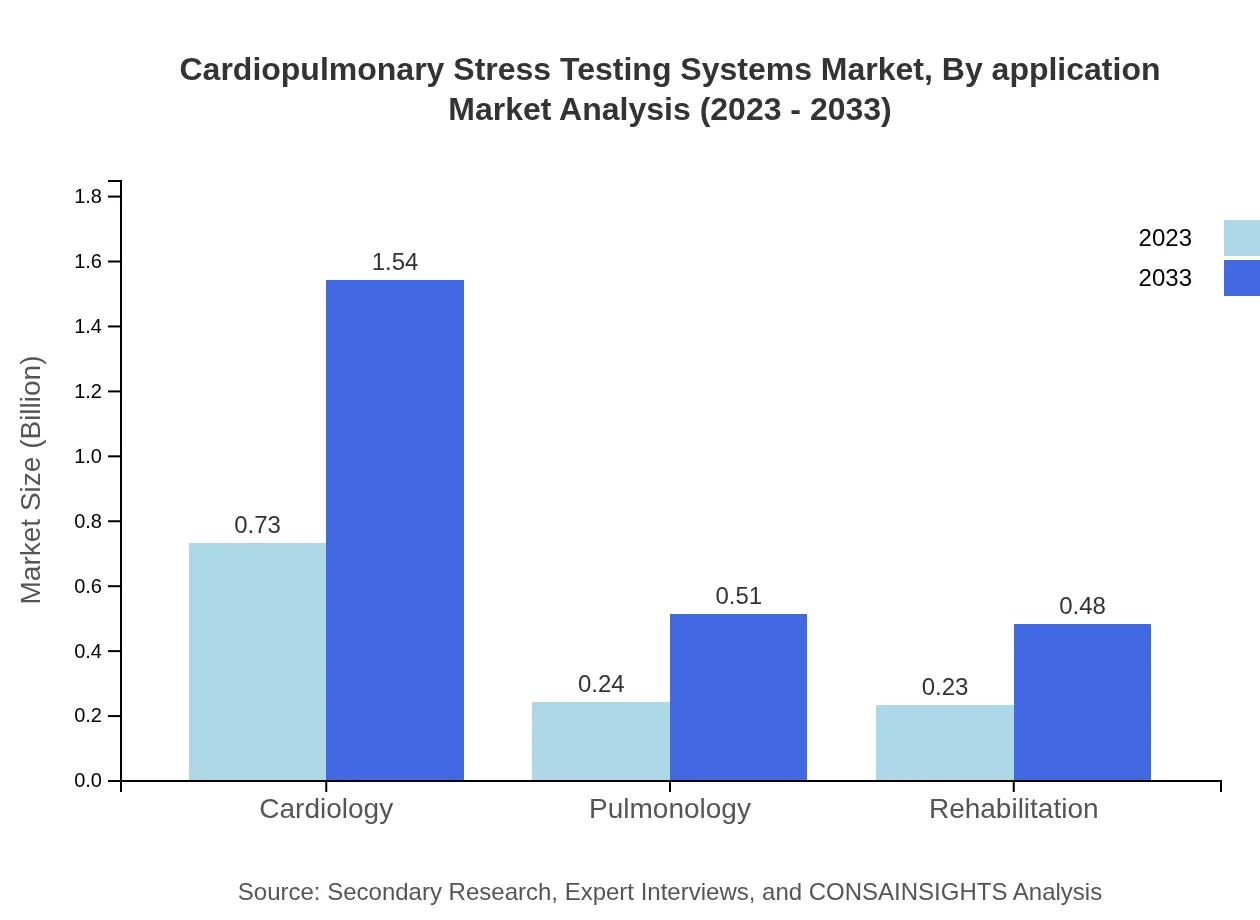
In terms of applications, cardiology holds a significant share, reflecting a continuous demand for cardiac monitoring and diagnostics. It is expected to maintain its position through 2033 with substantial growth predicted, alongside an increase in pulmonology and rehabilitation applications driven by the rising prevalence of related diseases.
Cardiopulmonary Stress Testing Systems Market Analysis By End User
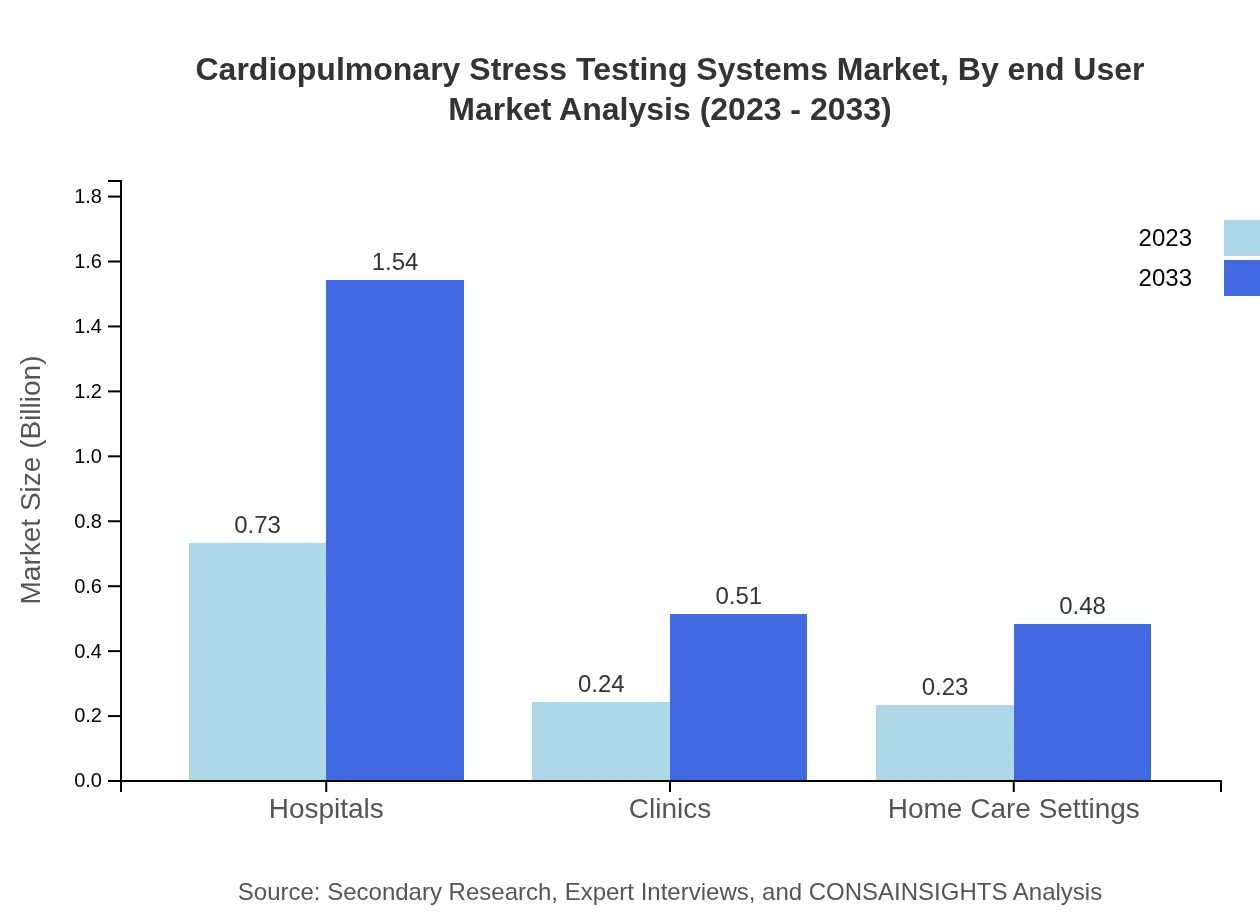
Hospitals dominate the end-user segment, accounting for approximately 60.84% of the market share in 2023, and it is expected to remain leading through 2033. Clinics and home care settings are also vital, demonstrating consistent growth as healthcare preferences shift towards outpatient services.
Cardiopulmonary Stress Testing Systems Market Analysis By Technology
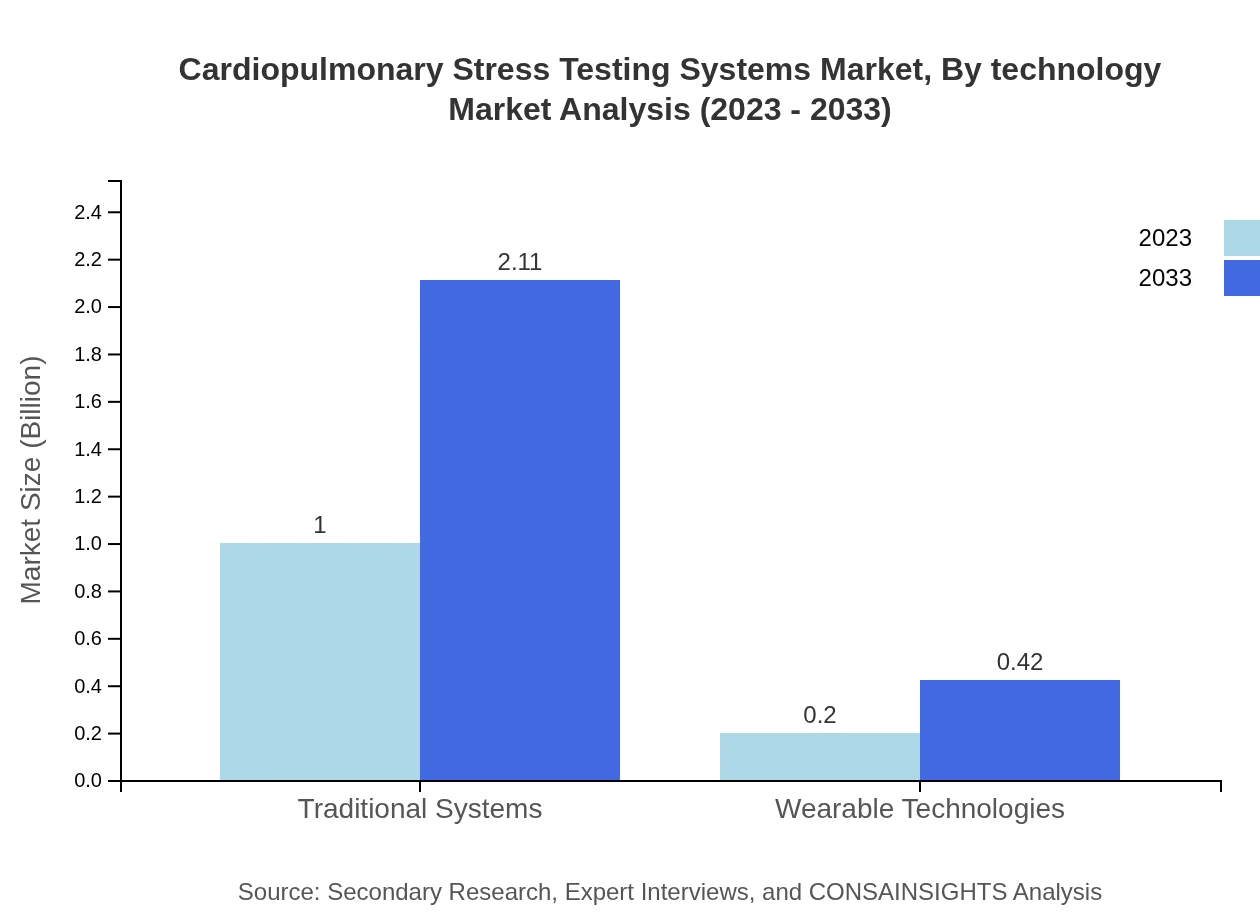
Traditional systems will continue to dominate the technology segment, but wearable technologies are gaining traction as consumers favor convenient, at-home monitoring solutions. This segment is showing promising growth potential as technological innovations occur.
Cardiopulmonary Stress Testing Systems Market Analysis By Distribution Channel
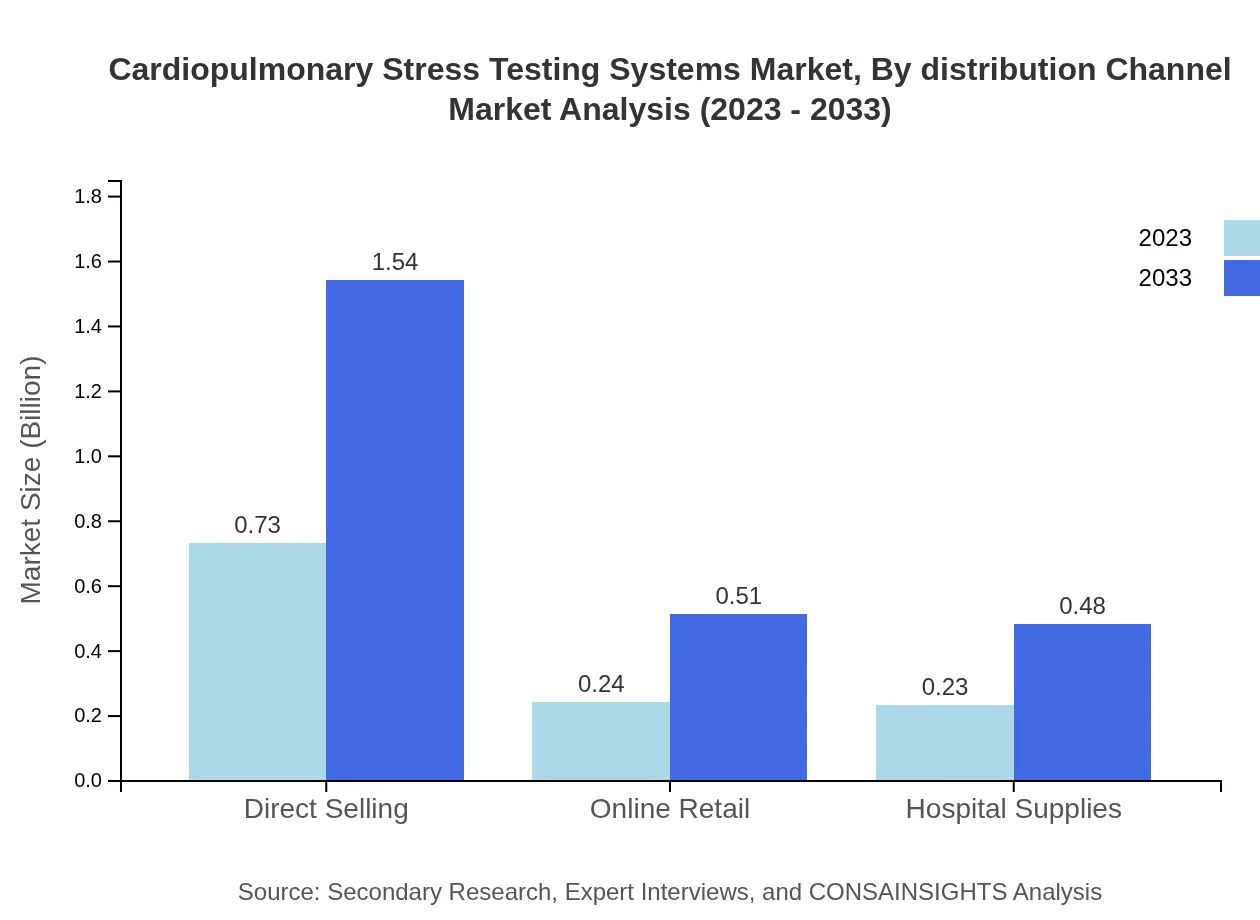
Direct selling remains the primary distribution channel, capturing around 60.84% of the market share in 2023, while online retail is rapidly gaining momentum due to increased e-commerce penetration and consumer preference for online shopping.
Cardiopulmonary Stress Testing Systems Market Trends and Future Forecast
Tell us your focus area and get a customized research report.
Global Market Leaders and Top Companies in Cardiopulmonary Stress Testing Systems Industry
GE Healthcare:
A key player in the development of innovative cardiopulmonary stress testing systems, GE Healthcare is known for its advanced imaging technologies and diagnostic solutions.Philips Healthcare:
Philips is at the forefront of diagnostic imaging and patient monitoring technologies, offering a range of solutions tailored to cardiopulmonary care.Schiller AG:
Schiller AG specializes in medical devices and systems for cardiopulmonary diagnostics, recognized for its innovative stress testing and monitoring equipment.Cardinal Health:
A global healthcare services and products company, Cardinal Health provides a wide range of solutions that include cardiopulmonary stress testing systems.We're grateful to work with incredible clients.









FAQs
What is the market size in 2023?
The market size in 2023 was $1.20 Billion, based on the report's base-year valuation for cardiopulmonary stress testing systems.
How big will the market be in 2033?
By 2033 the market is projected to reach $2.53 Billion, reflecting the forecasted expansion through the 2023 to 2033 period.
What is the CAGR for the forecast period?
The compound annual growth rate for the 2023 to 2033 forecast period is 7.5%, as stated in the market projection.
Is there a single fastest Growing region in the Cardiopulmonary Stress Testing Systems Market Report market?
No single fastest-growing region is stated for the Cardiopulmonary Stress Testing Systems Market Report market because the top regional implied CAGR values are within 0.15 percentage points of each other, making the ranking too close to call reliably.
Which companies are key players in the market?
Top companies identified in the market include GE Healthcare, Philips Healthcare, Schiller AG and Cardinal Health among established suppliers.
What product types are covered in the segmentation?
Segmentation includes exercise testing systems, monitoring devices and software solutions as primary product categories for diagnostics and monitoring.
How are end users categorized?
End users are listed as hospitals, clinics and home care settings, reflecting where cardiopulmonary stress testing systems are deployed.
What technologies does the report highlight?
The report distinguishes traditional systems and wearable technologies, noting both as relevant options for cardiopulmonary assessment.