
Reports >
Life Sciences
>
Cell Line Development Market Report

Cell Line Development Market Report
First published: 11 October 2024 | Last updated: 25 May 2026 | Report Code: cell-line-development
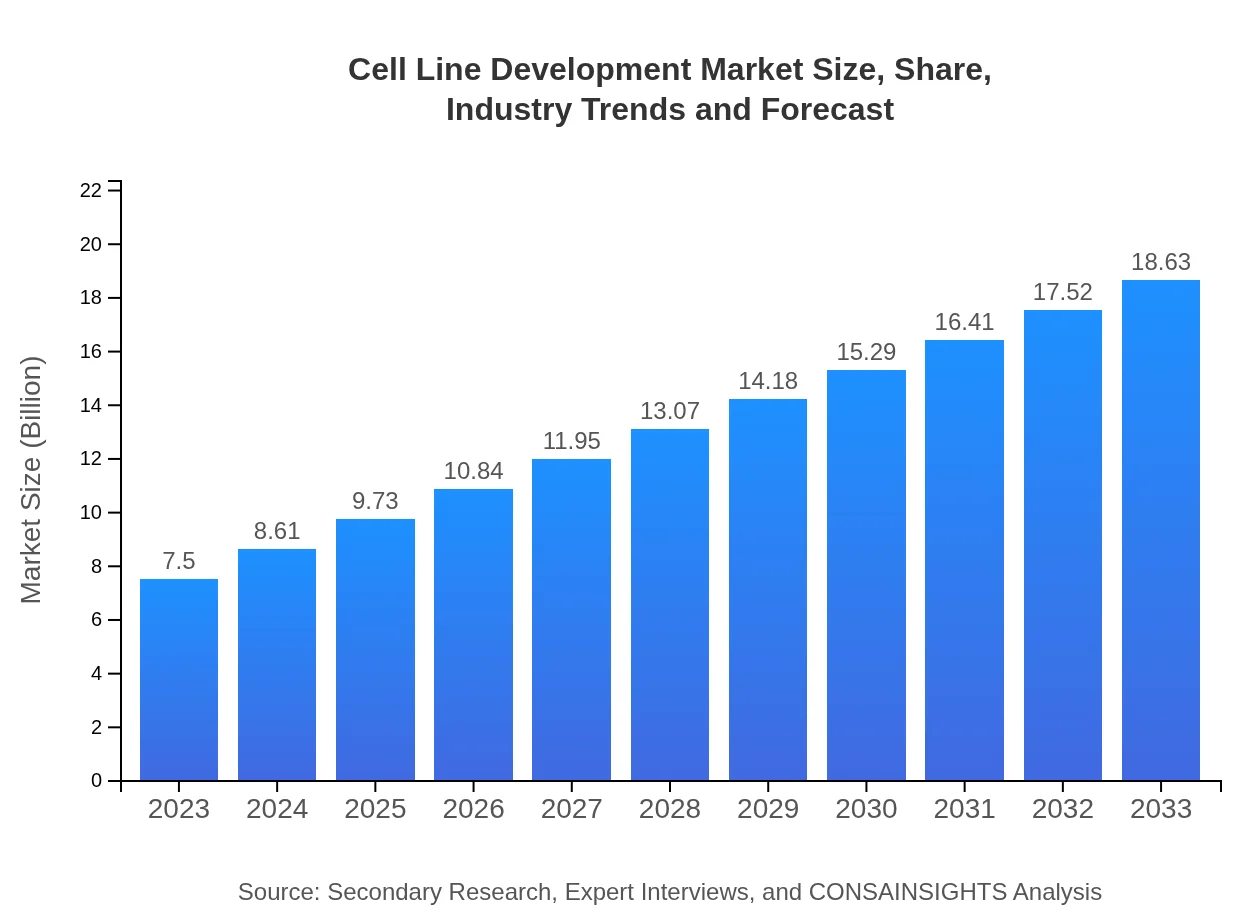
Cell Line Development Market — USD 7.5 billion in 2023, Growing to USD 18.63B by 2033 at 9.2% CAGR
This report provides a comprehensive analysis of the Cell Line Development market, including insights into market size, trends, segmentation, and regional dynamics. The forecast period extends from 2023 to 2033, offering a thorough examination of anticipated growth and industry challenges.
Key Takeaways
- Global market expands from $7.50 Billion in 2023 to $18.63 Billion in 2033 at a 9.2% CAGR.
- North America is largest regional market, while no single fastest-growing region is stated because regional CAGR differences remain within 0.15 percentage points.
- Europe and Asia Pacific show substantial increases, reaching $4.72 Billion and $4.06 Billion respectively by 2033.
- Top industry participants include Lonza Group AG, Thermo Fisher Scientific Inc., Merck KGaA, Sartorius AG, and Fujifilm Diosynth Biotechnologies.
- Market growth is supported by demand for biopharmaceuticals, R&D investment, and a shift toward outsourced development services.
Cell Line Development Market Report — Executive Summary
North America remains largest market by forecast-period value, while no single fastest-growing region is stated because top regional growth rates are separated by less than 0.15 percentage points. This report analyzes the global Cell Line Development market from 2023 to 2033, quantifying a rise from $7.50 Billion to $18.63 Billion at a 9.2% CAGR. Growth is underpinned by increasing biologics pipelines, expanded research activity, and outsourcing to specialized providers. Key trends include technology upgrades, automation, and stronger regulatory emphasis on quality and reproducibility. Geographic performance varies: North America leads in absolute value, while Europe, Asia Pacific, Latin America and Middle East & Africa show steady expansion. The competitive landscape features established suppliers such as Lonza Group AG, Thermo Fisher Scientific Inc., Merck KGaA, Sartorius AG, and Fujifilm Diosynth Biotechnologies. Segmentation covers cell types, product types, applications, and end users, offering actionable insights for stakeholders considering investment, partnerships, or service expansion.
Key Growth Drivers
- Rising demand for biologic therapies increases need for robust cell line development workflows.
- Greater R&D spending across pharmaceuticals and biotechnology fuels activity in cell line creation and optimization.
- A move toward outsourcing development tasks encourages expansion of specialized service providers.
- Adoption of automation and advanced lab technologies improves throughput and reproducibility in cell line workflows.
- Regulatory focus on product quality and traceability drives investment in validated development processes.
| Metric | Value |
|---|---|
| Study Period | 2023 - 2033 |
| 2023 Market Size | $7.50 Billion |
| CAGR (2023-2033) | 9.2% |
| 2033 Market Size | $18.63 Billion |
| Top Companies | Lonza Group AG, Thermo Fisher Scientific Inc., Merck KGaA, Sartorius AG, Fujifilm Diosynth Biotechnologies |
| Published Date | 11 October 2024 |
| Last Modified Date | 25 May 2026 |
Cell Line Development Market Overview
Customize Cell Line Development Market Report market research report
- ✔ Get in-depth analysis of Cell Line Development market size, growth, and forecasts.
- ✔ Understand Cell Line Development's regional dynamics and industry-specific trends.
- ✔ Identify potential applications, end-user demand, and growth segments in Cell Line Development
What is the Market Size & CAGR of Cell Line Development Market Report market in 2023?
Cell Line Development Industry Analysis
Cell Line Development Market Segmentation and Scope
Tell us your focus area and get a customized research report.
Cell Line Development Market Report Market Analysis Report by Region
Europe Cell Line Development Market Report:
Europe grows from $1.9 Billion in 2023 to $4.72 Billion in 2033. Expansion is supported by strong biotech hubs, academic research activity, and increasing focus on biologics development and quality standards.Asia Pacific Cell Line Development Market Report:
Asia Pacific grows from $1.64 Billion in 2023 to $4.06 Billion in 2033. Growth reflects rising pharmaceutical and biotech investment, expanding research capacity, and greater outsourcing demand in the region.North America Cell Line Development Market Report:
North America is largest regional market, rising from $2.54 Billion in 2023 to $6.3 Billion in 2033. Regional strength is linked to concentrated biopharmaceutical R&D, established contract service providers, and investment in advanced laboratory infrastructure.South America Cell Line Development Market Report:
Latin America grows from $0.64 Billion in 2023 to $1.58 Billion in 2033. Market gains are associated with growing regional R&D efforts, increasing public and private sector interest, and adoption of external development services.Middle East & Africa Cell Line Development Market Report:
Middle East and Africa grows from $0.79 Billion in 2023 to $1.96 Billion in 2033. The market is influenced by expanding research initiatives, investment in healthcare infrastructure, and partnerships with global providers.Tell us your focus area and get a customized research report.
Research Methodology
Cell Line Development Market Analysis By Product Type
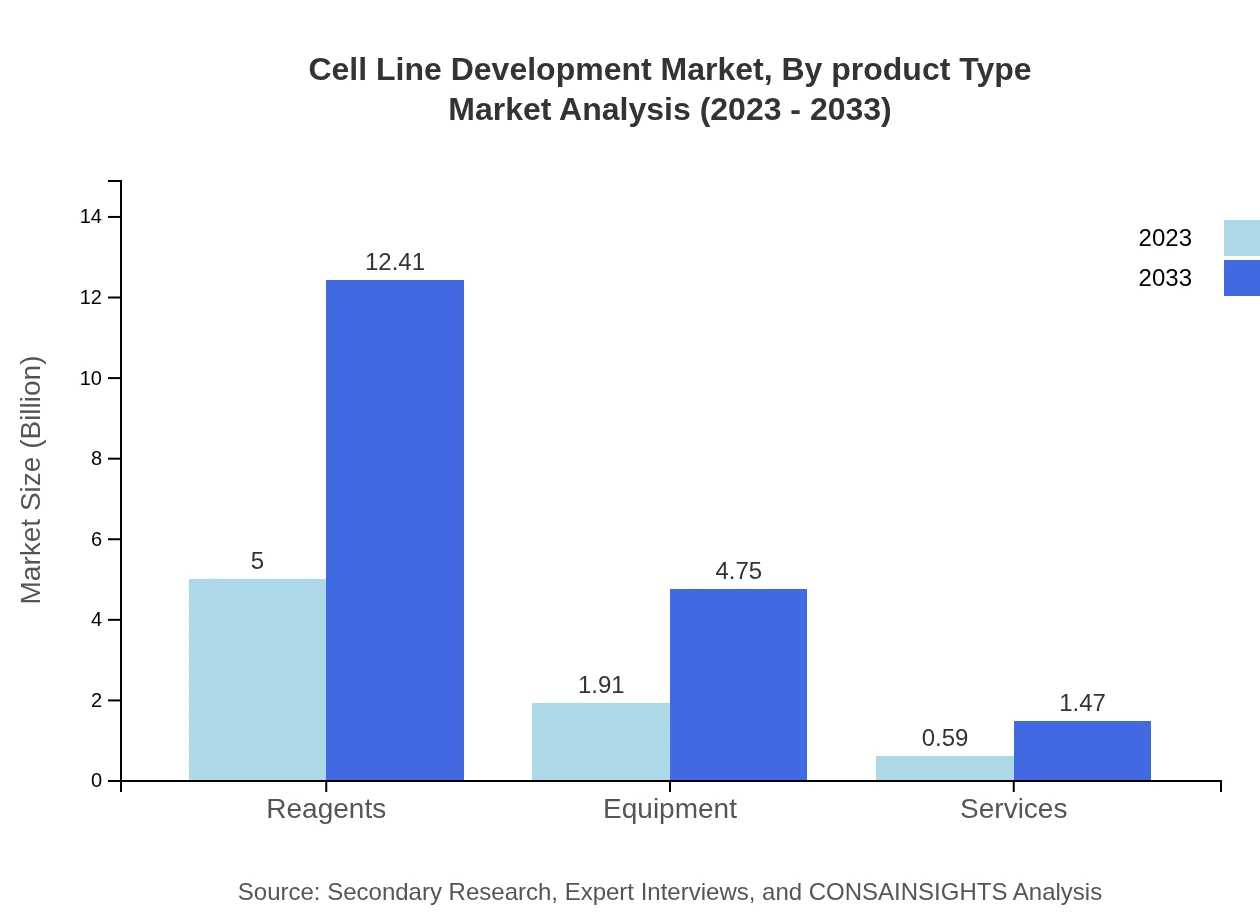
The Cell Line Development Market is primarily driven by product types including primary cell lines, continuous cell lines, and stem cell lines. In 2023, primary cell lines are valued at $5.00 billion and are anticipated to reach $12.41 billion by 2033, holding a 66.62% market share. Continuous cell lines, valued at $1.91 billion in 2023, are expected to grow to $4.75 billion by 2033, while stem cell lines will increase from $0.59 billion to $1.47 billion during the same forecast period.
Cell Line Development Market Analysis By Application
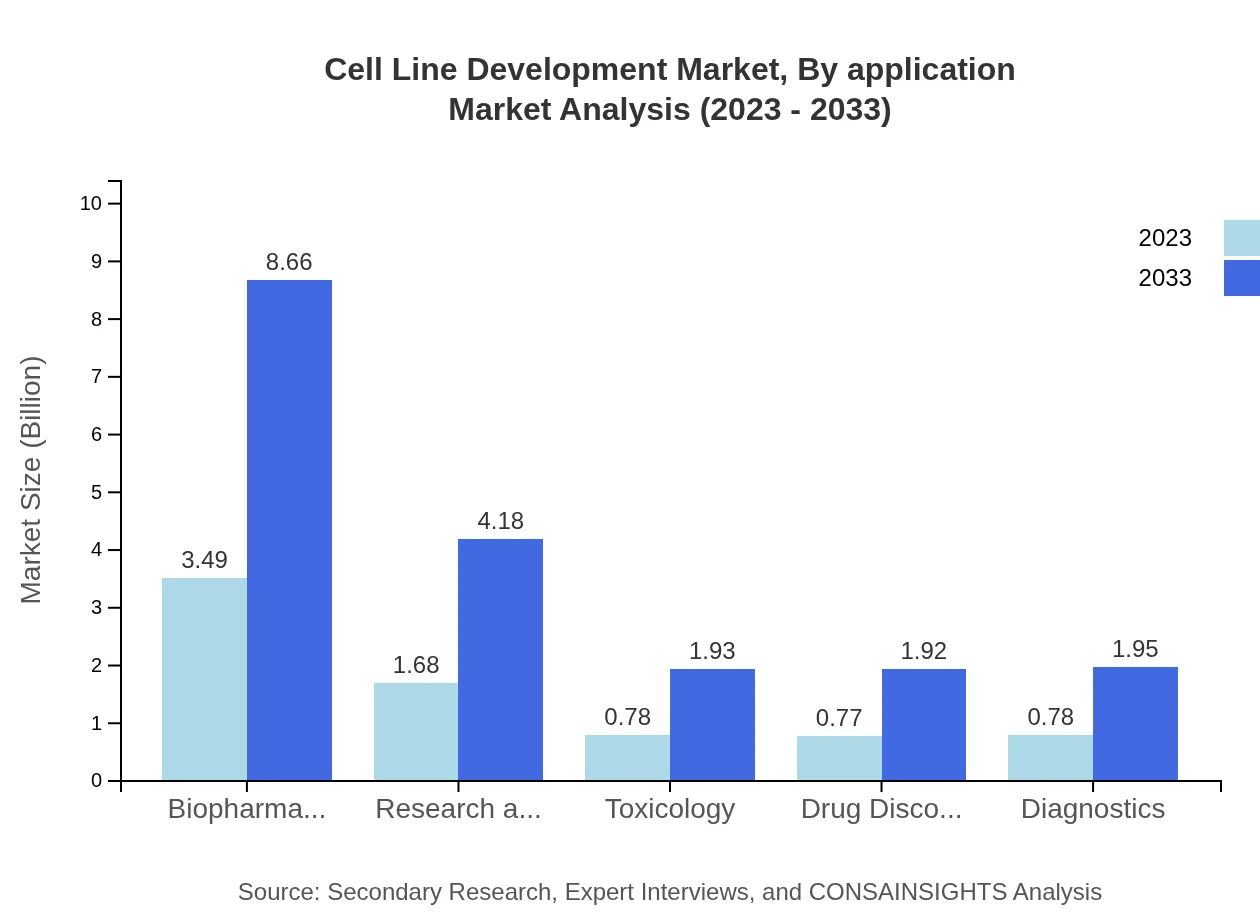
Applications of cell line development span across pharmaceuticals, biopharmaceuticals, diagnostics, and more. The pharmaceutical sector holds the largest market share, with a market size of $3.93 billion in 2023 and anticipated growth to $9.76 billion by 2033. Subsequently, biopharmaceuticals will grow from $3.49 billion to $8.66 billion during the same period, alongside significant contributions from the academic and research sectors.
Cell Line Development Market Analysis By Cell Type
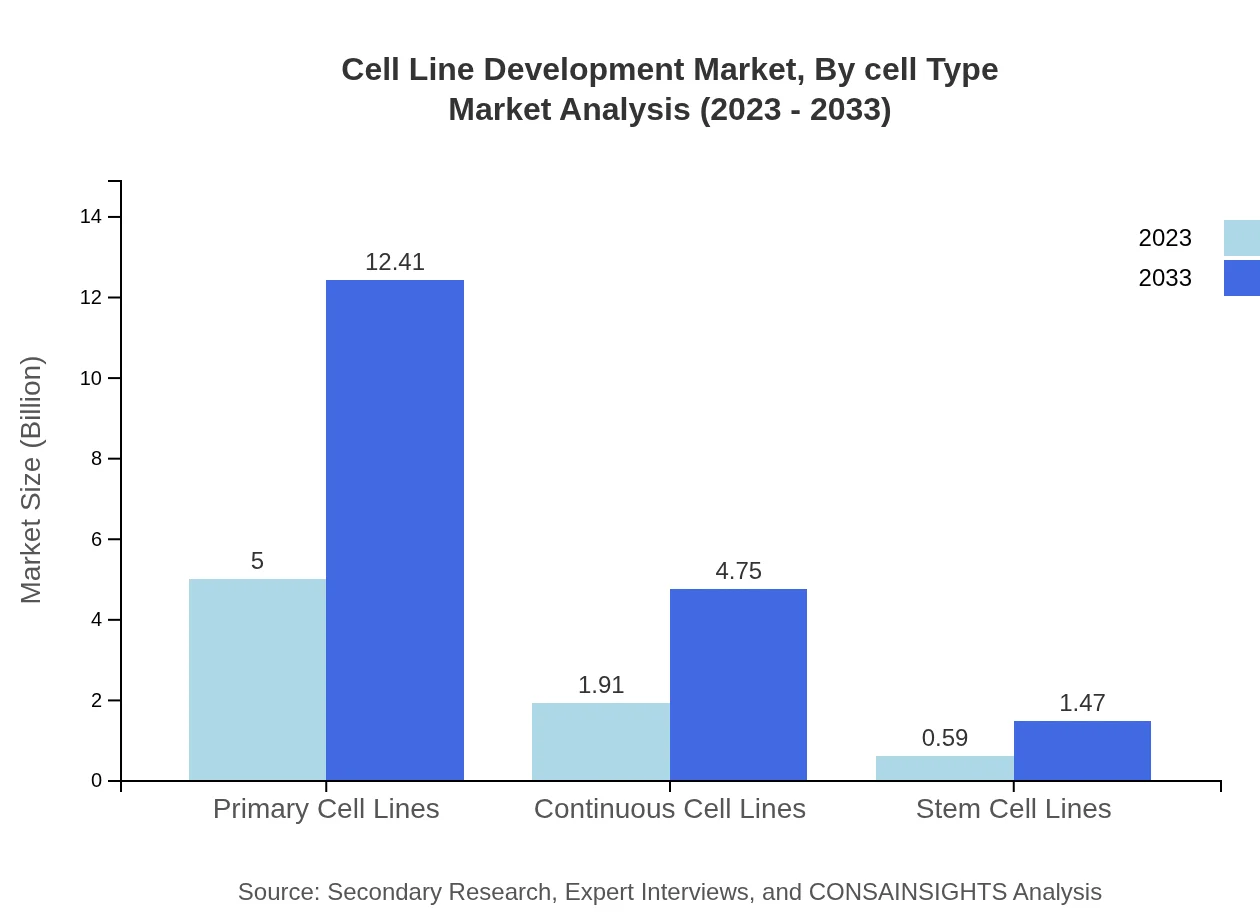
Cell lines used in development can be categorized into primary cell lines, continuous cell lines, and stem cell lines. In 2023, the primary cell lines segment is leading with $5.00 billion, followed by continuous cell lines at $1.91 billion and stem cells at $0.59 billion. Growth in these segments is reflecting the increasing reliance on specific cell types for therapeutic developments and research.
Cell Line Development Market Analysis By End User
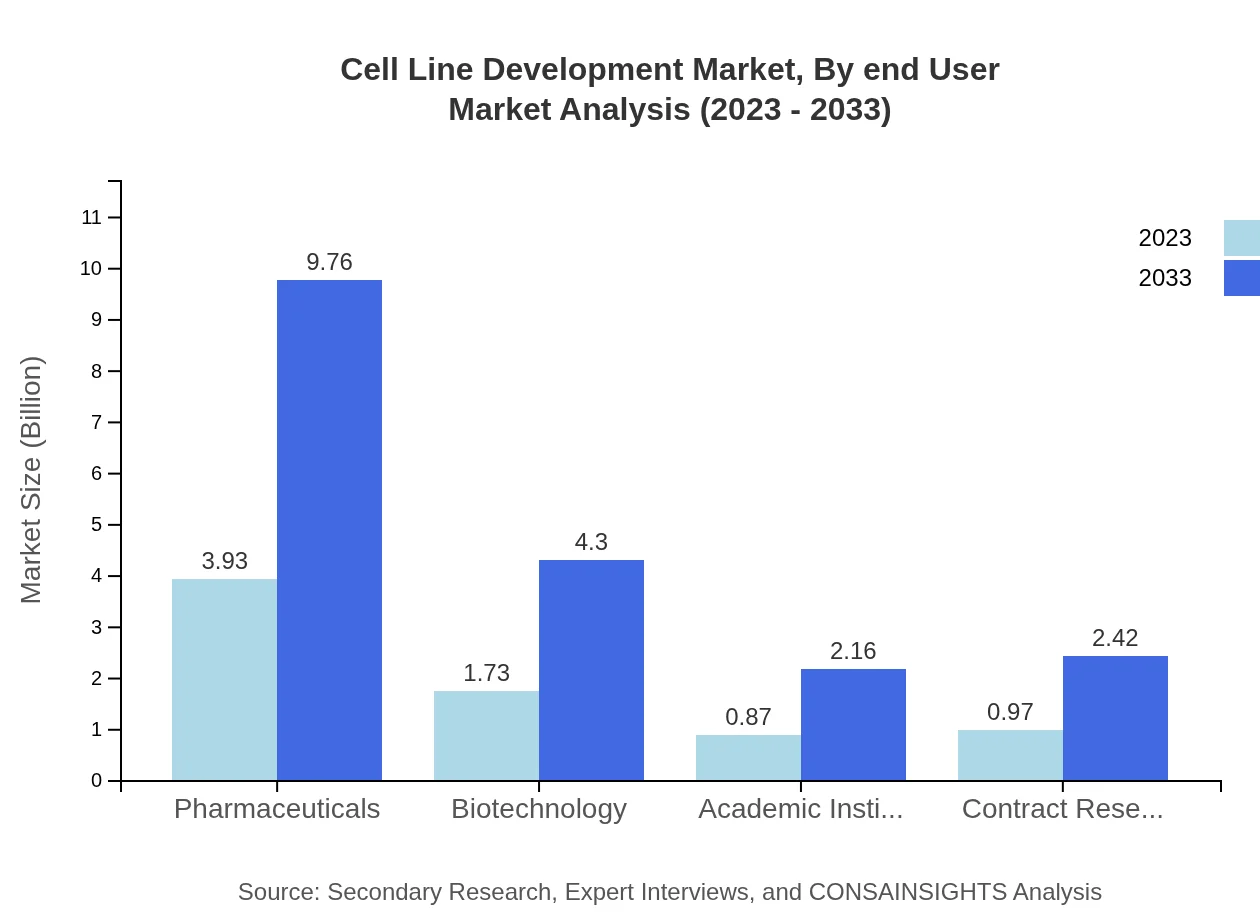
Key end-users in the cell line development market include pharmaceutical companies, biotechnology firms, academic institutions, and CROs. The pharmaceutical sector, with significant market share captured at 52.37% in 2023, is projected to maintain its dominance by 2033 due to ongoing innovations in drug development, followed by academic institutions and CROs who contribute heavily to R&D initiatives.
Cell Line Development Market Analysis By Region
Global Cell Line Development Market, By Region Market Analysis (2023 - 2033)
Regionally, North America leads, followed by Europe and Asia Pacific. Each region emphasizes specific segments with North America focusing heavily on biopharmaceutical innovations, while Europe is advancing in regulatory practices for drug development. Asia Pacific countries are increasingly investing in biotechnology, bolstering their market presence within the global landscape.
Cell Line Development Market Trends and Future Forecast
Tell us your focus area and get a customized research report.
Global Market Leaders and Top Companies in Cell Line Development Industry
Lonza Group AG:
A leading global provider of integrated, customized solutions that enable pharmaceutical and biotechnology companies to optimize their development and manufacturing processes.Thermo Fisher Scientific Inc.:
A major player in the scientific instrumentation and biotechnology industry, offering laboratory equipment and supplies for cell culture development.Merck KGaA:
Provides a comprehensive range of products for cell line development and biomanufacturing solutions to the pharmaceutical and biotechnology industries.Sartorius AG:
Specializes in laboratory and process technologies tailored for the biopharmaceutical sector, with a dedication to enhancing the efficiency of cell line development.Fujifilm Diosynth Biotechnologies:
Engaged in a range of biopharmaceutical contract development and manufacturing services, including cell line development and high-quality production services.We're grateful to work with incredible clients.









FAQs
What is the market size of the Cell Line Development Market Report in 2023?
The market size in 2023 is $7.50 Billion as stated in the report data and serves as the baseline for the 2023 to 2033 forecast.
What is the projected market size in 2033?
The market is projected to reach $18.63 Billion by 2033 according to the provided forecast figures.
What is CAGR for the forecast period?
The compound annual growth rate for the 2023 to 2033 period is 9.2% as specified in the input data.
Is there a single fastest Growing region in the Cell Line Development Market Report market?
No single fastest-growing region is stated for the Cell Line Development Market Report market because the top regional implied CAGR values are within 0.15 percentage points of each other, making the ranking too close to call reliably.
Which companies are listed as top players?
Top companies named in the dataset include Lonza Group AG, Thermo Fisher Scientific Inc., Merck KGaA, Sartorius AG, and Fujifilm Diosynth Biotechnologies.
Why is outsourcing important in cell line development?
Outsourcing allows firms to access specialized expertise and capacity, enabling internal teams to focus on core drug development activities.
What are common product types covered?
The report identifies reagents, equipment, and services as primary product-type categories supporting cell line development workflows.
How big is Europe in 2023 and 2033?
Europe is reported at $1.9 Billion in 2023 and grows to $4.72 Billion by 2033 according to the regional figures.
How big is Asia Pacific in 2023 and 2033?
Asia Pacific is listed at $1.64 Billion in 2023 and expands to $4.06 Billion in 2033 per the provided data.
Who are primary end users mentioned?
Primary end users include pharmaceuticals, biotechnology companies, academic institutions, and contract research organizations (CROs).