

Collateral Ligament Stabilizers Market Report
First published: 11 October 2024 | Last updated: 25 May 2026 | Report Code: collateral-ligament-stabilizers
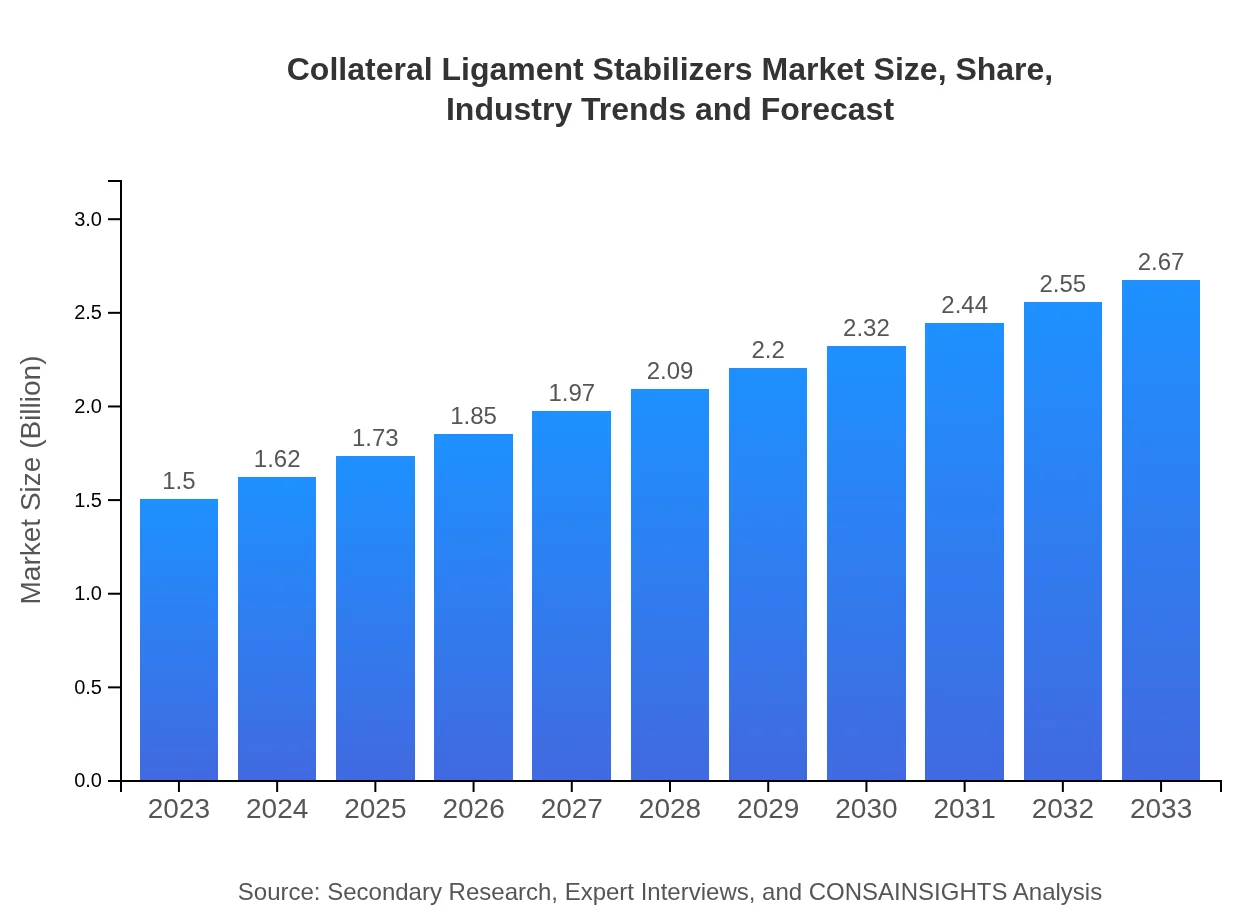
Collateral Ligament Stabilizers Market — USD 1.5 billion in 2023, Growing to USD 2.67B by 2033 at 5.8% CAGR
This comprehensive market report analyzes the Collateral Ligament Stabilizers industry, offering insights on market dynamics, segmentation, technology trends, and forecasts from 2023 to 2033.
Key Takeaways
- Global market rose from $1.50 Billion in 2023 to an expected $2.67 Billion by 2033 at a 5.8% CAGR.
- North America is largest regional market, while no single fastest-growing region is stated because regional CAGR differences remain within 0.15 percentage points.
- Europe is projected to grow from $0.41 Billion in 2023 to $0.74 Billion in 2033, reflecting steady regional demand.
- Asia Pacific expands from $0.29 Billion in 2023 to $0.51 Billion in 2033 as sports participation and rehab services increase.
- Key manufacturers include Breg, Inc., Medtronic, DJO Global and Ottobock, driving product development and distribution.
Collateral Ligament Stabilizers Market Report — Executive Summary
North America remains largest market by forecast-period value, while no single fastest-growing region is stated because top regional growth rates are separated by less than 0.15 percentage points. The market for collateral ligament stabilizers recorded $1.50 Billion in 2023 and is forecast to reach $2.67 Billion by 2033 at a 5.8% CAGR. Growth is supported by rising incidence of sports-related injuries, greater adoption of post-surgery rehabilitation protocols, and material and design innovations in braces, tapes and supports. Regional demand varies, with North America as the largest market. Product segmentation covers braces, tapes and supports across neoprene, fabric and thermoplastic materials, with distribution through online and offline channels. Leading firms such as Breg, Inc., Medtronic, DJO Global and Ottobock compete on performance, comfort and clinical acceptance. The report synthesizes primary expert interviews, company documentation and triangulated data to present market structure, trends and strategic implications for manufacturers and distributors.
Key Growth Drivers
- Increasing sports participation and higher incidence of ligament injuries boosting demand for stabilizers.
- Greater emphasis on post-operative rehabilitation protocols that recommend supports and braces.
- Advances in materials such as neoprene, fabric and thermoplastics improving comfort and effectiveness.
- Expanded e-commerce and traditional distribution channels enhancing product accessibility.
- Innovation by established players like Breg, Inc., Medtronic, DJO Global and Ottobock accelerating product launches.
| Metric | Value |
|---|---|
| Study Period | 2023 - 2033 |
| 2023 Market Size | $1.50 Billion |
| CAGR (2023-2033) | 5.8% |
| 2033 Market Size | $2.67 Billion |
| Top Companies | Breg, Inc., Medtronic , DJO Global, Ottobock |
| Published Date | 11 October 2024 |
| Last Modified Date | 25 May 2026 |
Collateral Ligament Stabilizers Market Overview
Customize Collateral Ligament Stabilizers Market Report market research report
- ✔ Get in-depth analysis of Collateral Ligament Stabilizers market size, growth, and forecasts.
- ✔ Understand Collateral Ligament Stabilizers's regional dynamics and industry-specific trends.
- ✔ Identify potential applications, end-user demand, and growth segments in Collateral Ligament Stabilizers
What is the Market Size & CAGR of Collateral Ligament Stabilizers Market Report market in 2023?
Collateral Ligament Stabilizers Industry Analysis
Collateral Ligament Stabilizers Market Segmentation and Scope
Tell us your focus area and get a customized research report.
Collateral Ligament Stabilizers Market Report Market Analysis Report by Region
Europe Collateral Ligament Stabilizers Market Report:
Europe grows from $0.41 Billion in 2023 to $0.74 Billion in 2033. Demand is influenced by broad awareness of sports injuries, rehabilitative service adoption and innovations in product materials and comfort for clinical and athletic use.Asia Pacific Collateral Ligament Stabilizers Market Report:
Asia Pacific grows from $0.29 Billion in 2023 to $0.51 Billion in 2033. Growth drivers include rising sports participation, improving access to rehabilitation services and increased availability of braces, tapes and supports through varied channels.North America Collateral Ligament Stabilizers Market Report:
North America is largest regional market, rising from $0.55 Billion in 2023 to $0.99 Billion in 2033. Regional expansion is linked to advanced clinical care, established sports medicine practices and active participation in organized sports that drive demand for stabilizers and rehabilitation devices.South America Collateral Ligament Stabilizers Market Report:
Latin America grows from $0.13 Billion in 2023 to $0.23 Billion in 2033. Growth reflects expanding clinical services, greater recognition of injury management needs and wider distribution of supportive products.Middle East & Africa Collateral Ligament Stabilizers Market Report:
Middle East and Africa grows from $0.12 Billion in 2023 to $0.21 Billion in 2033. Market expansion is supported by improving healthcare infrastructure, growing interest in sports medicine and increased access to rehabilitation solutions.Tell us your focus area and get a customized research report.
Research Methodology
Collateral Ligament Stabilizers Market Analysis By Product Type
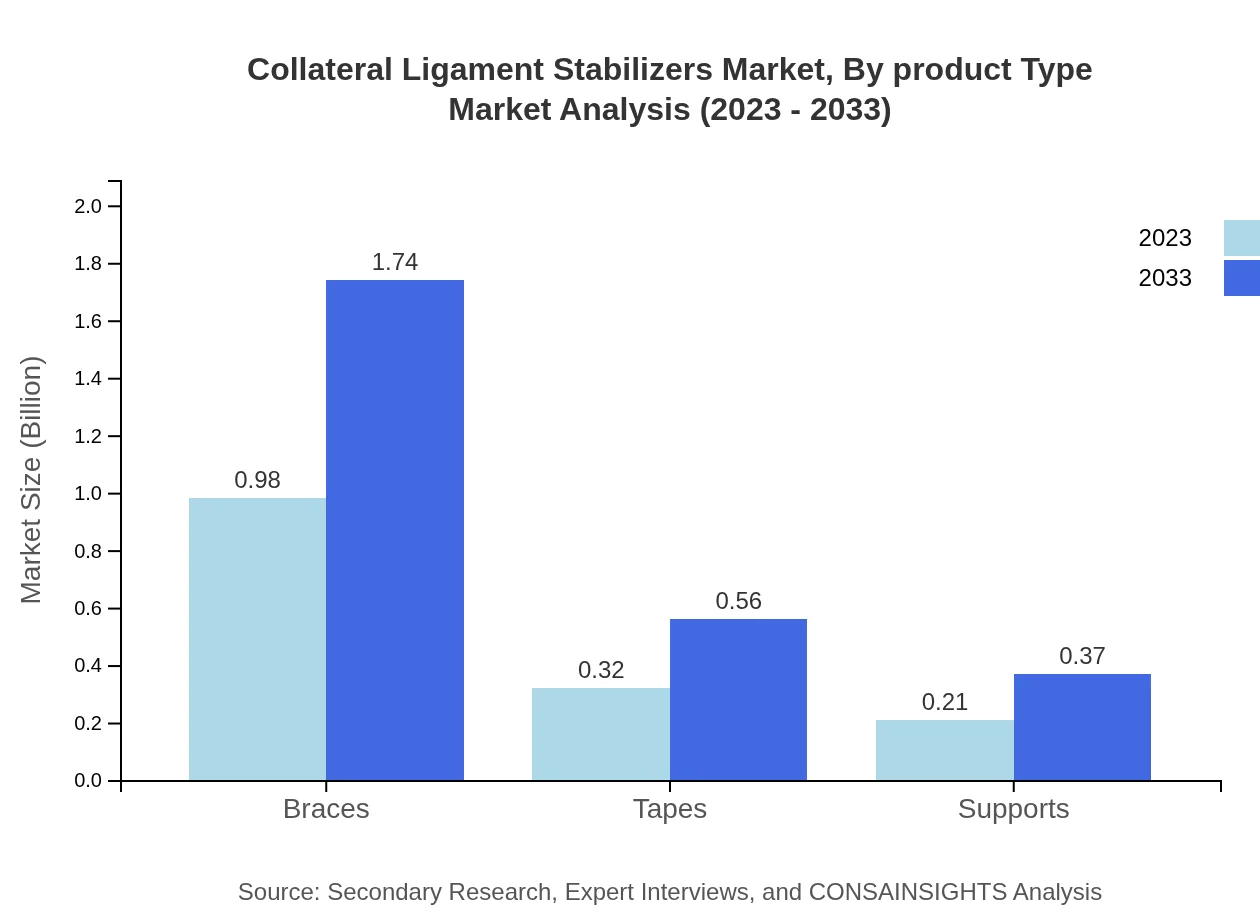
The product type segment includes key categories such as braces, tape, and supports. In 2023, the market size for braces is estimated at $0.98 billion, with braces accounting for approximately 65.18% of the overall product share. The braces market is expected to grow to $1.74 billion by 2033. Other segments like tape and supports contribute significantly, indicating diverse user preferences.
Collateral Ligament Stabilizers Market Analysis By Application
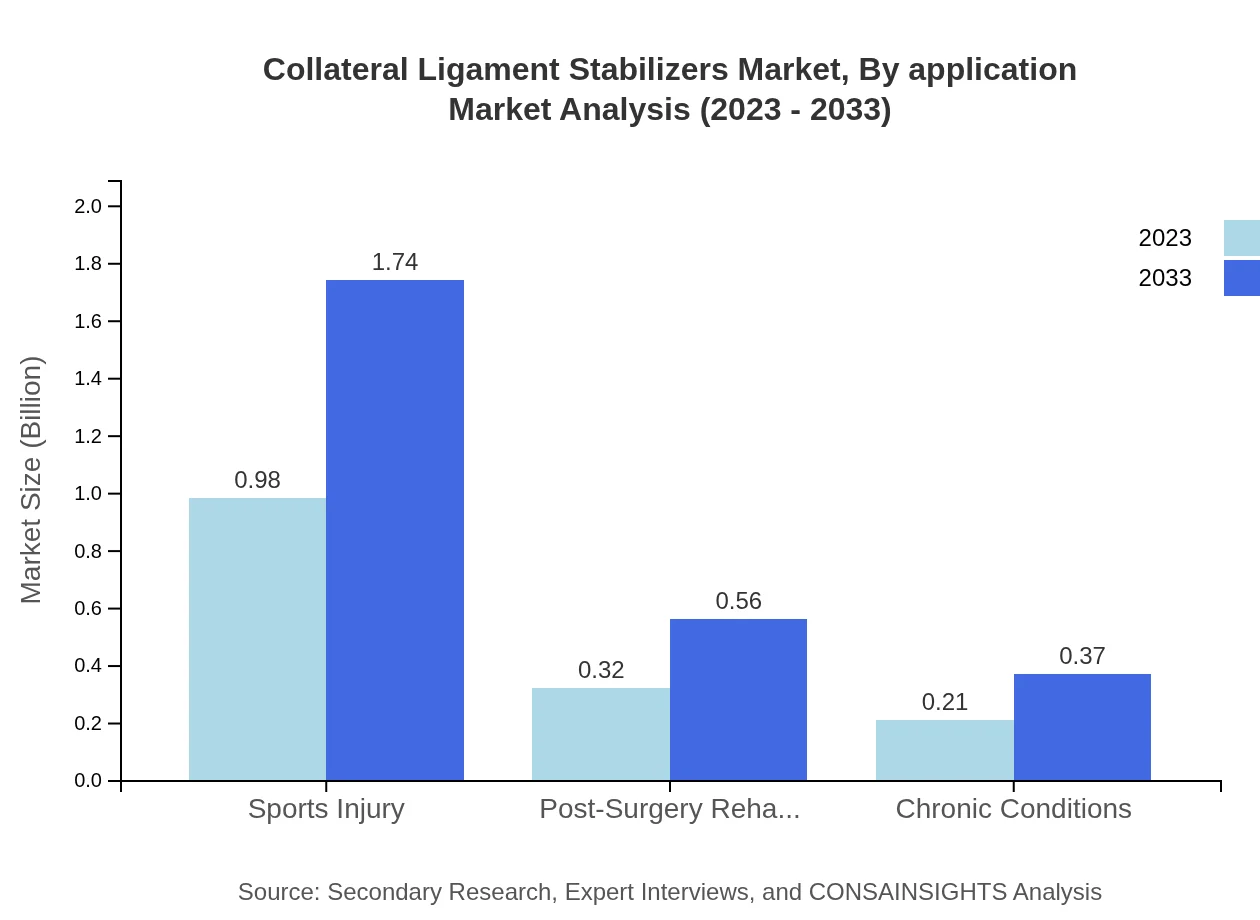
Application segments for ligaments stabilizers include sports injuries, post-surgery rehabilitation, and chronic conditions. Sports injuries dominate with a market share of 65.18%, growing from $0.98 billion in 2023 to $1.74 billion by 2033. The other segments represent substantial opportunities as awareness of recovery solutions increases.
Collateral Ligament Stabilizers Market Analysis By Distribution Channel
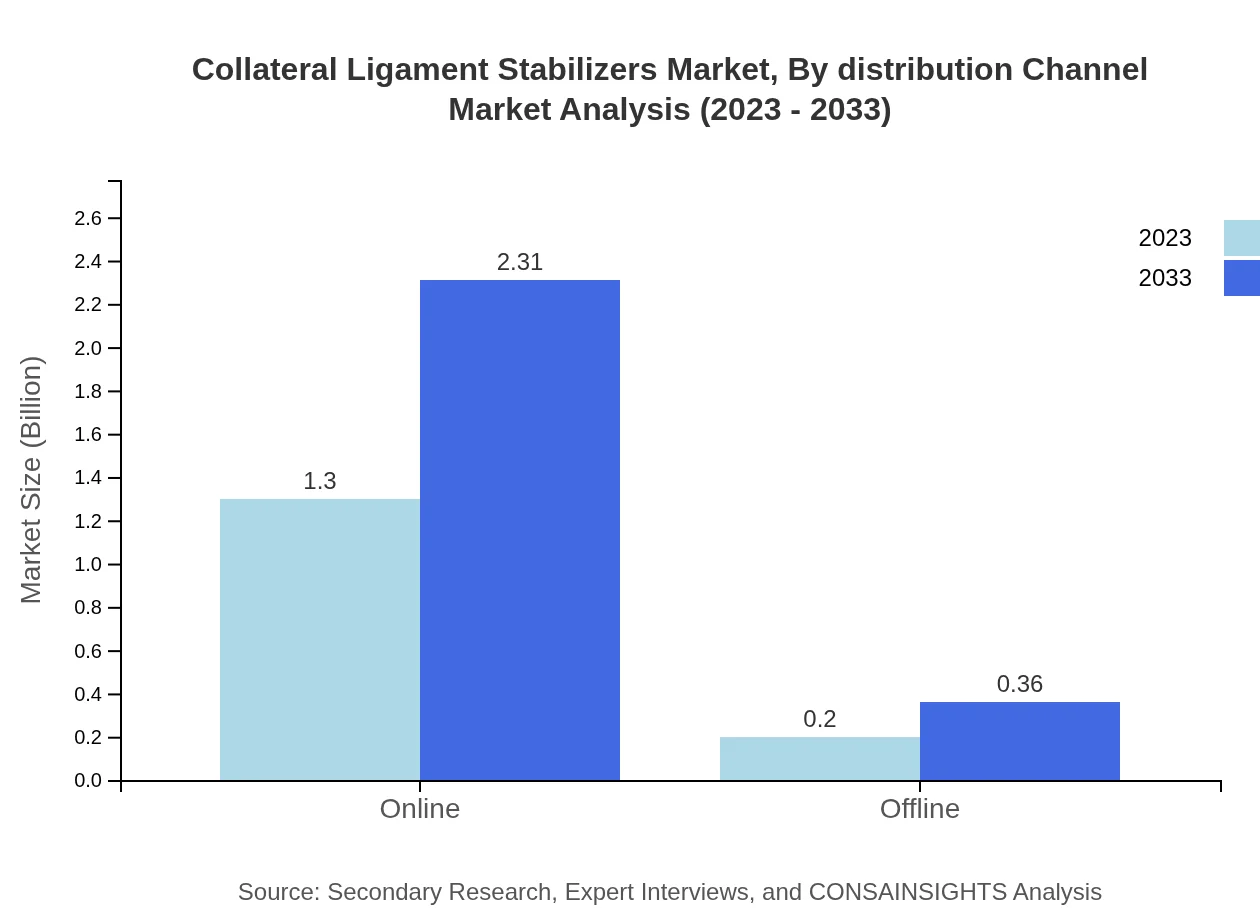
The distribution channels comprise online and offline sales. Online channels are leading, with an expected market size of $1.30 billion in 2023, reaching $2.31 billion by 2033, accounting for 86.38% of the market share. This highlights the growing trend towards e-commerce in the medical supplies sector.
Collateral Ligament Stabilizers Market Analysis By End User
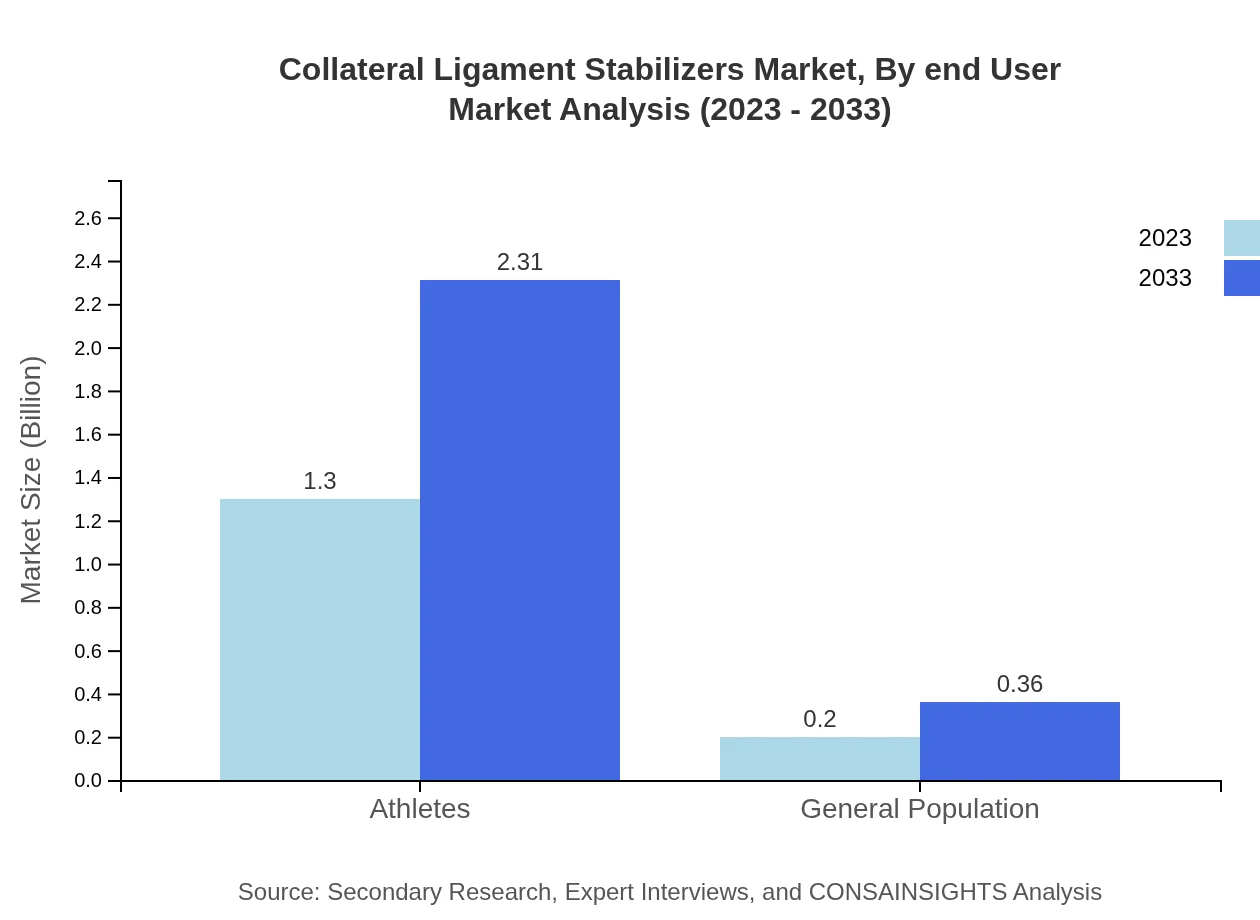
End-users are predominantly athletes and the general population. Athletes represent a major market, with a size of $1.30 billion in 2023 and will expand to $2.31 billion by 2033, constituting around 86.38% of the market. In contrast, the general population's segment grows at a moderate pace, from $0.20 billion in 2023 to $0.36 billion by 2033.
Collateral Ligament Stabilizers Market Analysis By Material
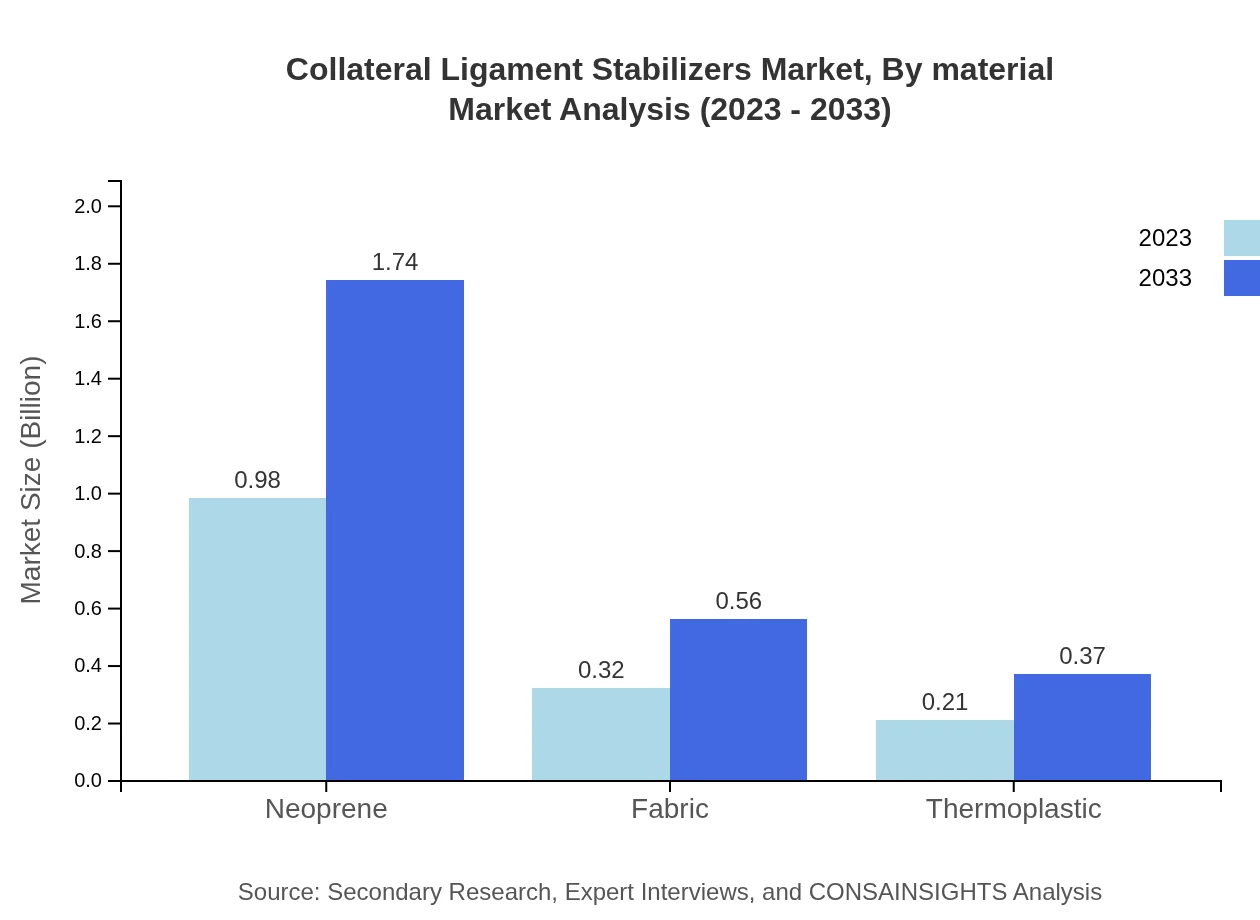
Materials used include Neoprene, fabric, and thermoplastic. Neoprene, which is leading with an estimated size of $0.98 billion in 2023, will grow to $1.74 billion, commanded by 65.18% share. Fabric-based and thermoplastic stabilizers also show consistent growth, driven by user comfort and durability.
Collateral Ligament Stabilizers Market Trends and Future Forecast
Tell us your focus area and get a customized research report.
Global Market Leaders and Top Companies in Collateral Ligament Stabilizers Industry
Breg, Inc.:
Breg is renowned for manufacturing orthopedic bracing and thermal therapy products, focusing heavily on rehabilitation technology.Medtronic :
A leader in medical technology solutions, Medtronic develops innovative products including those tailored for injury prevention and recovery in athletes.DJO Global:
DJO Global is prominent in the orthopedic device realm, offering a variety of braces and supports that enhance the recovery of ligament-related injuries.Ottobock:
Focused on prosthetics and orthotics, Ottobock provides advanced technology solutions for ligament stabilization and rehabilitation.We're grateful to work with incredible clients.








FAQs
What is the market size of collateral ligament stabilizers in 2023?
The market size for collateral ligament stabilizers in 2023 is $1.50 Billion, reflecting current demand across medical and sports rehabilitation applications.
How big will the market be in 2033?
By 2033 the market is projected to reach $2.67 Billion, based on the provided forecast and anticipated expansion in clinical and athletic use cases.
What is CAGR for the forecast period?
The compound annual growth rate for the period 2023 to 2033 is 5.8%, as specified for the market projection.
Is there a single fastest Growing region in the Collateral Ligament Stabilizers Market Report market?
No single fastest-growing region is stated for the Collateral Ligament Stabilizers Market Report market because the top regional implied CAGR values are within 0.15 percentage points of each other, making the ranking too close to call reliably.
Which companies are prominent in this market?
Top companies listed include Breg, Inc., Medtronic, DJO Global and Ottobock, which are active in product development and distribution across regions.
What end Users consume these stabilizers?
End-users include athletes and the general population, reflecting use in sports injury prevention and broader rehabilitative contexts.
How are products categorized by material?
Materials noted include neoprene, fabric and thermoplastic, each used across braces, tapes and supports to balance support and comfort.
What distribution channels are used?
Distribution is through online and offline channels, enabling both direct-to-consumer access and traditional medical supply pathways.
Who conducted the research for this report?
Research involved primary interviews with industry experts, supplemented by company reports and publications, with data triangulation and validation.
What applications drive product demand?
Key applications include sports injury management, post-surgery rehabilitation and chronic condition support, each contributing to steady demand.