
Reports >
Technology And Media
>
Computer Aided Engineering Cae

Computer Aided Engineering Cae
First published: 08 January 2026 | Last updated: 31 January 2026 | Report Code: computer-aided-engineering-cae
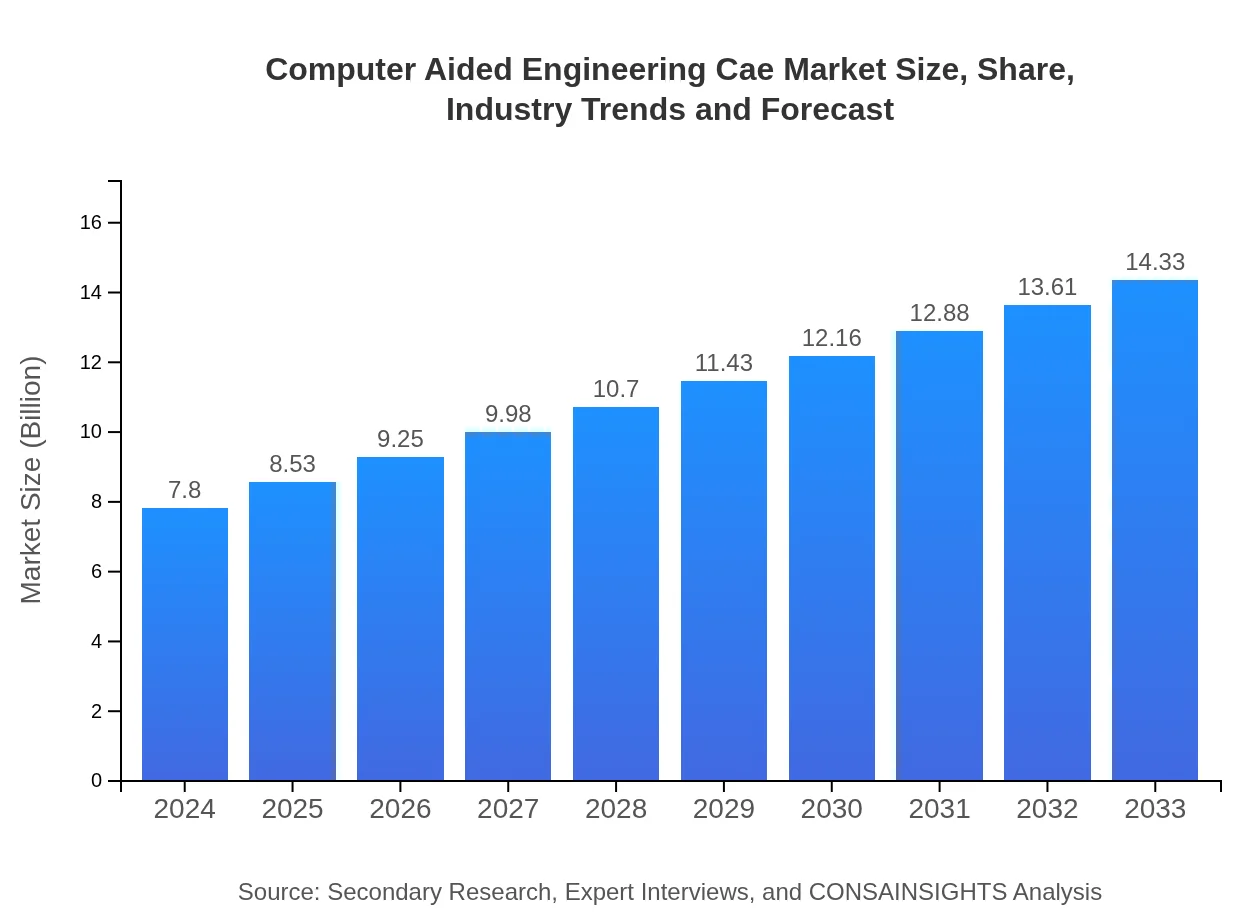
Computer Aided Engineering Cae Market — USD $7.8 Billion in 2024, Growing to USD 14.33 by 2033 at 6.8% CAGR
This report provides an in‐depth analysis of the Computer Aided Engineering (CAE) market, presenting robust insights, data trends, and forecasts for the period 2024 to 2033. It includes market size evaluations, segmentation details, regional breakdowns, technological advancements, and analysis of key players, ensuring a comprehensive overview of emerging opportunities and challenges.
| Metric | Value |
|---|---|
| Study Period | 2024 - 2033 |
| 2024 Market Size | $7.80 Billion |
| CAGR (2024-2033) | 6.8% |
| 2033 Market Size | $14.33 Billion |
| Top Companies | ANSYS, Inc., Dassault Systèmes, Siemens Digital Industries Software |
| Published Date | 08 January 2026 |
| Last Modified Date | 31 January 2026 |
Computer Aided Engineering Cae Market Overview
Customize Computer Aided Engineering Cae market research report
- ✔ Get in-depth analysis of Computer Aided Engineering Cae market size, growth, and forecasts.
- ✔ Understand Computer Aided Engineering Cae's regional dynamics and industry-specific trends.
- ✔ Identify potential applications, end-user demand, and growth segments in Computer Aided Engineering Cae
What is the Market Size & CAGR of Computer Aided Engineering Cae market in 2024?
Computer Aided Engineering Cae Industry Analysis
Computer Aided Engineering Cae Market Segmentation and Scope
Tell us your focus area and get a customized research report.
Computer Aided Engineering Cae Market Analysis Report by Region
Europe Computer Aided Engineering Cae:
Europe’s CAE market is expected to witness growth from 2.32 in 2024 to 4.27 in 2033, driven by stringent regulatory standards and a strong focus on energy efficiency and environmental sustainability. European industries are increasingly investing in state-of-the-art CAE solutions to improve product reliability while meeting complex certification requirements, making the region a key market for high-end simulation technologies.Asia Pacific Computer Aided Engineering Cae:
The Asia Pacific region exhibits promising growth fueled by rapid industrialization, increasing R&D expenditures, and a surge in technological adoption across manufacturing and design centers. With market values expected to grow from 1.51 in 2024 to 2.78 in 2033, the region faces robust competition and significant investment in localized research, fostering innovation and cost-efficient CAE solutions.North America Computer Aided Engineering Cae:
North America remains a dominant player in the CAE landscape, with market figures growing from 2.73 in 2024 to 5.02 in 2033. The region benefits from advanced technological infrastructures, significant R&D investments, and well-established industrial ecosystems. These factors help in leveraging innovative CAE tools for enhanced design accuracy and operational efficiency.South America Computer Aided Engineering Cae:
In South America, represented by Latin America data, the CAE market is gradually evolving. Market growth from 0.22 in 2024 to 0.41 in 2033 indicates a smaller but steadily increasing adoption rate, driven by emerging industries and increasing investments in digital transformation, although infrastructural challenges and budgetary constraints remain influential factors.Middle East & Africa Computer Aided Engineering Cae:
In the Middle East and Africa, the market is projected to grow from 1.01 in 2024 to 1.86 in 2033. This region is gradually embracing CAE technologies as industries modernize their operations. While infrastructural development and investment remain challenges, government initiatives supporting industrial advancements and digital transformation are likely to boost market adoption in the coming years.Tell us your focus area and get a customized research report.
Computer Aided Engineering Cae Market Analysis By Solution
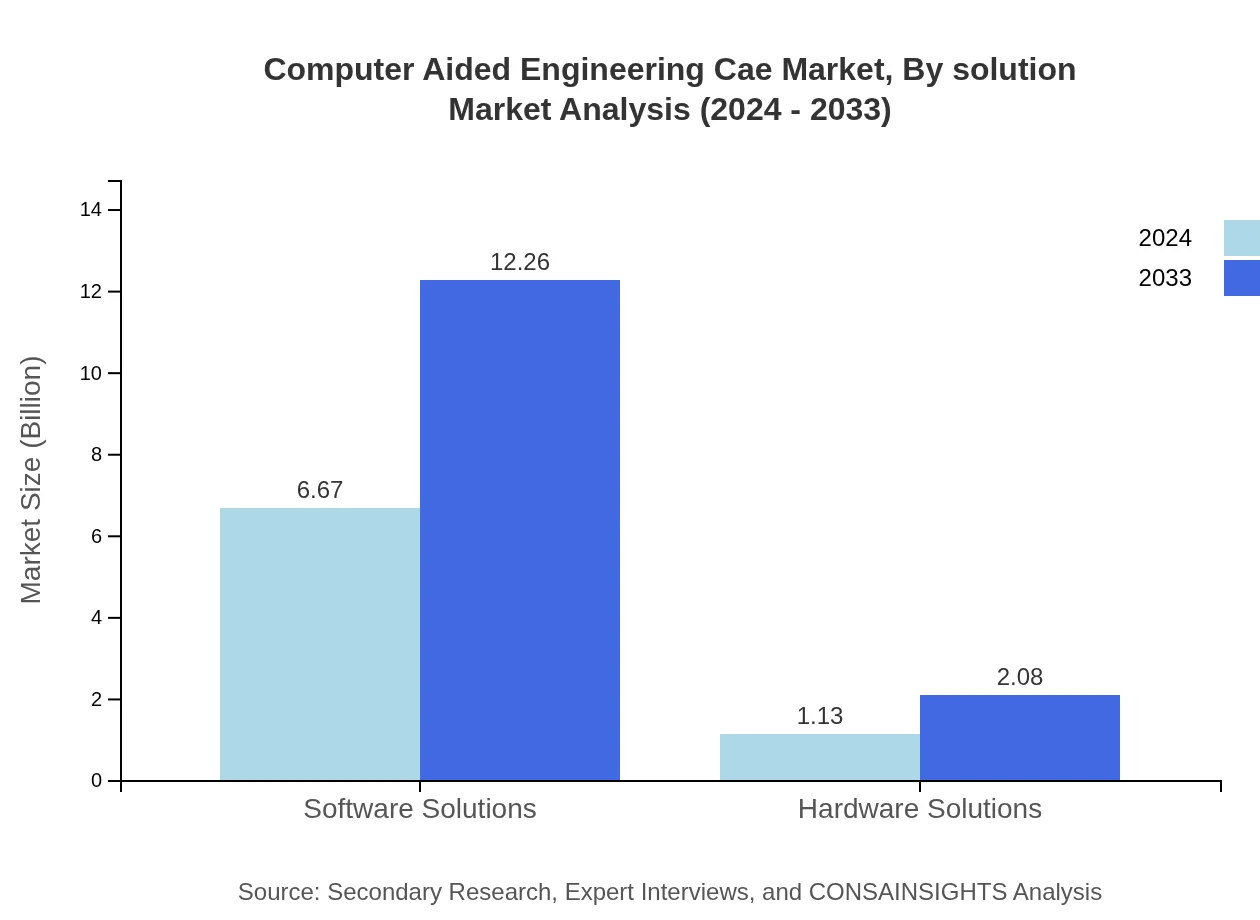
The solution segment broadly categorizes into software and hardware solutions. Software solutions dominate the market, driven by superior simulation capabilities and high user adoption rates, illustrated by market sizes exceeding 6.67 in 2024 and growing to 12.26 by 2033. Hardware, while smaller in scale, remains crucial for ensuring optimal performance and integration with cutting-edge software packages.
Computer Aided Engineering Cae Market Analysis By Application
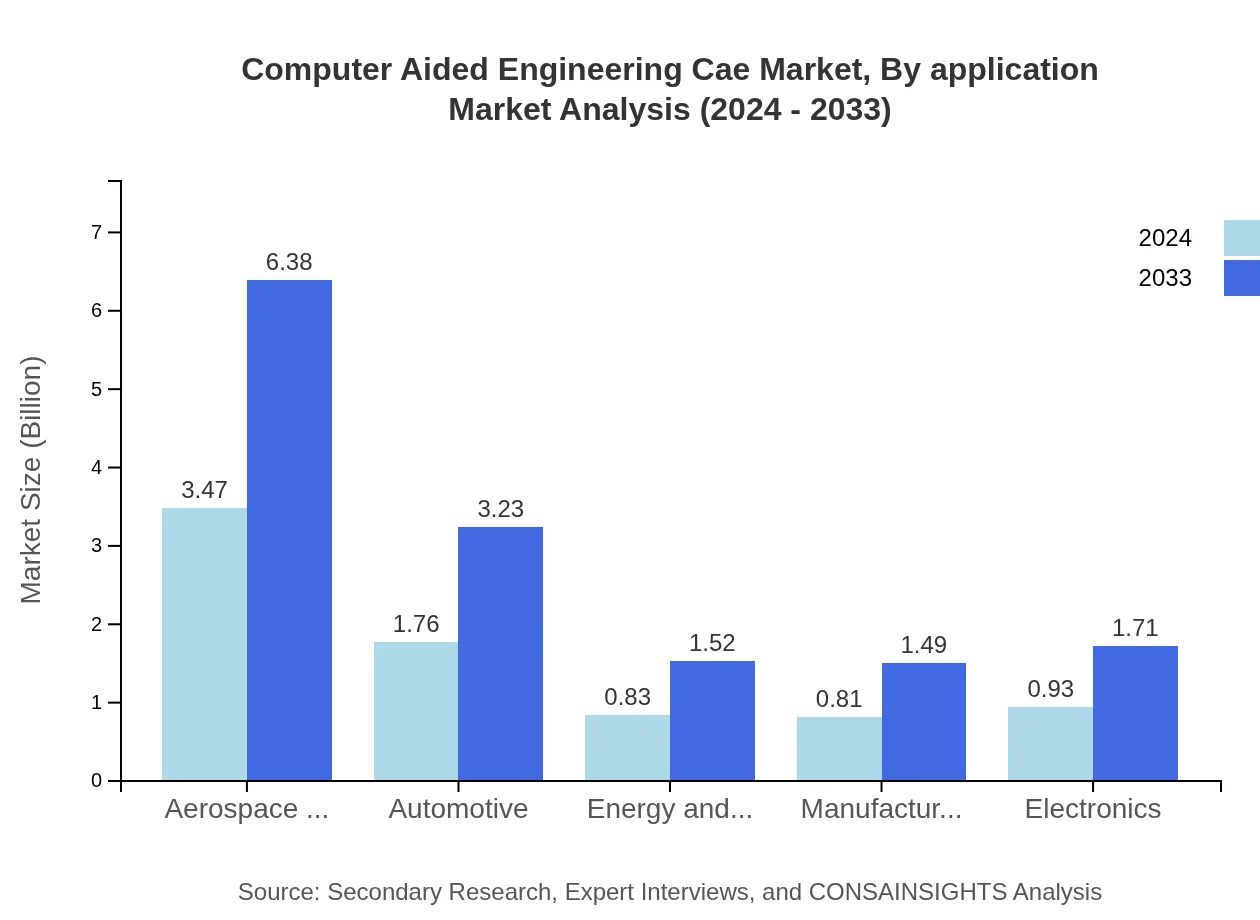
Application segmentation identifies core industries such as Automotive, Aerospace, Electronics, and Architecture & Construction. Within these industries, automotive applications lead with significant market share, demonstrating steady growth and reflecting the need for enhanced simulation in safety, performance, and regulatory compliance. The aerospace and electronics sectors also contribute notably, benefiting from precise aerodynamic and thermal management simulations.
Computer Aided Engineering Cae Market Analysis By Technology
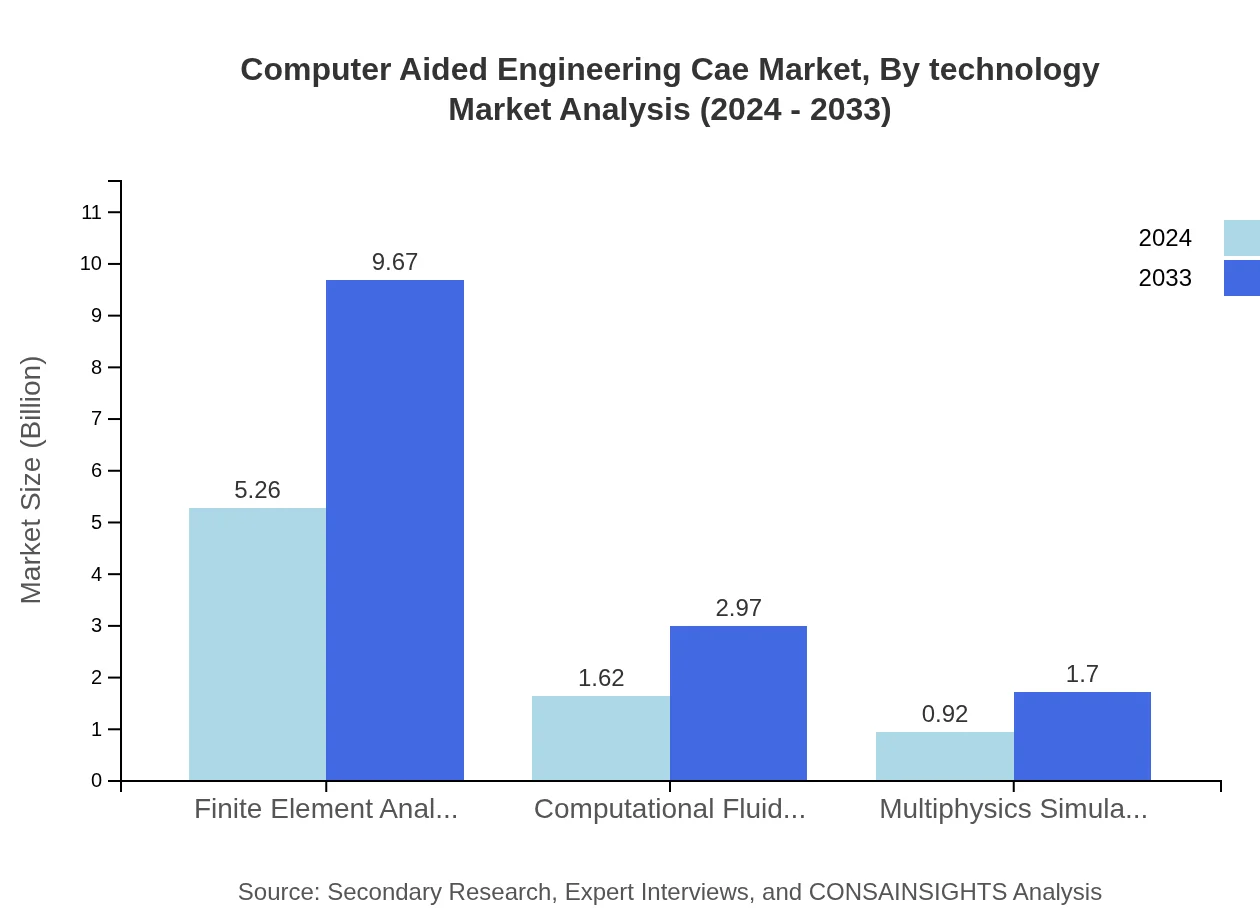
Technology segmentation focuses on core simulation technologies like Finite Element Analysis (FEA), Computational Fluid Dynamics (CFD), and Multiphysics Simulation. FEA holds the majority share in the CAE market due to its extensive application in stress, vibration, and thermal analysis. CFD and multiphysics simulation are important for understanding fluid interactions and complex system behaviors, ensuring holistic design insights and improved product performance.
Computer Aided Engineering Cae Market Analysis By Deployment Model
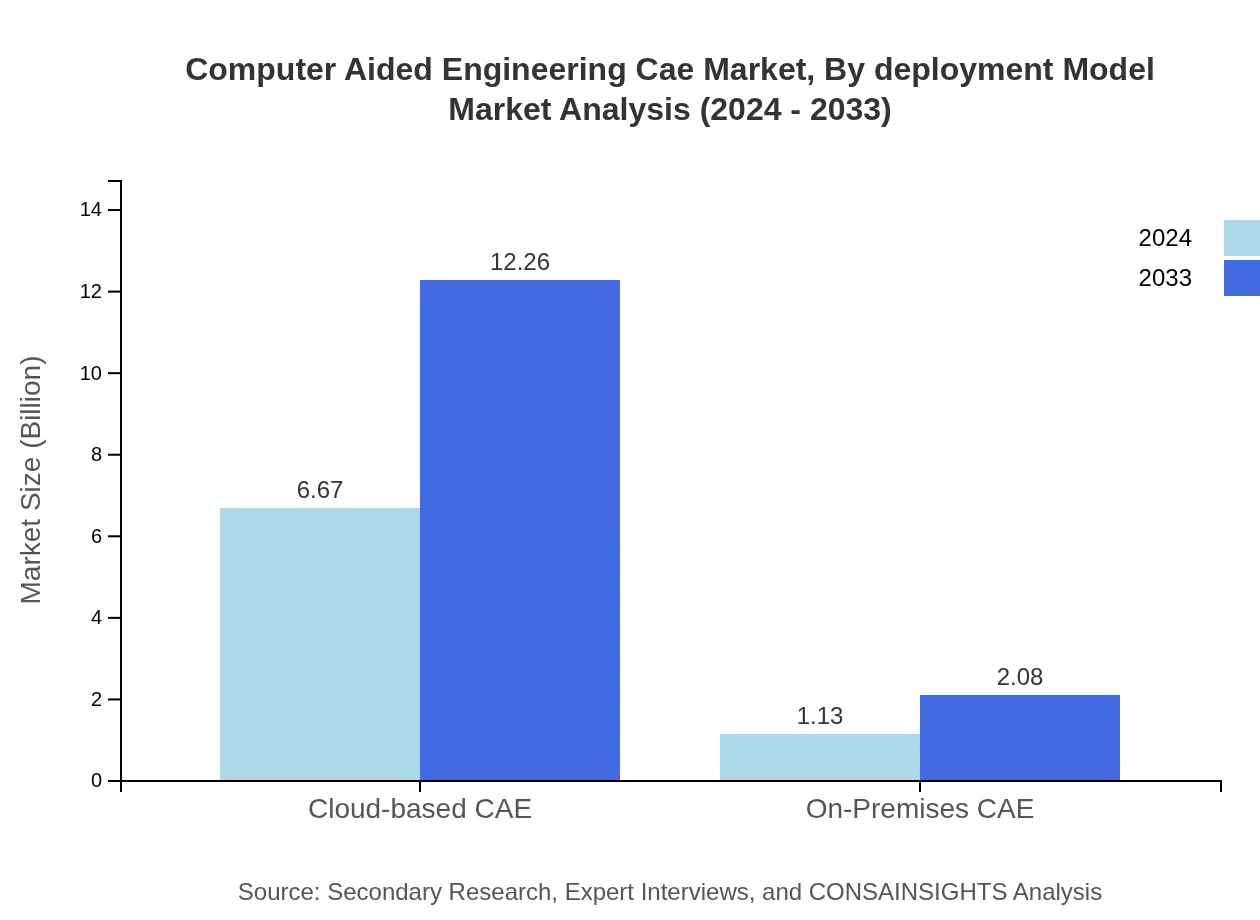
Deployment models in the CAE market are primarily categorized into cloud-based and on-premises solutions. Cloud-based CAE is increasingly popular due to its scalability, cost-effectiveness, and ease of remote collaboration. On-premises solutions continue to be favored in sectors demanding higher data security and customization, reflecting a balance between technological flexibility and robust performance requirements.
Computer Aided Engineering Cae Market Analysis By End User
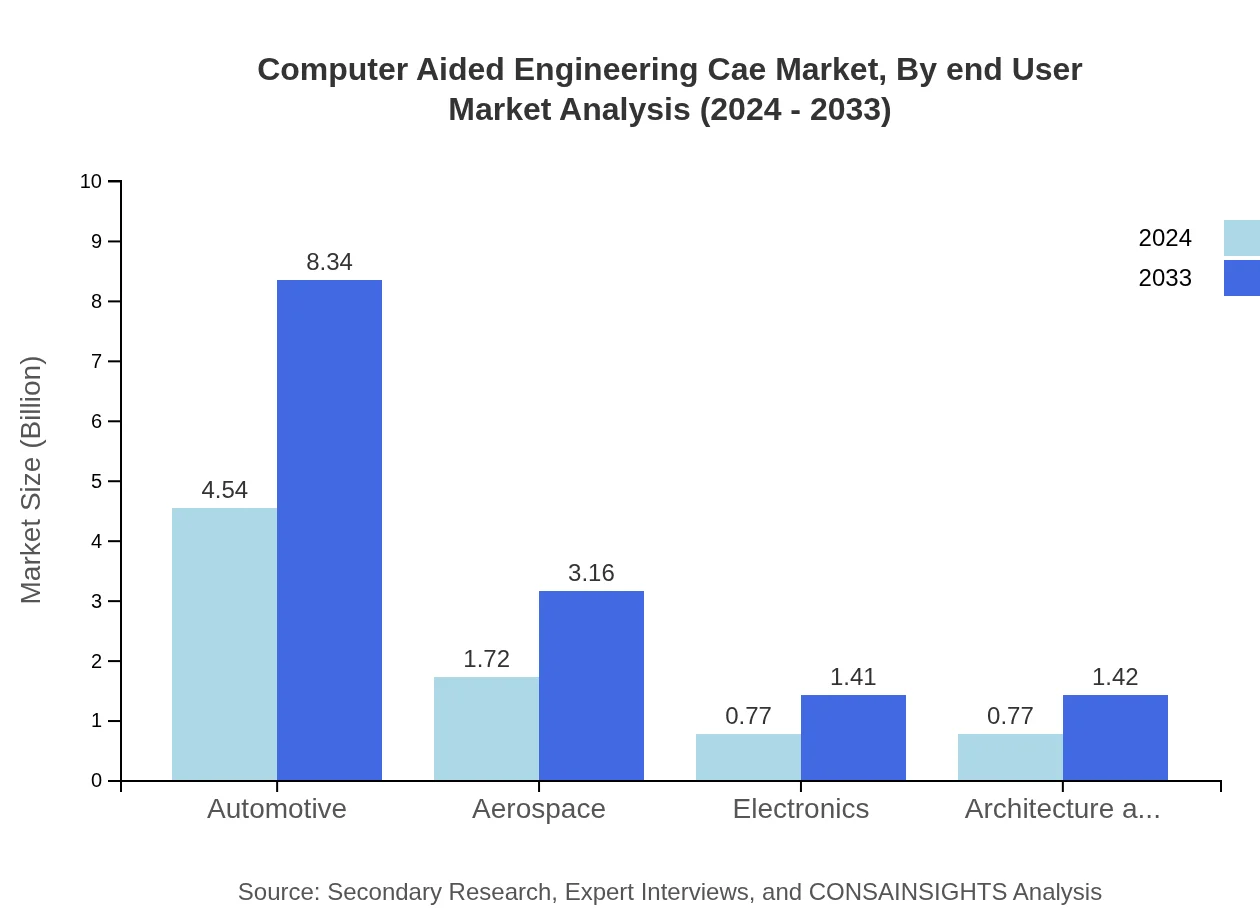
End-user segmentation highlights key industries including Aerospace and Defense, Automotive, Energy and Power, Manufacturing, and Electronics. Each industry benefits uniquely from CAE applications; for instance, aerospace sectors rely on precise simulation for safety-critical design enhancements while automotive industries focus on durability and performance. Energy and power as well as manufacturing sectors leverage CAE for optimizing system performance, reducing development cycles, and ensuring regulatory compliance.
Computer Aided Engineering Cae Market Trends and Future Forecast
Tell us your focus area and get a customized research report.
Global Market Leaders and Top Companies in Computer Aided Engineering Cae Industry
ANSYS, Inc.:
ANSYS is a global leader in CAE software, renowned for its high-fidelity simulation tools and comprehensive suite of engineering solutions that cater to a wide range of industries.Dassault Systèmes:
Dassault Systèmes offers innovative 3D design and simulation software that empowers industries with advanced CAE technologies, driving digital transformation and optimized product development.Siemens Digital Industries Software:
Siemens provides robust CAE and simulation platforms that integrate seamlessly with manufacturing processes, enhancing product reliability, and enabling efficient design workflows.We're grateful to work with incredible clients.









FAQs
How can the Computer-Aided Engineering (CAE) Report help align our marketing strategy with customer adoption trends?
The CAE market, valued at $7.8 billion with a CAGR of 6.8%, provides insights into customer preferences. By understanding these trends, businesses can customize marketing strategies to target specific needs in automotive, aerospace, and other sectors, ensuring relevance.
What product features are in highest demand according to CAE trends?
The report indicates strong demand for software solutions, particularly Finite Element Analysis (FEA) and Computational Fluid Dynamics (CFD). In 2024, software solutions account for 85.51% market share, showing a preference for advanced simulation tools.
Which regions offer the best market entry and expansion opportunities in the CAE industry?
North America is projected to grow from $2.73 billion in 2024 to $5.02 billion in 2033, while Asia Pacific grows from $1.51 billion to $2.78 billion. Both regions represent significant opportunities for market entry and expansion.
What emerging technologies and innovations are shaping the CAE market?
Emerging technologies like cloud-based CAE are transforming the market. With a market share of 85.51% by 2024, cloud solutions enhance accessibility and collaboration, driving growth and innovation across industries including automotive and aerospace.
Does the CAE Report include competitive landscape and market share analysis?
Yes, the report offers a comprehensive competitive landscape analysis. It details market shares by sectors like automotive (58.21%) and aerospace (22.04%), enabling companies to assess competitive positioning and make informed strategic decisions.
How can executives use the CAE Report to evaluate investment risks and ROI?
Executives can leverage the report to analyze market trends and regional growth forecasts, such as the 6.8% CAGR. By evaluating demands in critical segments like automotive, they can strategically assess risks and potential ROI before investments.
What is the market size of computer Aided Engineering (CAE)?
The CAE market is valued at $7.8 billion in 2024, projected to grow with a CAGR of 6.8%. Key segments include automotive and aerospace, indicating strong market potential over the next decade.
What are the projected market sizes for key regions in the CAE market by 2033?
By 2033, North America will reach $5.02 billion, Europe $4.27 billion, Asia Pacific $2.78 billion, while Latin America and the Middle East and Africa will be $0.41 billion and $1.86 billion respectively, highlighting potential growth hotspots.