

Dermal Filler Market Report
First published: 08 October 2024 | Last updated: 25 May 2026 | Report Code: dermal-filler
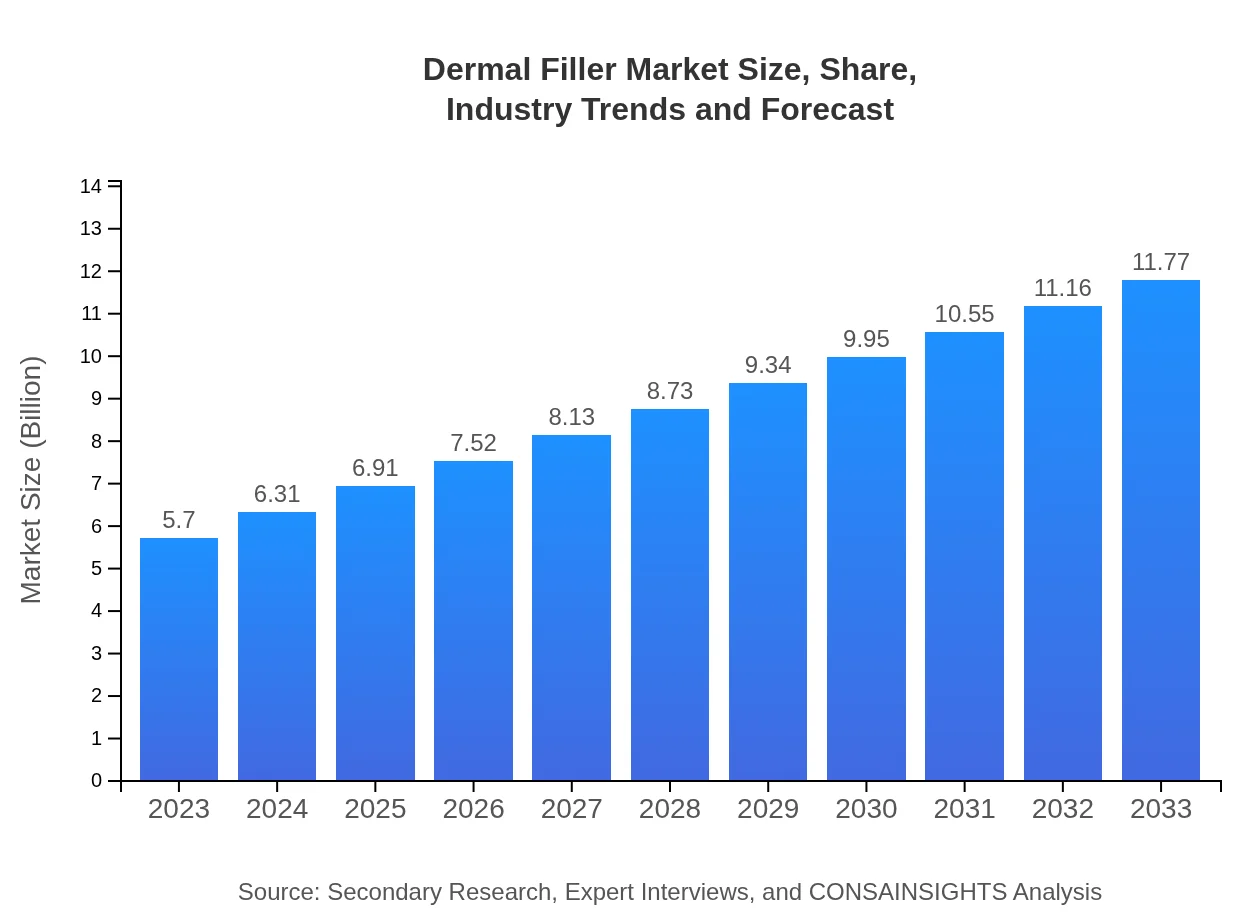
Dermal Filler Market — USD 5.7 billion in 2023, Growing to USD 11.77B by 2033 at 7.3% CAGR
This report provides a comprehensive analysis of the Dermal Filler market, covering various aspects such as market size, industry trends, segmentation, regional insights, and forecasts up to 2033.
Key Takeaways
- Global market expands from $5.70 Billion in 2023 to $11.77 Billion by 2033, reflecting a 7.3% CAGR over 2023 to 2033.
- Europe is largest regional market, while no single fastest-growing region is stated because regional CAGR differences remain within 0.15 percentage points.
- Product innovation and demand for minimally invasive procedures are primary trends supporting market growth.
- Top manufacturers include Allergan (AbbVie), Merz Pharmaceuticals, Revance Therapeutics, Galderma, and Sientra, Inc.
- End-user mix includes beauty clinics, dermatology centers, spas and salons, and hospitals across distribution channels.
Dermal Filler Market Report — Executive Summary
Europe remains largest market by forecast-period value, while no single fastest-growing region is stated because top regional growth rates are separated by less than 0.15 percentage points. The dermal filler sector is forecast for sustained growth, increasing from $5.70 Billion in 2023 to $11.77 Billion by 2033 at a 7.3% CAGR. Expansion is driven by greater acceptance of minimally invasive aesthetic procedures, product innovation in biocompatible formulations, and broader availability through online and offline channels. Europe stands out as the largest regional market, with demand supported by established clinical infrastructure and consumer interest in facial rejuvenation. Industry structure spans multiple product types—hyaluronic acid, calcium hydroxylapatite, poly-L-lactic acid, and polymethyl methacrylate fillers—and a variety of applications such as lip enhancement, wrinkle reduction, scar treatment, and volume replacement. The competitive landscape features major players including Allergan (AbbVie), Merz Pharmaceuticals, Revance Therapeutics, Galderma, and Sientra, Inc., competing on formulation, safety, and longevity. Regulatory considerations and quality assurance remain important influences, while hybrid and biodegradable filler trends and advanced injection techniques shape future product development and clinical practice.
Key Growth Drivers
- Rising consumer preference for minimally invasive cosmetic treatments increases demand for injectable dermal products.
- Technological advances and new formulations, including biodegradable and hybrid fillers, extend treatment options and outcomes.
- Broader product availability through online and offline distribution channels improves patient access to dermal fillers.
- Aging and appearance-conscious demographics sustain demand for facial rejuvenation, lip enhancement, and wrinkle reduction procedures.
- Focus on safety, regulatory clarity, and clinical validation encourages wider adoption by medical practitioners and clinics.
| Metric | Value |
|---|---|
| Study Period | 2023 - 2033 |
| 2023 Market Size | $5.70 Billion |
| CAGR (2023-2033) | 7.3% |
| 2033 Market Size | $11.77 Billion |
| Top Companies | Allergan (AbbVie), Merz Pharmaceuticals, Revance Therapeutics, Galderma, Sientra, Inc. |
| Published Date | 08 October 2024 |
| Last Modified Date | 25 May 2026 |
Dermal Filler Market Overview
Customize Dermal Filler Market Report market research report
- ✔ Get in-depth analysis of Dermal Filler market size, growth, and forecasts.
- ✔ Understand Dermal Filler's regional dynamics and industry-specific trends.
- ✔ Identify potential applications, end-user demand, and growth segments in Dermal Filler
What is the Market Size & CAGR of Dermal Filler Market Report market in 2023?
Dermal Filler Industry Analysis
Dermal Filler Market Segmentation and Scope
Tell us your focus area and get a customized research report.
Dermal Filler Market Report Market Analysis Report by Region
Europe Dermal Filler Market Report:
Europe is largest regional market, rising from $1.85 Billion in 2023 to $3.83 Billion in 2033. Growth reflects strong clinical adoption of injectable treatments, consumer interest in facial rejuvenation, and innovation in filler technologies and safety profiles.Asia Pacific Dermal Filler Market Report:
Asia Pacific grows from $1.1 Billion in 2023 to $2.27 Billion in 2033. Expansion is fueled by increasing acceptance of minimally invasive procedures, improving access to aesthetic services, and rising investment in product development and practitioner training.North America Dermal Filler Market Report:
North America grows from $1.85 Billion in 2023 to $3.83 Billion in 2033. 85 Billion in 2023 and is projected to reach $3.83 Billion by 2033. Regional momentum is linked to established clinical networks, high patient demand for non-surgical aesthetics, and broad availability of varied filler formulations through multiple distribution channels.South America Dermal Filler Market Report:
Latin America grows from $0.16 Billion in 2023 to $0.33 Billion in 2033. Market growth is supported by growing consumer interest in cosmetic procedures, expanding clinic networks, and improving availability of recognized filler products.Middle East & Africa Dermal Filler Market Report:
Middle East and Africa grows from $0.73 Billion in 2023 to $1.52 Billion in 2033. Drivers include rising consumer demand for aesthetic enhancements, expanding medical service infrastructure, and adoption of newer filler formulations in metropolitan centers.Tell us your focus area and get a customized research report.
Research Methodology
Dermal Filler Market Analysis By Product Type
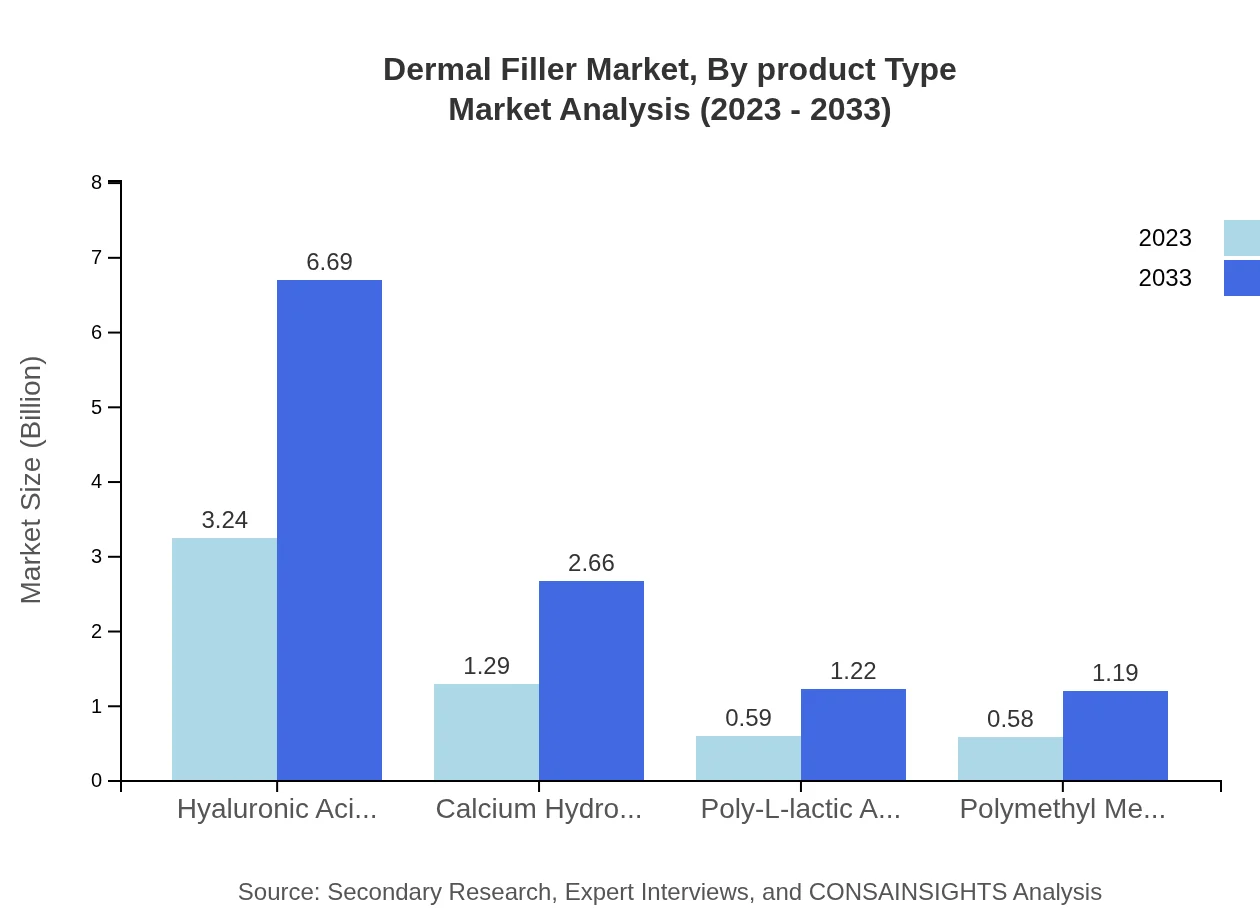
The Dermal Filler market is significantly influenced by product type segmentations like Hyaluronic Acid, Calcium Hydroxylapatite, Poly-L-lactic Acid, and Polymethyl Methacrylate fillers. Hyaluronic Acid fillers dominate with a market size of $3.24 billion in 2023 and projected to reach $6.69 billion by 2033, accounting for 56.87% market share throughout this period. The Calcium-based fillers have a steady growth pattern, growing from $1.29 billion to $2.66 billion in the same time frame.
Dermal Filler Market Analysis By Application
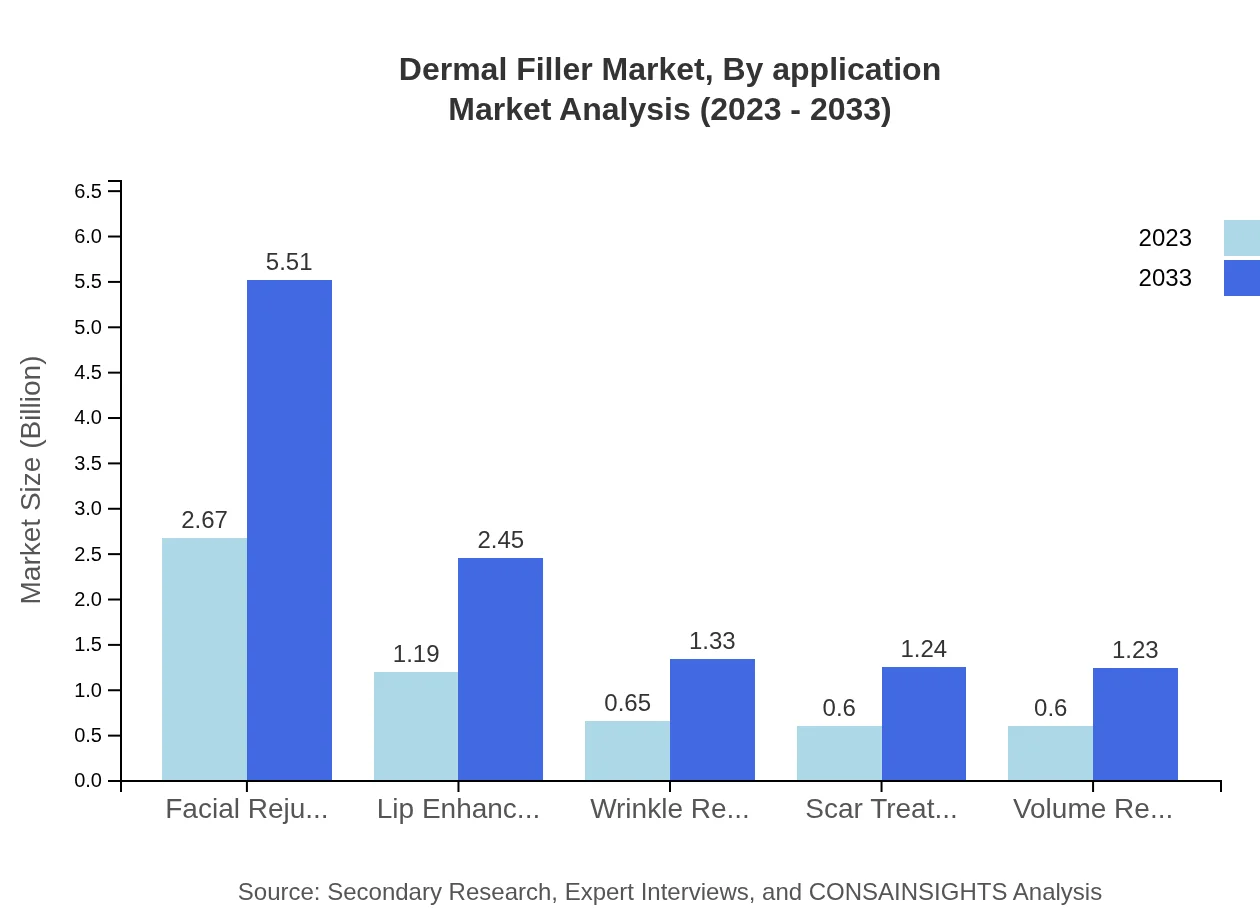
The Application segment portrays varied performance metrics with Facial Rejuvenation leading at $2.67 billion in 2023 and anticipated to grow to $5.51 billion by 2033. Lip Enhancement follows with a market size of $1.19 billion in 2023, scaling up to $2.45 billion within the decade, maintaining 20.79% market share consistently. Notably, wrinkle reduction and scar treatments contribute significantly to this industry segment, collectively forming a vital component of the Dermal Fillers market.
Dermal Filler Market Analysis By End User
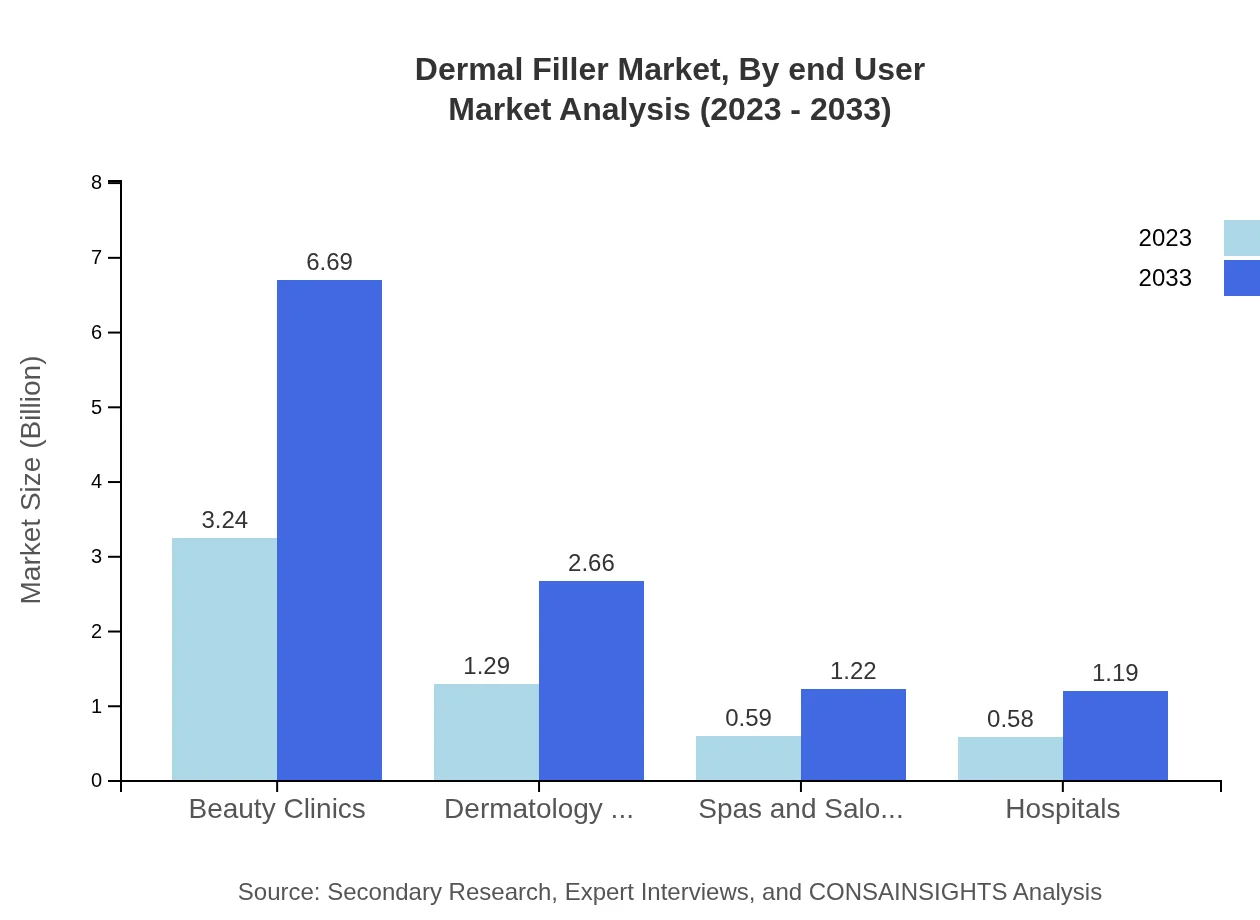
The Dermal Filler market is segmented into beauty clinics, dermatology centers, spas, salons, and hospitals. Beauty clinics exhibit the highest market value at $3.24 billion in 2023, projected to grow to $6.69 billion by 2033, holding a dominating market share of 56.87%. Dermatology centers and hospitals also represent significant sectors within the market, indicating the breadth of applications for dermal fillers in professional healthcare settings.
Dermal Filler Market Analysis By Distribution Channel
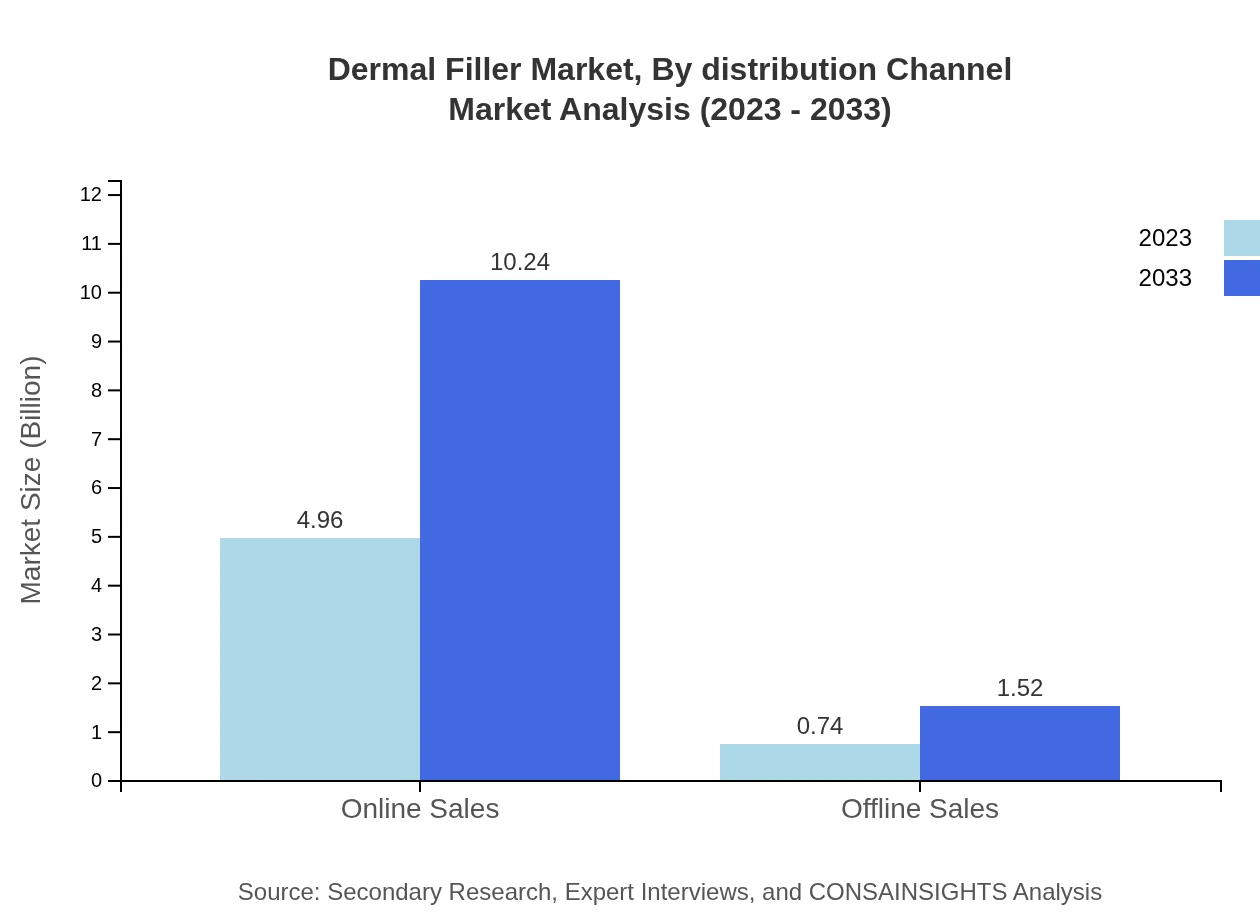
The distribution of Dermal Fillers is primarily achieved through online and offline channels. Online sales dominate significantly, with a market size of $4.96 billion in 2023, expected to leap to $10.24 billion by 2033, comprising over 87.06% market share. This is primarily due to the convenience of purchasing products and a broader range. Offline sales stay relevant, increasing from $0.74 billion to $1.52 billion, reflecting a balanced approach to product distribution.
Dermal Filler Market Trends and Future Forecast
Tell us your focus area and get a customized research report.
Global Market Leaders and Top Companies in Dermal Filler Industry
Allergan (AbbVie):
A leading player in the market, Allergan is known for its product Juvederm, which revolutionized the dermal filler sector. The firm focuses heavily on R&D to enhance filler formulations.Merz Pharmaceuticals:
Merz offers a diverse range of aesthetic products, including the Belotero line of fillers. Their commitment to innovation helps them maintain a competitive edge.Revance Therapeutics:
Known for their DaxibotulinumtoxinA formulation, Revance is expanding into the dermal filler space with its innovative products aimed at achieving longer-lasting results.Galderma:
Galderma’s Restylane product line is a staple in aesthetic procedures. The company invests in new technologies to enhance their product offerings.Sientra, Inc.:
Sientra emphasizes on a dual approach with surgical and non-surgical products, providing a comprehensive solution to the cosmetic industry.We're grateful to work with incredible clients.




FAQs
What is the current market size of the dermal filler market?
The market size was $5.70 Billion in 2023 according to the report, providing a baseline for analysis of growth drivers and regional performance.
How big will the dermal filler market be in 2033?
The market is projected to reach $11.77 Billion by 2033, reflecting the cumulative impact of demand for minimally invasive aesthetic procedures and innovation.
What is CAGR of the dermal filler market?
The forecasted compound annual growth rate for the market is 7.3% for the period 2023 to 2033, indicating steady expansion across product types and regions.
Is there a single fastest Growing region in the Dermal Filler Market Report market?
No single fastest-growing region is stated for the Dermal Filler Market Report market because the top regional implied CAGR values are within 0.15 percentage points of each other, making the ranking too close to call reliably.
Which companies lead the dermal filler industry?
Key companies cited in the report include Allergan (AbbVie), Merz Pharmaceuticals, Revance Therapeutics, Galderma, and Sientra, Inc., driving product development and market reach.
What are the main product types in the market?
Primary product categories include hyaluronic acid fillers, calcium hydroxylapatite fillers, poly-L-lactic acid fillers, and polymethyl methacrylate fillers used across aesthetic applications.
How big is the North America regional market?
North America is reported at $1.85 Billion in 2023 and is projected to reach $3.83 Billion in 2033, reflecting sustained adoption of non-surgical aesthetic procedures.
What factors drive adoption among end users?
Adoption is driven by clinic and dermatologist availability, consumer interest in non-surgical enhancements, improved formulations, and multiple distribution channels.
Who are the primary end users of dermal fillers?
End users include beauty clinics, dermatology centers, spas and salons, and hospitals, each serving different patient segments and treatment preferences.
What regional trends affect market growth?
Regional growth is influenced by local clinical infrastructure, regulatory environments, consumer acceptance of aesthetic procedures, and availability of trained practitioners.