

Doxorubicin Market Report
First published: 12 October 2024 | Last updated: 28 May 2026 | Report Code: doxorubicin
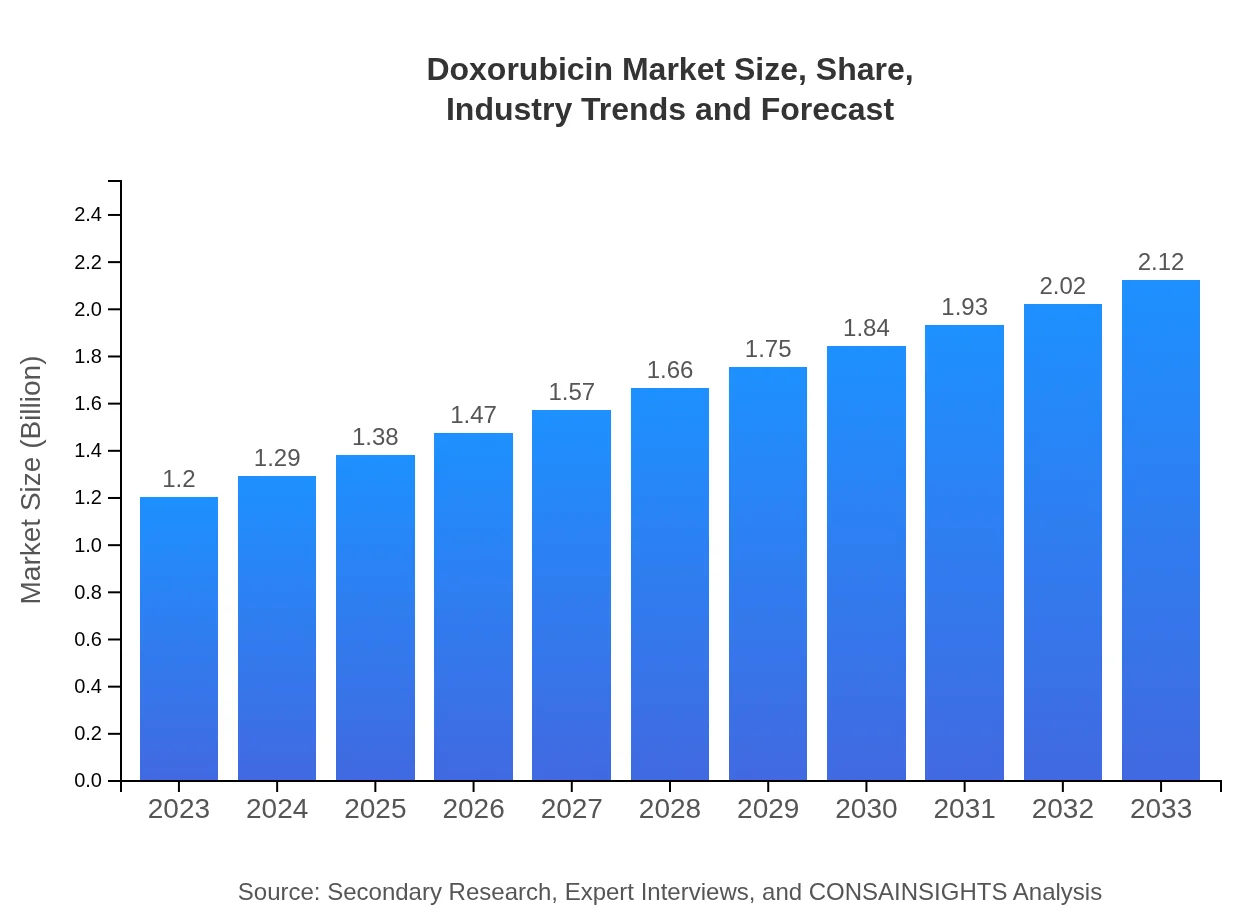
Doxorubicin Market — USD 1.2 billion in 2023, Growing to USD 2.12B by 2033 at 5.7% CAGR
This report provides comprehensive insights into the Doxorubicin market, focusing on its size, growth forecasts, and key trends from 2023 to 2033. It covers industry analysis, segmentation, regional dynamics, and the role of major market players.
Key Takeaways
- Global market expands from $1.20 Billion in 2023 to $2.12 Billion by 2033 at a 5.7% CAGR.
- North America is largest regional market; Middle East and Africa is regional market region based on implied CAGR across 2023 to 2033.
- Middle East and Africa is identified as the regional market region, increasing from $0.13 Billion to $0.24 Billion.
- Liposomal and conventional formulations, plus hospital and oncology center end-users, shape product and channel demand.
- Top companies include Bristol-Myers Squibb, Teva Pharmaceuticals, Accord Healthcare, and Mylan.
Doxorubicin Market Report — Executive Summary
Regional analysis shows North America as largest market and Middle East and Africa as fastest-growing region by implied CAGR. The Doxorubicin Market Report outlines steady expansion between 2023 and 2033, propelled by formulation innovation and expanding oncology care access. Market value increases from $1.20 Billion to $2.12 Billion at a 5.7% CAGR. Clinical preference for improved delivery systems, such as liposomal formulations, and sustained use across indications like breast cancer, lymphoma, and sarcoma support uptake. Regional dynamics vary: North America holds the largest market share with notable absolute growth, while Middle East and Africa registers the most rapid advance. Hospitals, oncology centers, and research institutes remain primary end-users, and distribution continues through hospital, retail, and online pharmacies. Competitive activity features established pharmaceutical players including Bristol-Myers Squibb, Teva Pharmaceuticals, Accord Healthcare, and Mylan. The report synthesizes primary expert interviews, company disclosures, and triangulated data to present actionable insights for manufacturers, payers, and clinical stakeholders.
Key Growth Drivers
- Improved formulations, notably liposomal doxorubicin, enhancing clinical tolerability and efficacy.
- Rising demand from oncology centers and hospitals treating breast cancer, lymphoma, and sarcoma.
- Greater healthcare spending and expanded access to cancer therapies across multiple regions.
- Ongoing research and collaborations between pharmaceutical companies and research institutes.
| Metric | Value |
|---|---|
| Study Period | 2023 - 2033 |
| 2023 Market Size | $1.20 Billion |
| CAGR (2023-2033) | 5.7% |
| 2033 Market Size | $2.12 Billion |
| Top Companies | Bristol-Myers Squibb, Teva Pharmaceuticals, Accord Healthcare, Mylan |
| Published Date | 12 October 2024 |
| Last Modified Date | 28 May 2026 |
Doxorubicin Market Overview
Customize Doxorubicin Market Report market research report
- ✔ Get in-depth analysis of Doxorubicin market size, growth, and forecasts.
- ✔ Understand Doxorubicin's regional dynamics and industry-specific trends.
- ✔ Identify potential applications, end-user demand, and growth segments in Doxorubicin
What is the Market Size & CAGR of Doxorubicin Market Report market in 2023?
Doxorubicin Industry Analysis
Doxorubicin Market Segmentation and Scope
Tell us your focus area and get a customized research report.
Doxorubicin Market Report Market Analysis Report by Region
Europe Doxorubicin Market Report:
Europe grows from $0.4 Billion in 2023 to $0.7 Billion in 2033. Regional expansion is linked to increased oncology treatment capacity and uptake of improved delivery systems in clinical practice.Asia Pacific Doxorubicin Market Report:
Asia Pacific grows from $0.21 Billion in 2023 to $0.38 Billion in 2033. Growth drivers include expanding healthcare access, rising cancer treatment volumes, and adoption of both conventional and liposomal formulations.North America Doxorubicin Market Report:
North America is largest regional market, rising from $0.42 Billion in 2023 to $0.75 Billion in 2033. This region's scale reflects established oncology infrastructure and high adoption rates of advanced formulations that support continued demand.South America Doxorubicin Market Report:
Latin America grows from $0.03 Billion in 2023 to $0.05 Billion in 2033. Market activity is influenced by growing oncology services and gradual improvements in therapy availability across clinical settings.Middle East & Africa Doxorubicin Market Report:
Middle East and Africa is fastest-growing region by implied CAGR, increasing from $0.13 Billion in 2023 to $0.24 Billion in 2033. 13 Billion in 2023 to $0.24 Billion in 2033 and is identified as the regional growth market, with uptake supported by expanding healthcare investment and broader access to cancer therapeutics.Tell us your focus area and get a customized research report.
Research Methodology
Doxorubicin Market Analysis By Formulation
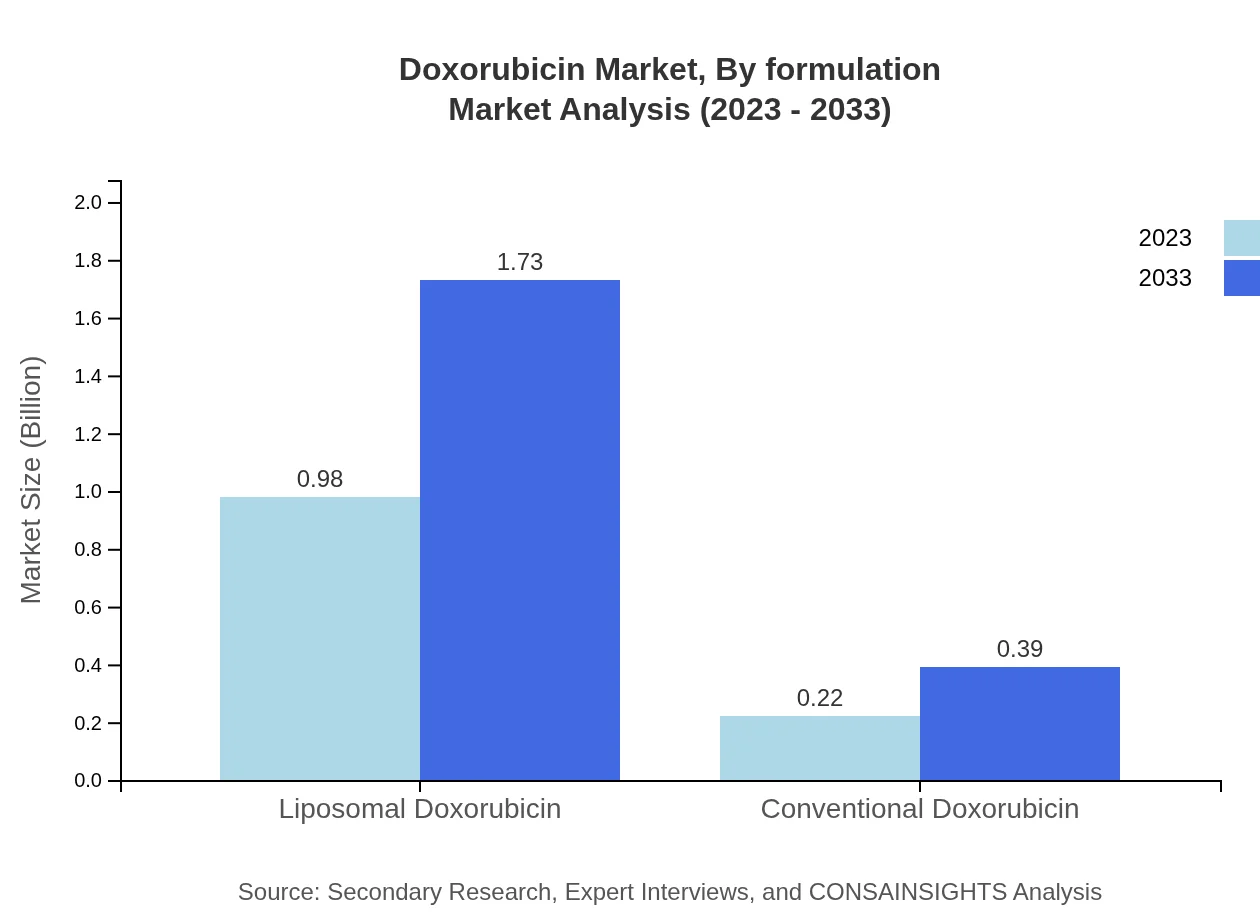
The Doxorubicin market by formulation is dominated by liposomal Doxorubicin, holding a substantial market share of 81.8% in 2023 and expected to maintain this share by 2033, with market values moving from $0.98 billion to $1.73 billion. In contrast, conventional Doxorubicin accounts for 18.2% of the market, with anticipated growth from $0.22 billion to $0.39 billion in the same period.
Doxorubicin Market Analysis By Therapy Type
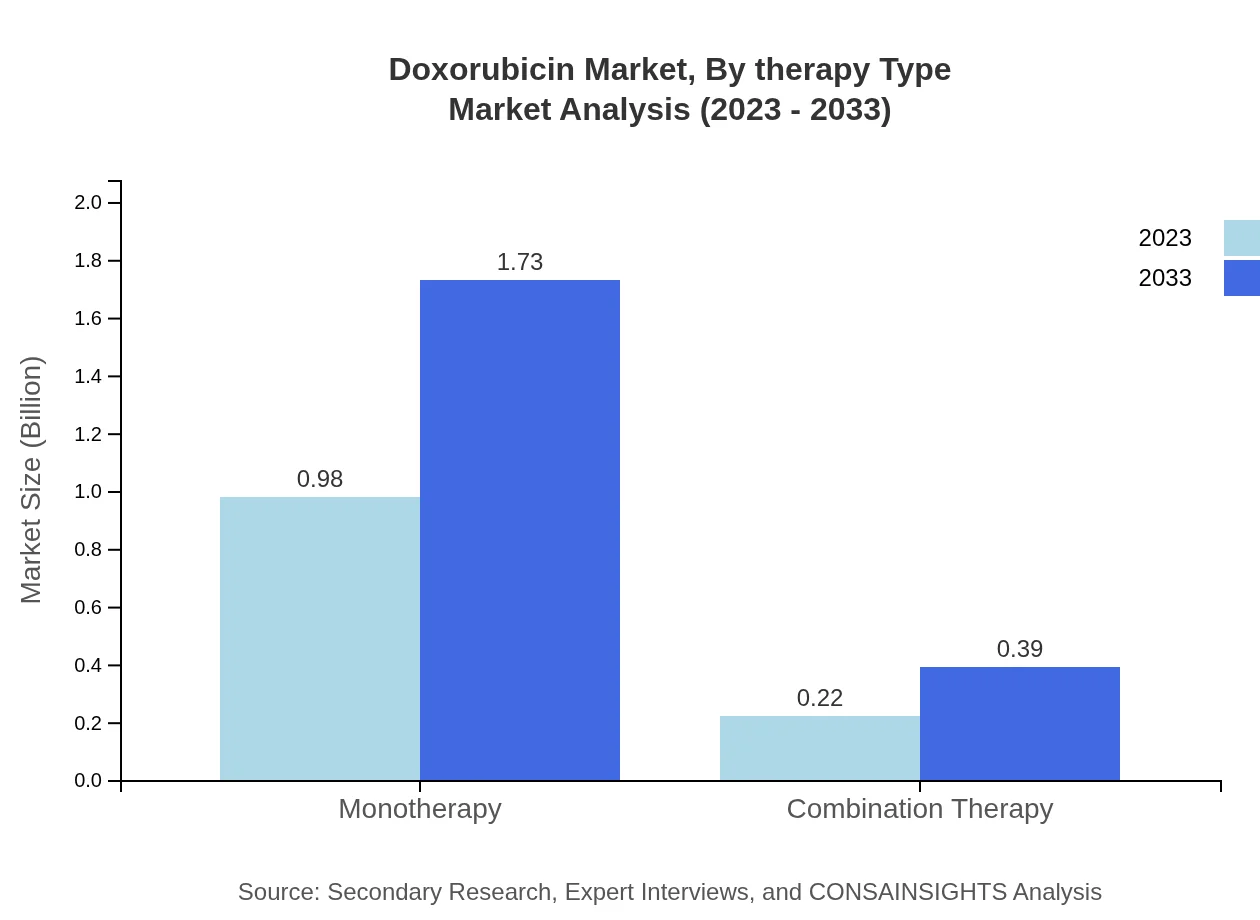
Therapeutically, monotherapy comprises the major share at 81.8% in 2023, translating to about $0.98 billion, which will likely grow to $1.73 billion by 2033. Combination therapy, on the other hand, while smaller at 18.2%, is expected to experience growth from $0.22 billion to $0.39 billion over the forecast period.
Doxorubicin Market Analysis By Indication
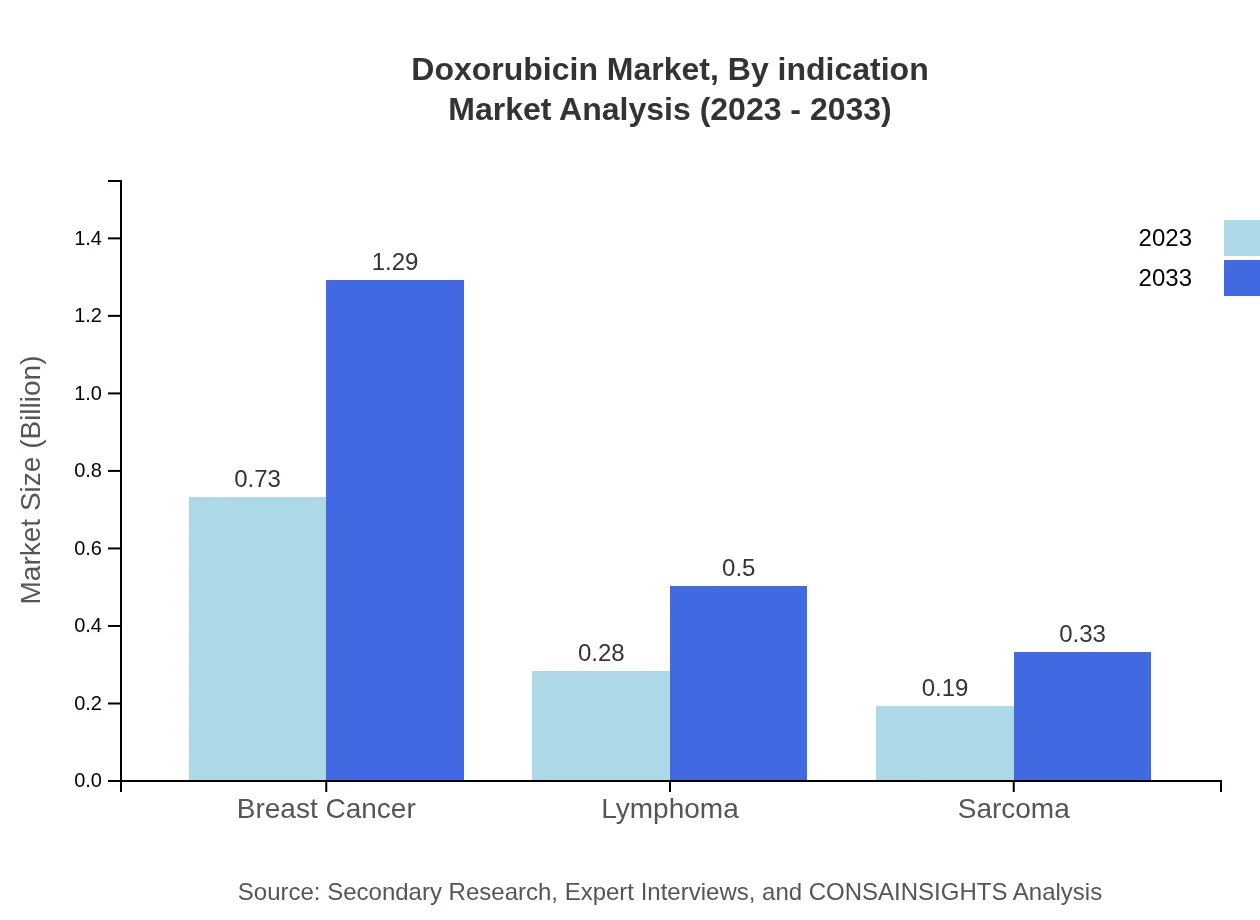
Breast cancer treatments constitute a significant portion of the Doxorubicin market at 60.72%, with revenues rising from $0.73 billion to $1.29 billion. Other indications like lymphoma and sarcoma account for shares of 23.52% and 15.76%, respectively, with growth expected to increase corresponding market values.
Doxorubicin Market Analysis By Distribution Channel
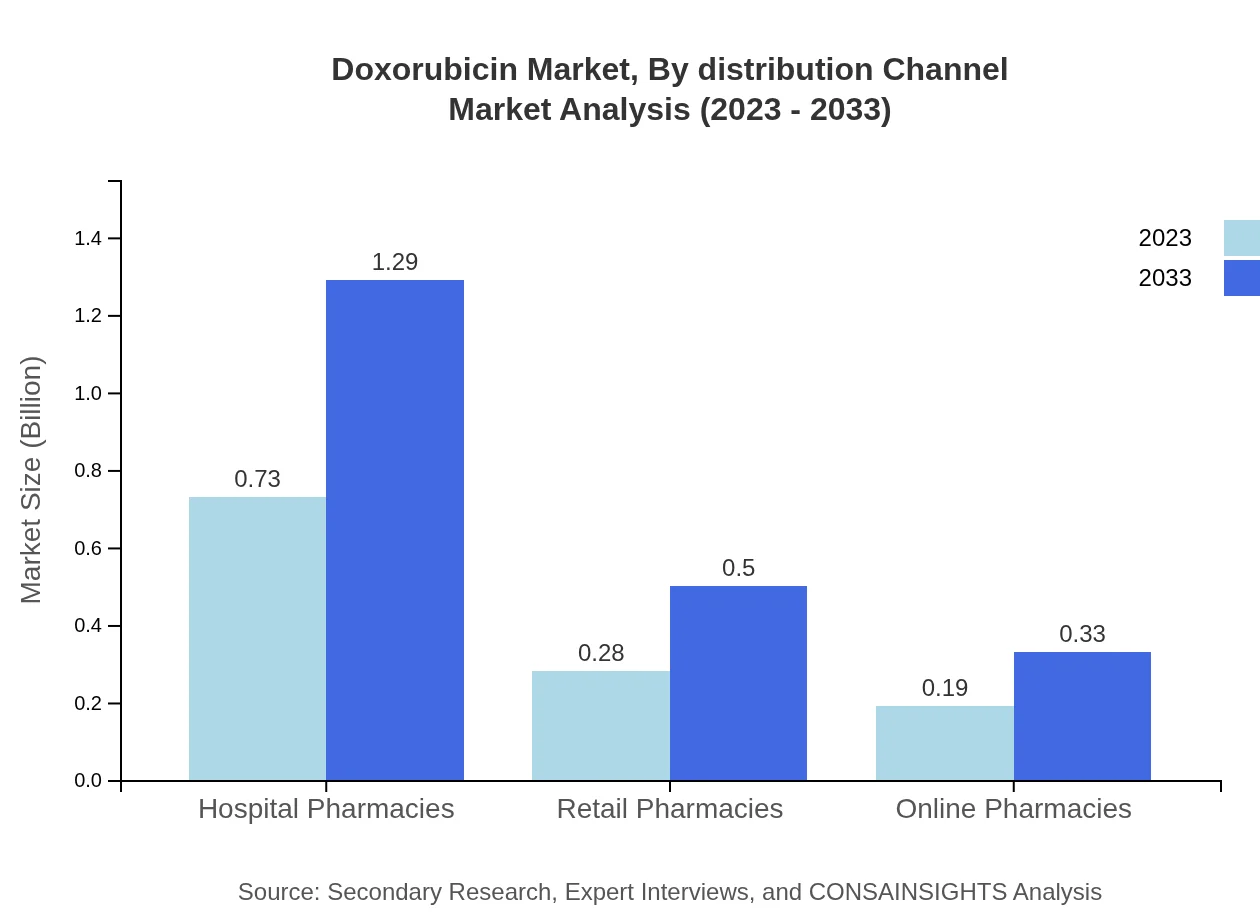
The primary distribution channel for Doxorubicin is hospital pharmacies, holding a market share of 60.72% in 2023 and anticipated to grow from $0.73 billion to $1.29 billion. Retail pharmacies, accounting for 23.52%, will see an increase from $0.28 billion to $0.50 billion. Online pharmacies, despite being a smaller channel (15.76%), are predicted to increase from $0.19 billion to $0.33 billion, reflecting changes in consumer purchasing behaviors.
Doxorubicin Market Analysis By End User
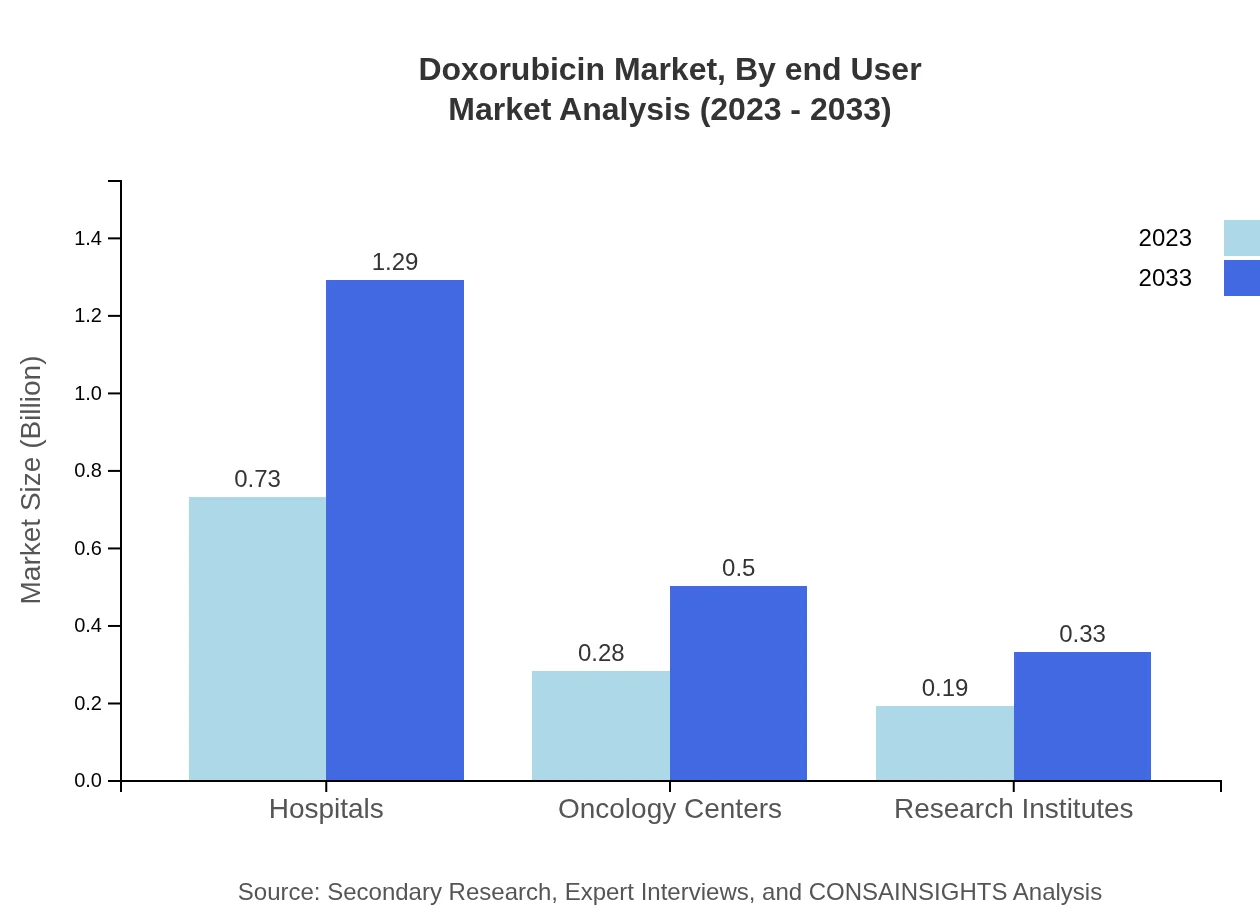
Hospitals are the largest consumers of Doxorubicin, expected to grow correspondingly from $0.73 billion in 2023 to $1.29 billion by 2033. Oncology centers and research institutes also show significant demand, contributing 23.52% and 15.76% shares, marking their significance in utilizing Doxorubicin for treatment.
Doxorubicin Market Trends and Future Forecast
Tell us your focus area and get a customized research report.
Global Market Leaders and Top Companies in Doxorubicin Industry
Bristol-Myers Squibb:
A global pharmaceutical company, Bristol-Myers Squibb develops innovative medicines, including Doxorubicin, significantly impacting cancer care worldwide.Teva Pharmaceuticals:
As a leading generics manufacturer, Teva Pharmaceuticals provides affordable Doxorubicin and contributes to increasing access to cancer treatment across various regions.Accord Healthcare:
Accord Healthcare focuses on providing high-quality generic pharmaceutical products, including Doxorubicin, to enhance cancer treatment accessibility and effectiveness.Mylan:
Mylan is noted for its extensive portfolio of generic medicines, including a variety of formulations of Doxorubicin, catering to diverse patient needs.We're grateful to work with incredible clients.







FAQs
What is the market size of the Doxorubicin market in 2023?
The market size in 2023 is $1.20 Billion, serving as the reported baseline for the forecast covering 2023 to 2033 with further growth expected.
How big is the market expected to be in 2033?
By 2033 the market is projected to reach $2.12 Billion according to the forecast period spanning 2023 to 2033, reflecting sectorwide expansion in oncology therapeutics.
What is CAGR for the Doxorubicin market?
The compound annual growth rate for the forecast period 2023 to 2033 is 5.7%, as reported for the market expansion from 2023 to 2033.
Which region is the fastest Growing in the Doxorubicin Market Report market?
Middle East and Africa is the fastest-growing region, projected to expand from $0.13 Billion in 2023 to $0.24 Billion in 2033, reflecting an implied 6.32% CAGR over the forecast period.
Which region is the fastest Growing for Doxorubicin?
The Middle East and Africa is identified as the regional market region, rising from $0.13 Billion in 2023 to $0.24 Billion in 2033 with an implied 6.32% CAGR.
Who are the leading companies in the Doxorubicin market?
Top companies named in the report are Bristol-Myers Squibb, Teva Pharmaceuticals, Accord Healthcare, and Mylan, reflecting active participation by established pharmaceutical firms.
What end Users drive demand for Doxorubicin?
Primary end-users include hospitals, oncology centers, and research institutes, which demand both conventional and liposomal formulations for various cancer indications.
How are formulations segmented in the market?
Formulation segmentation highlights Liposomal Doxorubicin and Conventional Doxorubicin as distinct categories, each influencing clinical adoption and product positioning.
What distribution channels are prominent for Doxorubicin?
Distribution channels include hospital pharmacies, retail pharmacies, and online pharmacies, which collectively support access across inpatient and outpatient settings.
Why are research institutes important to this market?
Research institutes contribute to clinical studies and formulation development, supporting advances in delivery systems and evidence generation for treatment protocols.