
Reports >
Life Sciences
>
Drug Delivery Devices Market Report

Drug Delivery Devices Market Report
First published: 20 October 2024 | Last updated: 25 May 2026 | Report Code: drug-delivery-devices
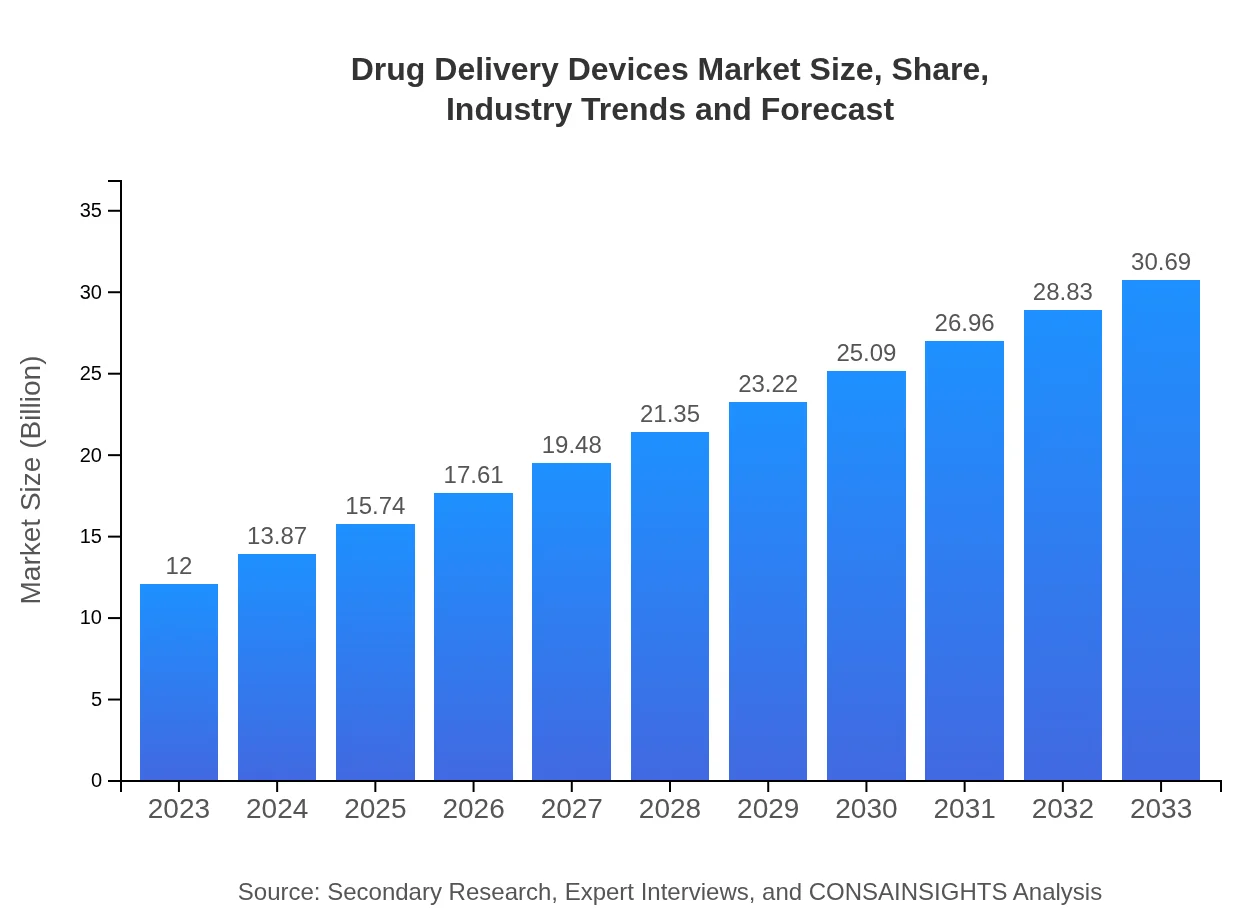
Drug Delivery Devices Market — USD $12 Billion in 2023, Growing to USD 30.69null by 2033 at 9.5% CAGR
This report explores the Drug Delivery Devices market, providing insights into market trends, regional analyses, and future forecasts from 2023 to 2033. It includes comprehensive industry analyses, segmentation details, and profiles of key market players.
Key Takeaways
- $12.00 Billion market size in 2023 expanding to $30.69 Billion by 2033 at a 9.5% CAGR.
- North America is largest regional market, while no single fastest-growing region is stated because regional CAGR differences remain within 0.15 percentage points.
- North America is the largest region, increasing from $4.31 Billion in 2023 to $11.03 Billion in 2033.
- Europe moves from $3.06 Billion in 2023 to $7.82 Billion by 2033; Asia Pacific grows from $2.57 Billion to $6.56 Billion.
- Regional markets such as Latin America and Middle East & Africa register growth from $0.72 Billion to $1.84 Billion and $1.35 Billion to $3.45 Billion respectively.
- Market developments are driven by chronic disease management, home-care adoption, and advances in smart and needle-free delivery technologies.
- Key players include Medtronic, Becton Dickinson and Company, Johnson & Johnson, AbbVie, and Fresenius Kabi.
Drug Delivery Devices Market Report — Executive Summary
North America remains largest market by forecast-period value, while no single fastest-growing region is stated because top regional growth rates are separated by less than 0.15 percentage points. The Drug Delivery Devices market is forecast to expand from $12.00 Billion in 2023 to $30.69 Billion by 2033, reflecting a 9.5% CAGR over the 2023 to 2033 period. Growth is supported by rising demand for chronic disease management, technological advances such as smart delivery and needle-free options, and increasing use of home-based therapies. North America is the largest regional market, reaching $11.03 Billion in 2033. The market structure includes device types like injectables, inhalers and transdermal patches; technology categories such as needle-free, smart, and conventional systems; and end users ranging from hospitals and clinics to home care. Competitive dynamics feature established medtech and pharmaceutical firms including Medtronic, Becton Dickinson and Company, Johnson & Johnson, AbbVie, and Fresenius Kabi. Regulatory pathways and device approvals remain important considerations for market entry and product adoption. Research combines expert engagement and multi-source validation to support the outlook and identify opportunities for innovation and investment.
Key Growth Drivers
- Increase in chronic disease prevalence driving demand for more convenient and effective delivery methods.
- Growing adoption of home-based care models that favor user-friendly and remotely monitored devices.
- Technological progress in smart delivery systems and needle-free technologies improving adherence and outcomes.
- Regulatory improvements and clearer pathways facilitating approvals and commercialization of new device innovations.
- Rising focus on patient-centered care that encourages development of minimally invasive and self-administration devices.
| Metric | Value |
|---|---|
| Study Period | 2023 - 2033 |
| 2023 Market Size | $12.00 Billion |
| CAGR (2023-2033) | 9.5% |
| 2033 Market Size | $30.69 Billion |
| Top Companies | Medtronic , Becton Dickinson and Company, Johnson & Johnson, AbbVie, Fresenius Kabi |
| Published Date | 20 October 2024 |
| Last Modified Date | 25 May 2026 |
Drug Delivery Devices Market Overview
Customize Drug Delivery Devices Market Report market research report
- ✔ Get in-depth analysis of Drug Delivery Devices market size, growth, and forecasts.
- ✔ Understand Drug Delivery Devices's regional dynamics and industry-specific trends.
- ✔ Identify potential applications, end-user demand, and growth segments in Drug Delivery Devices
What is the Market Size & CAGR of Drug Delivery Devices Market Report market in 2023?
Drug Delivery Devices Industry Analysis
Drug Delivery Devices Market Segmentation and Scope
Tell us your focus area and get a customized research report.
Drug Delivery Devices Market Report Market Analysis Report by Region
Europe Drug Delivery Devices Market Report:
Europe grows from $3.06 Billion in 2023 to $7.82 Billion in 2033. Regional momentum is supported by investments in chronic disease care, regulatory frameworks that facilitate device approvals, and increasing use of home-based therapeutic solutions.Asia Pacific Drug Delivery Devices Market Report:
Asia Pacific grows from $2.57 Billion in 2023 to $6.56 Billion in 2033. Market advancement is driven by rising chronic disease incidence, expanding healthcare access, and greater adoption of innovative delivery technologies in clinical and home settings.North America Drug Delivery Devices Market Report:
North America is largest regional market, rising from $4.31 Billion in 2023 to $11.03 Billion in 2033. Growth in the region reflects demand for advanced delivery devices, strong healthcare infrastructure, and uptake of smart and needle-free technologies.South America Drug Delivery Devices Market Report:
Latin America grows from $0.72 Billion in 2023 to $1.84 Billion in 2033. Growth reflects expanding healthcare services, rising demand for chronic care solutions, and gradual uptake of user-friendly drug delivery devices.Middle East & Africa Drug Delivery Devices Market Report:
Middle East and Africa grows from $1.35 Billion in 2023 to $3.45 Billion in 2033. Expansion is supported by improving healthcare infrastructure, greater focus on chronic disease management, and growing interest in minimally invasive and self-administered devices.Tell us your focus area and get a customized research report.
Research Methodology
Drug Delivery Devices Market Analysis By Device Type
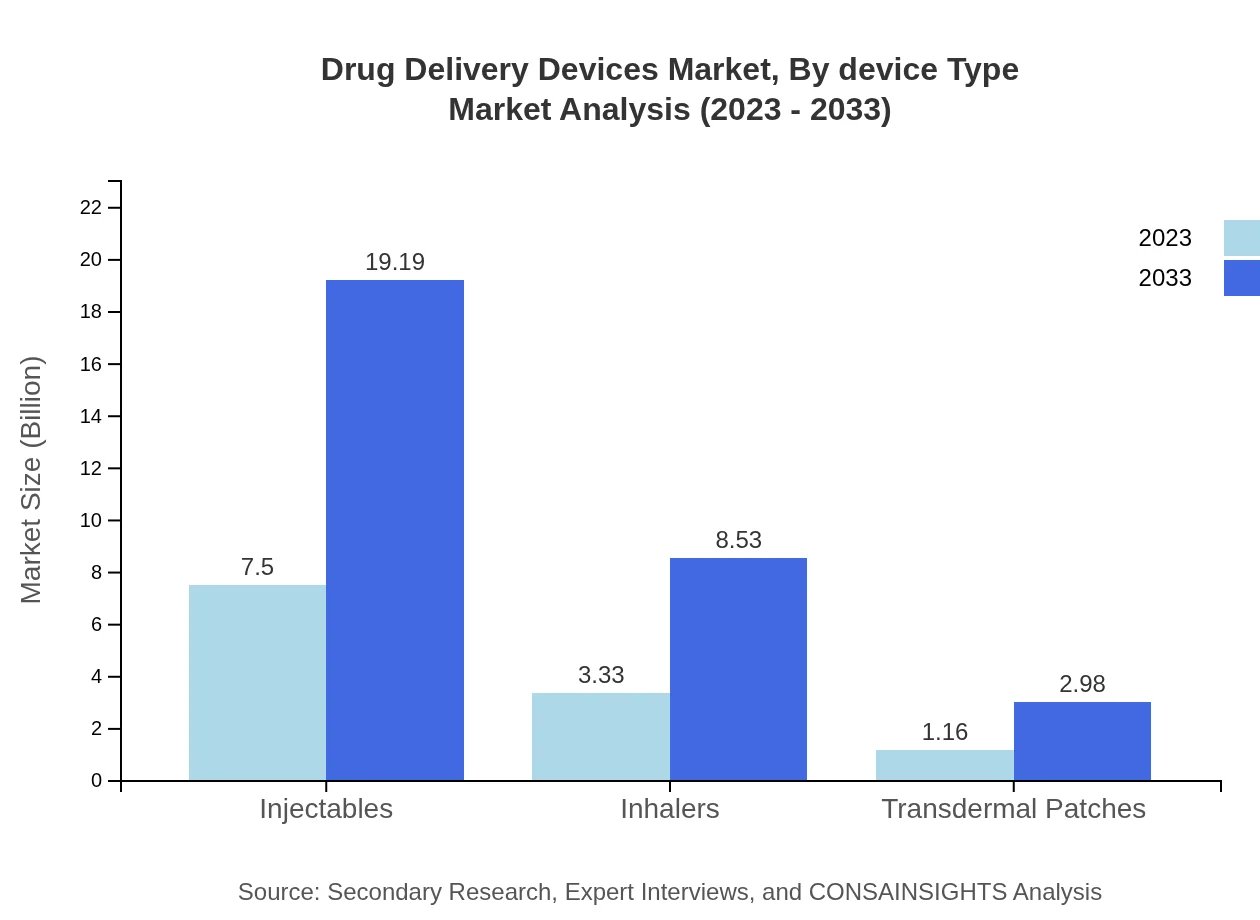
Drug delivery devices are classified into various categories like injectables, inhalers, transdermal patches, and needle-free technologies. The injectables segment alone has a share of 62.52% in 2023, expected to grow to USD 19.19 billion by 2033. Needle-free technologies are also rapidly gaining traction. The development of smart delivery technologies that enhance patient adherence and treatment outcomes is shaping this segment's future.
Drug Delivery Devices Market Analysis By Therapeutic Area
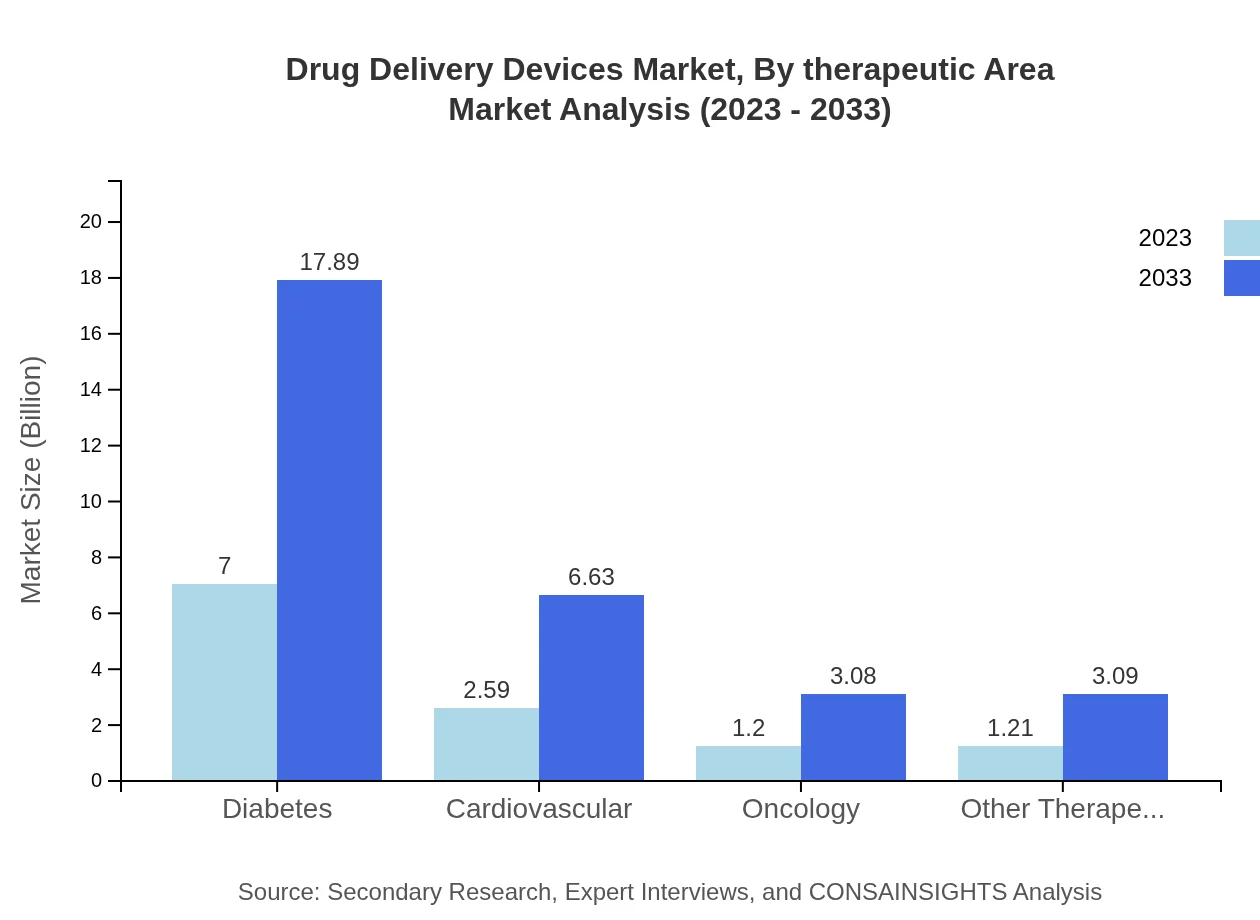
The therapeutic areas within the drug delivery devices market include segments like diabetes, cardiovascular, oncology, and other therapeutic areas. Diabetes treatments dominate with a market share of 58.3% in 2023 and will reach USD 17.89 billion by 2033. This is followed by cardiovascular treatments which hold a 21.59% share, reflecting the significant focus on chronic disease management.
Drug Delivery Devices Market Analysis By Technology
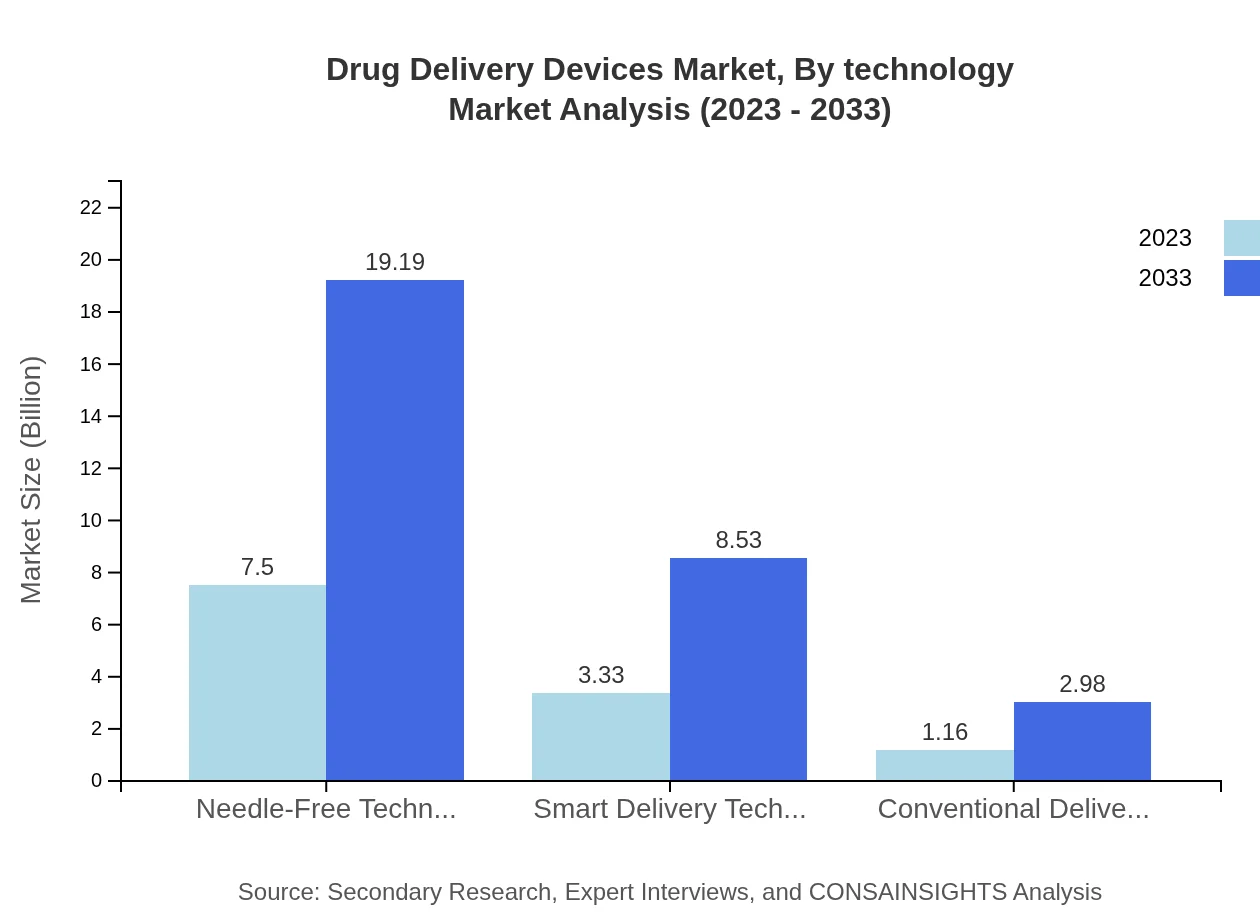
Innovations in technology play a crucial role in advancing drug delivery systems. Technologies such as smart delivery systems, needle-free methods, and advanced injectables enhance patient comfort and compliance. The smart delivery technology market is expected to grow significantly due to its efficacy in managing chronic conditions.
Drug Delivery Devices Market Analysis By End User
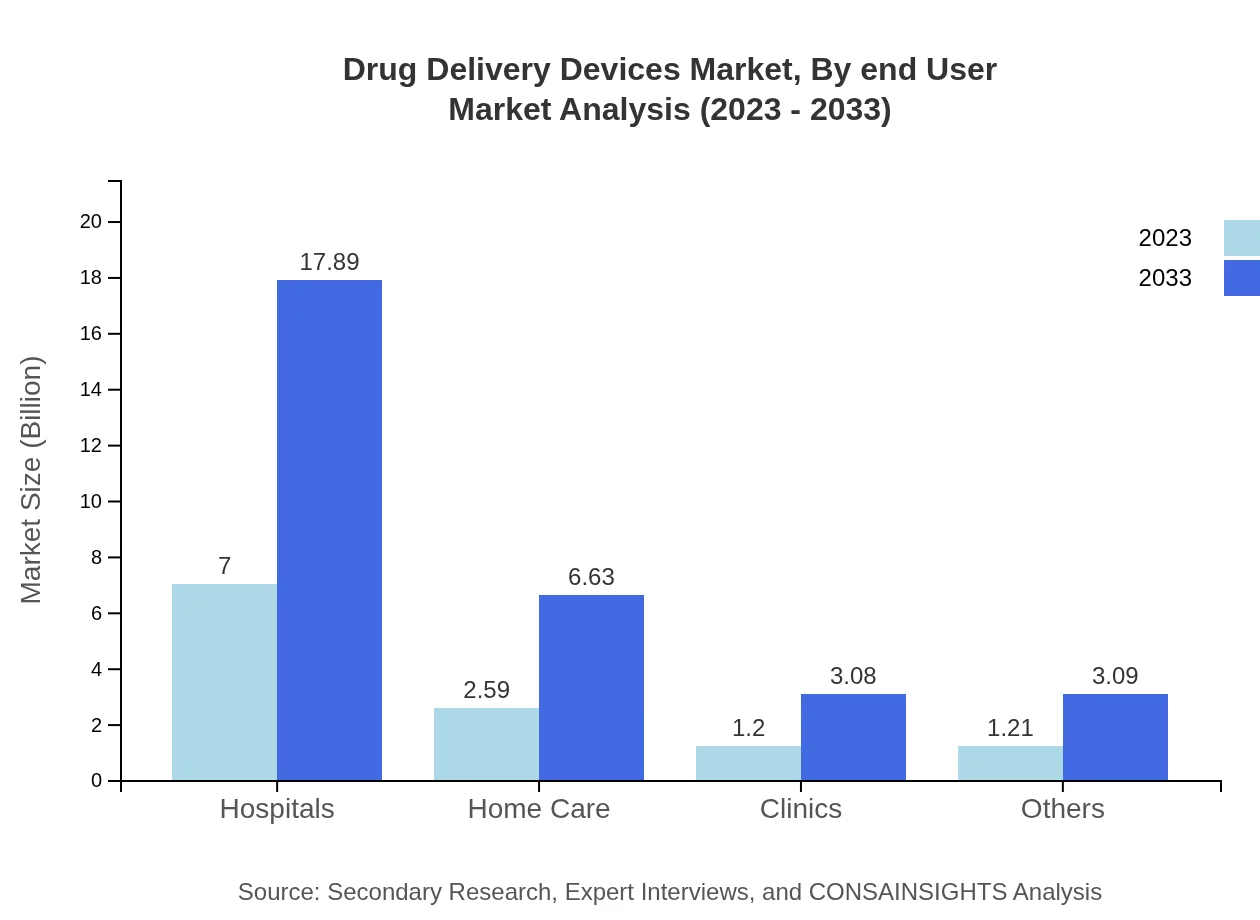
End-users of drug delivery devices include hospitals, home care settings, clinics, and others. Hospitals account for the largest share (58.3% in 2023), reflecting their pivotal role in patient treatment. The home care segment is also expanding, driven by a push for at-home health management and chronic disease management.
Drug Delivery Devices Market Analysis By Regulatory Status
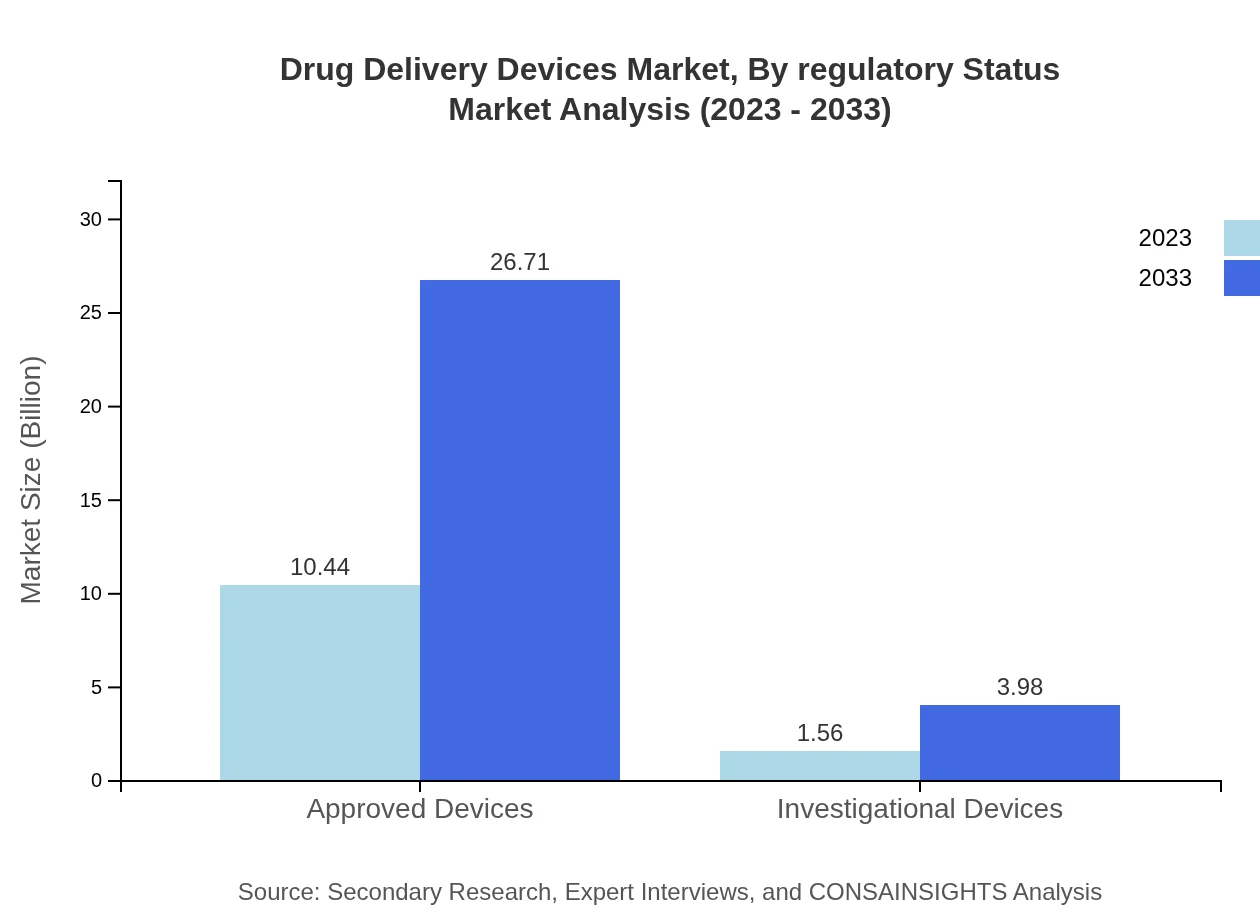
The market is segmented into approved and investigational devices. Approved devices represent the majority, with a share of 87.03% in 2023. The focus on streamlining regulations is helping to expedite the approval of innovative devices, which is crucial for market growth.
Drug Delivery Devices Market Trends and Future Forecast
Tell us your focus area and get a customized research report.
Global Market Leaders and Top Companies in Drug Delivery Devices Industry
Medtronic :
Medtronic is a leading global healthcare solutions company specializing in innovative drug delivery devices and therapies to help healthcare professionals monitor their conditions.Becton Dickinson and Company:
Becton Dickinson manufactures and sells medical devices, instrument systems, and reagents, focusing heavily on advanced injectable systems for drug delivery.Johnson & Johnson:
Johnson & Johnson is a global leader in consumer health products and pharmaceuticals, with a strong portfolio in innovative drug delivery technologies.AbbVie:
AbbVie specializes in advanced pharmaceuticals and biopharmaceutical products, including drug delivery devices that address complex health needs.Fresenius Kabi:
Fresenius Kabi is a global healthcare company that specializes in lifesaving medicines and technologies, including various drug delivery devices and infusion solutions.We're grateful to work with incredible clients.








FAQs
What is the market size of the Drug Delivery Devices market in 2023?
The market size in 2023 is $12.00 Billion, as reported for the Drug Delivery Devices market for the base year.
What is the projected market size for 2033?
The market is projected to reach $30.69 Billion by 2033 according to the provided forecasts.
What is CAGR for the forecast period?
The Compound Annual Growth Rate (CAGR) for the 2023 to 2033 forecast period is 9.5%.
Is there a single fastest Growing region in the Drug Delivery Devices Market Report market?
No single fastest-growing region is stated for the Drug Delivery Devices Market Report market because the top regional implied CAGR values are within 0.15 percentage points of each other, making the ranking too close to call reliably.
How big is the Europe market in this report?
Europe is reported at $3.06 Billion in 2023 and is expected to reach $7.82 Billion by 2033.
Why is the market expected to grow through 2033?
Growth drivers include rising chronic disease management needs, technological innovation in delivery systems, and increased use of home-care models and smart devices.
Who are the top companies active in this market?
Top companies listed include Medtronic, Becton Dickinson and Company, Johnson & Johnson, AbbVie, and Fresenius Kabi.
Which device types are covered in the segmentation?
Device-type segmentation includes Injectables, Inhalers, and Transdermal Patches as specified in the report.
What end User segments are included?
End-user categories in the report are Hospitals, Home Care, Clinics, and Others.
How is regulatory status treated in the report?
Regulatory-status segmentation distinguishes Approved Devices and Investigational Devices, reflecting market differentiation by approval stage.