

Drug Delivery Technologies Market Report
First published: 23 October 2024 | Last updated: 25 May 2026 | Report Code: drug-delivery-technologies
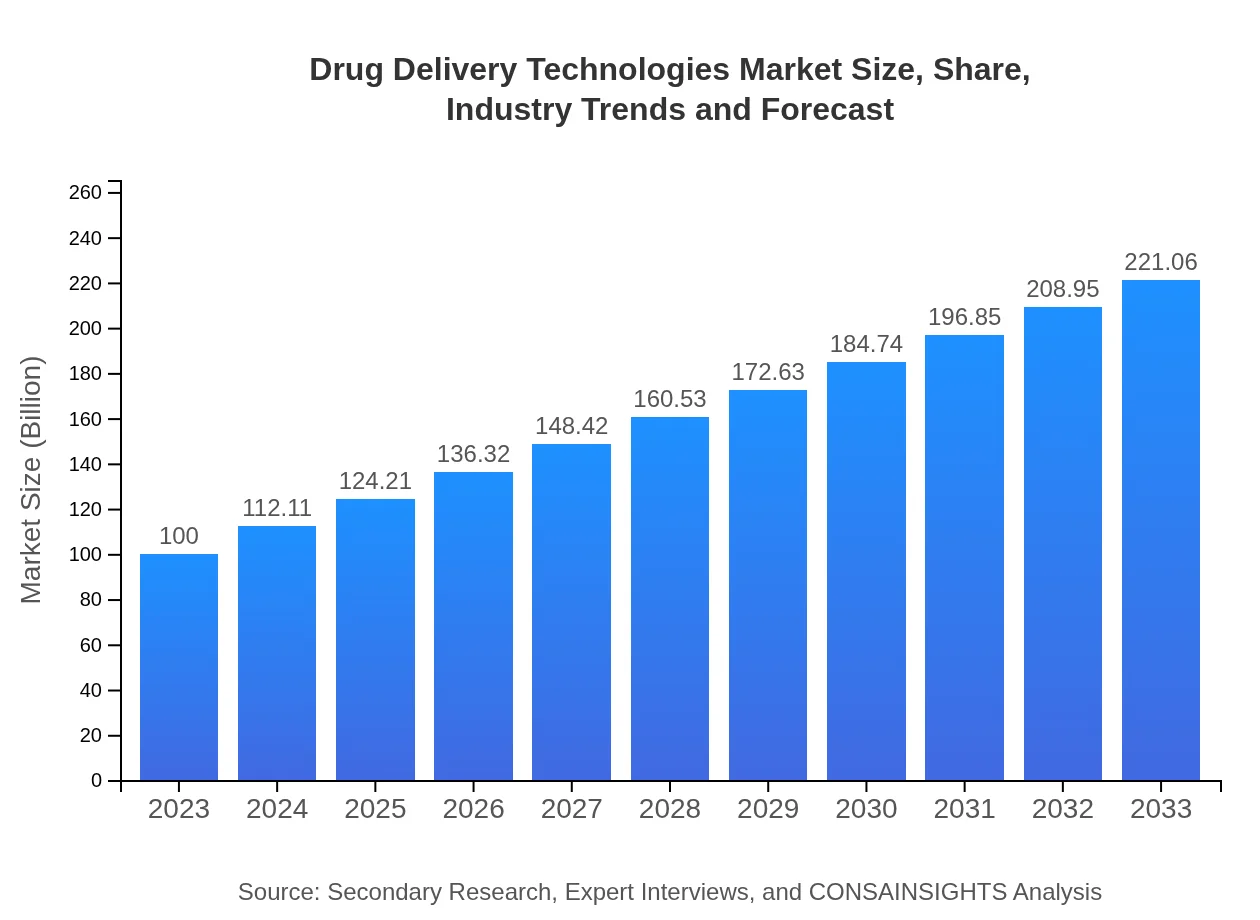
Drug Delivery Technologies Market — USD 100 billion in 2023, Growing to USD 221.06B by 2033 at 8% CAGR
This report provides an in-depth analysis of the Drug Delivery Technologies market, covering current trends, market size forecasts from 2023 to 2033, and insights into regional performances. It is an essential resource for stakeholders to understand the dynamic landscape of drug delivery innovations.
Key Takeaways
- Global market value rises from $100.00 Billion in 2023 to $221.06 Billion in 2033, reflecting an 8% CAGR over 2023 to 2033.
- Europe is largest regional market, while no single fastest-growing region is stated because regional CAGR differences remain within 0.15 percentage points.
- Europe is the largest region, increasing from $33.96 Billion in 2023 to $75.07 Billion in 2033.
- North America expands from $32.81 Billion to $72.53 Billion between 2023 and 2033, highlighting strong regional demand.
- Technology segments highlighted include nanoparticles, microneedles, and implantable devices as core innovation areas.
- Leading firms named include Johnson & Johnson, Roche, AbbVie, and Bristol-Myers Squibb, active across formulation and delivery platforms.
Drug Delivery Technologies Market Report — Executive Summary
Europe remains largest market by forecast-period value, while no single fastest-growing region is stated because top regional growth rates are separated by less than 0.15 percentage points. The report examines drivers such as rising chronic disease prevalence, increased R&D investment, and demand for patient-centric therapies that support drug delivery innovation. Market value is projected to grow from $100.00 Billion in 2023 to $221.06 Billion in 2033 at an 8% CAGR for 2023 to 2033. Key technology directions include nanoparticles, microneedles, and implantable devices, while formulation diversity spans solid, liquid, and biologic forms. Regional dynamics show Europe as the largest market, supported by advanced healthcare infrastructure and regulatory adaptation. The analysis covers end-users like hospitals and home healthcare, profiles leading companies including Johnson & Johnson, Roche, AbbVie, and Bristol-Myers Squibb, and outlines segmentation by technology, application, and formulation. Methodology integrates primary interviews, secondary documentation, and internal validation to ensure a balanced market view.
Key Growth Drivers
- Rising incidence of chronic illnesses increases need for targeted and sustained drug delivery options.
- Expanded R&D spending by pharmaceutical and biotech firms accelerates development of advanced delivery platforms.
- Regulatory frameworks evolving to accommodate new technologies, enabling faster commercialization.
- Shift toward patient-centric care and home healthcare boosts demand for user-friendly delivery systems.
- Advances in formulation science and precision technologies such as nanoparticle systems enhance therapeutic effectiveness.
| Metric | Value |
|---|---|
| Study Period | 2023 - 2033 |
| 2023 Market Size | $100.00 Billion |
| CAGR (2023-2033) | 8% |
| 2033 Market Size | $221.06 Billion |
| Top Companies | Johnson & Johnson, Roche, AbbVie, Bristol-Myers Squibb |
| Published Date | 23 October 2024 |
| Last Modified Date | 25 May 2026 |
Drug Delivery Technologies Market Overview
Customize Drug Delivery Technologies Market Report market research report
- ✔ Get in-depth analysis of Drug Delivery Technologies market size, growth, and forecasts.
- ✔ Understand Drug Delivery Technologies's regional dynamics and industry-specific trends.
- ✔ Identify potential applications, end-user demand, and growth segments in Drug Delivery Technologies
What is the Market Size & CAGR of Drug Delivery Technologies Market Report market in 2023?
Drug Delivery Technologies Industry Analysis
Drug Delivery Technologies Market Segmentation and Scope
Tell us your focus area and get a customized research report.
Drug Delivery Technologies Market Report Market Analysis Report by Region
Europe Drug Delivery Technologies Market Report:
Europe is largest regional market, rising from $33.96 Billion in 2023 to $75.07 Billion in 2033. 96 Billion in 2023 to $75.07 Billion in 2033 and is the largest regional market. Growth is supported by strong healthcare infrastructure, technology adoption, and regulatory frameworks accommodating new delivery approaches.Asia Pacific Drug Delivery Technologies Market Report:
Asia Pacific grows from $18.23 Billion in 2023 to $40.3 Billion in 2033. This rise is driven by growing healthcare investment, broader access to novel therapies, and increasing focus on managing chronic disease burdens.North America Drug Delivery Technologies Market Report:
North America grows from $32.81 Billion in 2023 to $72.53 Billion in 2033. Regional expansion reflects high healthcare spending, substantial R&D activity, and widespread adoption of advanced delivery platforms in clinical practice.South America Drug Delivery Technologies Market Report:
Latin America grows from $5.77 Billion in 2023 to $12.76 Billion in 2033. Market progress is influenced by improving healthcare access, rising awareness of advanced therapies, and incremental investment in medical technologies.Middle East & Africa Drug Delivery Technologies Market Report:
Middle East and Africa grows from $9.23 Billion in 2023 to $20.4 Billion in 2033. Growth factors include expanding healthcare infrastructure, increasing adoption of modern treatment modalities, and rising demand for effective drug delivery solutions.Tell us your focus area and get a customized research report.
Research Methodology
Drug Delivery Technologies Market Analysis By Technology
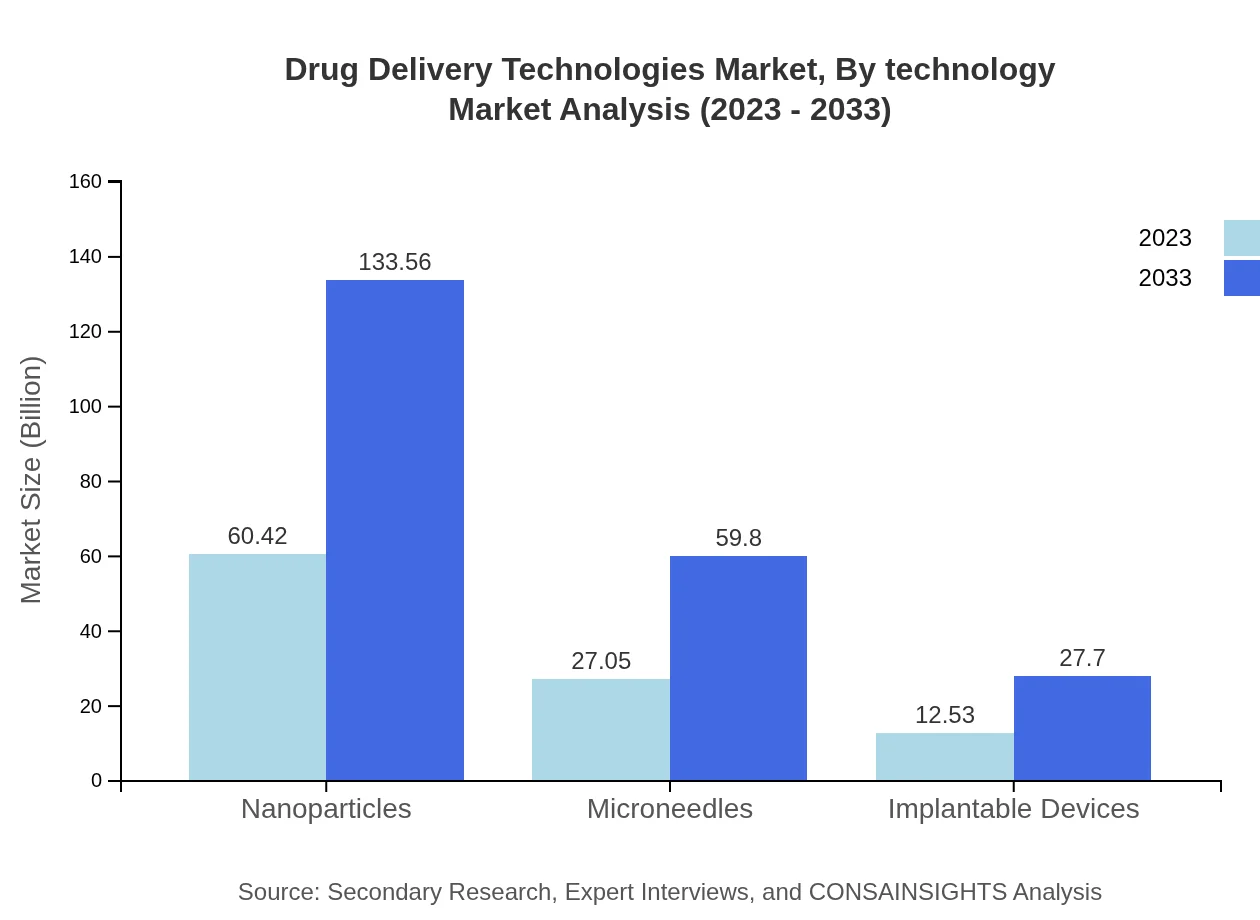
In 2023, the nanoparticle segment held a dominant market share of USD 60.42 billion, with growth anticipated to reach USD 133.56 billion by 2033. Meanwhile, microneedles and implantable devices are also seeing substantial growth, highlighting innovation in delivery mechanisms.
Drug Delivery Technologies Market Analysis By Formulation
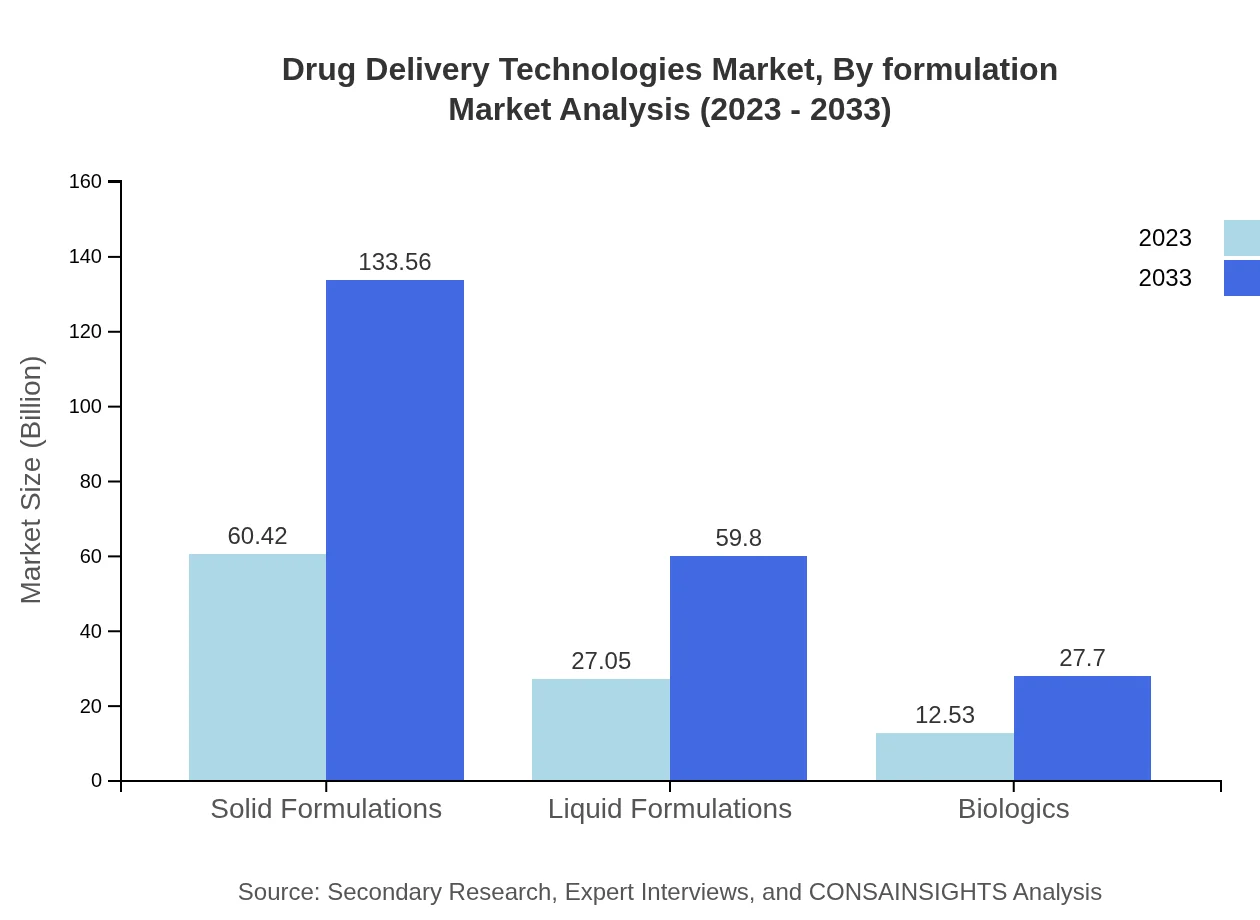
The solid formulations segment generated USD 60.42 billion in 2023 and is projected to expand to USD 133.56 billion by 2033, while liquid formulations are expected to grow from USD 27.05 billion to USD 59.80 billion, showcasing the versatility of formulations in drug administration.
Drug Delivery Technologies Market Analysis By End User
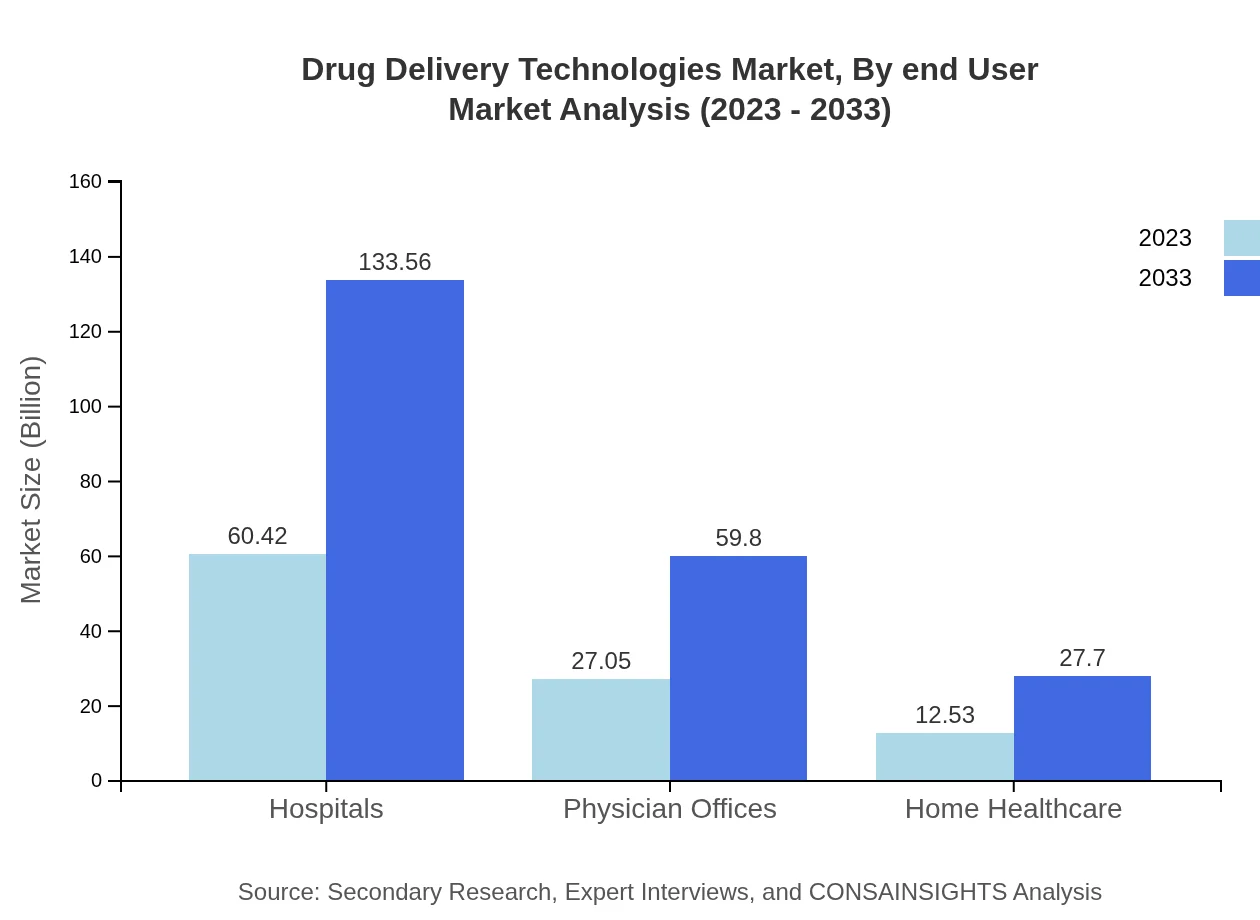
Hospitals, with a share of 60.42% in 2023, are set to grow from USD 60.42 billion to USD 133.56 billion by 2033, reflecting the vital role of healthcare institutions in adopting advanced drug delivery paradigms.
Drug Delivery Technologies Market Analysis By Application
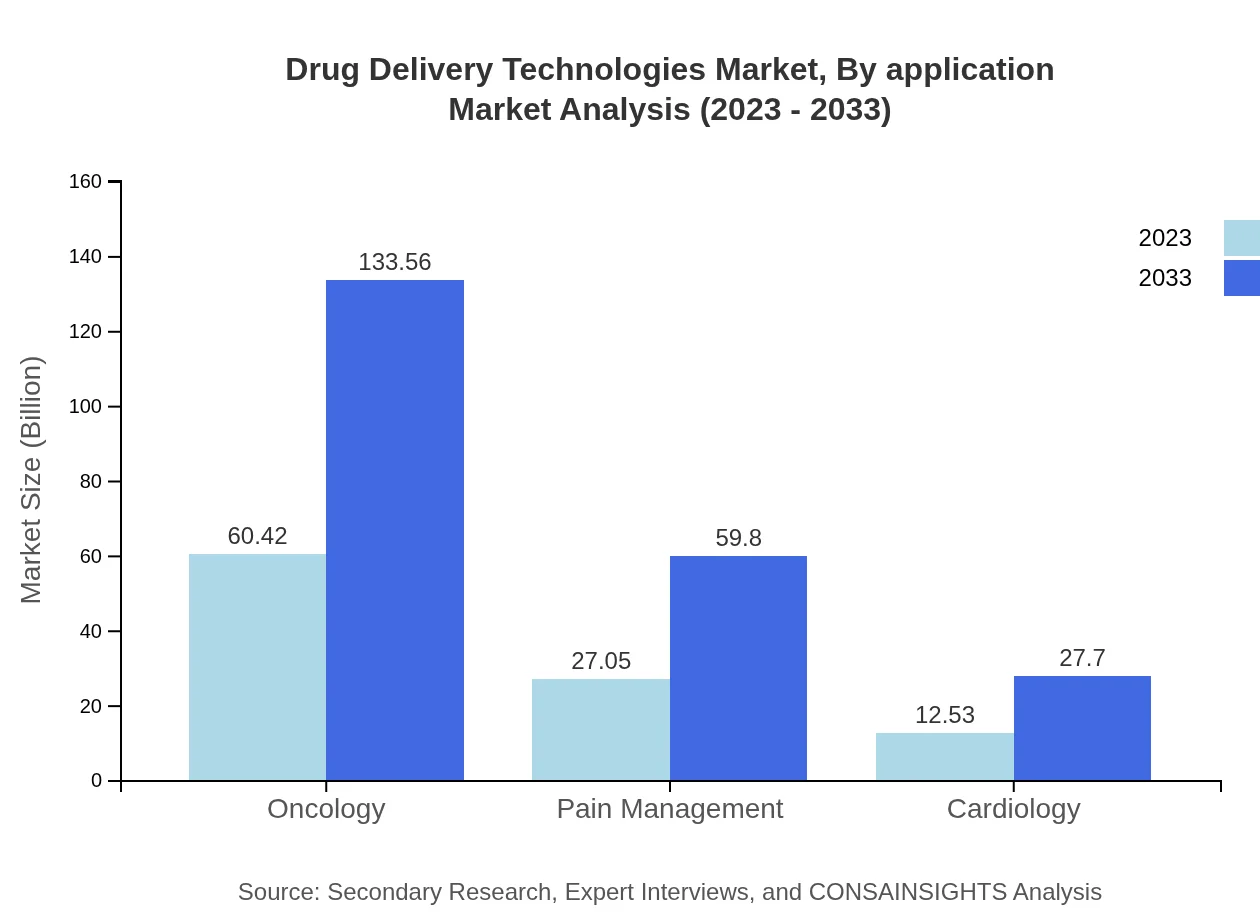
Oncology is the leading application area, accounting for USD 60.42 billion in 2023, expected to enhance to USD 133.56 billion by 2033. This significant growth mirrors the increasing incidence of cancer and the growing demand for targeted therapies.
Drug Delivery Technologies Market Trends and Future Forecast
Tell us your focus area and get a customized research report.
Global Market Leaders and Top Companies in Drug Delivery Technologies Industry
Johnson & Johnson:
A major player in pharmaceutical and consumer goods, Johnson & Johnson is known for its innovative drug delivery systems, particularly in oncology and pain management.Roche:
Roche stands out for its biologics and personalized medicine approaches, including advanced drug delivery technologies that enhance therapeutic efficiency.AbbVie:
AbbVie is dedicated to breakthrough therapies and technologies in drug delivery that cater to chronic conditions and complex disease mechanisms.Bristol-Myers Squibb:
This company focuses on innovative drug delivery technologies to advance treatments in immunology, cardiovascular diseases, and cancer.We're grateful to work with incredible clients.








FAQs
What is the current market size of the Drug Delivery Technologies Market Report?
The market size in 2023 is $100.00 Billion, based on the report's stated figure for that year.
How big will the market be in 2033?
The projected market value in 2033 is $221.06 Billion as specified in the forecast data.
What is CAGR of the market for the forecast period?
The compound annual growth rate for 2023 to 2033 is 8% according to the provided forecast.
Is there a single fastest Growing region in the Drug Delivery Technologies Market Report market?
No single fastest-growing region is stated for the Drug Delivery Technologies Market Report market because the top regional implied CAGR values are within 0.15 percentage points of each other, making the ranking too close to call reliably.
Why is the market expected to grow through 2033?
Growth is supported by rising R&D activity, a greater focus on precision therapies, and expanding demand for patient-friendly delivery systems.
Who are the top companies mentioned in the report?
The report lists Johnson & Johnson, Roche, AbbVie, and Bristol-Myers Squibb among leading participants.
What technology segments are highlighted in the market?
Highlighted technologies include nanoparticles, microneedles, and implantable devices as important innovation areas.
Which end User segments are covered in the analysis?
End-user categories cited include hospitals, physician offices, and home healthcare as primary consumption points.
What formulations are addressed in the segmentation?
Formulation types in the report comprise solid formulations, liquid formulations, and biologics.
How was the research in the report conducted?
The study used primary interviews, secondary sources such as company reports, and internal data triangulation for validation.