

Drug Eluting Stent Market Report
First published: 08 October 2024 | Last updated: 25 May 2026 | Report Code: drug-eluting-stent
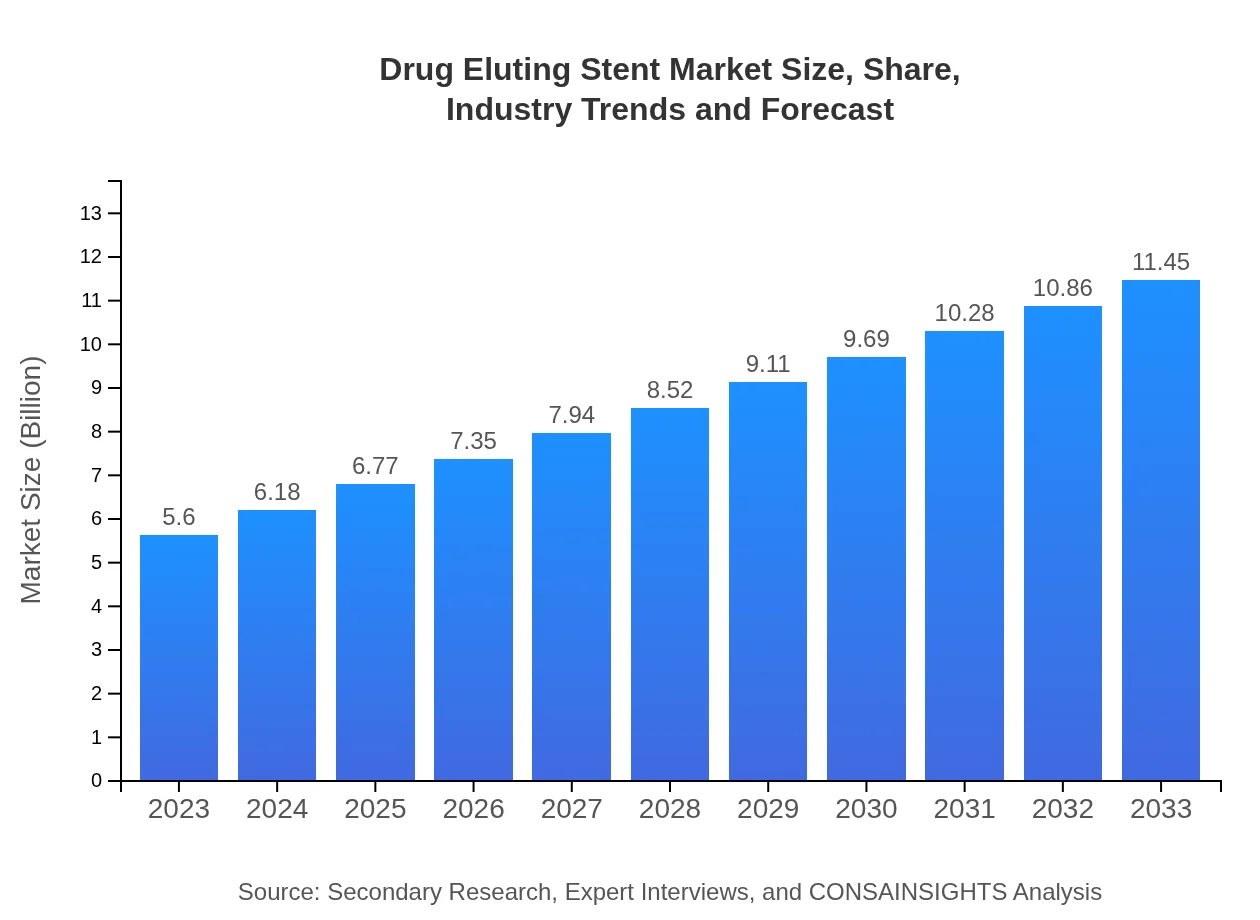
Drug Eluting Stent Market — USD 5.6 billion in 2023, Growing to USD 11.45B by 2033 at 7.2% CAGR
This report provides a comprehensive analysis of the Drug Eluting Stent market from 2023 to 2033, covering market trends, regional insights, segmentation, and forecasts, along with a focused exploration of industry leaders and technological advancements.
Key Takeaways
- Global market grows from $5.60 Billion in 2023 to $11.45 Billion by 2033 at a 7.2% CAGR.
- North America is largest regional market, while no single fastest-growing region is stated because regional CAGR differences remain within 0.15 percentage points.
- North America is the largest region, moving from $1.9 Billion in 2023 to $3.87 Billion in 2033.
- Europe and Asia Pacific show substantial gains: Europe from $1.68 Billion to $3.44 Billion; Asia Pacific from $1.12 Billion to $2.29 Billion.
- Notable segments include Everolimus, Zotarolimus, and Sirolimus drug types and a mix of biodegradable and polymer-based stent products.
- Top companies featured include Abbott Laboratories, Boston Scientific Corporation, Medtronic, and Siemens Healthineers.
Drug Eluting Stent Market Report — Executive Summary
North America remains largest market by forecast-period value, while no single fastest-growing region is stated because top regional growth rates are separated by less than 0.15 percentage points. The Drug Eluting Stent Market Report outlines projected expansion from $5.60 Billion in 2023 to $11.45 Billion in 2033 at a 7.2% CAGR. Growth is driven by rising prevalence of coronary artery disease, an aging population, and continuous device innovation improving efficacy and safety. Product segmentation covers drug types such as Everolimus, Zotarolimus, and Sirolimus, alongside product types including biodegradable and polymer-based stents. Regional dynamics are diverse; North America remains the largest market. Key industry forces include regulatory scrutiny, consolidation among major medical device companies, and investments in minimally invasive technologies. The report maps competitive positioning with leading firms such as Abbott Laboratories, Boston Scientific Corporation, Medtronic, and Siemens Healthineers, and highlights opportunities in emerging markets as healthcare infrastructure expands.
Key Growth Drivers
- Rising incidence of coronary artery disease increases procedural demand for stenting solutions.
- Advances in stent materials and drug-delivery coatings enhance clinical outcomes and adoption.
- Aging populations in key markets expand the patient pool requiring interventional cardiology treatments.
- Shift toward minimally invasive procedures supports broader use of drug-eluting stents.
- Industry consolidation and R&D investments accelerate introduction of improved stent platforms.
| Metric | Value |
|---|---|
| Study Period | 2023 - 2033 |
| 2023 Market Size | $5.60 Billion |
| CAGR (2023-2033) | 7.2% |
| 2033 Market Size | $11.45 Billion |
| Top Companies | Abbott Laboratories, Boston Scientific Corporation, Medtronic , Siemens Healthineers |
| Published Date | 08 October 2024 |
| Last Modified Date | 25 May 2026 |
Drug Eluting Stent Market Overview
Customize Drug Eluting Stent Market Report market research report
- ✔ Get in-depth analysis of Drug Eluting Stent market size, growth, and forecasts.
- ✔ Understand Drug Eluting Stent's regional dynamics and industry-specific trends.
- ✔ Identify potential applications, end-user demand, and growth segments in Drug Eluting Stent
What is the Market Size & CAGR of Drug Eluting Stent Market Report market in 2023?
Drug Eluting Stent Industry Analysis
Drug Eluting Stent Market Segmentation and Scope
Tell us your focus area and get a customized research report.
Drug Eluting Stent Market Report Market Analysis Report by Region
Europe Drug Eluting Stent Market Report:
Europe grows from $1.68 Billion in 2023 to $3.44 Billion in 2033. Growth is supported by aging demographics, advanced healthcare systems, and regulatory environments that influence device adoption and incremental product improvements.Asia Pacific Drug Eluting Stent Market Report:
Asia Pacific grows from $1.12 Billion in 2023 to $2.29 Billion in 2033. Expansion is driven by improving healthcare infrastructure, rising cardiovascular disease incidence, and greater access to modern interventional therapies.North America Drug Eluting Stent Market Report:
North America is largest regional market, rising from $1.9 Billion in 2023 to $3.87 Billion in 2033. Market strength reflects established interventional cardiology infrastructure, broad access to advanced devices, and continued investment in minimally invasive procedures.South America Drug Eluting Stent Market Report:
Latin America grows from $0.29 Billion in 2023 to $0.6 Billion in 2033. Growth is tied to gradual enhancements in healthcare delivery, increased procedural uptake, and market entry by global device manufacturers.Middle East & Africa Drug Eluting Stent Market Report:
Middle East and Africa grows from $0.61 Billion in 2023 to $1.25 Billion in 2033. Regional progress is influenced by investments in healthcare facilities, increased awareness of cardiovascular conditions, and growing availability of advanced devices.Tell us your focus area and get a customized research report.
Research Methodology
Drug Eluting Stent Market Analysis By Product Type
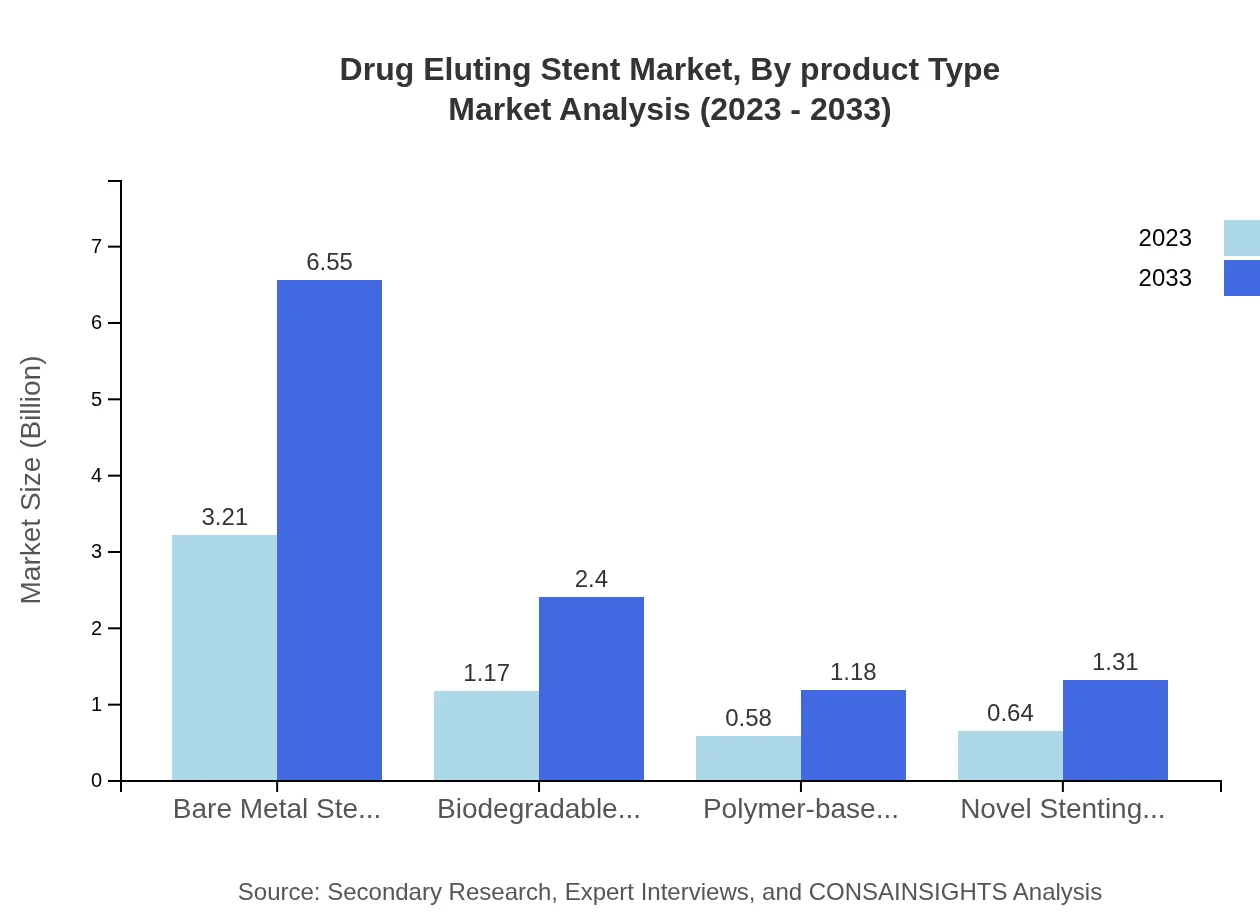
The product type segment shows notable growth, with Everolimus stents dominating the market. By 2033, the Everolimus stent market is projected to grow from USD 3.62 billion in 2023 to USD 7.39 billion, retaining a market share of 64.56%. Zotarolimus stents also show growth from USD 1.33 billion to USD 2.72 billion capturing 23.76% of the market by 2033. Other types like biodegradable and polymer-based stents are gradually gaining traction as healthcare shifts towards patient-centric solutions.
Drug Eluting Stent Market Analysis By Drug Type
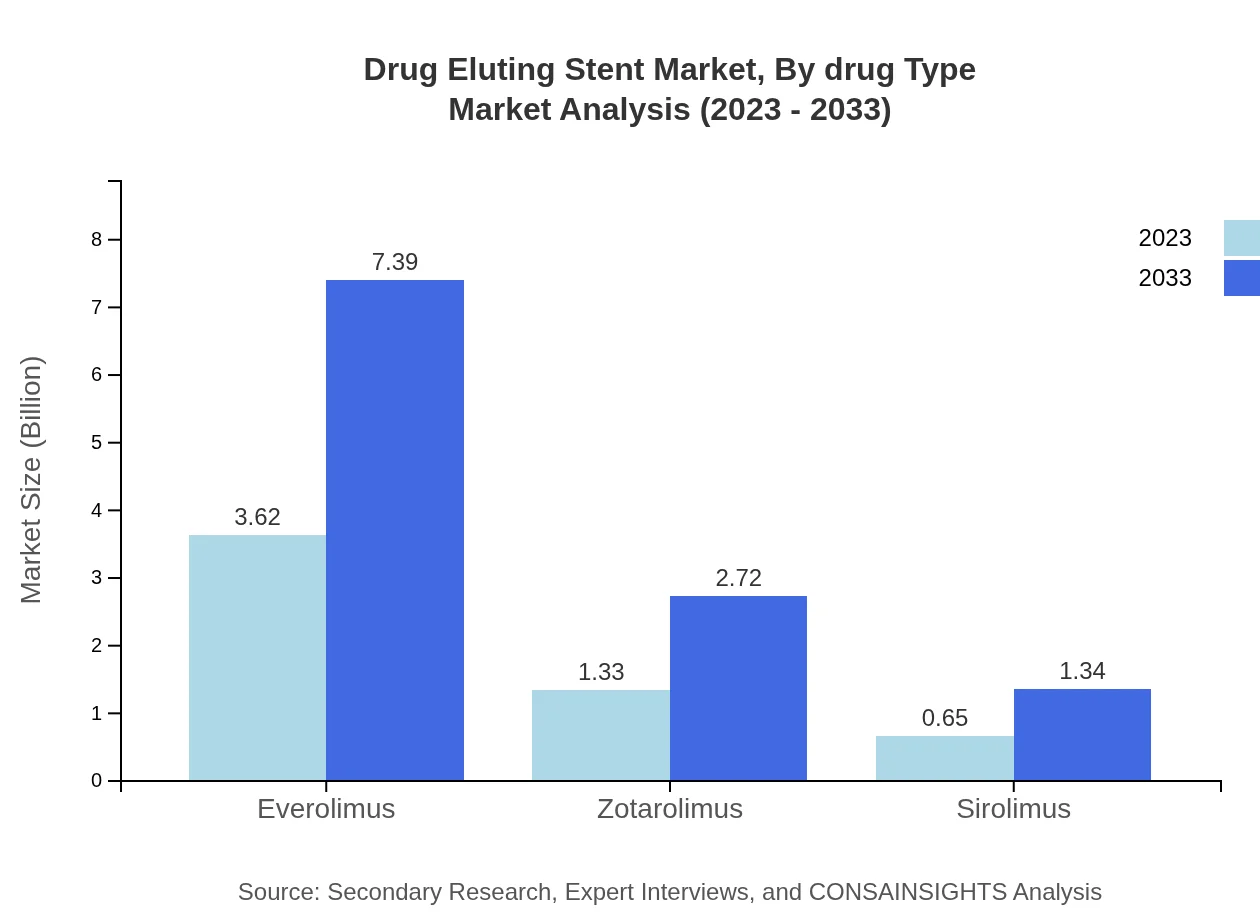
In the drug type segment, the Everolimus drug type leads the market, with projections showing an increase from USD 3.62 billion in 2023 to USD 7.39 billion by 2033. The market share remains steady at 64.56%. Zotarolimus also shows incremental growth, from USD 1.33 billion to USD 2.72 billion, maintaining 23.76% market share. The use of Sirolimus and biodegradable drugs is also expected to change over the forecast period, reflecting growing research and development initiatives.
Drug Eluting Stent Market Analysis By Application Area
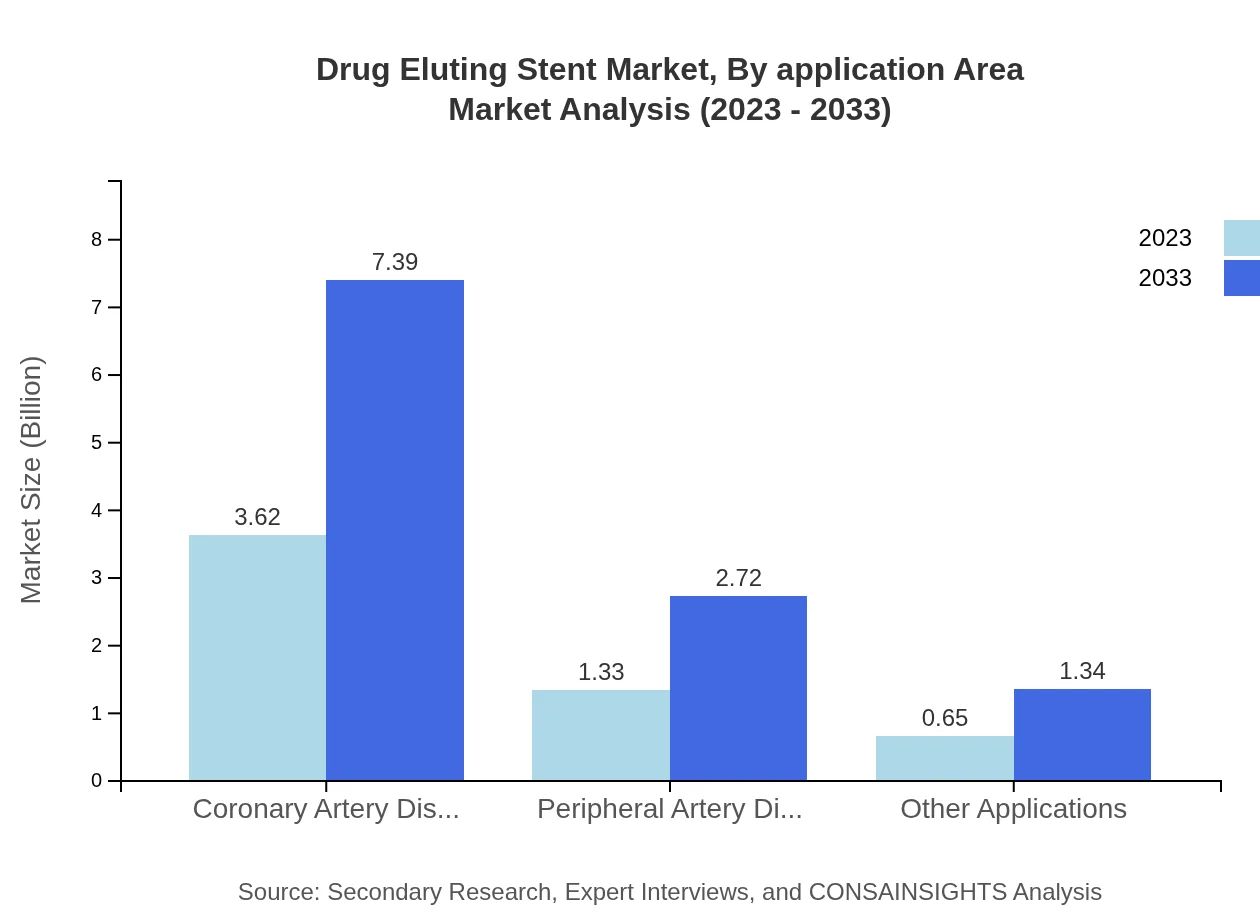
The application area segment is robust, with coronary artery disease being the primary application, growing from USD 3.62 billion in 2023 to USD 7.39 billion by 2033. This segment retains its share of 64.56%. The peripheral artery disease sector is also noteworthy, growing from USD 1.33 billion to USD 2.72 billion by 2033, with steady interest in other applications, showcasing the versatility of Drug Eluting Stents.
Drug Eluting Stent Market Analysis By Manufacturing Technique
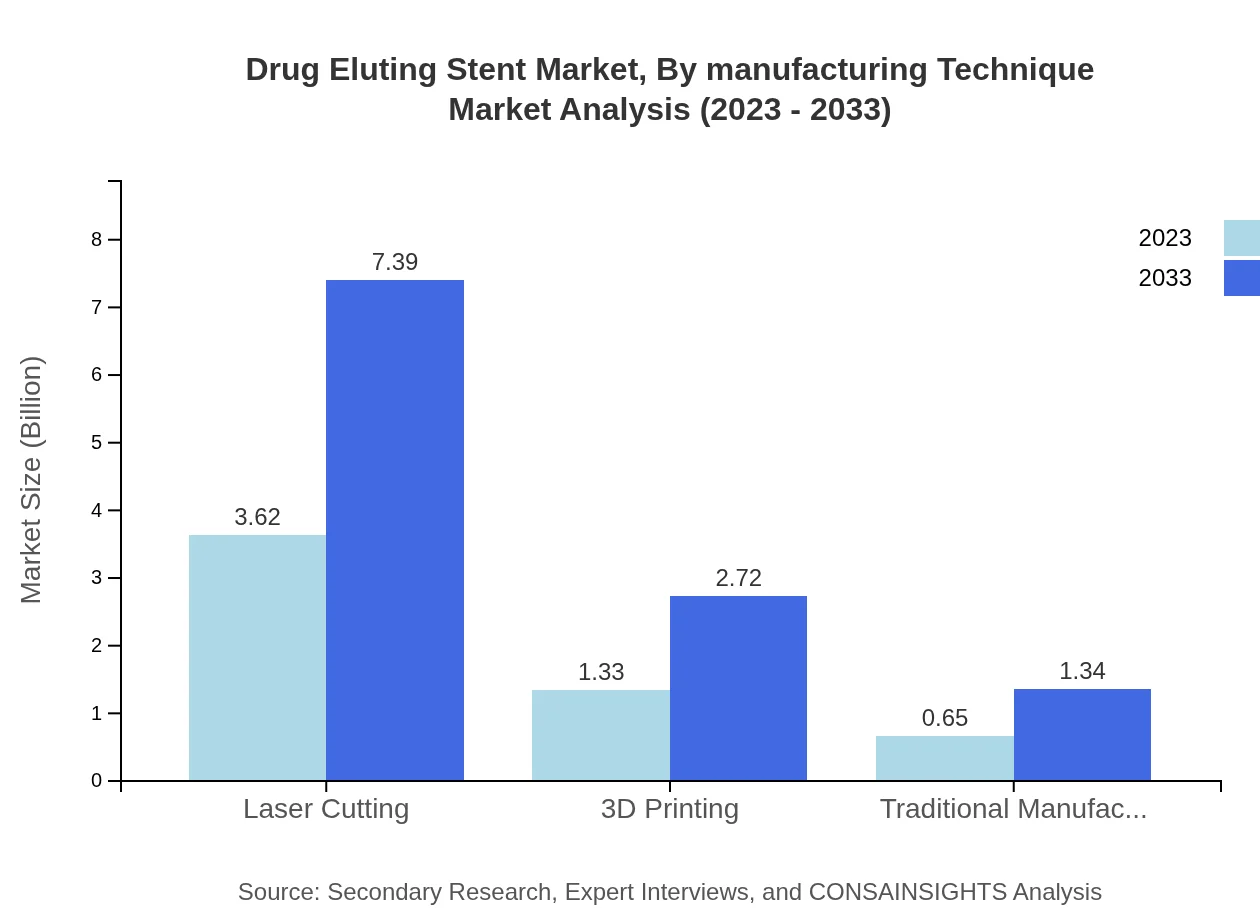
Among manufacturing techniques, traditional manufacturing methods continue to hold a significant market share, while 3D printing technologies are emerging as innovative alternatives. The 3D printing market is expected to expand from USD 1.33 billion in 2023 to USD 2.72 billion by 2033, capturing 23.76% of the segment. Laser cutting also holds considerable market weight, maintaining its share throughout the forecast period, although innovation-focused companies are pivoting towards modern manufacturing techniques to improve efficiency and efficacy.
Drug Eluting Stent Market Trends and Future Forecast
Tell us your focus area and get a customized research report.
Global Market Leaders and Top Companies in Drug Eluting Stent Industry
Abbott Laboratories:
Abbott is a global healthcare leader, known for its cutting-edge medical technologies, including Drug Eluting Stents. The company's innovative product lines enhance patient outcomes and offer impressive efficacy and safety.Boston Scientific Corporation:
Boston Scientific is a key player in the cardiovascular space, particularly in Drug Eluting Stents, and focuses on developing advanced therapies that meet the needs of patients and healthcare providers.Medtronic :
Medtronic is recognized for its innovative cardiovascular devices, pioneering stent technology that has advanced treatment options for coronary artery disease and improved patient care globally.Siemens Healthineers:
A leader in diagnostic imaging and advanced therapies, Siemens Healthineers provides innovative solutions and products that contribute to improved procedural outcomes with DES technology.We're grateful to work with incredible clients.









FAQs
What is the market size of the Drug Eluting Stent Market Report in 2023?
The reported market size for 2023 is $5.60 Billion, as provided in the report data for the Drug Eluting Stent Market Report.
What is the projected market size for 2033?
The market is projected to reach $11.45 Billion by 2033, according to the supplied report figures covering the 2023 to 2033 forecast period.
What is CAGR for the forecast period?
The specified compound annual growth rate for the forecast period 2023 to 2033 is 7.2%, based on the input market projections.
Is there a single fastest Growing region in the Drug Eluting Stent Market Report market?
No single fastest-growing region is stated for the Drug Eluting Stent Market Report market because the top regional implied CAGR values are within 0.15 percentage points of each other, making the ranking too close to call reliably.
Which companies are listed as top players?
Top companies named in the input are Abbott Laboratories, Boston Scientific Corporation, Medtronic, and Siemens Healthineers.
Why are drug Eluting stents gaining adoption?
Adoption is supported by improved clinical performance of stent coatings, reduced restenosis rates, and preference for minimally invasive cardiovascular interventions.
What are the primary product segments referenced?
Product segmentation includes drug types such as Everolimus, Zotarolimus, Sirolimus, product forms like biodegradable and polymer-based stents, and novel stenting technologies.
Which regions are highlighted in the analysis?
Regional coverage includes North America, Europe, Asia Pacific, Latin America, and Middle East and Africa with individual start and end values provided in the dataset.