
Reports >
Technology And Media
>
Ecommerce Platform

Ecommerce Platform
First published: 08 January 2026 | Last updated: 31 January 2026 | Report Code: ecommerce-platform
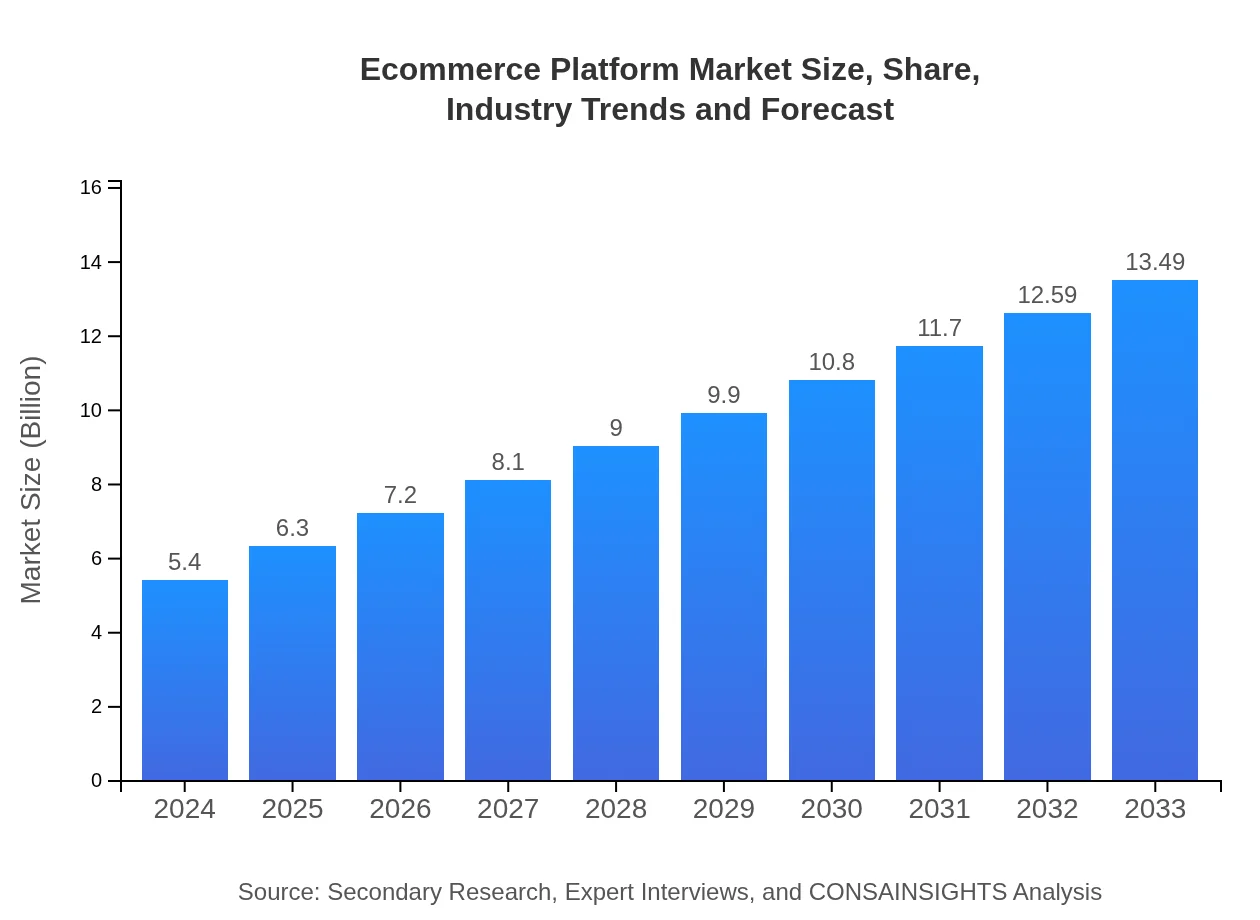
Ecommerce Platform Market — USD $5.4 Trillion in 2024, Growing to USD 13.49 by 2033 at 10.3% CAGR
This comprehensive report on the Ecommerce Platform market offers an in‐depth analysis of current trends, technological advances, segmentation, and regional performance. Spanning a forecast period from 2024 to 2033, the report provides detailed insights into market size, growth rates, and industry challenges, empowering stakeholders to make data‐driven strategic decisions.
| Metric | Value |
|---|---|
| Study Period | 2024 - 2033 |
| 2024 Market Size | $5.40 Trillion |
| CAGR (2024-2033) | 10.3% |
| 2033 Market Size | $13.49 Trillion |
| Top Companies | Shopify Inc., Magento (Adobe Commerce) |
| Published Date | 08 January 2026 |
| Last Modified Date | 31 January 2026 |
Ecommerce Platform Market Overview
Customize Ecommerce Platform market research report
- ✔ Get in-depth analysis of Ecommerce Platform market size, growth, and forecasts.
- ✔ Understand Ecommerce Platform's regional dynamics and industry-specific trends.
- ✔ Identify potential applications, end-user demand, and growth segments in Ecommerce Platform
What is the Market Size & CAGR of Ecommerce Platform market in 2024?
Ecommerce Platform Industry Analysis
Ecommerce Platform Market Segmentation and Scope
Tell us your focus area and get a customized research report.
Ecommerce Platform Market Analysis Report by Region
Europe Ecommerce Platform:
Europe shows promising expansion in the Ecommerce Platform market with an anticipated growth from 1.72 in 2024 to 4.31 by 2033. The region benefits from a stable regulatory environment, high consumer spending power, and progressive digital transformation initiatives. Advances in security protocols and the adoption of innovative payment technologies further reinforce the region’s growth trajectory.Asia Pacific Ecommerce Platform:
Asia Pacific remains a vital growth engine in the Ecommerce Platform market, with projections indicating market growth from 1.04 in 2024 to 2.60 by 2033. Rapid internet penetration, increasing mobile device usage, and supportive government policies have spurred ecommerce adoption. The region’s diverse consumer base and burgeoning digital infrastructure contribute to high demand and continuous innovation.North America Ecommerce Platform:
North America continues to be a mature market with significant investments in technological infrastructure. Market projections indicate growth from 1.77 in 2024 to 4.44 by 2033, driven by high consumer spending, robust online retail frameworks, and continuous innovation in ecommerce technologies. The region benefits from a strong digital ecosystem and widespread adoption of advanced payment solutions.South America Ecommerce Platform:
South America is experiencing gradual yet steady growth in ecommerce adoption. The market, while smaller in absolute terms, is evolving as online payment methods and digital logistics improve. Increasing consumer confidence, coupled with enhanced digital payment security, is expected to drive market expansion in this region over the forecast period.Middle East & Africa Ecommerce Platform:
The Middle East and Africa region, while having smaller market figures (from 0.40 in 2024 to 1.01 by 2033), is marked by rapid digital adoption and a young, tech-savvy population. Investments in infrastructure and increased internet accessibility are progressively enhancing ecommerce capabilities, making this region a promising emerging market.Tell us your focus area and get a customized research report.
Ecommerce Platform Market Analysis By Platform Type
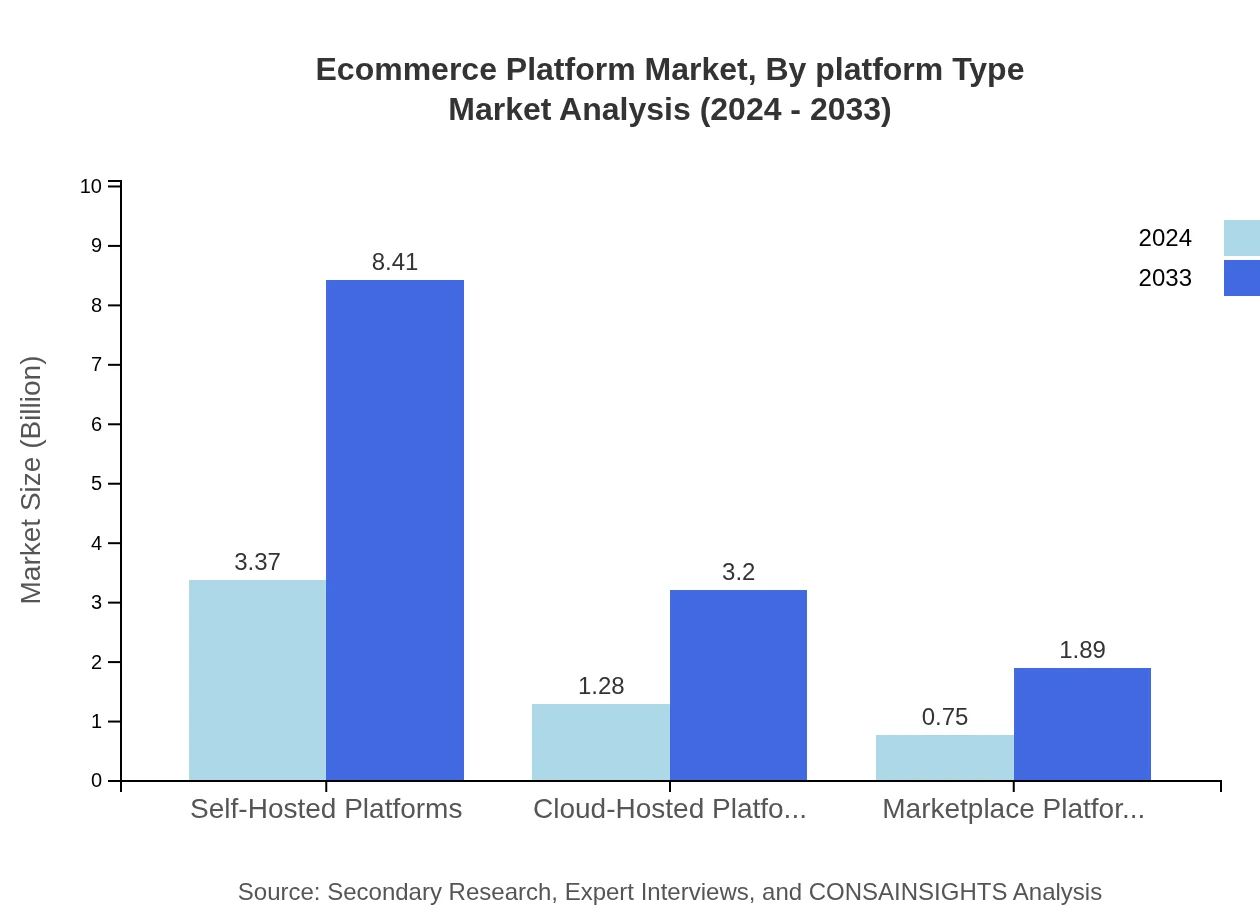
Within the platform-type segmentation, the Ecommerce Platform market differentiates itself based on deployment methods including self-hosted platforms, cloud-hosted platforms, and marketplace platforms. In 2024, self-hosted platforms are forecasted to capture a size of 3.37 units, expanding to 8.41 units by 2033, with cloud-hosted platforms and marketplace platforms showing similar proportional growth. This segmentation indicates that businesses value the control offered by self-hosted solutions along with the flexibility and scalability of cloud-hosted environments. The competitive advantage in these segments stems from robust security measures, ease of integration with other digital tools, and cost-effective scalability. As digital ecosystems evolve, these platform types are set to benefit from continuous technological upgrades, streamlined user experiences, and improved back-end support, thereby appealing to a wide range of enterprises.
Ecommerce Platform Market Analysis By Business Size
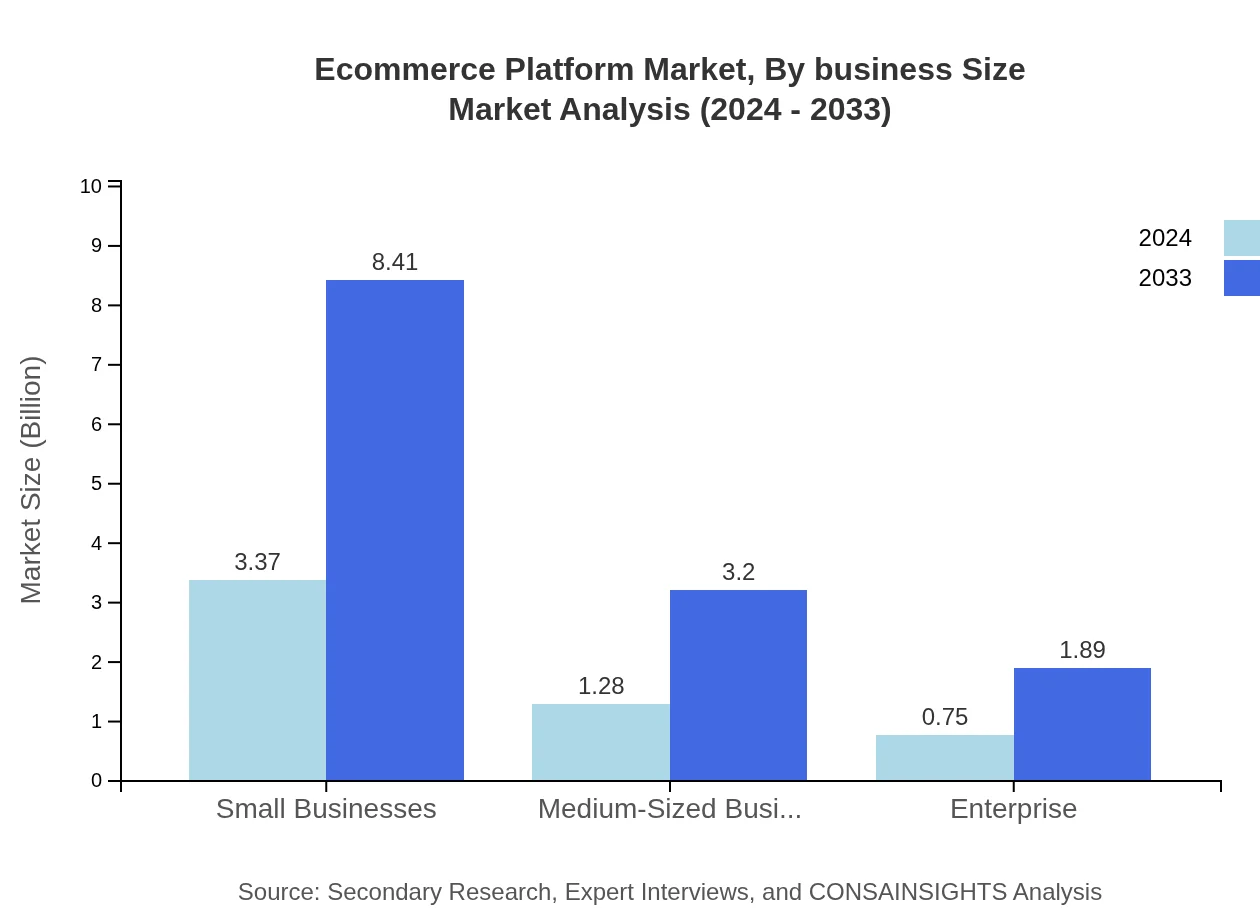
Segmentation by business size categorizes the market into small businesses, medium-sized businesses, and enterprises. Small businesses dominate the segment with market sizes growing from 3.37 units in 2024 to 8.41 units by 2033 and commanding a market share of 62.32%. Medium-sized businesses, though smaller in volume, show steady progress with sizes growing from 1.28 to 3.20 units. Enterprises, while representing the smallest volume, continue to focus on bespoke and scalable solutions that cater to complex operational needs. This segmentation is reflective of the diverse digital maturity levels across business sizes and illustrates how tailored ecommerce solutions can effectively address unique challenges faced by different segments. The emphasis remains on affordability, customization, and future scalability to ensure long-term competitive advantage.
Ecommerce Platform Market Analysis By Industry Vertical
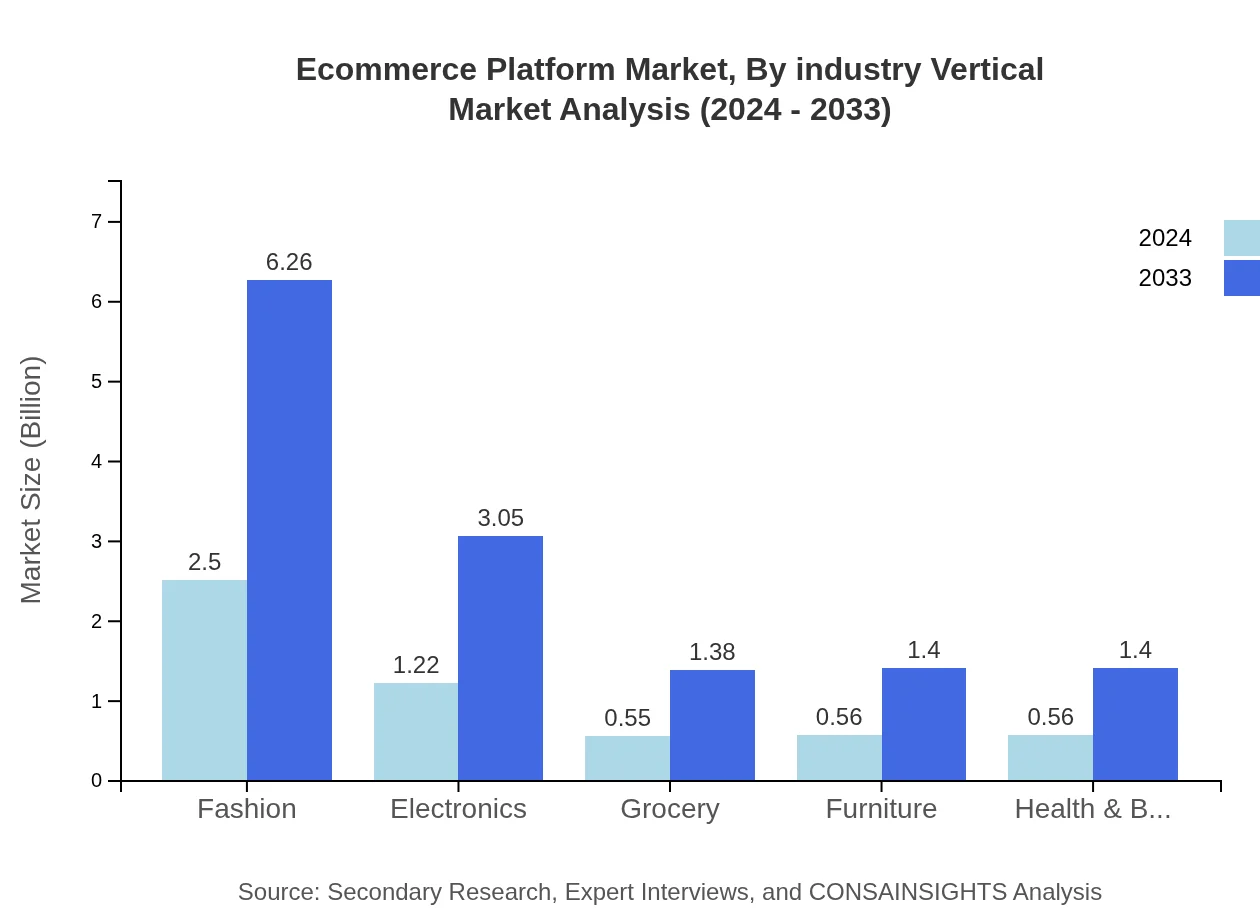
The Ecommerce Platform market, when segmented by industry verticals, encompasses sectors such as fashion, electronics, grocery, furniture, and health & beauty. For instance, the fashion vertical is set to expand from a market size of 2.50 in 2024 to 6.26 by 2033, capturing a significant share of 46.38%. Electronics and grocery follow, showcasing consistent growth driven by evolving consumer preferences and digital engagement trends. Meanwhile, furniture and health & beauty sectors are also progressing steadily, supported by enhanced online marketing strategies and the shift towards integrated digital experiences. Each vertical presents unique opportunities, driven by varying consumer demands, product innovation, and evolving market dynamics. The segmentation by industry vertical emphasizes the need for specialized ecommerce platforms that cater to distinctive industry requirements while offering seamless integration of advanced payment options and robust customer support.
Ecommerce Platform Market Analysis By Payment Mode
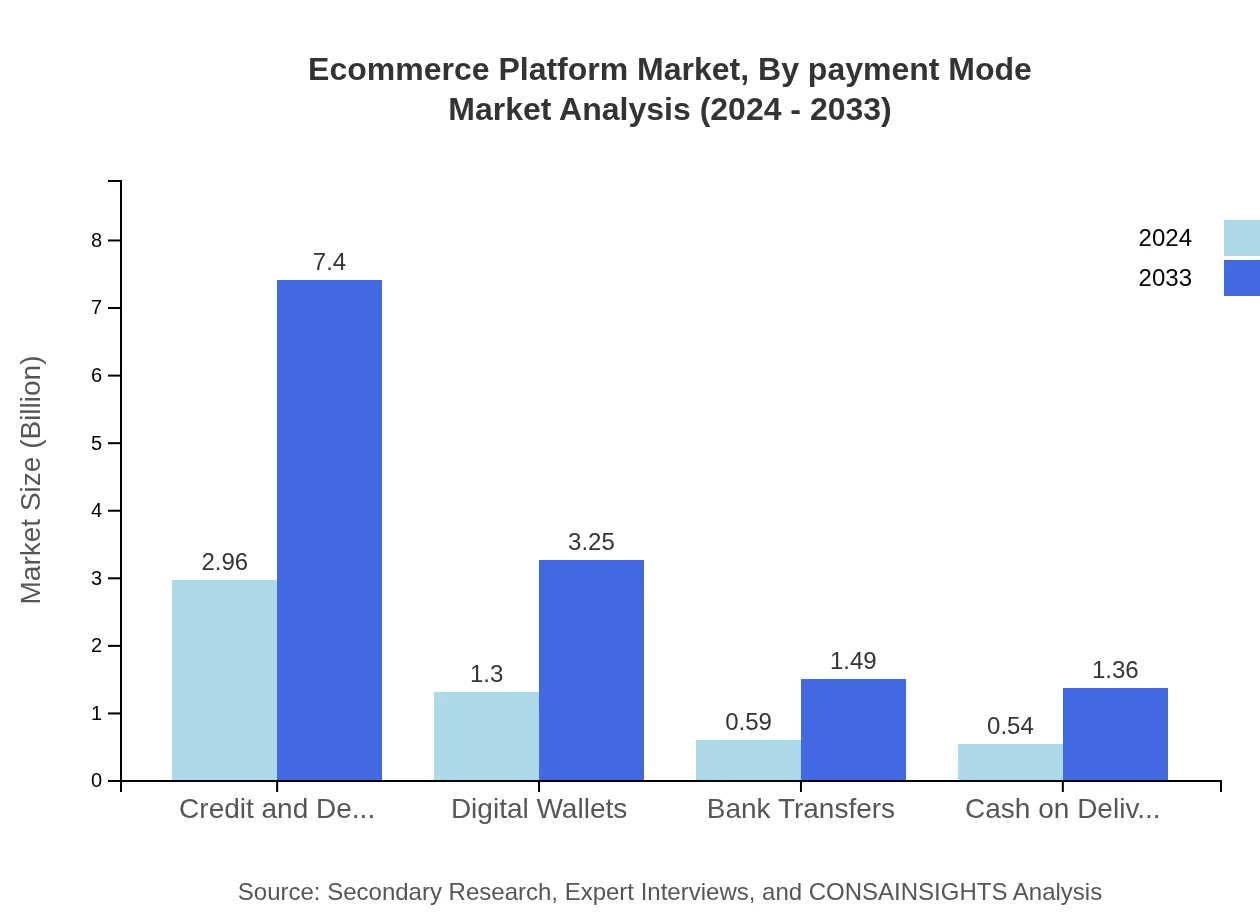
The payment mode segmentation highlights the predominant channels used by consumers when transacting on ecommerce platforms. Credit and debit cards lead this segment with a sizable market presence, growing from 2.96 in 2024 to 7.40 by 2033 and consistently capturing a market share of 54.82%. Digital wallets, another rapidly growing segment, are projected to rise from 1.30 to 3.25 units, securing a share of 24.09%. Complementing these, bank transfers and cash on delivery have maintained steady positions, with bank transfers advancing from 0.59 to 1.49 units and cash on delivery from 0.54 to 1.36 units over the forecast period. This analysis underscores the continuous evolution of consumer payment preferences, emphasizing higher security, ease of transaction, and the need for integration of multi-channel payment solutions within ecommerce ecosystems.
Ecommerce Platform Market Trends and Future Forecast
Tell us your focus area and get a customized research report.
Global Market Leaders and Top Companies in Ecommerce Platform Industry
Shopify Inc.:
Shopify is a leading global ecommerce platform that empowers merchants with robust tools for online retail, efficient payment processing, and comprehensive digital marketing solutions. The company is renowned for its scalable architecture and innovative customer support services.Magento (Adobe Commerce):
Magento, now part of Adobe Commerce, offers a highly versatile and customizable ecommerce solution. It is celebrated for its flexibility, extensive third-party integrations, and powerful analytics tools that enable businesses to manage large-scale operations.We're grateful to work with incredible clients.









FAQs
How can the Ecommerce Platform Market Report help align our marketing strategy with customer adoption trends?
The Ecommerce Platform Market Report, valued at $5.4 trillion with a CAGR of 10.3%, highlights customer preferences and adoption trends. This data enables companies to tailor their marketing strategies based on consumer behavior, ensuring alignment with market demands and improving effectiveness.
What product features are in the highest demand according to the Ecommerce Platform trends?
Based on Ecommerce Platform trends, popular features include advanced payment options like digital wallets, strong security measures, and mobile-optimized designs. These features address consumer needs for efficiency and safety, driving higher customer satisfaction and loyalty in a growing market.
Which regions offer the best market entry and expansion opportunities in the Ecommerce Platform industry?
Regions like North America, projected to grow from $1.77 trillion in 2024 to $4.44 trillion by 2033, and Europe, expanding from $1.72 trillion to $4.31 trillion, offer excellent opportunities. Such growth potential makes these markets ideal for new entrants and existing players seeking expansion.
What emerging technologies and innovations are shaping the Ecommerce Platform market?
Key technologies influencing the Ecommerce Platform market include AI for personalized shopping experiences and blockchain for secure transactions. Innovations in mobile payment solutions and augmented reality for virtual try-ons are also shaping user experiences, driving growth in this sector.
Does the Ecommerce Platform Market Report include competitive landscape and market share analysis?
Yes, the Ecommerce Platform Market Report features detailed competitive landscape analyses, providing insights into market share by leading players. This critical information enables stakeholders to identify competitors, assess market positioning, and strategize effectively for competitive advantage.
How can executives use the Ecommerce Platform Market Report to evaluate investment risks and ROI?
Executives can leverage the Ecommerce Platform Market Report, with its $5.4 trillion valuation and 10.3% CAGR, to assess potential investment risks by examining market trends, regional performance, and segment growth. This comprehensive analysis aids in predicting ROI and informed decision-making.
What is the market size of ecommerce Platform?
The Ecommerce Platform market size is valued at $5.4 trillion, with a projected CAGR of 10.3%. This significant growth highlights the increasing reliance on digital channels and the importance of adapting to consumer preferences in a rapidly evolving marketplace.
What are the segment data insights for the Ecommerce Platform?
Ecommerce Platform segments reveal strong preferences: Credit and Debit Cards dominate with a 54.82% share, followed by Digital Wallets at 24.09%. Small businesses lead in market size, growing from $3.37 trillion to $8.41 trillion from 2024 to 2033, indicating substantial demand.