
Reports >
Life Sciences
>
Enteral Feeding Tubes Market Report

Enteral Feeding Tubes Market Report
First published: 12 October 2024 | Last updated: 28 May 2026 | Report Code: enteral-feeding-tubes
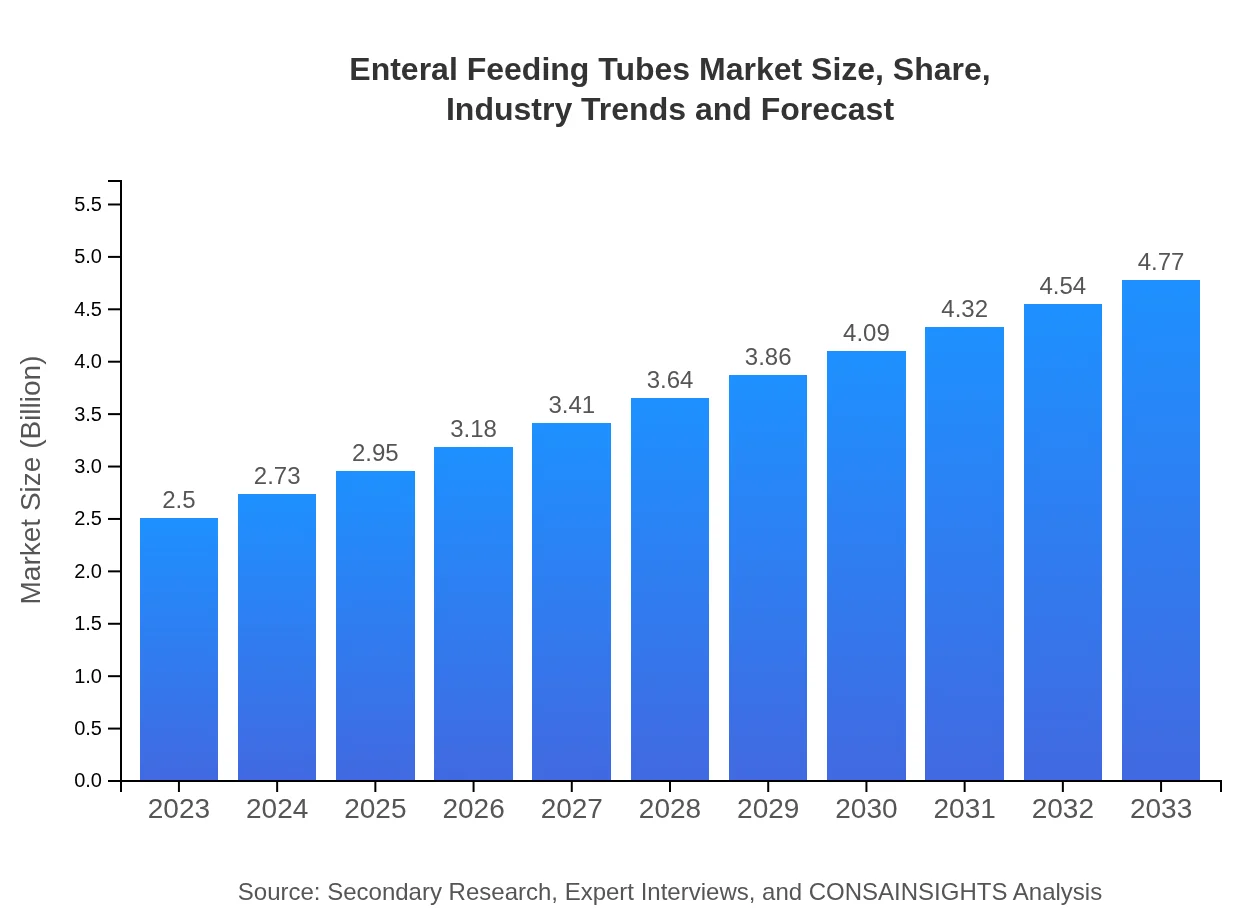
Enteral Feeding Tubes Market — USD 2.5 billion in 2023, Growing to USD 4.77B by 2033 at 6.5% CAGR
This report provides a comprehensive analysis of the enteral feeding tubes market, covering key insights, market size, segmentation, and trends from 2023 to 2033. It aims to inform stakeholders about current conditions and future forecasts in the industry.
Key Takeaways
- Global market projected from $2.50 Billion in 2023 to $4.77 Billion by 2033 at a 6.5% CAGR.
- North America is largest regional market; Middle East and Africa is regional market region based on implied CAGR across 2023 to 2033.
- Middle East and Africa is the regional market region, increasing from $0.21 Billion in 2023 to $0.41 Billion in 2033.
- Material advances and growing use in hospitals and home care are central growth enablers.
- Leading firms include Abbott Laboratories, Boston Scientific, Fresenius Kabi AG, and Medtronic.
Enteral Feeding Tubes Market Report — Executive Summary
Regional analysis shows North America as largest market and Middle East and Africa as fastest-growing region by implied CAGR. The report outlines market expansion driven by elevated demand for clinically reliable enteral nutrition solutions and improvements in tubing materials. Increasing hospital procedures, greater adoption of home-care feeding, and attention to infection control support long-term growth. Product innovation addressing patient comfort and tube performance is shaping supplier strategies. The market structure is organized by type, material, application, and end user, highlighting nasogastric, gastrostomy, jejunostomy, and orogastric devices alongside polyurethane, silicone, and PVC materials. Major participants such as Abbott Laboratories, Boston Scientific, Fresenius Kabi AG, and Medtronic are noted for R&D investments and portfolio expansion. Regulatory compliance and partnerships between manufacturers and healthcare providers are also influential factors.
Key Growth Drivers
- Rising clinical procedures and chronic conditions increasing need for enteral nutrition support.
- Expansion of hospital and home-care services boosting demand for feeding tube solutions.
- Material innovations (polyurethane, silicone, PVC) improving comfort and durability.
- Product developments targeting reduced infection and blockage rates enhancing clinical adoption.
- Strategic initiatives by leading companies to broaden product lines and distribution.
| Metric | Value |
|---|---|
| Study Period | 2023 - 2033 |
| 2023 Market Size | $2.50 Billion |
| CAGR (2023-2033) | 6.5% |
| 2033 Market Size | $4.77 Billion |
| Top Companies | Abbott Laboratories, Boston Scientific, Fresenius Kabi AG, Medtronic |
| Published Date | 12 October 2024 |
| Last Modified Date | 28 May 2026 |
Enteral Feeding Tubes Market Overview
Customize Enteral Feeding Tubes Market Report market research report
- ✔ Get in-depth analysis of Enteral Feeding Tubes market size, growth, and forecasts.
- ✔ Understand Enteral Feeding Tubes's regional dynamics and industry-specific trends.
- ✔ Identify potential applications, end-user demand, and growth segments in Enteral Feeding Tubes
What is the Market Size & CAGR of Enteral Feeding Tubes Market Report market in 2023?
Enteral Feeding Tubes Industry Analysis
Enteral Feeding Tubes Market Segmentation and Scope
Tell us your focus area and get a customized research report.
Enteral Feeding Tubes Market Report Market Analysis Report by Region
Europe Enteral Feeding Tubes Market Report:
Europe grows from $0.77 Billion in 2023 to $1.46 Billion in 2033. Regional momentum is tied to aging populations, rising clinical nutrition awareness, and standards emphasizing device safety and performance across care settings.Asia Pacific Enteral Feeding Tubes Market Report:
Asia Pacific grows from $0.44 Billion in 2023 to $0.84 Billion in 2033. Growth in the region is associated with expanding healthcare access, rising chronic disease burden, and greater adoption of enteral nutrition in both hospitals and home-care environments.North America Enteral Feeding Tubes Market Report:
North America is largest regional market, rising from $0.93 Billion in 2023 to $1.78 Billion in 2033. 93 Billion in 2023, increasing to $1.78 Billion in 2033. This region’s expansion reflects substantial hospital procedure volumes, established healthcare delivery systems, and steady uptake in post-acute and home-care settings that drive demand.South America Enteral Feeding Tubes Market Report:
Latin America grows from $0.15 Billion in 2023 to $0.28 Billion in 2033. Market drivers include improving healthcare infrastructure, increasing clinical adoption of enteral feeding, and efforts to broaden access to nutritional support services.Middle East & Africa Enteral Feeding Tubes Market Report:
Middle East and Africa is fastest-growing region by implied CAGR, increasing from $0.21 Billion in 2023 to $0.41 Billion in 2033. Identified as the regional growth market, expansion is linked to developing healthcare systems, increased awareness of enteral nutrition, and investment in facilities that support longer-term and acute care.Tell us your focus area and get a customized research report.
Research Methodology
Enteral Feeding Tubes Market Analysis By Type
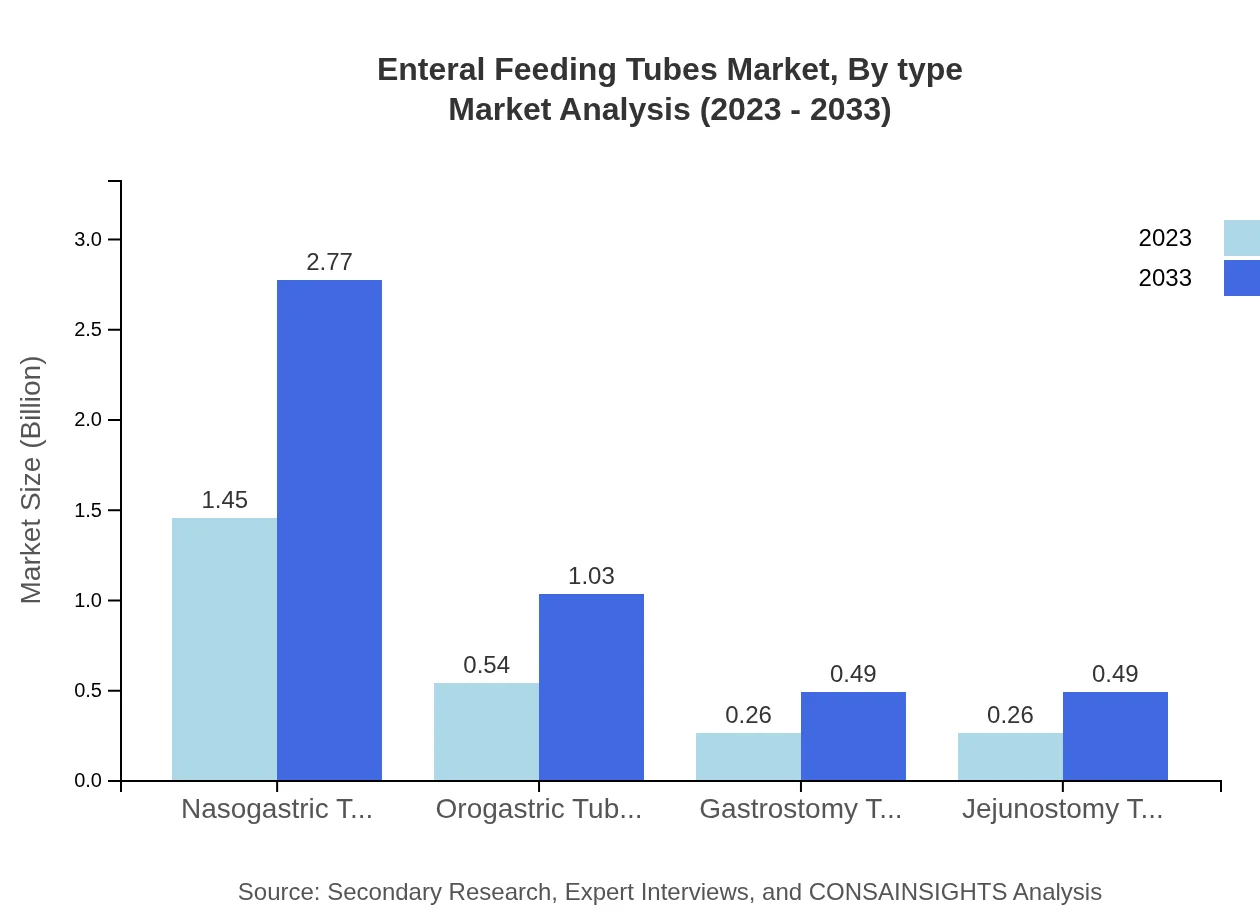
The market is dominated by Nasogastric Tubes, which are forecasted to increase from $1.45 billion in 2023 to $2.77 billion by 2033, holding a share of 58%. Orogastric and Gastrostomy tubes are also significant, expected to grow from $0.54 billion to $1.03 billion and from $0.26 billion to $0.49 billion, respectively, each maintaining shares of approximately 21% and 10%.
Enteral Feeding Tubes Market Analysis By Application
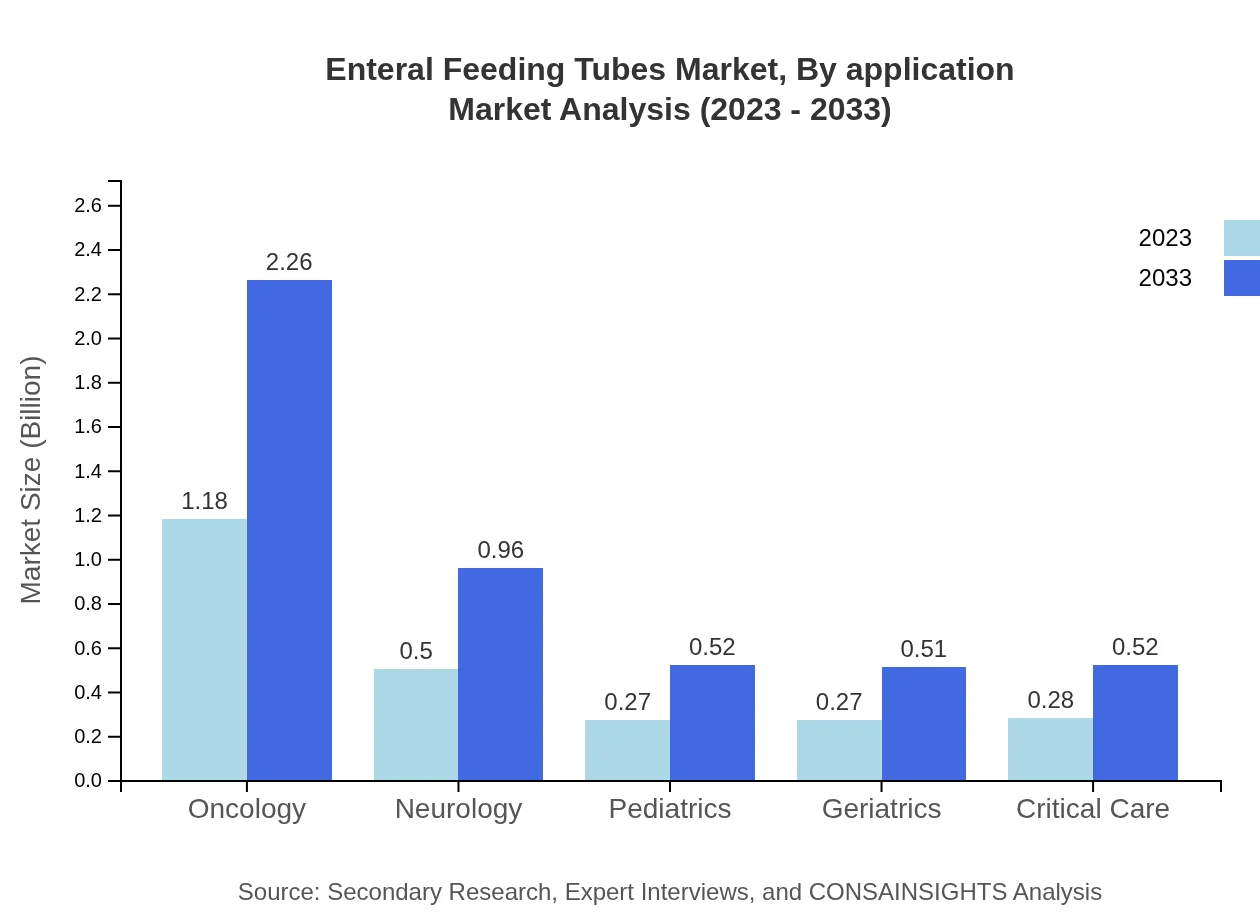
The oncology application segment leads with a market size of $1.18 billion in 2023, expected to reach $2.26 billion by 2033, holding a share of 47%. The neurology segment follows, projected to double from $0.50 billion to $0.96 billion, while pediatrics and geriatrics segments are also on a growth trajectory from $0.27 billion to $0.51 billion.
Enteral Feeding Tubes Market Analysis By End User
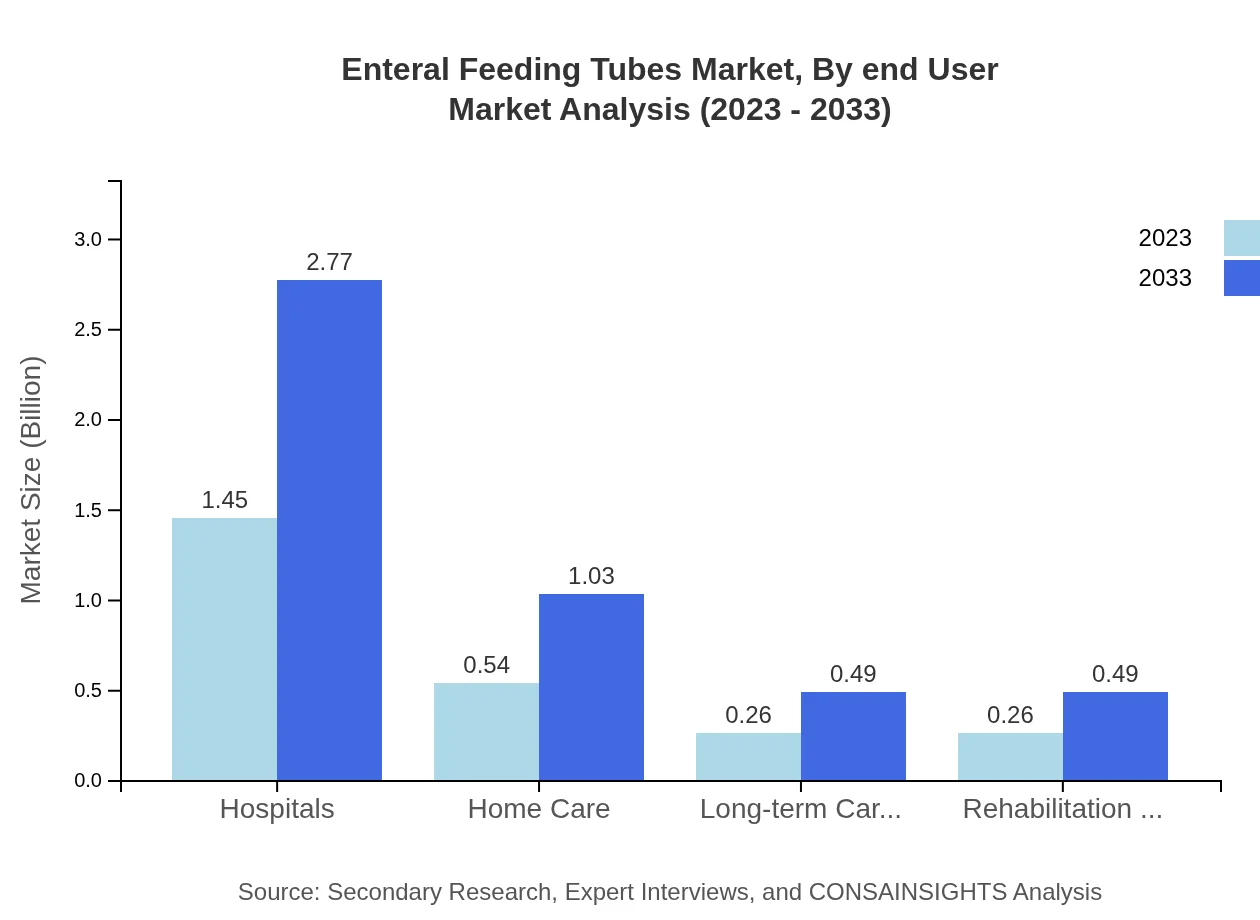
Hospitals remain the largest end-user segment, showing a constant market size of $1.45 billion in 2023 to $2.77 billion in 2033. Home care settings and long-term care facilities are also important markets, anticipated to grow significantly due to the increasing trend of out-of-hospital care.
Enteral Feeding Tubes Market Trends and Future Forecast
Tell us your focus area and get a customized research report.
Global Market Leaders and Top Companies in Enteral Feeding Tubes Industry
Abbott Laboratories:
A leading player in medical devices, Abbott offers various feeding tube products catering to different medical needs with a strong focus on quality and innovation.Boston Scientific:
Known for its advances in medical technology, Boston Scientific's enteral feeding solutions are critical for patient care, emphasizing product reliability and efficiency.Fresenius Kabi AG:
A prominent supplier of enteral nutrition products, Fresenius Kabi invests significantly in R&D to enhance patient outcomes related to nutritional therapies.Medtronic :
Medtronic has established itself by developing advanced feeding tube technologies that improve safety and ease of use for patients and healthcare providers alike.We're grateful to work with incredible clients.









FAQs
What is the market size of the Enteral Feeding Tubes Market Report in 2023?
The market size for 2023 is $2.50 Billion as stated in the report, representing the baseline for the 2023 to 2033 forecast period.
How big will the market be in 2033?
The projected market value for 2033 is $4.77 Billion according to the forecast provided in the report data.
What is CAGR for the forecast period?
The compound annual growth rate for 2023 to 2033 is 6.5%, as specified in the input market metrics.
Which region is the fastest Growing in the Enteral Feeding Tubes Market Report market?
Middle East and Africa is the fastest-growing region, projected to expand from $0.21 Billion in 2023 to $0.41 Billion in 2033, reflecting an implied 6.92% CAGR over the forecast period.
Which region is fastest Growing?
Middle East and Africa is cited as the regional market region, rising from $0.21 Billion in 2023 to $0.41 Billion in 2033 at an implied 6.92% CAGR.
Who are the key companies in this market?
Top firms named in the report include Abbott Laboratories, Boston Scientific, Fresenius Kabi AG, and Medtronic, noted for research and product development.
What are primary material categories for tubes?
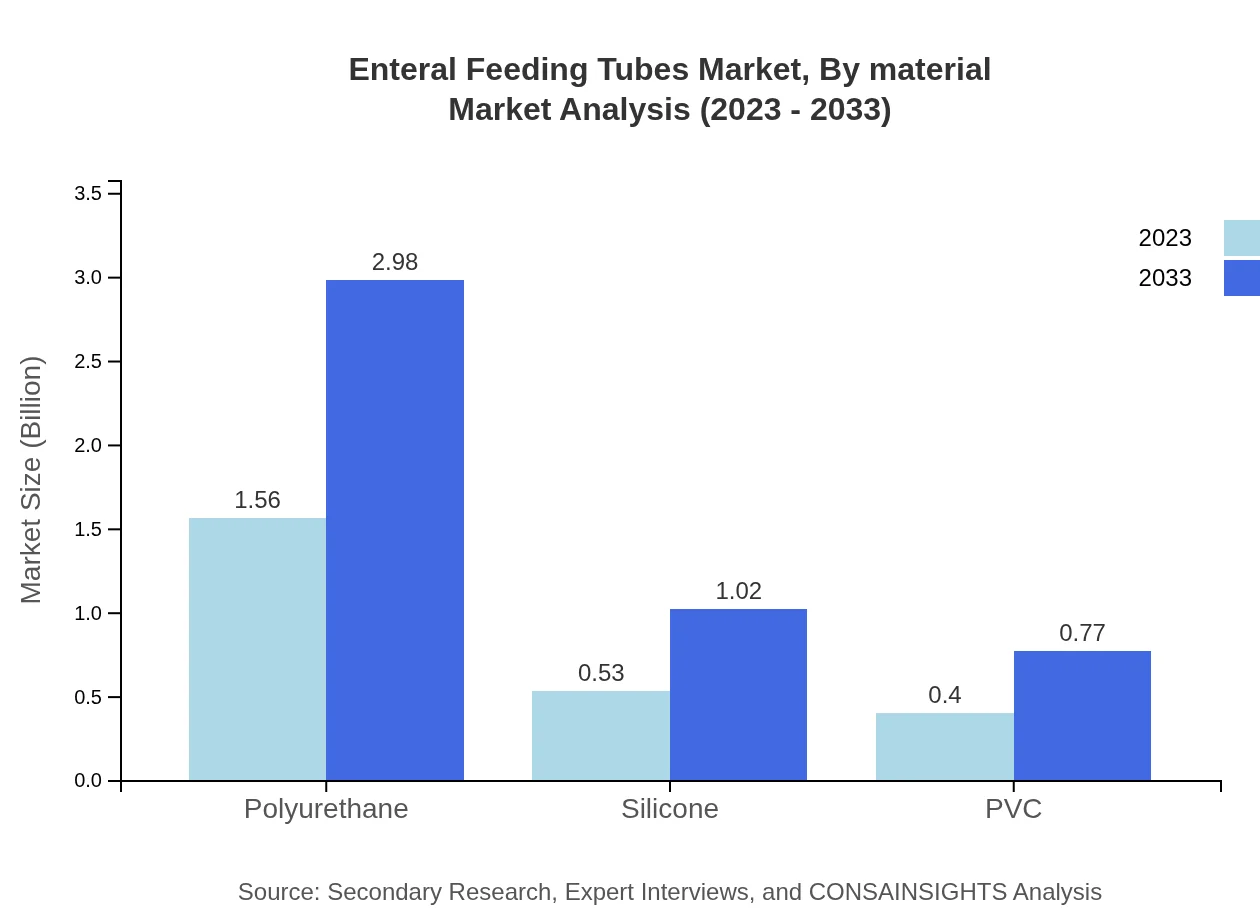
Material subsegments listed are Polyurethane, Silicone, and PVC, which are highlighted for their differing performance and clinical applications.
How are end users categorized?
End-user segments include Hospitals, Home Care, Long-term Care Facilities, and Rehabilitation Centers, reflecting care settings where enteral feeding is applied.
What types of tubes are included in segmentation?
Types covered include Nasogastric Tubes, Orogastric Tubes, Gastrostomy Tubes, and Jejunostomy Tubes, corresponding to varied clinical requirements.
Why is product innovation important in this market?
Innovation addresses patient comfort, reduces complications like blockage and infection, and supports broader adoption across hospital and home-care settings.