

Hypercholesterolemia Drugs Market Report
First published: 12 October 2024 | Last updated: 25 May 2026 | Report Code: hypercholesterolemia-drugs
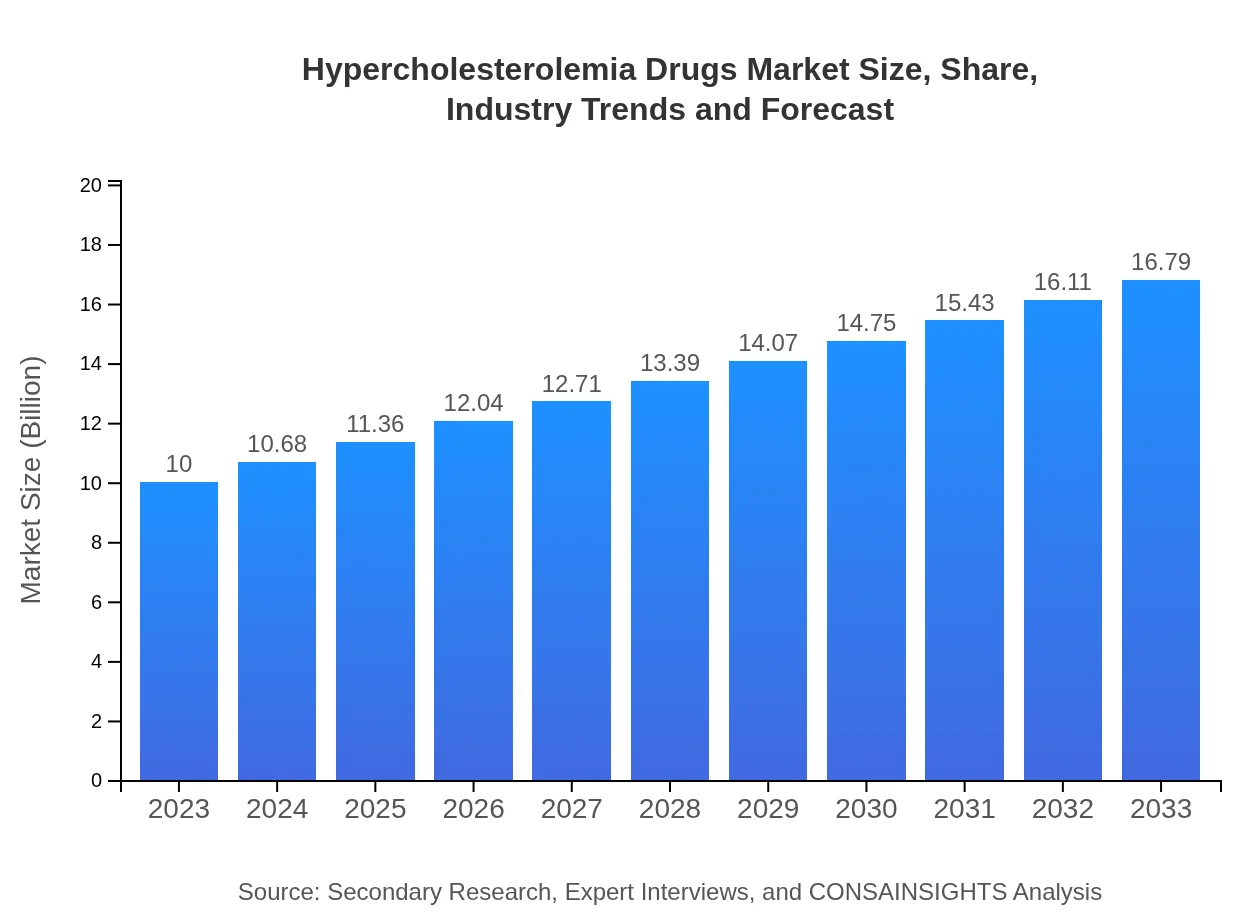
Hypercholesterolemia Drugs Market — USD 10 billion in 2023, Growing to USD 16.79B by 2033 at 5.2% CAGR
This report provides an in-depth analysis of the Hypercholesterolemia Drugs market, covering insights on market size, growth trends, and regional dynamics from 2023 to 2033. The analysis includes comprehensive industry evaluations, segmentation, and forecasts to help stakeholders make informed decisions.
Key Takeaways
- Global market value rising from $10.00 Billion in 2023 to $16.79 Billion in 2033, reflecting a 5.2% CAGR.
- North America is largest regional market, while no single fastest-growing region is stated because regional CAGR differences remain within 0.15 percentage points.
- North America is the largest region, increasing from $3.54 Billion in 2023 to $5.95 Billion in 2033.
- Europe and Asia Pacific also show substantial expansion, with Europe moving from $2.55 Billion to $4.28 Billion and Asia Pacific from $1.99 Billion to $3.33 Billion.
- Product mix includes statins, non-statins and combination therapies; distribution spans hospital, retail and online pharmacies.
- Leading industry participants include Pfizer Inc., Novartis AG, Bristol-Myers Squibb, Sanofi and AstraZeneca.
Hypercholesterolemia Drugs Market Report — Executive Summary
North America remains largest market by forecast-period value, while no single fastest-growing region is stated because top regional growth rates are separated by less than 0.15 percentage points. The market for hypercholesterolemia medications is projected to expand from $10.00 Billion in 2023 to $16.79 Billion by 2033 at a 5.2% CAGR. Demand reflects a rising prevalence of high cholesterol, demographic aging and lifestyle factors that increase cardiovascular risk. Market structure encompasses statins, non-statin agents and combination therapies distributed through hospital, retail and online pharmacies and used across hospitals, clinics and home care. Innovation in formulations and biotechnology, along with competitive activity among major firms such as Pfizer Inc., Novartis AG, Bristol-Myers Squibb, Sanofi and AstraZeneca, shapes product development and commercialization strategies. Regional dynamics vary, with North America identified as the largest regional market. The research integrates primary expert interviews and secondary sources to inform strategic insights for stakeholders.
Key Growth Drivers
- Increasing prevalence of high cholesterol and related cardiovascular conditions driving prescription demand.
- Aging populations raising chronic disease incidence and long-term medication use.
- Lifestyle shifts toward diets and behaviors that elevate cholesterol levels, expanding treatment needs.
- Advances in drug formulation and biotechnology enabling new therapeutic options and combination therapies.
- Expanded distribution channels, including online pharmacy access and hospital pharmacy networks, improving availability.
| Metric | Value |
|---|---|
| Study Period | 2023 - 2033 |
| 2023 Market Size | $10.00 Billion |
| CAGR (2023-2033) | 5.2% |
| 2033 Market Size | $16.79 Billion |
| Top Companies | Pfizer Inc., Novartis AG, Bristol-Myers Squibb, Sanofi, AstraZeneca |
| Published Date | 12 October 2024 |
| Last Modified Date | 25 May 2026 |
Hypercholesterolemia Drugs Market Overview
Customize Hypercholesterolemia Drugs Market Report market research report
- ✔ Get in-depth analysis of Hypercholesterolemia Drugs market size, growth, and forecasts.
- ✔ Understand Hypercholesterolemia Drugs's regional dynamics and industry-specific trends.
- ✔ Identify potential applications, end-user demand, and growth segments in Hypercholesterolemia Drugs
What is the Market Size & CAGR of Hypercholesterolemia Drugs Market Report market in 2023?
Hypercholesterolemia Drugs Industry Analysis
Hypercholesterolemia Drugs Market Segmentation and Scope
Tell us your focus area and get a customized research report.
Hypercholesterolemia Drugs Market Report Market Analysis Report by Region
Europe Hypercholesterolemia Drugs Market Report:
Europe grows from $2.55 Billion in 2023 to $4.28 Billion in 2033. Expansion reflects demographic aging, clinical guideline adoption and uptake of both established statins and newer therapies within diverse healthcare systems.Asia Pacific Hypercholesterolemia Drugs Market Report:
Asia Pacific grows from $1.99 Billion in 2023 to $3.33 Billion in 2033. Market momentum is linked to rising incidence of cardiovascular risk factors, expanding healthcare access and growing adoption of pharmaceutical interventions.North America Hypercholesterolemia Drugs Market Report:
North America is largest regional market, rising from $3.54 Billion in 2023 to $5.95 Billion in 2033. Local demand is driven by established healthcare infrastructure, high clinical diagnosis rates and broad access through hospital and retail pharmacy networks.South America Hypercholesterolemia Drugs Market Report:
Latin America grows from $0.65 Billion in 2023 to $1.08 Billion in 2033. Growth stems from increasing diagnosis rates, improving healthcare delivery and greater availability of therapies across hospital and retail channels.Middle East & Africa Hypercholesterolemia Drugs Market Report:
Middle East and Africa grows from $1.28 Billion in 2023 to $2.14 Billion in 2033. Regional expansion is associated with urbanization, changing diets, and enhanced access to medications through evolving healthcare infrastructures.Tell us your focus area and get a customized research report.
Research Methodology
Hypercholesterolemia Drugs Market Analysis By Drug Type
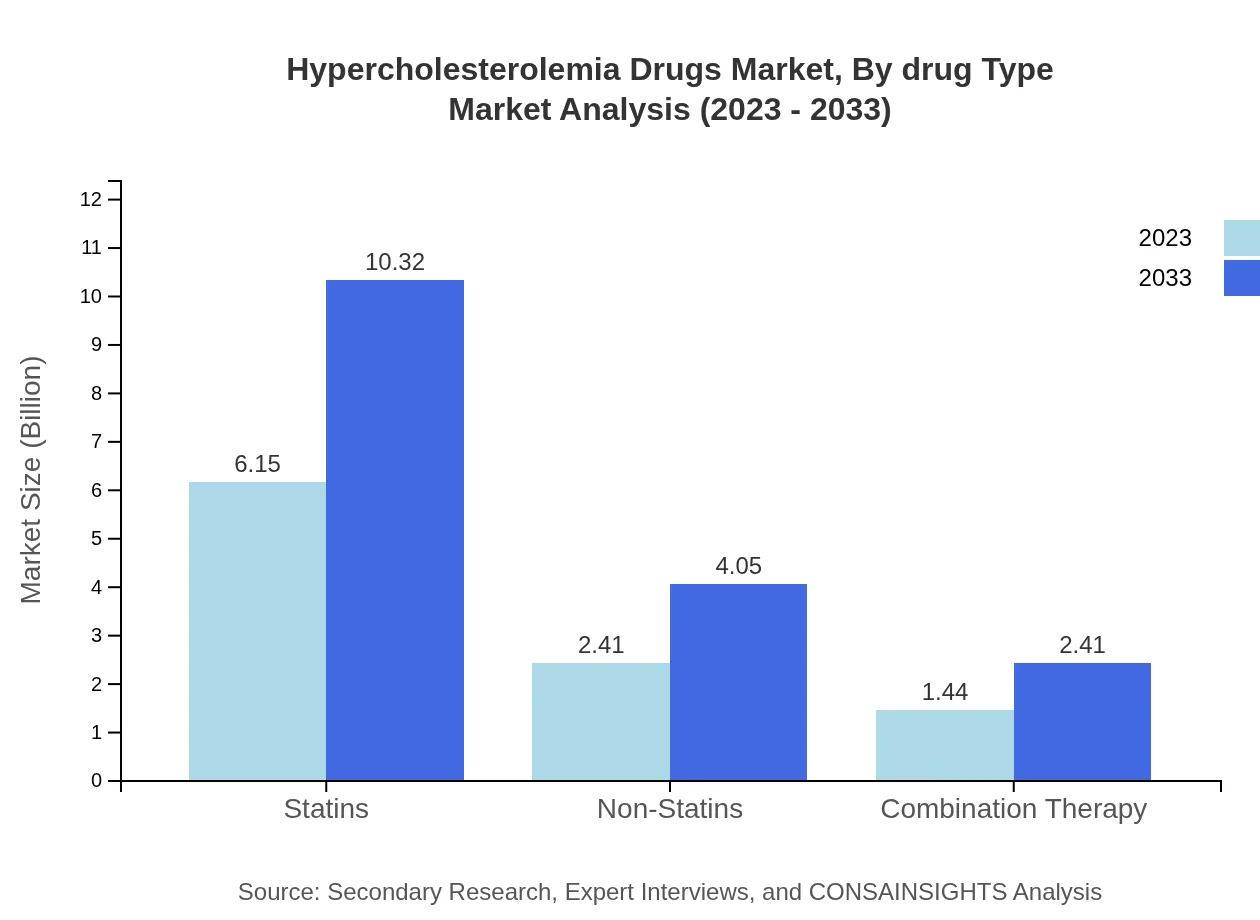
The Hypercholesterolemia Drugs market is predominantly driven by statins, accounting for $6.15 billion in size in 2023, with projections to reach $10.32 billion by 2033, thereby maintaining a 61.48% market share. Non-statin drugs are expected to grow from $2.41 billion to $4.05 billion, capturing approximately 24.14% share, while combination therapies will grow from $1.44 billion to $2.41 billion, attesting to their role in comprehensive cholesterol management strategies.
Hypercholesterolemia Drugs Market Analysis By Route Of Administration
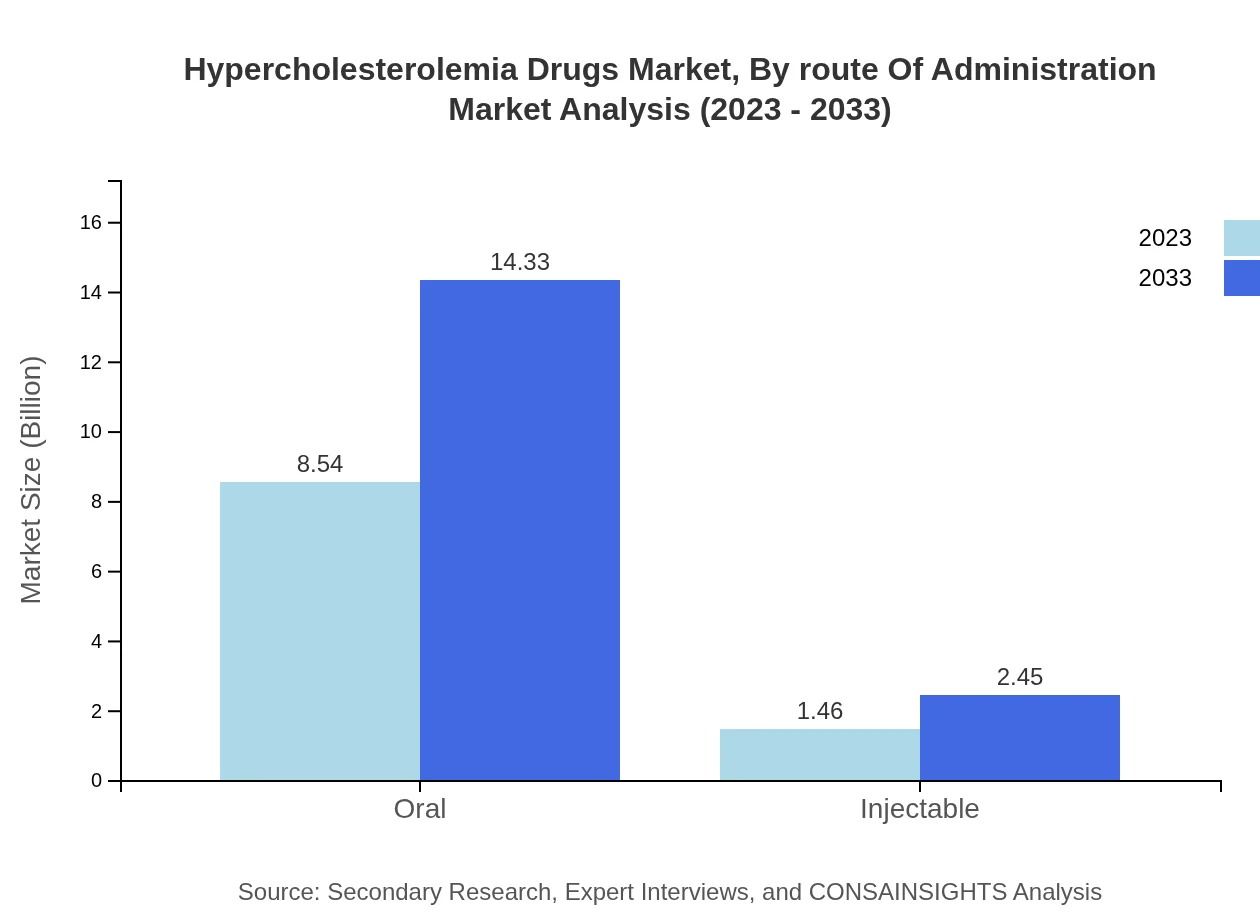
Oral administration is the leading route, projected to grow from $8.54 billion in 2023 to $14.33 billion by 2033, representing 85.38% market share. Injectable forms account for a smaller portion, increasing from $1.46 billion to $2.45 billion, with a market share of 14.62%, reflecting their use in specialized cases.
Hypercholesterolemia Drugs Market Analysis By End User
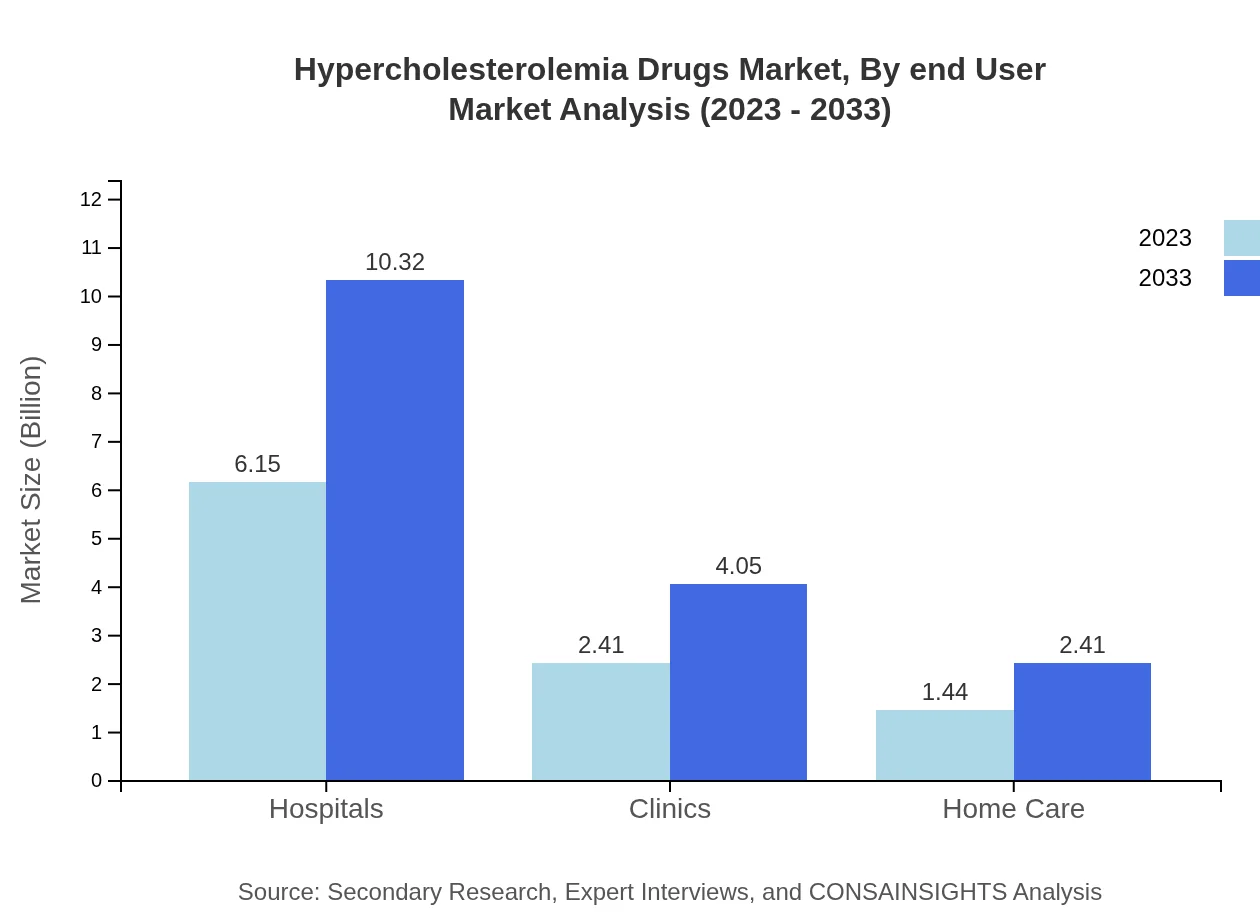
Hospitals dominate the end-user segment, with a share of 61.48% in 2023, projecting growth from $6.15 billion to $10.32 billion by 2033. Clinics follow with a share of 24.14%, growing from $2.41 billion to $4.05 billion, and home care settings represent a growing segment, from $1.44 billion to $2.41 billion, reflecting increasing patient preference for at-home health management.
Hypercholesterolemia Drugs Market Analysis By Distribution Channel
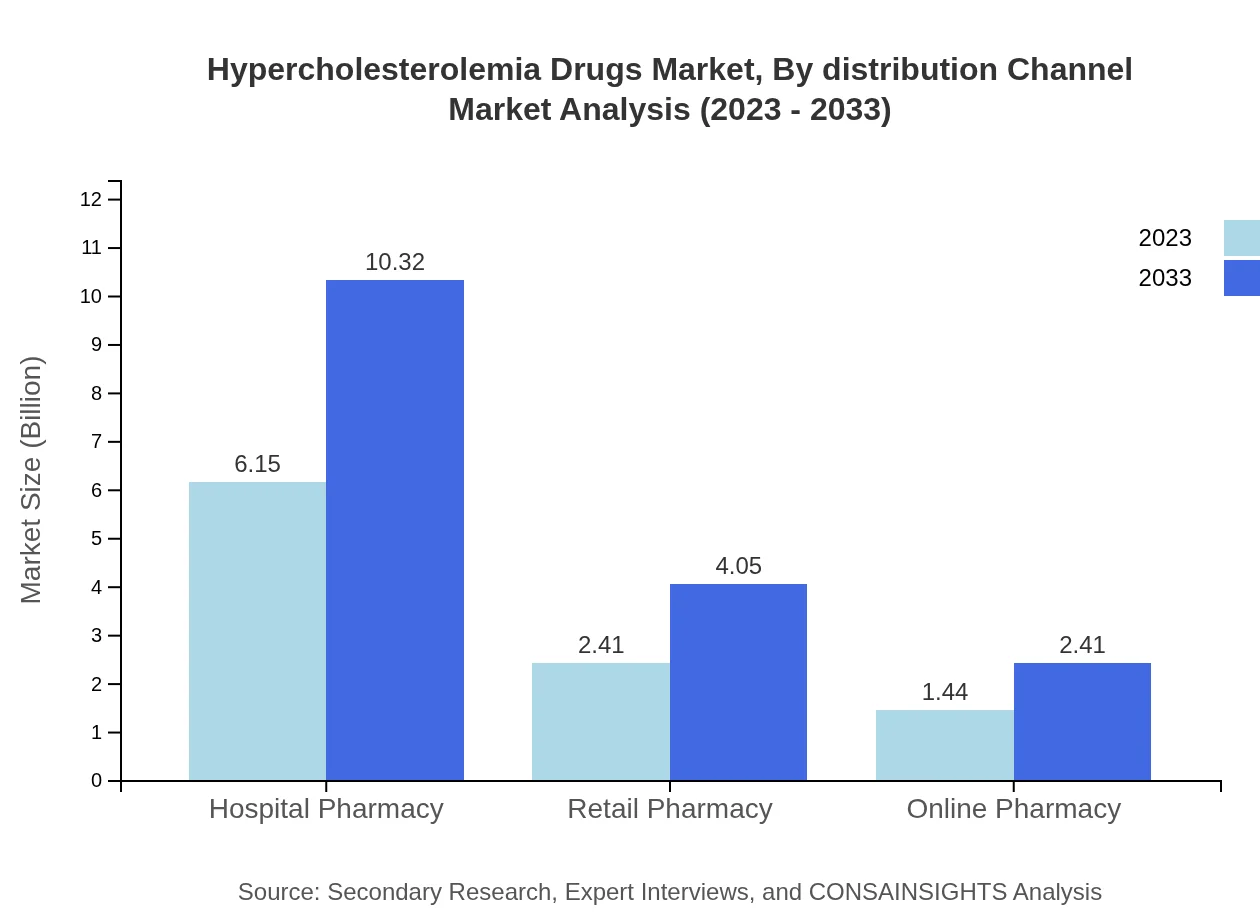
Hospital pharmacies maintain a significant market share of 61.48%, growing from $6.15 billion to $10.32 billion. Retail pharmacies capture 24.14% of the market, moving from $2.41 billion to $4.05 billion, while online pharmacies are witnessing an increasing share of 14.38%, driven by the demand for convenient medication access.
Hypercholesterolemia Drugs Market Analysis By Patient Type
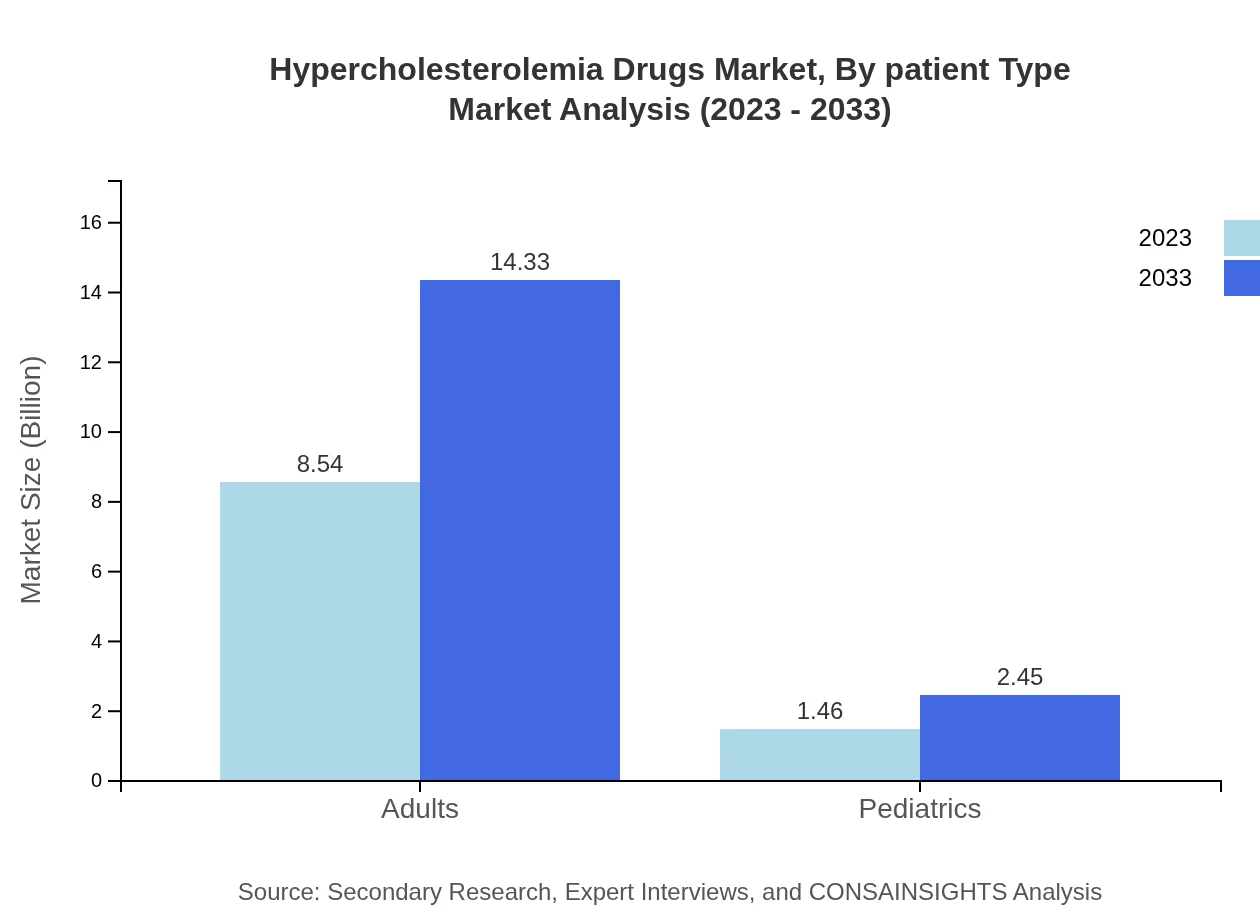
Adults represent a substantial portion of the market, valued at $8.54 billion in 2023, with a projection to reach $14.33 billion by 2033, equating to 85.38%. Pediatric segments, though smaller, are also expanding from $1.46 billion to $2.45 billion, indicating a growing trend towards addressing hypercholesterolemia in the younger population.
Hypercholesterolemia Drugs Market Trends and Future Forecast
Tell us your focus area and get a customized research report.
Global Market Leaders and Top Companies in Hypercholesterolemia Drugs Industry
Pfizer Inc.:
Pfizer is a key player in the industry, known for its robust portfolio of statin medications that address hypercholesterolemia effectively.Novartis AG:
Novartis leads in innovation and development, offering multiple drugs, including non-statins that provide alternative treatments for patients.Bristol-Myers Squibb:
Bristol-Myers Squibb excels in biotechnology solutions, contributing significantly to the therapy options available for cholesterol management.Sanofi:
Sanofi provides both prescription medications and patient care solutions dedicated to reducing cholesterol levels in patients.AstraZeneca:
AstraZeneca is recognized for its advancement in combination therapies, focusing on improving patient outcomes in hypercholesterolemia management.We're grateful to work with incredible clients.







FAQs
What is the market size of the Hypercholesterolemia Drugs Market Report in 2023?
The market size in 2023 is $10.00 Billion, as stated in the report data, representing the baseline for the 2023 to 2033 forecast period.
How big will the market be in 2033?
By 2033 the market is reported to reach $16.79 Billion, reflecting growth over the 2023 baseline during the 2023 to 2033 forecast period.
What is CAGR for the forecast period?
The compound annual growth rate for the 2023 to 2033 interval is 5.2% as provided in the input summary.
Is there a single fastest Growing region in the Hypercholesterolemia Drugs Market Report market?
No single fastest-growing region is stated for the Hypercholesterolemia Drugs Market Report market because the top regional implied CAGR values are within 0.15 percentage points of each other, making the ranking too close to call reliably.
Which companies are named as key players?
Top companies listed include Pfizer Inc., Novartis AG, Bristol-Myers Squibb, Sanofi and AstraZeneca according to the provided report data.
What are the primary product segments covered?
The report includes statins, non-statins and combination therapy as the main drug-type segments, per the segment facts supplied.
Who are the end User segments included in the analysis?
End-user categories specified are hospitals, clinics and home care, reflecting where hypercholesterolemia therapies are administered or monitored.
How is distribution characterized in the report?
Distribution channels cited are hospital pharmacy, retail pharmacy and online pharmacy, indicating multi-channel availability for treatments.
What is the regional outlook for Europe?
Europe is reported to grow from $2.55 Billion in 2023 to $4.28 Billion in 2033, with expansion linked to clinical adoption and demographic factors noted in the context.
Why are combination therapies highlighted?
Combination therapies are emphasized because they form part of the product mix alongside statins and non-statins and reflect evolving clinical approaches to cholesterol management.