

Fire Sprinkler
First published: 15 January 2026 | Last updated: 31 January 2026 | Report Code: fire-sprinkler
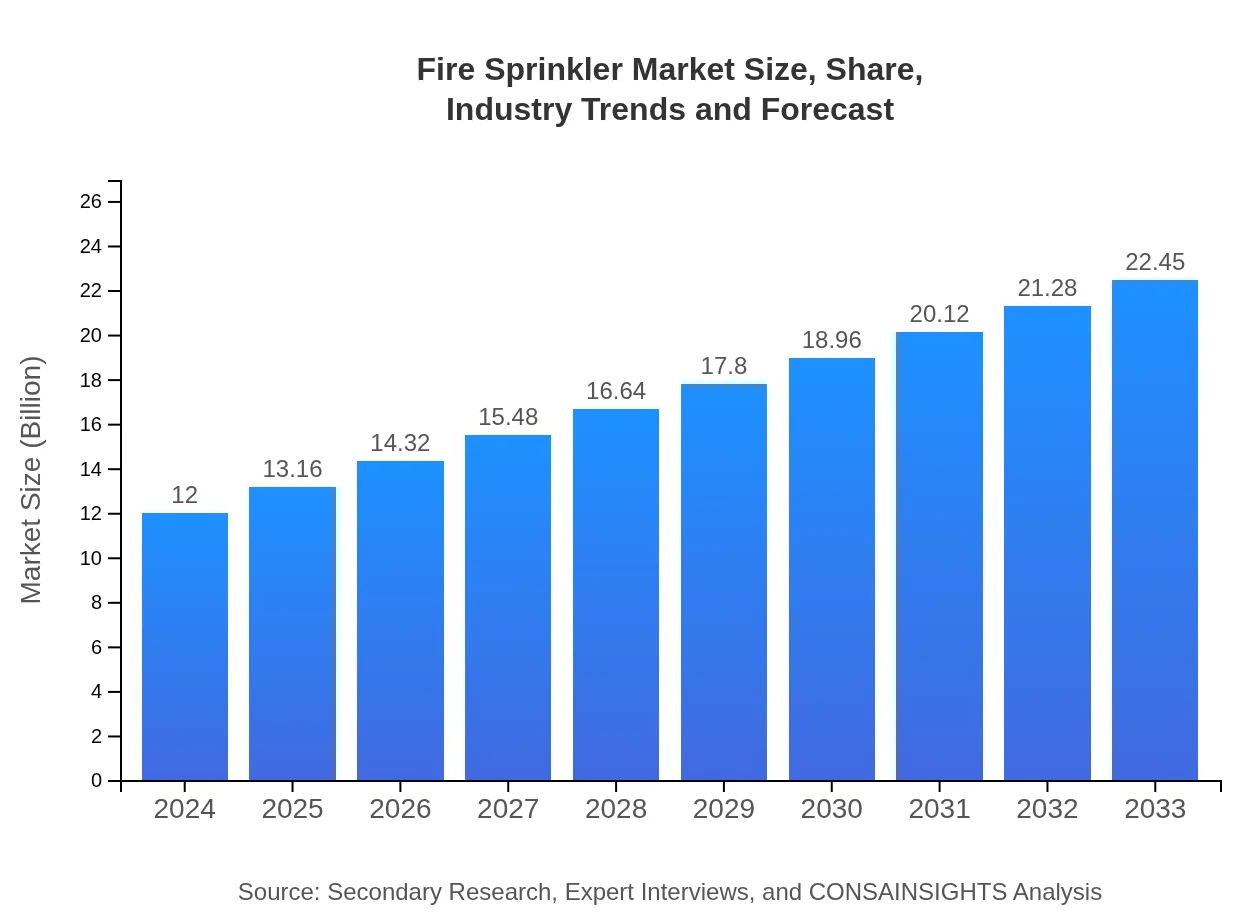
Fire Sprinkler Market — USD $12 Billion in 2024, Growing to USD 22.45 by 2033 at 7.0% CAGR
This comprehensive report on the Fire Sprinkler market provides an in‐depth analysis of current industry trends, technological advancements, market segmentation, and regional performance. Covering forecast insights for the period 2024 to 2033, the report presents data-driven evidence on market size, CAGR, and key factors influencing the market. It is tailored to help industry stakeholders make informed decisions.
| Metric | Value |
|---|---|
| Study Period | 2024 - 2033 |
| 2024 Market Size | $12.00 Billion |
| CAGR (2024-2033) | 7.0% |
| 2033 Market Size | $22.45 Billion |
| Top Companies | Tyco International, UTC Fire & Security, Kidde Fire Systems, Siemens Building Technologies |
| Published Date | 15 January 2026 |
| Last Modified Date | 31 January 2026 |
Fire Sprinkler Market Overview
Customize Fire Sprinkler market research report
- ✔ Get in-depth analysis of Fire Sprinkler market size, growth, and forecasts.
- ✔ Understand Fire Sprinkler's regional dynamics and industry-specific trends.
- ✔ Identify potential applications, end-user demand, and growth segments in Fire Sprinkler
What is the Market Size & CAGR of Fire Sprinkler market in 2024?
Fire Sprinkler Industry Analysis
Fire Sprinkler Market Segmentation and Scope
Tell us your focus area and get a customized research report.
Fire Sprinkler Market Analysis Report by Region
Europe Fire Sprinkler:
Europe has consistently been at the forefront of implementing advanced fire protection measures, as reflected in the market size rise from 3.07 units in 2024 to 5.75 units by 2033. Stringent regulatory frameworks combined with a strong commitment to safety standards have catalyzed market growth. European manufacturers are known for integrating cutting-edge technology into their products, which enhances performance and reliability. The mature market, characterized by a balanced mix of replacement demand and new installations, is supported by scalable innovations aimed at minimizing fire risks in densely populated urban areas. The region’s focus on energy efficiency and sustainable development further amplifies its drive toward modernizing fire suppression systems.Asia Pacific Fire Sprinkler:
The Asia Pacific region is poised for significant growth owing to rapid industrialization, urban expansion, and rising construction activities. In 2024, the market size was estimated at 2.53 units, growing to 4.74 units by 2033. The region benefits from favorable government initiatives aimed at enhancing building safety and promoting the installation of advanced fire suppression systems. Furthermore, technological adoption is accelerating, with modern systems increasingly being implemented in newly developed infrastructure projects. The influence of regional safety regulations and improved public awareness about fire hazards further contribute to the positive market outlook in this area.North America Fire Sprinkler:
North America remains one of the leading regions in the Fire Sprinkler market with a robust market size that grew from 4.59 units in 2024 to 8.58 units by 2033. The mature market is driven by stringent fire safety regulations and a heightened emphasis on preventive measures. Advanced technologies and high consumer awareness regarding fire hazards have resulted in widespread adoption of state-of-the-art sprinkler systems. Sector-specific advancements in commercial, industrial, and residential projects continuously drive innovation and refined safety protocols. The region’s established infrastructure and ongoing upgrades in building safety standards foster a competitive environment where market leaders continue to push for technological advancements.South America Fire Sprinkler:
In South America, the Fire Sprinkler market is emerging as a critical component of urban and industrial safety measures. With a market size of 0.21 units in 2024, expanding to 0.40 units by 2033, the region is witnessing gradual growth. The relatively smaller market size reflects ongoing developmental challenges and a slower pace of infrastructure investments compared to other regions. However, significant opportunities exist as governments and private entities intensify efforts to modernize fire safety systems. Increased public and private investments, coupled with the adoption of international fire safety standards, are expected to contribute to steady market expansion in the coming years.Middle East & Africa Fire Sprinkler:
The Middle East and Africa region, with a market size that expanded from 1.59 units in 2024 to 2.98 units by 2033, is gradually emerging as a significant market for Fire Sprinkler systems. Rapid urbanization, coupled with increasing investments in infrastructure and commercial developments, is prompting heightened demand for comprehensive fire safety solutions. Governments in these regions are actively promoting safety standards and encouraging the adoption of modern fire suppression technologies. Challenges such as economic fluctuations and less mature infrastructure are being addressed through targeted investments and international collaborations, fostering an environment conducive to steady market growth.Tell us your focus area and get a customized research report.
Fire Sprinkler Market Analysis By System
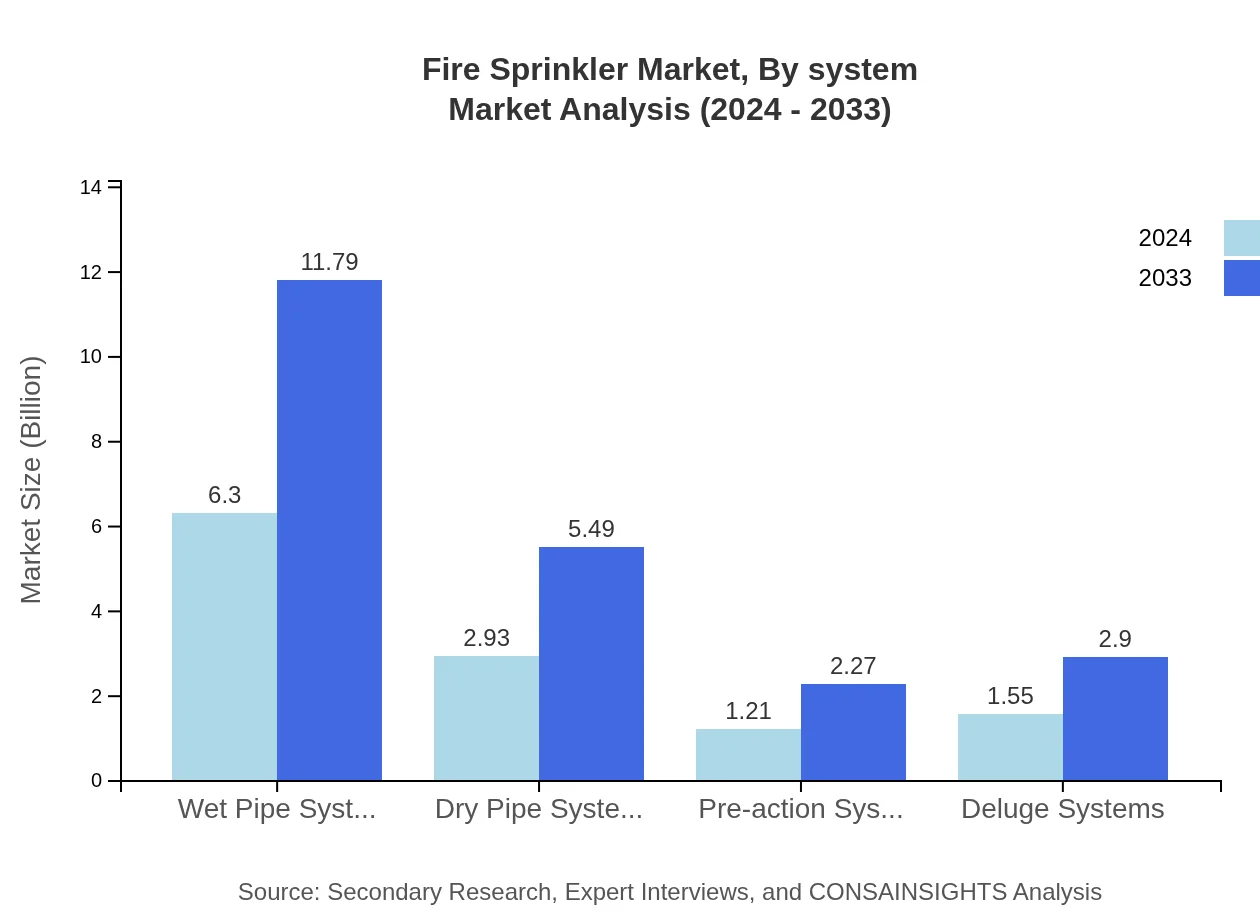
The system segment in the Fire Sprinkler market is segmented into several specialized systems including Wet Pipe, Dry Pipe, Pre-action, Deluge, Standard, Intelligent, and Modular systems. Wet Pipe Systems are the most prevalent, with a market size growing from 6.30 units in 2024 to 11.79 units by 2033 and maintaining a consistent market share of 52.51%. Dry Pipe Systems show promising growth as well, with their size increasing from 2.93 units to 5.49 units and a stable share of 24.45%. Pre-action Systems, designed for high-risk environments, are witnessing growth from 1.21 units to 2.27 units, and Deluge Systems are expected to grow from 1.55 to 2.90 units. Additionally, both Standard Systems and Intelligent Systems, along with Modular Systems, are experiencing moderate yet steady increases in their sizes and shares. This diverse system segmentation offers valuable insights into performance differentials, installation preferences, and required maintenance protocols, highlighting the broad spectrum of safety applications and customization available to meet varied operational demands.
Fire Sprinkler Market Analysis By Application
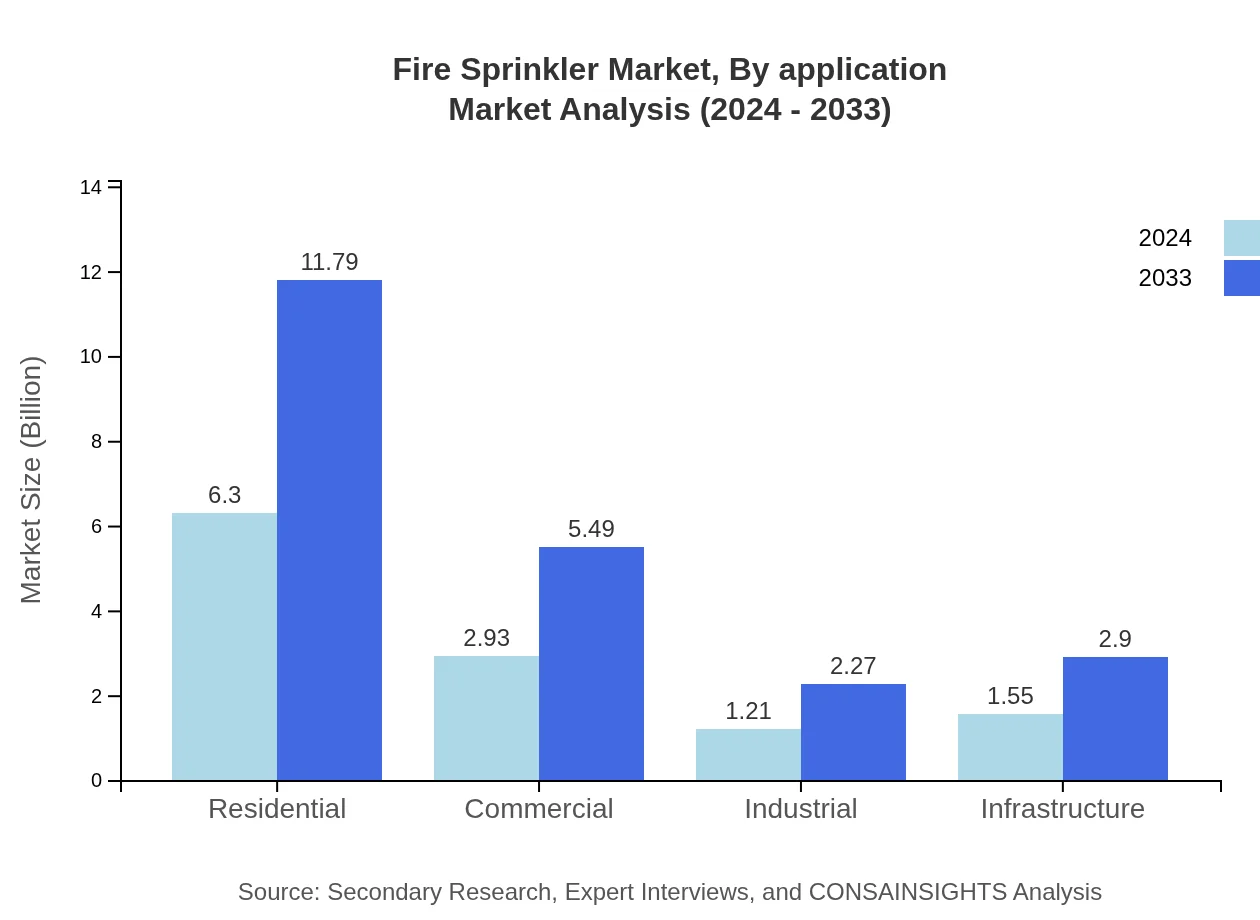
The application segment of the Fire Sprinkler market is diverse, covering Residential, Commercial, Industrial, and Infrastructure sectors, each with unique needs and growth drivers. Residential applications account for a significant market size, growing from 6.30 units in 2024 to 11.79 units by 2033, with a steady share of 52.51% due to increasing focus on safety in new housing developments and renovations of existing properties. The Commercial segment shows similar promising trends with sizes moving from 2.93 to 5.49 units and holding a 24.45% share. For Industrial applications, the market size expands from 1.21 to 2.27 units, while Infrastructure projects are transitioning from 1.55 to 2.90 units. This segmentation highlights how different sectors are adapting fire safety measures to meet distinct operational challenges, ensuring comprehensive coverage and tailored risk mitigation strategies across the industry.
Fire Sprinkler Market Analysis By Technology
Technology plays a critical role in enhancing the performance and reliability of Fire Sprinkler systems. The incorporation of intelligent and modular designs has redefined traditional fire protection measures. Advanced sensor integration, remote monitoring, and automated response mechanisms have not only improved the speed and accuracy of fire detection but also optimized maintenance scheduling. These technological enhancements are transforming conventional systems into smart networks capable of real-time data analytics and predictive maintenance. The drive towards digitalization is aimed at reducing false alarms, improving operational efficiency, and extending the lifecycle of the systems. Continuous innovation in software and hardware integration is expected to create further differentiation among market players, providing end-users with reliable, cost-effective, and state-of-the-art fire safety solutions.
Fire Sprinkler Market Analysis By Service
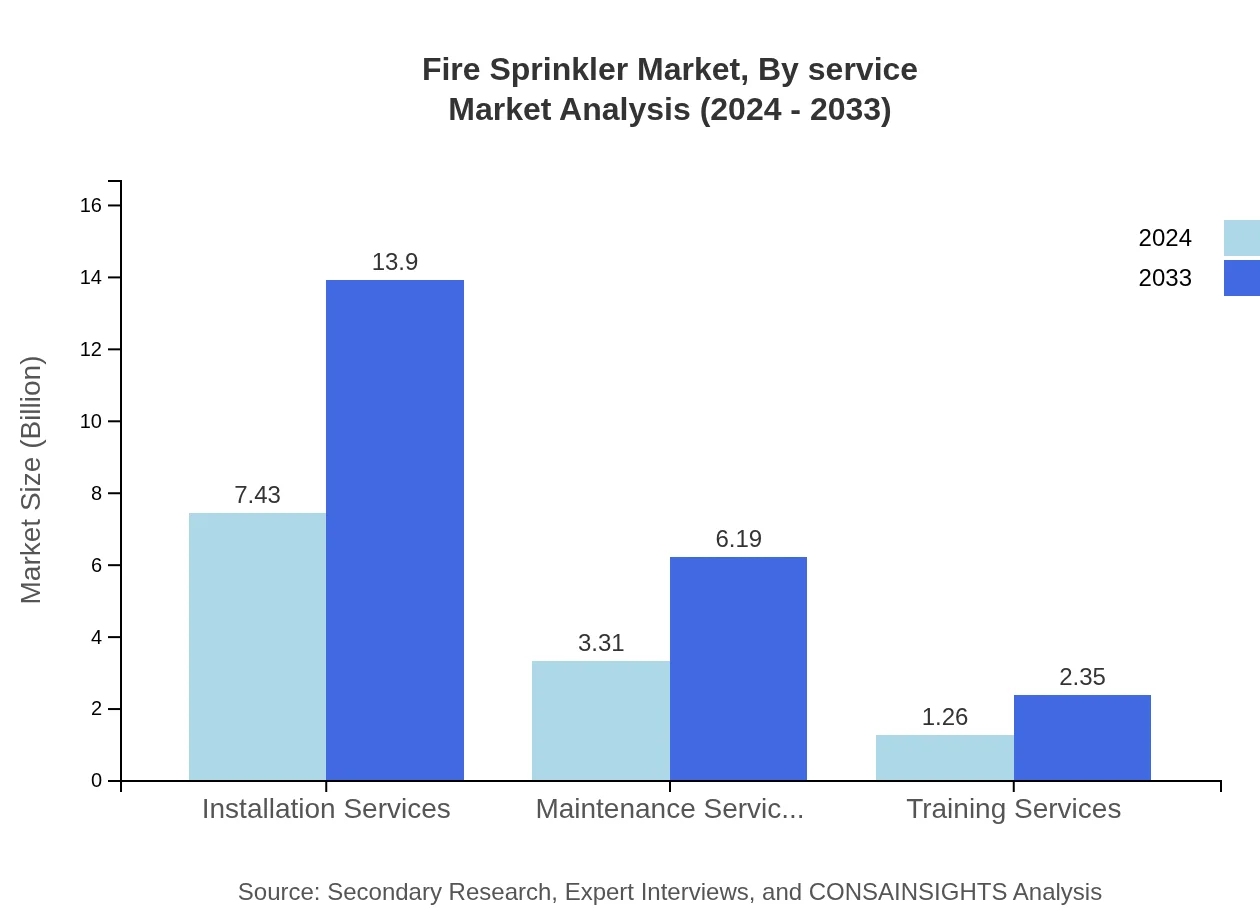
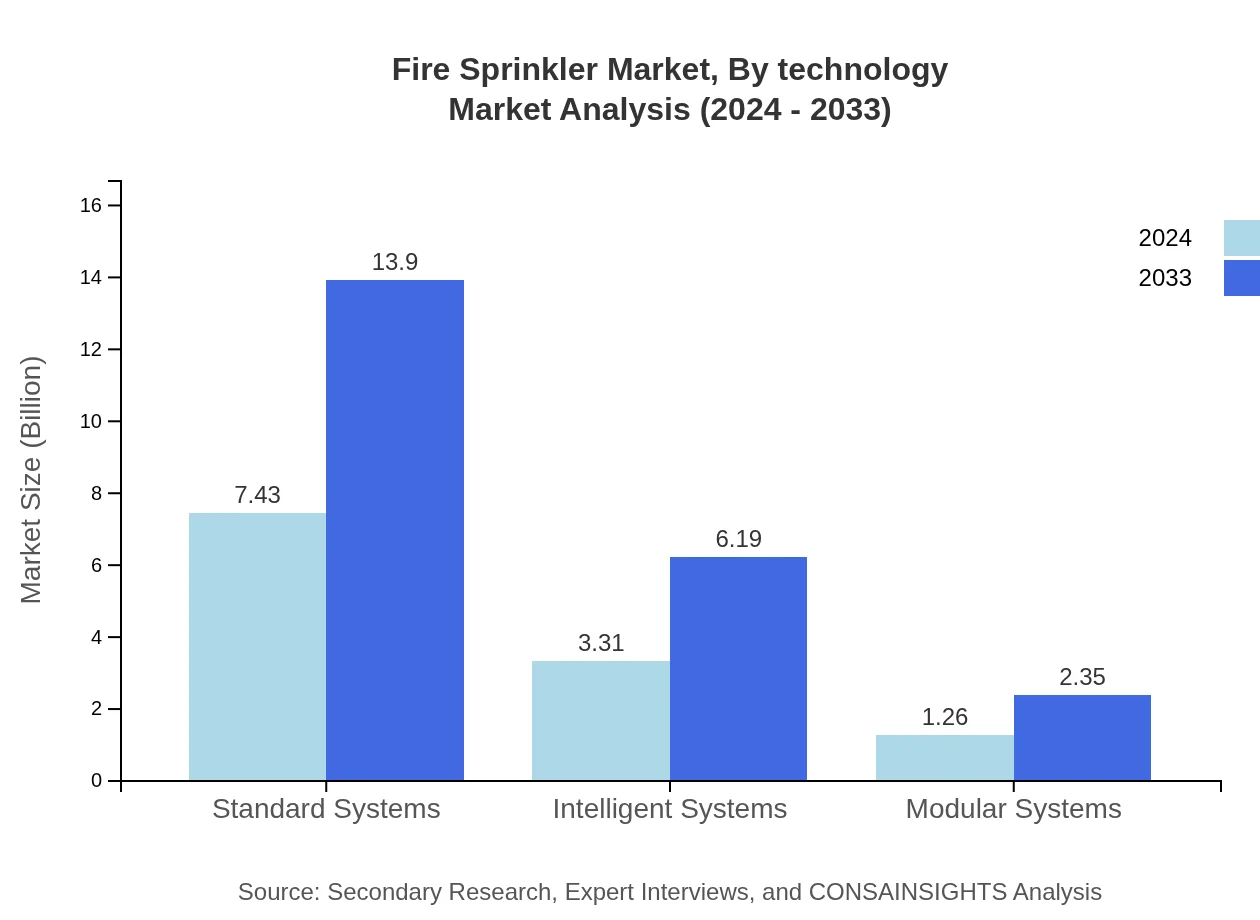
Service offerings in the Fire Sprinkler market, including installation, maintenance, and training services, are critical for ensuring the durability and functionality of fire protection systems. Installation Services dominate the service segment with a market size projected to increase from 7.43 units in 2024 to 13.90 units by 2033, representing a major share of 61.95%. Maintenance Services, essential for sustaining operational reliability, are forecasted to grow from 3.31 to 6.19 units, holding a share of about 27.58%. Training Services, although smaller in scale with growth from 1.26 to 2.35 units, remain vital to ensuring that operators are well-versed in system functionalities and emergency response protocols. These services collectively contribute to the system’s overall performance and longevity, and they facilitate compliance with evolving safety regulations and standards.
Fire Sprinkler Market Trends and Future Forecast
Tell us your focus area and get a customized research report.
Global Market Leaders and Top Companies in Fire Sprinkler Industry
Tyco International:
Tyco International is a global leader in fire protection services and solutions. The company is renowned for its innovative technologies and comprehensive fire safety systems that cater to industrial, commercial, and residential markets. Their commitment to research and development ensures cutting-edge advancements in fire suppression.UTC Fire & Security:
UTC Fire & Security is another major player recognized for its reliable and technologically advanced fire sprinkler systems. The company focuses on integrating smart technologies into their products, providing efficient fire suppression solutions that meet stringent international safety standards.Kidde Fire Systems:
Kidde Fire Systems offers a wide range of fire protection solutions. Known for its robust product quality and innovative designs, Kidde has established a strong market presence globally. Their systems are widely adopted across various sectors including commercial, residential, and industrial applications.Siemens Building Technologies:
Siemens Building Technologies leverages its technological expertise to deliver integrated fire safety solutions. The company’s focus on automation and digitalization has enabled businesses to monitor and manage fire safety protocols more efficiently, making them a trusted name in the industry.We're grateful to work with incredible clients.









FAQs
How can the fire Sprinkler report help align our marketing strategy with customer adoption trends?
The fire-sprinkler report showcases a projected market size of $12 billion with a CAGR of 7.0%. Analyzing adoption trends allows businesses to tailor their marketing strategies effectively, targeting specific customer segments and regions to maximize engagement.
What product features are in highest demand according to the fire Sprinkler trends?
Current trends indicate a high demand for Wet Pipe Systems, expected to represent 52.51% of the market share by 2033. Installation and maintenance services are also critical, reflecting evolving customer expectations for reliability and advanced safety technology.
Which regions offer the best market entry and expansion opportunities in the fire Sprinkler industry?
The North American market is projected to grow from $4.59 billion in 2024 to $8.58 billion by 2033. Europe, with growth from $3.07 billion to $5.75 billion, also presents significant expansion opportunities, highlighting its robust infrastructure needs.
What emerging technologies and innovations are shaping the fire Sprinkler market?
Innovations such as Intelligent Systems and smart technology integrations are crucial in the fire-sprinkler market. Additionally, advances in Modular Systems identify growing trends towards scalable safety solutions in both commercial and industrial sectors.
Does the fire Sprinkler report include competitive landscape and market share analysis?
Yes, the fire-sprinkler report provides a comprehensive competitive landscape detailing the market share of various segments. This includes insights on market leaders and emerging players across key regions, essential for strategic planning.
How can executives use the fire Sprinkler report to evaluate investment risks and ROI?
Executives can assess potential ROI by analyzing market demands and projected growth rates. With a CAGR of 7.0%, decision-makers can make informed investments based on regional performance data and evolving segment needs.
What is the market size of fire Sprinkler systems?
The fire-sprinkler market is valued at $12 billion in 2024, with a projected growth to $21.1 billion by 2033, reflecting a robust CAGR of 7.0%. This growth is driven by heightened safety regulations and demand for advanced fire protection solutions.