
Reports >
Life Sciences
>
Gemcitabine Hydrochloride Market Report

Gemcitabine Hydrochloride Market Report
First published: 20 October 2024 | Last updated: 28 May 2026 | Report Code: gemcitabine-hydrochloride
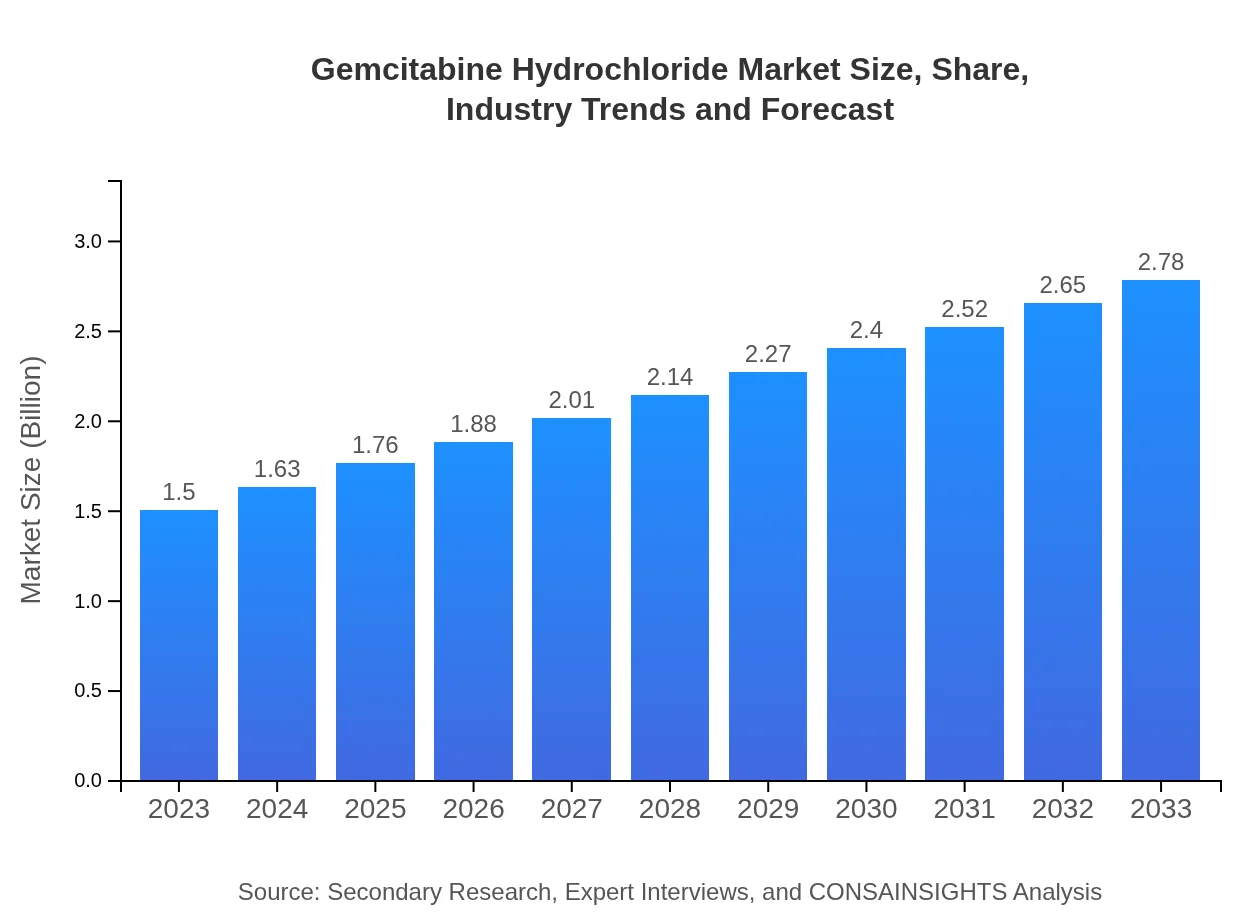
Gemcitabine Hydrochloride Market — USD $1.5 Billion in 2023, Growing to USD 2.78null by 2033 at 6.2% CAGR
This report provides a comprehensive analysis of the Gemcitabine Hydrochloride market from 2023 to 2033, offering insights into market size, growth rates, key trends, regional performance, and competitive landscape.
Key Takeaways
- Global market expands from $1.50 Billion in 2023 to $2.78 Billion by 2033, with an overall CAGR of 6.2%.
- North America is largest regional market; Latin America is regional market region based on implied CAGR across 2023 to 2033.
- Latin America is identified as the regional market region, rising from $0.05 Billion in 2023 to $0.1 Billion in 2033.
- Europe grows from $0.5 Billion in 2023 to $0.93 Billion in 2033, reflecting sustained demand for oncology treatments.
- Top companies include Boehringer Ingelheim, Sandoz (A Novartis Division), Teva Pharmaceutical Industries Ltd., and Fresenius Kabi.
Gemcitabine Hydrochloride Market Report — Executive Summary
Regional analysis shows North America as largest market and Latin America as fastest-growing region by implied CAGR. The Gemcitabine Hydrochloride market is projected to grow from $1.50 Billion in 2023 to $2.78 Billion by 2033 at a 6.2% CAGR. Growth is driven by rising oncology demand, improvements in formulation and delivery systems, and an emphasis on tailored treatment approaches. Regional performance varies: North America holds the largest market value, while Latin America shows the highest implied growth rate. Key participants such as Boehringer Ingelheim, Sandoz (A Novartis Division), Teva Pharmaceutical Industries Ltd., and Fresenius Kabi compete through formulation innovation and strategic distribution. Segmentation spans formulation, therapeutic use, distribution channel, and end-user categories, which supports a granular view of market dynamics. Ongoing clinical research and partnerships are expected to shape product pipelines and influence adoption of novel combinations and advanced delivery systems across markets.
Key Growth Drivers
- Increasing prevalence of cancers that utilize gemcitabine-based regimens increases demand for established oncology agents.
- Advances in drug delivery and formulation improve therapeutic performance and patient adherence, supporting wider clinical adoption.
- Expansion of hospital and oncology care infrastructure in multiple regions enhances access through hospital pharmacies and specialized centers.
- Product development focusing on novel combinations and advanced delivery systems creates opportunities for market differentiation and uptake.
- Strategic activity by major manufacturers strengthens supply chains and availability across distribution channels, including retail and online pharmacies.
| Metric | Value |
|---|---|
| Study Period | 2023 - 2033 |
| 2023 Market Size | $1.50 Billion |
| CAGR (2023-2033) | 6.2% |
| 2033 Market Size | $2.78 Billion |
| Top Companies | Boehringer Ingelheim, Sandoz (A Novartis Division), Teva Pharmaceutical Industries Ltd., Fresenius Kabi |
| Published Date | 20 October 2024 |
| Last Modified Date | 28 May 2026 |
Gemcitabine Hydrochloride Market Overview
Customize Gemcitabine Hydrochloride Market Report market research report
- ✔ Get in-depth analysis of Gemcitabine Hydrochloride market size, growth, and forecasts.
- ✔ Understand Gemcitabine Hydrochloride's regional dynamics and industry-specific trends.
- ✔ Identify potential applications, end-user demand, and growth segments in Gemcitabine Hydrochloride
What is the Market Size & CAGR of Gemcitabine Hydrochloride Market Report market in 2023?
Gemcitabine Hydrochloride Industry Analysis
Gemcitabine Hydrochloride Market Segmentation and Scope
Tell us your focus area and get a customized research report.
Gemcitabine Hydrochloride Market Report Market Analysis Report by Region
Europe Gemcitabine Hydrochloride Market Report:
Europe grows from $0.5 Billion in 2023 to $0.93 Billion in 2033. Regional momentum reflects ongoing adoption of improved treatment regimens, supportive clinical research activities, and demand within hospital and oncology center settings.Asia Pacific Gemcitabine Hydrochloride Market Report:
Asia Pacific grows from $0.25 Billion in 2023 to $0.47 Billion in 2033. Growth is underpinned by expanding oncology services, increased healthcare investment, and interest in advanced delivery systems and novel therapeutic combinations.North America Gemcitabine Hydrochloride Market Report:
North America is largest regional market, rising from $0.54 Billion in 2023 to $0.99 Billion in 2033. Local drivers include concentrated oncology infrastructure, established hospital procurement channels, and investment in formulation and delivery innovations that support sustained demand.South America Gemcitabine Hydrochloride Market Report:
Latin America is fastest-growing region by implied CAGR, increasing from $0.05 Billion in 2023 to $0.1 Billion in 2033. The region is identified as the fastest-growing market, driven by expanding access to oncology care and growing uptake of established chemotherapy agents.Middle East & Africa Gemcitabine Hydrochloride Market Report:
Middle East and Africa grows from $0.16 Billion in 2023 to $0.29 Billion in 2033. Expansion is supported by increasing healthcare infrastructure, broader hospital-based treatment availability, and interest in improved formulation and delivery options.Tell us your focus area and get a customized research report.
Research Methodology
Gemcitabine Hydrochloride Market Analysis By Formulation
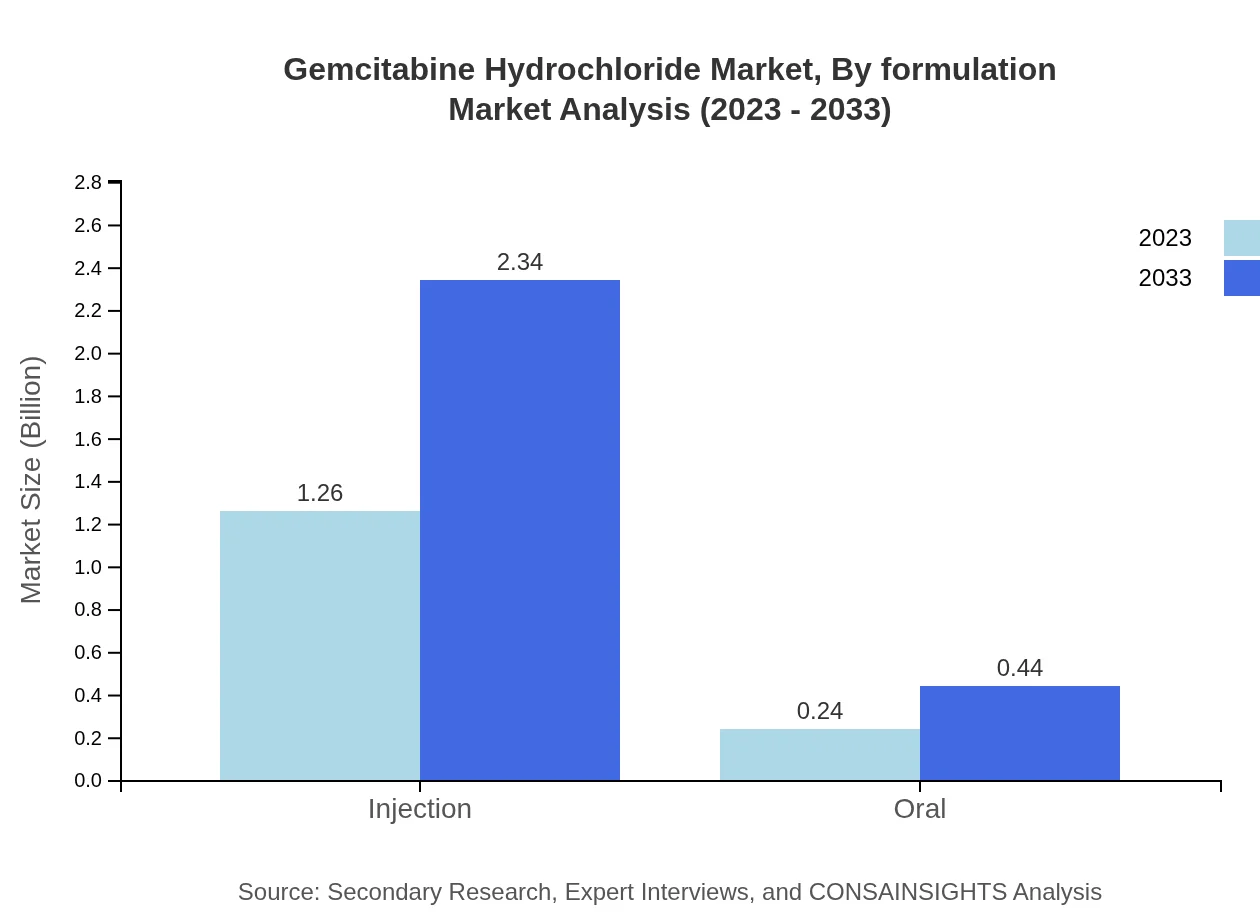
The market segment for formulations of Gemcitabine Hydrochloride includes injection and oral types. In 2023, injections constitute a significant market size of $1.26 billion and are expected to reach $2.34 billion by 2033, holding an84.23% share. Oral formulations, while smaller, contribute significantly, projected to grow from $0.24 billion to $0.44 billion over the same period.
Gemcitabine Hydrochloride Market Analysis By Therapeutic Use
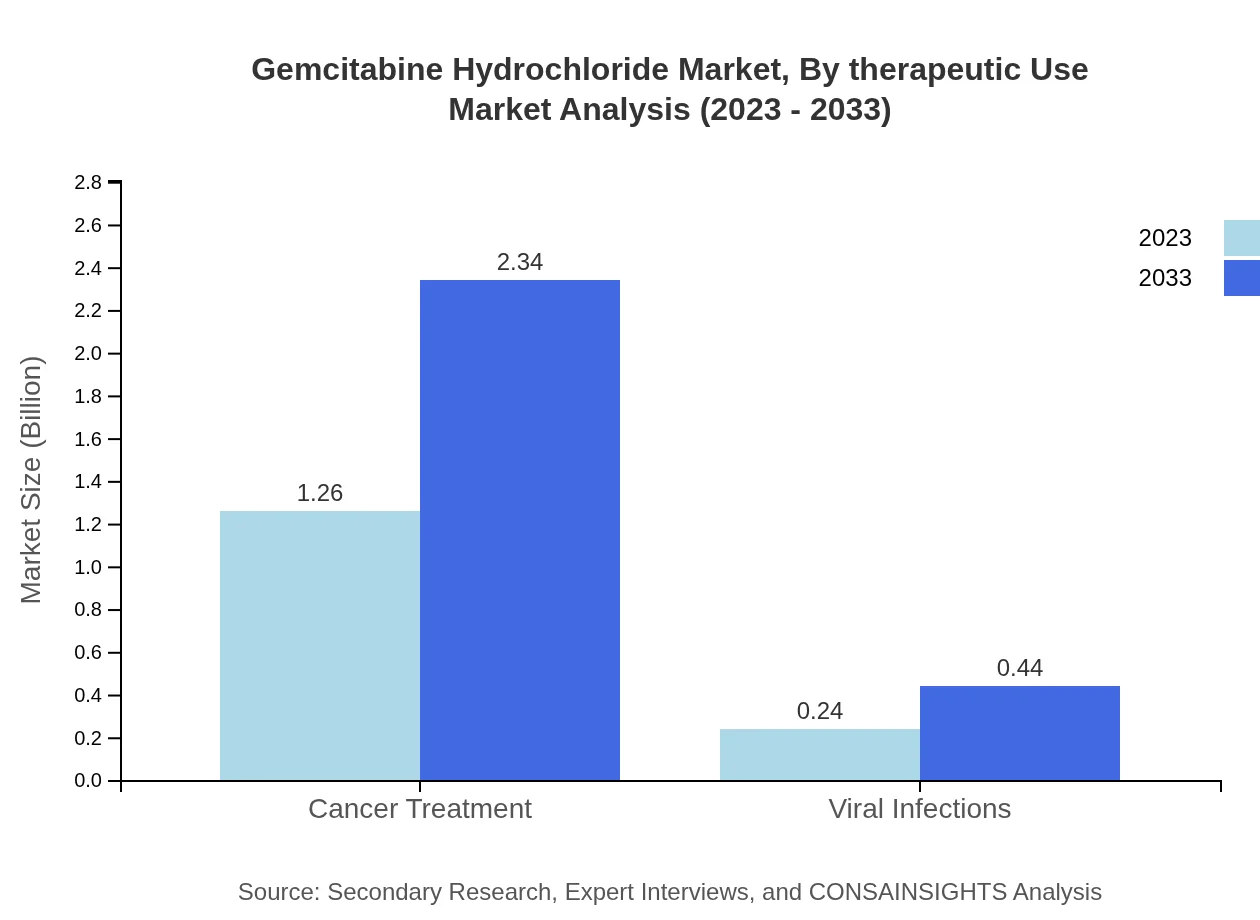
Cancer treatment dominates the therapeutic use segment, where Gemcitabine is crucial. In 2023, the size for cancer treatment applications stands at $1.26 billion, expected to grow to $2.34 billion by 2033, maintaining an84.23% market share. Viral infections and other off-label uses of Gemcitabine comprise the remaining proportions.
Gemcitabine Hydrochloride Market Analysis By Distribution Channel
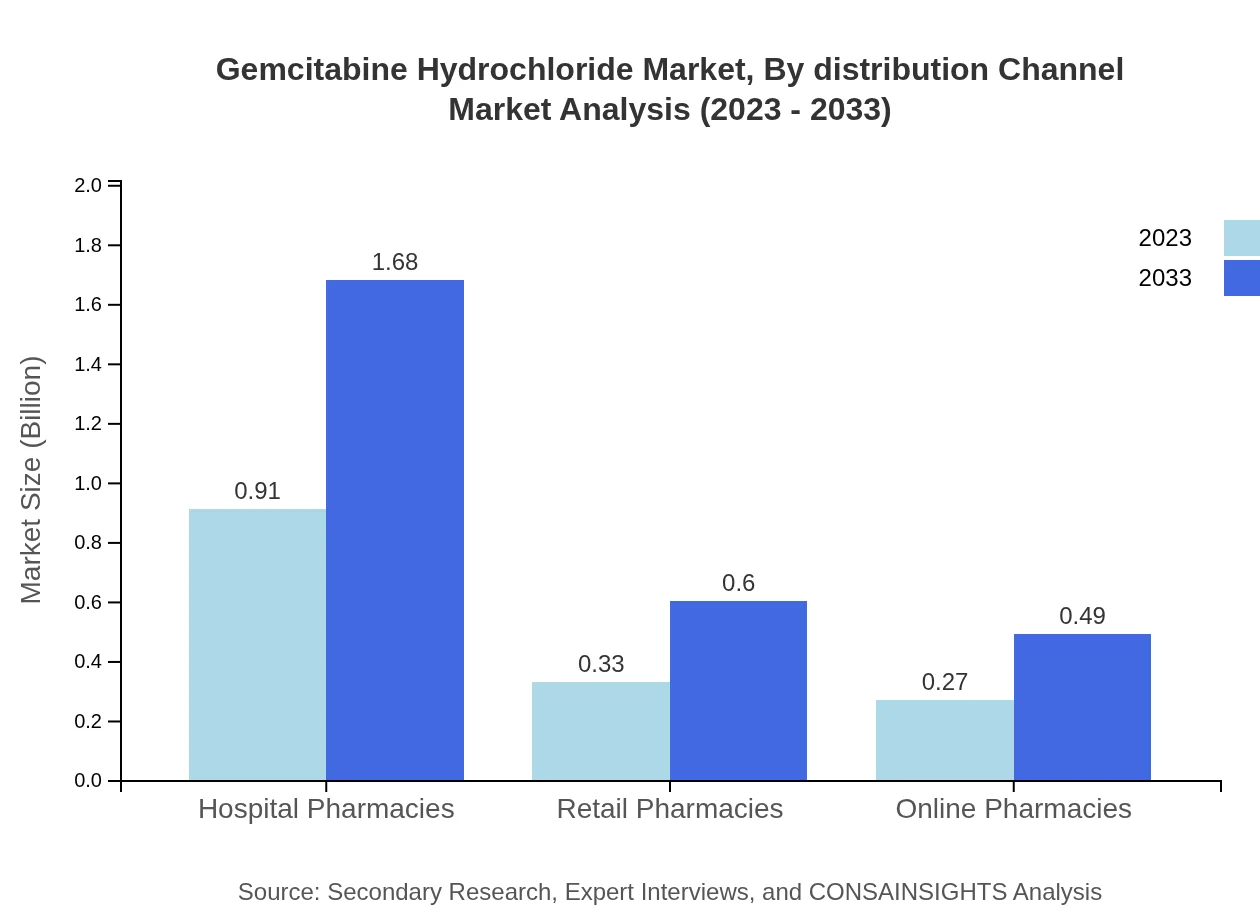
Hospitals and oncology centers remain the significant distribution channels. In 2023, hospitals hold a leading market size at $0.91 billion, growing to $1.68 billion by 2033. Retail and online pharmacies are also expanding their share, with online pharmacies projected to increase from $0.27 billion to $0.49 billion.
Gemcitabine Hydrochloride Market Analysis By End User
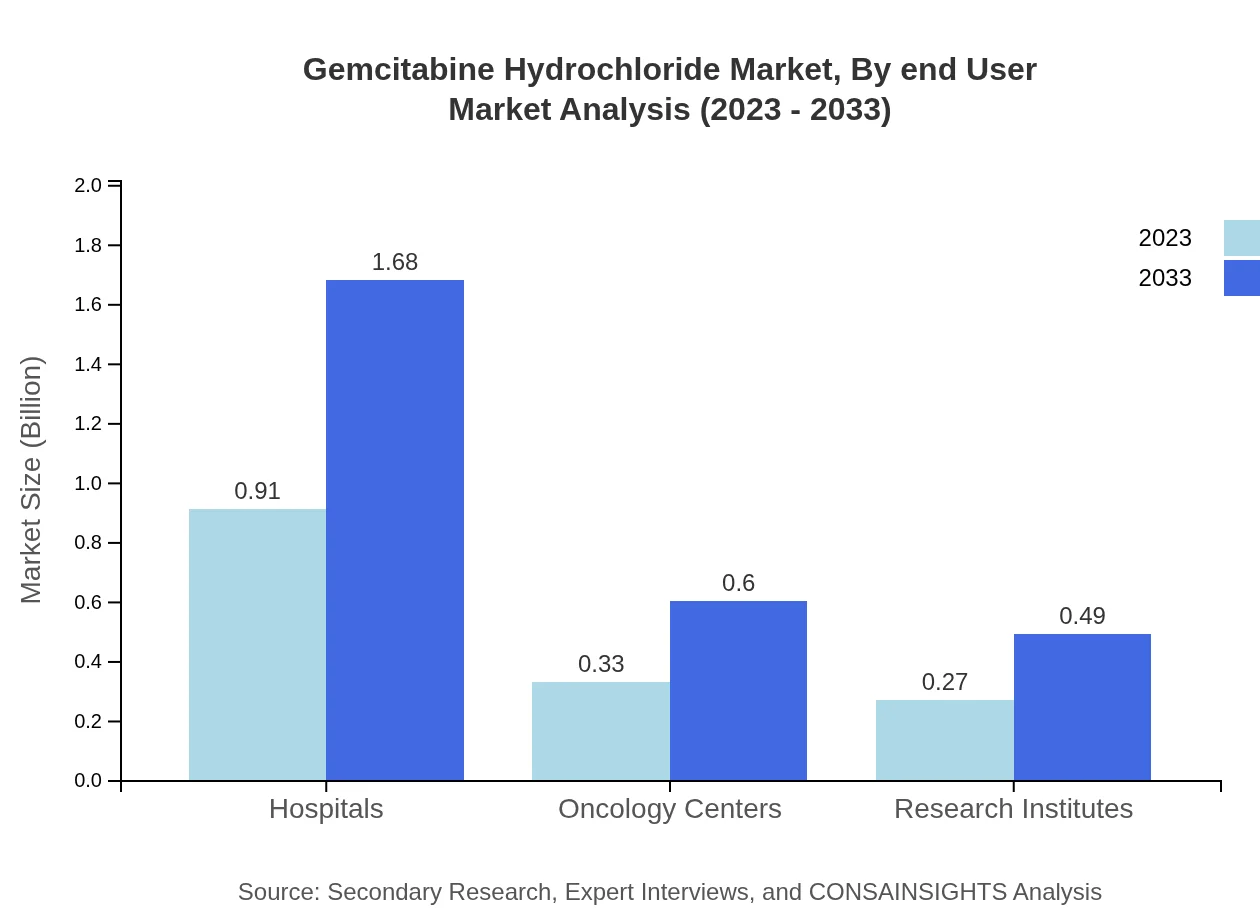
The predominant end-users of Gemcitabine Hydrochloride are hospitals, oncology centers, and research institutions. In 2023, hospitals account for about 60.5% market share, which is expected to remain constant through 2033, while oncology centers are gradually increasing their share as specialized care rises.
Gemcitabine Hydrochloride Market Analysis By Region New Drugs
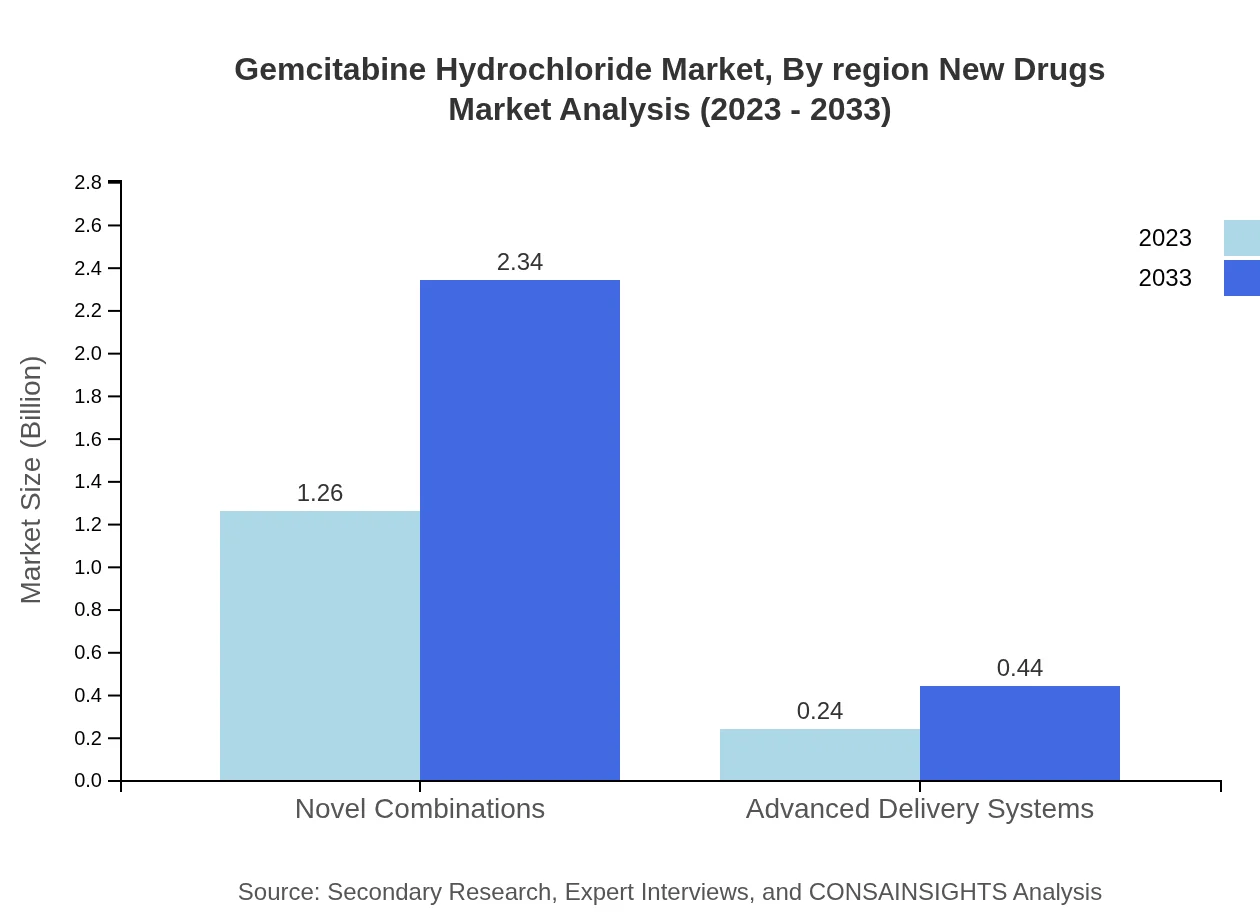
Research into new drug combinations is on the rise, with novel approaches enhancing Gemcitabine’s efficacy and expanding treatment options. This segment is crucial for attracting investment and signifies progress in personalized medicine.
Gemcitabine Hydrochloride Market Trends and Future Forecast
Tell us your focus area and get a customized research report.
Global Market Leaders and Top Companies in Gemcitabine Hydrochloride Industry
Boehringer Ingelheim:
Boehringer Ingelheim is a key player in the oncology market, noted for its strong portfolio and active involvement in research for novel combinations featuring Gemcitabine Hydrochloride.Sandoz (A Novartis Division):
Sandoz focuses on generic pharmaceuticals and biosimilars, contributing significantly to making Gemcitabine Hydrochloride accessible in various markets.Teva Pharmaceutical Industries Ltd.:
Teva is a leading generic manufacturer of Gemcitabine Hydrochloride, known for its dedication to affordability and access to cancer treatments.Fresenius Kabi:
Fresenius Kabi specializes in injectables and is recognized for its quality formulations of Gemcitabine Hydrochloride, catering to hospital pharmacies.We're grateful to work with incredible clients.






FAQs
What is the current market size of Gemcitabine Hydrochloride?
The market size for Gemcitabine Hydrochloride in 2023 is $1.50 Billion, as reported for the 2023 base year in the provided dataset.
How big will the Gemcitabine Hydrochloride market be in 2033?
The projected market value for 2033 is $2.78 Billion according to the supplied forecast figures for the 2023 to 2033 period.
What is CAGR for the forecast period?
The reported compound annual growth rate for the 2023 to 2033 forecast period is 6.2% based on the provided market projections.
Which region is the fastest Growing in the Gemcitabine Hydrochloride Market Report market?
Latin America is the fastest-growing region, projected to expand from $0.05 Billion in 2023 to $0.1 Billion in 2033, reflecting an implied 7.18% CAGR over the forecast period.
Which region is described as the fastest Growing?
Latin America is identified as the regional market region, rising from $0.05 Billion in 2023 to $0.1 Billion in 2033 with an implied 7.18% CAGR.
Who are the top companies operating in the market?
Top companies listed in the dataset are Boehringer Ingelheim, Sandoz (A Novartis Division), Teva Pharmaceutical Industries Ltd., and Fresenius Kabi.
How is the market segmented by end User and formulation?
End-user subsegments include Hospitals, Oncology Centers, and Research Institutes. Formulation subsegments noted are Injection and Oral as per the provided segmentation facts.
What distribution channels are highlighted?
Distribution channel subsegments specified in the input are Hospital Pharmacies, Retail Pharmacies, and Online Pharmacies, reflecting varied points of patient access.
Why are novel combinations and delivery systems important?
Novel combinations and advanced delivery systems, listed as product subsegments, are important for improving therapeutic outcomes and differentiating product offerings in the market.