

Glycobiology Market Report
First published: 21 October 2024 | Last updated: 25 May 2026 | Report Code: glycobiology
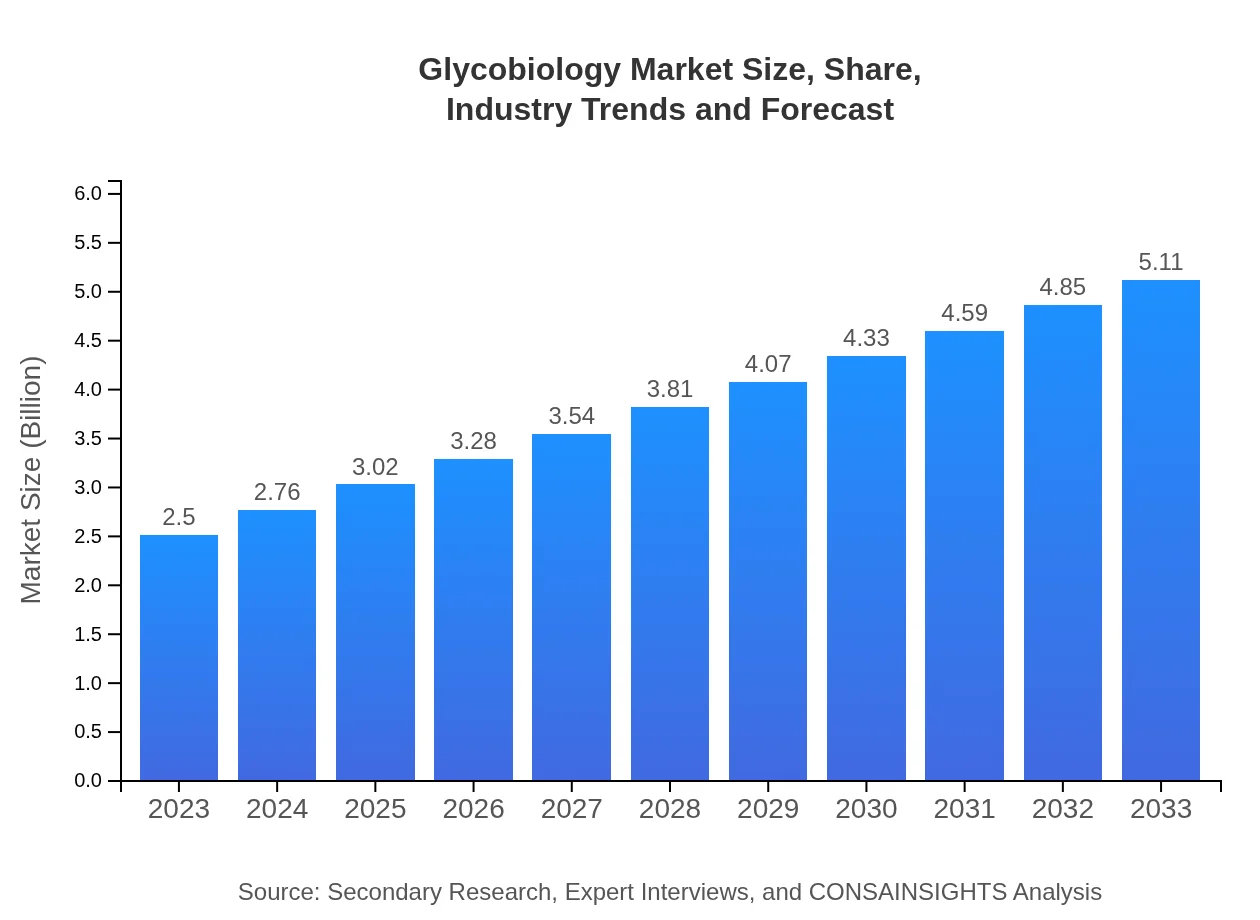
Glycobiology Market — USD 2.5 billion in 2023, Growing to USD 5.11B by 2033 at 7.2% CAGR
This market report on Glycobiology spans insights from 2023 to 2033, detailing market trends, size, segmentation, and growth potential. It also presents regional analyses and key players in the industry, providing an overarching view of the market landscape in Glycobiology over the forecast period.
Key Takeaways
- $2.50 Billion market size in 2023 expanding to $5.11 Billion by 2033, reflecting a 7.2% CAGR over the forecast period.
- North America is largest regional market, while no single fastest-growing region is stated because regional CAGR differences remain within 0.15 percentage points.
- North America is identified as the largest region, rising from $0.97 Billion in 2023 to $1.98 Billion in 2033.
- Europe and Asia Pacific show substantial absolute growth: Europe from $0.76 Billion to $1.56 Billion, Asia Pacific from $0.47 Billion to $0.95 Billion.
- Top companies noted include GlycoTech and ProZyme, active across product and service segments.
- Segmentation highlights include glycoconjugates, glycan analyses, reagents, and applications in pharmaceuticals, biotechnology, diagnostics, and research.
Glycobiology Market Report — Executive Summary
North America remains largest market by forecast-period value, while no single fastest-growing region is stated because top regional growth rates are separated by less than 0.15 percentage points. The Glycobiology Market Report outlines a decade of steady expansion driven by increased investment in glycan-focused research and integration of glycan analysis into therapeutic and diagnostic development. Market size grows from $2.50 Billion in 2023 to $5.11 Billion by 2033 at a 7.2% CAGR between 2023 and 2033. Key commercial activity spans product types such as glycoconjugates, glycan analyses, and reagents, with end users including academic institutions, pharmaceutical companies, hospitals, and diagnostics laboratories. Regional performance varies: North America is the largest region, supported by research infrastructure and industry investment. Europe and Asia Pacific are notable for expanding R&D efforts and adoption of advanced analytical platforms. Primary trends include technological advancements, collaborative research, and increasing application of glycan science in drug development and diagnostics. Competitive dynamics feature established firms and specialized providers; GlycoTech and ProZyme are listed among prominent companies. The report synthesizes primary expert interviews and secondary sources to present validated market perspectives and actionable insights for stakeholders.
Key Growth Drivers
- Rising R&D expenditure by pharmaceutical companies and academic institutions focused on glycan-related therapeutics and diagnostics.
- Adoption of advanced analytical tools for glycan analyses that enable more precise biomarker discovery and quality control.
- Collaborative research initiatives linking universities, biotech firms, and clinical laboratories to accelerate translation of glycobiology findings.
- Growing demand for glycan-informed approaches in pharmaceuticals and personalized medicine, driving commercial and research activity.
- Increasing availability of reagents and specialized products that support higher throughput and more reproducible glycan studies.
| Metric | Value |
|---|---|
| Study Period | 2023 - 2033 |
| 2023 Market Size | $2.50 Billion |
| CAGR (2023-2033) | 7.2% |
| 2033 Market Size | $5.11 Billion |
| Top Companies | GlycoTech, ProZyme |
| Published Date | 21 October 2024 |
| Last Modified Date | 25 May 2026 |
Glycobiology Market Overview
Customize Glycobiology Market Report market research report
- ✔ Get in-depth analysis of Glycobiology market size, growth, and forecasts.
- ✔ Understand Glycobiology's regional dynamics and industry-specific trends.
- ✔ Identify potential applications, end-user demand, and growth segments in Glycobiology
What is the Market Size & CAGR of Glycobiology Market Report market in 2023?
Glycobiology Industry Analysis
Glycobiology Market Segmentation and Scope
Tell us your focus area and get a customized research report.
Glycobiology Market Report Market Analysis Report by Region
Europe Glycobiology Market Report:
Europe grows from $0.76 Billion in 2023 to $1.56 Billion in 2033. Expansion is supported by collaborative academic-industry programs, investments in analytical capabilities, and growing clinical research that leverages glycan science in therapeutics and diagnostics.Asia Pacific Glycobiology Market Report:
Asia Pacific grows from $0.47 Billion in 2023 to $0.95 Billion in 2033. Growth drivers include rising biotech activity, increased R&D spending, and adoption of advanced glycan analysis tools across research institutions and pharmaceutical companies.North America Glycobiology Market Report:
North America is largest regional market, rising from $0.97 Billion in 2023 to $1.98 Billion in 2033. Local strength is attributed to concentrated research funding, pharmaceutical R&D activity, and established laboratory infrastructure that supports glycobiology research and commercialization.South America Glycobiology Market Report:
Latin America grows from $0.01 Billion in 2023 to $0.01 Billion in 2033. Regional development is shaped by nascent investment in glycobiology research and limited commercial scale, with gradual interest from academic and diagnostic centers.Middle East & Africa Glycobiology Market Report:
Middle East and Africa grows from $0.31 Billion in 2023 to $0.63 Billion in 2033. Growth reflects targeted research initiatives, strengthening laboratory networks, and increasing collaborations that support glycan-related studies and applications.Tell us your focus area and get a customized research report.
Research Methodology
Glycobiology Market Analysis By Product Type
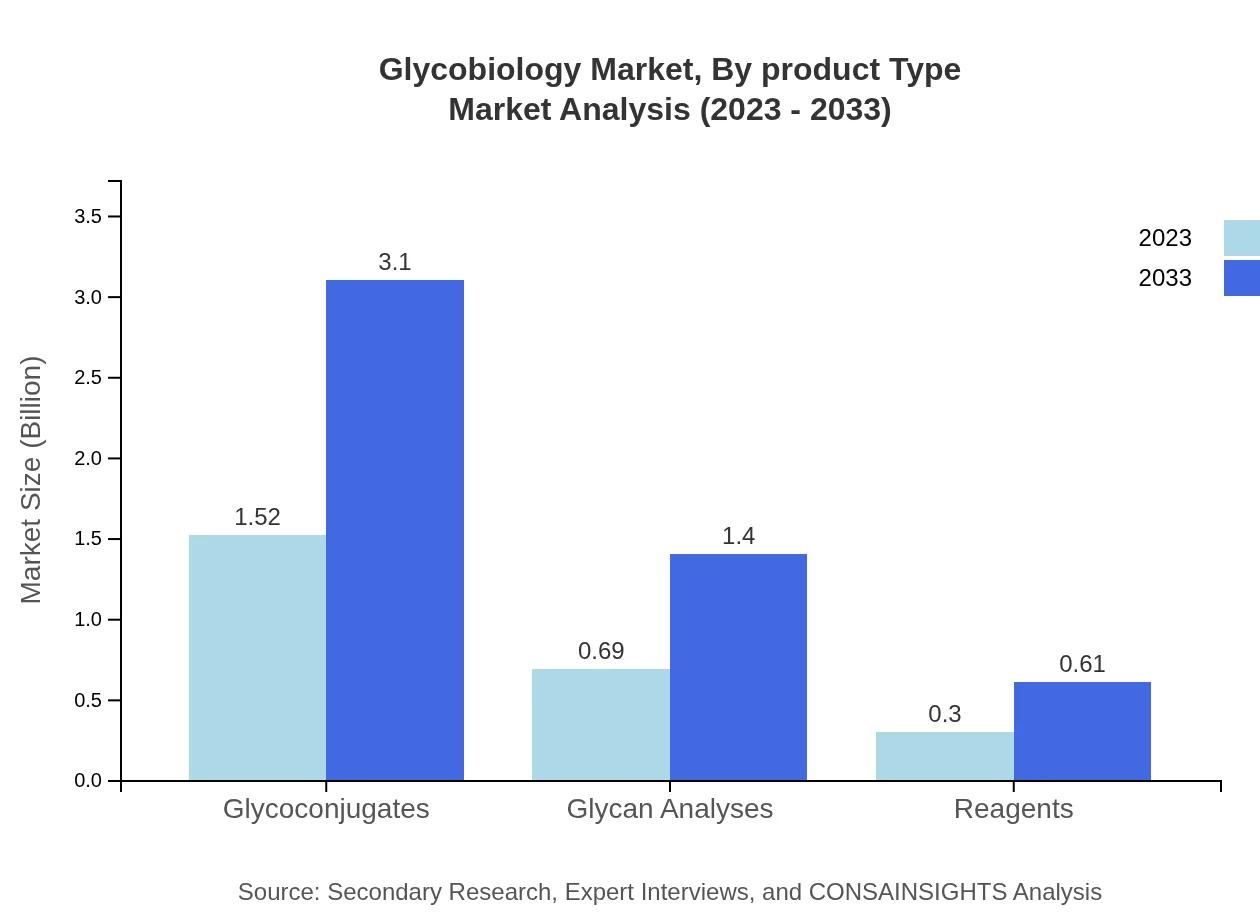
The Glycobiology market is significantly driven by the demand for Glycoconjugates, which was valued at $1.52 billion in 2023 and is expected to reach $3.10 billion in 2033. Glycan analyses are projected to increase from $0.69 billion to $1.40 billion, driven by advancements in analytical techniques. Reagents are expected to also grow from $0.30 billion in 2023 to $0.61 billion in 2033, reflecting their critical role in glycobiology research.
Glycobiology Market Analysis By Application
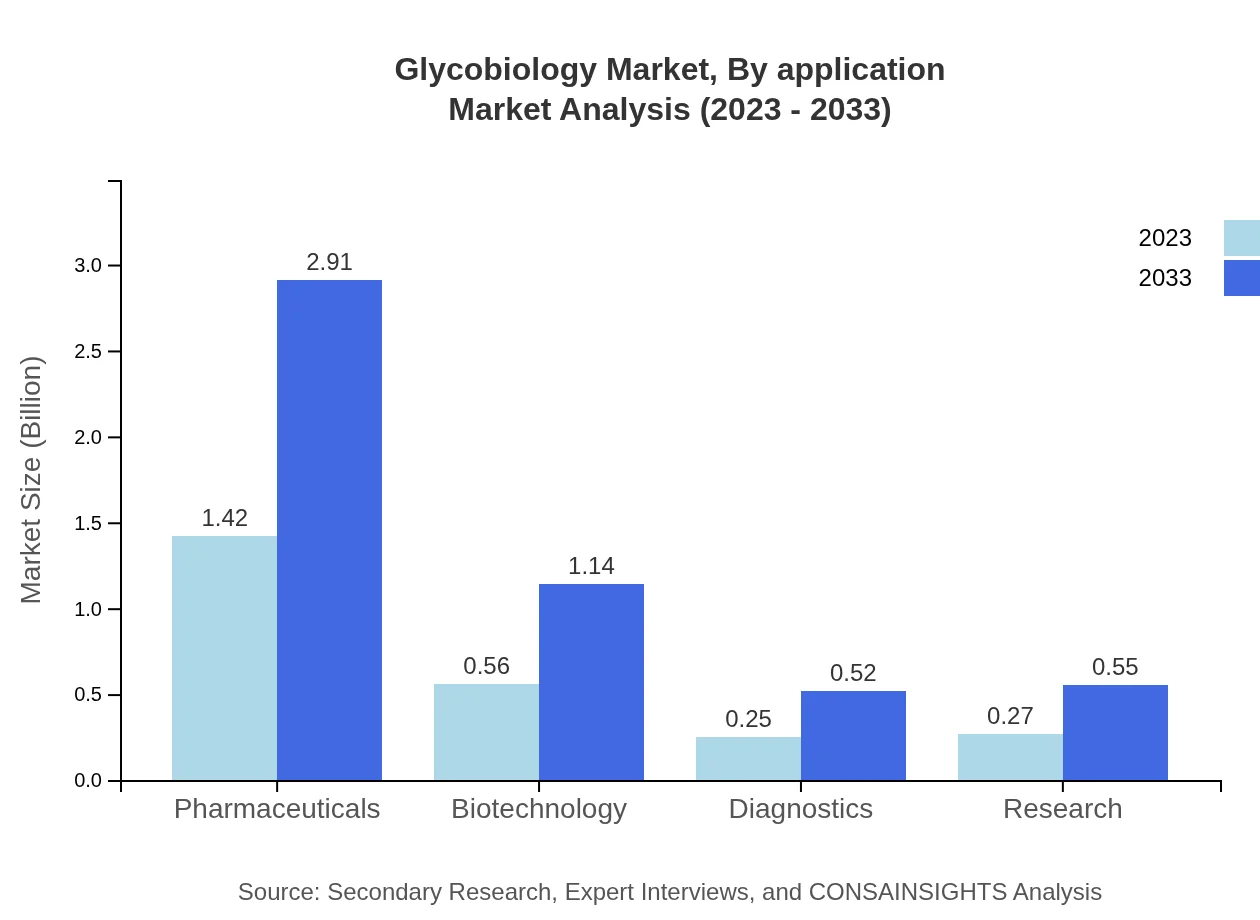
The applications of Glycobiology span healthcare, diagnostics, and research sectors. Therapeutics led the market in 2023 due to increasing applications in cancer treatment and vaccine development. The diagnostics segment is also growing due to enhanced glycan analysis techniques, while academia is increasingly integrating glycobiology into their curricula to support the development of future innovations.
Glycobiology Market Analysis By End User
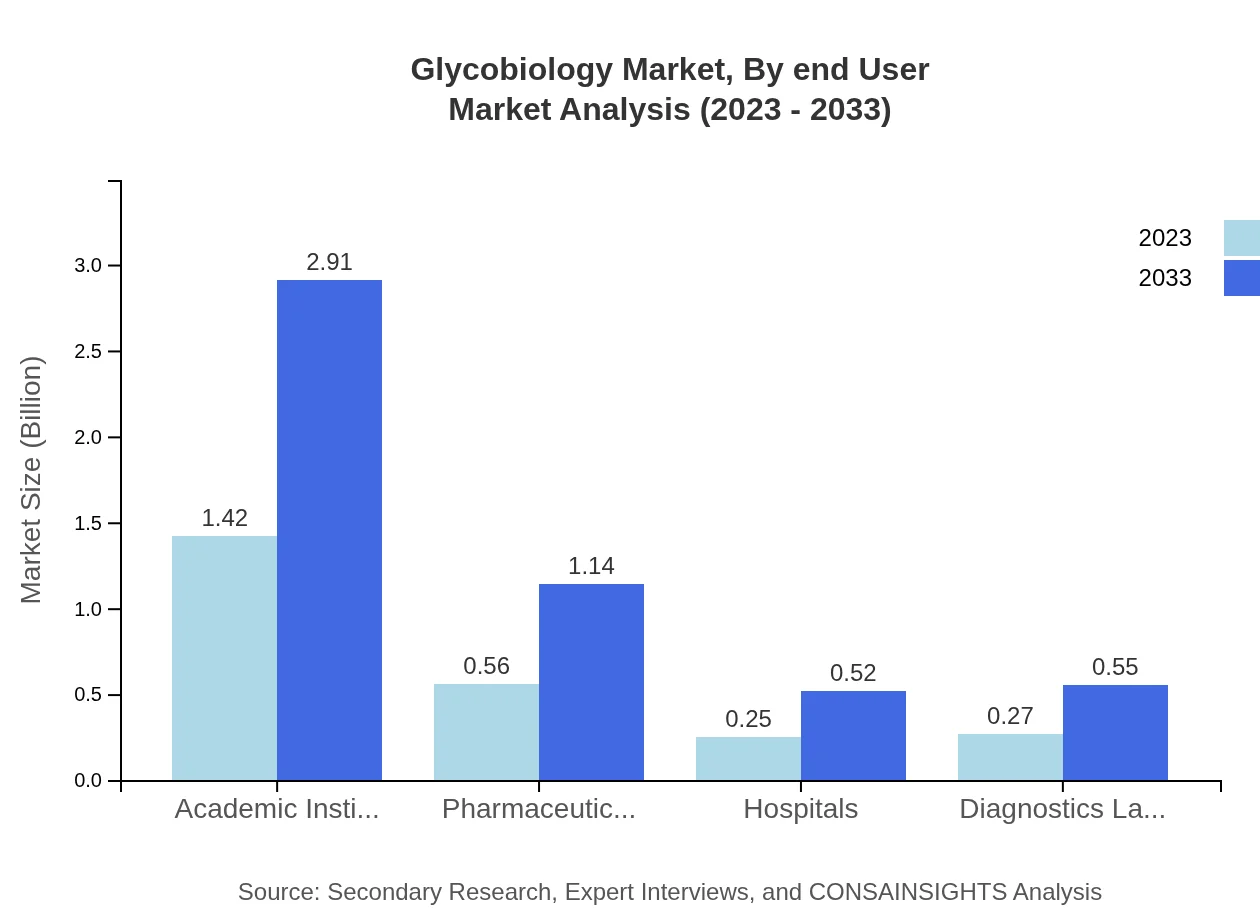
Academic Institutions are the primary end-users in the Glycobiology market, with a size of $1.42 billion in 2023, expected to reach $2.91 billion by 2033. Pharmaceutical companies represent a significant share, also projected to grow from $0.56 billion to $1.14 billion. Hospitals and diagnostic laboratories are smaller but growing segments, benefitting from advances in glycobiology technologies.
Glycobiology Market Analysis By Region Key Trends
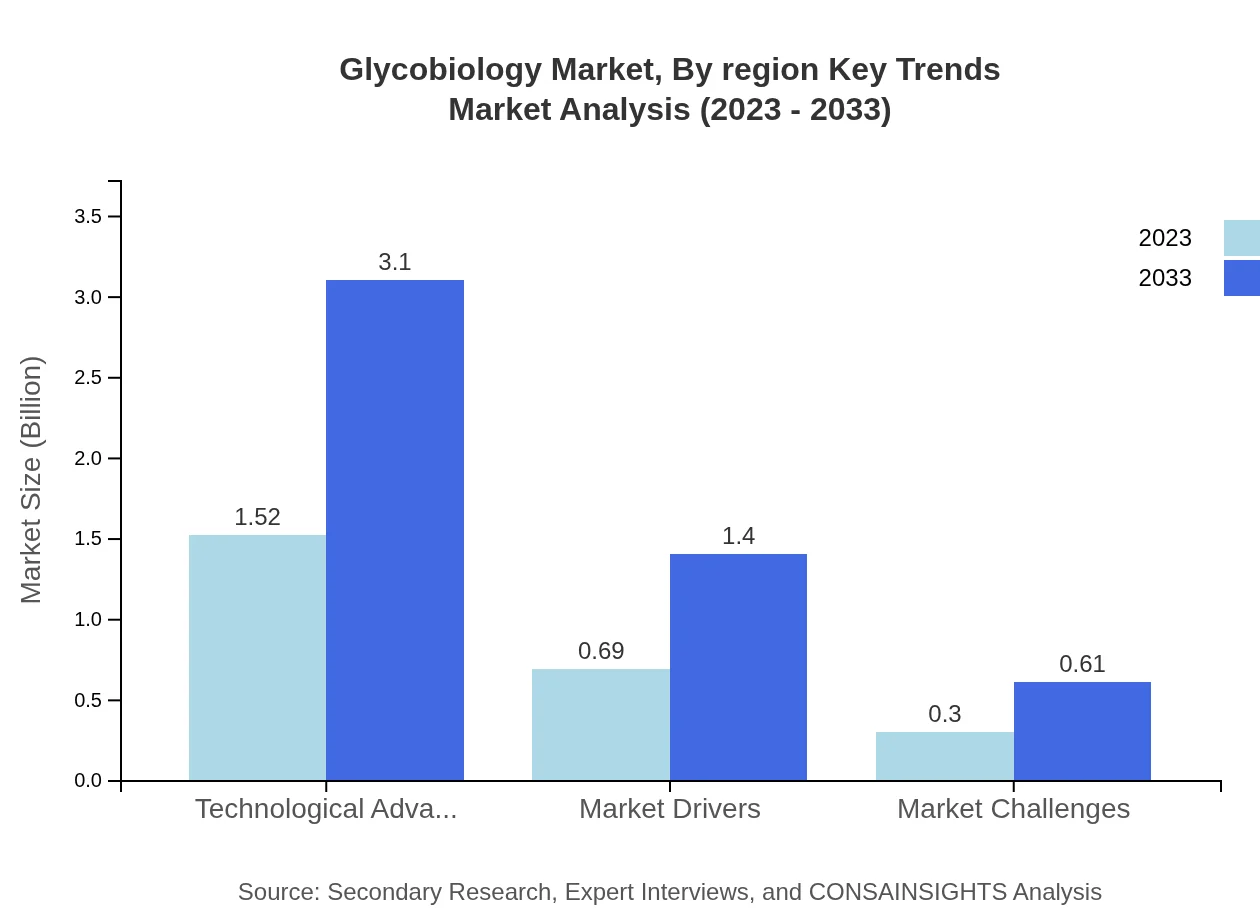
Key trends within the Glycobiology market include a shift towards personalized medicine and automation in glycan analysis. Technological innovations are enabling more accurate and efficient research outcomes, while data analytics continues to play a pivotal role in the interpretation and application of glycobiological data.
Glycobiology Market Analysis By Market Share
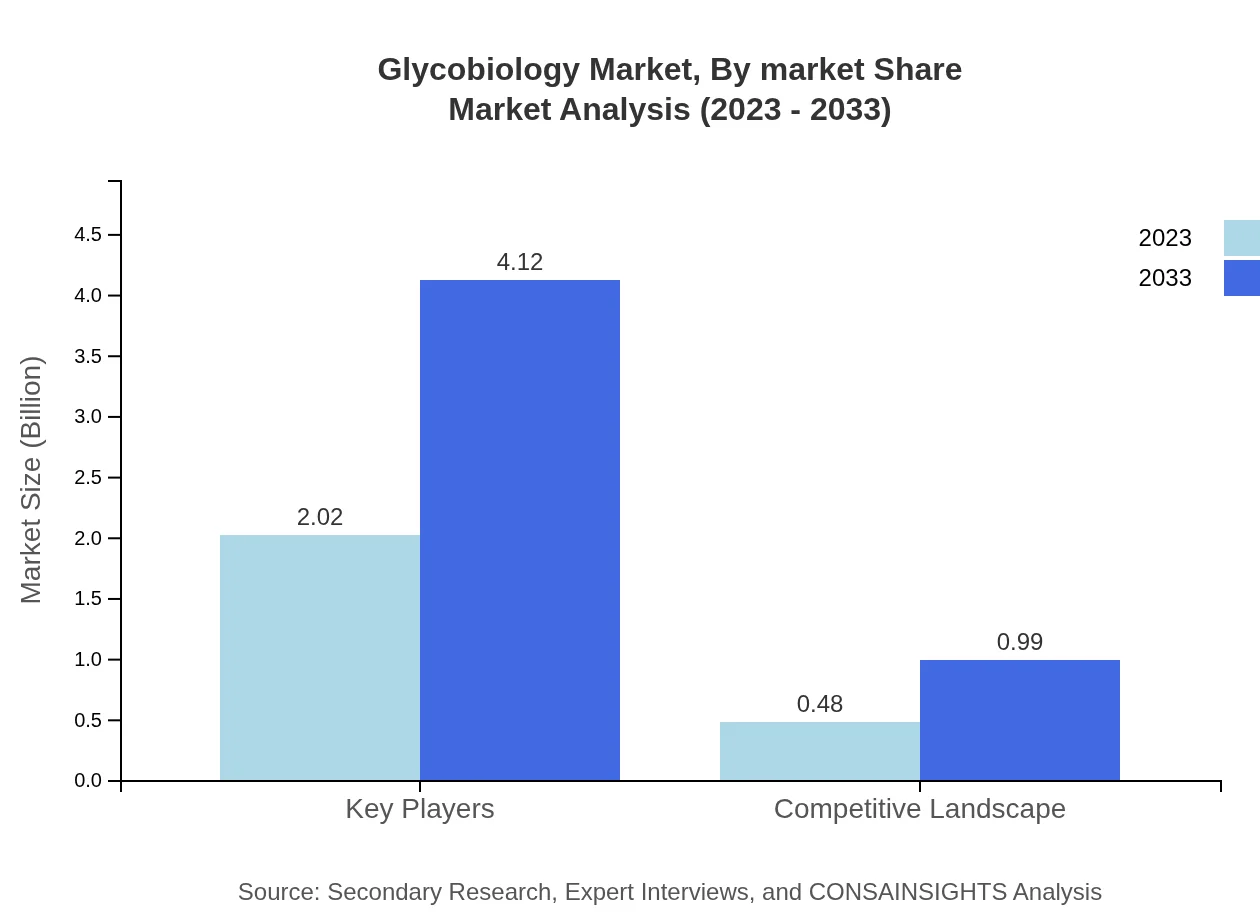
The market is experiencing increased competition, with leading players holding an estimated 80.61% market share in 2023. Key Players in the market are continuously innovating and forming strategic partnerships to enhance their market position, ensuring sustained growth and competitiveness in the Glycobiology landscape.
Glycobiology Market Trends and Future Forecast
Tell us your focus area and get a customized research report.
Global Market Leaders and Top Companies in Glycobiology Industry
GlycoTech:
GlycoTech specializes in glycan analysis and provides cutting-edge technologies for quality control and drug development related to glycobiology.ProZyme:
ProZyme is recognized for developing reagents and products that streamline glycan research and analysis, making significant contributions to biopharmaceutical applications.We're grateful to work with incredible clients.






FAQs
What is the current market size of the Glycobiology Market Report?
The market size was $2.50 Billion in 2023 according to the provided report data for the defined forecast scope.
How big will the market be by 2033?
The market is projected to reach $5.11 Billion by 2033 based on the report's stated forecast figures.
What is CAGR for the forecast period?
The compound annual growth rate for the forecast period 2023 to 2033 is 7.2% as specified in the input data.
Is there a single fastest Growing region in the Glycobiology Market Report market?
No single fastest-growing region is stated for the Glycobiology Market Report market because the top regional implied CAGR values are within 0.15 percentage points of each other, making the ranking too close to call reliably.
Which companies are highlighted in the report?
Top companies listed in the input data are GlycoTech and ProZyme, noted for their roles across product and service segments.
What are primary application segments mentioned?
Key application segments specified include pharmaceuticals, biotechnology, diagnostics, and research, reflecting major end-use areas for glycobiology tools.
Who are the end users identified in the segmentation?
End users named include academic institutions, pharmaceutical companies, hospitals, and diagnostics laboratories as per the provided segmentation facts.
What drives adoption of glycobiology tools?
Adoption is supported by technological advancements in glycan analyses, increased R&D funding, and demand for glycan-informed therapeutics and diagnostics.