
Reports >
Life Sciences
>
Hematocrit Test Devices Market Report

Hematocrit Test Devices Market Report
First published: 15 October 2024 | Last updated: 25 May 2026 | Report Code: hematocrit-test-devices
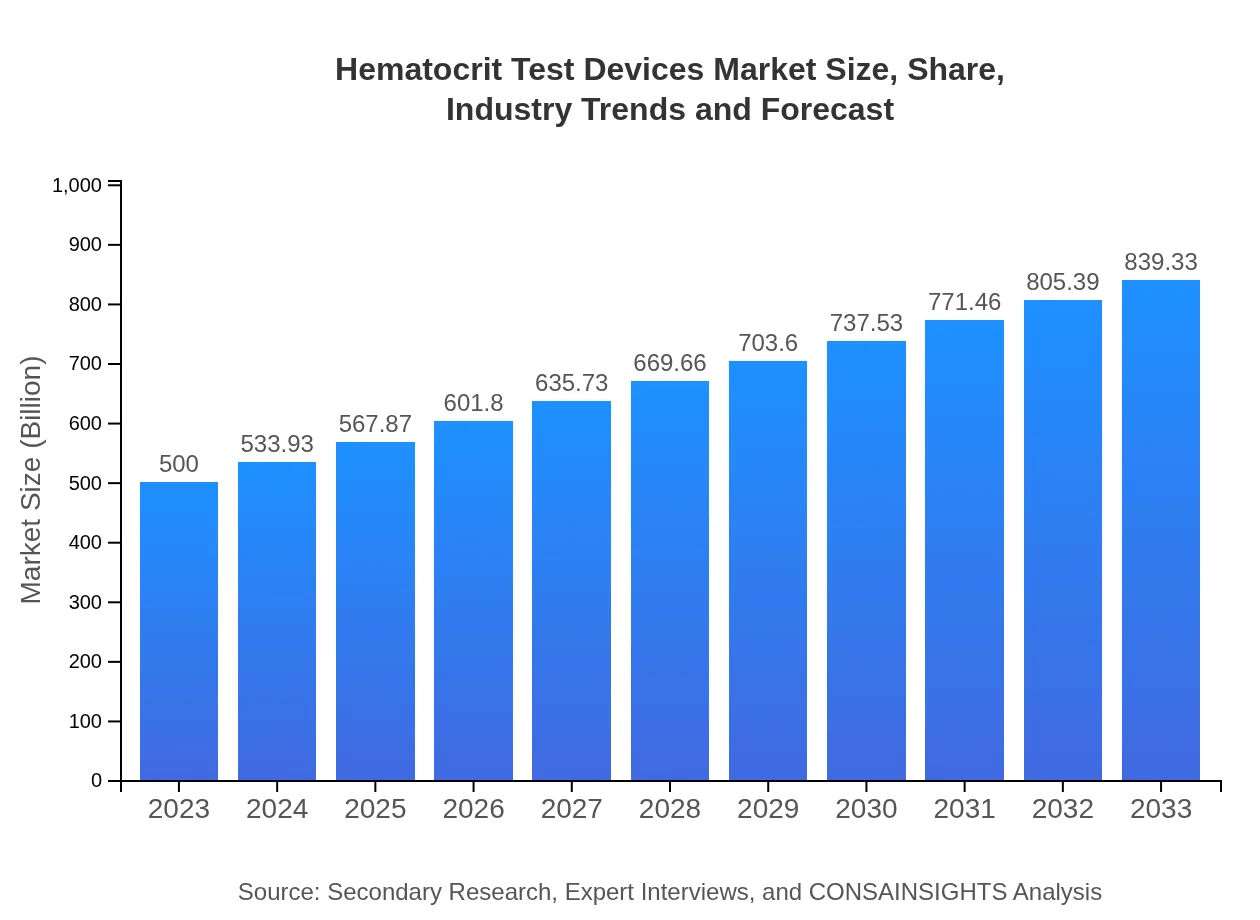
Hematocrit Test Devices Market — USD 500 million in 2023, Growing to USD 839.33M by 2033 at 5.2% CAGR
This report explores the Hematocrit Test Devices market, offering insights into market size, trends, and projections from 2023 to 2033. It provides a comprehensive analysis of segments, regional performance, industry leaders, and future forecasts.
Key Takeaways
- Global market estimated at $500.00 Billion in 2023, reaching $839.33 Billion by 2033 at a 5.2% CAGR.
- North America is largest regional market, while no single fastest-growing region is stated because regional CAGR differences remain within 0.15 percentage points.
- North America is the largest region, rising from $173.15 Billion in 2023 to $290.66 Billion in 2033.
- Europe moves from $122.3 Billion in 2023 to $205.3 Billion in 2033, indicating strong regional expansion.
- Asia Pacific increases from $97.7 Billion to $164 Billion between 2023 and 2033, driven by adoption and access improvements.
- Key vendors include Sysmex Corporation, Roche Diagnostics, F. Hoffmann-La Roche Ltd., and Abbott Laboratories.
Hematocrit Test Devices Market Report — Executive Summary
North America remains largest market by forecast-period value, while no single fastest-growing region is stated because top regional growth rates are separated by less than 0.15 percentage points. The Hematocrit Test Devices market is forecast to grow from $500.00 Billion in 2023 to $839.33 Billion by 2033 at a 5.2% CAGR. Growth is supported by rising diagnostic demand, adoption of portable and automated devices, and broader use across clinical laboratories, hospitals and home care settings. North America is the largest regional market, expanding from $173.15 Billion to $290.66 Billion over the period. Market structure includes traditional and advanced technologies, centrifuges, microhematocrit and portable devices, plus varied distribution channels such as direct sales and online retail. Leading manufacturers—Sysmex Corporation, Roche Diagnostics, F. Hoffmann-La Roche Ltd., and Abbott Laboratories—are investing in product development and quality compliance. Ongoing trends include increased home testing, integration of rapid-result devices, and consolidation among suppliers. Regulatory requirements and initial device costs remain considerations for adoption and commercialization strategies.
Key Growth Drivers
- Rising diagnostic demand for hematological assessment across clinical laboratories and hospitals
- Wider acceptance of portable and at-home testing solutions enabling point-of-care measurements
- Investment in advanced technologies that improve speed, accuracy, and automation
- Aging populations and increased screening for anemia and related conditions
- Expansion of distribution channels including direct sales and online retail
| Metric | Value |
|---|---|
| Study Period | 2023 - 2033 |
| 2023 Market Size | $500.00 Million |
| CAGR (2023-2033) | 5.2% |
| 2033 Market Size | $839.33 Million |
| Top Companies | Sysmex Corporation, Roche Diagnostics, F. Hoffmann-La Roche Ltd., Abbott Laboratories |
| Published Date | 15 October 2024 |
| Last Modified Date | 25 May 2026 |
Hematocrit Test Devices Market Overview
Customize Hematocrit Test Devices Market Report market research report
- ✔ Get in-depth analysis of Hematocrit Test Devices market size, growth, and forecasts.
- ✔ Understand Hematocrit Test Devices's regional dynamics and industry-specific trends.
- ✔ Identify potential applications, end-user demand, and growth segments in Hematocrit Test Devices
What is the Market Size & CAGR of Hematocrit Test Devices Market Report market in 2023?
Hematocrit Test Devices Industry Analysis
Hematocrit Test Devices Market Segmentation and Scope
Tell us your focus area and get a customized research report.
Hematocrit Test Devices Market Report Market Analysis Report by Region
Europe Hematocrit Test Devices Market Report:
Europe grows from $122.3 Billion in 2023 to $205.3 Billion in 2033. Regional improvement is supported by expanded laboratory capacity, regulatory compliance emphasis, and uptake of advanced hematocrit technologies in hospitals and clinics.Asia Pacific Hematocrit Test Devices Market Report:
Asia Pacific grows from $97.7 Billion in 2023 to $164 Billion in 2033. Growth is underpinned by improving healthcare access, broader use of point-of-care testing, and increasing demand across clinical and home care settings.North America Hematocrit Test Devices Market Report:
North America is largest regional market, rising from $173.15 Billion in 2023 to $290.66 Billion in 2033. The region’s scale reflects extensive clinical infrastructure, adoption of portable and automated testing, and active vendor presence among leading manufacturers.South America Hematocrit Test Devices Market Report:
Latin America grows from $47.4 Billion in 2023 to $79.57 Billion in 2033. Expansion is associated with greater diagnostic adoption, scaling of laboratory services, and growing interest in portable and user-friendly devices.Middle East & Africa Hematocrit Test Devices Market Report:
Middle East and Africa grows from $59.45 Billion in 2023 to $99.8 Billion in 2033. Drivers include investments in healthcare infrastructure, rising screening needs, and increased availability of both traditional and portable hematocrit devices.Tell us your focus area and get a customized research report.
Research Methodology
Hematocrit Test Devices Market Analysis By Application
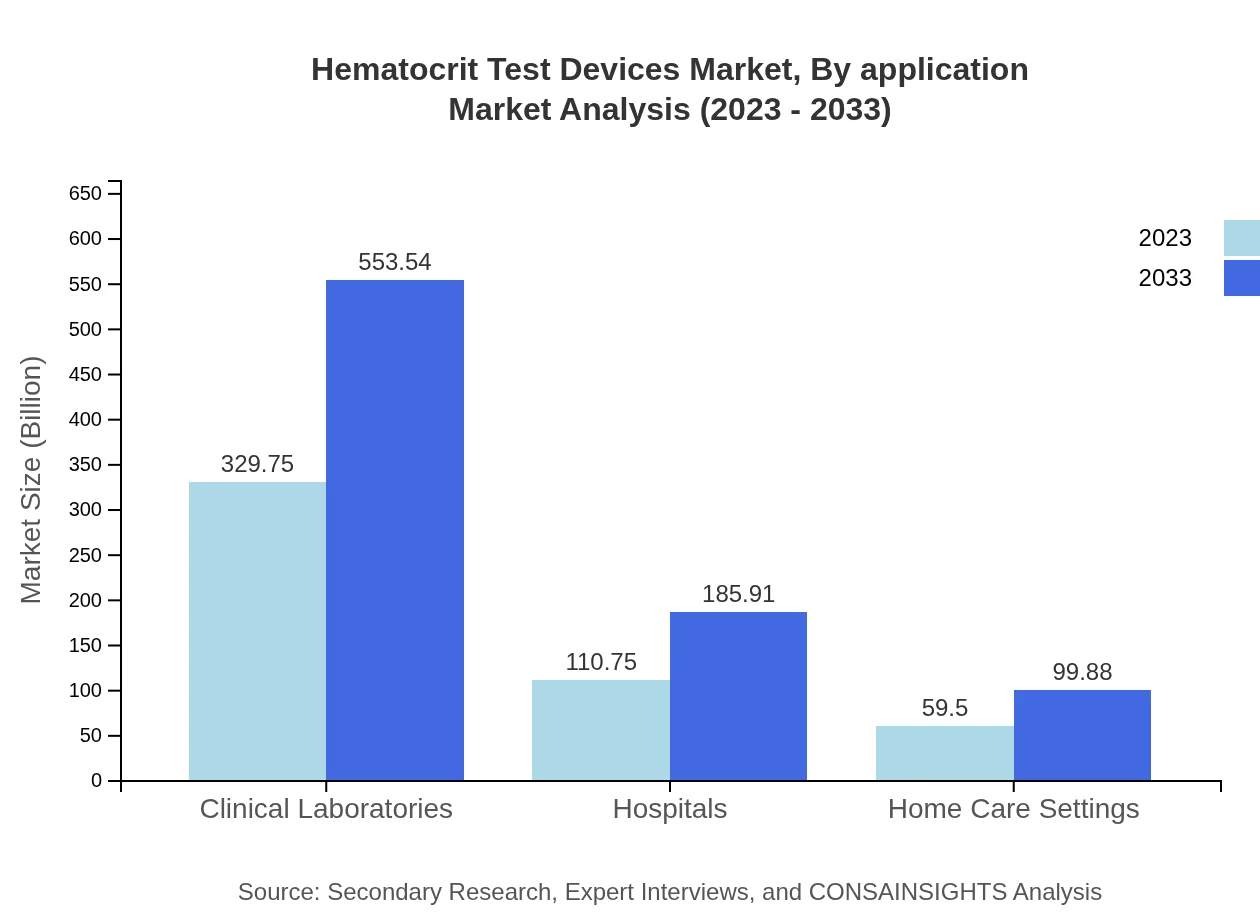
The Hematocrit Test Devices market by application shows significant segmentation into clinical laboratories, hospitals, emergency services, and research institutes. Clinical laboratories and hospitals are the leading segments accounting for most of the market share due to their essential role in disease diagnosis and treatment monitoring. The increasing number of emergency services utilizing portable or rapid testing devices is also noteworthy, showcasing the devices' versatility.
Hematocrit Test Devices Market Analysis By End User
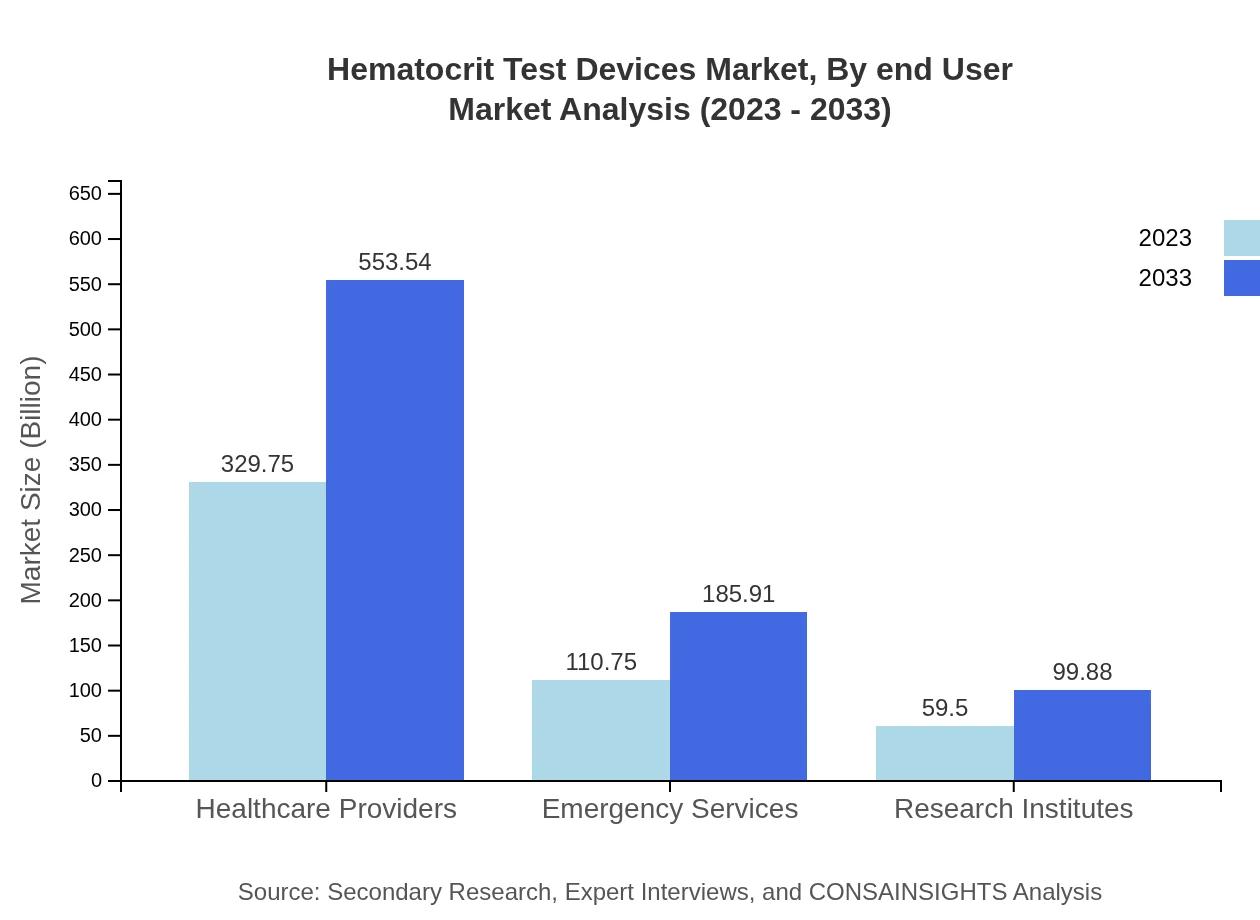
Key end-user segments in the Hematocrit Test Devices market include healthcare providers, emergency services, clinical laboratories, research institutes, and home care settings. With a significant market share, healthcare providers predominantly utilize these devices for routine checks. The growing trend of home healthcare is fostering an increase in portable hematocrit devices, allowing for real-time monitoring in patient comfort.
Hematocrit Test Devices Market Analysis By Technology
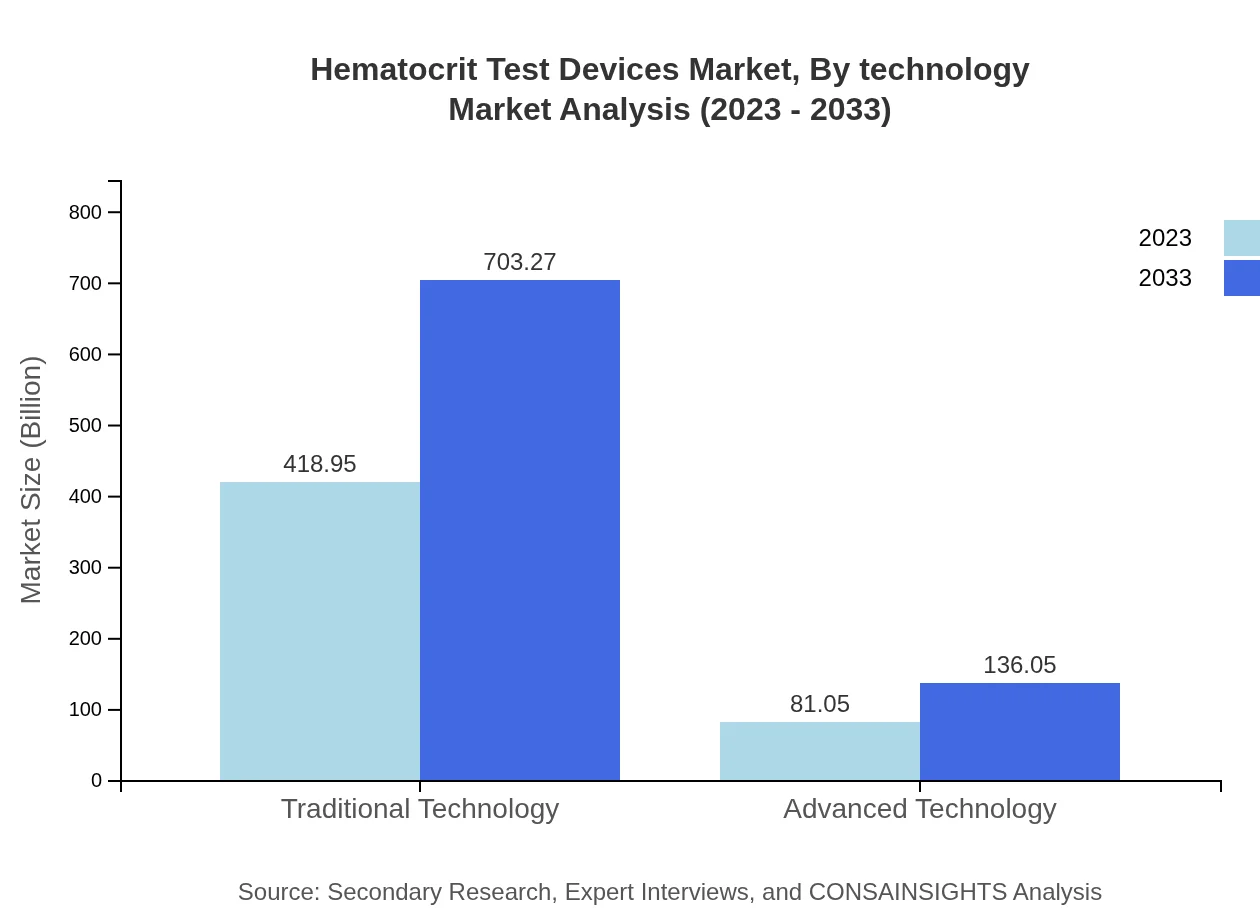
The market by technology is divided into traditional technology and advanced technology. Traditional methods such as centrifugation dominate the market due to their accuracy and reliability. However, there is a growing inclination towards advanced technologies with enhanced features like portability and point-of-care testing solutions, reflecting evolving consumer needs and preferences.
Hematocrit Test Devices Market Analysis By Distribution Channel
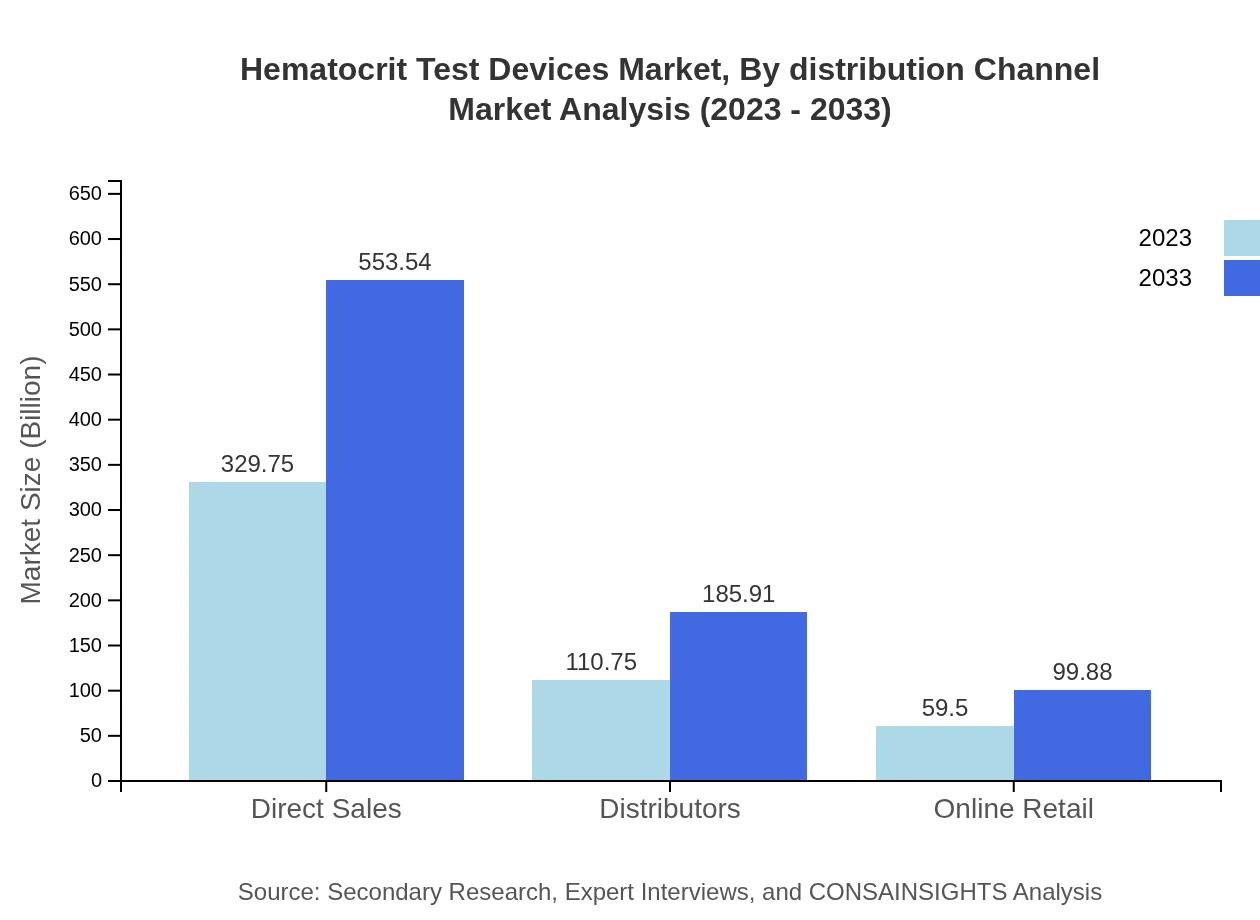
The distribution channels for Hematocrit Test Devices include direct sales, distributors, and online retail. Direct sales and distributors play a significant role in providing devices to healthcare facilities, whereas the online retail segment is emerging rapidly, giving customers the convenience of purchasing devices from anywhere. This shift towards online solutions caters to an increasing demand for efficiency and accessibility.
Hematocrit Test Devices Market Analysis By Device Type
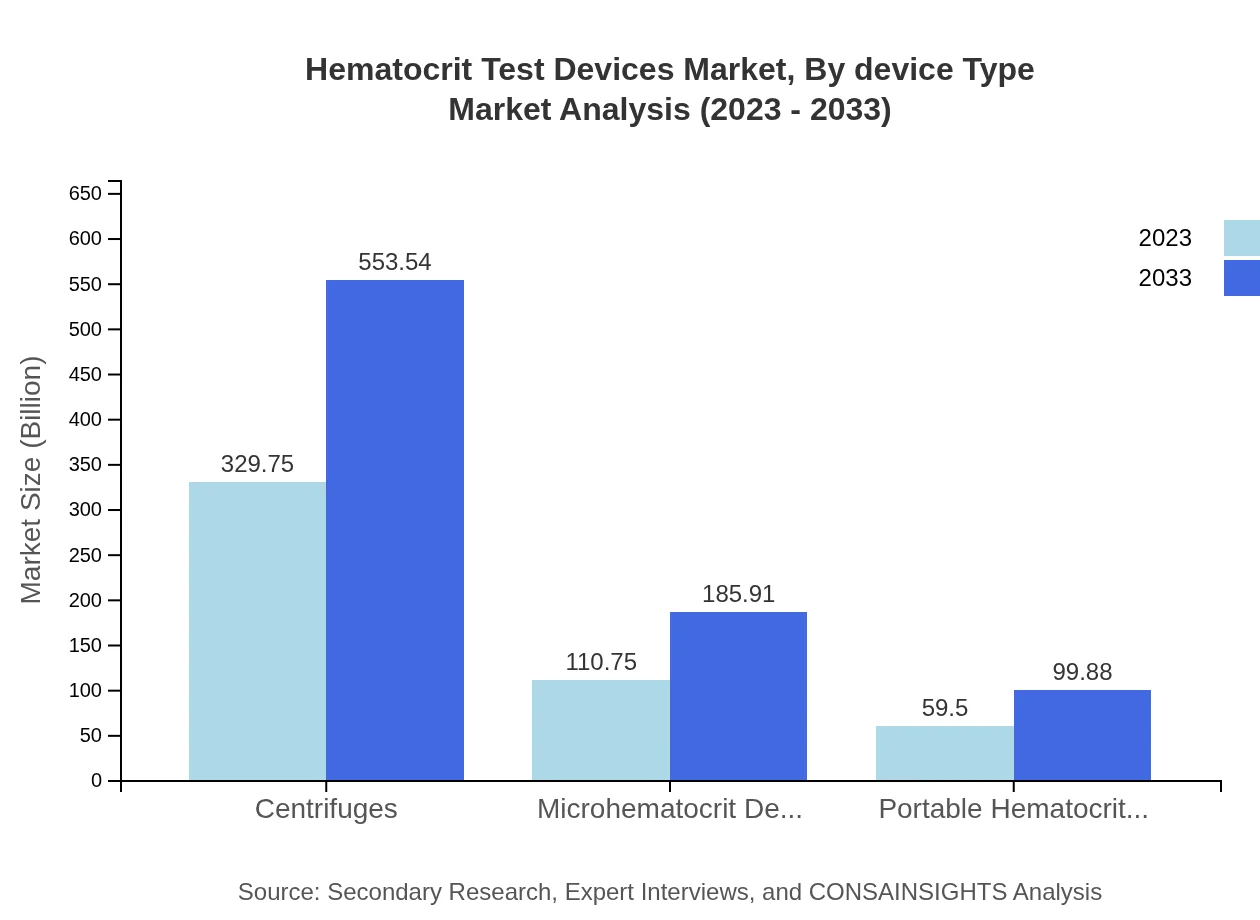
Market performance by device type indicates the prevalence of centrifuges and microhematocrit devices as staples in laboratories and hospitals. Centrifuges offer reliable performance for hematocrit testing, while newer models like portable hematocrit devices are becoming popular due to their practicality in varied settings, including field testing and emergency situations.
Hematocrit Test Devices Market Trends and Future Forecast
Tell us your focus area and get a customized research report.
Global Market Leaders and Top Companies in Hematocrit Test Devices Industry
Sysmex Corporation:
Sysmex is a key player in the global hematology market, known for its innovative hematology analyzers that provide precise hematocrit measurements.Roche Diagnostics:
Roche Diagnostics specializes in diagnostic testing, providing high-quality hematocrit testing solutions with advanced analytical capabilities.F. Hoffmann-La Roche Ltd.:
A prominent player in the medical technology sector, Roche's hematocrit devices are widely recognized for their accuracy and user-friendly features.Abbott Laboratories:
Abbott's hematocrit testing devices are used widely across clinical settings, leveraging state-of-the-art technology for effective testing.We're grateful to work with incredible clients.









FAQs
What is the market size for Hematocrit Test Devices in 2023?
The market size for 2023 is $500.00 Billion, as stated for the global Hematocrit Test Devices market in the provided report data.
How big will the Hematocrit Test Devices market be in 2033?
The market is projected to reach $839.33 Billion in 2033 according to the supplied forecast figures for the decade.
What is CAGR for the Hematocrit Test Devices market?
The compound annual growth rate (CAGR) for the forecast period 2023 to 2033 is 5.2% as provided in the input data.
Why is North America highlighted in the report?
North America is identified as the largest regional market, growing from $173.15 Billion in 2023 to $290.66 Billion in 2033, per the regional figures given.
Which companies are listed as top participants?
Top companies named in the input include Sysmex Corporation, Roche Diagnostics, F. Hoffmann-La Roche Ltd., and Abbott Laboratories.
What are the main device categories included in the segmentation?
Device categories specified are Centrifuges, Microhematocrit Devices, and Portable Hematocrit Devices as listed in the segment facts.
How big is the Europe market in 2023 and 2033?
Europe is reported at $122.3 Billion in 2023 and is projected to reach $205.3 Billion in 2033, using the exact regional values provided.
What end users are covered in the market segmentation?
End-user segments include Healthcare Providers, Emergency Services, and Research Institutes as specified in the supplied segment facts.
Who conducted the research methods referenced?
The methodology includes primary interviews with industry experts and secondary research via company reports and publications, per the input.
Is there a single fastest Growing region in the Hematocrit Test Devices Market Report market?
No single fastest-growing region is stated for the Hematocrit Test Devices Market Report market because the top regional implied CAGR values are within 0.15 percentage points of each other, making the ranking too close to call reliably.