

Hemoglobinopathies Treatment Market Report
First published: 20 October 2024 | Last updated: 25 May 2026 | Report Code: hemoglobinopathies-treatment
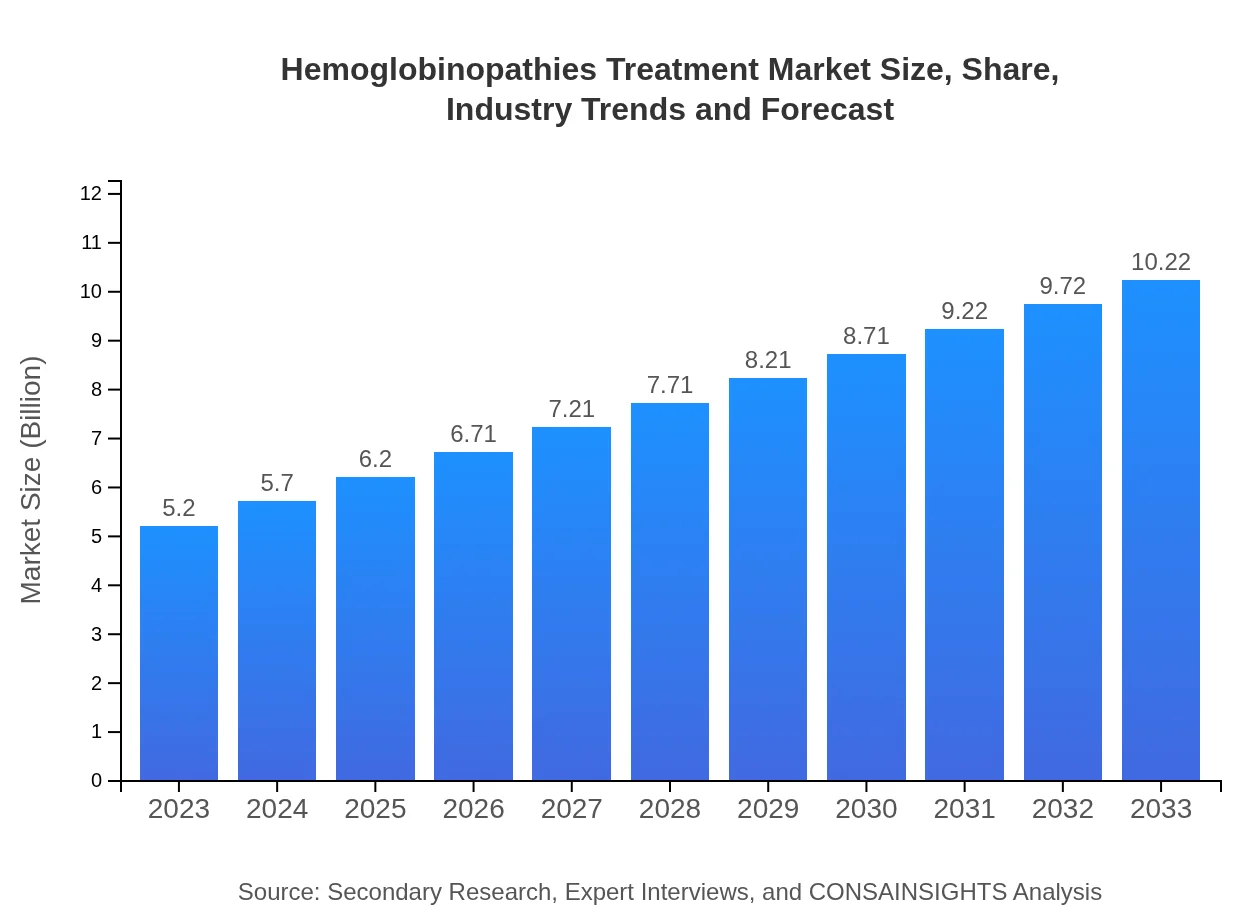
Hemoglobinopathies Treatment Market — USD 5.2 billion in 2023, Growing to USD 10.22B by 2033 at 6.8% CAGR
This report provides a comprehensive analysis of the Hemoglobinopathies Treatment market, focusing on market sizing, segmentation, regional insights, and future growth forecasts from 2023 to 2033. It aims to deliver actionable insights for stakeholders in understanding the dynamics and trends of this vital segment of healthcare.
Key Takeaways
- Global market expands from $5.20 Billion in 2023 to $10.22 Billion in 2033 with a 6.8% CAGR over 2023 to 2033.
- North America is largest regional market, while no single fastest-growing region is stated because regional CAGR differences remain within 0.15 percentage points.
- Therapy mix includes medications, gene therapy, and cell therapies, with delivery across hospital and retail channels.
- Patient-focused care settings span hospitals, specialty clinics, and home care, reflecting diversifying end-user channels.
Hemoglobinopathies Treatment Market Report — Executive Summary
North America remains largest market by forecast-period value, while no single fastest-growing region is stated because top regional growth rates are separated by less than 0.15 percentage points. The report outlines the Hemoglobinopathies Treatment market trajectory from $5.20 Billion in 2023 to $10.22 Billion in 2033 at a 6.8% CAGR over 2023 to 2033. Growth is supported by progress in gene and cell therapies, expanded supportive-care options, and rising clinical investments. Market structure is segmented by therapy type (medications, gene therapy, cell therapies), disease (sickle cell disease, thalassemia, other hemoglobinopathies), route of administration, distribution channel, and end users. Regional dynamics highlight North America as the largest market, while regional growth rates are close enough that no single regional market region is named. Leading companies include Novartis, Bristol Myers Squibb, and Vertex Pharmaceuticals. The landscape remains innovation-driven with emphasis on advanced therapeutics, regulatory attention, and increasing patient awareness shaping near-term priorities for stakeholders.
Key Growth Drivers
- Advances in gene and cell therapy platforms expanding potential long-term treatment options.
- Rising clinical research investments and development programs by established pharmaceutical players.
- Greater awareness and diagnosis rates leading to increased demand for targeted hemoglobinopathy treatments.
- Expansion of supportive care and broader distribution networks, including hospital and retail pharmacy channels.
| Metric | Value |
|---|---|
| Study Period | 2023 - 2033 |
| 2023 Market Size | $5.20 Billion |
| CAGR (2023-2033) | 6.8% |
| 2033 Market Size | $10.22 Billion |
| Top Companies | Novartis, Bristol Myers Squibb, Vertex Pharmaceuticals |
| Published Date | 20 October 2024 |
| Last Modified Date | 25 May 2026 |
Hemoglobinopathies Treatment Market Overview
Customize Hemoglobinopathies Treatment Market Report market research report
- ✔ Get in-depth analysis of Hemoglobinopathies Treatment market size, growth, and forecasts.
- ✔ Understand Hemoglobinopathies Treatment's regional dynamics and industry-specific trends.
- ✔ Identify potential applications, end-user demand, and growth segments in Hemoglobinopathies Treatment
What is the Market Size & CAGR of Hemoglobinopathies Treatment Market Report market in 2023?
Hemoglobinopathies Treatment Industry Analysis
Hemoglobinopathies Treatment Market Segmentation and Scope
Tell us your focus area and get a customized research report.
Hemoglobinopathies Treatment Market Report Market Analysis Report by Region
Europe Hemoglobinopathies Treatment Market Report:
Europe grows from $1.68 Billion in 2023 to $3.3 Billion in 2033. This progression is supported by enhanced regulatory engagement, research activity across countries, and expanding availability of advanced treatment modalities for hemoglobin disorders.Asia Pacific Hemoglobinopathies Treatment Market Report:
Asia Pacific grows from $0.87 Billion in 2023 to $1.71 Billion in 2033. Growth drivers include increasing diagnosis rates, expanding healthcare infrastructure, and growing clinical research interest in gene and cell therapy approaches.North America Hemoglobinopathies Treatment Market Report:
North America is largest regional market, rising from $1.88 Billion in 2023 to $3.7 Billion in 2033. Regional momentum reflects concentrated clinical development, higher access to advanced therapies, and substantial investment by industry participants.South America Hemoglobinopathies Treatment Market Report:
Latin America grows from $0.43 Billion in 2023 to $0.85 Billion in 2033. Regional expansion is influenced by improving treatment accessibility, rising awareness of hemoglobin disorders, and gradual adoption of newer therapies.Middle East & Africa Hemoglobinopathies Treatment Market Report:
Middle East and Africa grows from $0.34 Billion in 2023 to $0.66 Billion in 2033. Growth is shaped by incremental healthcare investments, targeted disease awareness efforts, and expanding treatment coverage in select markets.Tell us your focus area and get a customized research report.
Research Methodology
Hemoglobinopathies Treatment Market Analysis By Therapy Type
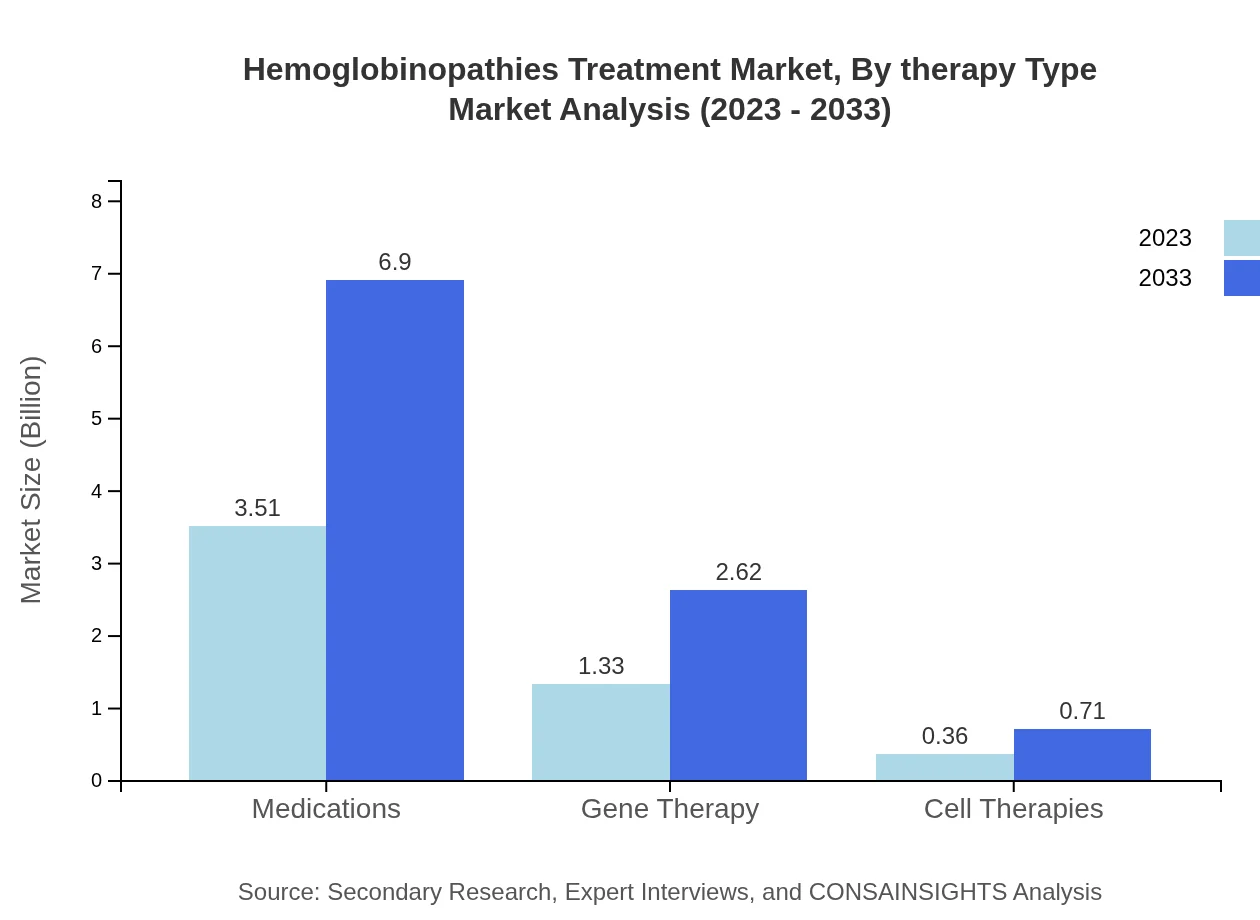
In 2023, the Hemoglobinopathies Treatment market by therapy type includes medications, gene therapy, and cell therapies. Medications account for a significant market share at $3.51 billion, projected to reach $6.90 billion by 2033. Gene therapy is emerging with a market size of $1.33 billion in 2023, expecting to grow to $2.62 billion by 2033, reflecting advancements in targeted therapies and personalized medicine. Cell therapies are expected to grow from $0.36 billion to $0.71 billion in the same period.
Hemoglobinopathies Treatment Market Analysis By Disease Type
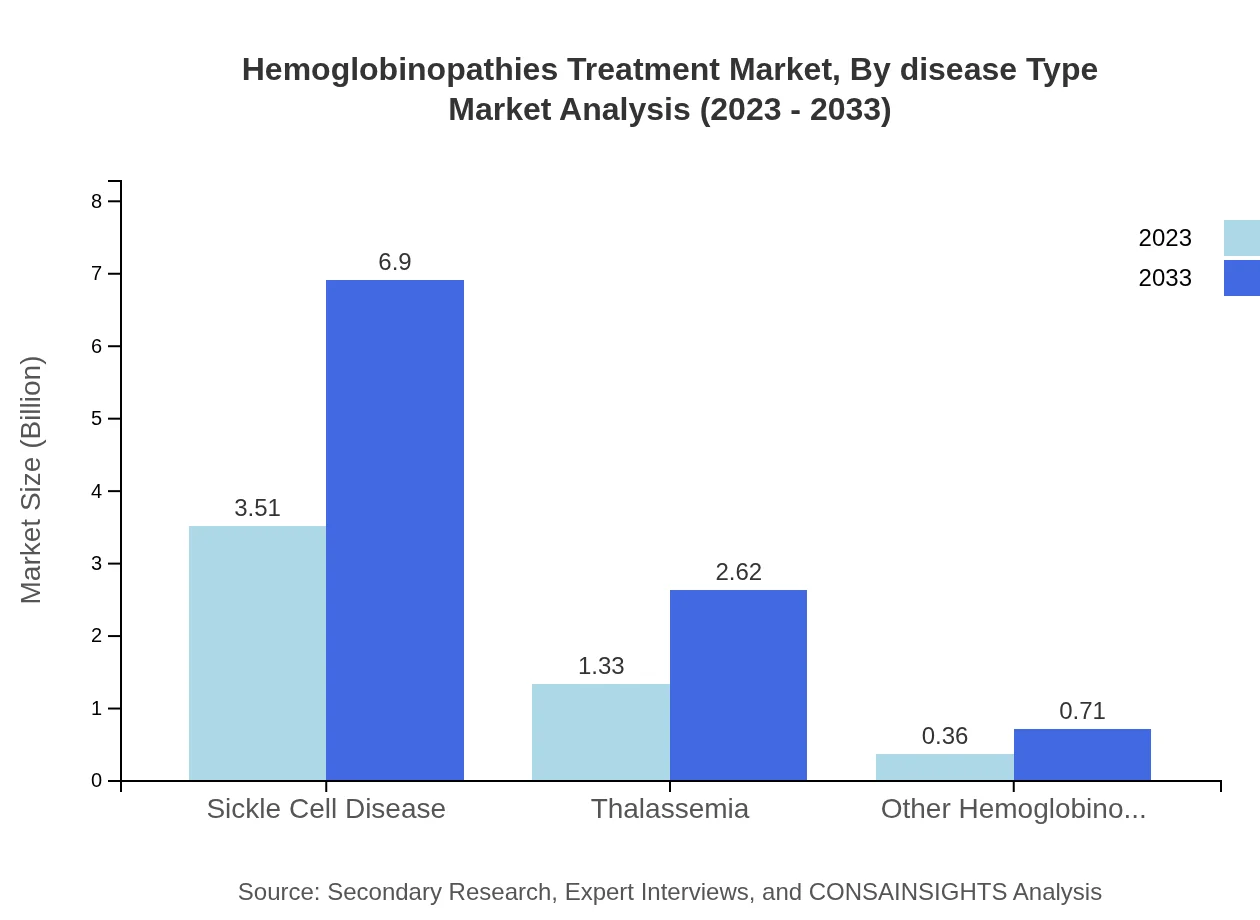
The market segmented by disease type shows Sickle Cell Disease and Thalassemia being the predominant conditions. Sickle Cell Disease treatment accounts for $3.51 billion in 2023 and is expected to rise to $6.90 billion by 2033. Thalassemia treatments are poised to grow from $1.33 billion to $2.62 billion in the same period, indicating the urgent need for effective management strategies. Other hemoglobinopathies account for a comparatively smaller market size but are also experiencing growth.
Hemoglobinopathies Treatment Market Analysis By Route Of Administration
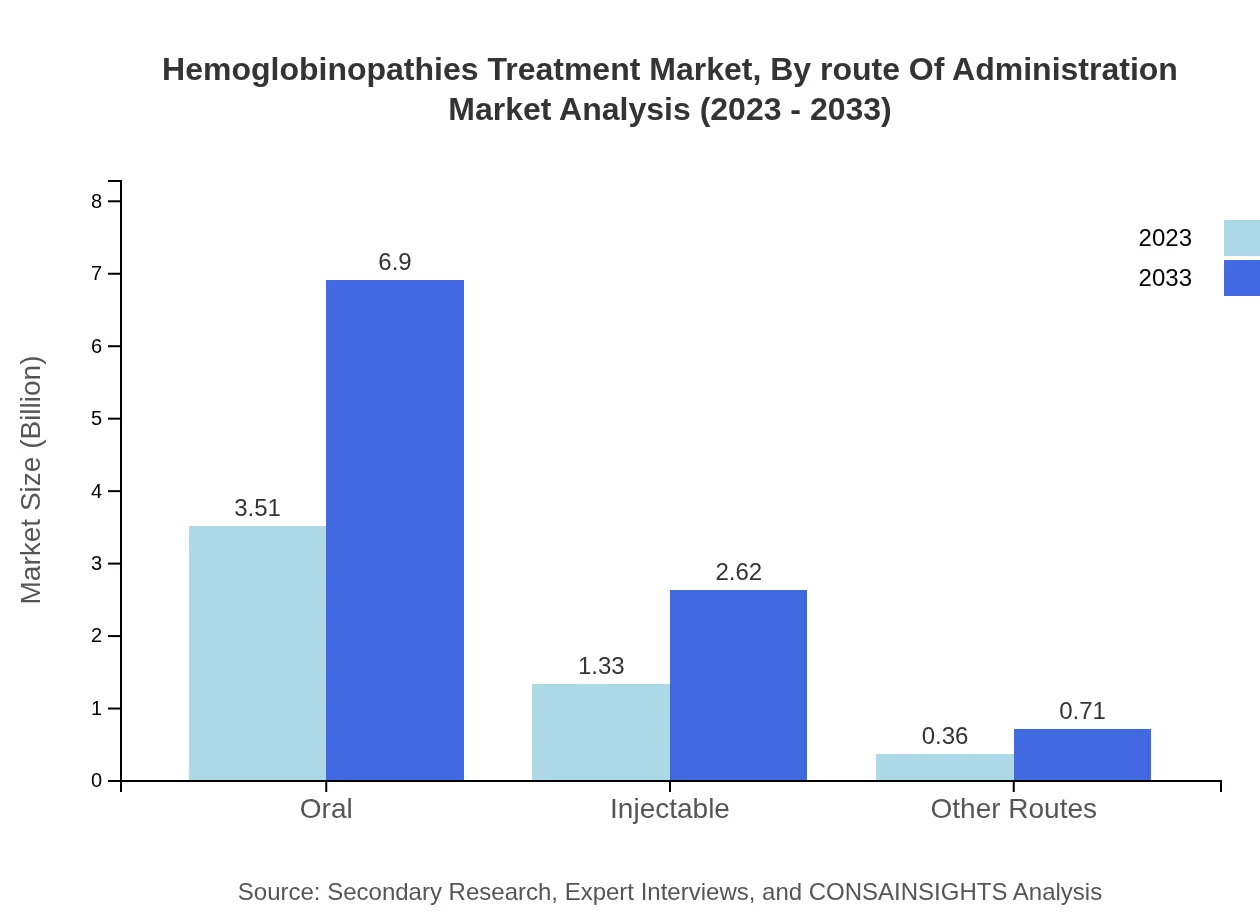
In terms of route of administration, oral medications dominate the market with a size of $3.51 billion in 2023, expected to grow to $6.90 billion by 2033. Injectable therapies, comprising critical interventions for severe cases, hold a market share of $1.33 billion in 2023, projected to reach $2.62 billion. Other routes account for a smaller share but show potential for growth with advancements in delivery systems.
Hemoglobinopathies Treatment Market Analysis By End User
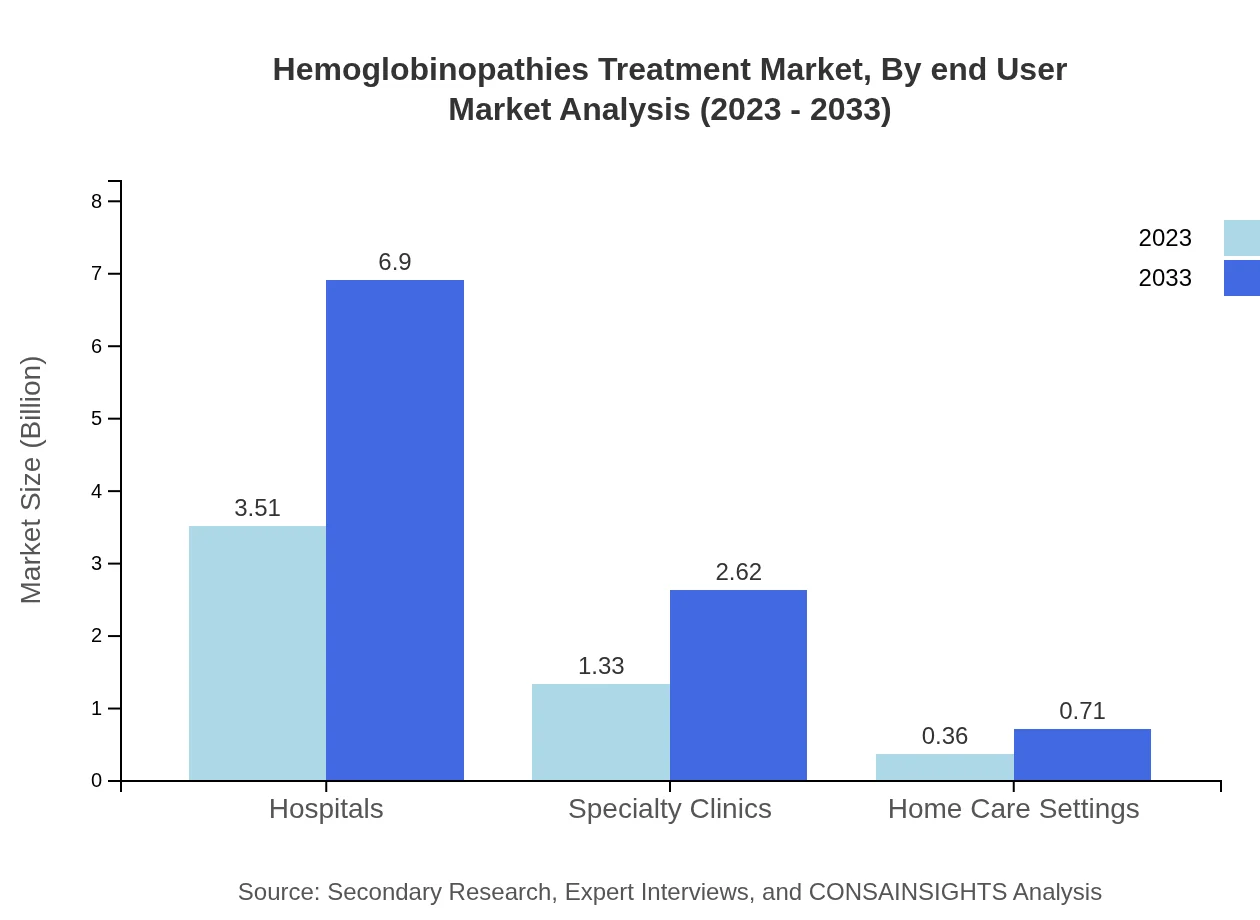
Hospitals lead the Hemoglobinopathies Treatment market, commanding a share of $3.51 billion in 2023 and expected to grow to $6.90 billion by 2033. Specialty clinics and home care settings also play pivotal roles, with market sizes of $1.33 billion and $0.36 billion respectively, emphasizing the importance of diverse treatment delivery models to meet patient needs.
Hemoglobinopathies Treatment Market Analysis By Distribution Channel
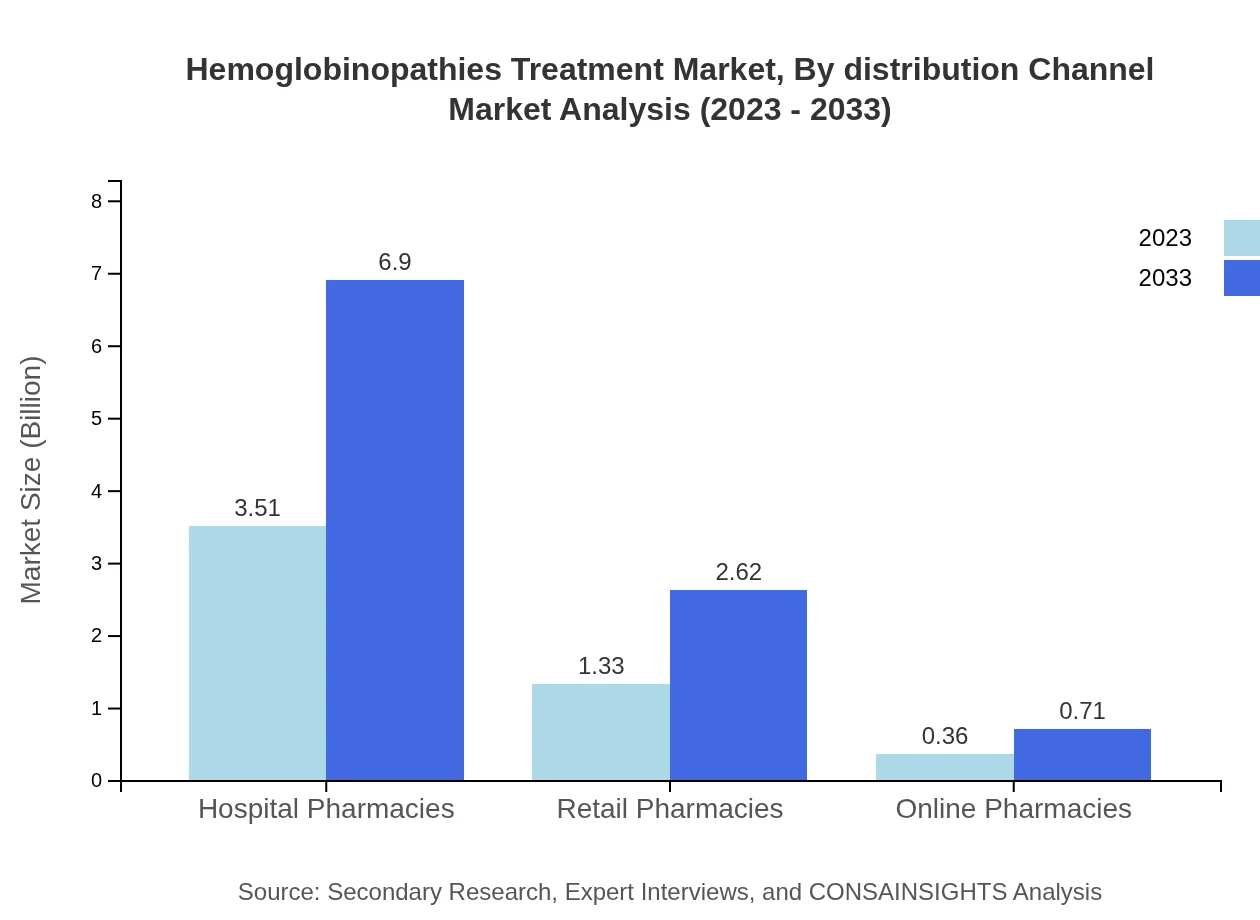
Distribution channels reveal that hospital pharmacies dominate the Hemoglobinopathies Treatment market with a market value of $3.51 billion in 2023, projected to grow to $6.90 billion by 2033. Retail and online pharmacies also hold significant shares, catering to the growing demand for accessible healthcare solutions. The shift towards e-commerce in healthcare signifies an important trend for future growth.
Hemoglobinopathies Treatment Market Trends and Future Forecast
Tell us your focus area and get a customized research report.
Global Market Leaders and Top Companies in Hemoglobinopathies Treatment Industry
Novartis:
Novartis is a leading global healthcare company focused on innovative medicines and specifically noted for its groundbreaking therapies for Sickle Cell Disease, improving patient outcomes significantly.Bristol Myers Squibb:
Bristol Myers Squibb specializes in biopharmaceuticals that blend innovative science with advanced technology to provide treatment for various hematological disorders.Vertex Pharmaceuticals:
Vertex Pharmaceuticals is renowned for developing transformative therapies for patients with serious diseases, focusing on hemoglobinopathies with a commitment to healthcare advances.We're grateful to work with incredible clients.







FAQs
What is the market size of the Hemoglobinopathies Treatment market in 2023?
The market size for 2023 is $5.20 Billion, as reported. This figure serves as the baseline for the forecast period spanning 2023 to 2033.
How big will the Hemoglobinopathies Treatment market be in 2033?
Projected market value for 2033 is $10.22 Billion. That end-period value reflects the market trajectory reported for the 2023 to 2033 forecast window.
What is CAGR for the Hemoglobinopathies Treatment market over the forecast period?
The reported compound annual growth rate (CAGR) for 2023 to 2033 is 6.8%, representing the average annual expansion between the stated start and end market sizes.
Is there a single fastest Growing region in the Hemoglobinopathies Treatment Market Report market?
No single fastest-growing region is stated for the Hemoglobinopathies Treatment Market Report market because the top regional implied CAGR values are within 0.15 percentage points of each other, making the ranking too close to call reliably.
Which companies are listed as leading players?
Top companies identified include Novartis, Bristol Myers Squibb, and Vertex Pharmaceuticals, noted for their participation in developing therapies and advancing treatment options.
What are the primary therapy types included in the market?
Therapy categories in the market comprise medications, gene therapy, and cell therapies, covering both established and emerging treatment modalities.
How are treatments distributed to patients?
Distribution channels include hospital pharmacies, retail pharmacies, and online pharmacies, supporting supply to hospitals, specialty clinics, and home care settings.
What disease types are covered within this market report?
The market encompasses sickle cell disease, thalassemia, and other hemoglobinopathies, reflecting the primary clinical segments targeted by therapies.