

Hyperphosphatemia Drugs Market Report
First published: 21 October 2024 | Last updated: 28 May 2026 | Report Code: hyperphosphatemia-drugs
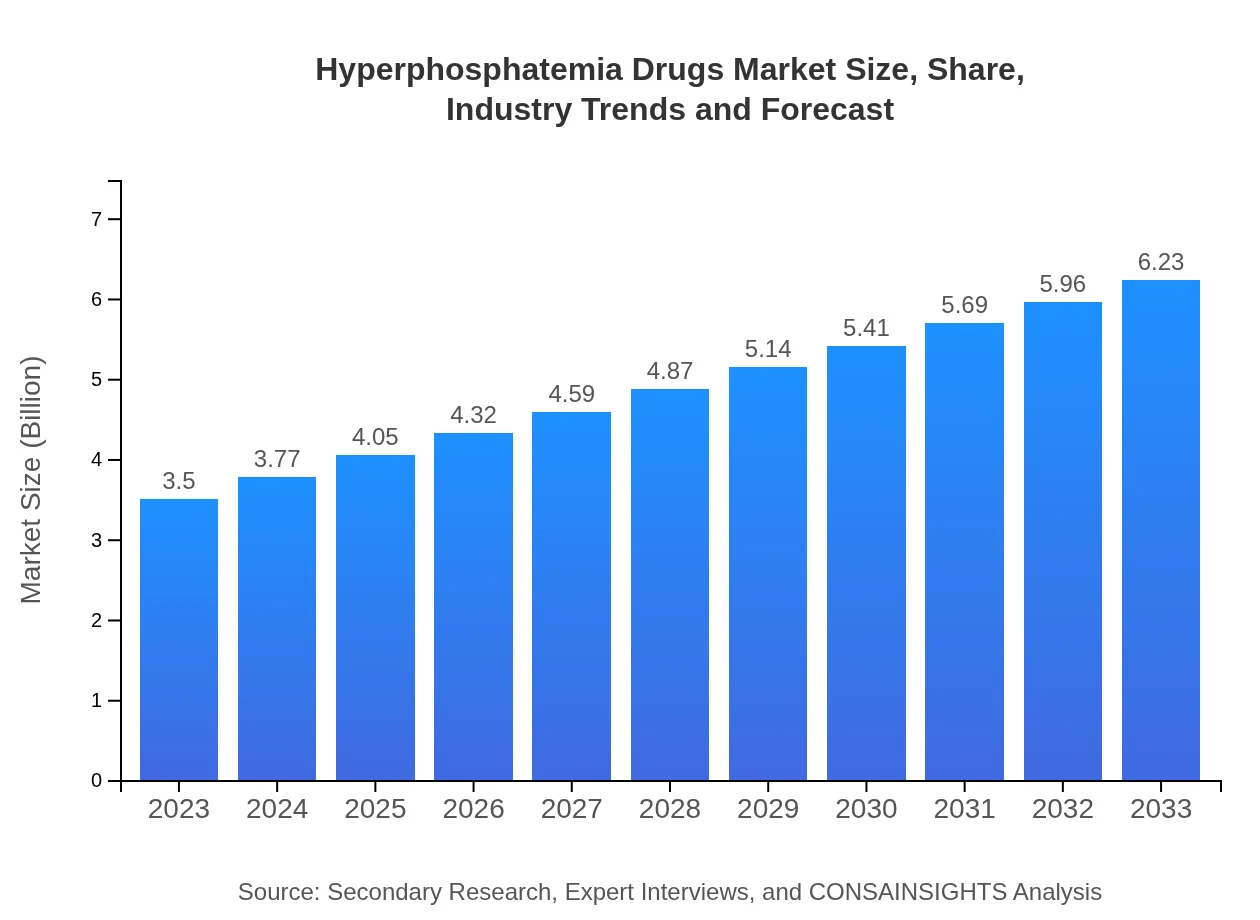
Hyperphosphatemia Drugs Market — USD 3.5 billion in 2023, Growing to USD 6.23B by 2033 at 5.8% CAGR
This report provides an in-depth analysis of the hyperphosphatemia drugs market including market size, trends, forecasts from 2023 to 2033, and insights into regional performance and industry dynamics.
Key Takeaways
- Global market expands from $3.50 Billion in 2023 to $6.23 Billion in 2033 at a 5.8% CAGR.
- North America is largest regional market; Latin America is regional market region based on implied CAGR across 2023 to 2033.
- Latin America is identified as the regional market region at an implied 6.19% CAGR, increasing from $0.17 Billion to $0.31 Billion.
- Europe and Asia Pacific show steady growth: Europe $1.05 Billion to $1.86 Billion, Asia Pacific $0.72 Billion to $1.29 Billion.
- Key players include Amgen Inc., Fresenius Medical Care, and Sanofi driving product and access strategies.
Hyperphosphatemia Drugs Market Report — Executive Summary
Regional analysis shows North America as largest market and Latin America as fastest-growing region by implied CAGR. The market for hyperphosphatemia therapies is forecast to grow from $3.50 Billion in 2023 to $6.23 Billion by 2033, reflecting a 5.8% CAGR through 2023 to 2033. Growth is supported by rising prevalence of chronic kidney disease and end-stage renal disease, increasing awareness of phosphate management, and ongoing investment in phosphate binders and calcimimetics. Regional dynamics vary: North America is the largest market by 2033, while Latin America posts the highest implied regional growth rate. The landscape includes established pharmaceutical and renal-care companies such as Amgen Inc., Fresenius Medical Care, and Sanofi. Market structure covers drug classes, indications, patient types, and administration routes, with opportunities stemming from formulation improvements, generic entries, and expanded access. The report combines primary expert interviews with secondary company and publication research to present validated insights for stakeholders considering development, investment, or market entry strategies.
Key Growth Drivers
- Rising incidence of chronic kidney disease and end-stage renal disease increasing long-term therapy demand.
- Expanded awareness and management programs for dietary phosphate contributing to greater treatment uptake.
- Introduction and optimization of phosphate binders and calcimimetics supporting therapeutic alternatives.
- Investment in formulation improvements and generics enhancing patient access and adherence.
- Active involvement of established renal and pharmaceutical firms advancing research and commercialization.
| Metric | Value |
|---|---|
| Study Period | 2023 - 2033 |
| 2023 Market Size | $3.50 Billion |
| CAGR (2023-2033) | 5.8% |
| 2033 Market Size | $6.23 Billion |
| Top Companies | Amgen Inc., Fresenius Medical Care, Sanofi |
| Published Date | 21 October 2024 |
| Last Modified Date | 28 May 2026 |
Hyperphosphatemia Drugs Market Overview
Customize Hyperphosphatemia Drugs Market Report market research report
- ✔ Get in-depth analysis of Hyperphosphatemia Drugs market size, growth, and forecasts.
- ✔ Understand Hyperphosphatemia Drugs's regional dynamics and industry-specific trends.
- ✔ Identify potential applications, end-user demand, and growth segments in Hyperphosphatemia Drugs
What is the Market Size & CAGR of Hyperphosphatemia Drugs Market Report market in 2023?
Hyperphosphatemia Drugs Industry Analysis
Hyperphosphatemia Drugs Market Segmentation and Scope
Tell us your focus area and get a customized research report.
Hyperphosphatemia Drugs Market Report Market Analysis Report by Region
Europe Hyperphosphatemia Drugs Market Report:
Europe grows from $1.05 Billion in 2023 to $1.86 Billion in 2033. Demand reflects rising CKD prevalence, availability of phosphate binders and calcimimetics, and market activity around generics and formulation improvements.Asia Pacific Hyperphosphatemia Drugs Market Report:
Asia Pacific grows from $0.72 Billion in 2023 to $1.29 Billion in 2033. Growth is linked to a larger patient population with kidney disease, expanding awareness of phosphate management, and growing access to therapeutic options.North America Hyperphosphatemia Drugs Market Report:
North America is largest regional market, rising from $1.16 Billion in 2023 to $2.06 Billion in 2033. The region’s scale is supported by established renal-care infrastructure, higher therapy adoption, and active participation by major firms such as Amgen Inc. and Fresenius Medical Care.South America Hyperphosphatemia Drugs Market Report:
Latin America is fastest-growing region by implied CAGR, increasing from $0.17 Billion in 2023 to $0.31 Billion in 2033. Identified as the regional growth market at an implied 6.19% CAGR, expansion is supported by increasing disease awareness and improving treatment availability.Middle East & Africa Hyperphosphatemia Drugs Market Report:
Middle East and Africa grows from $0.41 Billion in 2023 to $0.72 Billion in 2033. Market progress is influenced by improving healthcare access, rising recognition of renal disorders, and adoption of established therapy classes.Tell us your focus area and get a customized research report.
Research Methodology
Hyperphosphatemia Drugs Market Analysis By Drug Class
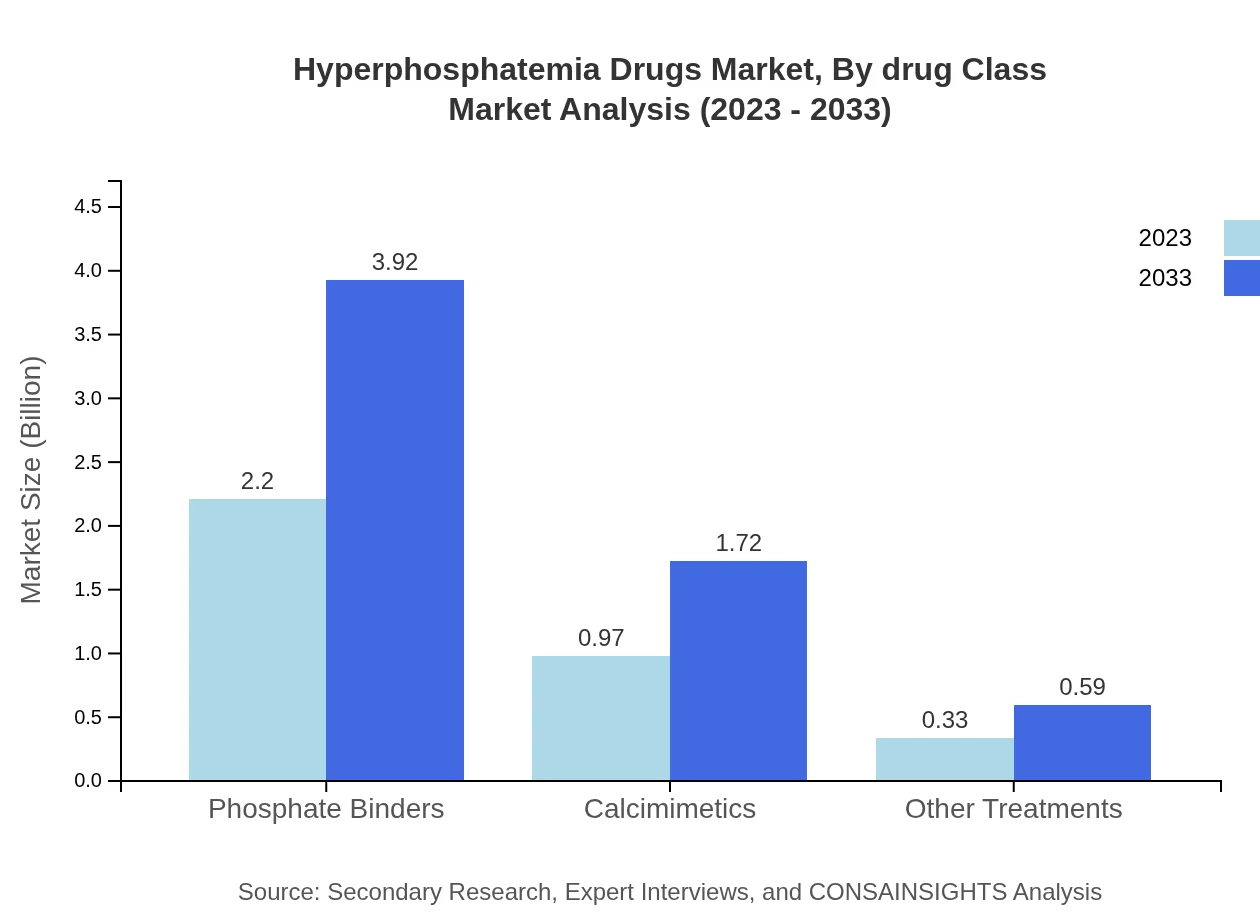
Phosphate binders currently dominate the market, contributing $2.20 billion in 2023 and projected to grow to $3.92 billion by 2033, representing a market share of 62.81%. Calcimimetics, while smaller with $0.97 billion in 2023, are expected to increase to $1.72 billion by 2033, maintaining a 27.67% market share. Other treatments contribute $0.33 billion in 2023, growing to $0.59 billion by 2033 with a 9.52% share.
Hyperphosphatemia Drugs Market Analysis By Route Of Administration
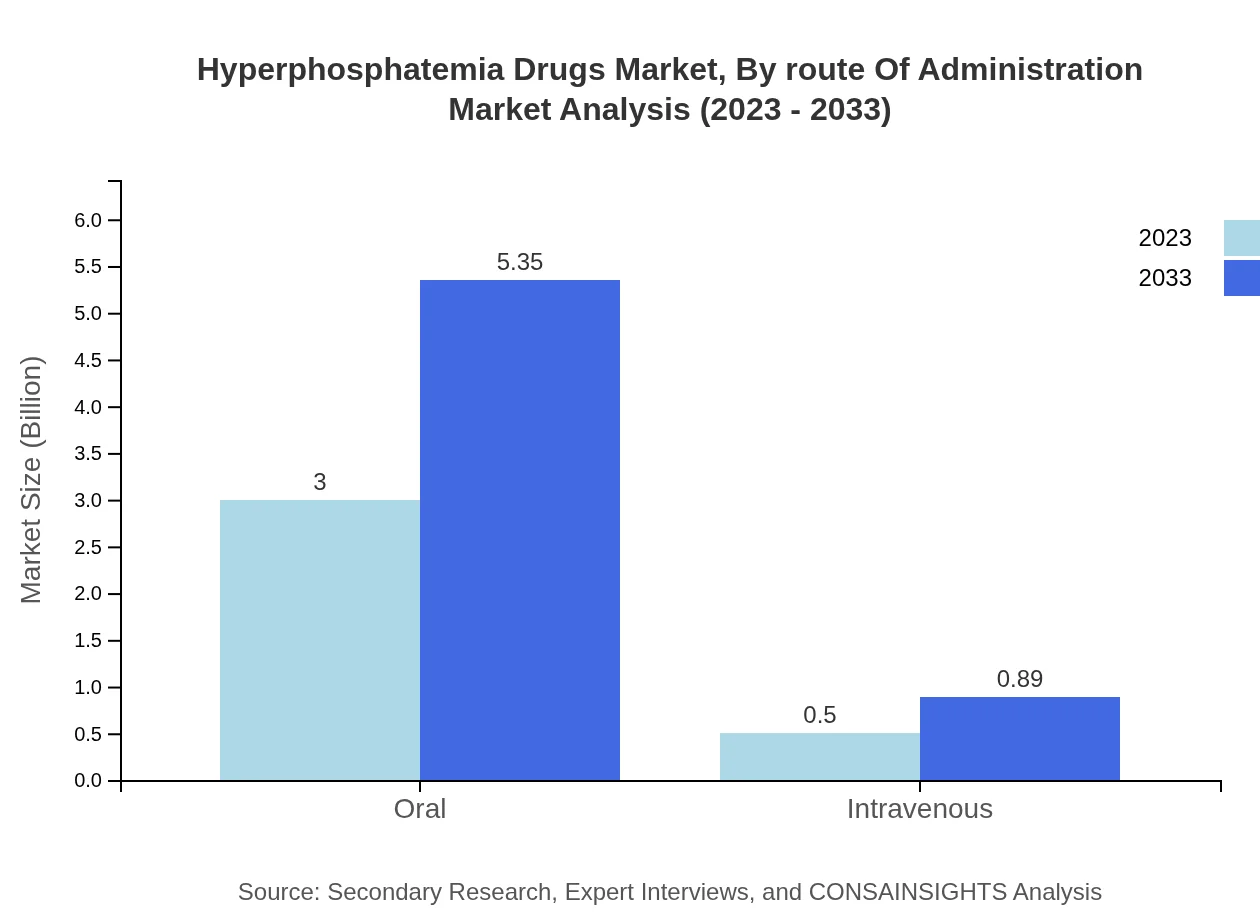
Oral medications account for a significant majority of market share at 85.8%, with a market size expected to grow from $3.00 billion in 2023 to $5.35 billion by 2033. Intravenous administration, while less common, is also experiencing growth from $0.50 billion in 2023 to $0.89 billion, taking a 14.2% share.
Hyperphosphatemia Drugs Market Analysis By Indication
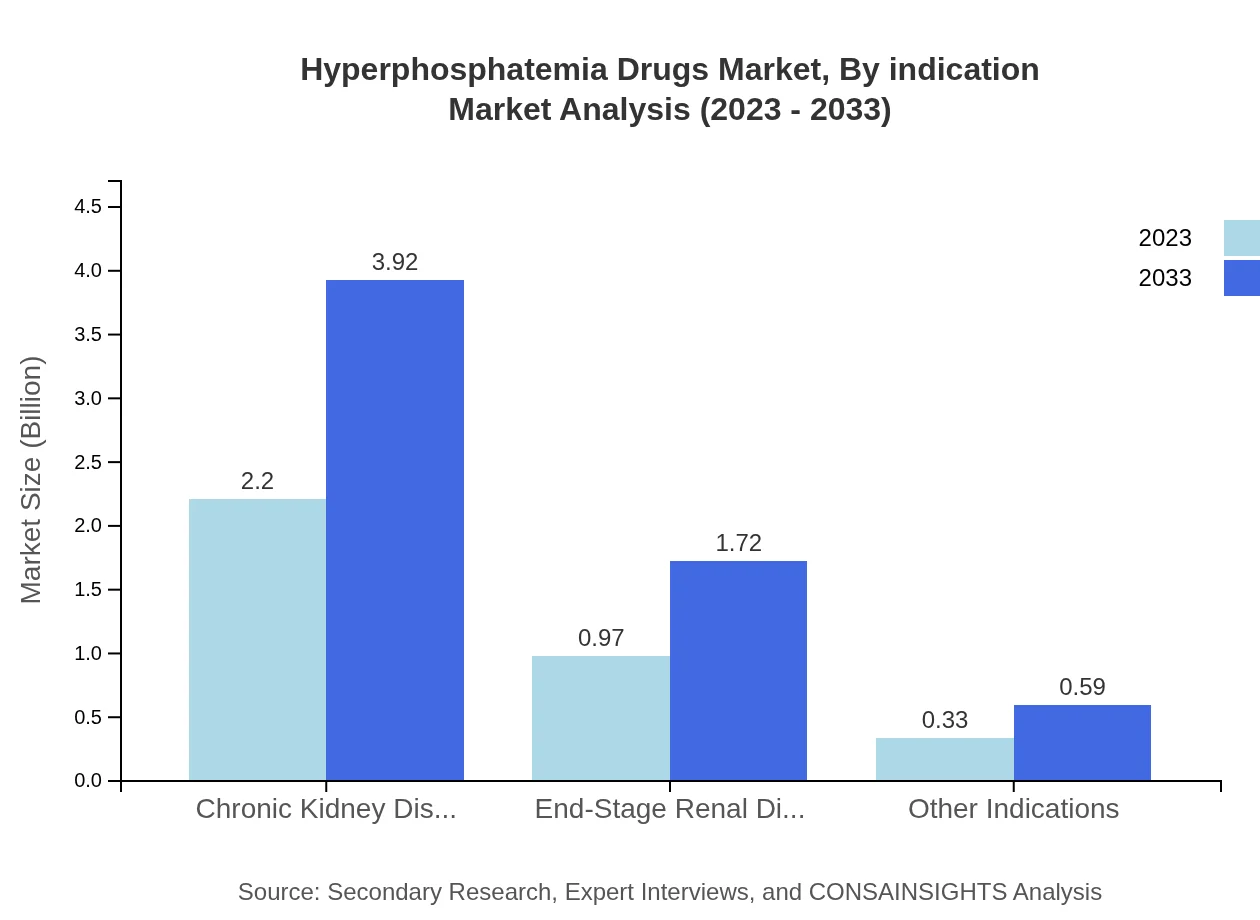
Chronic kidney disease encompasses the largest share, with a market size of $2.20 billion in 2023 and a projected growth to $3.92 billion by 2033. End-stage renal disease treatments are also growing, from $0.97 billion to $1.72 billion. Treatments for other indications contribute smaller but significant shares of the market.
Hyperphosphatemia Drugs Market Analysis By Patient Type
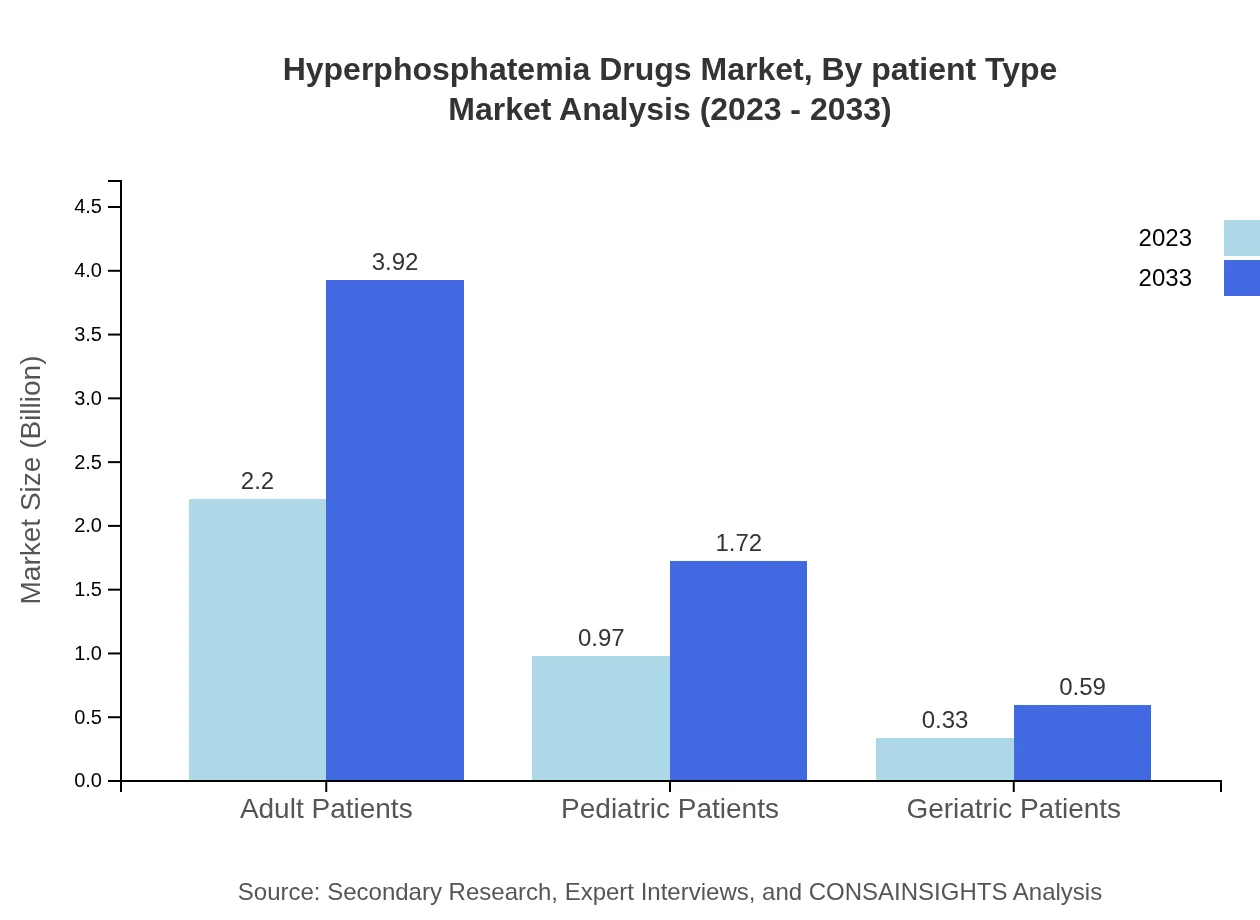
Adult patients dominate the market with a size of $2.20 billion in 2023, growing to $3.92 billion by 2033, while pediatric and geriatric patients represent smaller segments with $0.97 billion and $0.33 billion in 2023, respectively, projected to grow to $1.72 billion and $0.59 billion by 2033.
Hyperphosphatemia Drugs Market Trends and Future Forecast
Tell us your focus area and get a customized research report.
Global Market Leaders and Top Companies in Hyperphosphatemia Drugs Industry
Amgen Inc.:
Amgen Inc. specializes in biotechnology and has a leading portfolio in the development of calcimimetics, contributing significantly to the treatment options available for hyperphosphatemia.Fresenius Medical Care:
Fresenius focuses on chronic kidney disease management solutions and has developed effective phosphate binders that are widely used among ESRD patients.Sanofi:
Sanofi is involved in the development of several therapeutic drugs for managing phosphate levels, driving innovation in the hyperphosphatemia space.We're grateful to work with incredible clients.





FAQs
What is the market size in 2023?
The market size in 2023 is $3.50 Billion as reported for the global hyperphosphatemia drugs market.
How big will the market be in 2033?
The market is projected to reach $6.23 Billion by 2033 according to the forecast period data provided.
What is CAGR?
The compound annual growth rate (CAGR) for the forecast period 2023 to 2033 is 5.8% for this market.
Which region is the fastest Growing in the Hyperphosphatemia Drugs Market Report market?
Latin America is the fastest-growing region, projected to expand from $0.17 Billion in 2023 to $0.31 Billion in 2033, reflecting an implied 6.19% CAGR over the forecast period.
Which region is fastest Growing?
Latin America is identified as the regional market region with an implied 6.19% CAGR, increasing from $0.17 Billion to $0.31 Billion.
Who are the top companies?
Top companies listed include Amgen Inc., Fresenius Medical Care, and Sanofi as notable participants in the market landscape.
What are the main treatment classes?
Primary treatment classes noted include phosphate binders, calcimimetics, and other treatments used to manage hyperphosphatemia.
How is the research conducted?
Research used primary interviews with industry experts, secondary company reports and publications, data triangulation, and internal validation for trend analysis.
What patient segments are covered?
The market segmentation covers adult, pediatric, and geriatric patient types to reflect therapeutic use across age groups.
Which administration routes are included?
Route-of-administration segments include oral and intravenous delivery methods for hyperphosphatemia therapies.