
Reports >
Life Sciences
>
Immunosuppressant Drugs Market Report

Immunosuppressant Drugs Market Report
First published: 08 October 2024 | Last updated: 25 May 2026 | Report Code: immunosuppressant-drugs
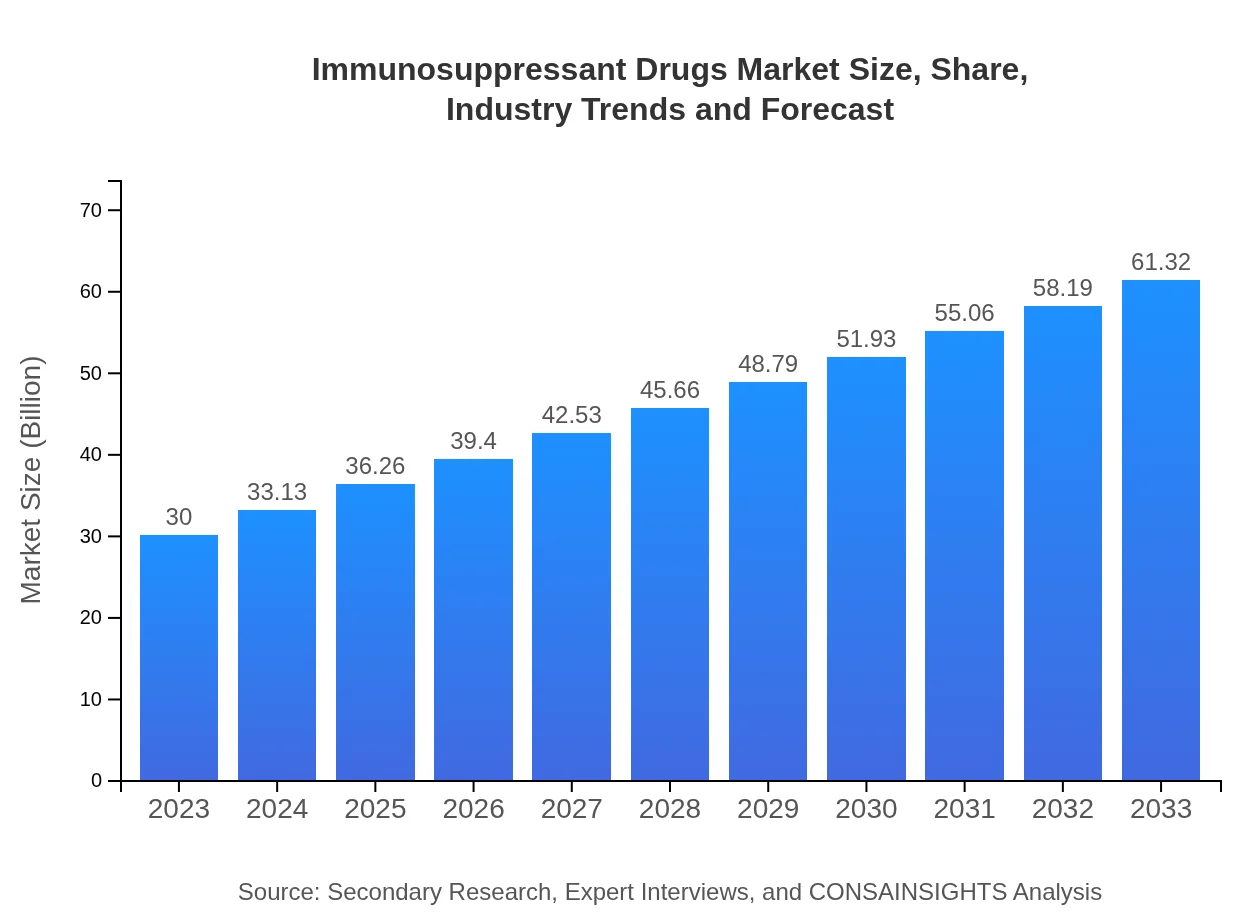
Immunosuppressant Drugs Market — USD $30 Billion in 2023, Growing to USD 61.32null by 2033 at 7.2% CAGR
This report provides a comprehensive analysis of the immunosuppressant drugs market from 2023 to 2033, detailing market size, growth trends, regional insights, and forecasts. It delivers critical insights into the industry's future including competitive landscape and segmentation analysis.
Key Takeaways
- Global market expands from $30.00 Billion in 2023 to $61.32 Billion in 2033 at a 7.2% CAGR.
- North America is largest regional market, while no single fastest-growing region is stated because regional CAGR differences remain within 0.15 percentage points.
- Europe and Asia Pacific show notable growth, with Europe increasing from $7.42 Billion to $15.17 Billion and Asia Pacific from $5.95 Billion to $12.15 Billion.
- Leading firms include Novartis, AbbVie, Pfizer, and Roche, reflecting strong incumbent presence and ongoing innovation.
Immunosuppressant Drugs Market Report — Executive Summary
North America remains largest market by forecast-period value, while no single fastest-growing region is stated because top regional growth rates are separated by less than 0.15 percentage points. The immunosuppressant drugs market is projected to more than double between 2023 and 2033, driven by expanding clinical demand for organ transplantation support and management of autoimmune conditions. Market expansion reflects advancements in biologics and improved delivery systems alongside growing adoption across hospitals, specialty clinics, and home healthcare. The landscape includes established pharmaceutical players—Novartis, AbbVie, Pfizer, and Roche—competing across corticosteroids, calcineurin inhibitors, antimetabolites, and biologics. Distribution spans retail, hospital, and online pharmacies. Regulatory developments, patent expiries, and heightened emphasis on personalized treatment approaches are shaping product portfolios and access. The report synthesizes primary interviews with industry experts and secondary company material, supported by data triangulation and expert-led trend interpretation to present a structured view of market segments, regional dynamics, and strategic considerations for stakeholders.
Key Growth Drivers
- Rising numbers of organ transplant procedures increasing demand for post-transplant immunosuppression.
- Growing prevalence and diagnosis of autoimmune diseases expanding long-term therapy needs.
- Innovation in biologics and delivery mechanisms improving therapeutic options and clinical adoption.
- Patent expirations enabling generic entrants and broadening access through lower-cost alternatives.
- Expanded distribution channels, including online pharmacies, increasing patient access and adherence.
| Metric | Value |
|---|---|
| Study Period | 2023 - 2033 |
| 2023 Market Size | $30.00 Billion |
| CAGR (2023-2033) | 7.2% |
| 2033 Market Size | $61.32 Billion |
| Top Companies | Novartis, AbbVie, Pfizer , Roche |
| Published Date | 08 October 2024 |
| Last Modified Date | 25 May 2026 |
Immunosuppressant Drugs Market Overview
Customize Immunosuppressant Drugs Market Report market research report
- ✔ Get in-depth analysis of Immunosuppressant Drugs market size, growth, and forecasts.
- ✔ Understand Immunosuppressant Drugs's regional dynamics and industry-specific trends.
- ✔ Identify potential applications, end-user demand, and growth segments in Immunosuppressant Drugs
What is the Market Size & CAGR of Immunosuppressant Drugs Market Report market in 2023?
Immunosuppressant Drugs Industry Analysis
Immunosuppressant Drugs Market Segmentation and Scope
Tell us your focus area and get a customized research report.
Immunosuppressant Drugs Market Report Market Analysis Report by Region
Europe Immunosuppressant Drugs Market Report:
Europe grows from $7.42 Billion in 2023 to $15.17 Billion in 2033. Expansion is influenced by rising autoimmune disease diagnosis rates, regulatory approvals affecting product availability, and ongoing innovation in biologics and therapeutic regimens.Asia Pacific Immunosuppressant Drugs Market Report:
Asia Pacific grows from $5.95 Billion in 2023 to $12.15 Billion in 2033. Drivers include increasing healthcare access, growing numbers of transplants, and adoption of newer therapies supported by strengthening healthcare infrastructure.North America Immunosuppressant Drugs Market Report:
North America is largest regional market, rising from $10.97 Billion in 2023 to $22.43 Billion in 2033. This growth aligns with well-established transplant programs, advanced clinical adoption, and significant presence of leading companies, supporting continued demand across hospitals and specialty clinics.South America Immunosuppressant Drugs Market Report:
Latin America grows from $2.81 Billion in 2023 to $5.73 Billion in 2033. Regional growth reflects improving access to specialized care, wider distribution through pharmacies, and increased awareness and diagnosis of autoimmune conditions.Middle East & Africa Immunosuppressant Drugs Market Report:
Middle East and Africa grows from $2.85 Billion in 2023 to $5.83 Billion in 2033. Market expansion is associated with gradual enhancements in healthcare services, greater adoption of transplant procedures, and growing availability of immunosuppressant therapies.Tell us your focus area and get a customized research report.
Research Methodology
Immunosuppressant Drugs Market Analysis By Drug Class
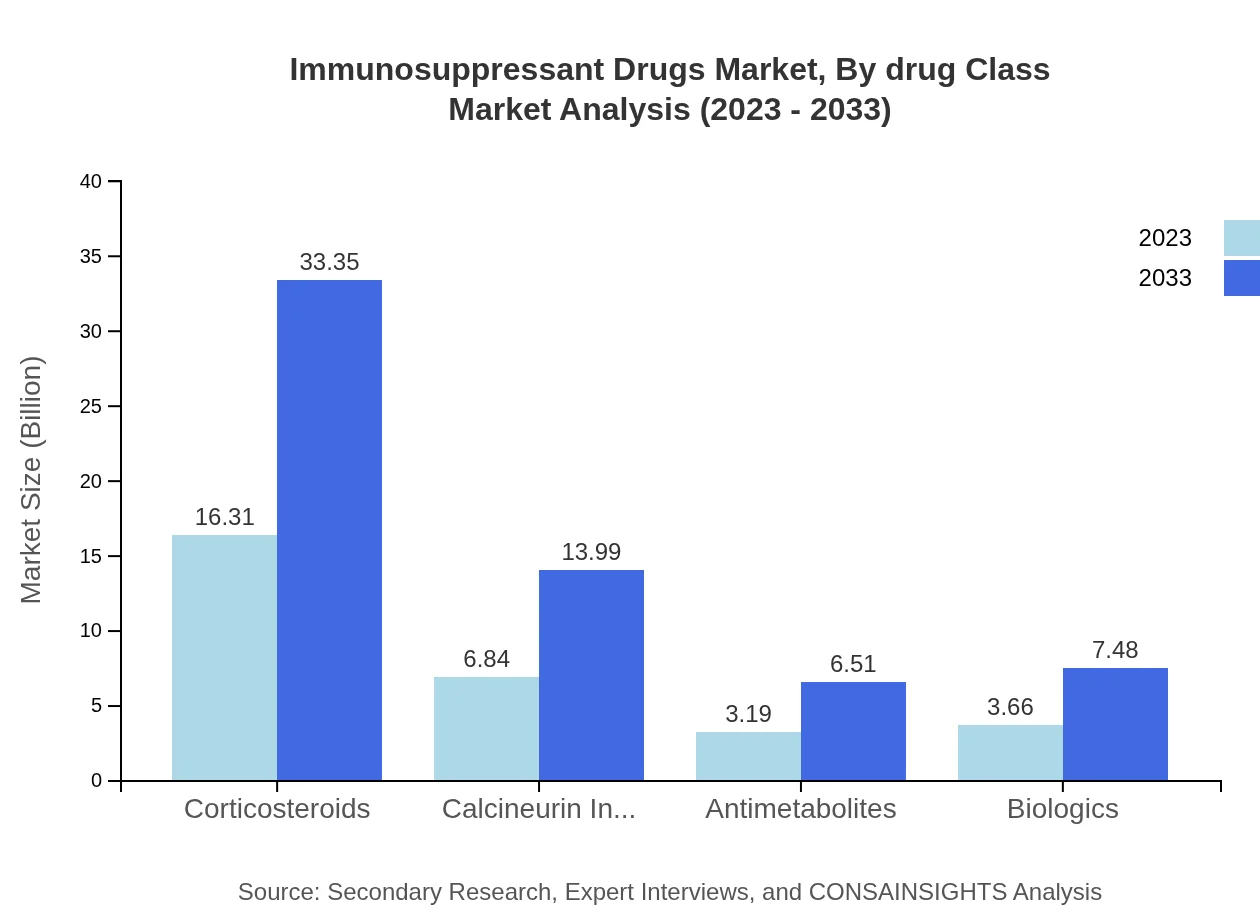
The immunosuppressant drugs market can be segmented by drug class. The key classes include corticosteroids, calcineurin inhibitors, antimetabolites, and biologics, representing different therapeutic mechanisms. For instance, corticosteroids accounted for approximately $16.31 billion in 2023 and are expected to grow to $33.35 billion by 2033, signifying their vital role in managing inflammation and autoimmune responses.
Immunosuppressant Drugs Market Analysis By Therapy Type
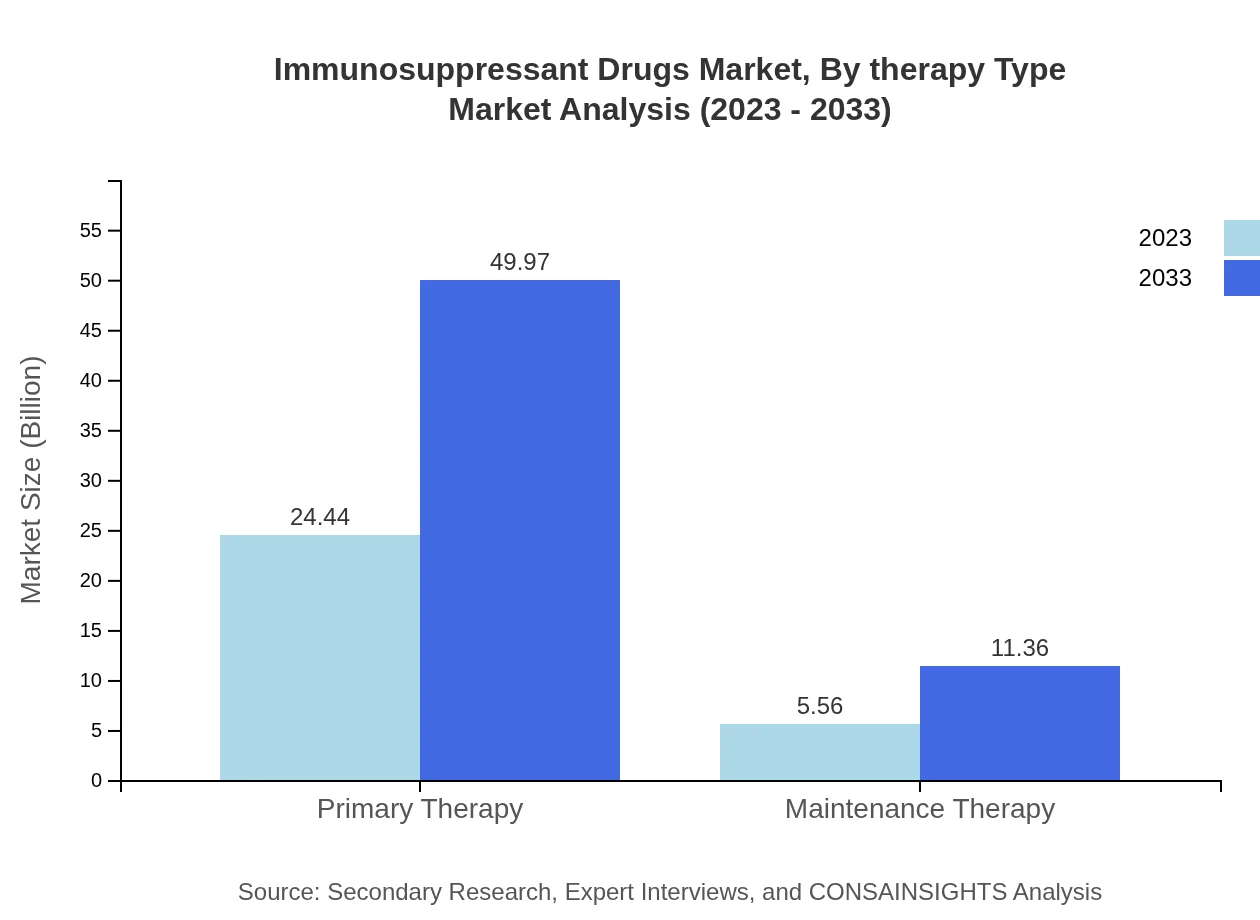
Therapy types categorized in this market include primary and maintenance therapies, with primary therapy accounting for nearly 81.48% share in 2023 and growing in significance to reach 49.97 billion by 2033. This reflects the critical adoption of immunosuppressants in initial treatment protocols.
Immunosuppressant Drugs Market Analysis By End User
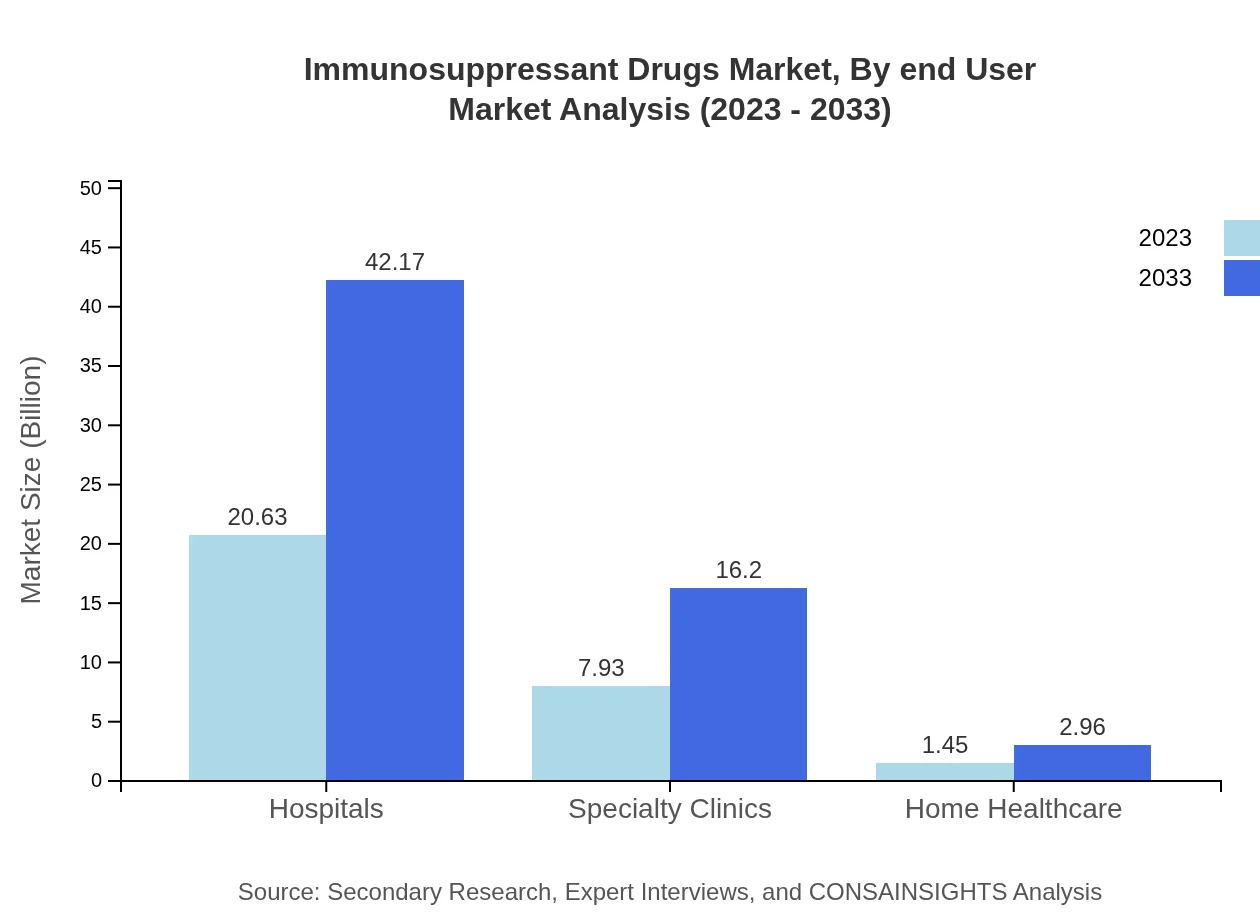
Key end-users of immunosuppressant drugs include hospitals, specialty clinics, and home healthcare. Hospitals represent the largest share, accounting for approximately 68.76% of the market in 2023 with a size of $20.63 billion, anticipated to expand to $42.17 billion by 2033.
Immunosuppressant Drugs Market Analysis By Indication
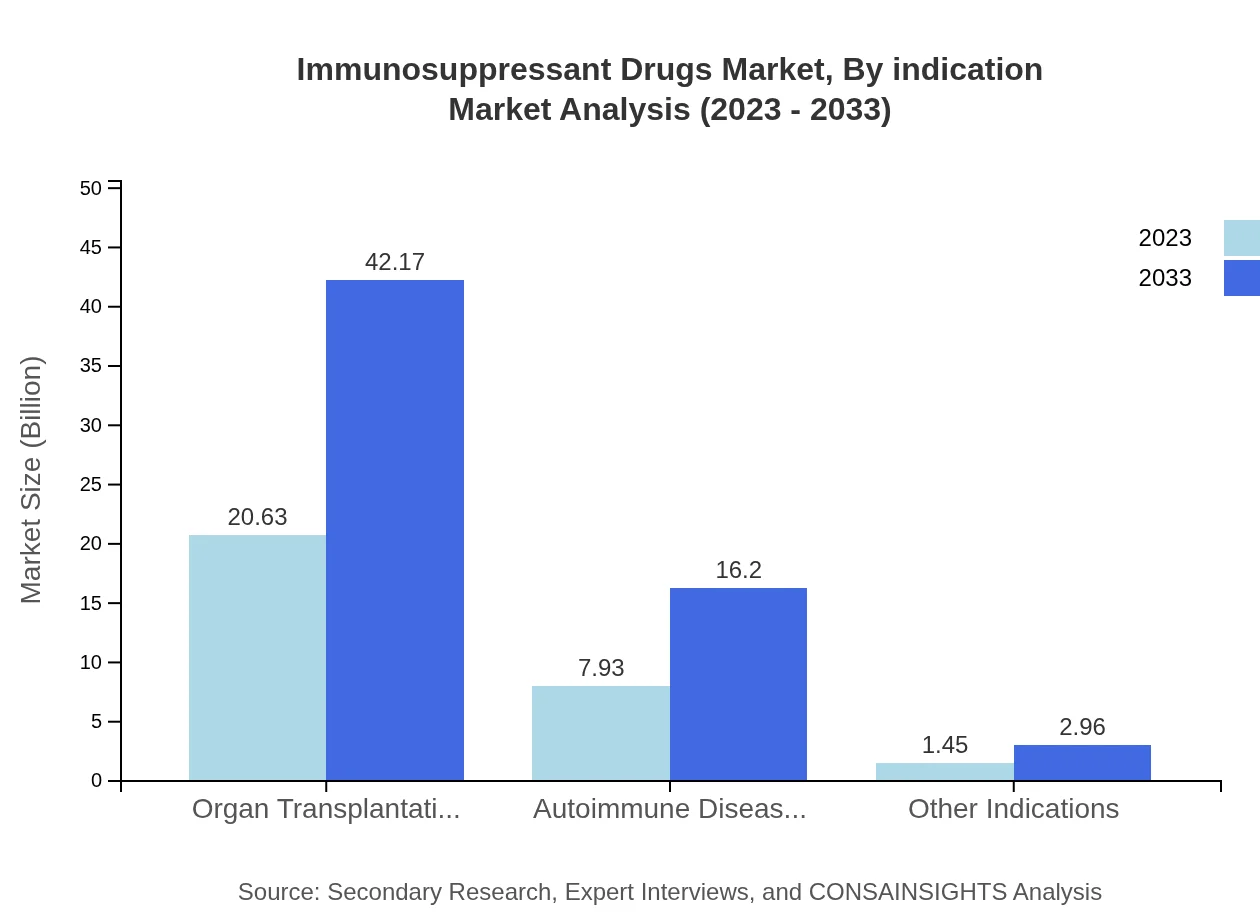
Indications for immunosuppressants predominantly include organ transplantation and autoimmune diseases, with organ transplantation expected to dominate, maintaining a market size of $20.63 billion in 2023 and projecting significant growth by 2033.
Immunosuppressant Drugs Market Analysis By Distribution Channel
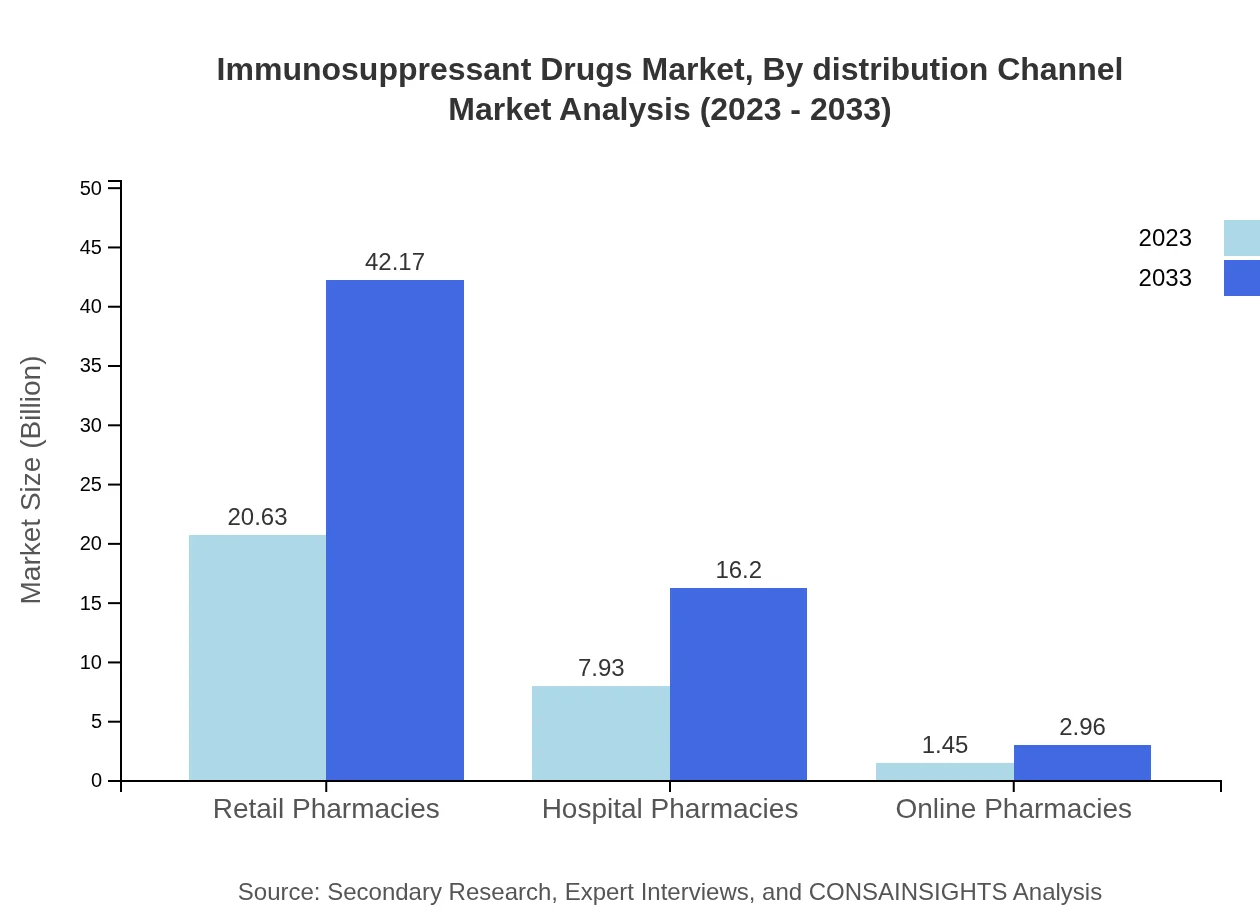
Distribution channels encompass retail pharmacies, hospital pharmacies, and online pharmacies. Retail pharmacies are significant players, holding 68.76% market share in 2023, demonstrating the evolving landscape of drug access and distribution.
Immunosuppressant Drugs Market Trends and Future Forecast
Tell us your focus area and get a customized research report.
Global Market Leaders and Top Companies in Immunosuppressant Drugs Industry
Novartis:
A leading pharmaceutical company with a diversified portfolio, Novartis is recognized for its innovative immunosuppressive agents and ongoing research in transplant medicine.AbbVie:
AbbVie specializes in immunology and has a strong pipeline of biologics targeting autoimmune diseases, emphasizing its significant role in shaping the immunosuppressant market.Pfizer :
With a focus on comprehensive immunosuppressant therapies, Pfizer stands out for its research and commitment to enhancing transplant outcomes and patient care.Roche:
Roche leverages biopharmaceutical innovations to provide advanced immunosuppressive therapies and is a key player in therapeutic interventions for transplant patients.We're grateful to work with incredible clients.









FAQs
What is the market size of the immunosuppressant drugs market in 2023?
The market size in 2023 is $30.00 Billion, based on the reported 2023 valuation used as the starting point for the 2023 to 2033 forecast period.
How big will the market be in 2033?
The projected market value in 2033 is $61.32 Billion as provided for the 2023 to 2033 forecast horizon, reflecting anticipated industry growth.
What is CAGR for the forecast period?
The compounded annual growth rate for 2023 to 2033 is 7.2%, representing the average yearly growth applied across the stated decade.
Is there a single fastest Growing region in the Immunosuppressant Drugs Market Report market?
No single fastest-growing region is stated for the Immunosuppressant Drugs Market Report market because the top regional implied CAGR values are within 0.15 percentage points of each other, making the ranking too close to call reliably.
Which companies are highlighted as key players?
Top companies listed in the report are Novartis, AbbVie, Pfizer, and Roche, representing major participants in drug development and commercialization.
What end users are covered in market segmentation?
Reported end-user sub segments include Hospitals, Specialty Clinics, and Home Healthcare, indicating primary points of care and treatment delivery.
How are drug classes categorized in the report?
Drug-class sub segments cited are Corticosteroids, Calcineurin Inhibitors, Antimetabolites, and Biologics, reflecting major therapeutic categories.
What distribution channels are included?
Distribution channels specified are Retail Pharmacies, Hospital Pharmacies, and Online Pharmacies, showing the main routes to patients.
What is driving demand for immunosuppressants?
Demand drivers include increasing organ transplants and autoimmune disease management needs, together with innovation in therapies and broader access via diverse channels.
Who contributed to the research methodology?
The methodology includes primary interviews with industry experts, supplemented by secondary company reports and publications, plus data triangulation and validation.