
Reports >
Life Sciences
>
Immunotherapy Drugs Market Report

Immunotherapy Drugs Market Report
First published: 11 October 2024 | Last updated: 25 May 2026 | Report Code: immunotherapy-drugs
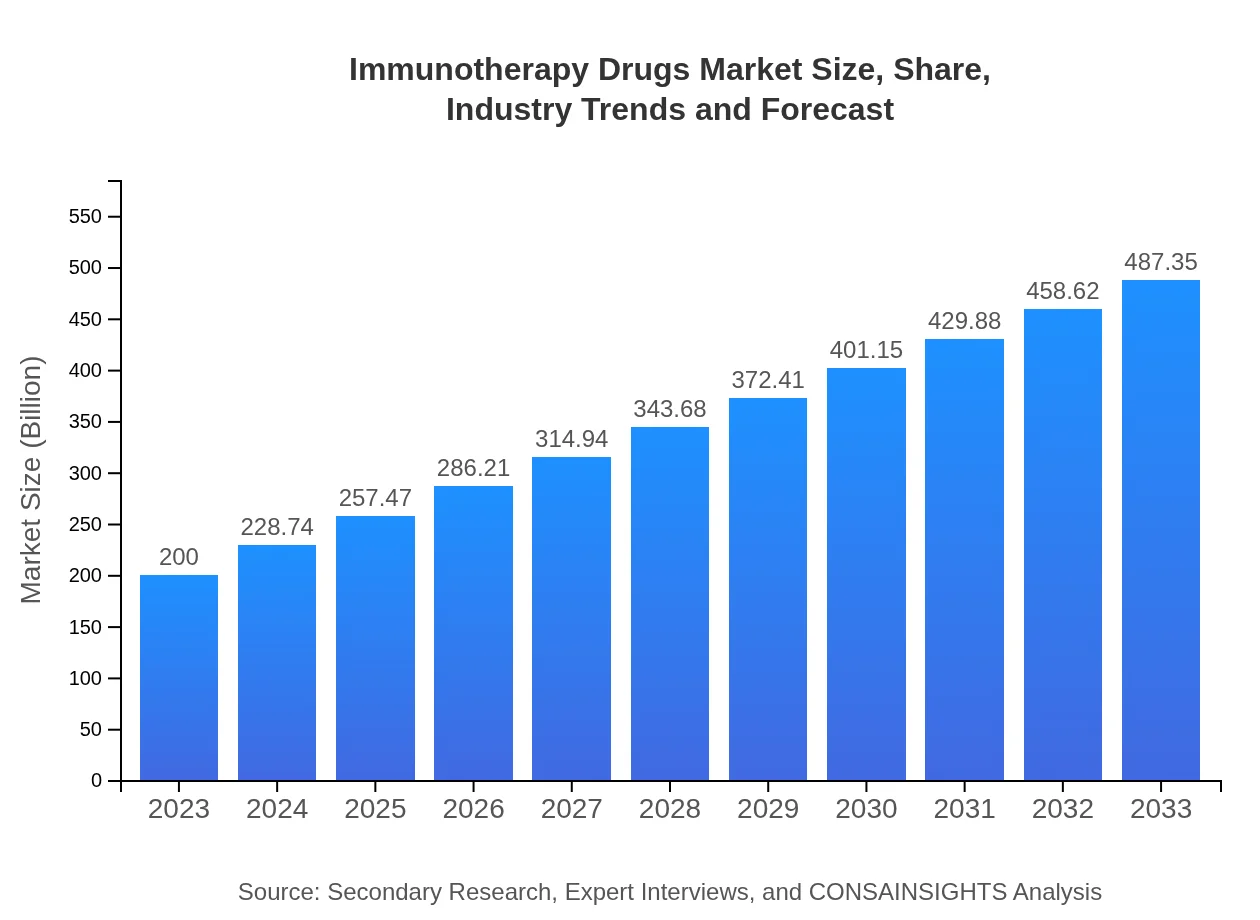
Immunotherapy Drugs Market — USD 200 billion in 2023, Growing to USD 487.35B by 2033 at 9% CAGR
This report provides an in-depth analysis of the Immunotherapy Drugs market, including key trends, market size, growth forecasts for the period 2023-2033, and segmentation across various categories. It offers critical insights into regional performance and global market leaders.
Key Takeaways
- Global market valued at $200.00 Billion in 2023 and projected to reach $487.35 Billion by 2033 at a 9% CAGR.
- North America is largest regional market, while no single fastest-growing region is stated because regional CAGR differences remain within 0.15 percentage points.
- Europe’s market rises from $60.56 Billion to $147.57 Billion between 2023 and 2033, reflecting sustained demand.
- Asia Pacific grows from $36.78 Billion in 2023 to $89.62 Billion by 2033, driven by expanding healthcare access.
- Top companies active include Roche, Bristol Myers Squibb, Merck & Co., Pfizer, and Novartis.
Immunotherapy Drugs Market Report — Executive Summary
North America remains largest market by forecast-period value, while no single fastest-growing region is stated because top regional growth rates are separated by less than 0.15 percentage points. This report examines the immunotherapy drugs market through 2023 to 2033, documenting a rise from $200.00 Billion to $487.35 Billion at a 9% CAGR. Key demand drivers include increasing incidence of oncology and autoimmune conditions and ongoing innovation in monoclonal antibodies, immune checkpoint inhibitors, and cellular therapies. The analysis addresses market structure across drug types, indications, manufacturers, distribution channels, and administration routes, and profiles competitive dynamics featuring Roche, Bristol Myers Squibb, Merck & Co., Pfizer, and Novartis. Regional trends highlight North America as the largest market. The study also discusses challenges such as treatment complexity and cost pressures, and notes partnership-driven pipelines and regulatory activity shaping future adoption patterns.
Key Growth Drivers
- Rising prevalence of oncology and autoimmune diseases fueling demand for targeted immunotherapies.
- Continuous innovation in monoclonal antibodies, checkpoint inhibitors, and cellular therapies expanding treatment options.
- Increasing regulatory approvals and larger clinical pipelines accelerating commercial availability.
- Growth in healthcare infrastructure and access in key regions enhancing adoption of advanced biologics.
| Metric | Value |
|---|---|
| Study Period | 2023 - 2033 |
| 2023 Market Size | $200.00 Billion |
| CAGR (2023-2033) | 9% |
| 2033 Market Size | $487.35 Billion |
| Top Companies | Roche, Bristol Myers Squibb, Merck & Co., Pfizer , Novartis |
| Published Date | 11 October 2024 |
| Last Modified Date | 25 May 2026 |
Immunotherapy Drugs Market Overview
Customize Immunotherapy Drugs Market Report market research report
- ✔ Get in-depth analysis of Immunotherapy Drugs market size, growth, and forecasts.
- ✔ Understand Immunotherapy Drugs's regional dynamics and industry-specific trends.
- ✔ Identify potential applications, end-user demand, and growth segments in Immunotherapy Drugs
What is the Market Size & CAGR of Immunotherapy Drugs Market Report market in 2023?
Immunotherapy Drugs Industry Analysis
Immunotherapy Drugs Market Segmentation and Scope
Tell us your focus area and get a customized research report.
Immunotherapy Drugs Market Report Market Analysis Report by Region
Europe Immunotherapy Drugs Market Report:
Europe grows from $60.56 Billion in 2023 to $147.57 Billion in 2033. Growth is driven by strong clinical research activity, regulatory approvals, and increasing adoption of immunotherapies for oncology and autoimmune indications.Asia Pacific Immunotherapy Drugs Market Report:
Asia Pacific grows from $36.78 Billion in 2023 to $89.62 Billion in 2033. 78 Billion in 2023 to $89.62 Billion by 2033. Expansion reflects improving healthcare infrastructure, growing patient access, and increased local and multinational investment in immunotherapy development.North America Immunotherapy Drugs Market Report:
North America is largest regional market, rising from $73.58 Billion in 2023 to $179.3 Billion in 2033. Regional strength is tied to concentrated R&D investment, established reimbursement frameworks, and high uptake of advanced biologic therapies.South America Immunotherapy Drugs Market Report:
Latin America grows from $4.68 Billion in 2023 to $11.4 Billion in 2033. Regional progress is influenced by expanding healthcare services, rising disease burden, and gradual introduction of advanced treatment options.Middle East & Africa Immunotherapy Drugs Market Report:
Middle East and Africa grows from $24.4 Billion in 2023 to $59.46 Billion in 2033. Growth factors include expanding healthcare capacity, increased diagnostic capabilities, and greater uptake of specialty therapeutics.Tell us your focus area and get a customized research report.
Research Methodology
Immunotherapy Drugs Market Analysis By Drug Type
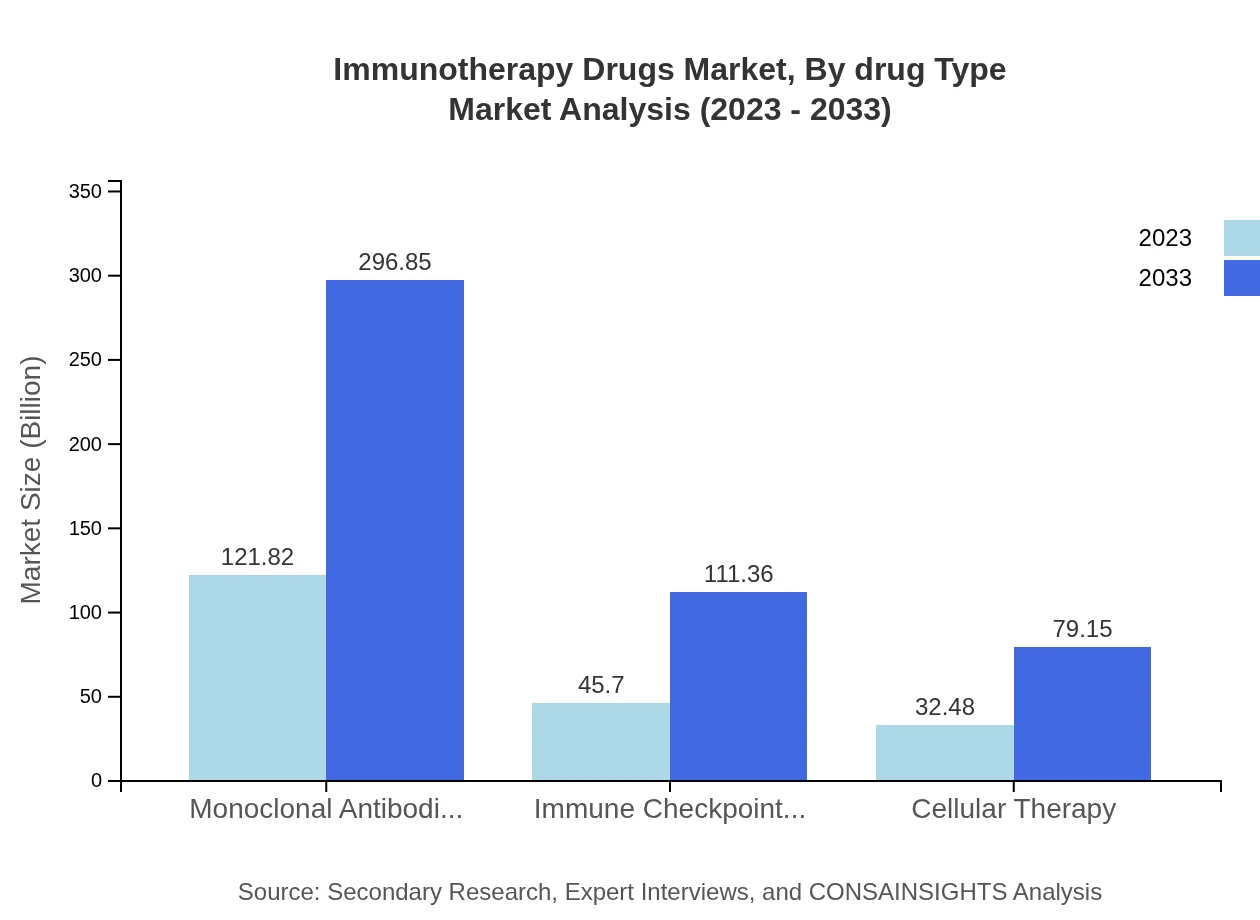
In 2023, the market for monoclonal antibodies was valued at USD 121.82 billion, projected to reach USD 296.85 billion by 2033. Immune checkpoint inhibitors followed with a market size of USD 45.70 billion in 2023, growing to USD 111.36 billion by 2033. Cellular therapy is also gaining traction, with projections from USD 32.48 billion to USD 79.15 billion over the same period, indicating the diversified therapeutic approaches in immunotherapy.
Immunotherapy Drugs Market Analysis By Indication
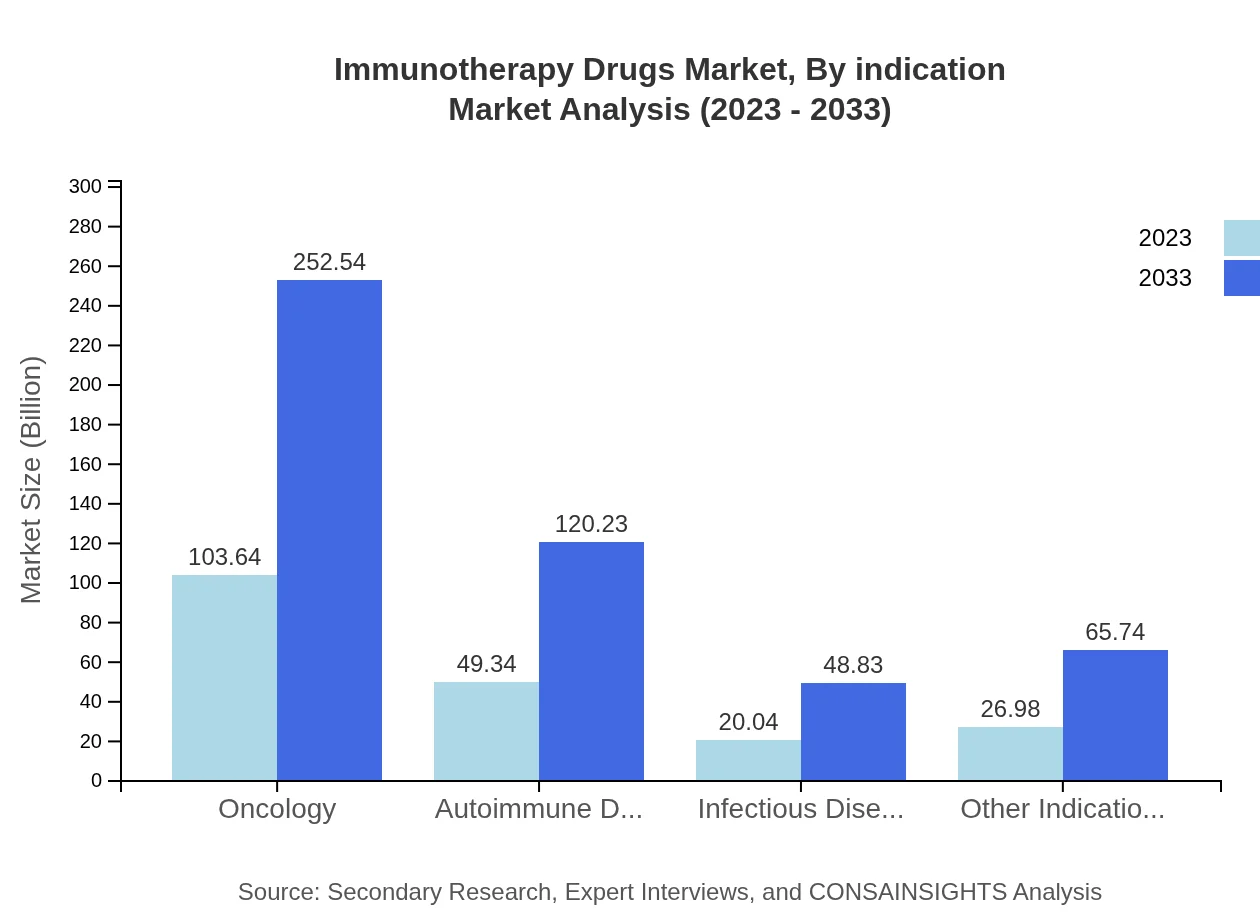
Oncology remains the leading indication for immunotherapy drugs, valued at USD 103.64 billion in 2023, expected to expand to USD 252.54 billion by 2033. Autoimmune disorders segment shows significant growth potential, rising from USD 49.34 billion to USD 120.23 billion. Infectious diseases and other indications are also crucial contributors to the market, reflecting the broad applicability of immunotherapy.
Immunotherapy Drugs Market Analysis By Manufacturer
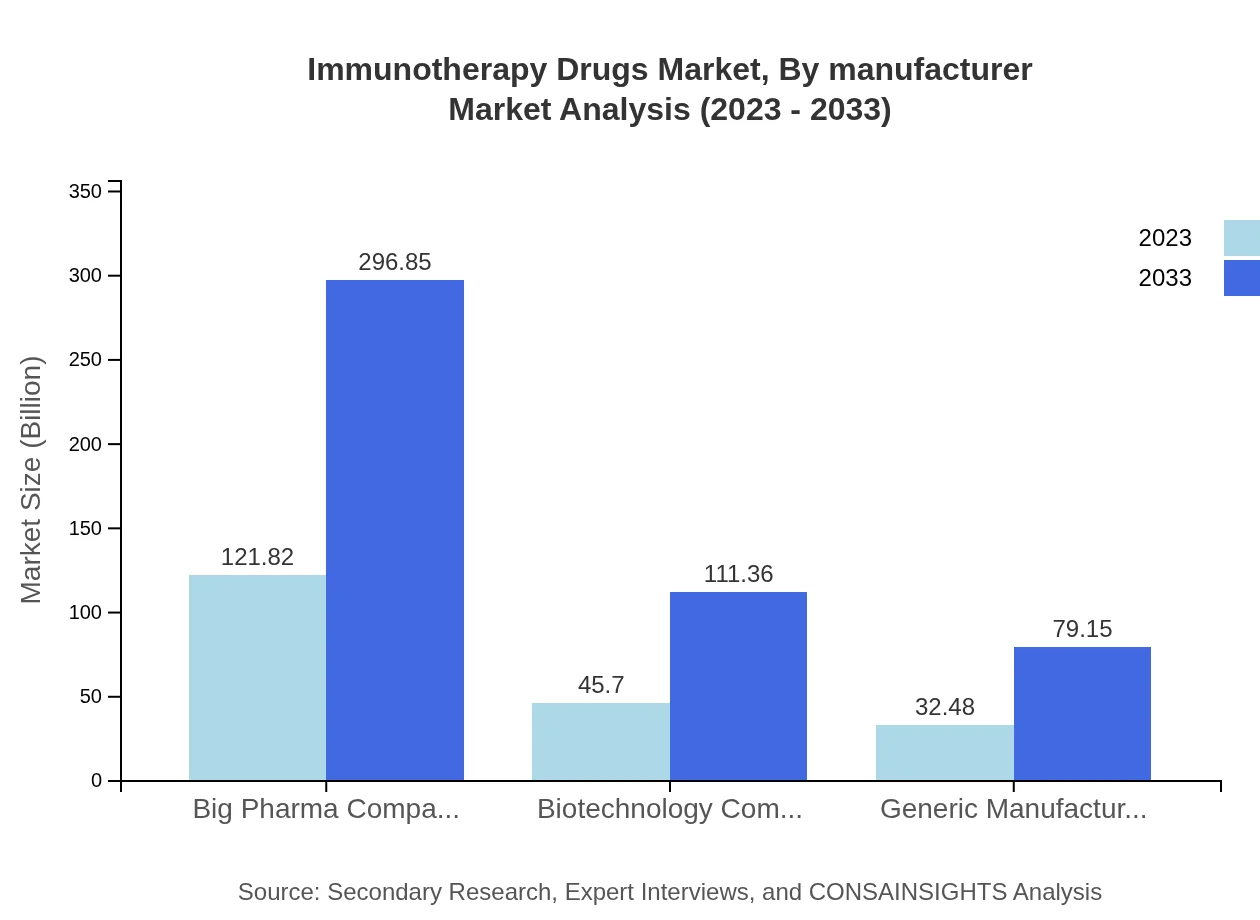
Among manufacturers, Big Pharma companies dominate the market with a share of USD 121.82 billion in 2023, forecasted to reach USD 296.85 billion. Biotechnology companies are also major players, with figures growing from USD 45.70 billion to USD 111.36 billion, demonstrating diverse manufacturing capabilities across the sector.
Immunotherapy Drugs Market Analysis By Route Of Administration
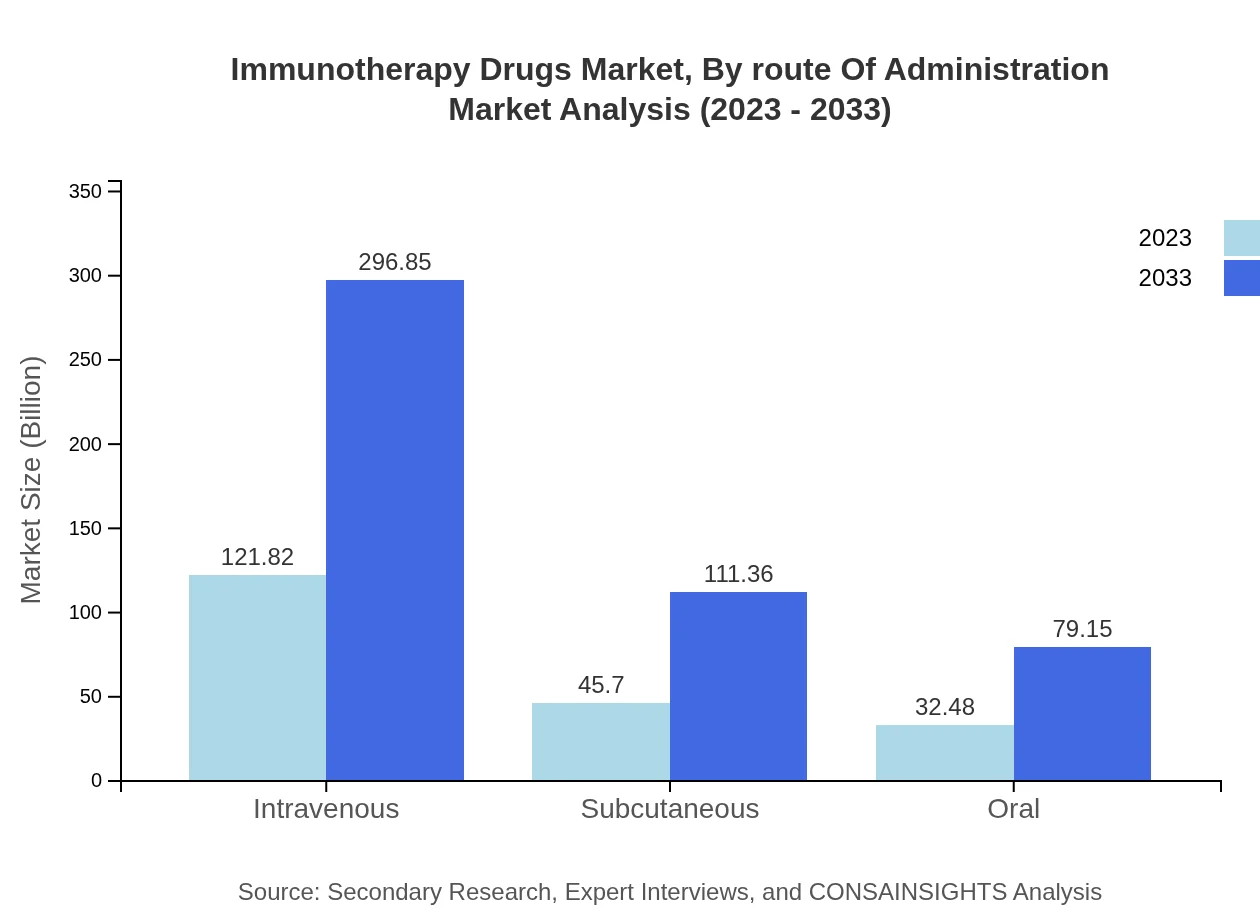
The majority of immunotherapy drugs are administered intravenously, valued at USD 121.82 billion in 2023, likely escalating to USD 296.85 billion by 2033. Subcutaneous and oral routes follow, projecting to grow significantly in response to patient preference and convenience, with market sizes moving from USD 45.70 billion and USD 32.48 billion to USD 111.36 billion and USD 79.15 billion respectively.
Immunotherapy Drugs Market Analysis By Distribution Channel
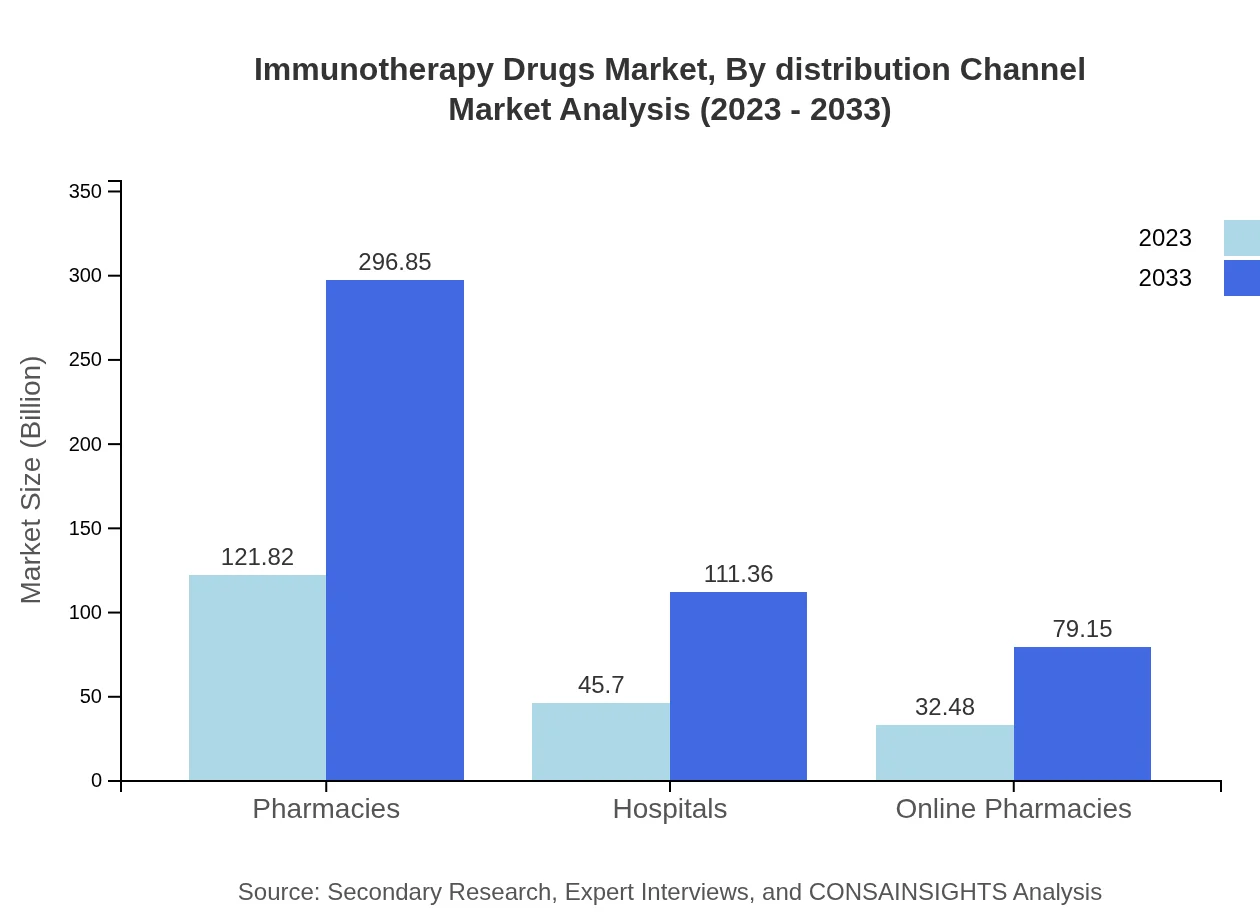
Pharmacies lead the distribution channels for immunotherapy drugs, holding a significant share with a market value of USD 121.82 billion in 2023, expanding to USD 296.85 billion. Hospitals represent another critical channel, expected to progress from USD 45.70 billion to USD 111.36 billion, indicating an increasing reliance on hospitals for administering complex therapies.
Immunotherapy Drugs Market Trends and Future Forecast
Tell us your focus area and get a customized research report.
Global Market Leaders and Top Companies in Immunotherapy Drugs Industry
Roche:
A leader in the development of monoclonal antibodies, Roche has significantly contributed to the immunotherapy landscape with drugs like Rituximab for hematological malignancies.Bristol Myers Squibb:
Recognized for its groundbreaking immune checkpoint inhibitors, Bristol Myers Squibb offers Opdivo and Yervoy that have transformed cancer treatment paradigms.Merck & Co.:
Merck is a pioneer in immunotherapy with its Keytruda product, leading the market in immune-oncology treatments.Pfizer :
Pfizer continues to innovate within the immunotherapy sphere, focusing on both monoclonal antibody and novel therapeutic development.Novartis:
With a strong emphasis on CAR T-cell therapies and gene editing strategies, Novartis is at the forefront of cellular therapy advancements.We're grateful to work with incredible clients.





FAQs
What is the market size of the immunotherapy drugs market in 2023?
The market size in 2023 is $200.00 Billion, as reported for the global immunotherapy drugs market base year.
How big will the market be in 2033?
By 2033, the market is forecast to reach $487.35 Billion according to the provided projections for the decade to 2033.
What is CAGR for the forecast period?
The compound annual growth rate (CAGR) for the 2023 to 2033 forecast period is 9% as specified in the report data.
Is there a single fastest Growing region in the Immunotherapy Drugs Market Report market?
No single fastest-growing region is stated for the Immunotherapy Drugs Market Report market because the top regional implied CAGR values are within 0.15 percentage points of each other, making the ranking too close to call reliably.
Which companies lead the immunotherapy drugs market?
Top companies listed include Roche, Bristol Myers Squibb, Merck & Co., Pfizer, and Novartis as major industry participants.
What are the main therapeutic segments covered?
Key drug-type segments include monoclonal antibodies, immune checkpoint inhibitors, and cellular therapy, spanning oncology and autoimmune indications.
How are products commonly distributed?
Distribution channels detailed include pharmacies, hospitals, and online pharmacies to reach diverse patient populations and healthcare settings.
What administration routes are included in the report?
Report segments by route of administration cover intravenous, subcutaneous, and oral delivery options for immunotherapy drugs.
What is the forecast period covered in the report?
The forecast period covered by the study is 2023 to 2033, during which the market trajectory is analyzed.
Why are partnerships important in this market?
Partnerships support pipeline development, access to novel technologies, and commercialization, helping companies advance complex immunotherapy candidates.