

Incretin Based Drugs Market Report
First published: 11 October 2024 | Last updated: 25 May 2026 | Report Code: incretin-based-drugs
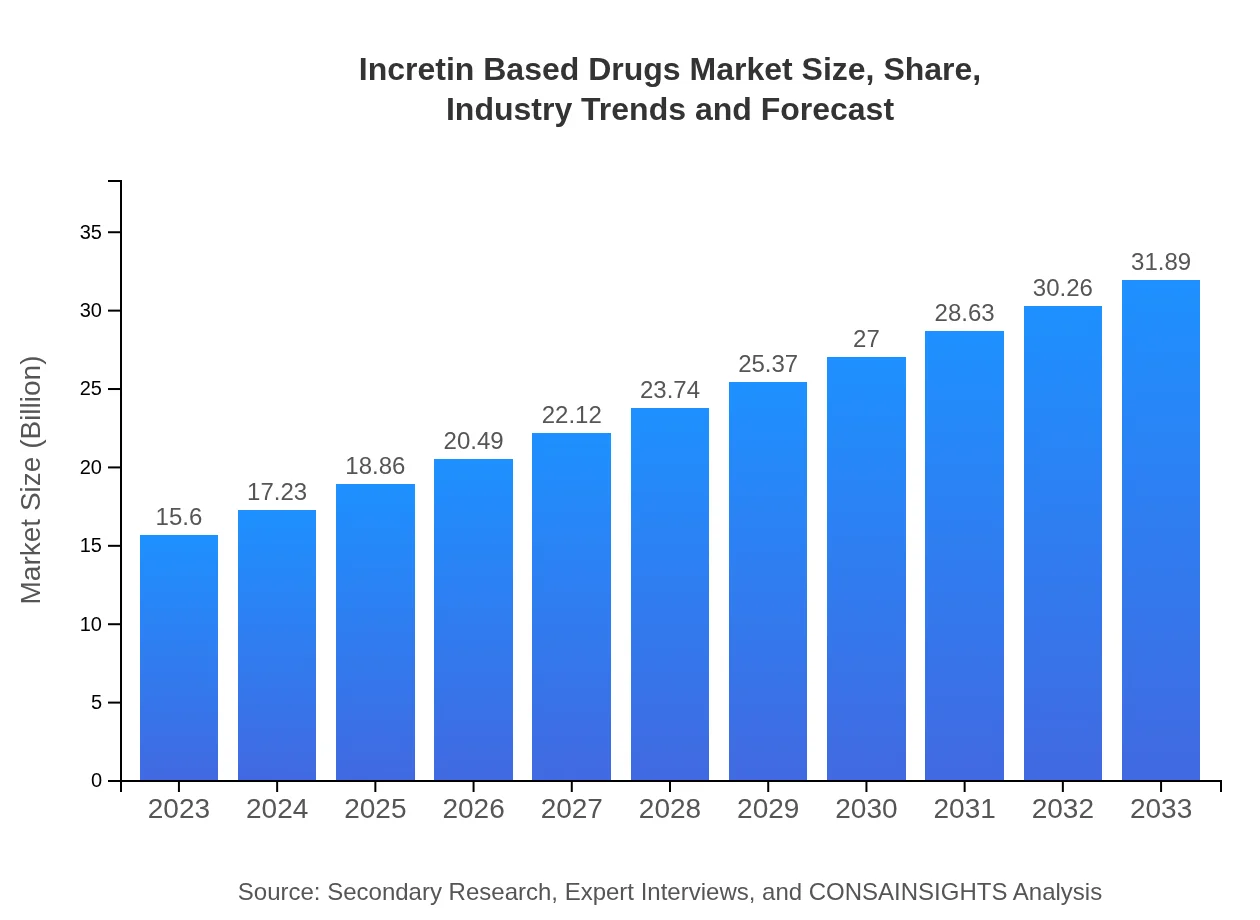
Incretin Based Drugs Market — USD 15.6 billion in 2023, Growing to USD 31.89B by 2033 at 7.2% CAGR
This report provides an in-depth analysis of the Incretin Based Drugs market, outlining the industry dynamics, market size, trends, and forecasts from 2023 to 2033. Key insights on regional performance and competitive landscape are also included.
Key Takeaways
- Global market expands from $15.60 Billion in 2023 to $31.89 Billion in 2033 at a 7.2% CAGR.
- North America is largest regional market, while no single fastest-growing region is stated because regional CAGR differences remain within 0.15 percentage points.
- Europe moves from $4.86 Billion in 2023 to $9.93 Billion in 2033; Asia Pacific grows from $3.14 Billion to $6.42 Billion.
- Key drug types include GLP-1 agonists and DPP-4 inhibitors; care settings span hospitals, specialty clinics, and homecare.
- Major firms shaping the market include Novo Nordisk, Merck & Co., Sanofi, and Eli Lilly.
Incretin Based Drugs Market Report — Executive Summary
North America remains largest market by forecast-period value, while no single fastest-growing region is stated because top regional growth rates are separated by less than 0.15 percentage points. This report outlines the Incretin Based Drugs market, which is forecast to grow from $15.60 Billion in 2023 to $31.89 Billion by 2033 at a 7.2% CAGR. Growth is driven by rising prevalence of type 2 diabetes and obesity, ongoing product innovation, and expanding access to care. The analysis covers drug types such as GLP-1 agonists and DPP-4 inhibitors, therapy approaches including monotherapy and combination therapy, and administration routes like subcutaneous and oral. End-user coverage includes hospitals, specialty clinics, and homecare settings. Regional breakdowns highlight North America as the largest regional market. Competitive profiling includes leading companies such as Novo Nordisk, Merck & Co., Sanofi, and Eli Lilly. Research integrates expert interviews and secondary sources to present a structured view of demand drivers, market segmentation, and regional opportunities through 2033.
Key Growth Drivers
- Rising incidence of type 2 diabetes and obesity increasing demand for effective glycemic and weight-management therapies.
- Continuous introduction of novel incretin formulations and combination regimens improving clinical outcomes and adoption.
- Greater healthcare spending and broader patient access enabling wider uptake across hospital and outpatient settings.
- Growing awareness among clinicians and patients about efficacy of GLP-1 agonists and DPP-4 inhibitors bolstering prescriptions.
- Shift toward homecare and outpatient treatment models facilitating administration of oral and subcutaneous therapies.
| Metric | Value |
|---|---|
| Study Period | 2023 - 2033 |
| 2023 Market Size | $15.60 Billion |
| CAGR (2023-2033) | 7.2% |
| 2033 Market Size | $31.89 Billion |
| Top Companies | Novo Nordisk, Merck & Co., Sanofi, Eli Lilly |
| Published Date | 11 October 2024 |
| Last Modified Date | 25 May 2026 |
Incretin Based Drugs Market Overview
Customize Incretin Based Drugs Market Report market research report
- ✔ Get in-depth analysis of Incretin Based Drugs market size, growth, and forecasts.
- ✔ Understand Incretin Based Drugs's regional dynamics and industry-specific trends.
- ✔ Identify potential applications, end-user demand, and growth segments in Incretin Based Drugs
What is the Market Size & CAGR of Incretin Based Drugs Market Report market in 2023?
Incretin Based Drugs Industry Analysis
Incretin Based Drugs Market Segmentation and Scope
Tell us your focus area and get a customized research report.
Incretin Based Drugs Market Report Market Analysis Report by Region
Europe Incretin Based Drugs Market Report:
Europe grows from $4.86 Billion in 2023 to $9.93 Billion in 2033. Growth is underpinned by increasing treatment adoption for diabetes and obesity, supportive reimbursement in key markets, and ongoing product introductions.Asia Pacific Incretin Based Drugs Market Report:
Asia Pacific grows from $3.14 Billion in 2023 to $6.42 Billion in 2033. Rising prevalence of metabolic diseases, expanding healthcare access, and growing patient awareness are primary demand drivers in the region.North America Incretin Based Drugs Market Report:
North America is largest regional market, rising from $5.05 Billion in 2023 to $10.33 Billion in 2033. Regional expansion is supported by strong clinical uptake, established healthcare infrastructure, and active commercialization by major companies.South America Incretin Based Drugs Market Report:
Latin America grows from $1.08 Billion in 2023 to $2.2 Billion in 2033. Market progression is linked to increased diagnosis and treatment rates, alongside improving availability of incretin therapies across care settings.Middle East & Africa Incretin Based Drugs Market Report:
Middle East and Africa grows from $1.47 Billion in 2023 to $3.01 Billion in 2033. Growth reflects expanding healthcare investments, rising chronic disease burden, and broader access to modern therapeutic options.Tell us your focus area and get a customized research report.
Research Methodology
Incretin Based Drugs Market Analysis By Drug Type
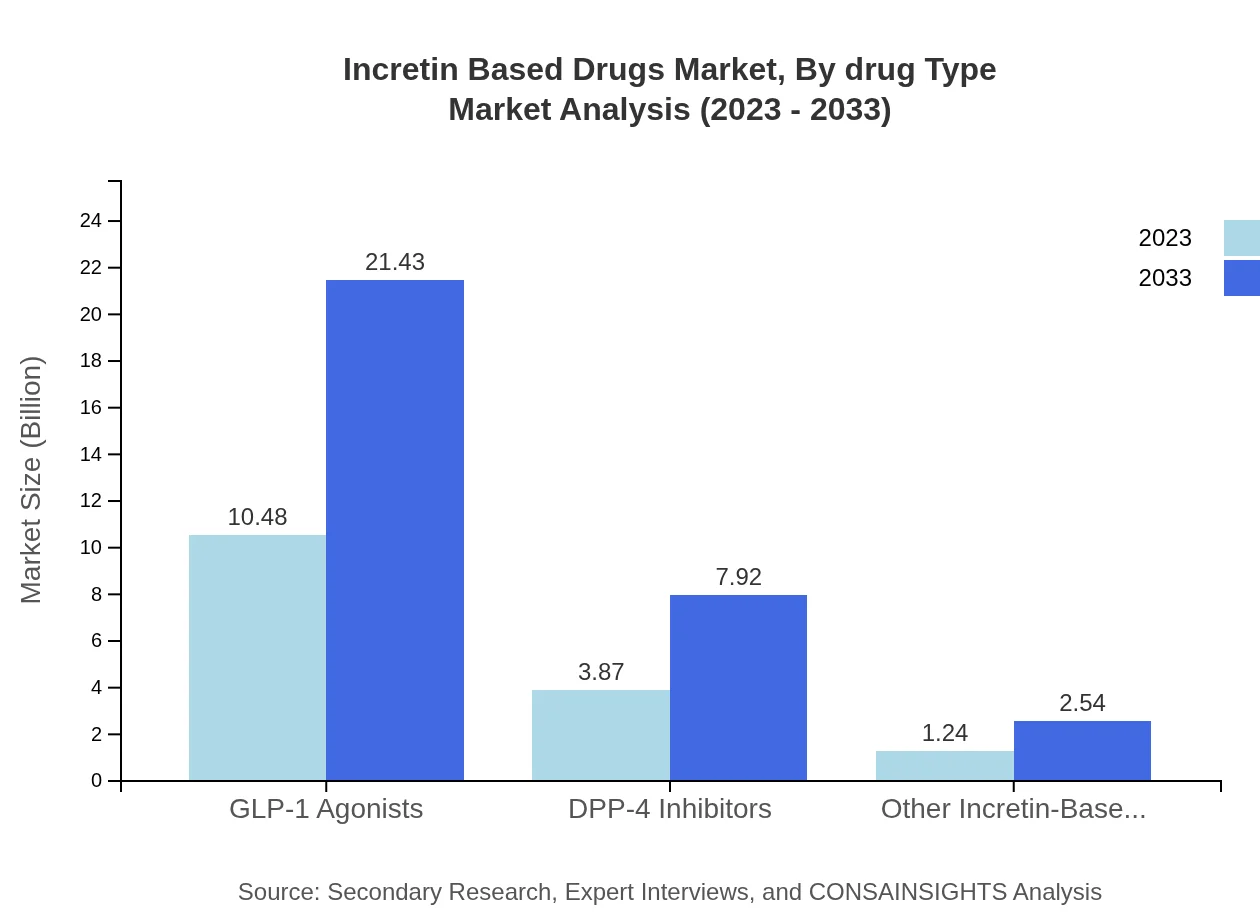
In the Incretin-Based Drugs Market, by Drug Type, GLP-1 agonists dominate with a market size of $10.48 billion in 2023, projected to grow to $21.43 billion by 2033, representing 67.19% of the share. DPP-4 inhibitors follow, with a size of $3.87 billion in 2023 and an expected growth to $7.92 billion by 2033, holding 24.83% of the market.
Incretin Based Drugs Market Analysis By Therapy Approach
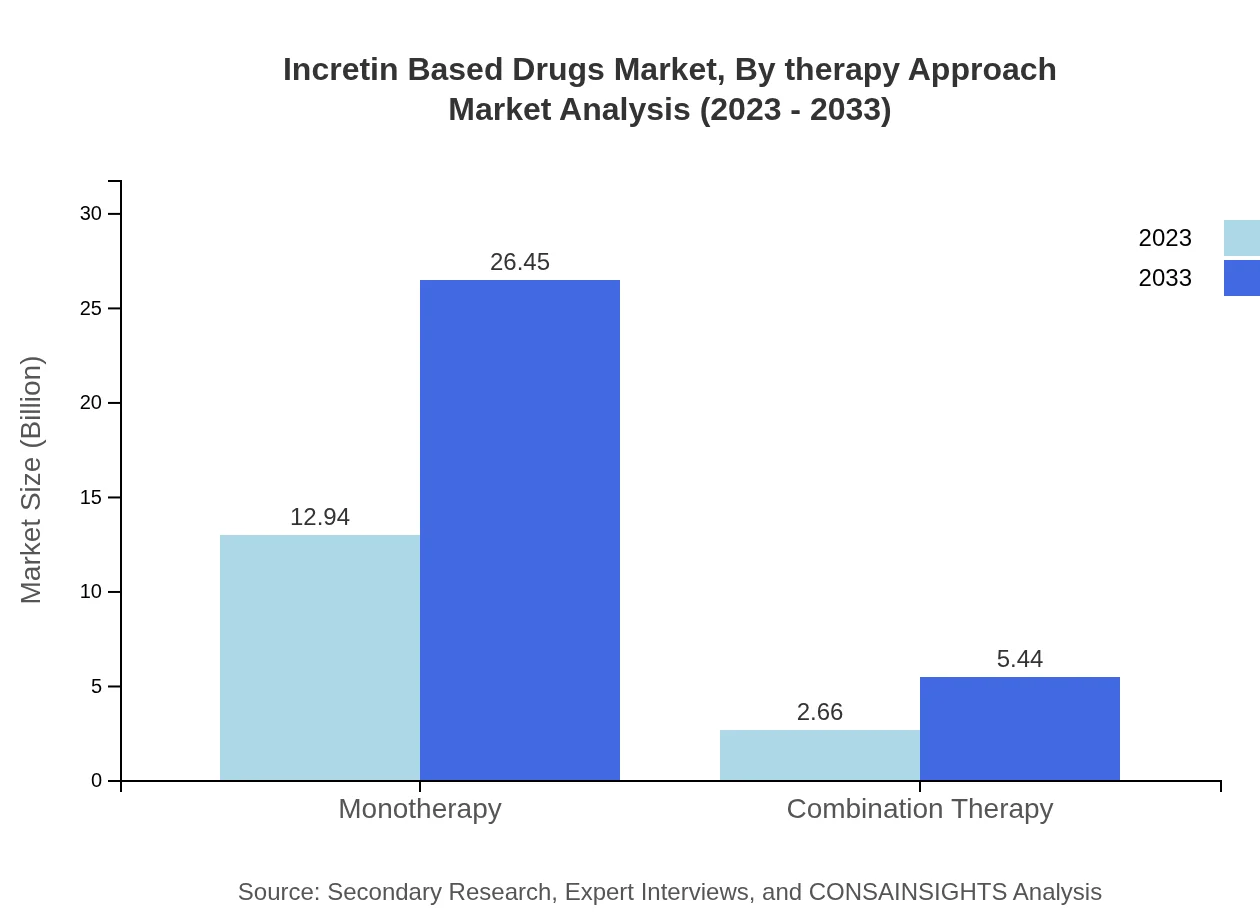
The Incretin-Based Drugs Market, by Therapy Approach, indicates Monotherapy leads significantly with a market size of $12.94 billion in 2023, moving to $26.45 billion by 2033, representing 82.94% of the market. Combination Therapy holds a smaller market of $2.66 billion in 2023 with projections reaching $5.44 billion by 2033, accounting for 17.06%.
Incretin Based Drugs Market Analysis By Indication
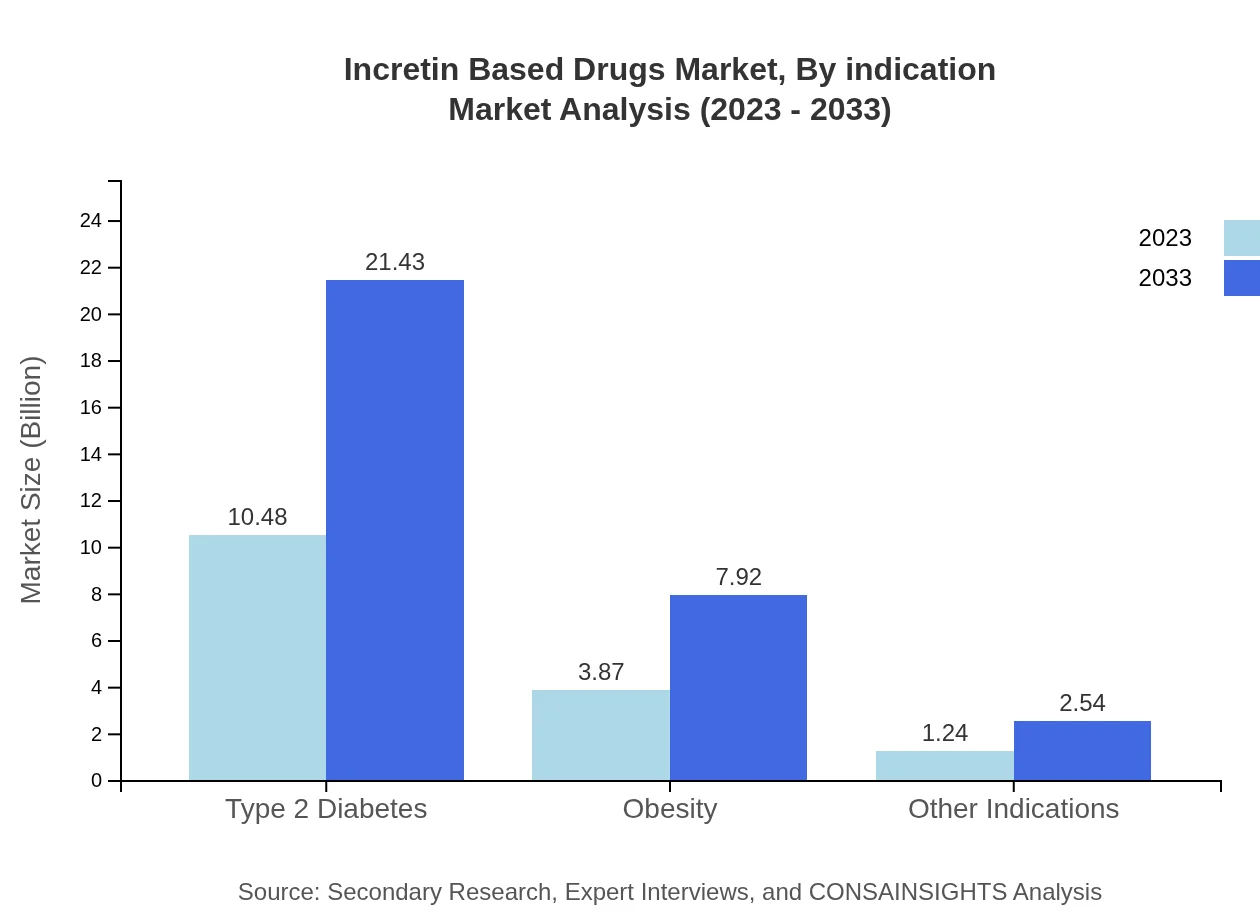
Segmenting by Indication, Type 2 Diabetes is the largest area, with a market projected at $10.48 billion in 2023, growing to $21.43 billion by 2033, which is also 67.19% share. Obesity and Other Indications follow with $3.87 billion growing to $7.92 billion and $1.24 billion growing to $2.54 billion respectively.
Incretin Based Drugs Market Analysis By End User
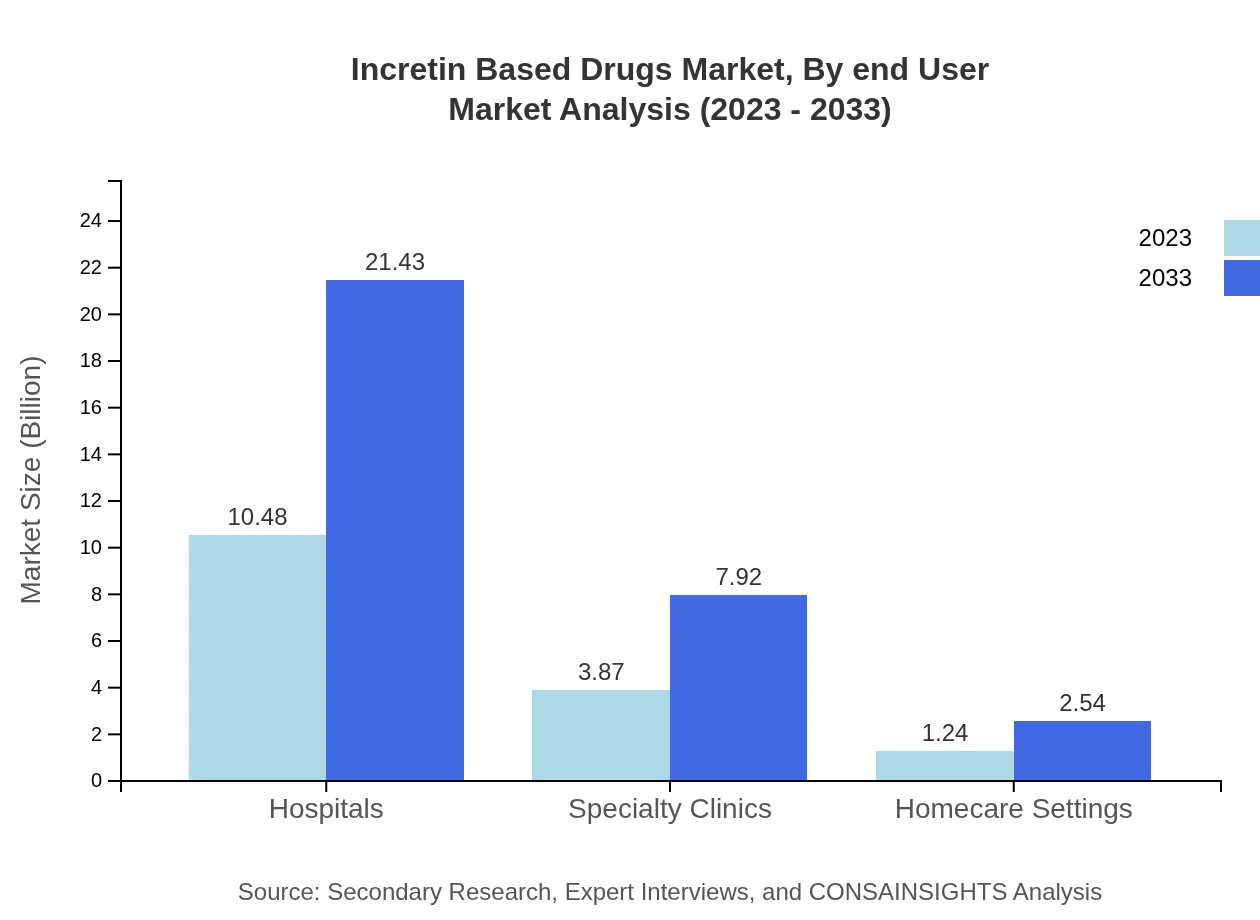
Regarding End-User segmentation, Hospitals account for the majority share with $10.48 billion expected to expand to $21.43 billion by 2033, representing 67.19%. Specialty Clinics and Homecare Settings also play significant roles, growing from $3.87 billion to $7.92 billion and from $1.24 billion to $2.54 billion respectively.
Incretin Based Drugs Market Analysis By Route Of Administration
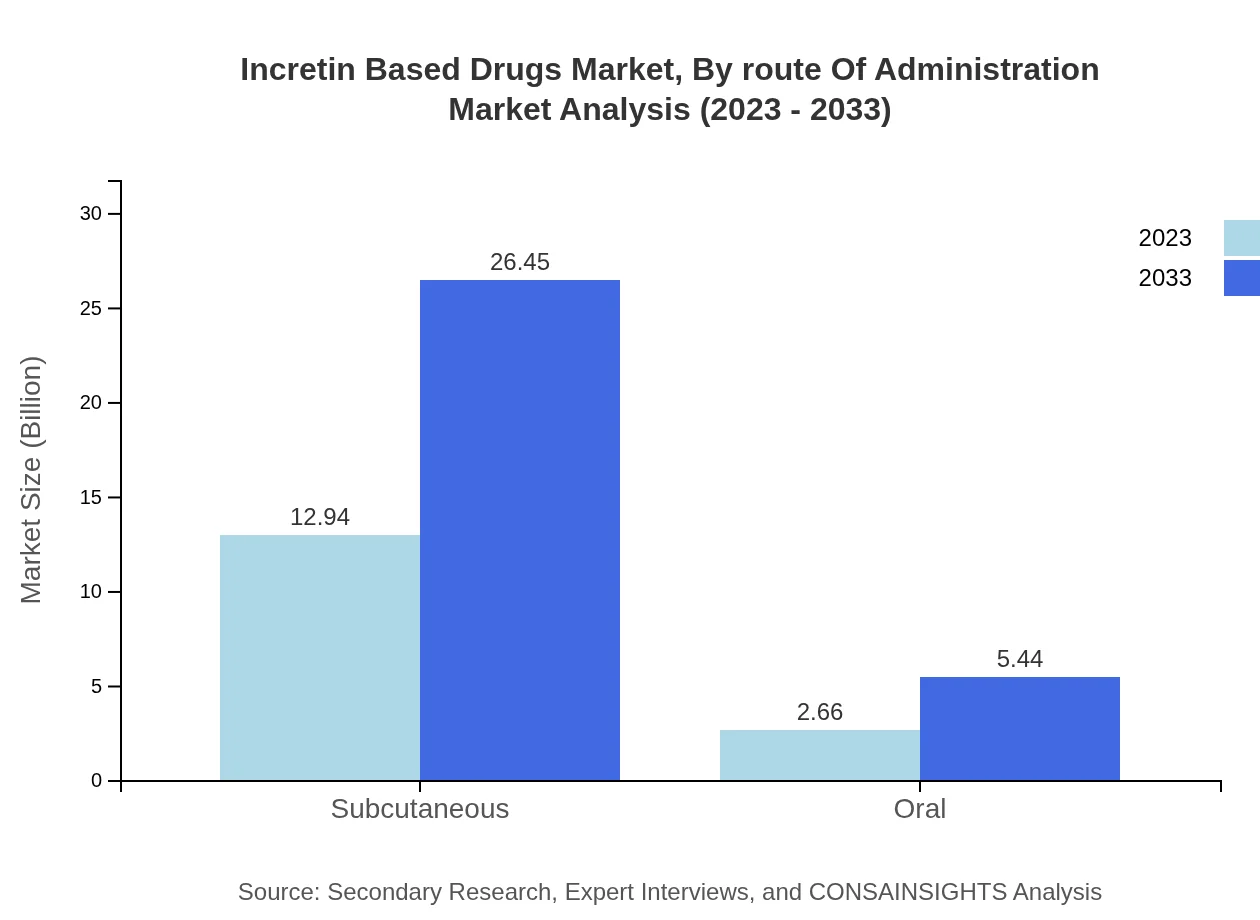
In terms of route, Subcutaneous administration dominates the market with an expected size of $12.94 billion in 2023, rising to $26.45 billion by 2033, holding 82.94%. Oral administration, while smaller, shows promising growth from $2.66 billion in 2023 to $5.44 billion by 2033, accounting for 17.06%.
Incretin Based Drugs Market Trends and Future Forecast
Tell us your focus area and get a customized research report.
Global Market Leaders and Top Companies in Incretin Based Drugs Industry
Novo Nordisk:
A leading pharmaceutical giant specializing in diabetes care, Novo Nordisk has been at the forefront of developing GLP-1 receptor agonists, significantly shaping the incretin market.Merck & Co.:
Merck has contributed to the incretin-based drugs domain with DPP-4 inhibitors, focusing on innovative solutions for diabetes management through research and patient-centric strategies.Sanofi:
Sanofi is involved in developing various incretin-based medications, with significant investments in R&D aimed at improving patient outcomes in diabetes care.Eli Lilly:
Eli Lilly has a notable presence in the incretin market, especially with its advanced GLP-1 agonist products, enhancing accessibility to effective diabetes therapies.We're grateful to work with incredible clients.









FAQs
What is the market size of the Incretin Based Drugs market in 2023?
The market size for 2023 is $15.60 Billion according to the report data, reflecting baseline demand across global regions and therapeutic categories.
How big will the Incretin Based Drugs market be in 2033?
By 2033 the market is projected to reach $31.89 Billion, capturing growth driven by expanded indications and higher uptake of incretin therapies.
What is CAGR for the forecast period?
The market is projected to grow at a 7.2% CAGR over the forecast period of 2023 to 2033, reflecting steady expansion in demand and innovation.
Is there a single fastest Growing region in the Incretin Based Drugs Market Report market?
No single fastest-growing region is stated for the Incretin Based Drugs Market Report market because the top regional implied CAGR values are within 0.15 percentage points of each other, making the ranking too close to call reliably.
Why are GLP-1 agonists significant in this market?
GLP-1 agonists are prominent due to demonstrated benefits for glycemic control and weight reduction, which support wider clinical adoption and product investment.
Who are the leading companies in the market?
Top companies listed include Novo Nordisk, Merck & Co., Sanofi, and Eli Lilly, which are active in product development and market expansion.
What are the primary end User segments?
Primary end-user segments include hospitals, specialty clinics, and homecare settings, reflecting multiple care delivery channels for incretin therapies.
Which drug types are covered in the market segmentation?
The report covers GLP-1 agonists, DPP-4 inhibitors, and other incretin-based drugs, addressing both established and emerging therapeutic classes.
How big is the Europe market in 2023 and 2033?
Europe is reported at $4.86 Billion in 2023 and projected to reach $9.93 Billion by 2033, reflecting sustained regional demand for incretin therapies.
What research methods were used for this report?
Research combined primary interviews with industry experts and secondary review of company reports and publications, plus data triangulation and internal validation.