
Injectable Drugs Market Report
First published: 21 October 2024 | Last updated: 25 May 2026 | Report Code: injectable-drugs
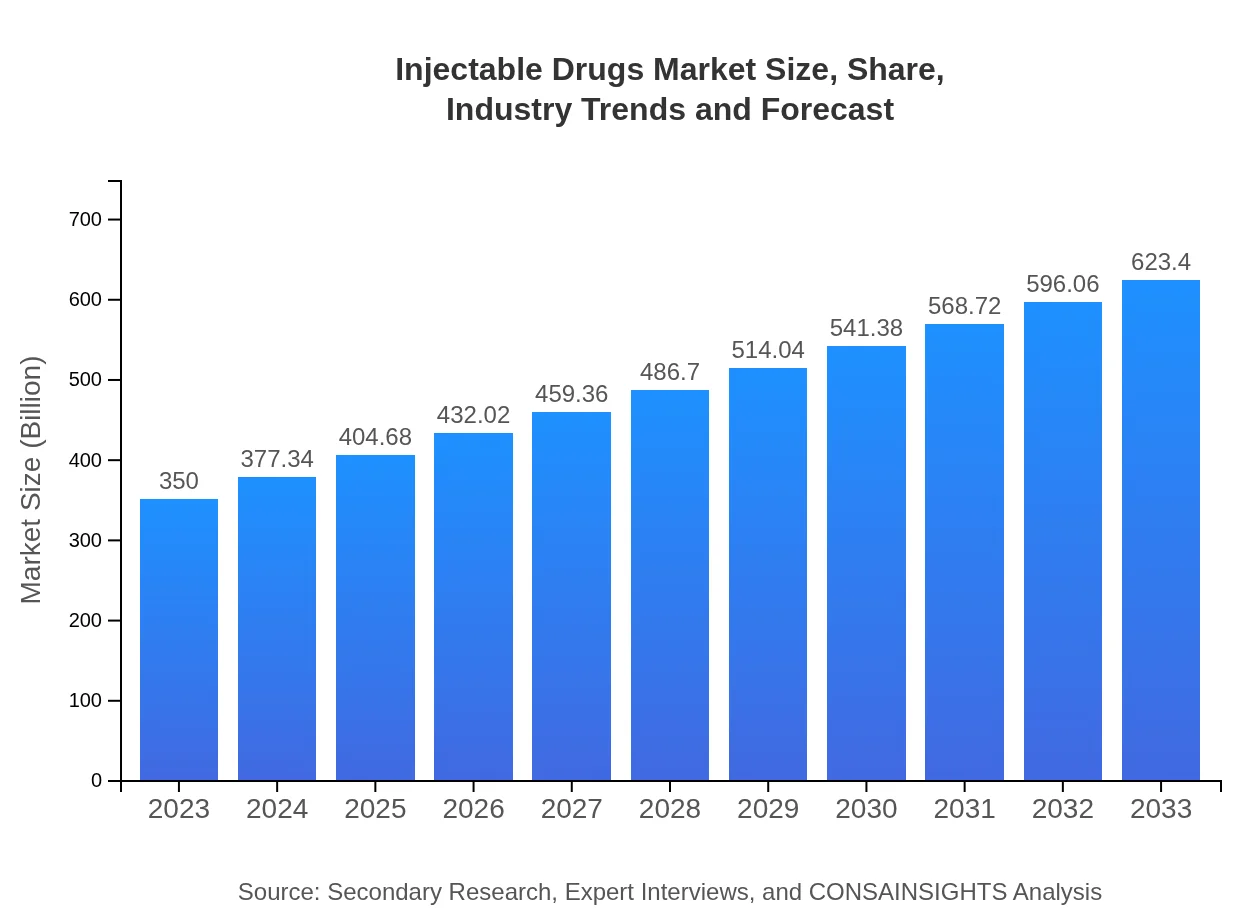
Injectable Drugs Market — USD 350 billion in 2023, Growing to USD 623.40B by 2033 at 5.8% CAGR
This report provides a comprehensive analysis of the Injectable Drugs market, covering market size, growth trends, regional insights, and leading players from 2023 to 2033. It offers critical data for stakeholders looking to understand this evolving industry.
Key Takeaways
- Global market grows from $350.00 Billion in 2023 to $623.40 Billion in 2033 at a 5.8% CAGR.
- North America is largest regional market, while no single fastest-growing region is stated because regional CAGR differences remain within 0.15 percentage points.
- Biologics demand and advances in delivery systems drive product innovation and adoption across end-users.
- Hospitals, clinics and home care remain primary end-user channels influencing distribution and treatment pathways.
- Top firms profiled include Pfizer Inc., Roche Holding AG, Novartis AG and Johnson & Johnson.
Injectable Drugs Market Report — Executive Summary
North America remains largest market by forecast-period value, while no single fastest-growing region is stated because top regional growth rates are separated by less than 0.15 percentage points. This report details the injectable drugs sector’s trajectory from 2023 to 2033, quantifying growth drivers and market structure. Rising chronic disease prevalence and the increasing role of biologics and monoclonal antibodies support sustained demand. Manufacturing shifts toward branded and generic injectable production, alongside evolving distribution through hospital and retail pharmacies and online channels, shape competitive strategies. Regulatory oversight and investment in drug delivery innovation influence product development and patient-centric services. The report covers segmentation by product, application, production type, end-user and distribution, and profiles leading companies including Pfizer Inc., Roche Holding AG, Novartis AG and Johnson & Johnson.
Key Growth Drivers
- Growing prevalence of chronic and oncological conditions boosting demand for injectable therapies.
- Expansion of biologics and monoclonal antibody pipelines driving higher-value injectable formulations.
- Greater adoption of home care and clinic-based injections increasing need for user-friendly delivery systems.
- Shift toward generics and biosimilars intensifying competition and widening patient access.
- Investment in cold-chain logistics and digital-enabled distribution enhancing market reach and efficiency.
| Metric | Value |
|---|---|
| Study Period | 2023 - 2033 |
| 2023 Market Size | $350.00 Billion |
| CAGR (2023-2033) | 5.8% |
| 2033 Market Size | $623.40 Billion |
| Top Companies | Pfizer Inc., Roche Holding AG, Novartis AG, Johnson & Johnson |
| Published Date | 21 October 2024 |
| Last Modified Date | 25 May 2026 |
Injectable Drugs Market Overview
Customize Injectable Drugs Market Report market research report
- ✔ Get in-depth analysis of Injectable Drugs market size, growth, and forecasts.
- ✔ Understand Injectable Drugs's regional dynamics and industry-specific trends.
- ✔ Identify potential applications, end-user demand, and growth segments in Injectable Drugs
What is the Market Size & CAGR of Injectable Drugs Market Report market in 2023?
Injectable Drugs Industry Analysis
Injectable Drugs Market Segmentation and Scope
Tell us your focus area and get a customized research report.
Injectable Drugs Market Report Market Analysis Report by Region
Europe Injectable Drugs Market Report:
Europe grows from $92.5 Billion in 2023 to $164.77 Billion in 2033. Regional momentum is supported by strong pharmaceutical manufacturing capabilities, regulatory frameworks for biologics, and demand across oncology and autoimmune applications.Asia Pacific Injectable Drugs Market Report:
Asia Pacific grows from $69.13 Billion in 2023 to $123.12 Billion in 2033. Growth drivers include expanding healthcare access, increasing prevalence of chronic diseases, and broader adoption of vaccines and insulin therapies.North America Injectable Drugs Market Report:
North America is largest regional market, rising from $134.78 Billion in 2023 to $240.07 Billion in 2033. Market strength reflects advanced healthcare infrastructure, high uptake of biologics and monoclonal antibodies, and significant investment in R&D and cold-chain distribution.South America Injectable Drugs Market Report:
Latin America grows from $15.58 Billion in 2023 to $27.74 Billion in 2033. Expansion is influenced by improving healthcare delivery, growing demand for infectious disease treatments and gradual uptake of advanced injectable therapies.Middle East & Africa Injectable Drugs Market Report:
Middle East and Africa grows from $38.01 Billion in 2023 to $67.7 Billion in 2033. Market expansion is driven by investments in healthcare infrastructure, rising chronic disease incidence and expanding immunization and treatment programs.Tell us your focus area and get a customized research report.
Research Methodology
Injectable Drugs Market Analysis By Product
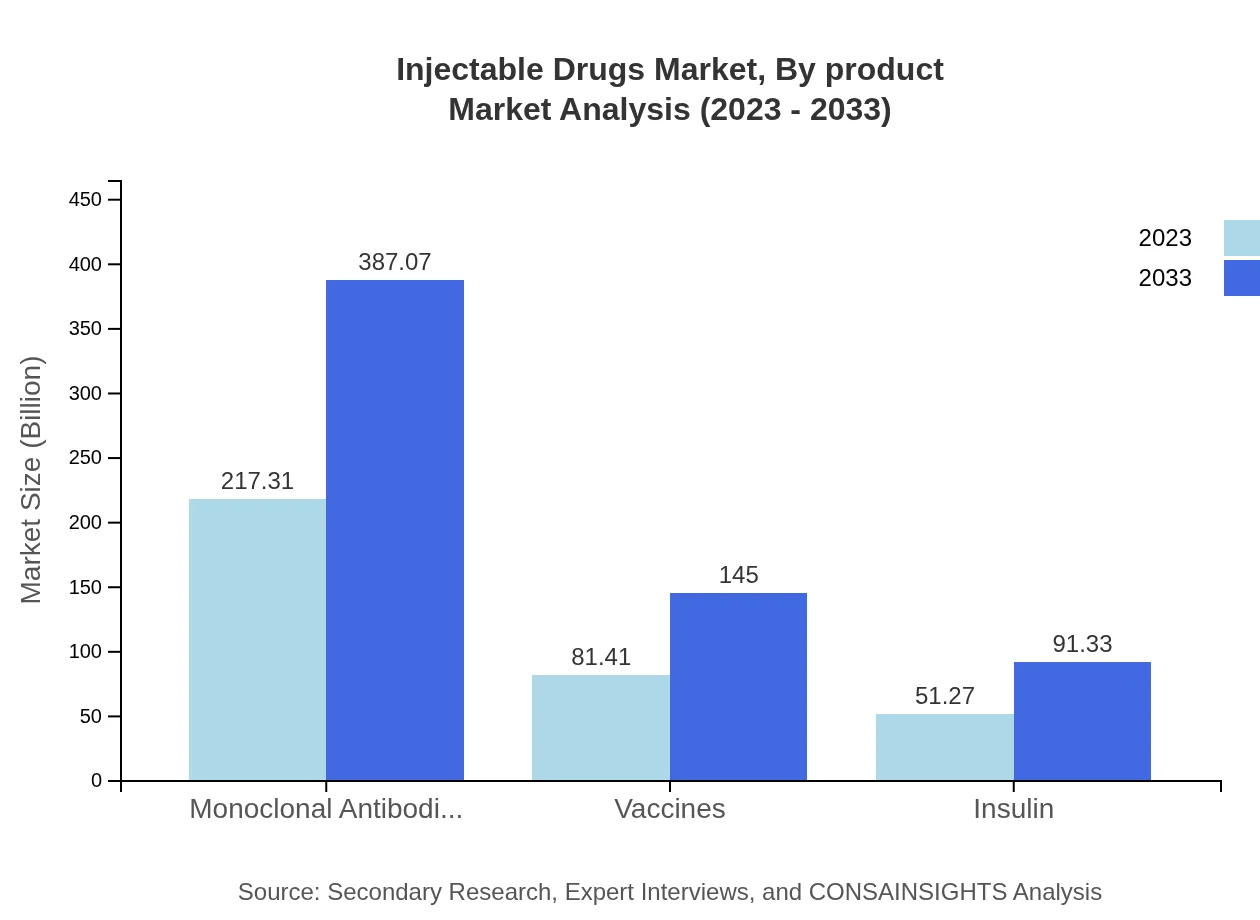
In 2023, Generic Injectables accounted for a significant share of the market, valued at $291.83 billion, projected to reach $519.79 billion by 2033, while Branded Injectables were valued at $58.17 billion and expected to grow to $103.61 billion.
Injectable Drugs Market Analysis By Application
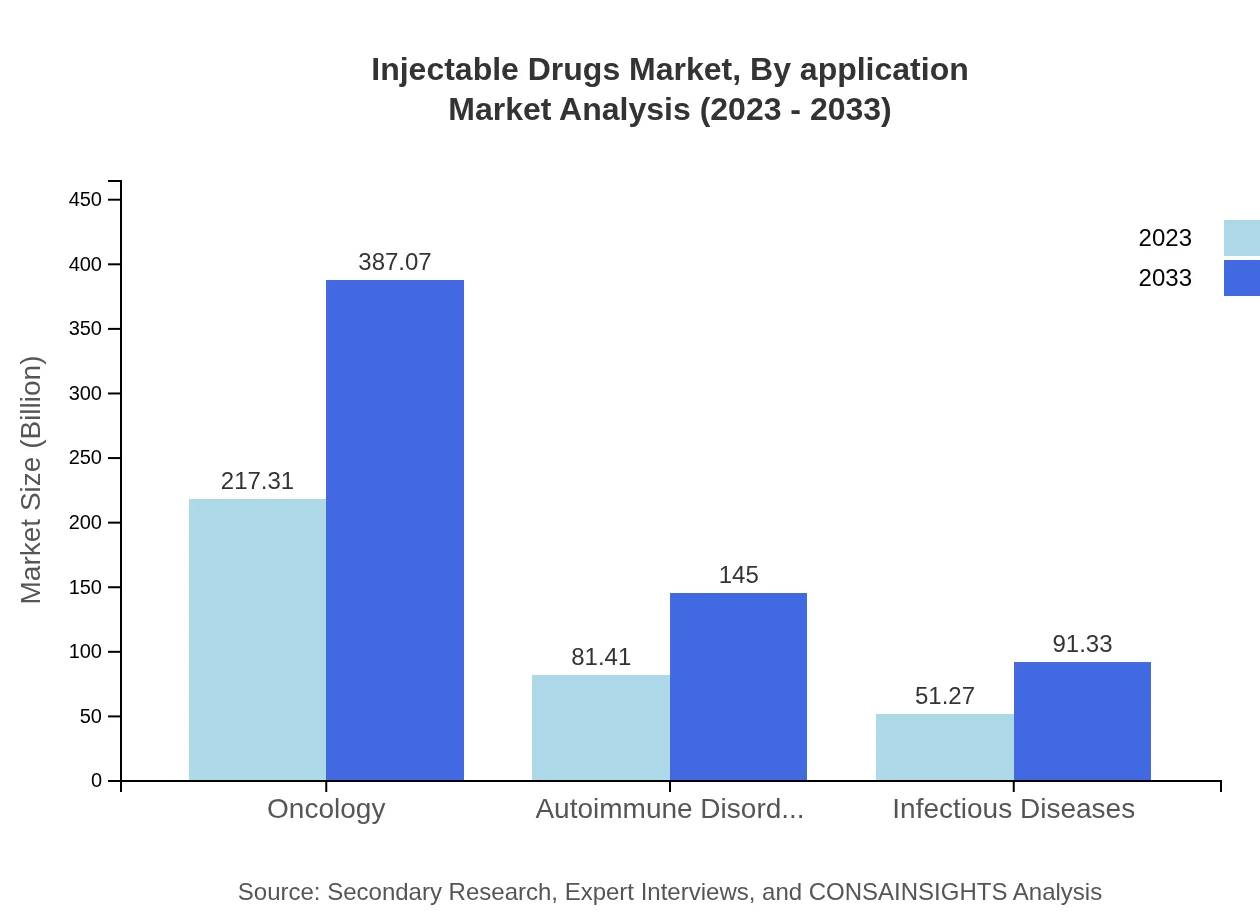
Oncology continues to dominate the segment with a market size of $217.31 billion in 2023, projected to expand to $387.07 billion. Vaccines are expected to grow from $81.41 billion to $145 billion, signaling robust investment in preventative medicine.
Injectable Drugs Market Analysis By Production Type
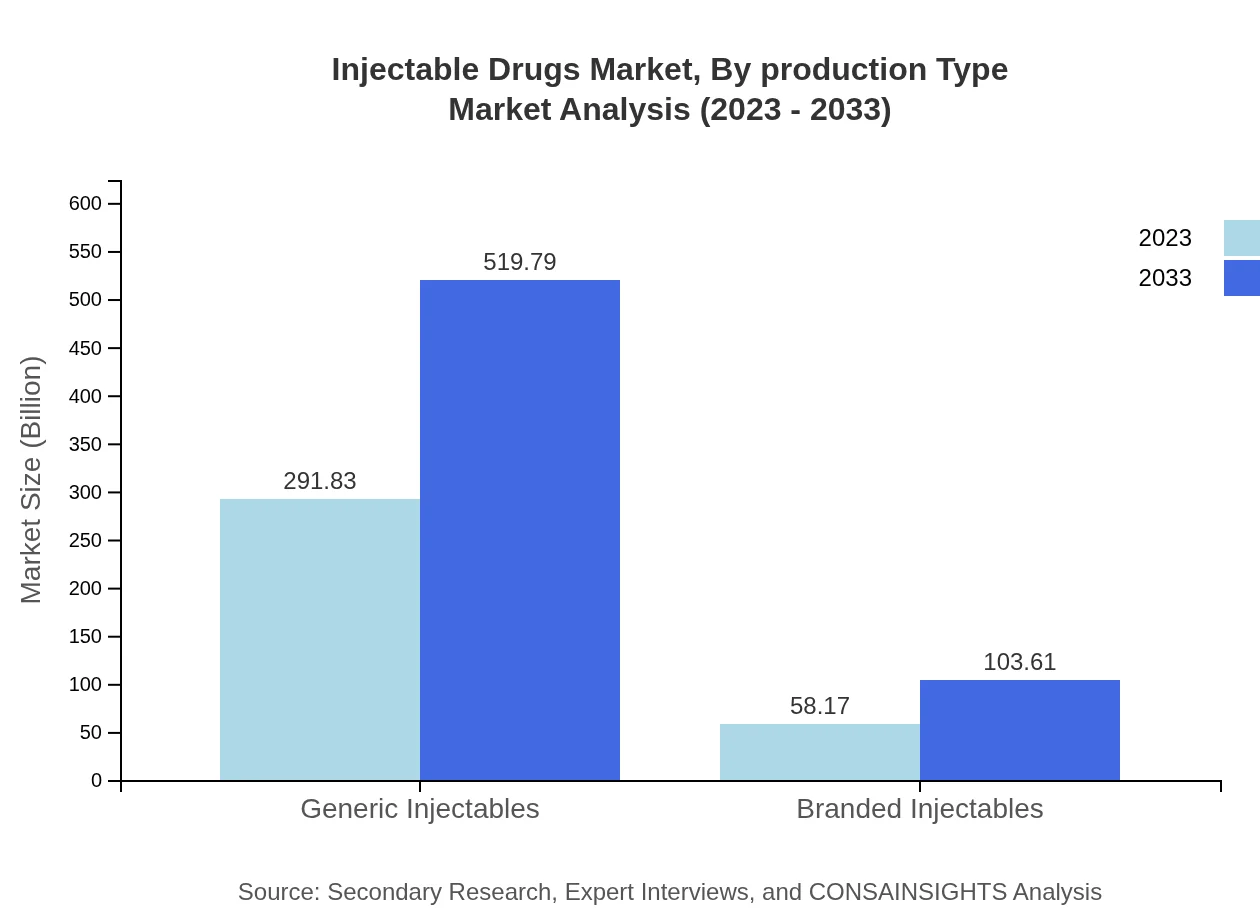
The market is characterized by aseptic processing, which plays a key role in ensuring safety and efficacy. Innovations in production technology are optimizing output while adhering to stringent quality standards.
Injectable Drugs Market Analysis By End User
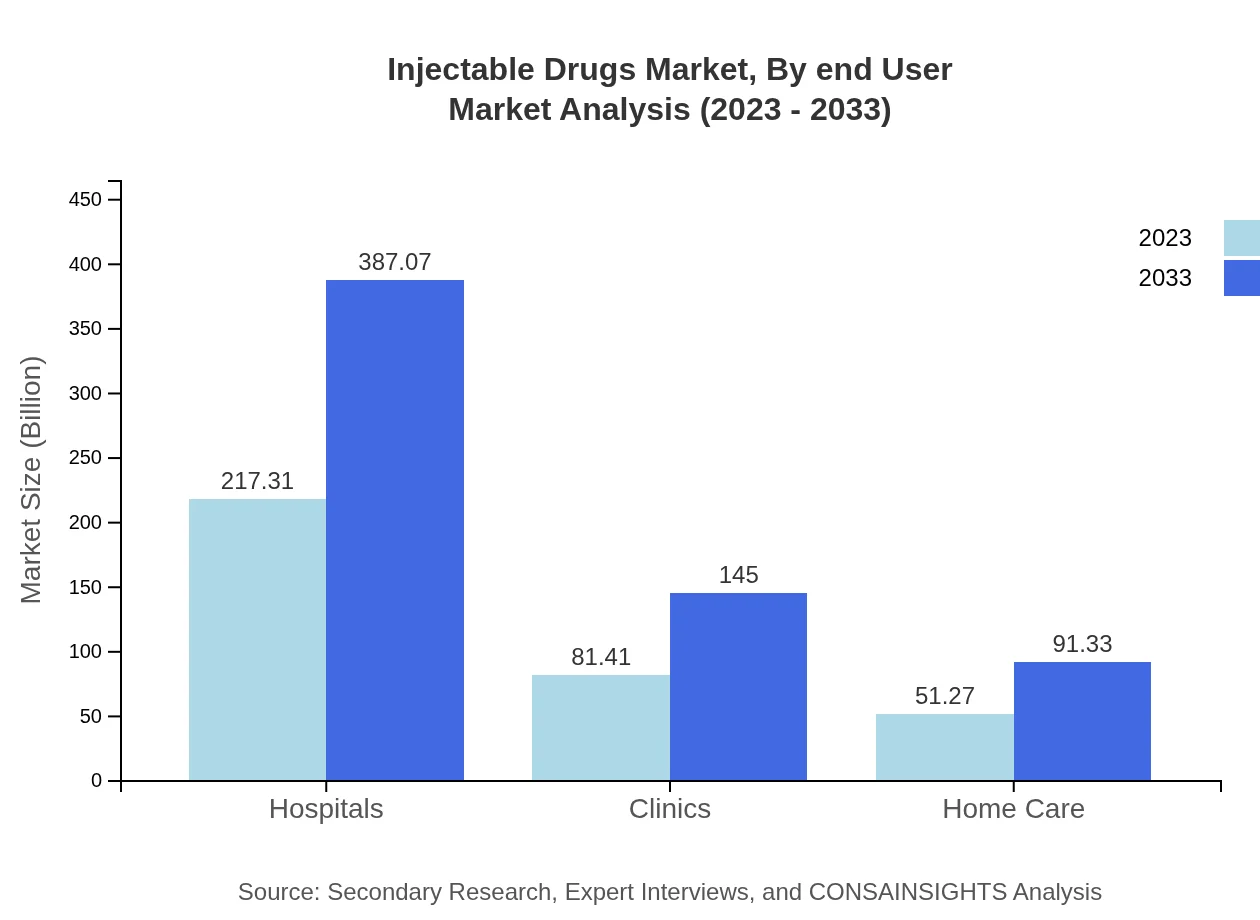
Hospitals, Clinics, and Home Care sectors are leading end-users, indicating a shift towards outpatient care. The hospital sector represented a major market share with $217.31 billion in 2023, expected to grow significantly.
Injectable Drugs Market Trends and Future Forecast
Tell us your focus area and get a customized research report.
Global Market Leaders and Top Companies in Injectable Drugs Industry
Pfizer Inc.:
A leading biopharmaceutical company, Pfizer specializes in innovative medicines across various therapeutic areas, focusing on the development of injectable drugs for critical health needs.Roche Holding AG:
Roche is known for its strong focus on oncology and immunology, producing a range of monoclonal antibodies for injection that have revolutionized cancer treatment protocols.Novartis AG:
Novartis is a global health care company that develops and commercializes innovative pharmaceuticals, including injectables, emphasizing personalized medicine.Johnson & Johnson:
J&J is a prominent player in the injectable drug market, investing in R&D to expand its portfolio in biologics and specialty pharmaceuticals.We're grateful to work with incredible clients.

FAQs
What is the current market size of the injectable drugs market?
The market size for injectable drugs stood at $350.00 Billion in 2023, reflecting the aggregated value of injectables across product types, applications, and distribution channels.
How big will the injectable drugs market be in 2033?
By 2033 the injectable drugs market is projected to reach $623.40 Billion, reflecting continued uptake of biologics, monoclonal antibodies, and expanded distribution models.
What is CAGR for the forecast period?
The forecast period 2023 to 2033 carries a compound annual growth rate (CAGR) of 5.8%, representing the expected annualized expansion rate of the market value.
Is there a single fastest Growing region in the Injectable Drugs Market Report market?
No single fastest-growing region is stated for the Injectable Drugs Market Report market because the top regional implied CAGR values are within 0.15 percentage points of each other, making the ranking too close to call reliably.
Which product types are prominent in the injectable drugs market?
Key product categories include monoclonal antibodies, vaccines and insulin, reflecting a mix of biologics and traditional injectables used across therapeutic areas.
Who are some leading companies in this sector?
Prominent companies active in the injectable drugs market include Pfizer Inc., Roche Holding AG, Novartis AG and Johnson & Johnson, among others driving innovation and market activity.
What end Users drive demand for injectable drugs?
Hospitals, clinics and home care settings are primary end-users, shaping procurement, administration practices and channel preferences such as hospital and retail pharmacies.
What distribution channels are used for injectable drugs?
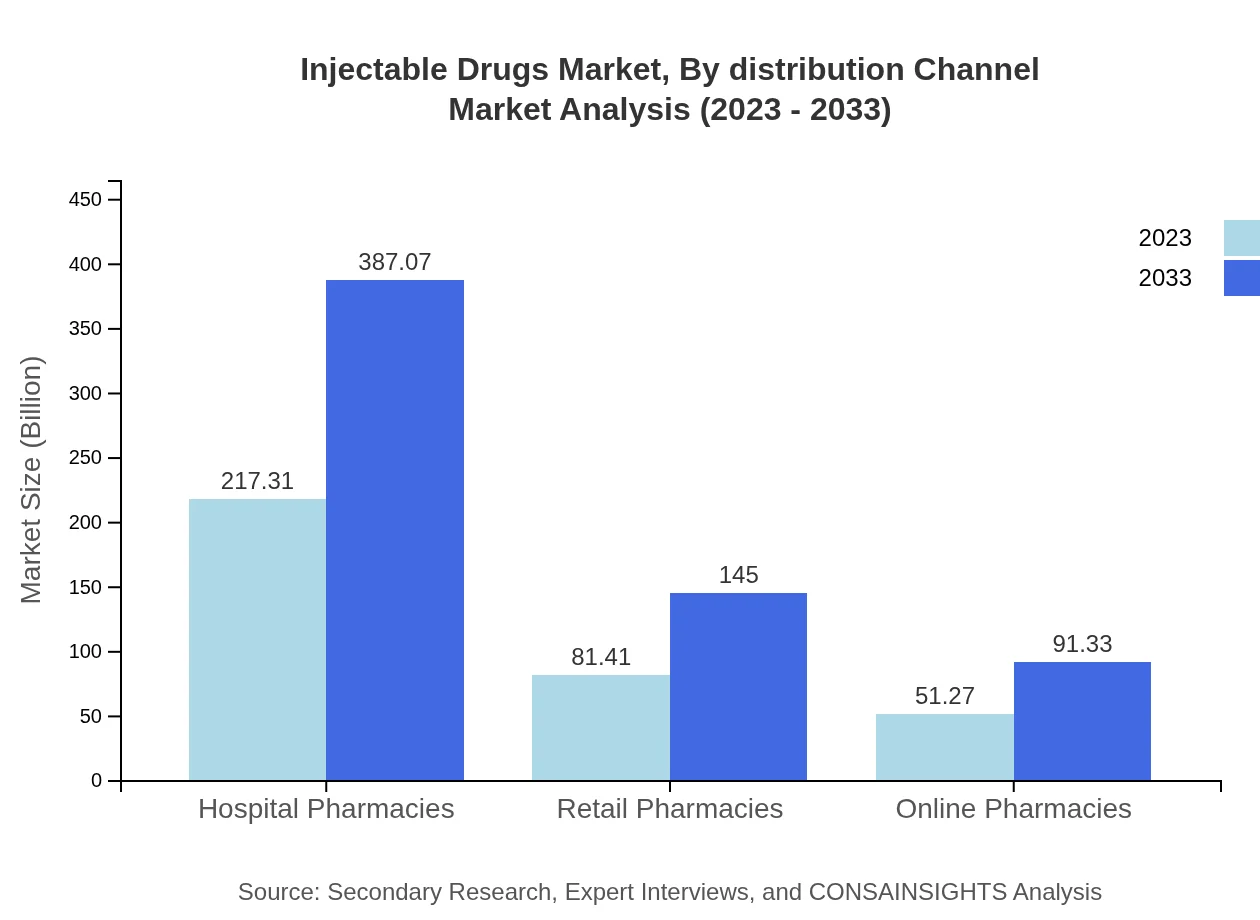
Injectable drugs are distributed through hospital pharmacies, retail pharmacies and online pharmacies, reflecting a multichannel approach to reach patients and healthcare providers.