

Intraocular Lens Market Report
First published: 21 October 2024 | Last updated: 25 May 2026 | Report Code: intraocular-lens
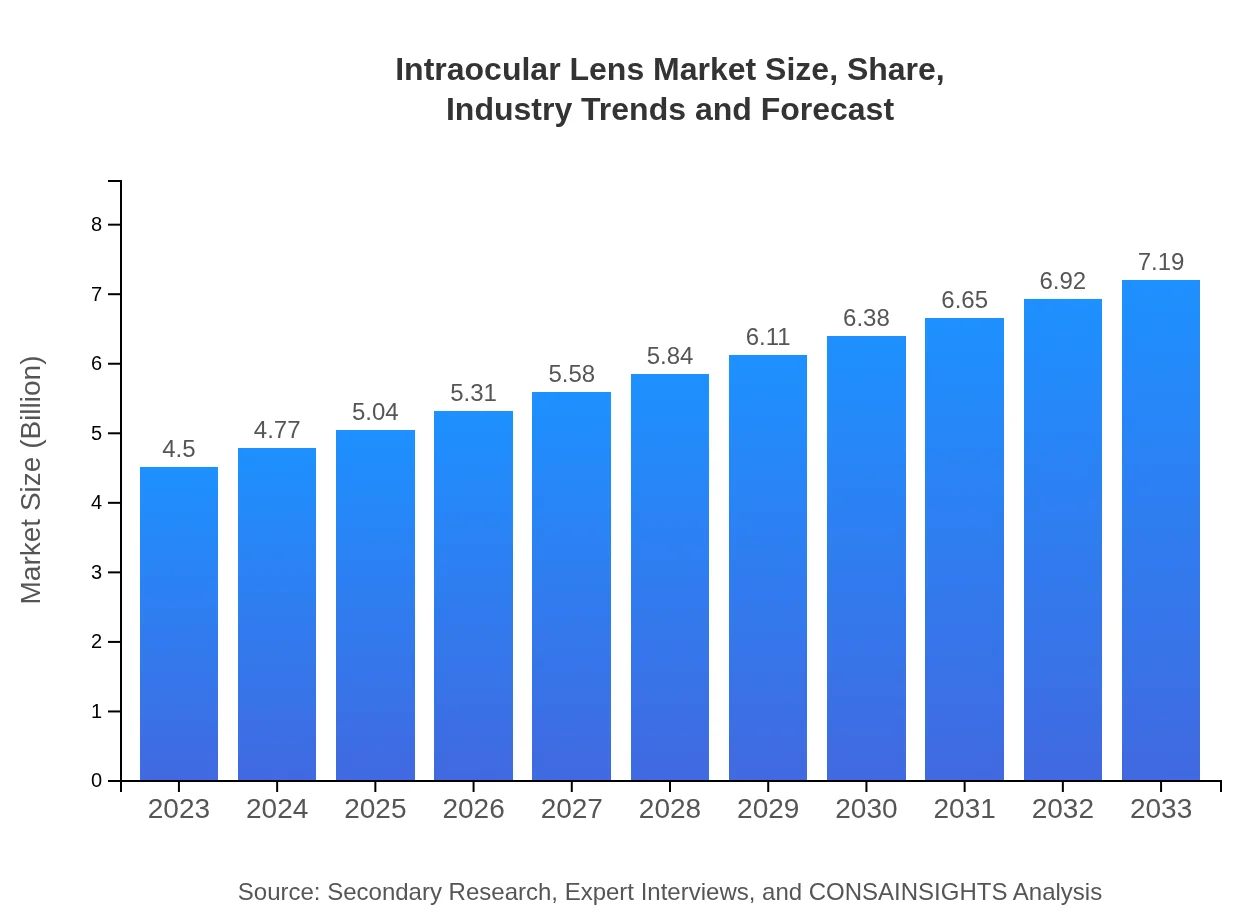
Intraocular Lens Market — USD $4.5 Billion in 2023, Growing to USD 7.19null by 2033 at 4.7% CAGR
This report provides an in-depth analysis of the Intraocular Lens market from 2023 to 2033, covering market trends, technological advancements, and segmentation data across various regions. Key insights related to market size, growth forecasts, and leading players will also be provided.
Key Takeaways
- Global market grows from $4.50 Billion in 2023 to $7.19 Billion by 2033 with a 4.7% CAGR over 2023 to 2033.
- North America is largest regional market, while no single fastest-growing region is stated because regional CAGR differences remain within 0.15 percentage points.
- Europe expands from $1.22 Billion to $1.95 Billion between 2023 and 2033, reflecting steady demand for advanced lenses.
- Asia Pacific rises from $0.94 Billion in 2023 to $1.5 Billion in 2033, driven by growing surgical adoption and awareness.
- Key manufacturers include Abbott Laboratories, Johnson & Johnson Vision, Bausch + Lomb, and Alcon, focusing on premium lens technology.
Intraocular Lens Market Report — Executive Summary
North America remains largest market by forecast-period value, while no single fastest-growing region is stated because top regional growth rates are separated by less than 0.15 percentage points. The intraocular lens sector is positioned for sustained expansion between 2023 and 2033, with the market rising from $4.50 Billion to $7.19 Billion at a 4.7% CAGR. Growth is supported by increasing incidence of cataracts, rising demand for vision correction surgeries, and technology advances in lens design such as multifocal, toric, and accommodating options. Adoption is influenced by improvements in surgical standards and patient awareness of visual outcomes. Regional demand patterns vary: North America holds the largest share, while Europe and Asia Pacific show notable increases in market value. Industry participants, including Abbott Laboratories, Johnson & Johnson Vision, Bausch + Lomb, and Alcon, are prioritizing innovation and premium product offerings. Distribution across hospital pharmacies, retail and online channels, along with end-users like ophthalmology centers and hospitals, shapes access to IOLs. Regulatory requirements and cost pressures remain relevant considerations for market entrants and established vendors. The report synthesizes primary interviews, secondary sources, and expert validation to present an evidence-based perspective on opportunity areas and competitive dynamics.
Key Growth Drivers
- Rising cataract prevalence and aging populations increasing the volume of corrective surgeries.
- Technological progress in lens designs—multifocal, toric, and accommodative—expanding treatment options.
- Greater patient awareness and demand for improved post-surgical visual outcomes encouraging premium IOL uptake.
- Enhanced surgical standards and broader access through hospitals and ophthalmology centers driving procedural adoption.
- Manufacturers’ focus on innovation and diversified distribution channels, including online pharmacies, improving availability.
| Metric | Value |
|---|---|
| Study Period | 2023 - 2033 |
| 2023 Market Size | $4.50 Billion |
| CAGR (2023-2033) | 4.7% |
| 2033 Market Size | $7.19 Billion |
| Top Companies | Abbott Laboratories, Johnson & Johnson Vision, Bausch + Lomb, Alcon |
| Published Date | 21 October 2024 |
| Last Modified Date | 25 May 2026 |
Intraocular Lens Market Overview
Customize Intraocular Lens Market Report market research report
- ✔ Get in-depth analysis of Intraocular Lens market size, growth, and forecasts.
- ✔ Understand Intraocular Lens's regional dynamics and industry-specific trends.
- ✔ Identify potential applications, end-user demand, and growth segments in Intraocular Lens
What is the Market Size & CAGR of Intraocular Lens Market Report market in 2023?
Intraocular Lens Industry Analysis
Intraocular Lens Market Segmentation and Scope
Tell us your focus area and get a customized research report.
Intraocular Lens Market Report Market Analysis Report by Region
Europe Intraocular Lens Market Report:
Europe grows from $1.22 Billion in 2023 to $1.95 Billion in 2033. Demand is supported by aging demographics, rising procedural standards across healthcare systems, and manufacturer focus on advanced IOL designs that meet patient expectations for improved visual outcomes.Asia Pacific Intraocular Lens Market Report:
Asia Pacific grows from $0.94 Billion in 2023 to $1.5 Billion in 2033. Growth reflects increasing surgical volumes, heightened awareness of eye health, and broader availability of corrective procedures, encouraging adoption of newer lens technologies in key markets.North America Intraocular Lens Market Report:
North America is largest regional market, rising from $1.6 Billion in 2023 to $2.56 Billion in 2033. The region benefits from established surgical infrastructure, high patient access to ophthalmic care, and active adoption of premium lens technologies, supporting sustained expenditure on intraocular lenses.South America Intraocular Lens Market Report:
Latin America grows from $0.41 Billion in 2023 to $0.66 Billion in 2033. Market expansion is linked to growing access to ophthalmic services, incremental adoption of modern lens options, and improving healthcare delivery in urban centers.Middle East & Africa Intraocular Lens Market Report:
Middle East and Africa grows from $0.33 Billion in 2023 to $0.53 Billion in 2033. The region’s growth is supported by expanding surgical capacity, rising awareness of corrective eye procedures, and gradual uptake of advanced intraocular lens products.Tell us your focus area and get a customized research report.
Research Methodology
Intraocular Lens Market Analysis By Material
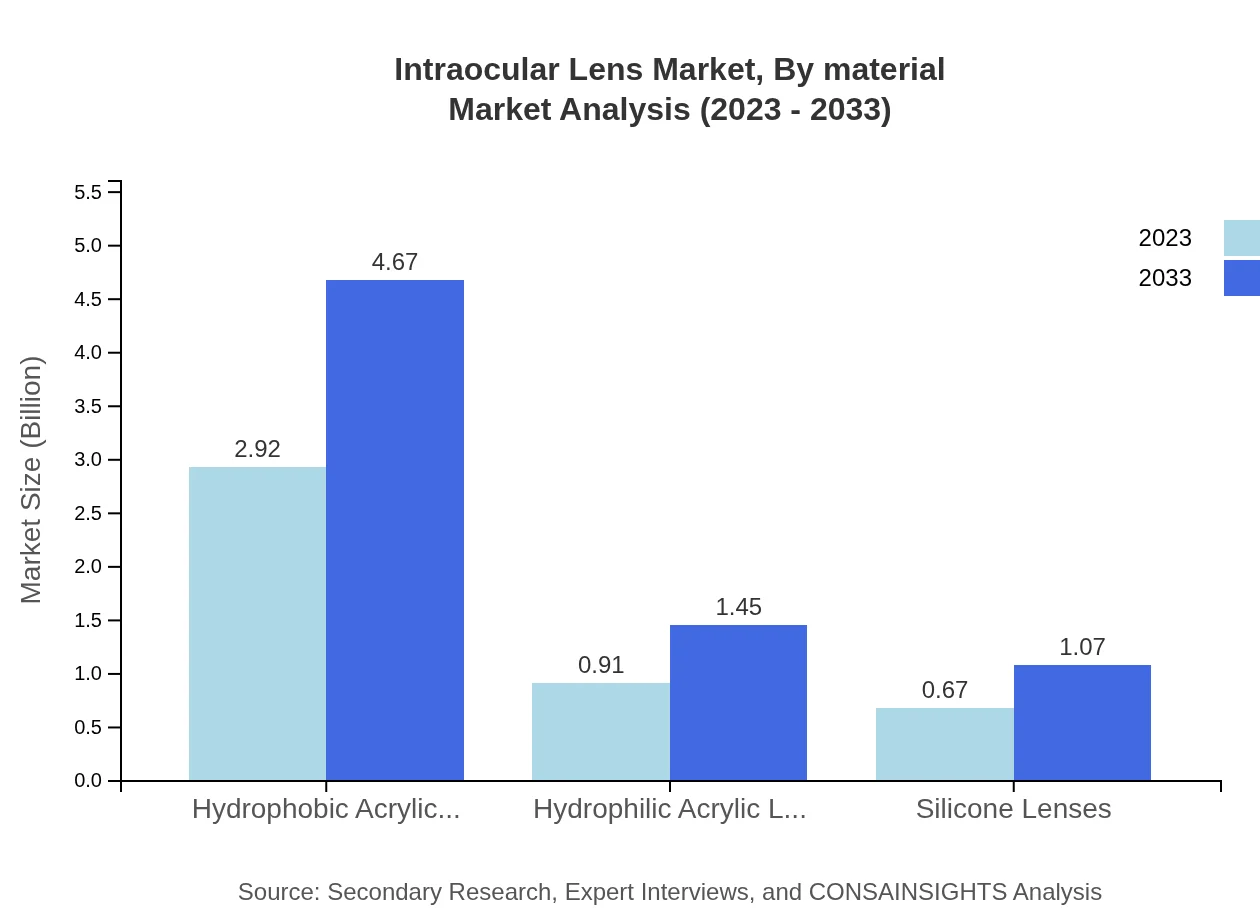
In 2023, hydrophobic acrylic lenses dominate the market with a size of $2.92 billion, expected to rise to $4.67 billion by 2033. This segment is favored due to its excellent biocompatibility. Hydrophilic acrylic and silicone lenses also hold significant shares, with respective 2023 values of $0.91 billion and $0.67 billion.
Intraocular Lens Market Analysis By Design
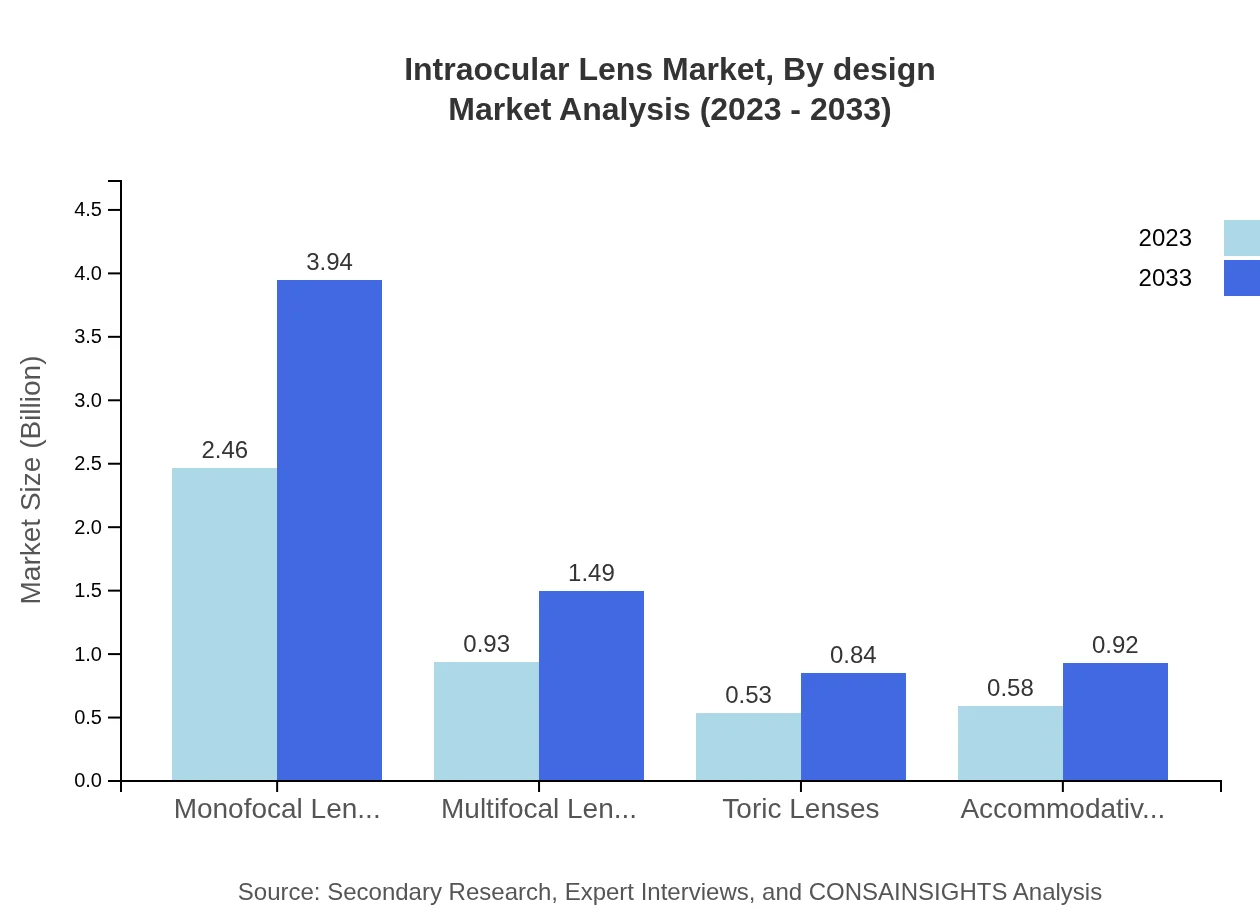
Monofocal lenses represent the largest segment with a size of $2.46 billion in 2023, projected to grow to $3.94 billion by 2033. Multifocal lenses also show promise, with growth from $0.93 billion in 2023 to $1.49 billion by 2033, reflecting increased demand for advanced vision correction solutions.
Intraocular Lens Market Analysis By Application
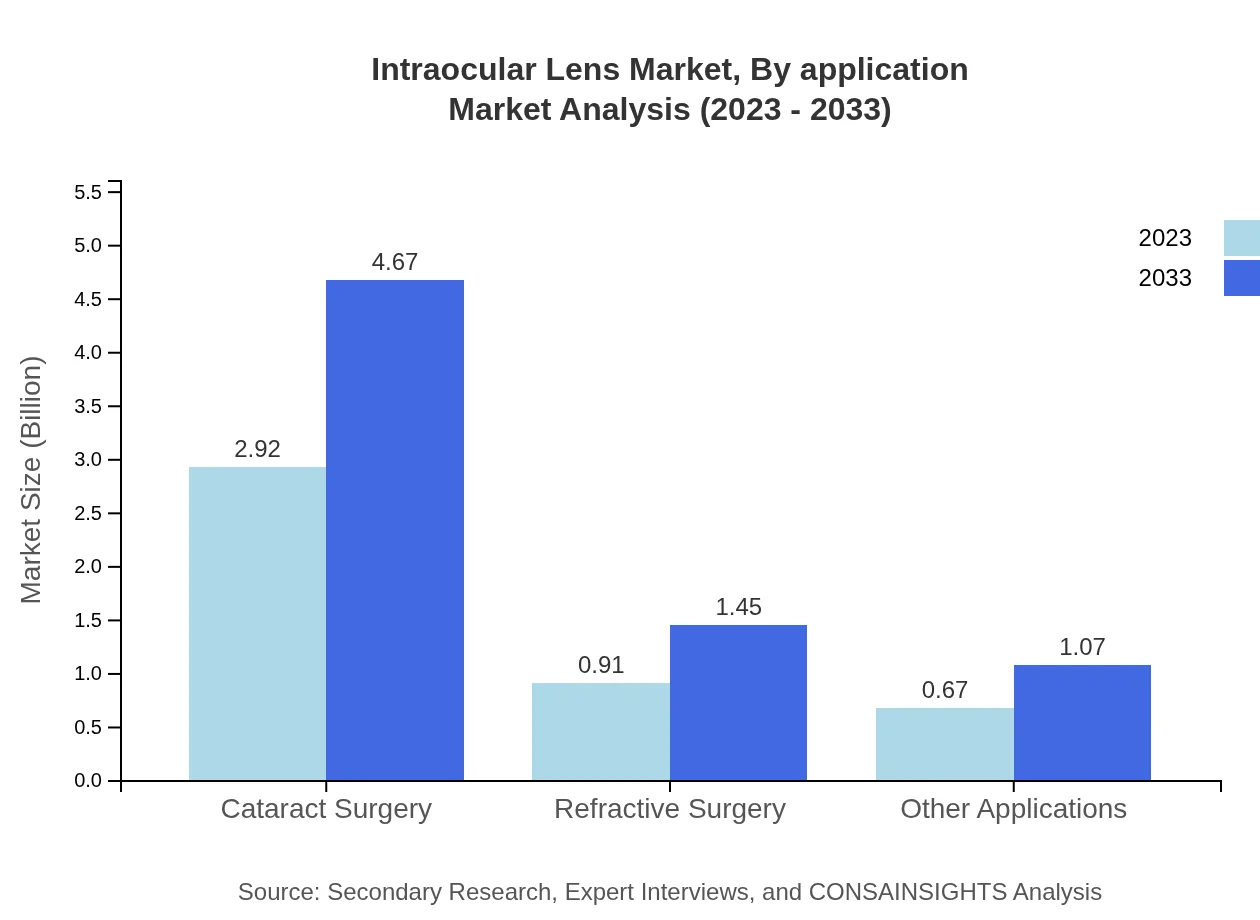
Cataract surgery remains the largest application area, valued at $2.92 billion in 2023, and expected to reach $4.67 billion by 2033. Refractive surgery is also growing, projected to increase from $0.91 billion in 2023 to $1.45 billion by 2033.
Intraocular Lens Market Analysis By Distribution Channel
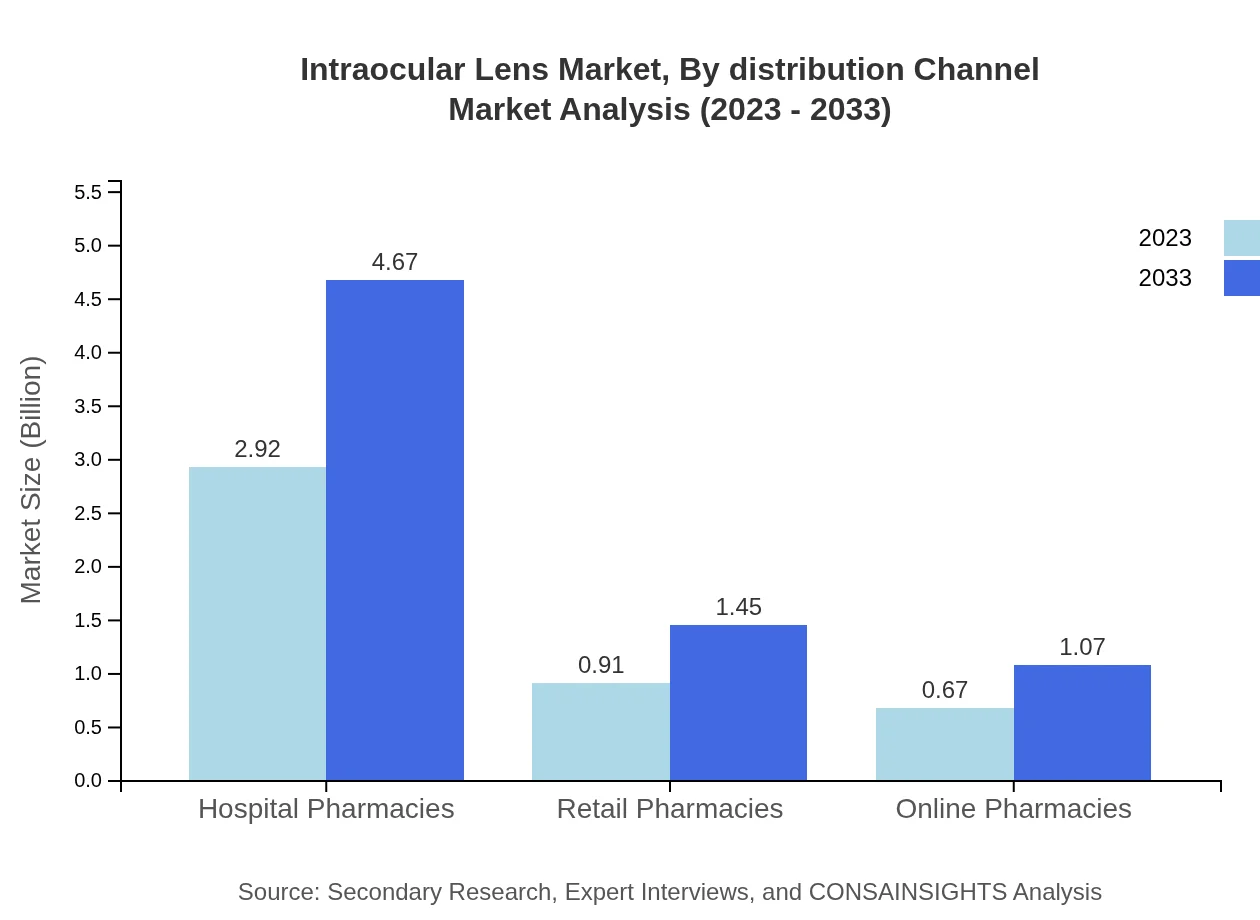
Hospital pharmacies are the primary distribution channel, accounting for $2.92 billion in 2023, poised to grow to $4.67 billion by 2033. Online and retail pharmacies are also vital, with respective market sizes of $0.67 billion and $0.91 billion in 2023, showing increasing consumer preference for convenience.
Intraocular Lens Market Trends and Future Forecast
Tell us your focus area and get a customized research report.
Global Market Leaders and Top Companies in Intraocular Lens Industry
Abbott Laboratories:
A prominent player in the IOL market, known for pioneering advancements in cataract surgery technologies and high-quality lens products.Johnson & Johnson Vision:
An influential company offering a range of innovative vision correction devices and IOLs, focusing on patient-centric solutions.Bausch + Lomb:
A well-established leader in eye health products, renowned for its diverse portfolio including advanced IOLs.Alcon:
A leading player specializing in surgical and vision care products, with a strong emphasis on innovative eye surgery solutions.We're grateful to work with incredible clients.








FAQs
What is the market size of the Intraocular Lens Market Report in 2023?
The market size in 2023 is $4.50 Billion, as stated in the report data provided.
How big will the market be in 2033?
The market is projected to reach $7.19 Billion by 2033 according to the supplied forecast figures.
What is CAGR for the forecast period?
The compound annual growth rate for 2023 to 2033 is 4.7% as specified in the input data.
Is there a single fastest Growing region in the Intraocular Lens Market Report market?
No single fastest-growing region is stated for the Intraocular Lens Market Report market because the top regional implied CAGR values are within 0.15 percentage points of each other, making the ranking too close to call reliably.
Who are the top companies active in this market?
Top companies listed include Abbott Laboratories, Johnson & Johnson Vision, Bausch + Lomb, and Alcon.
Why are premium intraocular lenses gaining traction?
Premium lenses are adopted due to higher patient expectations for post-operative visual quality and advances in multifocal and toric technologies.
What end Users purchase intraocular lenses?
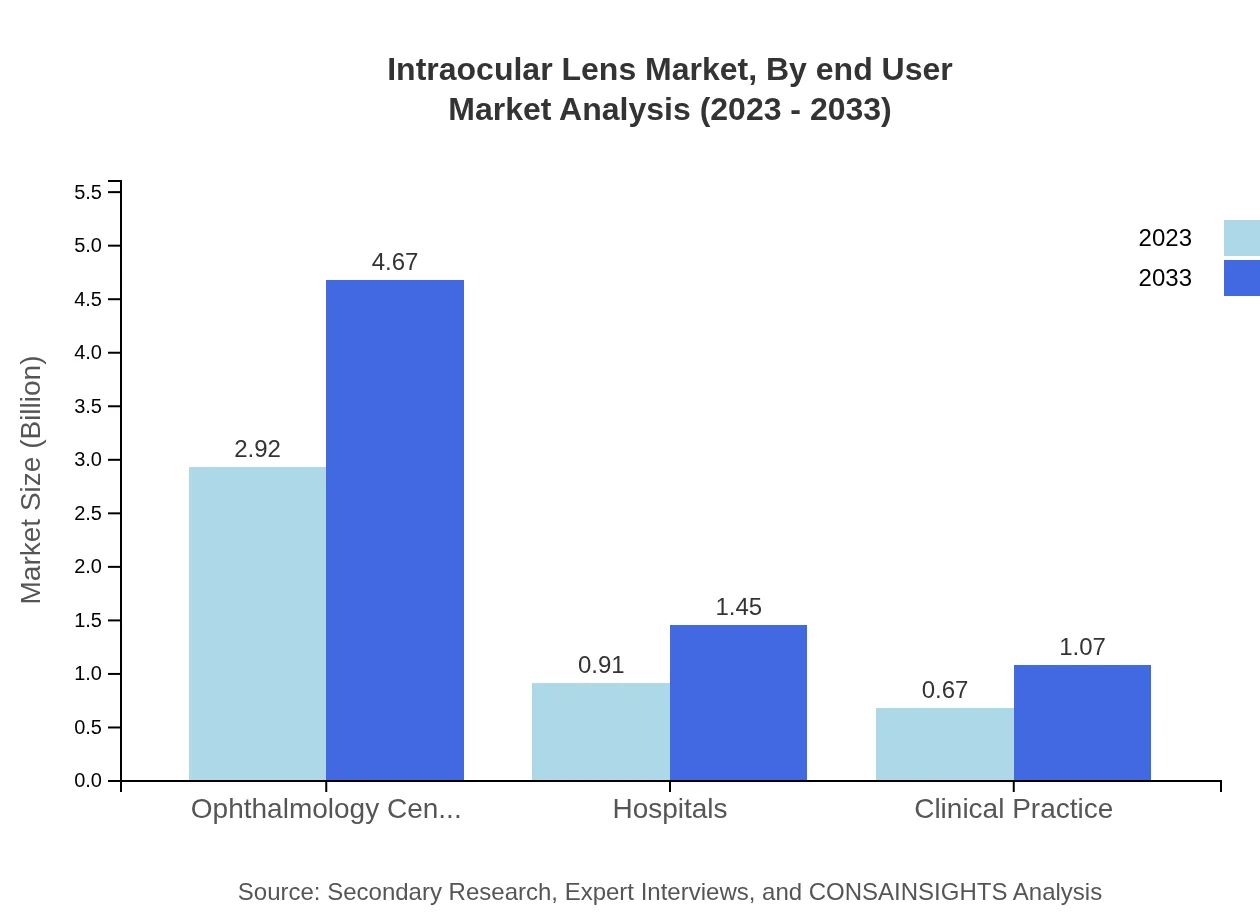
End-users include ophthalmology centers, hospitals, and clinical practices as specified in the segment data.
How is the market segmented by material?
Material segments include hydrophobic acrylic lenses, hydrophilic acrylic lenses, and silicone lenses as provided in the input.
What distribution channels are covered in the report?
Distribution channels identified are hospital pharmacies, retail pharmacies, and online pharmacies according to the input.
Why is regional analysis important for this report?
Regional breakdowns reveal differing market sizes and adoption patterns that inform strategy; the report includes detailed regional values for 2023 and 2033.