

Hadron Therapy Market Report
First published: 21 October 2024 | Last updated: 25 May 2026 | Report Code: hadron-therapy
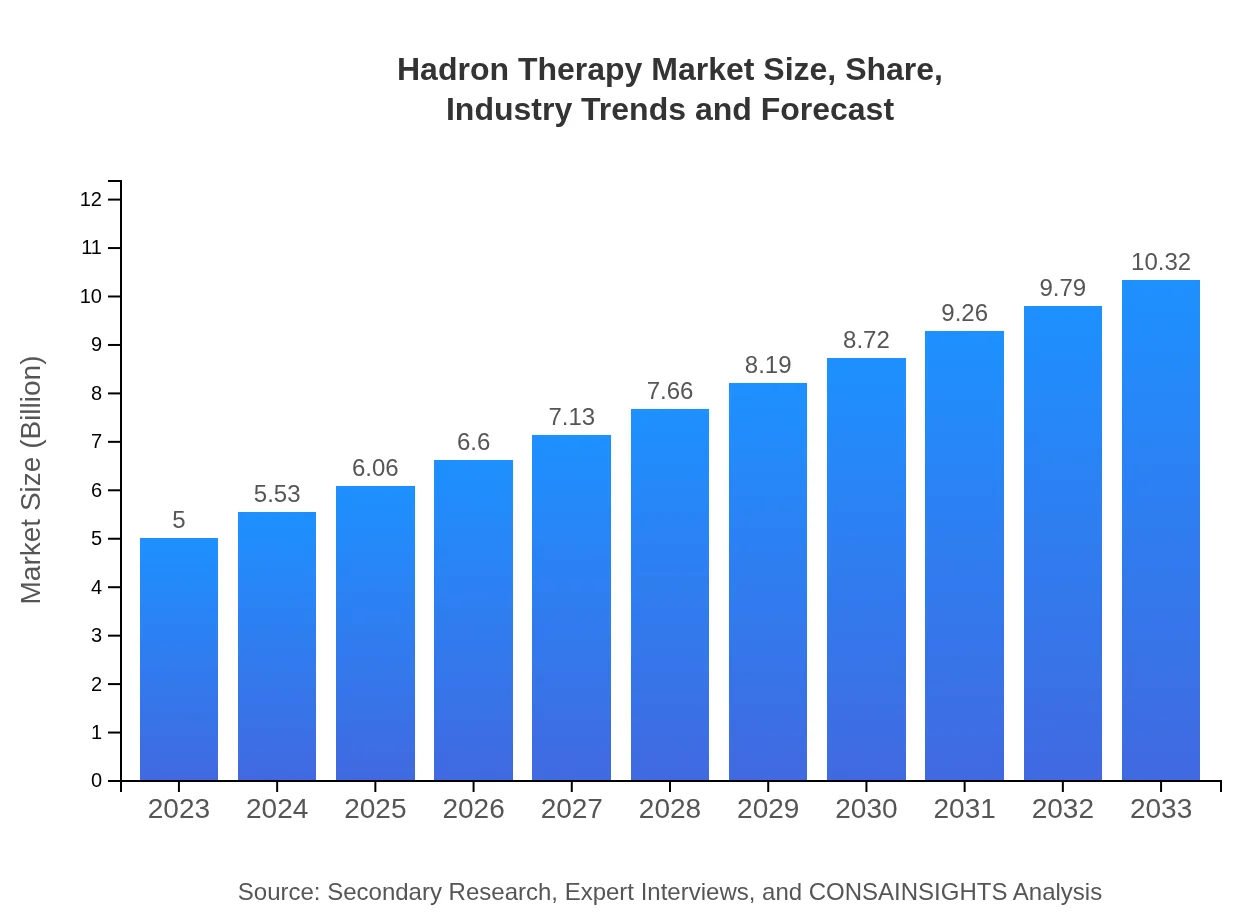
Hadron Therapy Market — USD $5 Billion in 2023, Growing to USD 10.32null by 2033 at 7.3% CAGR
This report provides an in-depth analysis of the Hadron Therapy market, detailing market size, trends, regional insights, and future forecasts from 2023 to 2033.
Key Takeaways
- Global market expands from $5.00 Billion in 2023 to $10.32 Billion by 2033 with a 7.3% CAGR over 2023 to 2033.
- North America is largest regional market, while no single fastest-growing region is stated because regional CAGR differences remain within 0.15 percentage points.
- Europe grows from $1.49 Billion in 2023 to $3.08 Billion in 2033, reflecting strong clinical adoption and infrastructure expansion.
- Asia Pacific advances from $0.9 Billion in 2023 to $1.86 Billion in 2033 amid increasing treatment centers and technological uptake.
- Key vendors include Varian Medical Systems, Siemens Healthineers, Ion Beam Applications (IBA), and Hitachi, shaping competitive innovation.
Hadron Therapy Market Report — Executive Summary
North America remains largest market by forecast-period value, while no single fastest-growing region is stated because top regional growth rates are separated by less than 0.15 percentage points. The hadron therapy market shows sustained expansion, reaching $5.00 Billion in 2023 and projected to attain $10.32 Billion by 2033 at a 7.3% CAGR for 2023 to 2033. Growth is underpinned by investments in treatment centers, upgrades in treatment planning and delivery technologies, and collaboration between clinical and research institutions. Regional dynamics vary: North America holds the largest share, while Europe and Asia Pacific report notable increases in capacity. Market structure includes therapy types such as Proton Therapy and Heavy Ion Therapy, and components like Treatment Planning Systems, Delivery Systems, and Dosimetry Systems. Leading companies—Varian Medical Systems, Siemens Healthineers, Ion Beam Applications (IBA), and Hitachi—are advancing solutions and partnerships. Persistent challenges include operational costs and access limitations in some regions, supporting continued focus on standardization, research collaborations, and funding models to broaden availability and clinical applications.
Key Growth Drivers
- Rising investment in specialized treatment centers expands clinical capacity and equipment demand.
- Advances in treatment planning and delivery systems improve precision and support broader clinical adoption.
- Collaborations between research institutes and hospitals drive clinical trials and evidence generation.
- Increased focus on personalized oncology therapies encourages integration of hadron therapy into treatment protocols.
- Regulatory standardization and international guidelines foster safer, more consistent deployment of treatments.
| Metric | Value |
|---|---|
| Study Period | 2023 - 2033 |
| 2023 Market Size | $5.00 Billion |
| CAGR (2023-2033) | 7.3% |
| 2033 Market Size | $10.32 Billion |
| Top Companies | Varian Medical Systems, Siemens Healthineers, Ion Beam Applications (IBA), Hitachi |
| Published Date | 21 October 2024 |
| Last Modified Date | 25 May 2026 |
Hadron Therapy Market Overview
Customize Hadron Therapy Market Report market research report
- ✔ Get in-depth analysis of Hadron Therapy market size, growth, and forecasts.
- ✔ Understand Hadron Therapy's regional dynamics and industry-specific trends.
- ✔ Identify potential applications, end-user demand, and growth segments in Hadron Therapy
What is the Market Size & CAGR of Hadron Therapy Market Report market in 2023?
Hadron Therapy Industry Analysis
Hadron Therapy Market Segmentation and Scope
Tell us your focus area and get a customized research report.
Hadron Therapy Market Report Market Analysis Report by Region
Europe Hadron Therapy Market Report:
Europe grows from $1.49 Billion in 2023 to $3.08 Billion in 2033. Regional advances are supported by expansion of treatment centers, adoption of improved planning and delivery systems, and collaborations between hospitals and research institutions.Asia Pacific Hadron Therapy Market Report:
Asia Pacific grows from $0.9 Billion in 2023 to $1.86 Billion in 2033. Growth is fueled by increased establishment of hadron therapy facilities, rising clinical demand, and adoption of modern treatment technologies in emerging markets.North America Hadron Therapy Market Report:
North America is largest regional market, rising from $1.92 Billion in 2023 to $3.97 Billion in 2033. This growth reflects concentrated investment in specialized clinical infrastructure, ongoing technology upgrades, and active participation by major vendors in equipment and services.South America Hadron Therapy Market Report:
Latin America grows from $0.03 Billion in 2023 to $0.05 Billion in 2033. Market movement is shaped by incremental investments in specialized oncology services and gradual enhancement of regional clinical capabilities.Middle East & Africa Hadron Therapy Market Report:
Middle East and Africa grows from $0.66 Billion in 2023 to $1.36 Billion in 2033. Expansion is driven by targeted investments in healthcare infrastructure and growing interest in advanced oncology treatment options.Tell us your focus area and get a customized research report.
Research Methodology
Hadron Therapy Market Analysis By Therapy Type
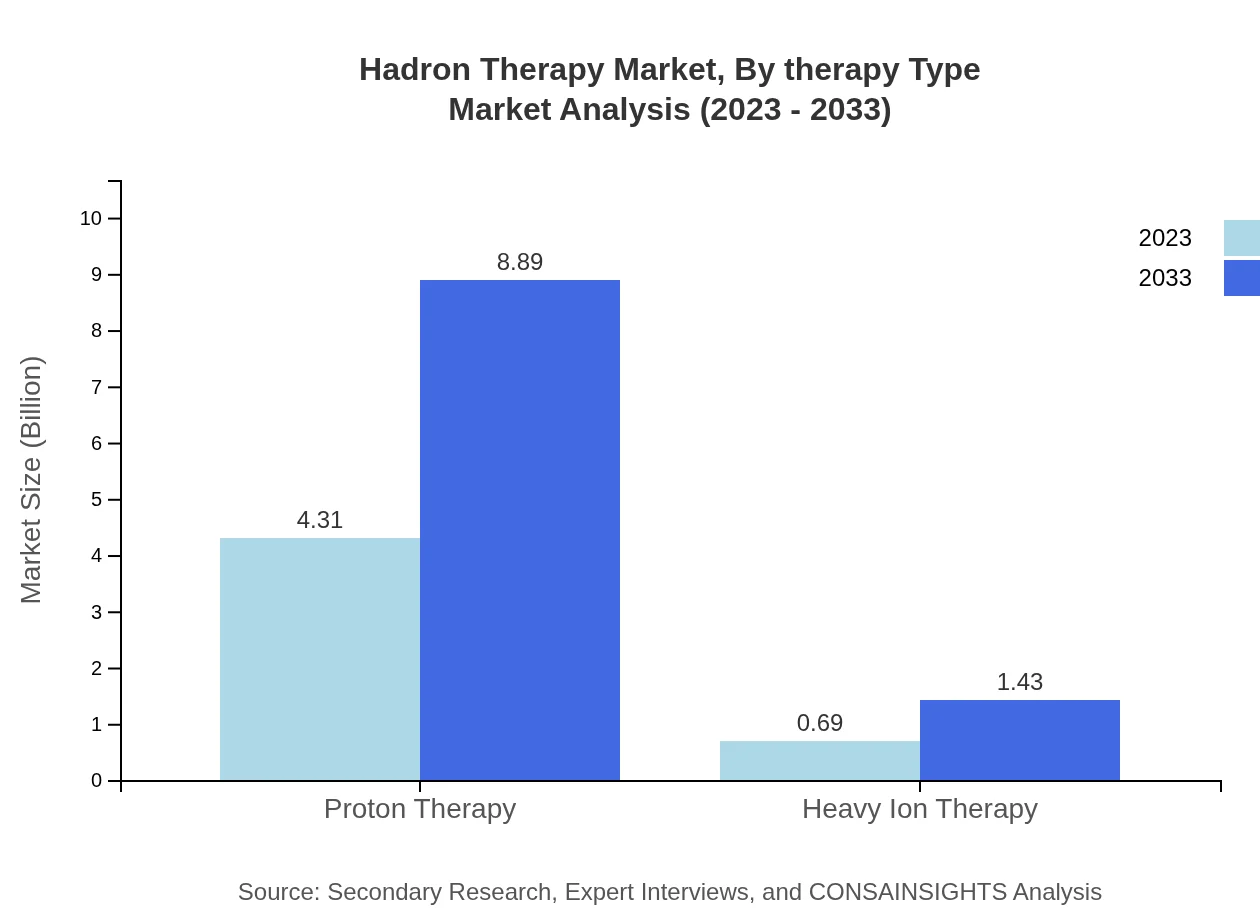
The market is dominated by Proton Therapy, which is leading due to its established efficacy and broader acceptance in clinical settings. The Proton Therapy market is projected to grow from $4.31 billion in 2023 to $8.89 billion by 2033, holding a share of 86.17% through the forecast period. Heavy Ion Therapy is also gaining traction, with projections of growth from $0.69 billion to $1.43 billion, presenting 13.83% of the market share.
Hadron Therapy Market Analysis By Application
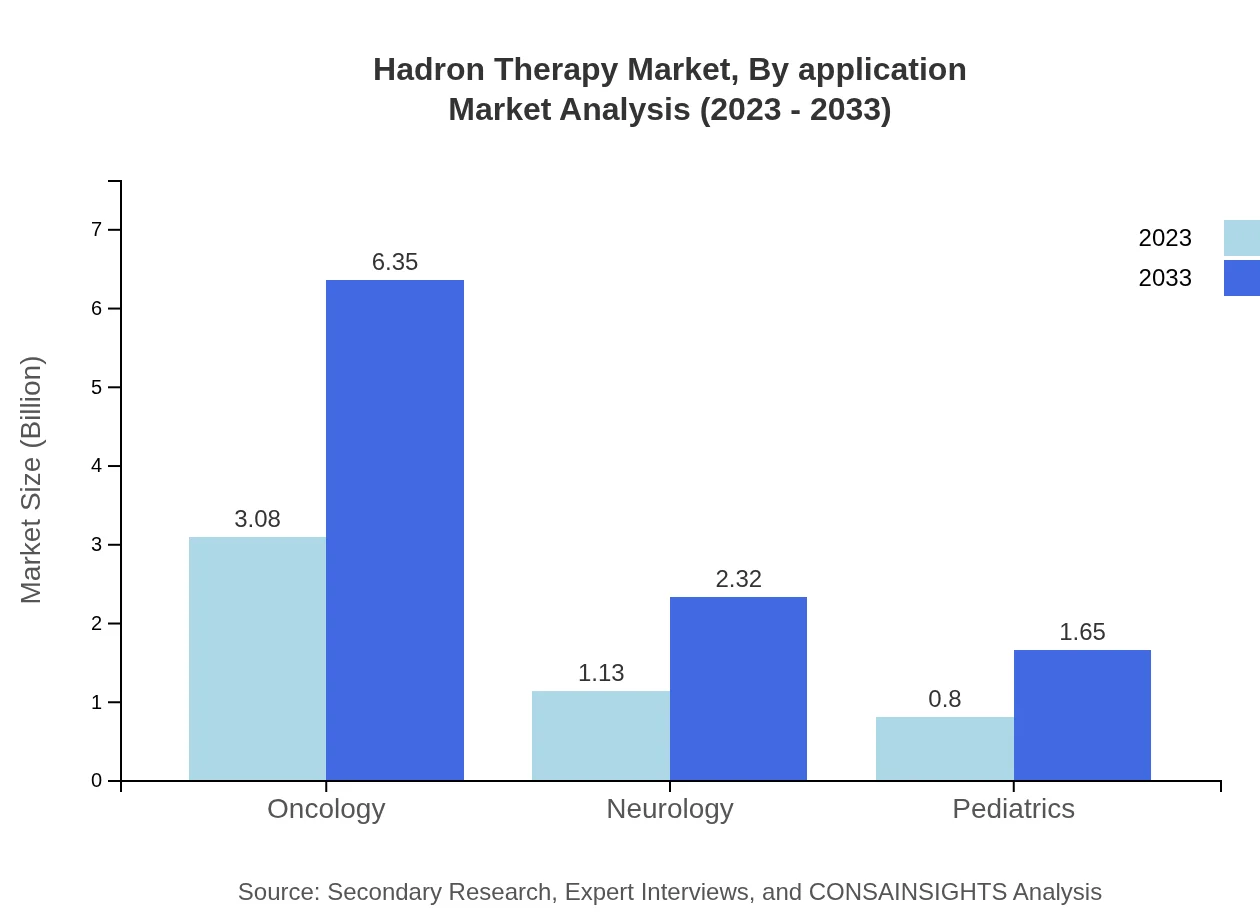
Oncology remains the leading application area for hadron therapy, accounting for the lion's share of market revenue. The market for oncology-related applications is expected to grow from $3.08 billion in 2023 to $6.35 billion in 2033. Other applications, including neurology and pediatrics, are also growing due to increased research and clinical trials, contributing positively to market diversification.
Hadron Therapy Market Analysis By End User
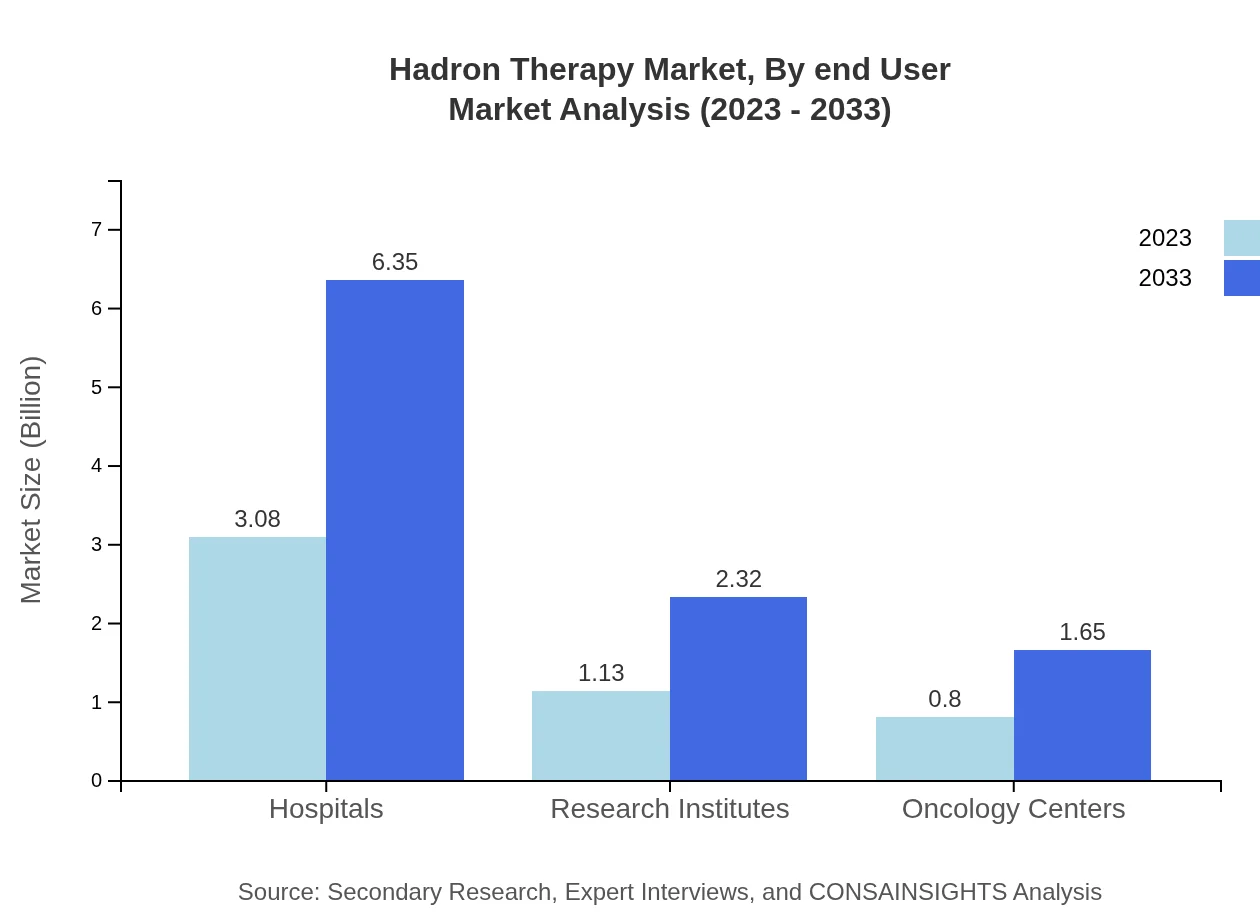
Hospitals are the primary end-users of hadron therapy, holding a major share that remains steady at 61.5% throughout the forecast, with values projected from $3.08 billion in 2023 to $6.35 billion in 2033. Oncology centers and research institutes play growing roles, reflected in their respective shares of 15.99% and 22.51%.
Hadron Therapy Market Analysis By Technology
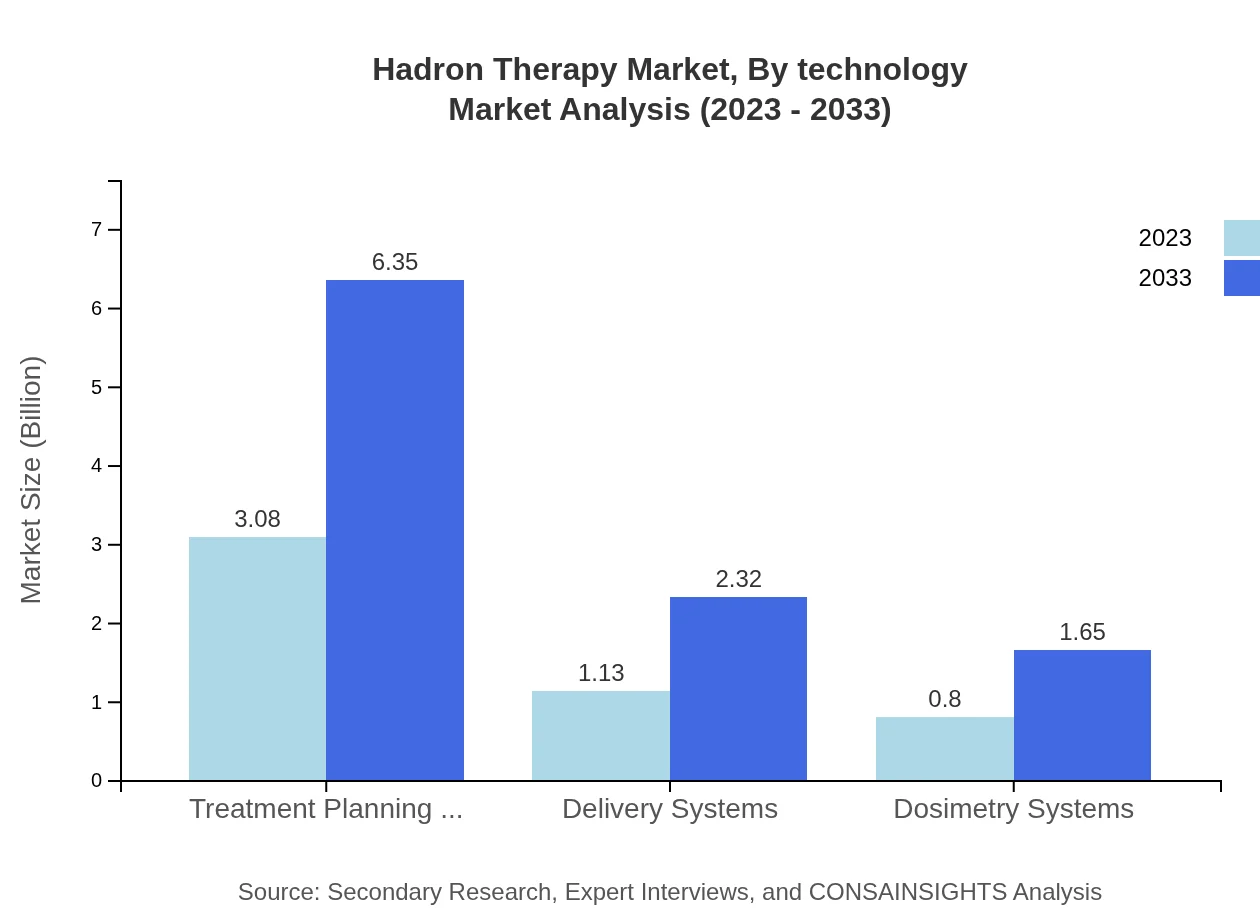
Innovations in treatment planning and delivery systems are critical in the Hadron Therapy landscape. Treatment planning systems are expected to expand from $3.08 billion to $6.35 billion, retaining a 61.5% market share. Meanwhile, delivery systems are evolving with advancements in precision, increasing their market potential.
Hadron Therapy Market Analysis By Regulatory Framework
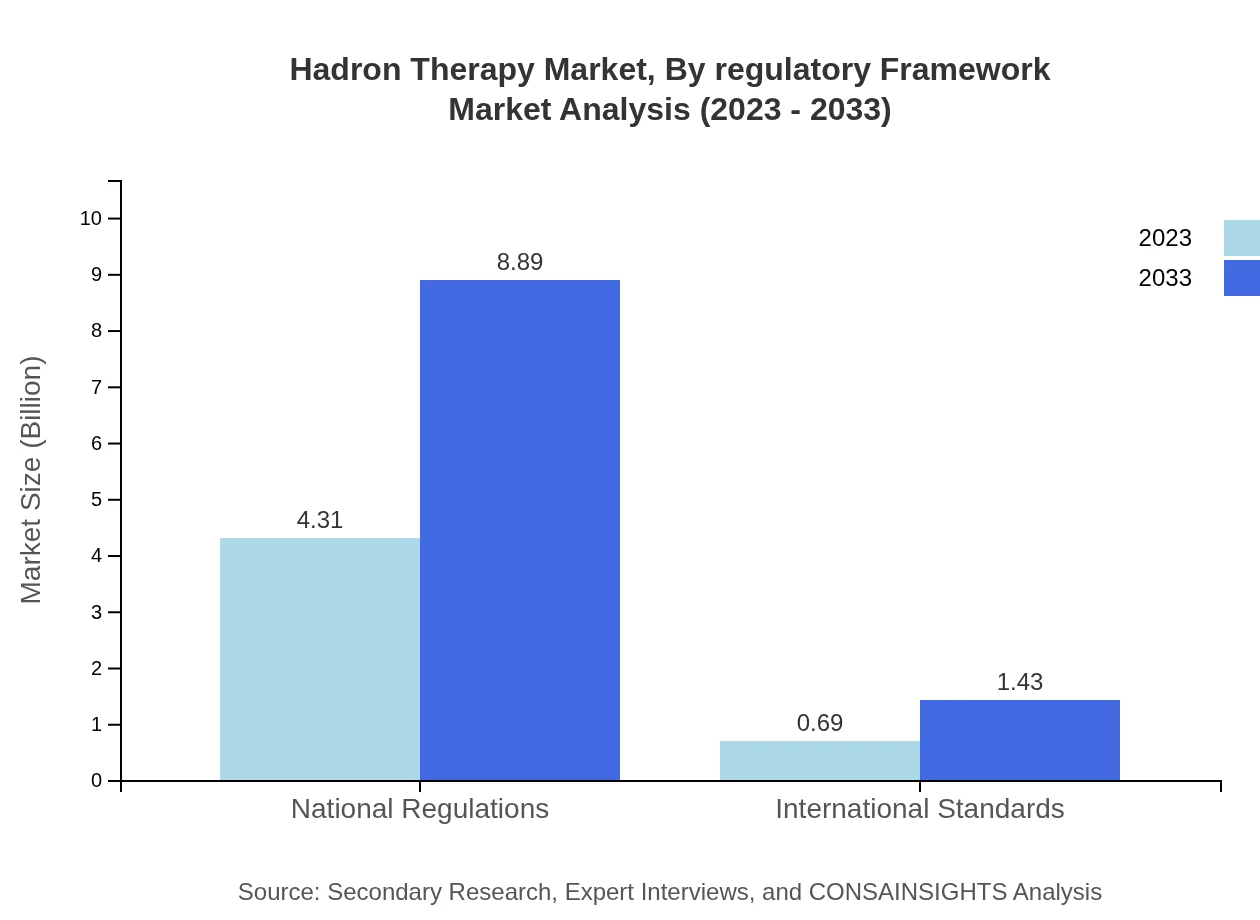
Regulatory frameworks significantly impact the Hadron Therapy market by establishing standards that ensure patient safety. International and national regulations set the pathways for treatment implementation, and their ongoing adaptation is essential for maintaining therapy efficacy and patient outcomes.
Hadron Therapy Market Trends and Future Forecast
Tell us your focus area and get a customized research report.
Global Market Leaders and Top Companies in Hadron Therapy Industry
Varian Medical Systems:
A leader in radiation therapy systems, Varian focuses on integrated solutions for cancer treatment, including advanced software and dosimetry systems.Siemens Healthineers:
Siemens specializes in medical technology and imaging, contributing significantly to the development and supply of hadron therapy machinery.Ion Beam Applications (IBA):
IBA is known for its innovative proton therapy solutions and plays a key role in advancing the global market with its technologies.Hitachi:
Hitachi is a prominent player that offers proton therapy systems and invests heavily in research to expand applications of heavy ion therapy.We're grateful to work with incredible clients.







FAQs
What is the market size of the Hadron Therapy Market Report in 2023?
The market size is $5.00 Billion in 2023 as reported, reflecting installed capacity and service offerings in clinical and research settings.
How big will the market be in 2033?
The market is projected to reach $10.32 Billion in 2033, based on reported forecast values covering technology adoption and facility expansion.
What is CAGR of the market for the forecast period?
The reported compound annual growth rate is 7.3% for the 2023 to 2033 forecast period.
Is there a single fastest Growing region in the Hadron Therapy Market Report market?
No single fastest-growing region is stated for the Hadron Therapy Market Report market because the top regional implied CAGR values are within 0.15 percentage points of each other, making the ranking too close to call reliably.
Which companies lead the Hadron Therapy market?
Top companies cited include Varian Medical Systems, Siemens Healthineers, Ion Beam Applications (IBA), and Hitachi, active in systems and clinical solutions.
What are the main therapy types in this market?
Reported therapy types include Proton Therapy and Heavy Ion Therapy, representing the core clinical modalities for charged-particle treatments.
How big is the Europe market in 2023 and 2033?
Europe is reported at $1.49 Billion in 2023 and grows to $3.08 Billion in 2033, supported by expanding clinical adoption and infrastructure upgrades.
What drives adoption in Asia Pacific?
Asia Pacific grows from $0.9 Billion in 2023 to $1.86 Billion in 2033, driven by rising treatment center investments and increasing access to advanced therapies.
Who are primary end users of hadron therapy solutions?
Primary end users include Hospitals, Research Institutes, and Oncology Centers, as identified in the reported segmentation.
Why are regulatory frameworks important for this market?
National Regulations and International Standards guide safe clinical deployment, influence approvals, and shape standardization across treatment centers.