

Intraosseous Infusion Device Market Report
First published: 11 October 2024 | Last updated: 25 May 2026 | Report Code: intraosseous-infusion-device
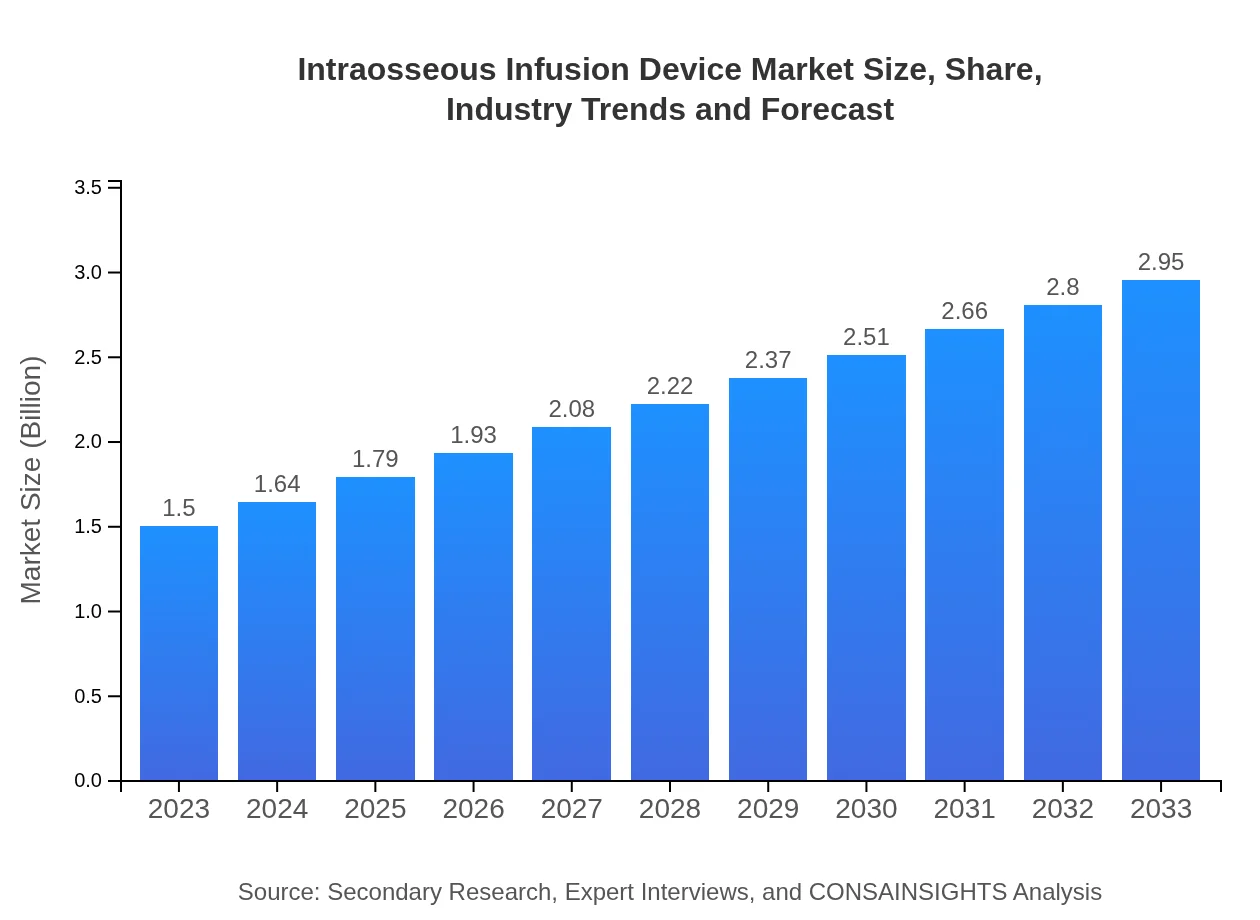
Intraosseous Infusion Device Market — USD $1.5 Billion in 2023, Growing to USD 2.95B by 2033 at 6.8% CAGR
This report provides an in-depth analysis of the Intraosseous Infusion Device market from 2023 to 2033. Insights include market size, trends, segmentation, regional analysis, and leading companies, aiming to furnish stakeholders with comprehensive data for strategic decision-making.
Key Takeaways
- Global market grows from $1.50 Billion in 2023 to $2.95 Billion in 2033 at a 6.8% CAGR.
- North America is largest regional market, while no single fastest-growing region is stated because regional CAGR differences remain within 0.15 percentage points.
- Europe expands from $0.5 Billion in 2023 to $0.99 Billion in 2033, reflecting steady clinical uptake.
- Asia Pacific increases from $0.25 Billion in 2023 to $0.5 Billion in 2033, driven by emergency care investments.
- Devices span manual and automated types with hospitals, ambulance services, and home healthcare as key end users.
Intraosseous Infusion Device Market Report — Executive Summary
North America remains largest market by forecast-period value, while no single fastest-growing region is stated because top regional growth rates are separated by less than 0.15 percentage points. Demand for rapid vascular access in acute and pre-hospital care underpins market momentum for intraosseous infusion devices. The market is sized at $1.50 Billion in 2023 and is projected to reach $2.95 Billion by 2033, corresponding to a 6.8% CAGR for 2023 to 2033. Growth reflects investments in automated device innovation, expanded clinical training, and increased emphasis on emergency response capabilities. The market structure covers device type, application, end user, material, and regional deployment. Hospitals and ambulance services remain principal channels, while home healthcare settings are gaining attention. North America is identified as the largest regional market. Leading companies profiled include BD (Becton, Dickinson and Company), Zoll Medical Corporation, and Pyng Medical Corp. The report synthesizes primary interviews and secondary literature to map adoption trends, regulatory influences, and technology advancements supporting future expansion.
Key Growth Drivers
- Rising need for immediate vascular access in emergency and trauma cases increases device utilization across care settings.
- Advances in automated intraosseous systems improve reliability and reduce procedure time, encouraging clinical adoption.
- Expanded training programs and procedural guidelines raise clinician confidence in intraosseous access techniques.
- Broader acceptance in pre-hospital and home healthcare contexts enlarges addressable markets for manufacturers.
- Ongoing R&D and product introductions by established firms sustain competitive innovation and portfolio diversification.
| Metric | Value |
|---|---|
| Study Period | 2023 - 2033 |
| 2023 Market Size | $1.50 Billion |
| CAGR (2023-2033) | 6.8% |
| 2033 Market Size | $2.95 Billion |
| Top Companies | BD (Becton, Dickinson and Company), Zoll Medical Corporation, Pyng Medical Corp. |
| Published Date | 11 October 2024 |
| Last Modified Date | 25 May 2026 |
Intraosseous Infusion Device Market Overview
Customize Intraosseous Infusion Device Market Report market research report
- ✔ Get in-depth analysis of Intraosseous Infusion Device market size, growth, and forecasts.
- ✔ Understand Intraosseous Infusion Device's regional dynamics and industry-specific trends.
- ✔ Identify potential applications, end-user demand, and growth segments in Intraosseous Infusion Device
What is the Market Size & CAGR of Intraosseous Infusion Device Market Report market in 2023?
Intraosseous Infusion Device Industry Analysis
Intraosseous Infusion Device Market Segmentation and Scope
Tell us your focus area and get a customized research report.
Intraosseous Infusion Device Market Report Market Analysis Report by Region
Europe Intraosseous Infusion Device Market Report:
Europe grows from $0.5 Billion in 2023 to $0.99 Billion in 2033. Regional growth reflects strengthened emergency response systems, regulatory support for device use, and increased integration of intraosseous access in hospital and pre-hospital protocols.Asia Pacific Intraosseous Infusion Device Market Report:
Asia Pacific grows from $0.25 Billion in 2023 to $0.5 Billion in 2033. Expansion is linked to investment in emergency care infrastructure, rising awareness of rapid vascular access techniques, and growing adoption in both hospital and ambulance settings.North America Intraosseous Infusion Device Market Report:
North America is largest regional market, rising from $0.54 Billion in 2023 to $1.06 Billion in 2033. Adoption is supported by robust emergency medical services, established clinical training programs, and active investment by major manufacturers in device development.South America Intraosseous Infusion Device Market Report:
Latin America grows from $0.07 Billion in 2023 to $0.13 Billion in 2033. Market progression is driven by improving emergency medical capabilities, targeted training initiatives, and gradual uptake of both manual and automated intraosseous devices.Middle East & Africa Intraosseous Infusion Device Market Report:
Middle East and Africa grows from $0.14 Billion in 2023 to $0.27 Billion in 2033. Growth is supported by enhancements in pre-hospital care, regulatory advancements, and expanding use of intraosseous techniques in acute care environments.Tell us your focus area and get a customized research report.
Research Methodology
Intraosseous Infusion Device Market Analysis By Device Type
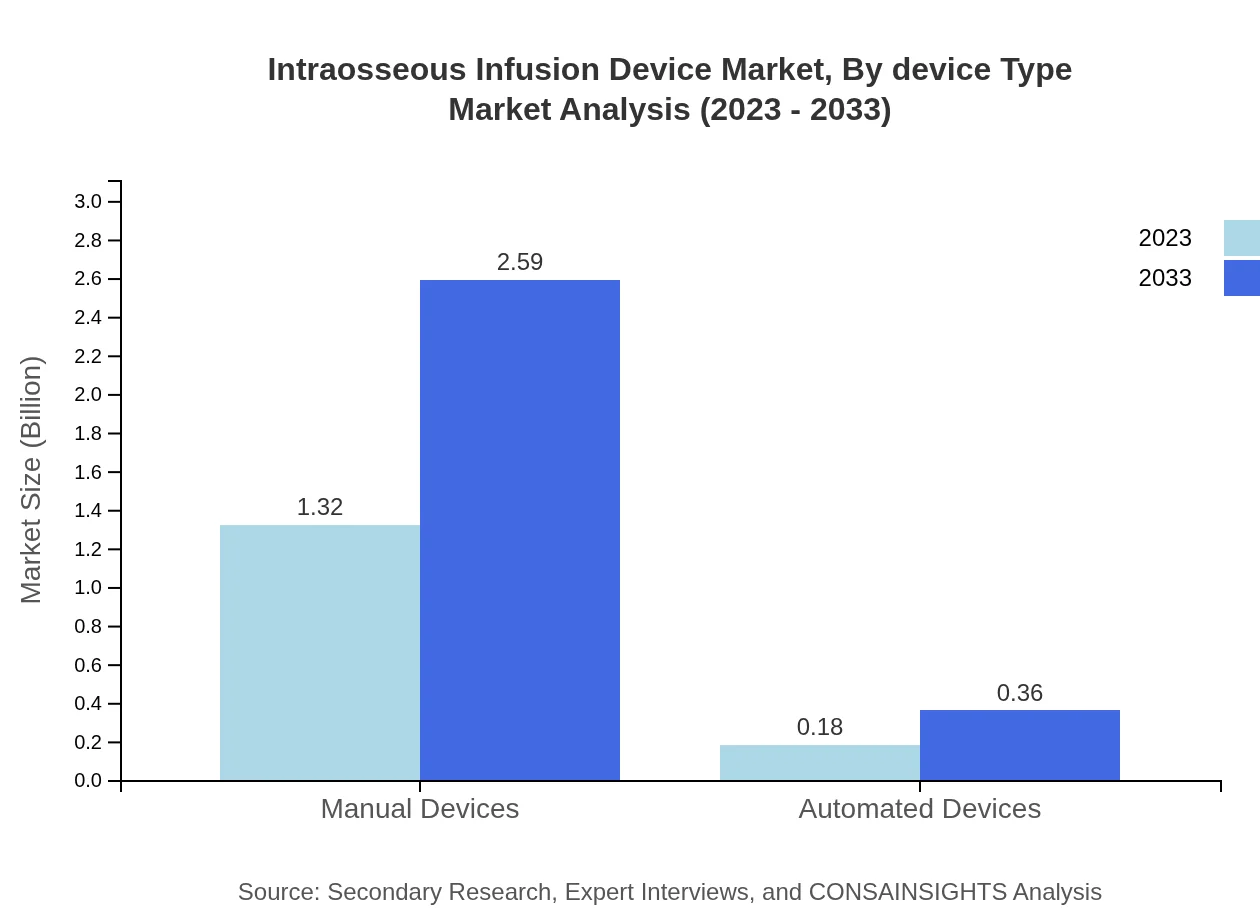
The market is segmented into manual and automated intraosseous devices. Manual devices accounted for a significant size of USD 1.32 billion in 2023 and are projected to reach USD 2.59 billion by 2033. Automated devices, while smaller in scale, are witnessing increased adoption to enhance procedural efficiency and safety.
Intraosseous Infusion Device Market Analysis By Application
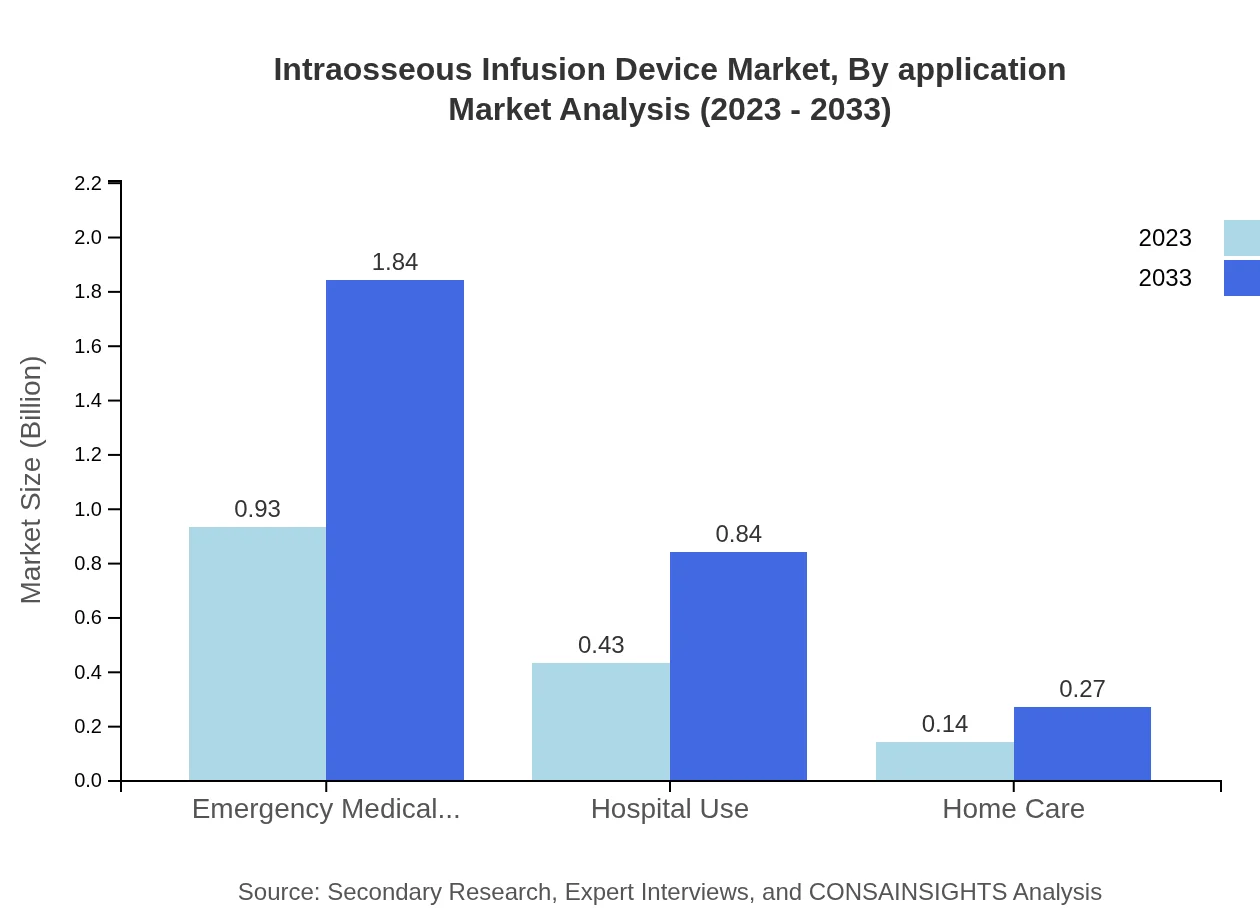
Applications for intraosseous infusion devices include trauma management, postoperative care, and emergency use. The trauma management segment is set to dominate the market, supported by increasing trauma cases and the need for rapid access to vein systems.
Intraosseous Infusion Device Market Analysis By End User
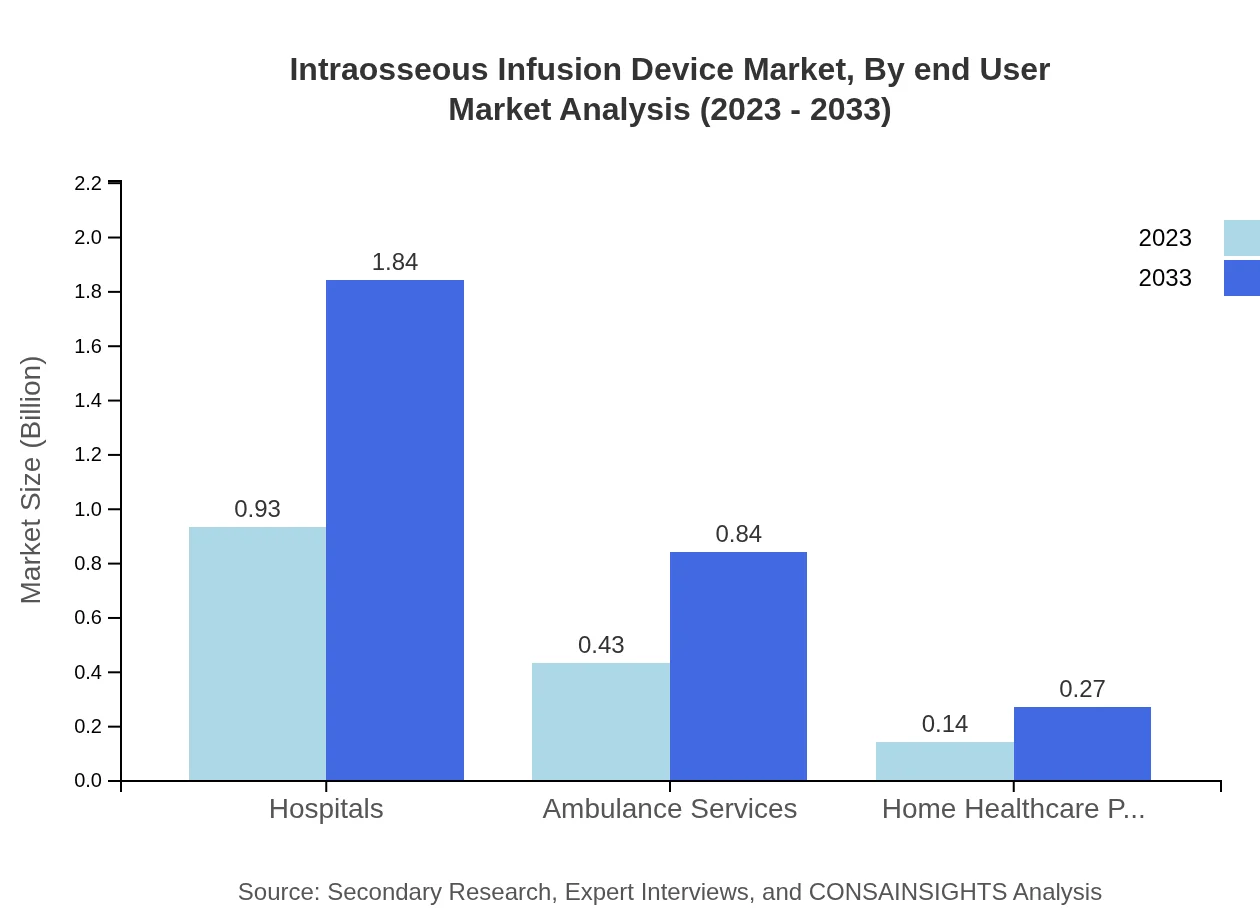
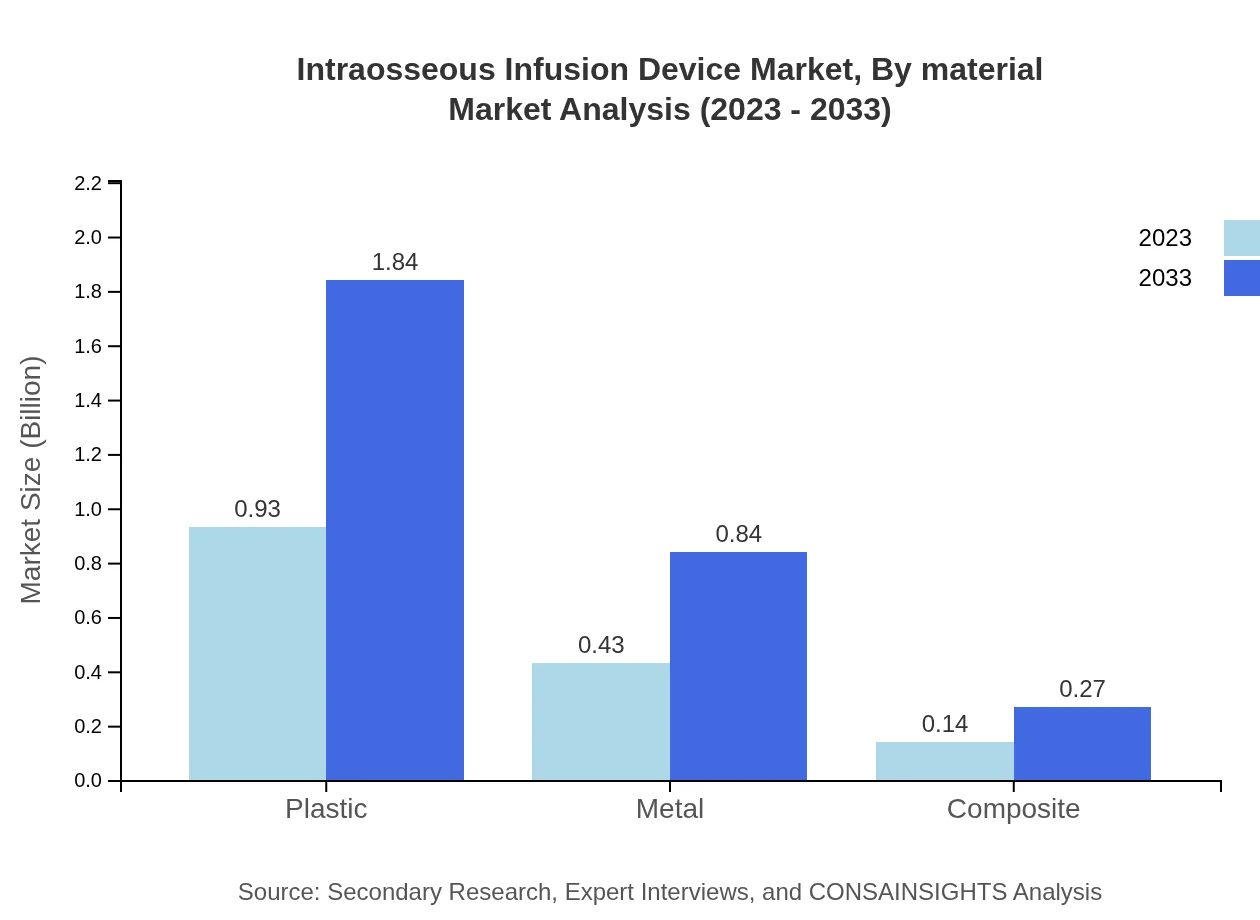
The primary end-users include hospitals, ambulance services, and home healthcare providers. Hospitals represent the largest segment, expected to grow from USD 0.93 billion to USD 1.84 billion by 2033, due to high demand for effective medical care and rising patient volumes.
Intraosseous Infusion Device Market Analysis By Region Deployment
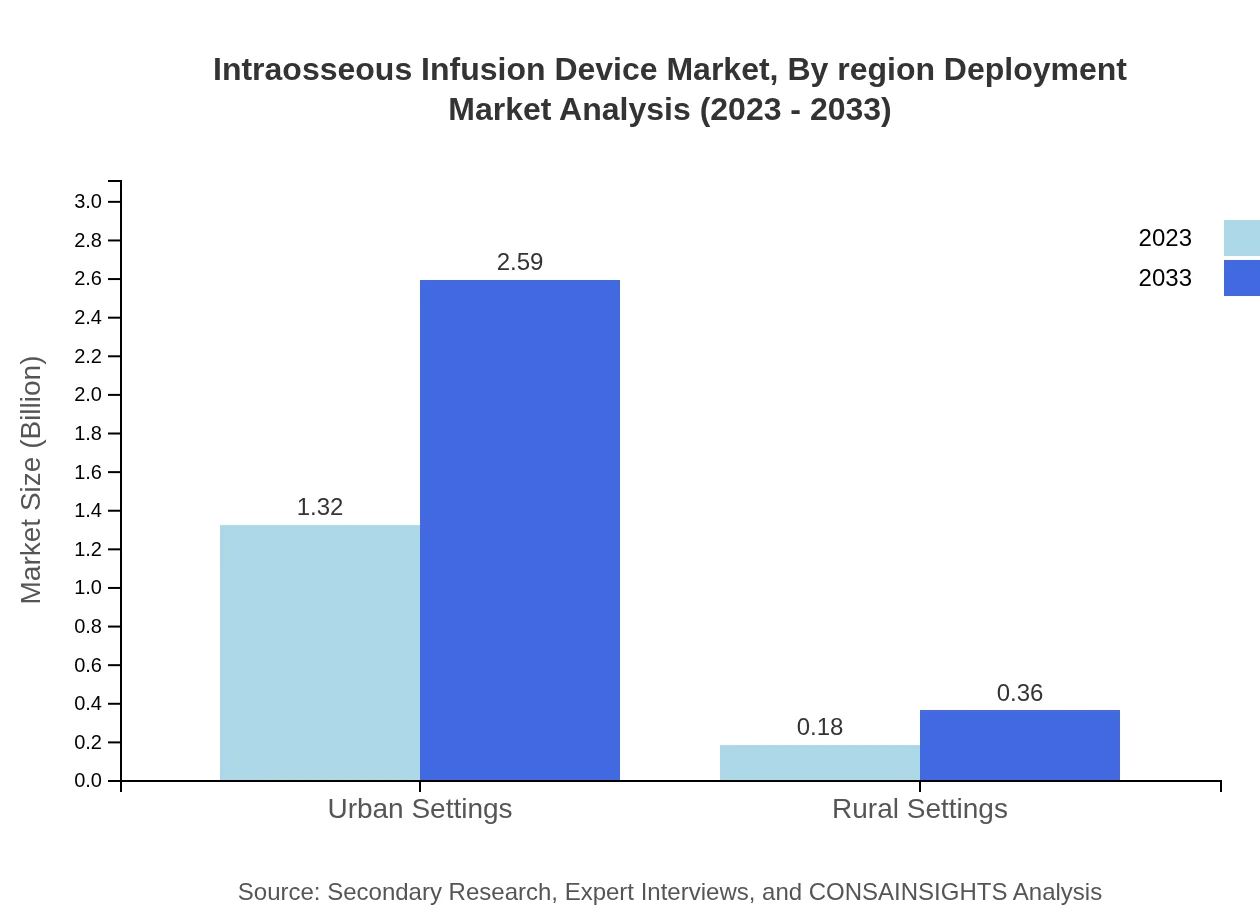
Regional deployment highlights the popularity of intraosseous devices in urban settings, which accounted for a market size of USD 1.32 billion in 2023. In contrast, rural settings represented a smaller share, with anticipated growth driven by increasing access to emergency care.
Intraosseous Infusion Device Market Trends and Future Forecast
Tell us your focus area and get a customized research report.
Global Market Leaders and Top Companies in Intraosseous Infusion Device Industry
BD (Becton, Dickinson and Company):
A leading global medical technology company, BD focuses on advancing drug delivery and improving outcomes through innovative intraosseous infusion devices.Zoll Medical Corporation:
Zoll specializes in medical devices and software, providing emergency medical services with advanced intraosseous infusion solutions for more effective patient treatment.Pyng Medical Corp.:
Known for its specialized medical devices, Pyng's intraosseous infusion technology has gained recognition in emergency medicine across different healthcare settings.We're grateful to work with incredible clients.








FAQs
What is the market size of intraosseous infusion devices in 2023?
The market size for intraosseous infusion devices in 2023 is $1.50 Billion according to the report's base-year measurement.
How big will the market be in 2033?
The projected market value for 2033 is $2.95 Billion as stated for the forecast end year.
What is CAGR for the forecast period?
The compound annual growth rate (CAGR) for 2023 to 2033 is 6.8% as reported for the market.
Is there a single fastest Growing region in the Intraosseous Infusion Device Market Report market?
No single fastest-growing region is stated for the Intraosseous Infusion Device Market Report market because the top regional implied CAGR values are within 0.15 percentage points of each other, making the ranking too close to call reliably.
Which companies lead the market?
Top companies named in the report include BD (Becton, Dickinson and Company), Zoll Medical Corporation, and Pyng Medical Corp.
What applications drive device demand?
Key applications include emergency medical services, hospital use, and home care, which together support device adoption across clinical and pre-hospital environments.
How are devices segmented by type?
Devices are categorized into manual devices and automated devices to reflect differing operation modes and clinical preferences.
What materials are used in device construction?
Reported material subsegments include plastic, metal, and composite, each serving various design and performance requirements.
Who are primary end users of intraosseous devices?
Primary end users include hospitals, ambulance services, and home healthcare providers, reflecting both institutional and pre-hospital deployment.
What drives regional adoption?
Regional adoption is influenced by emergency care capacity, training availability, regulatory acceptance, and investments in pre-hospital services, according to the report.