

Metaverse In Education
First published: 26 February 2026 | Last updated: 26 February 2026 | Report Code: metaverse-in-education
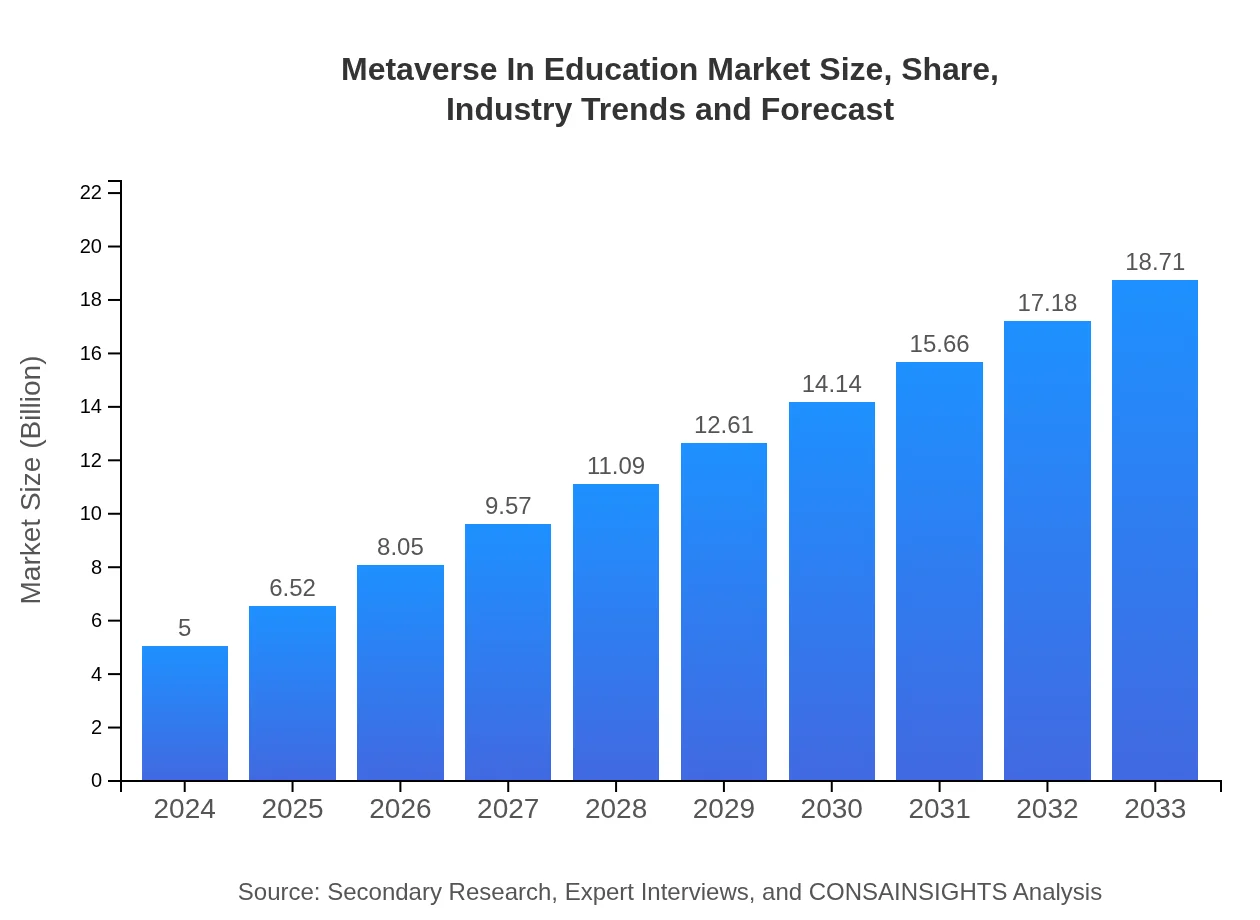
Metaverse In Education Market — USD $5 Billion in 2024, Growing to USD 18.71 by 2033 at 15% CAGR
This comprehensive market report on the Metaverse In Education explores key trends, data insights, and predictive analyses for the forecast period between 2024 and 2033. It offers an in-depth review of market size, growth drivers, segmentation, regional performance, technological innovations, and major players shaping the future of immersive educational experiences globally, providing actionable insights.
| Metric | Value |
|---|---|
| Study Period | 2024 - 2033 |
| 2024 Market Size | $5.00 Billion |
| CAGR (2024-2033) | 15% |
| 2033 Market Size | $18.71 Billion |
| Top Companies | Meta Platforms Inc., Google LLC, Microsoft Corporation |
| Published Date | 26 February 2026 |
| Last Modified Date | 26 February 2026 |
Metaverse In Education Market Overview
Customize Metaverse In Education market research report
- ✔ Get in-depth analysis of Metaverse In Education market size, growth, and forecasts.
- ✔ Understand Metaverse In Education's regional dynamics and industry-specific trends.
- ✔ Identify potential applications, end-user demand, and growth segments in Metaverse In Education
What is the Market Size & CAGR of Metaverse In Education market in 2024?
Metaverse In Education Industry Analysis
Metaverse In Education Market Segmentation and Scope
Tell us your focus area and get a customized research report.
Metaverse In Education Market Analysis Report by Region
Europe Metaverse In Education:
Europe shows strong market performance with sizes moving from 1.81 in 2024 to an estimated 6.79 by 2033. The region benefits from robust regulatory frameworks, high broadband penetration, and strategic government investments that foster innovation in educational technology.Asia Pacific Metaverse In Education:
With an initial market size of 0.85 in 2024, the Asia Pacific region is expected to grow to 3.18 by 2033. This region benefits from an expanding young population, increased investment in digital education, and proactive government policies aimed at enhancing technology-driven learning. Rapid urbanization and infrastructural developments further propel the growth of immersive education solutions in the region.North America Metaverse In Education:
North America, valued at 1.62 in 2024, is forecasted to expand to 6.06 by 2033. The region’s mature tech infrastructure, coupled with early adoption of digital learning tools and significant R&D investments, positions it as a leader in implementing immersive educational technologies.South America Metaverse In Education:
Starting from a market size of 0.20 in 2024, South America is projected to reach 0.76 by 2033. Despite economic challenges in parts of the region, there is a surge in digital transformation initiatives and innovative educational projects, driven by localized tech startups and international collaborations. Enhanced internet accessibility is also creating new opportunities for immersive learning.Middle East & Africa Metaverse In Education:
With a starting value of 0.51 in 2024 and an expected increase to 1.92 by 2033, the Middle East and Africa regions are gradually embracing immersive educational solutions. Despite facing challenges such as lower internet penetration in some areas, targeted investments in digital infrastructure and policy reforms are paving the way for growth, highlighting significant long-term potential.Tell us your focus area and get a customized research report.
Metaverse In Education Market Analysis By Technology
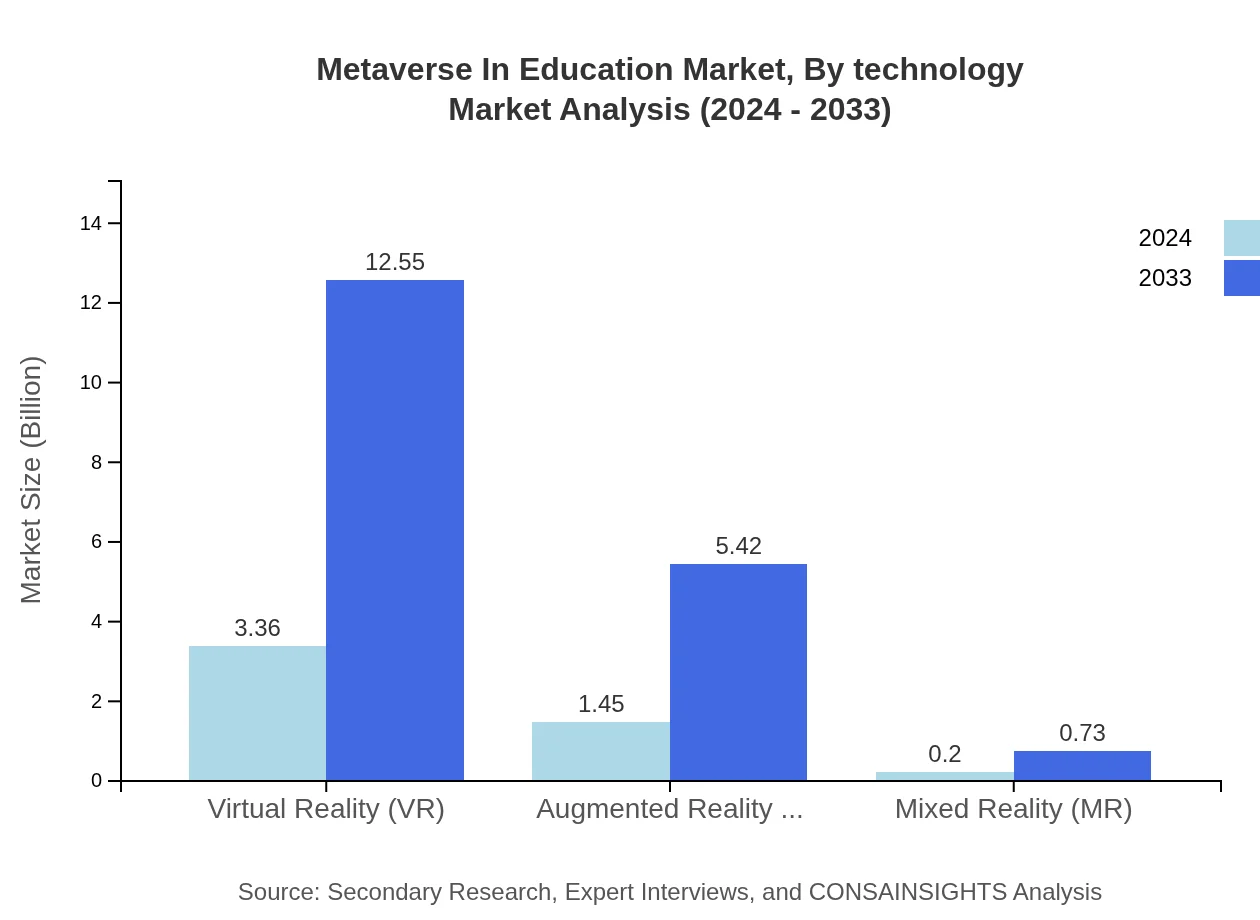
The by-technology segment evaluates the role of immersive technologies in education, focusing on Virtual Reality (VR), Augmented Reality (AR), and Mixed Reality (MR). These technologies are revolutionizing traditional learning environments by offering interactive simulations, enhancing engagement, and improving practical understanding through realistic, immersive experiences.
Metaverse In Education Market Analysis By Application
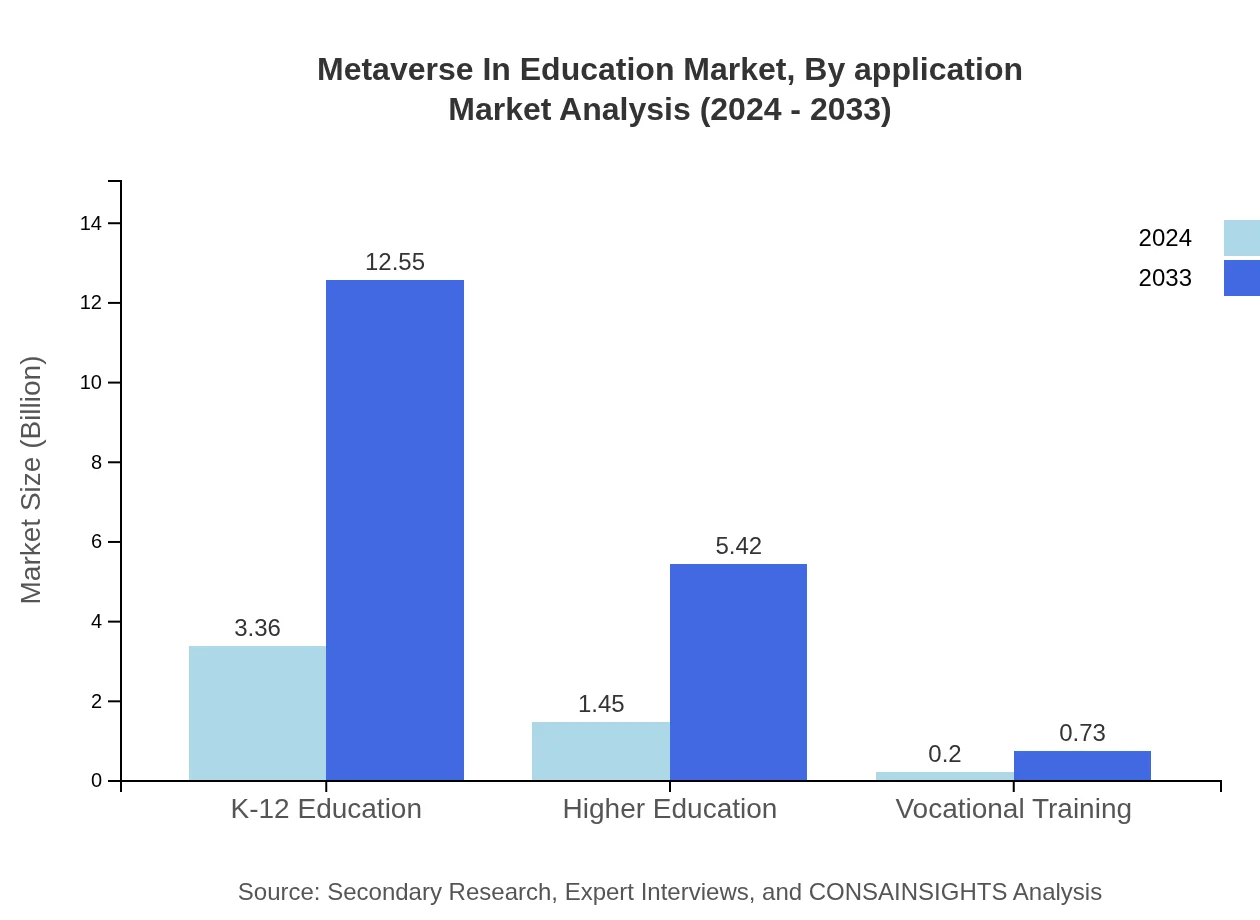
In the by-application segment, the analysis centers on the different digital platforms used in immersive education. It covers desktop applications, mobile applications, and web-based platforms that facilitate access to interactive learning modules. This segment is critical as it highlights how diverse application frameworks enhance user accessibility and content delivery.
Metaverse In Education Market Analysis By User Type
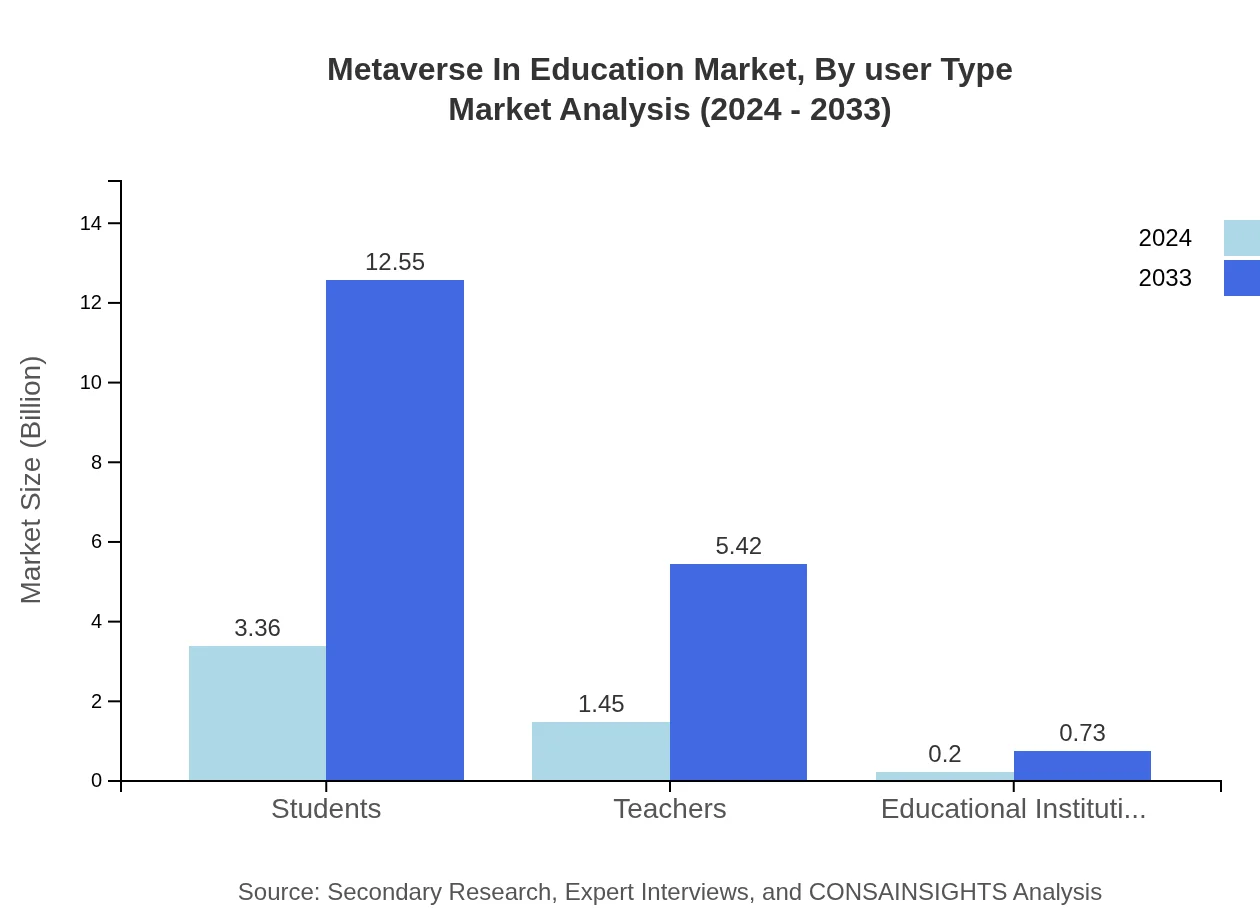
The by-user-type segment delves into how various user groups, such as students, teachers, and educational institutions, interact with immersive education solutions. Notably, the largest share is held by students, reflecting their demand for engaging and adaptive learning environments. It underscores the importance of tailoring solutions to meet diverse educational requirements.
Metaverse In Education Market Analysis By Access Mode
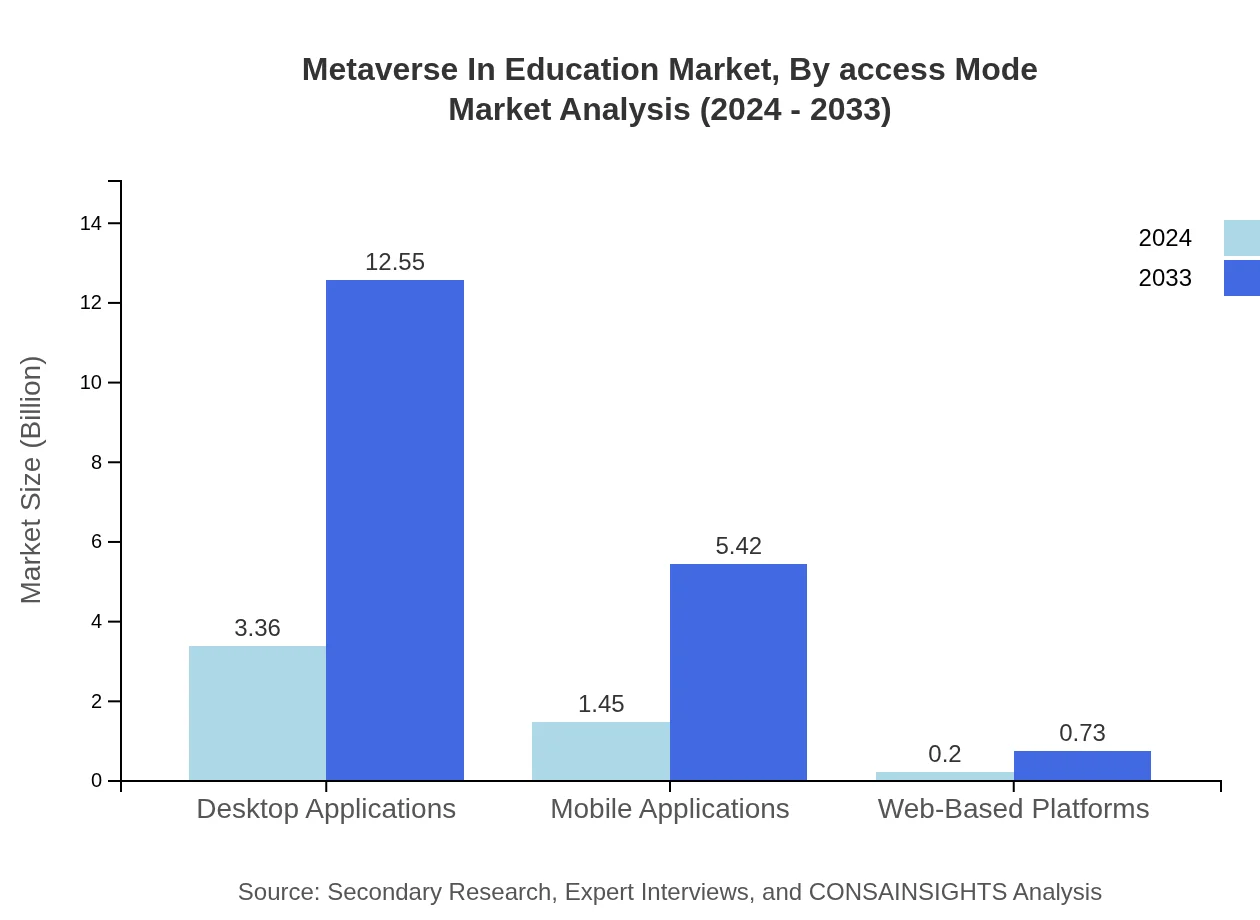
The by-access-mode segment reviews how different access modes impact the use of immersive technologies in education. It examines the significance of seamless integration across desktop and mobile platforms, ensuring that learners have continuous and flexible access to educational content, regardless of their geographic location or device constraints.
Metaverse In Education Market Analysis By Content Type
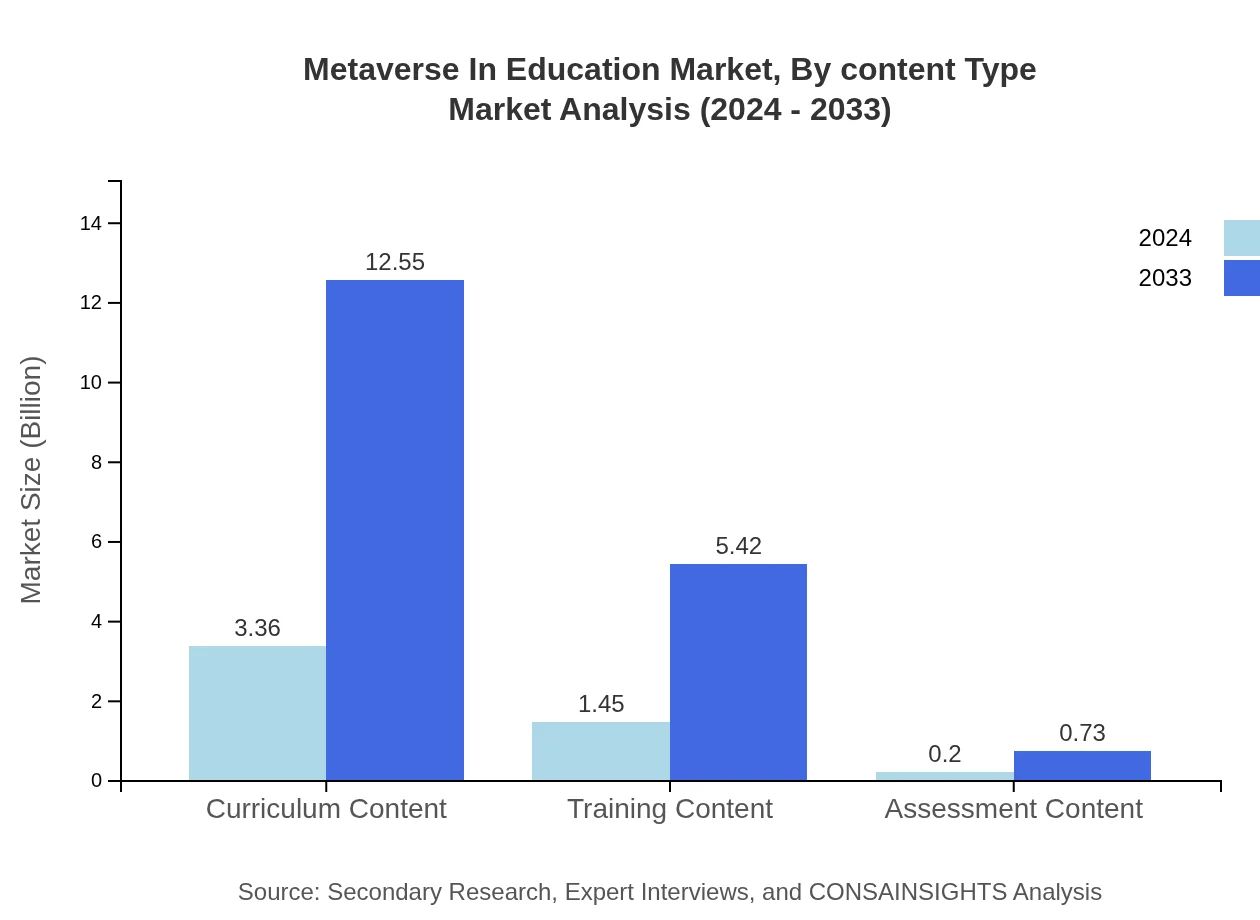
This segment focuses on the various types of content delivered through immersive education platforms, including curriculum content, training content, and assessment content. Effective content structuring plays a pivotal role in enhancing learning outcomes by providing engaging, interactive, and well-organized educational resources tailored to diverse learning objectives.
Metaverse In Education Market Trends and Future Forecast
Tell us your focus area and get a customized research report.
Global Market Leaders and Top Companies in Metaverse In Education Industry
Meta Platforms Inc.:
Meta Platforms Inc. is at the forefront of developing cutting-edge VR and AR solutions to create immersive learning environments.Google LLC:
Google LLC leverages its robust cloud infrastructure and innovative digital tools to support interactive educational platforms.Microsoft Corporation:
Microsoft Corporation excels in integrating advanced software solutions that bridge traditional education with modern digital experiences.We're grateful to work with incredible clients.









FAQs
How can the metaverse In Education report help align our marketing strategy with customer adoption trends?
The metaverse-in-education market size is projected to reach $5 billion by 2033, growing at a CAGR of 15%. Understanding adoption trends allows marketers to tailor strategies, targeting schools and institutions that are increasingly integrating immersive technologies.
What product features are in highest demand according to the metaverse In Education trends?
High-demand features include Virtual Reality (VR) and Augmented Reality (AR) capabilities, essential for immersive learning experiences. These segments are expected to capture market shares of 67.11% for VR and 28.97% for AR by 2033.
Which regions offer the best market entry and expansion opportunities in the metaverse In Education industry?
Europe leads with a market value of $6.79 billion by 2033. North America follows with $6.06 billion. Asia-Pacific is expanding rapidly, projected to reach $3.18 billion, making it an attractive area for market expansion.
What emerging technologies and innovations are shaping the metaverse In Education market?
Key innovations include advancements in VR, AR, and Mixed Reality (MR), enhancing interactive learning. These technologies are reshaping educational content delivery, with VR expected to dominate with a market size of $12.55 billion by 2033.
Does the metaverse In Education report include competitive landscape and market share analysis?
Yes, the report includes comprehensive competitive landscape analysis, detailing major players and their respective shares. This is crucial for understanding market dynamics and positioning strategies effectively in a rapidly evolving sector.
How can executives use the metaverse In Education report to evaluate investment risks and ROI?
Executives can assess investment risks by analyzing market projections, including expected growth rates and regional performance. The report allows them to estimate potential ROI based on detailed analysis of market trends and customer adoption.
What is the market size of the metaverse In Education?
The market size of metaverse-in-education is currently valued at $5 billion, with an expected growth at a CAGR of 15% up to 2033, driven by increasing demand for immersive educational experiences.
What are the segment data insights for the metaverse In Education market?
For 2024, students are the largest segment at $3.36 billion, while teachers account for $1.45 billion. By 2033, student market size will grow to $12.55 billion, maintaining a 67.11% share.