

Microsurgical Instruments
First published: 20 December 2024 | Last updated: 25 May 2026 | Report Code: microsurgical-instruments
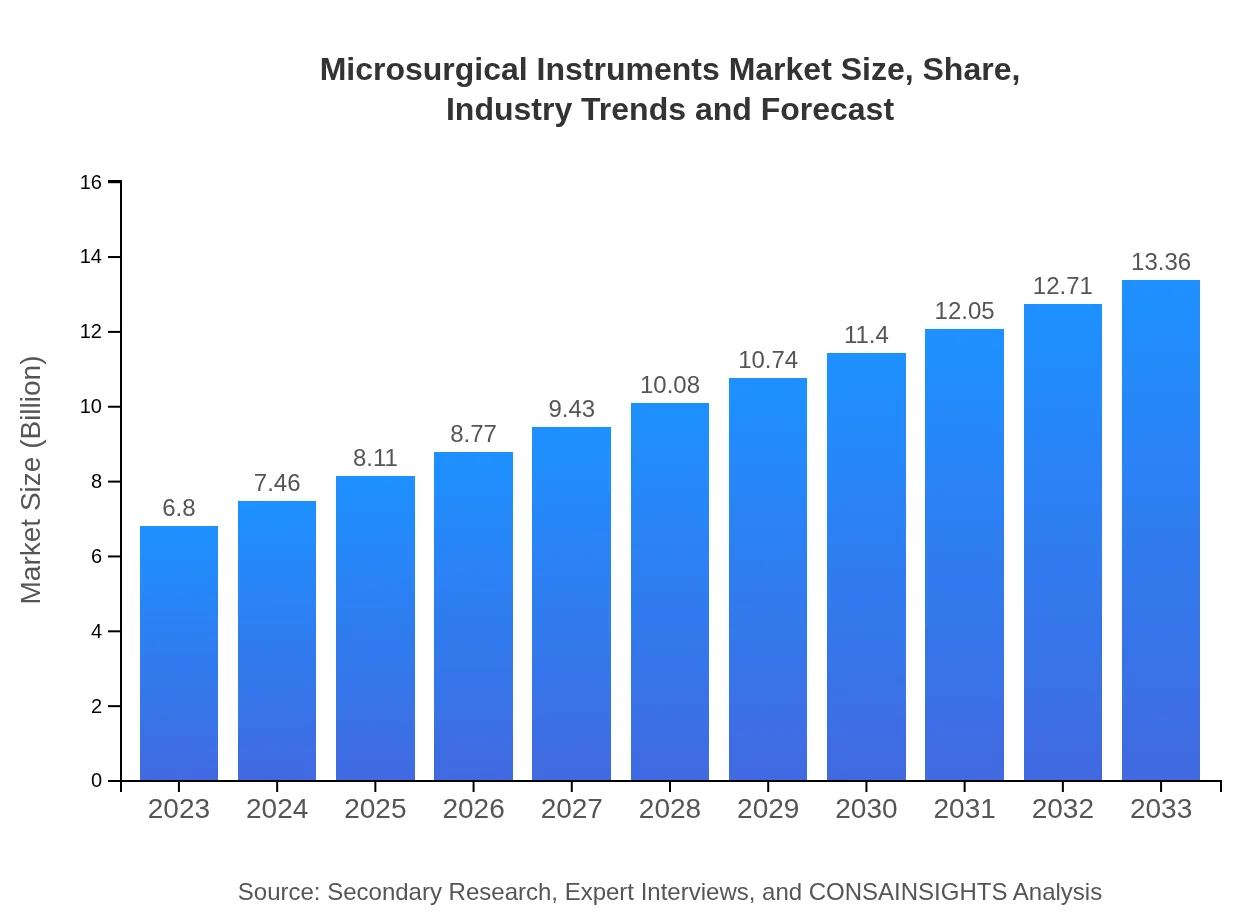
Microsurgical Instruments Market — USD $6.8 Billion in 2023, Growing to USD 13.36B by 2033 at 6.8% CAGR
This report provides a comprehensive analysis of the Microsurgical Instruments market, covering market size, trends, regional performance, and future forecasts for 2023 to 2033. It offers insights into various segments, including products and technologies shaping the industry.
Key Takeaways
- Global market value grows from $6.80 Billion in 2023 to $13.36 Billion in 2033 at a 6.8% CAGR.
- North America is largest regional market, while no single fastest-growing region is stated because regional CAGR differences remain within 0.15 percentage points.
- Europe moves from $1.72 Billion in 2023 to $3.38 Billion in 2033, reflecting steady clinical uptake.
- Asia Pacific expands from $1.4 Billion in 2023 to $2.76 Billion in 2033, driven by procedural adoption and infrastructure investments.
- Leading firms include Medtronic, Johnson & Johnson, Stryker Corporation, B. Braun Melsungen AG, and Karl Storz SE & Co. KG.
Microsurgical Instruments — Executive Summary
North America remains largest market by forecast-period value, while no single fastest-growing region is stated because top regional growth rates are separated by less than 0.15 percentage points. The Microsurgical Instruments market is poised for substantial expansion from 2023 to 2033, with total valuation rising from $6.80 Billion to $13.36 Billion at a 6.8% CAGR. Growth is underpinned by increasing preference for minimally invasive surgeries, technological advancements such as robotic-assisted tools, and an aging population requiring precision surgical care. Market structure spans product categories like scissors, forceps, clamps, and sutures; end users include hospitals, ambulatory surgical centers, clinics, and research institutes. Distribution channels cover direct and online sales as well as retail. Competitive dynamics feature established multinational manufacturers—Medtronic, Johnson & Johnson, Stryker Corporation, B. Braun Melsungen AG, and Karl Storz SE & Co. KG—investing in product development. Regulatory requirements and cost pressures remain constraints, while emerging regional demand and device innovation present opportunities for diversified portfolios and targeted commercialization strategies.
Key Growth Drivers
- Rising adoption of minimally invasive procedures that increase demand for precision instruments.
- Technological progress including robotic-assisted and ergonomically improved devices enhancing surgical outcomes.
- A growing geriatric population leading to higher incidence of conditions requiring microsurgical intervention.
- Expansion of healthcare infrastructure and procedural capacity in multiple regions supporting instrument uptake.
- Product innovation and portfolio expansion by leading medical device companies accelerating market availability.
| Metric | Value |
|---|---|
| Study Period | 2023 - 2033 |
| 2023 Market Size | $6.80 Billion |
| CAGR (2023-2033) | 6.8% |
| 2033 Market Size | $13.36 Billion |
| Top Companies | Medtronic , Johnson & Johnson, Stryker Corporation, B. Braun Melsungen AG, Karl Storz SE & Co. KG |
| Published Date | 20 December 2024 |
| Last Modified Date | 25 May 2026 |
Microsurgical Instruments Market Overview
Customize Microsurgical Instruments market research report
- ✔ Get in-depth analysis of Microsurgical Instruments market size, growth, and forecasts.
- ✔ Understand Microsurgical Instruments's regional dynamics and industry-specific trends.
- ✔ Identify potential applications, end-user demand, and growth segments in Microsurgical Instruments
What is the Market Size & CAGR of Microsurgical Instruments market in 2023?
Microsurgical Instruments Industry Analysis
Microsurgical Instruments Market Segmentation and Scope
Tell us your focus area and get a customized research report.
Microsurgical Instruments Market Analysis Report by Region
Europe Microsurgical Instruments:
Europe grows from $1.72 Billion in 2023 to $3.38 Billion in 2033. 72 Billion in 2023 to $3.38 Billion in 2033, reflecting steady clinical adoption and investments in minimally invasive techniques alongside regulatory and innovation activity in medical devices.Asia Pacific Microsurgical Instruments:
Asia Pacific grows from $1.4 Billion in 2023 to $2.76 Billion in 2033. 4 Billion in 2023 to $2.76 Billion in 2033, driven by expanding healthcare access, increased surgical capacity, and growing uptake of precision surgical instruments across major markets.North America Microsurgical Instruments:
North America is largest regional market, rising from $2.47 Billion in 2023 to $4.86 Billion in 2033. Regional growth is attributed to robust procedural volumes, established healthcare infrastructure, and active product development by major device manufacturers.South America Microsurgical Instruments:
Latin America grows from $0.53 Billion in 2023 to $1.04 Billion in 2033. 53 Billion in 2023 to $1.04 Billion in 2033, supported by gradual healthcare infrastructure improvements and heightened demand for specialized surgical tools in regional clinical settings.Middle East & Africa Microsurgical Instruments:
Middle East and Africa grows from $0.67 Billion in 2023 to $1.33 Billion in 2033. 67 Billion in 2023 to $1.33 Billion in 2033, propelled by investments in healthcare facilities, rising procedural volumes, and adoption of advanced surgical technologies where feasible.Tell us your focus area and get a customized research report.
Research Methodology
Microsurgical Instruments Market Analysis By Product
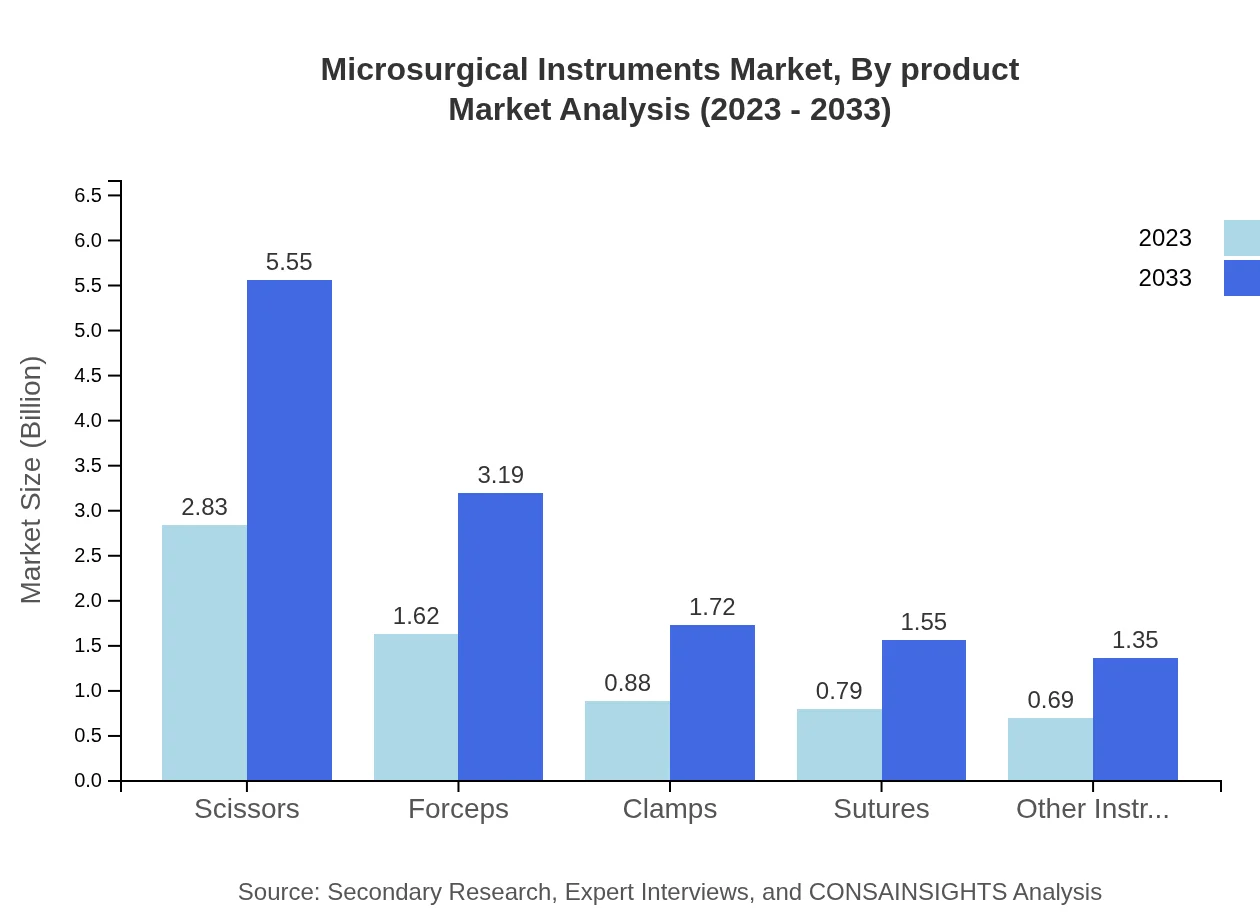
The product segment of the Microsurgical Instruments market consists of scissors, forceps, clamps, sutures, and other instruments. Scissors dominate the market with a size of $2.83 billion in 2023, projected to $5.55 billion by 2033, accounting for 41.55% market share. Forceps follow closely at $1.62 billion, growing to $3.19 billion with a share of 23.86%.
Microsurgical Instruments Market Analysis By Application
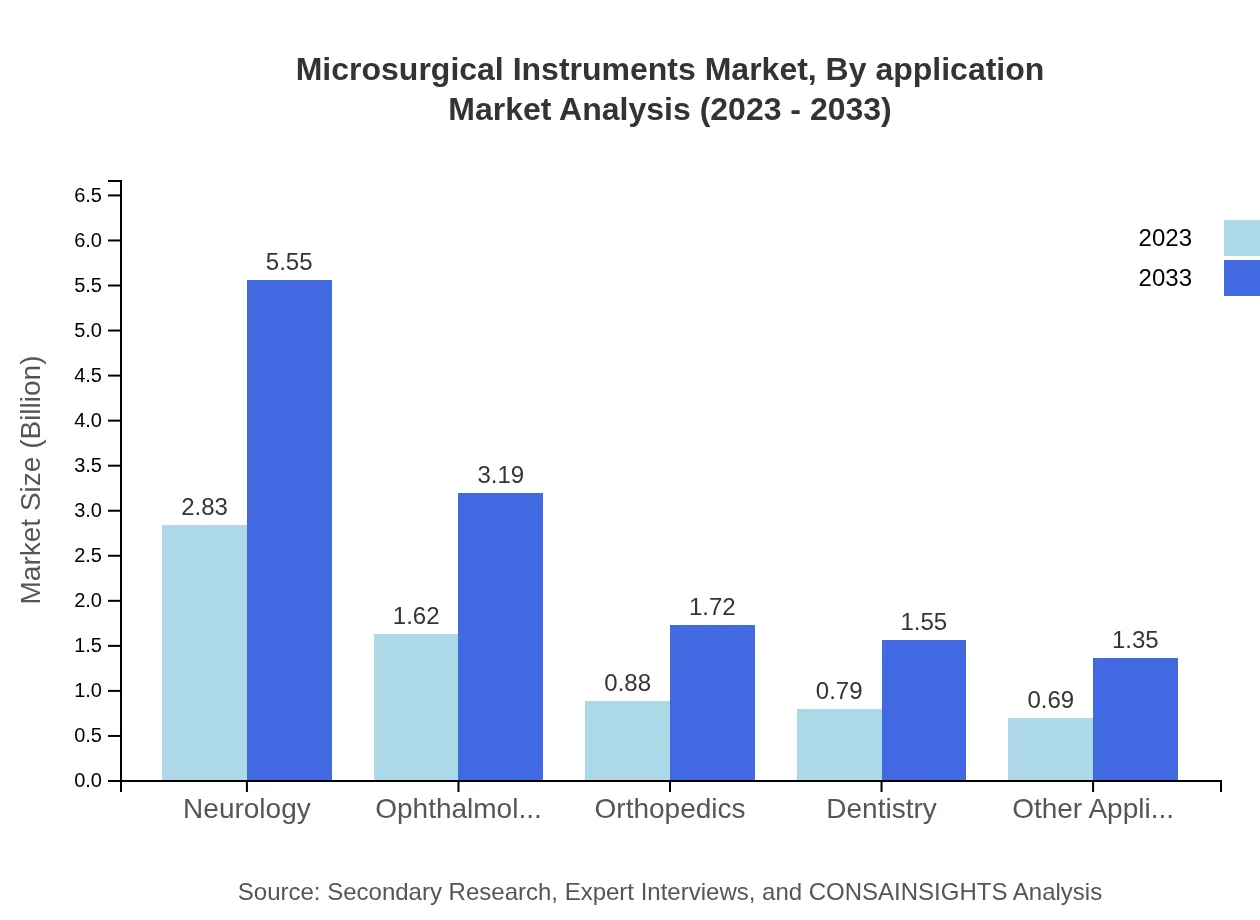
Applications of Microsurgical Instruments encompass neurology, ophthalmology, orthopedics, and dentistry. The neurology segment comprises the largest share for the market, projected to grow from $2.83 billion in 2023 to $5.55 billion by 2033. Each application contributes significantly to the overall growth due to the demand for specialized surgical techniques.
Microsurgical Instruments Market Analysis By End User
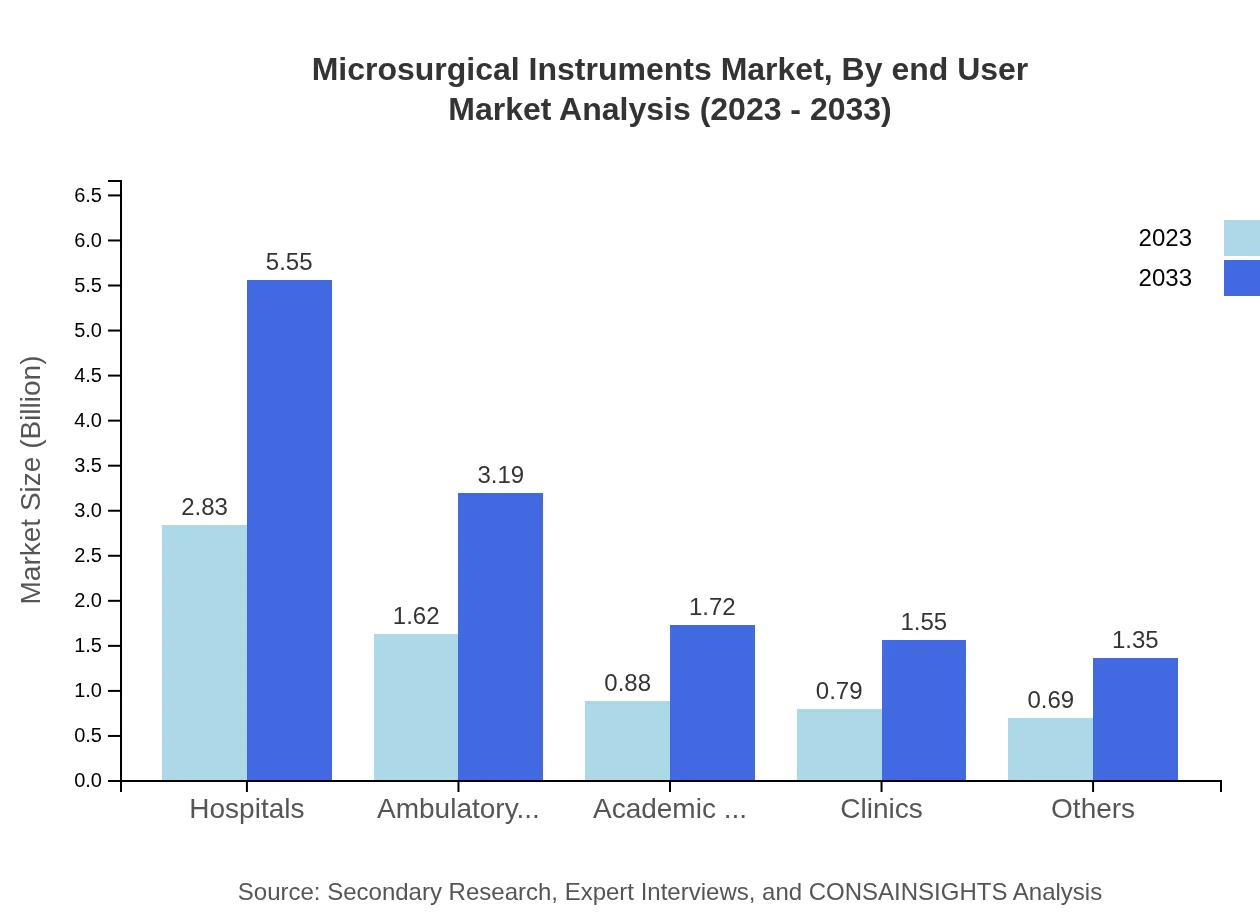
Key end-users include hospitals, ambulatory surgical centers, academic and research institutes, and clinics. Hospitals represent the largest share, with a market size of $2.83 billion in 2023, growing to $5.55 billion by 2033. These institutions are increasingly adopting innovative surgical instruments to enhance patient outcomes.
Microsurgical Instruments Market Analysis By Technology
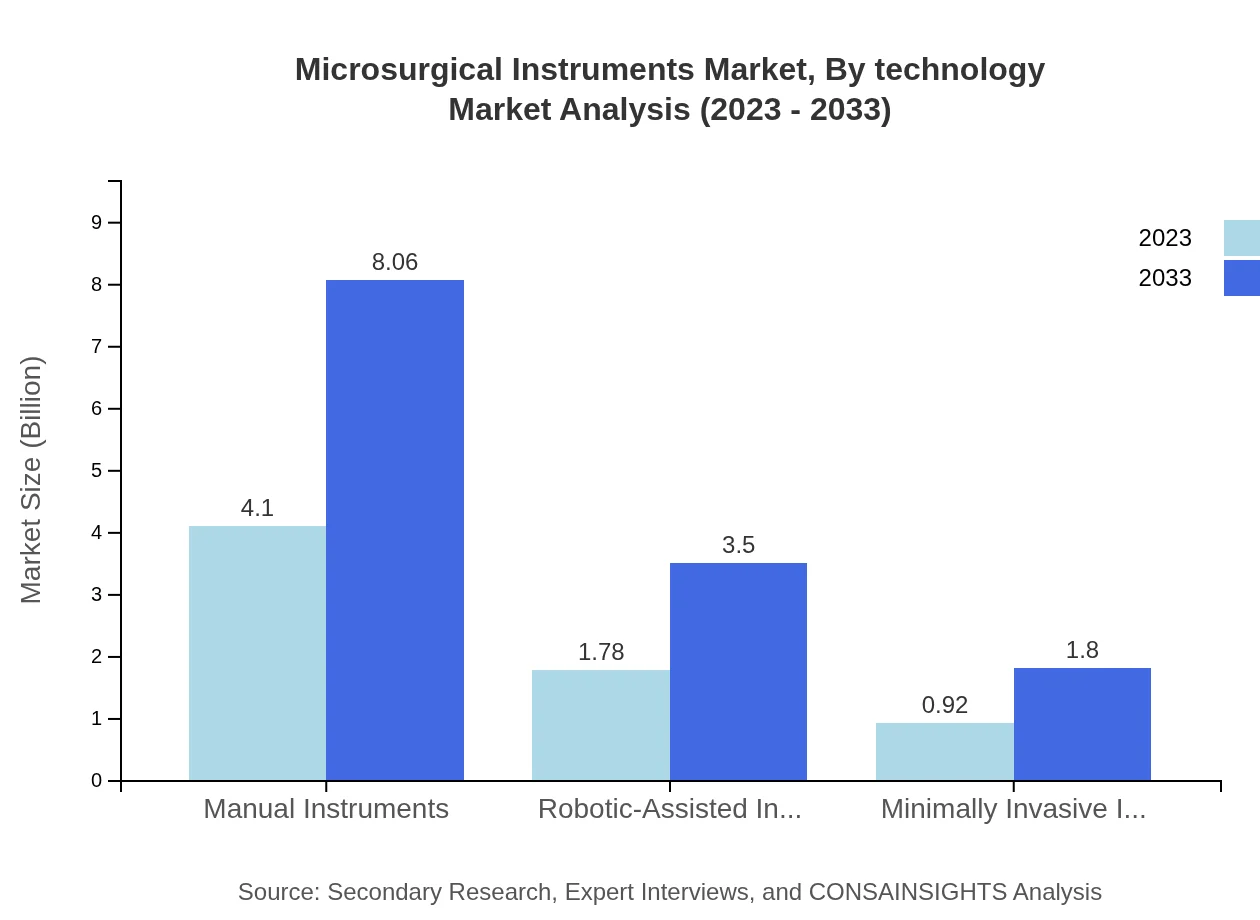
Technological advancements are a crucial aspect of the Microsurgical Instruments market. The segment includes manual instruments, robotic-assisted instruments, and minimally invasive instruments. Manual instruments dominate with a size of $4.10 billion in 2023, predicted to reach $8.06 billion by 2033, highlighting their continued relevance in surgical procedures.
Microsurgical Instruments Market Analysis By Distribution Channel
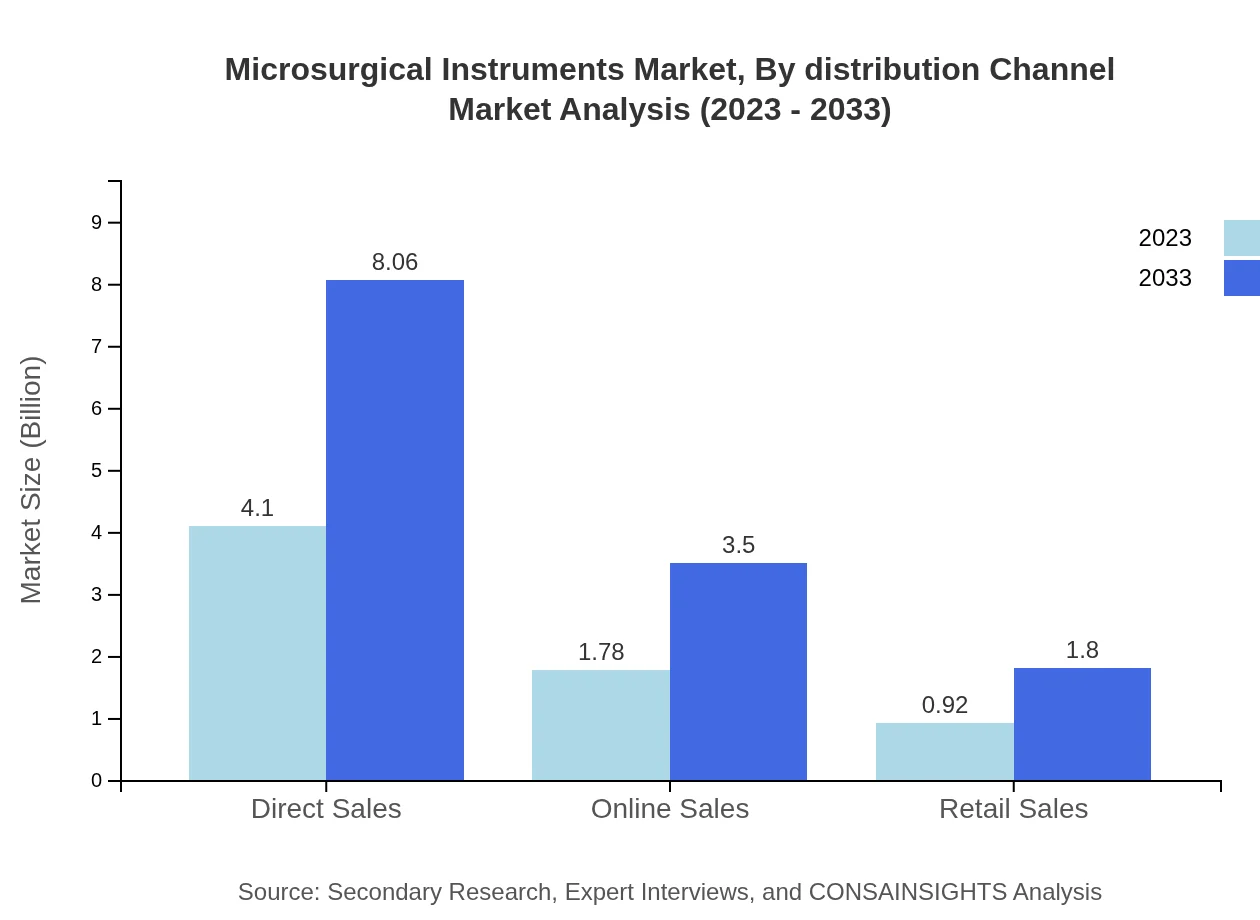
Distribution channels for Microsurgical Instruments include direct sales, online sales, and retail sales. Direct sales remain the dominant channel at $4.10 billion in 2023, expected to expand to $8.06 billion by 2033, leveraging close relationships between manufacturers and healthcare providers.
Microsurgical Instruments Market Trends and Future Forecast
Tell us your focus area and get a customized research report.
Global Market Leaders and Top Companies in Microsurgical Instruments Industry
Medtronic :
Medtronic is a leading global medical technology company that specializes in the development of innovative surgical instruments and technologies aimed at improving patient outcomes.Johnson & Johnson:
Johnson & Johnson is recognized for its advanced surgical technology and instruments, providing comprehensive solutions for various surgical procedures.Stryker Corporation:
Stryker Corporation leads in products for healthcare including instruments and devices used in surgeries, driving innovation through advanced engineering.B. Braun Melsungen AG:
B. Braun is known for its development of high-quality surgical instruments and has a significant market presence in microsurgery segment.Karl Storz SE & Co. KG:
Karl Storz focuses on minimally invasive surgery with advanced instrumentation and technologies tailored to enhance surgical efficiency.We're grateful to work with incredible clients.









FAQs
What is the current market size of Microsurgical Instruments?
The market size for Microsurgical Instruments in 2023 is $6.80 Billion, based on the provided market valuation for that year.
How big will the Microsurgical Instruments market be in 2033?
By 2033 the market is projected to reach $13.36 Billion according to the supplied forecast figures for the period.
What is CAGR for the Microsurgical Instruments market?
The reported compound annual growth rate for the forecast period 2023 to 2033 is 6.8% as provided in the input data.
Is there a single fastest Growing region in the Microsurgical Instruments market?
No single fastest-growing region is stated for the Microsurgical Instruments market because the top regional implied CAGR values are within 0.15 percentage points of each other, making the ranking too close to call reliably.
Who are the top companies in this market?
Top companies listed in the dataset are Medtronic, Johnson & Johnson, Stryker Corporation, B. Braun Melsungen AG, and Karl Storz SE & Co. KG.
Why is demand for microsurgical tools increasing?
Demand is rising due to greater use of minimally invasive surgeries, advances in device technology, and demographic shifts increasing procedural needs.
What are common product segments in this market?
Product segmentation includes scissors, forceps, clamps, sutures, and other instruments as specified in the input data.
How are microsurgical instruments distributed?
Distribution channels noted include direct sales, online sales, and retail sales as outlined in the provided segmentation facts.
What end users consume microsurgical instruments?
End users listed comprise hospitals, ambulatory surgical centers, academic and research institutes, clinics, and other healthcare facilities.
Which technologies are included in the market taxonomy?
The technology categories provided are manual instruments, robotic-assisted instruments, and minimally invasive instruments.