

Mrna Vaccine Platforms
First published: 29 September 2025 | Last updated: 25 May 2026 | Report Code: mrna-vaccine-platforms
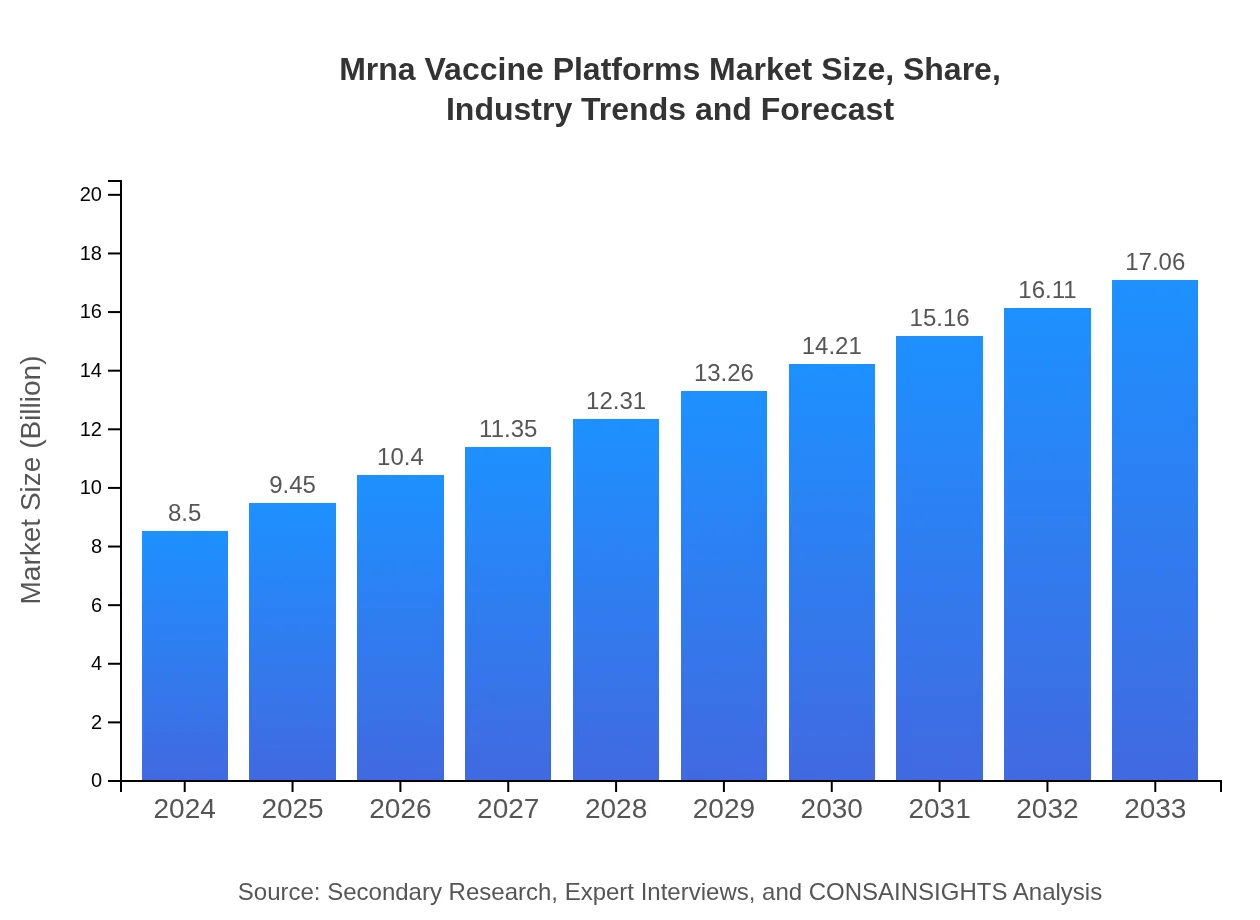
Mrna Vaccine Platforms Market — USD $8.5 Billion in 2024, Growing to USD 17.06 by 2033 at 7.8% CAGR
This comprehensive report offers a detailed analysis of the Mrna Vaccine Platforms market, exploring the industry landscape, segmentation strategies, regional performance, technological breakthroughs, and product innovations. Covering a forecast period from 2024 to 2033, the report provides key insights into market size, growth rates, and competitive dynamics, serving as an essential guide for stakeholders and investors alike.
Key Takeaways
- $8.50 Billion market size in 2024 expanding to $17.06 Billion by 2033 at a 7.8% CAGR.
- North America is largest regional market, while no single fastest-growing region is stated because regional CAGR differences remain within 0.15 percentage points.
- Europe and Asia Pacific show notable expansion: Europe from $2.06 Billion to $4.13 Billion and Asia Pacific from $1.79 Billion to $3.59 Billion.
- Commercialization and clinical-stage advancements support sustained demand across therapeutic and diagnostic segments.
- Moderna Inc. and BioNTech SE are identified among the primary market participants driving innovation.
Mrna Vaccine Platforms — Executive Summary
North America remains largest market by forecast-period value, while no single fastest-growing region is stated because top regional growth rates are separated by less than 0.15 percentage points. The Mrna Vaccine Platforms market is on a sustained growth path driven by increased funding, intensified R&D, and collaboration among pharmaceutical companies, biotechnology firms, and research organizations. Market value grows from $8.50 Billion in 2024 to $17.06 Billion by 2033, reflecting a 7.8% CAGR for the 2024 to 2033 period. Innovations in mRNA stabilization, delivery systems and scaling of manufacturing capacity underpin commercial expansion. Key segments include therapeutics, diagnostics, delivery systems, self-amplifying and non-amplifying mRNA technologies, and applications spanning infectious diseases, cancer, and other areas. North America is the largest regional market with significant investment and infrastructure supporting clinical and commercial activity. The competitive environment features major players such as Moderna Inc. and BioNTech SE, while partnerships, regulatory engagement, and technology integration remain central to market progress. This report combines primary interviews and secondary sources to deliver a structured view of drivers, segmentation, and regional trajectories.
Key Growth Drivers
- Increased public and private investment accelerating R&D and manufacturing scale-up for mRNA platforms.
- Advances in mRNA formulation and delivery technologies improving stability and clinical applicability.
- Stronger collaborations among pharmaceutical companies, biotechnology firms, and research organizations.
- Regulatory engagement and funding support enhancing pathways from clinical stages to commercialization.
- Rising focus on infectious disease response and oncology applications expanding demand for platform solutions.
| Metric | Value |
|---|---|
| Study Period | 2024 - 2033 |
| 2024 Market Size | $8.50 Billion |
| CAGR (2024-2033) | 7.8% |
| 2033 Market Size | $17.06 Billion |
| Top Companies | Moderna Inc., BioNTech SE |
| Published Date | 29 September 2025 |
| Last Modified Date | 25 May 2026 |
Mrna Vaccine Platforms Market Overview
Customize Mrna Vaccine Platforms market research report
- ✔ Get in-depth analysis of Mrna Vaccine Platforms market size, growth, and forecasts.
- ✔ Understand Mrna Vaccine Platforms's regional dynamics and industry-specific trends.
- ✔ Identify potential applications, end-user demand, and growth segments in Mrna Vaccine Platforms
What is the Market Size & CAGR of Mrna Vaccine Platforms market in 2024?
Mrna Vaccine Platforms Industry Analysis
Mrna Vaccine Platforms Market Segmentation and Scope
Tell us your focus area and get a customized research report.
Mrna Vaccine Platforms Market Analysis Report by Region
Europe Mrna Vaccine Platforms:
Europe grows from $2.06 Billion in 2024 to $4.13 Billion in 2033. Regional momentum is driven by R&D activity, regulatory engagement, and partnerships among academic institutions and industry to advance mRNA formulations and clinical programs.Asia Pacific Mrna Vaccine Platforms:
Asia Pacific grows from $1.79 Billion in 2024 to $3.59 Billion in 2033. Expansion is supported by rising biotechnology investments, growing research capacities, and expanding manufacturing capabilities to serve regional and global demand.North America Mrna Vaccine Platforms:
North America is largest regional market, rising from $3.1 Billion in 2024 to $6.22 Billion in 2033. Local growth reflects robust investment, established biomanufacturing infrastructure, and active collaborations between pharmaceutical and biotech firms supporting clinical and commercial rollout.South America Mrna Vaccine Platforms:
Latin America grows from $0.81 Billion in 2024 to $1.62 Billion in 2033. Market development is linked to increasing health-sector investments, adoption of novel vaccine platforms, and collaborations with global biopharma organizations.Middle East & Africa Mrna Vaccine Platforms:
Middle East and Africa grows from $0.75 Billion in 2024 to $1.5 Billion in 2033. Regional drivers include enhanced public funding, improved clinical research infrastructure, and partnerships that facilitate access to emerging mRNA technologies.Tell us your focus area and get a customized research report.
Research Methodology
Mrna Vaccine Platforms Market Analysis By Product
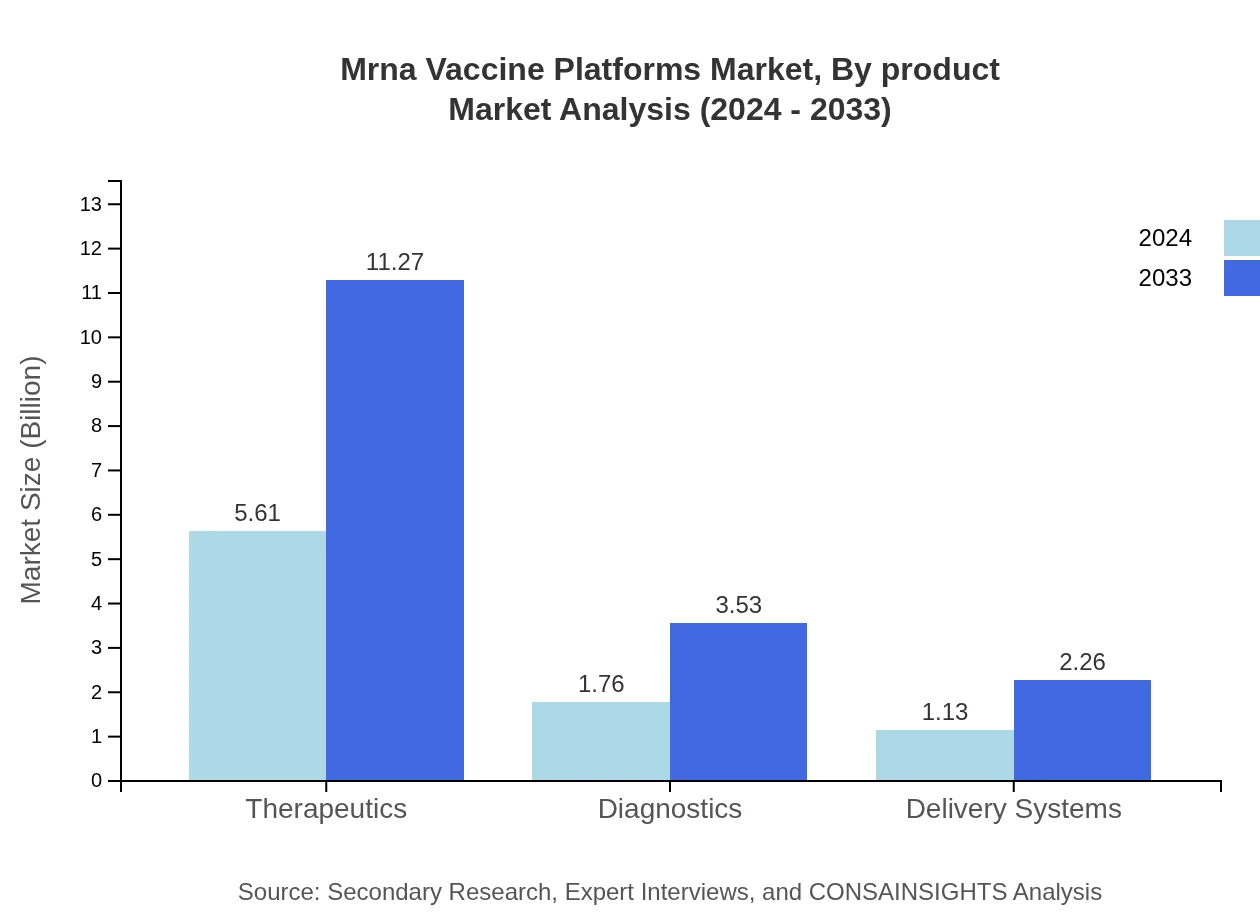
The by-product segmentation of the Mrna Vaccine Platforms market focuses on the critical components such as therapeutics, diagnostics, and delivery systems. Therapeutics form the backbone of the market, showing substantial growth in delivering effective vaccines, with market values projected to nearly double. Diagnostics play a crucial role in early disease detection and treatment validation. Meanwhile, advanced delivery systems ensure that mRNA vaccines achieve proper cellular uptake and efficacy, helping to optimize the overall clinical outcomes. Each product segment not only supports advancement in vaccine design but also contributes to a more resilient healthcare ecosystem.
Mrna Vaccine Platforms Market Analysis By Technology
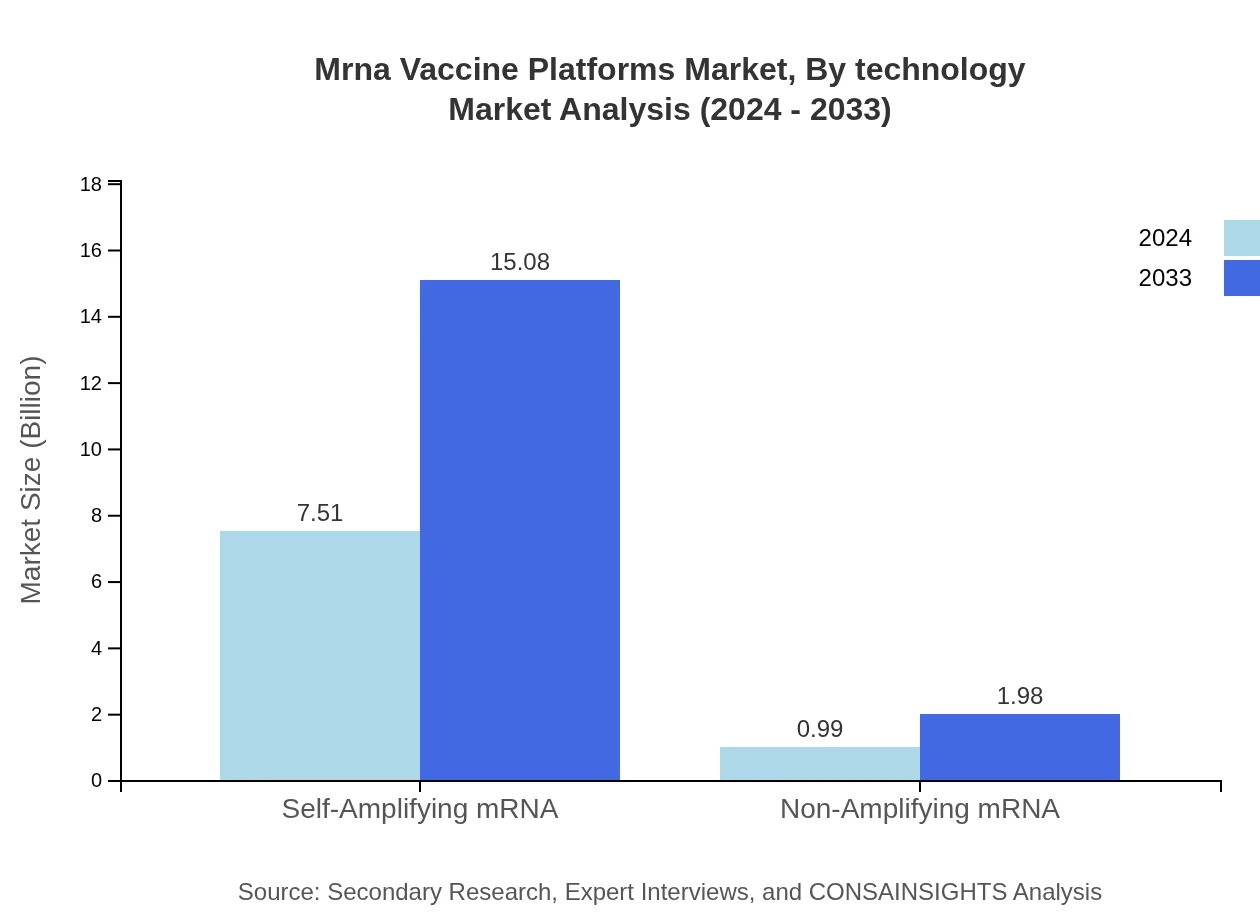
Technology segmentation within the mRNA Vaccine Platforms market distinguishes between self-amplifying and non-amplifying mRNA technologies. Self-amplifying mRNA platforms, noted for their enhanced potency and longer-lasting effects, are witnessing rapid adoption, with significant investments in scaling production and refining delivery methods. Conversely, non-amplifying mRNA technologies remain important due to their established safety profiles and relatively straightforward manufacturing processes. Innovations in formulation and stabilization are bridging gaps between these technologies, ultimately fostering competitive dynamics and driving overall industry growth. This technology-driven approach is critical for meeting the diverse demands of global vaccination needs.
Mrna Vaccine Platforms Market Analysis By Application
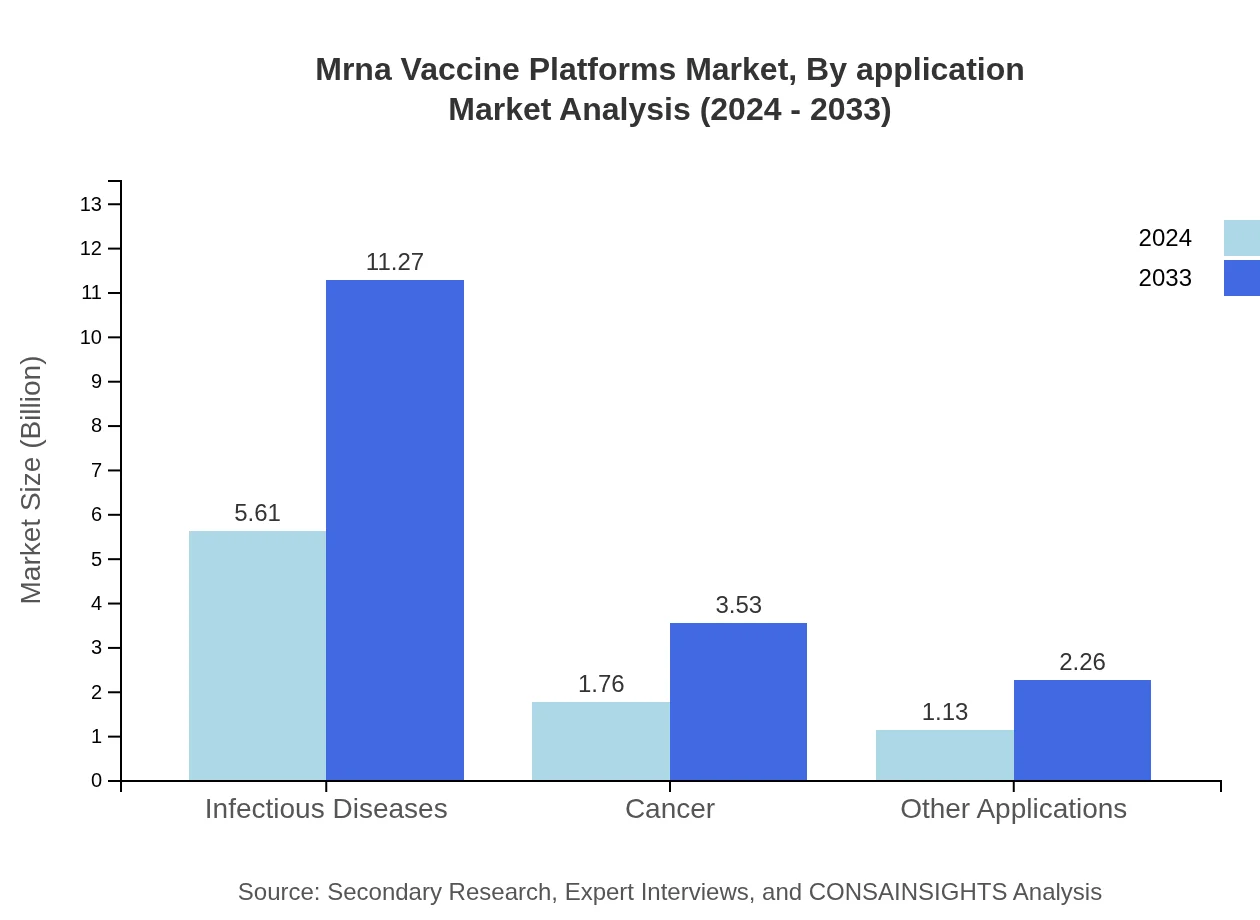
Application-based segmentation covers a diverse array of therapeutic areas including infectious diseases, cancer, and other emerging medical applications. Infectious disease applications dominate the market, benefiting from high public and governmental focus. Cancer applications, although smaller in market share, are rapidly evolving with promising clinical outcomes. Other applications, including rare and neglected diseases, also contribute to the market by addressing unmet medical needs. This segmentation underscores the versatility of mRNA platforms, which allow for rapid adaptation and customization of vaccine formulations to address specific health challenges and patient demographics.
Mrna Vaccine Platforms Market Analysis By End User
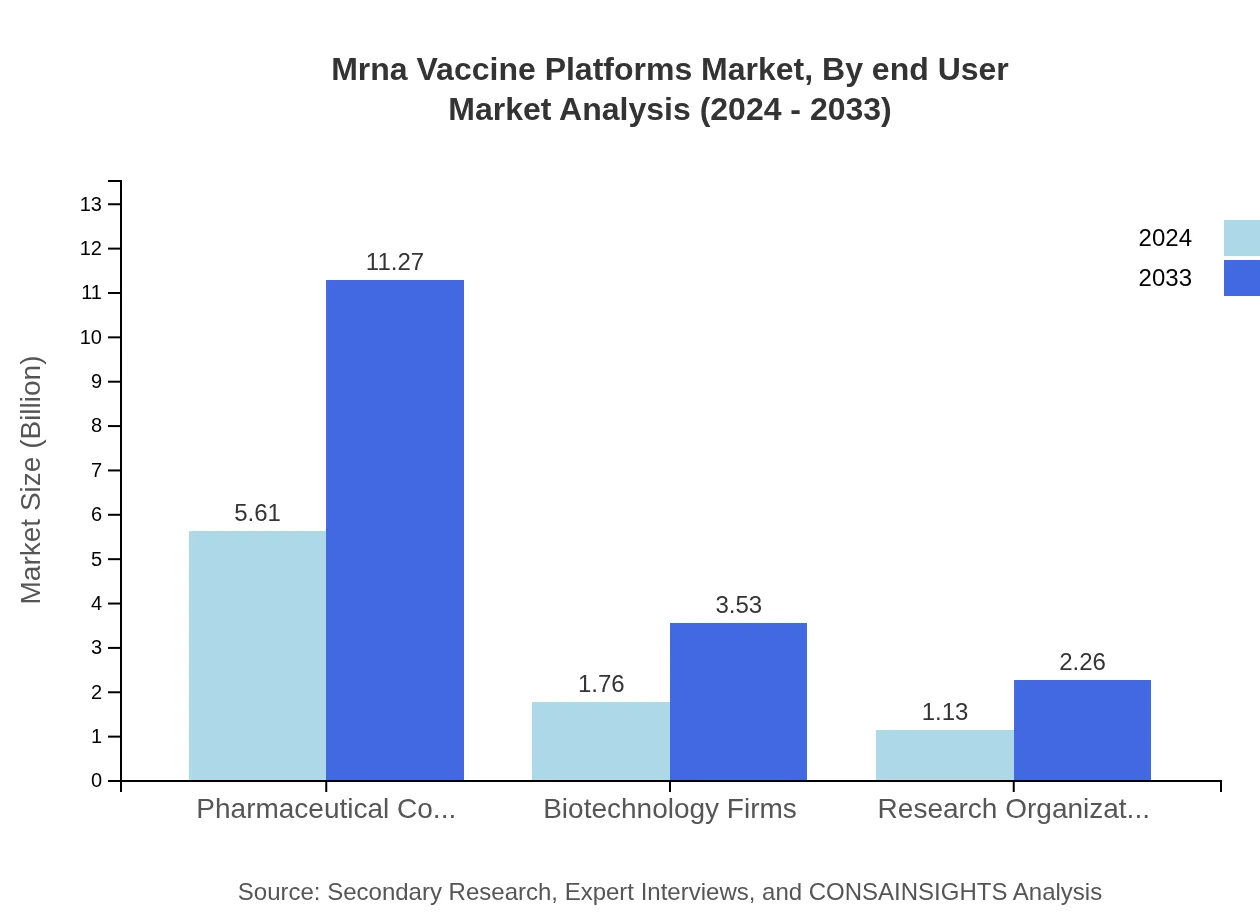
End-user segmentation divides the market based on the primary stakeholders involved in vaccine development and application, including pharmaceutical companies, biotechnology firms, and research organizations. Pharmaceutical companies leverage advanced mRNA technologies to develop next-generation vaccines, improving therapeutic efficacy and patient safety. Biotechnology firms are at the forefront of innovative research, driving breakthroughs in mRNA synthesis and delivery. Research organizations significantly contribute to early-stage discovery and clinical testing, ensuring that novel vaccine formulations meet rigorous safety and performance standards. This segmentation highlights the collaborative ecosystem that fuels continuous advancements and the overall competitiveness of the market.
Mrna Vaccine Platforms Market Analysis By Development Stage
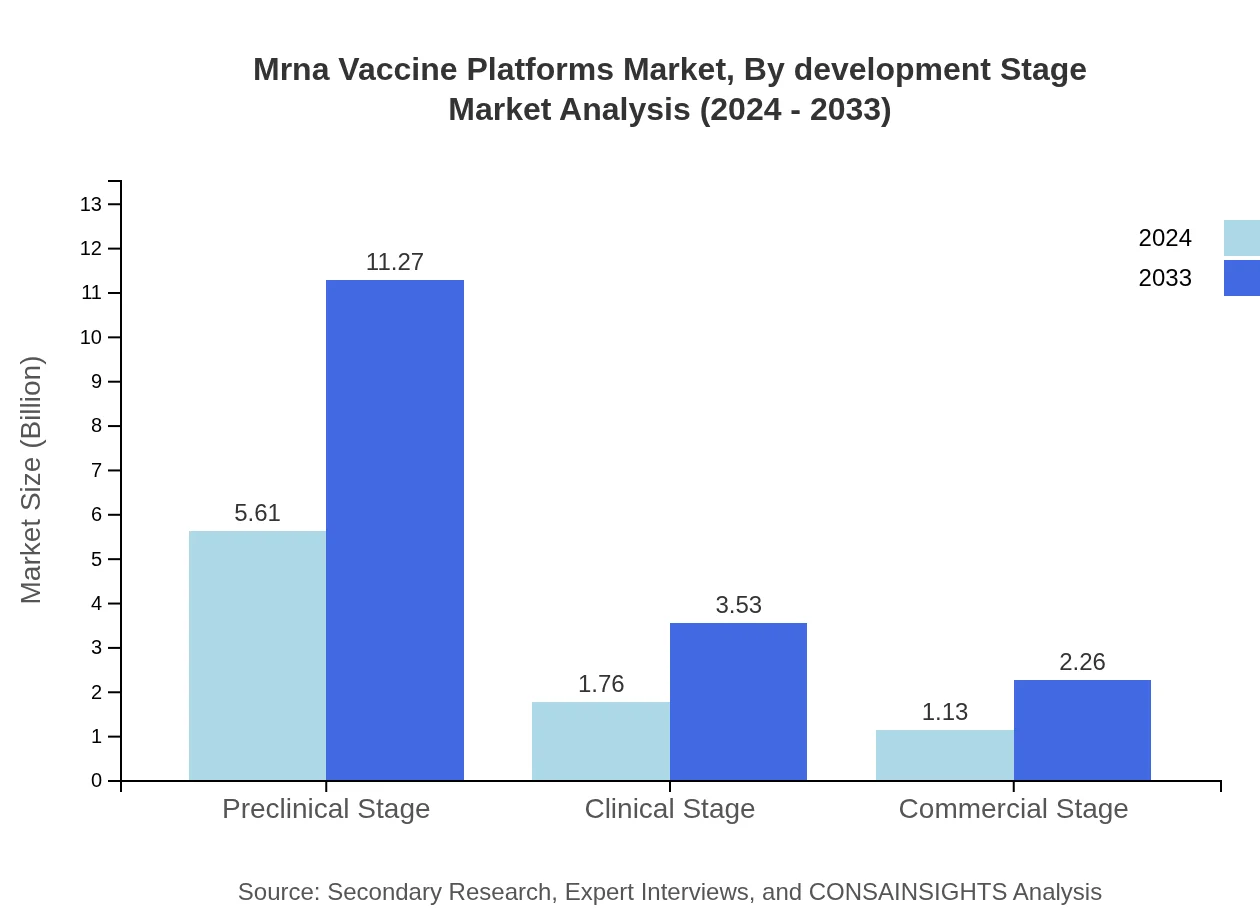
The development stage segmentation of the mRNA Vaccine Platforms market provides insight into the maturity and commercialization of vaccine candidates. In the preclinical stage, extensive research and animal testing lay the groundwork for subsequent clinical trials. The clinical stage is marked by rigorous human trials that validate safety and efficacy, while the commercial stage sees the successful launch and widespread distribution of approved vaccines. Each phase presents unique challenges and opportunities, with regulatory approvals and technological refinements playing pivotal roles in transitioning products from development to market. This segmentation framework ensures that investors and stakeholders can accurately gauge progress and strategize accordingly.
Mrna Vaccine Platforms Market Trends and Future Forecast
Tell us your focus area and get a customized research report.
Global Market Leaders and Top Companies in Mrna Vaccine Platforms Industry
Moderna Inc.:
Moderna Inc. is a trailblazer in mRNA technology, actively involved in pioneering vaccine development and production. With robust R&D capabilities, the company has led groundbreaking projects, successfully navigating clinical trials and regulatory approvals to deliver innovative vaccine solutions that address global health challenges.BioNTech SE:
BioNTech SE stands at the forefront of mRNA vaccine technology, driving advancements in vaccine design and therapeutic applications. Renowned for its collaboration with global partners, the company leverages state-of-the-art technology and rigorous clinical research to deliver high-efficacy vaccines, solidifying its position as a key industry leader.We're grateful to work with incredible clients.









FAQs
What is the market size of Mrna Vaccine Platforms in 2024?
The market size for 2024 is $8.50 Billion as stated for the Mrna Vaccine Platforms report.
How big will the market be in 2033?
The market is projected to reach $17.06 Billion by 2033 according to the provided forecast data.
What is CAGR for the forecast period?
The report specifies a compound annual growth rate (CAGR) of 7.8% for the 2024 to 2033 forecast period.
Is there a single fastest Growing region in the Mrna Vaccine Platforms market?
No single fastest-growing region is stated for the Mrna Vaccine Platforms market because the top regional implied CAGR values are within 0.15 percentage points of each other, making the ranking too close to call reliably.
Which companies are highlighted as leading players?
Top companies listed in the report include Moderna Inc. and BioNTech SE as primary market participants.
Who are the main end users for these platforms?
Primary end users identified are pharmaceutical companies, biotechnology firms, and research organizations across development stages.
What development stages are covered in the segmentation?
The segmentation includes preclinical, clinical, and commercial stages as distinct development phase categories.
How big is the Europe regional market in 2024 and 2033?
Europe is reported to grow from $2.06 Billion in 2024 to $4.13 Billion in 2033 according to the regional facts.
What are the primary technology subsegments?
Technology subsegments listed include self-amplifying mRNA and non-amplifying mRNA approaches.
Why are delivery systems important for this market?
Delivery systems are critical for stability and targeted administration, and they are listed among key product subsegments supporting clinical outcomes.