
Reports >
Life Sciences
>
Ai In Robotic Surgery

Ai In Robotic Surgery
First published: 20 May 2025 | Last updated: 25 May 2026 | Report Code: ai-in-robotic-surgery
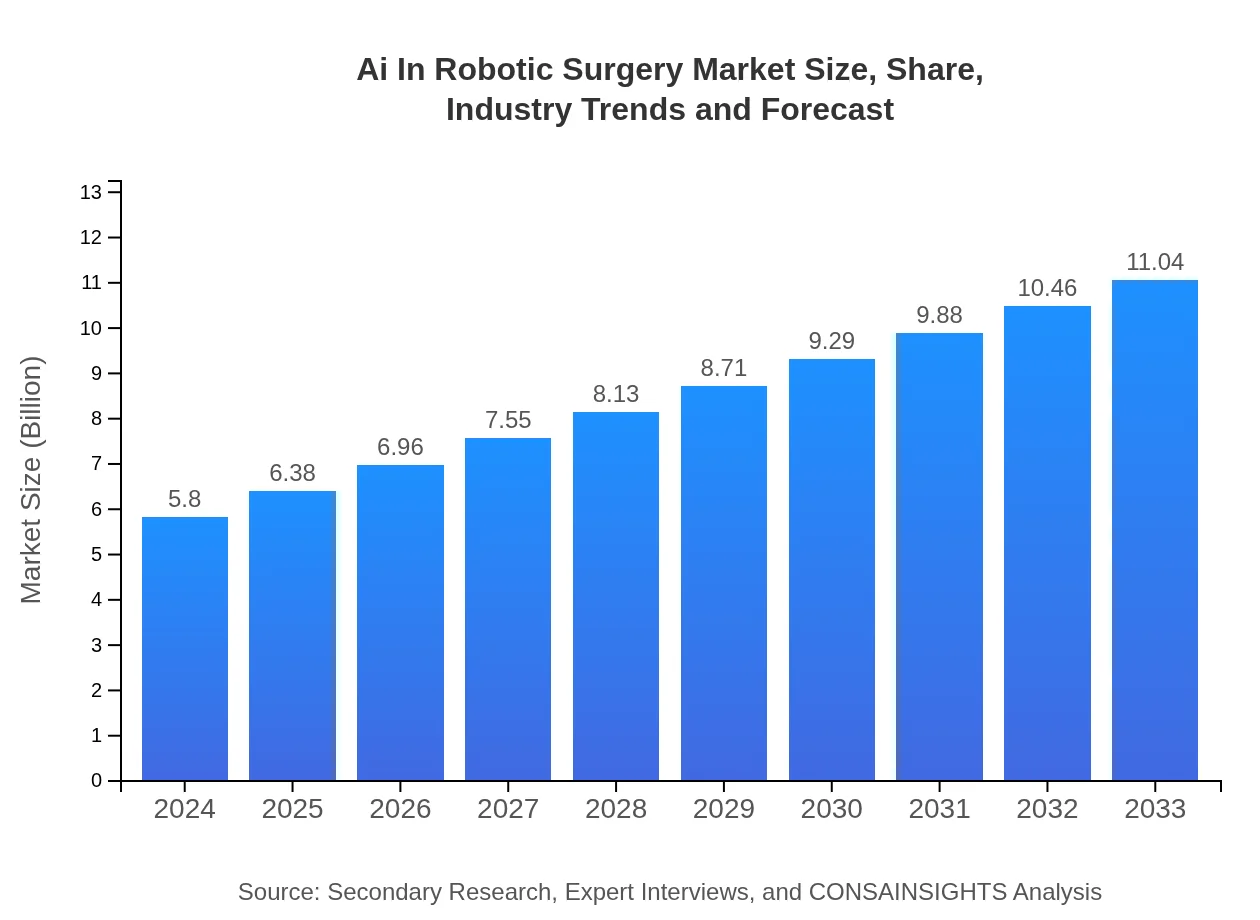
Ai In Robotic Surgery Market — USD $5.8 Billion in 2024, Growing to USD 11.04null by 2033 at 7.2% CAGR
This detailed market report provides a comprehensive overview of the Ai in Robotic Surgery industry, offering insights into market dynamics, size and growth trends, technological advancements, and regional trends. The report spans from 2024 to 2033 and covers key segments, technologies, and investment patterns shaping the future landscape of this innovative healthcare domain.
Key Takeaways
- Global market expands from $5.80 Billion in 2024 to $11.04 Billion in 2033 at a 7.2% CAGR.
- North America is largest regional market, while no single fastest-growing region is stated because regional CAGR differences remain within 0.15 percentage points.
- Europe and Asia Pacific show notable growth: Europe from $1.43 Billion to $2.73 Billion; Asia Pacific from $1.18 Billion to $2.24 Billion.
- Top companies identified include Intuitive Surgical Inc. and Medtronic plc, reflecting strong vendor involvement.
- Key technologies cited include machine learning, computer vision, and natural language processing enabling smarter surgical systems.
Ai In Robotic Surgery — Executive Summary
North America remains largest market by forecast-period value, while no single fastest-growing region is stated because top regional growth rates are separated by less than 0.15 percentage points. The Ai In Robotic Surgery market is advancing through deeper integration of AI-driven capabilities into robotic-assisted procedures. Market value rises from $5.80 Billion in 2024 to $11.04 Billion by 2033 at a 7.2% CAGR over the 2024 to 2033 forecast period. Growth is supported by investments in machine learning, computer vision, and natural language processing, and by partnerships between device manufacturers and technology firms. Hospitals, surgical centers, and research institutes are key end users, while funding sources include public funding, private sector funding, and venture capital. Regional dynamics vary: North America is the largest market, with Europe, Asia Pacific, Latin America, and Middle East & Africa each showing expansion. Leading companies such as Intuitive Surgical Inc. and Medtronic plc are central to the competitive landscape. The market outlook reflects sustained R&D activity, regulatory oversight, and demand for minimally invasive procedures driving adoption and innovation.
Key Growth Drivers
- Advances in machine learning models that improve intraoperative decision support and workflow optimization.
- Increased R&D and strategic collaborations between medical device manufacturers and AI technology providers.
- Rising preference for minimally invasive procedures that favor robotic assistance and AI-enabled precision.
- Diversified funding from public sources, private sector investments, and venture capital accelerating product development.
- Broader clinical adoption across hospitals, surgical centers, and research institutes expanding addressable demand.
| Metric | Value |
|---|---|
| Study Period | 2024 - 2033 |
| 2024 Market Size | $5.80 Billion |
| CAGR (2024-2033) | 7.2% |
| 2033 Market Size | $11.04 Billion |
| Top Companies | Intuitive Surgical Inc., Medtronic plc |
| Published Date | 20 May 2025 |
| Last Modified Date | 25 May 2026 |
Ai In Robotic Surgery Market Overview
Customize Ai In Robotic Surgery market research report
- ✔ Get in-depth analysis of Ai In Robotic Surgery market size, growth, and forecasts.
- ✔ Understand Ai In Robotic Surgery's regional dynamics and industry-specific trends.
- ✔ Identify potential applications, end-user demand, and growth segments in Ai In Robotic Surgery
What is the Market Size & CAGR of Ai In Robotic Surgery market in 2024?
Ai In Robotic Surgery Industry Analysis
Ai In Robotic Surgery Market Segmentation and Scope
Tell us your focus area and get a customized research report.
Ai In Robotic Surgery Market Analysis Report by Region
Europe Ai In Robotic Surgery:
Europe grows from $1.43 Billion in 2024 to $2.73 Billion in 2033. Adoption is propelled by regulatory pathways for medical devices, collaborative research initiatives, and investments in technologies such as machine learning and computer vision.Asia Pacific Ai In Robotic Surgery:
Asia Pacific grows from $1.18 Billion in 2024 to $2.24 Billion in 2033. Growth reflects increasing healthcare investments, expanding hospital infrastructure, and growing interest in minimally invasive procedures supported by AI capabilities.North America Ai In Robotic Surgery:
North America is largest regional market, rising from $1.92 Billion in 2024 to $3.66 Billion in 2033. This expansion is supported by investment in AI-enabled surgical systems, strong clinical adoption, and active participation from established device manufacturers.South America Ai In Robotic Surgery:
Latin America grows from $0.49 Billion in 2024 to $0.94 Billion in 2033. Expansion is driven by gradual adoption of robotic procedures, increasing hospital modernization, and targeted investments in medical technology.Middle East & Africa Ai In Robotic Surgery:
Middle East and Africa grows from $0.77 Billion in 2024 to $1.47 Billion in 2033. Market momentum is linked to healthcare infrastructure development, strategic partnerships, and adoption of advanced surgical technologies.Tell us your focus area and get a customized research report.
Research Methodology
Ai In Robotic Surgery Market Analysis By Robotic System
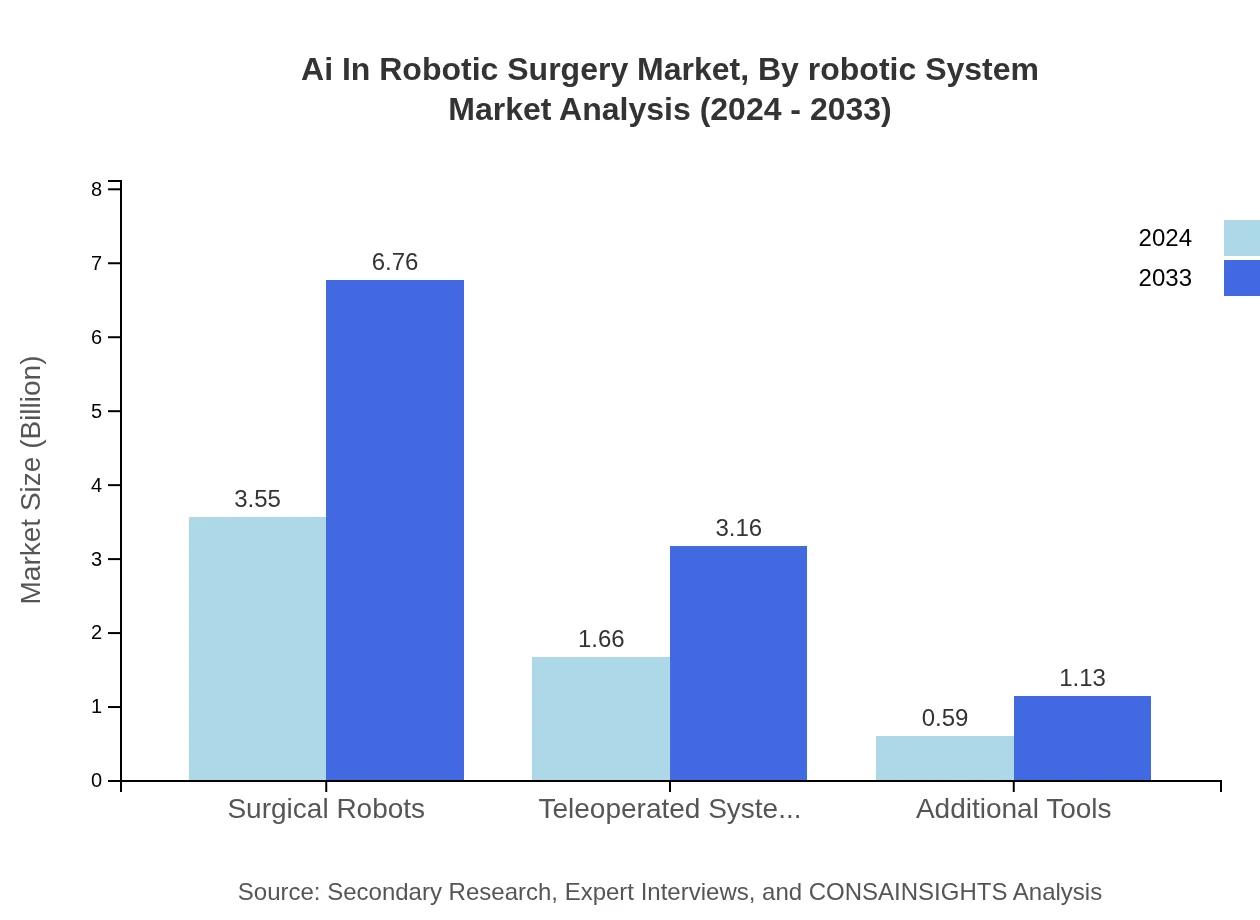
The by-robotic-system segment focuses on the scope and development of hardware platforms used in surgical procedures. Key subcategories include surgical robots, teleoperated systems, and additional tools. Surgical robots remain the cornerstone with significant market share, offering precision and enhanced operational capability. Teleoperated systems facilitate remote surgeries and specialist consultations, while additional tools integrate supplemental functionalities that boost overall system reliability. This segment is driven by technical innovations, dynamic product improvements, and an escalating emphasis on minimally invasive and precision surgeries. Trends indicate that future advancements will incorporate enhanced sensor technologies and machine-to-machine learning capabilities for better real-time performance monitoring.
Ai In Robotic Surgery Market Analysis By Application Area
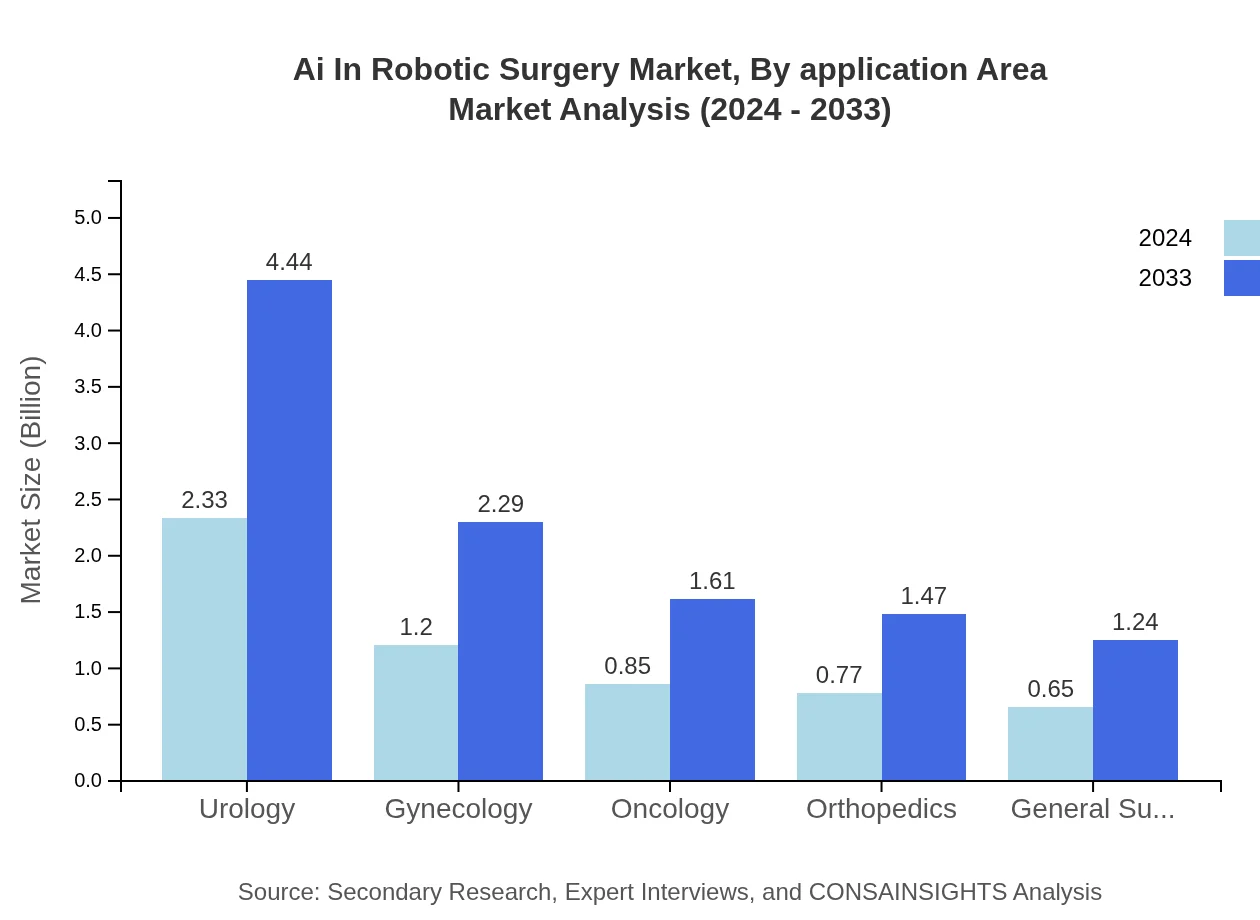
The by-application-area segment dissects the market into distinct surgical disciplines including urology, gynecology, oncology, orthopedics, and general surgery. Urology leads with high adoption rates due to the precision required in delicate procedures, capturing a significant share of the market. Gynecology is growing as robotic surgeries offer less invasive options, while oncology, orthopedics, and general surgery are gradually incorporating AI-assisted techniques to improve clinical outcomes. This segmentation highlights how specialized surgical fields drive innovation and customization in robotic systems, leading to more tailored product offerings. Enhanced training programs and specific regulatory approvals further support the expansion of robotic applications in these critical areas.
Ai In Robotic Surgery Market Analysis By Technology
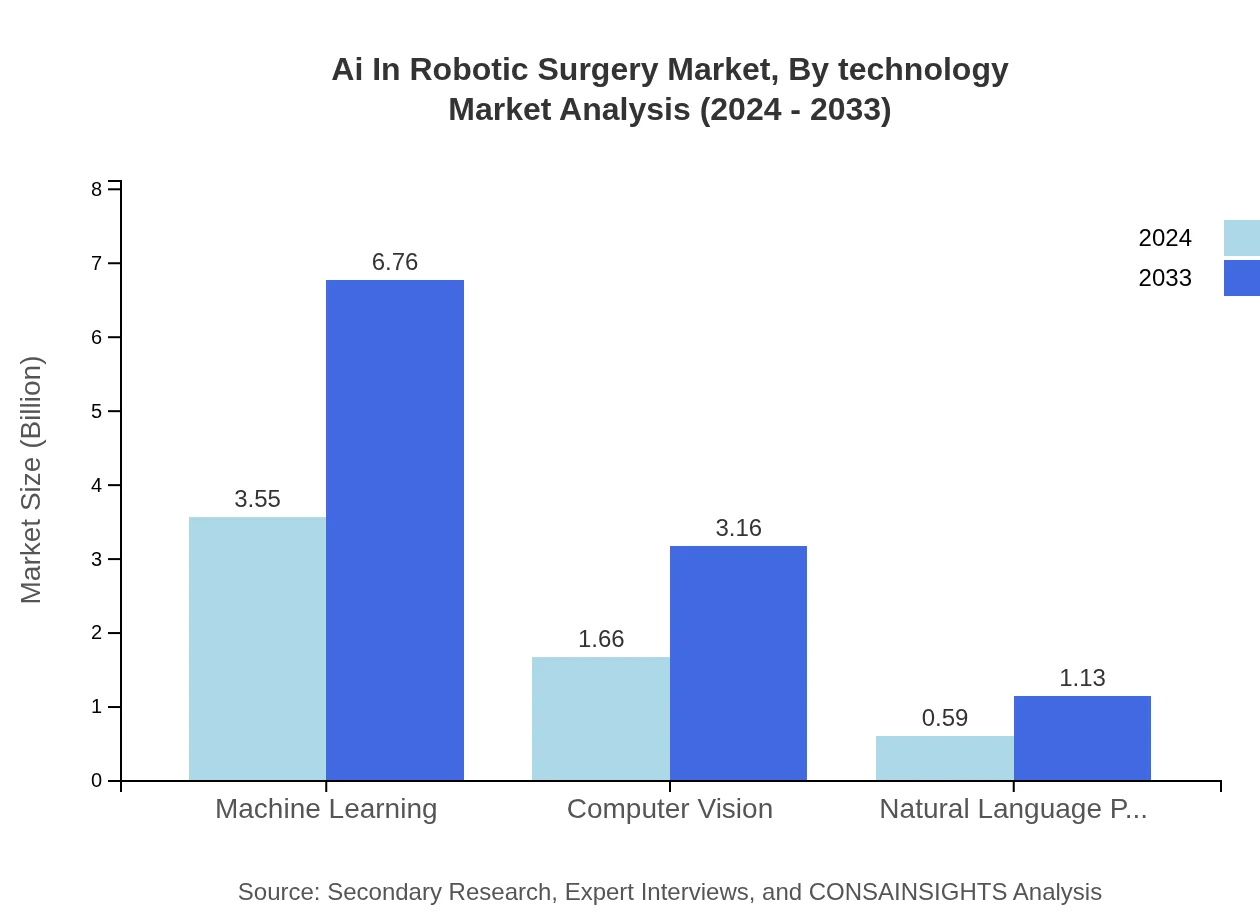
Technological innovations are the lifeblood of the robotic surgery industry. This segment covers core AI technologies such as machine learning, computer vision, and natural language processing that are integral to enhancing surgical precision and operational efficiency. Machine learning algorithms enable the robotic systems to learn from previous surgeries and adapt their techniques over time. Computer vision supports enhanced imaging and navigation, while natural language processing assists in streamlining surgeon-robot interactions through intuitive voice commands. The convergence of these technologies is proving critical in reducing error rates and advancing automated procedures, making the surgeon’s role more focused on strategic decision-making rather than manual operational control.
Ai In Robotic Surgery Market Analysis By End User
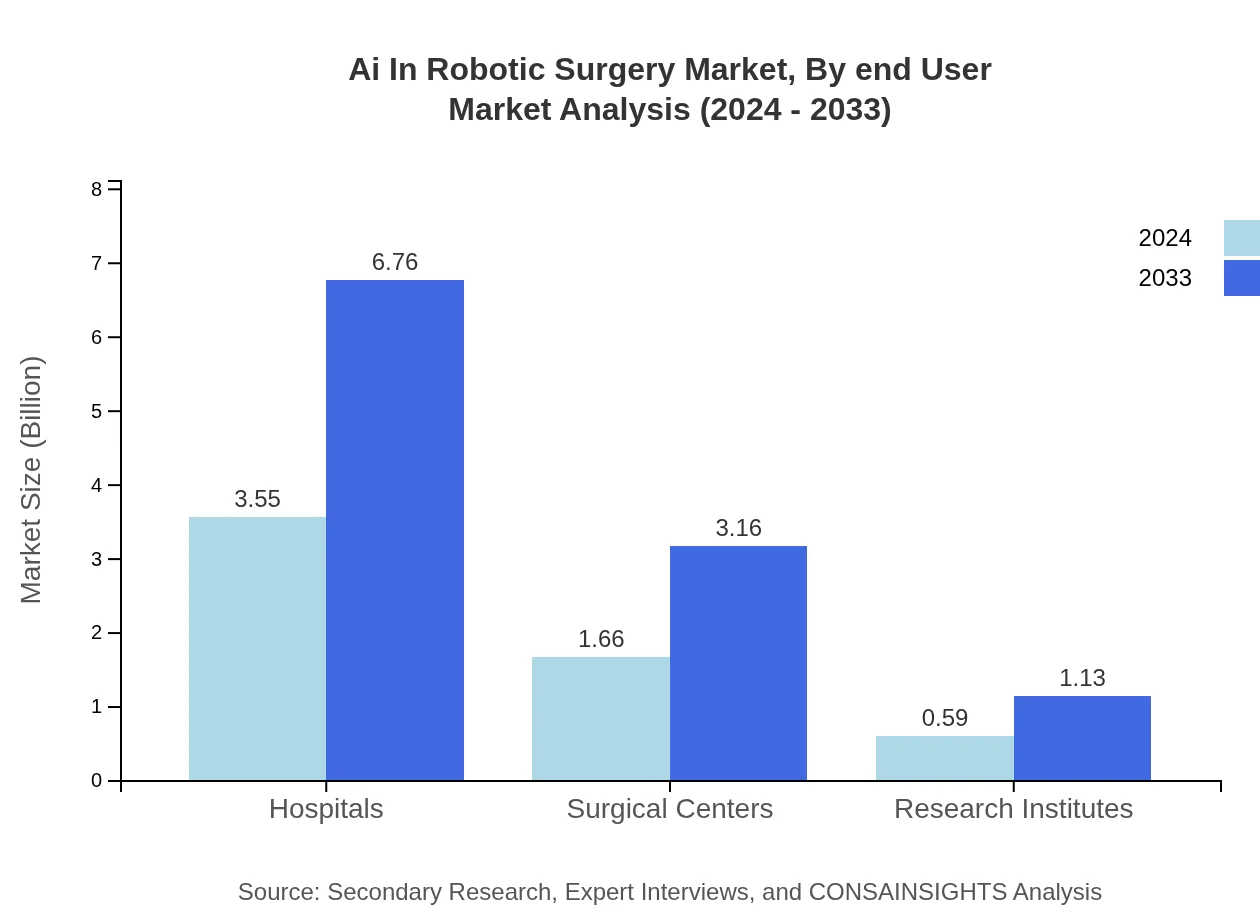
In the by-end-user segmentation, the focus is on the primary adopters of robotic surgery technologies. This segment includes hospitals, surgical centers, and research institutes. Hospitals form the largest segment due to their capacity to invest in cutting-edge technology and the central role they play in providing advanced patient care. Surgical centers are increasingly adopting these technologies to differentiate their service offerings, while research institutes drive innovation through clinical trials and pilot studies. Funding from both public and private sectors has bolstered investments in this segment, leading to enhanced collaboration between clinicians and technologists. The overall trend is a steady increase in adoption as robotic surgery becomes an integral component of the standard clinical care model.
Ai In Robotic Surgery Market Analysis By Investment
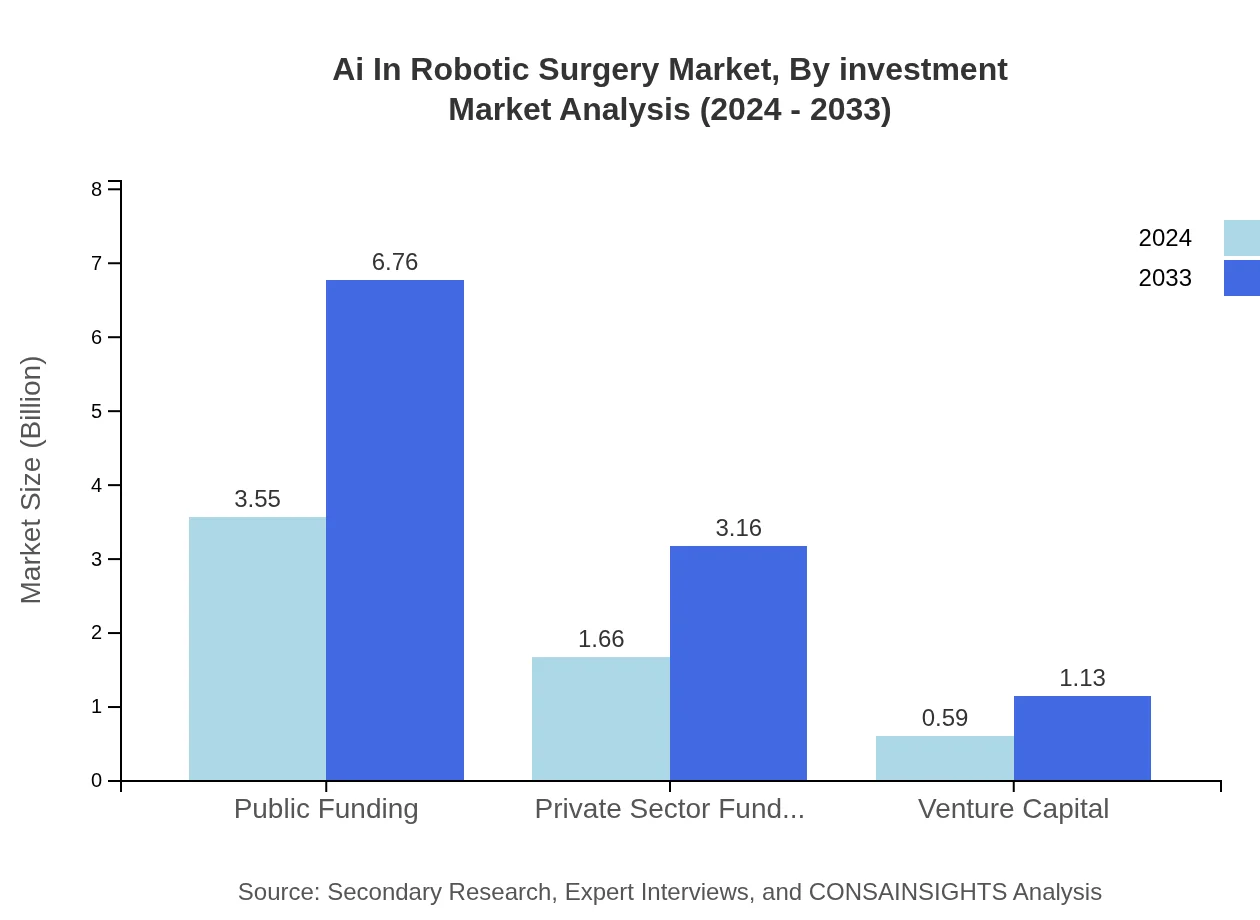
The by-investment segment scrutinizes the financial backbone of the AI in Robotic Surgery market, focusing on funding sources including public funding, private sector funding, and venture capital investments. Public funding plays a pivotal role by offering grants and subsidies to both innovators and healthcare providers aiming to integrate advanced technologies. Private sector funding complements these initiatives by channeling resources into product development and market expansion. Venture capital is particularly influential, often fueling early-stage innovations and startups that introduce disruptive solutions. Combined, these investment streams create a dynamic ecosystem that stimulates continuous product enhancements, drives market adoption, and increases competitive intensity, ultimately paving the way for a robust growth trajectory across the industry.
Ai In Robotic Surgery Market Trends and Future Forecast
Tell us your focus area and get a customized research report.
Global Market Leaders and Top Companies in Ai In Robotic Surgery Industry
Intuitive Surgical Inc.:
A pioneer in robotic-assisted surgical systems, Intuitive Surgical Inc. has consistently led the market through its innovative da Vinci systems, focusing on precision, enhanced recovery times, and integrated AI capabilities that streamline surgical procedures.Medtronic plc:
Medtronic plc leverages its extensive experience in medical device technology and healthcare analytics to develop advanced robotic surgical solutions. Their commitment to research and strategic partnerships has positioned them as a formidable player in the evolution of AI-driven surgical systems.We're grateful to work with incredible clients.








FAQs
What is the market size of Ai In Robotic Surgery in 2024?
The market size for Ai In Robotic Surgery in 2024 is $5.80 Billion as reported in the provided data.
How big will the Ai In Robotic Surgery market be in 2033?
The projected market size for 2033 is $11.04 Billion according to the input figures for the forecast period.
What is CAGR for the Ai In Robotic Surgery market?
The forecast CAGR for the Ai In Robotic Surgery market during 2024 to 2033 is 7.2% as stated in the provided data.
Is there a single fastest Growing region in the Ai In Robotic Surgery market?
No single fastest-growing region is stated for the Ai In Robotic Surgery market because the top regional implied CAGR values are within 0.15 percentage points of each other, making the ranking too close to call reliably.
Which technologies drive Ai In Robotic Surgery?
Key technologies include machine learning, computer vision, and natural language processing, which support diagnostics, imaging, and intraoperative assistance.
Who are the top companies in this market?
Top companies listed in the data are Intuitive Surgical Inc. and Medtronic plc, which are active in AI and robotic surgery solutions.
What end users adopt Ai In Robotic Surgery solutions?
End users specified include hospitals, surgical centers, and research institutes, each contributing to deployment and clinical validation.
How is the market funded?
Funding sources noted are public funding, private sector funding, and venture capital, supporting commercialization and innovation.
What regional markets show growth in the forecast?
Regional figures indicate growth across North America, Europe, Asia Pacific, Latin America, and Middle East & Africa using the provided start and end values.
What applications are covered in the market segmentation?
Application areas specified include urology, gynecology, oncology, orthopedics, and general surgery as listed in the segment facts.